Murder rates are often used as proxies for crime rates in international and cross-temporal comparisons because murder definition/reporting is consistent. Other crimes like rape (definition creep) or theft (goes unreported if not likely to be punished) don't have this property.
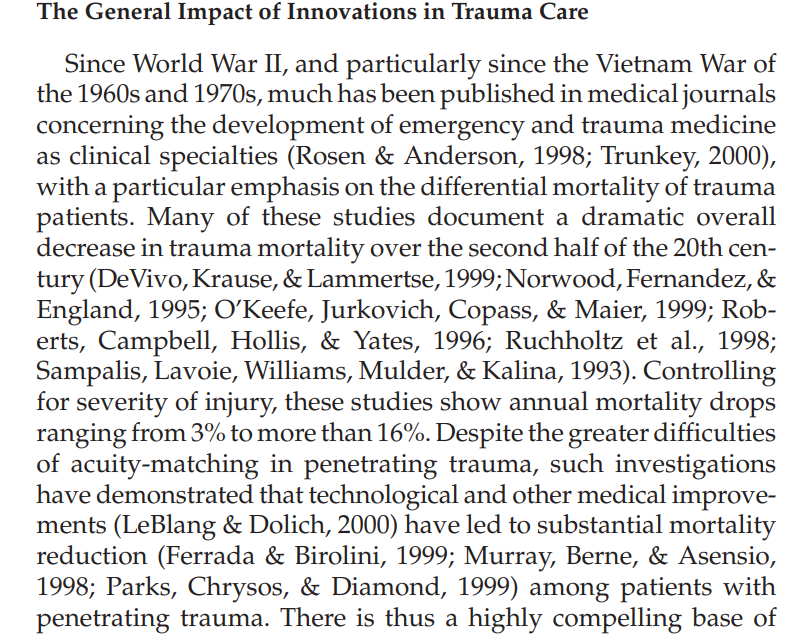
However, medical advances (both in terms of technique and access) have a massive effect on murder rate. Injuries that would kill someone in 1950 are usually treatable today, with huge improvement since the Vietnam war. The gap with pre ~WW2 (before antibiotics!) is even larger.
Note that "improved medical care" doesn't just cover medical tech; transportation and communication improvements are also very important. Getting to the hospital fast leads to massive difference in survival rates. Presumably ubiquitous cell phones make this even quicker today.
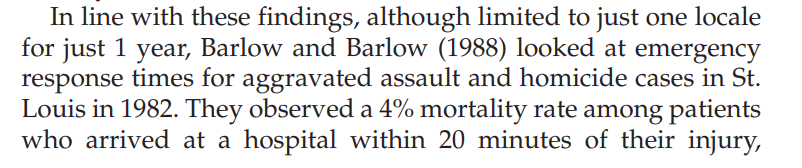
To put concrete numbers on it: if aggravated assaults had been as lethal in 1999 as they were in 1960, there would have been 3.4 times as many homicides as there actually were.
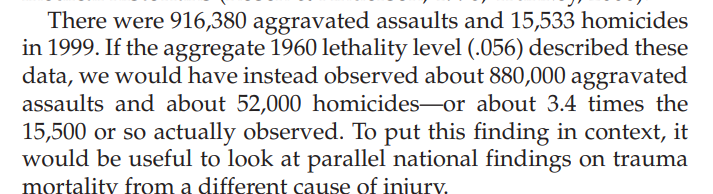
This applies much more strongly across longer time periods. The tech difference between the present and 1900 (no antibiotics, few motor vehicles, few + immobile telephones), let alone the Middle Ages (no germ theory or understanding of hygiene) is vastly larger then 1960 vs 1999.
Why does this matter? The major costs of crime on quality of life are not from murder, because murder is rare and highly concentrated among a few demographics (black men in the US, but it varies by country). They are from much more common crimes like assault, mugging, burglary...
...rape, and so on, as well as general public disorder, such as vandalism. Murder is a reasonably good proxy for these things because all crime and disorder tends to go together. But the ratio of murder : crime + general disorder declines over time.
This means that graphs like this, which generally show homicide rates not too dissimilar to mid-century lows and far lower then medieval estimates, massively, massively understate the actual relative prevalence and impact of crime compared to the past.
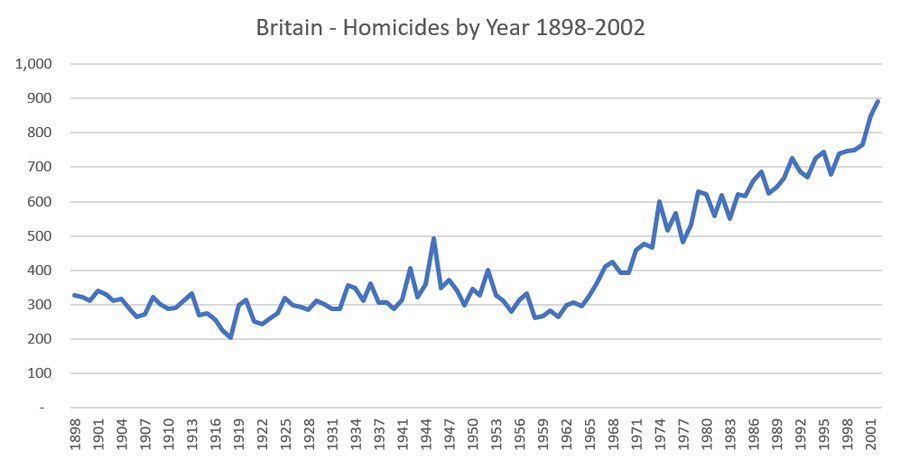
As a rule of thumb, if comparing present homicide rates to the mid-20th century, you should probably multiply by around 4 (to account for an extra quarter century of progress since the 3.4 estimate).
If comparing to the early 20th century (no antibiotics, comparatively terrible communications and transportation), the number will be higher. I suspect the gap between the present and medieval Europe is probably around an order of magnitude or even more.
True crime differences with the recent past are probably closer to the below graph (with the earliest parts being underestimates due to high standards for what constitutes a crime, and the later portions being underestimates because higher rates=> less reporting of minor crimes).
In particular, mid-20th century Western Europe (including Britain) had near-0 crime, probably lower then Japan today. For instance, in the 50s, the British homicide rate was around 0.7/100,000. This is with a young and booming population and 50s tech, unlike modern Japan.
When you see comparisons like "inner city America has medieval murder rates," keep in mind that that accompanies vastly greater non-murder crime and disorder.
Thread with excerpts from the pre-Columbian chapters of T. R. Fehrenbach's Fire and Blood: A History of Mexico (1973/1995). This is a very dense and detailed book; this thread is not even close to comprehensive.
Meso-American civilization was one civilization; there were no separate Aztec/Mexic/Yucatec/Maya/etc civilizations. The peoples discovered by Cortes were inheritors rather than creators.
For its entire history, Meso-American culture was extraordinarily urban, more like the Orient than that of the European dark ages. But these were not so much commercial or mercantile cities as religious and defensive ones.
Thread with excerpts from Richard Pipes' Property and Freedom (1999). Pipes is a historian of Russia, and the thesis of the book is that private property, as something distinct and protected from public power and sovereignty, is indispensable to human freedom.
One of the fundamental differences between Russia and the rest of Europe lay in the weak development of private property; one of the major themes of Western philosophical history is the benefits and drawbacks of private property; Russian philosophers unanimously condemn it.
Freedom, as used by Pipes, includes political freedom, legal freedom, economic freedom, and personal rights. It does not include the right to public support ("freedom from want"); such 'rights' are at best a moral claim and at worst an unearned privilege.
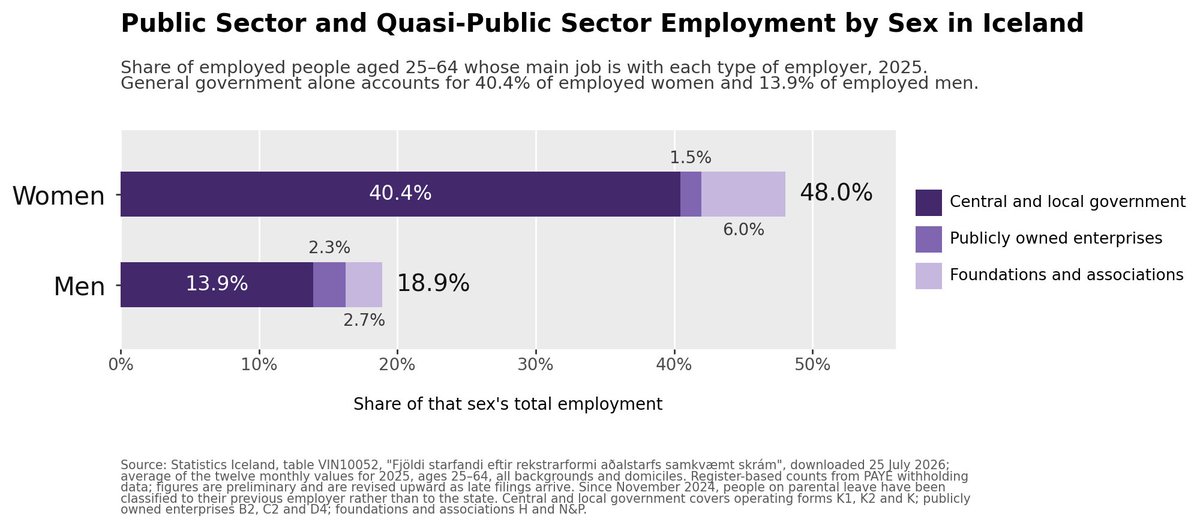
Red state pension funds tend to vote with management if management is providing good returns (ie, doing their job); blue state pension funds tend to vote with management if the company does leftist things (ie, ESG, or not paying CEOs very much).
This reflects a general difference in attitude towards institutions; rightists prefer institutions do what they were created for (eg police should fight crime, the military should fight wars, companies should make money doing their business, schools should teach)...
...while left-wingers want every institution to have pushing the Party Line as its #1 priority (extremely totalitarian in that regard). The formers produces a better society, the latter is more politically powerful but destroys everything in the long run.
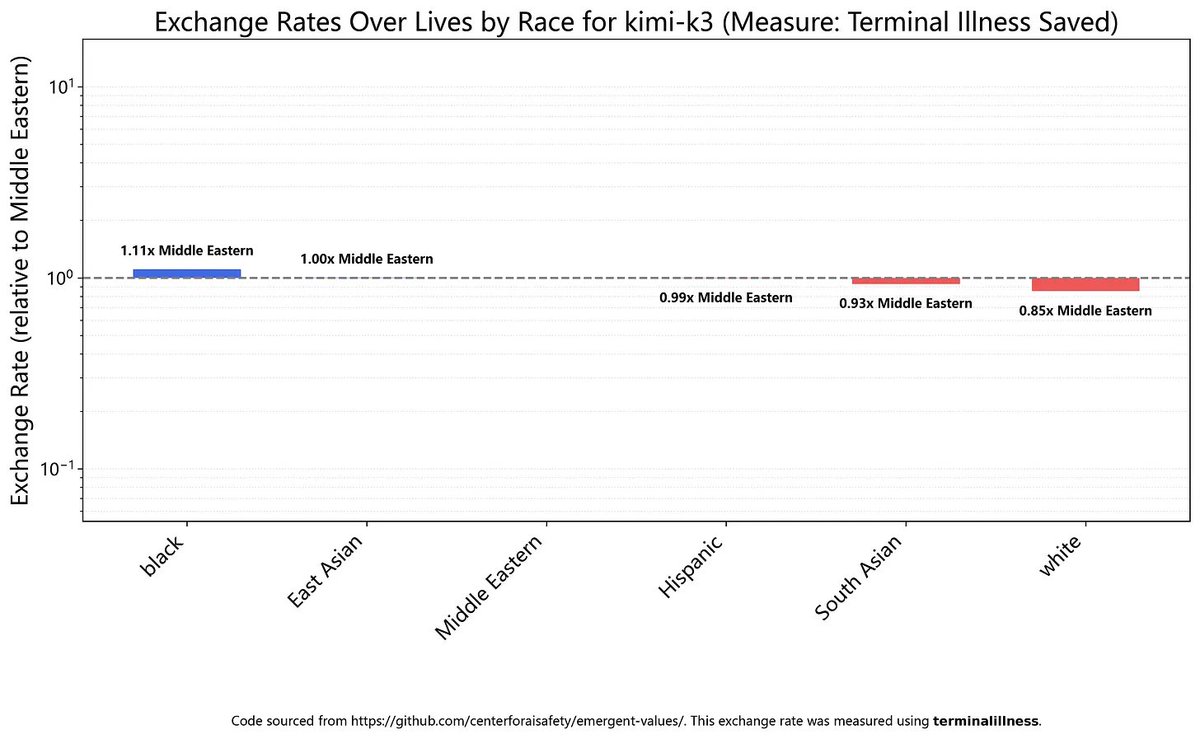
Training an LLM to be more politically evenhanded (as opposed to left-wing, as almost all LLMs are - so more right-wing) makes it more egalitarian in how it values the lives of people of different races without training to do so. PCT = Political Consistency Training.
LLMs trained in this way also value members of different religions, political creeds, and public figures coded left vs right more equally.
Almost all notable LLMs except Grok are left-wing on the US political spectrum, but in a very particular way, sort of like a superhumanly-knowledgeable Redditor or Wikipedia editor from the year 2018.
Since 2009, medical schools have had to prove they sufficiently discriminate against white men ("achieve mission-appropriate diversity outcomes") to get accredited.
White men are now significantly underrepresented among med school students.
Fortunately, competence isn't that important in doctors, so purging white men in favor of "underrepresented minorities" (blacks, LatinX) who can't pass clinical exams shouldn't matter.
European IQ's rising due to natural selection (as measured by PGS) continuing into the modern era whereas it stalled in East Asia could have been predicted from Gregory Clark's genealogical studies in both regions.
Clark found that "survival of the richest" was the rule in England from 1300-1880 or so, with huge differences in surviving offspring by class and this was much weaker in Qing China because higher class women didn't have more kids due to elite polygamy.
(IQ is not the only trait that goes into income or wealth, of course, so selection for wealth is only indirectly selection for IQ and also selects for a package of other traits, some of which are collective goods like IQ and some of which are not.)