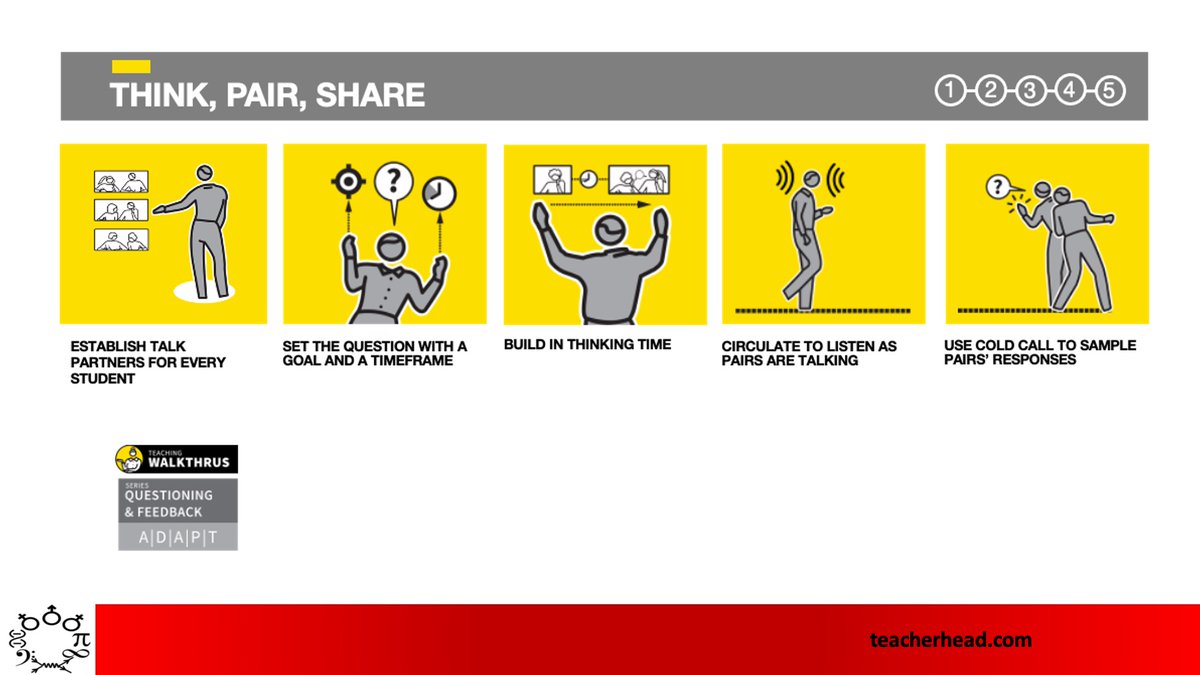
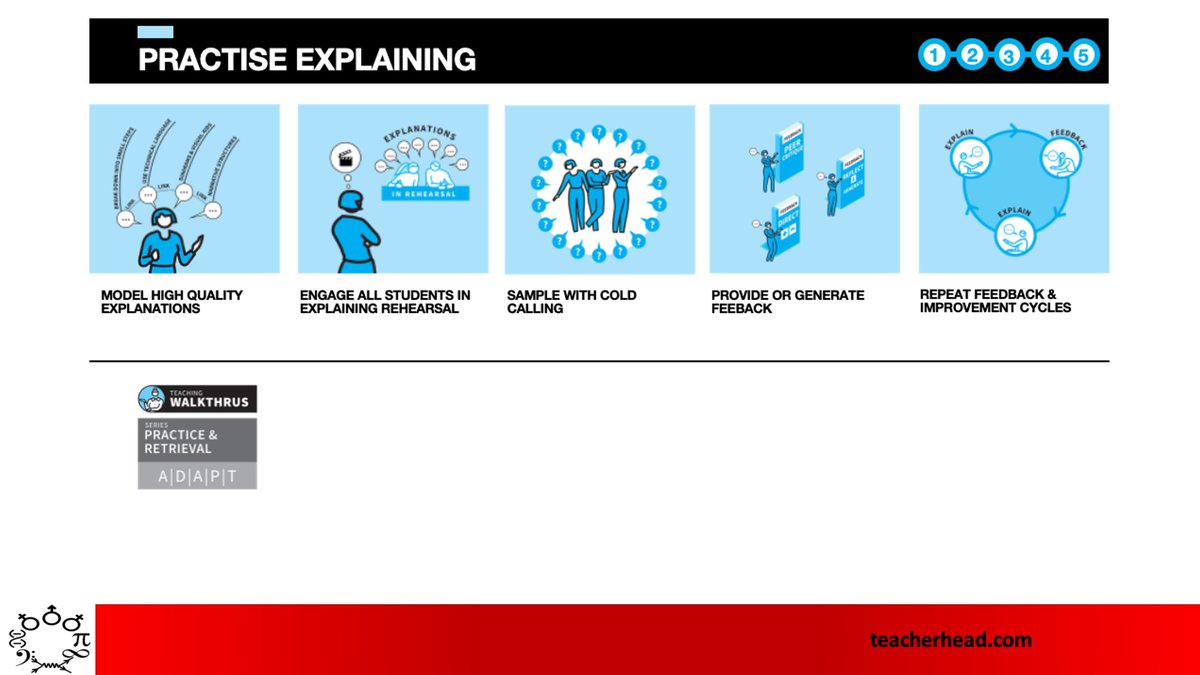
Short 🧵on my #rED23 talk:
Expert creative pros develop a repertoire of secure techniques through practice that allow them to respond in the moment with flair and precision. Jazz, tennis....
Teaching is the same.
The central challenge of teaching is to teach every child at once - each matters as much as any other. It's really hard and inherently flawed .. so our routines and habits need to maximise our chance of success..
Being evidence informed requires us to assimilate a lot of ideas and then translate them into meaningful actions. I've tried to summarise it as ALL thinking, making meaning and practising.. with teachers being responsive according to success...
The ALL means doing things that systematically, explicitly, deliberately involve all students:
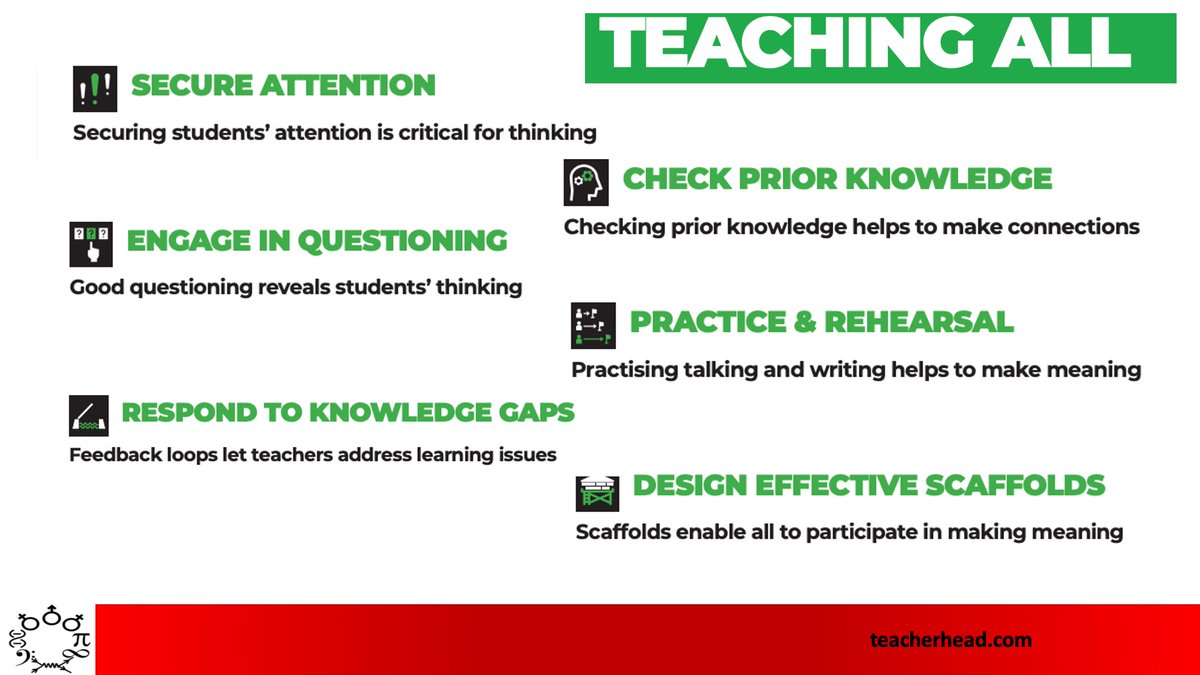
We then need techniques that are each strongly effective that we can combine flexibly in order to be responsive.. teaching has a spontaneity with multiple decisions so a repertoire of strong techniques is essential. It allows multiple degrees of freedom.. eg questioning.
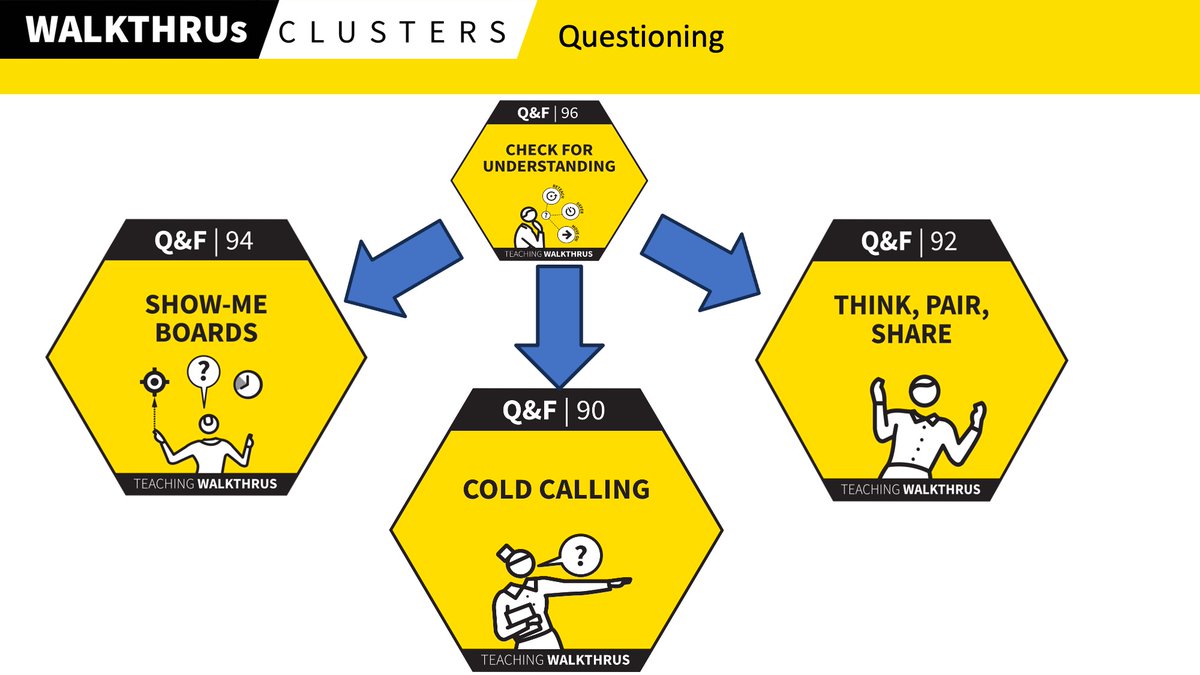
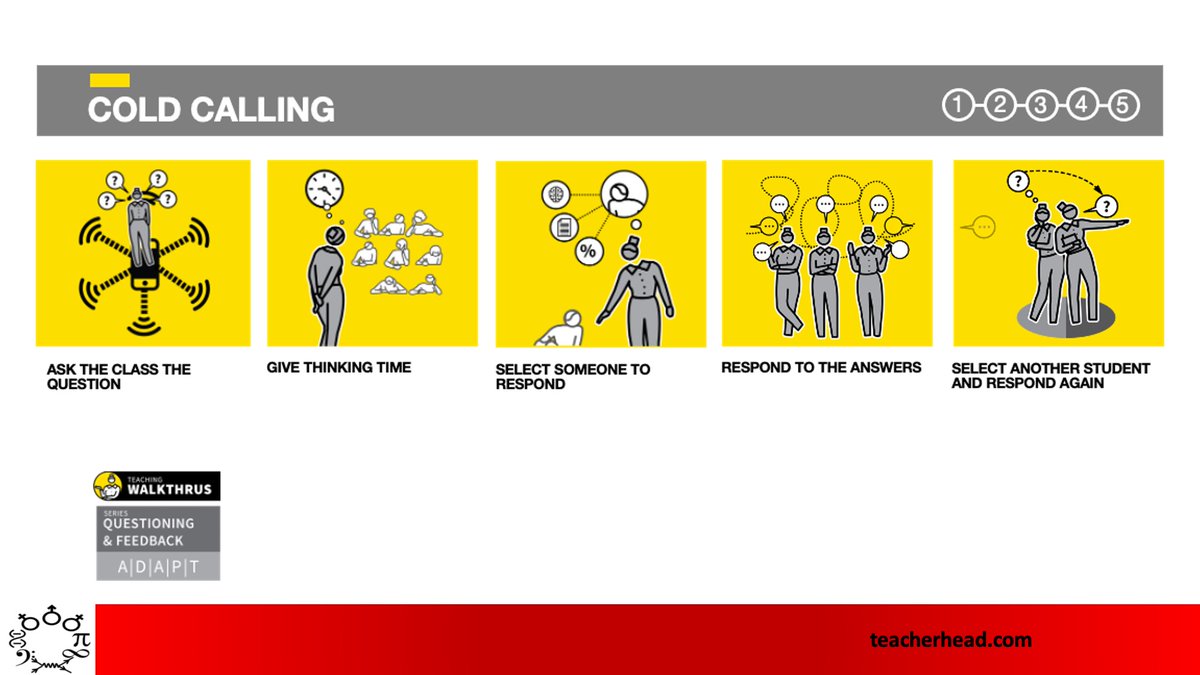
Defining techniques helps you to do them really well and to build a shared understanding across a team or school which helps you to improve how well you do them. We explore these four with practical examples. Precision in technique allows you to be creative and effective.
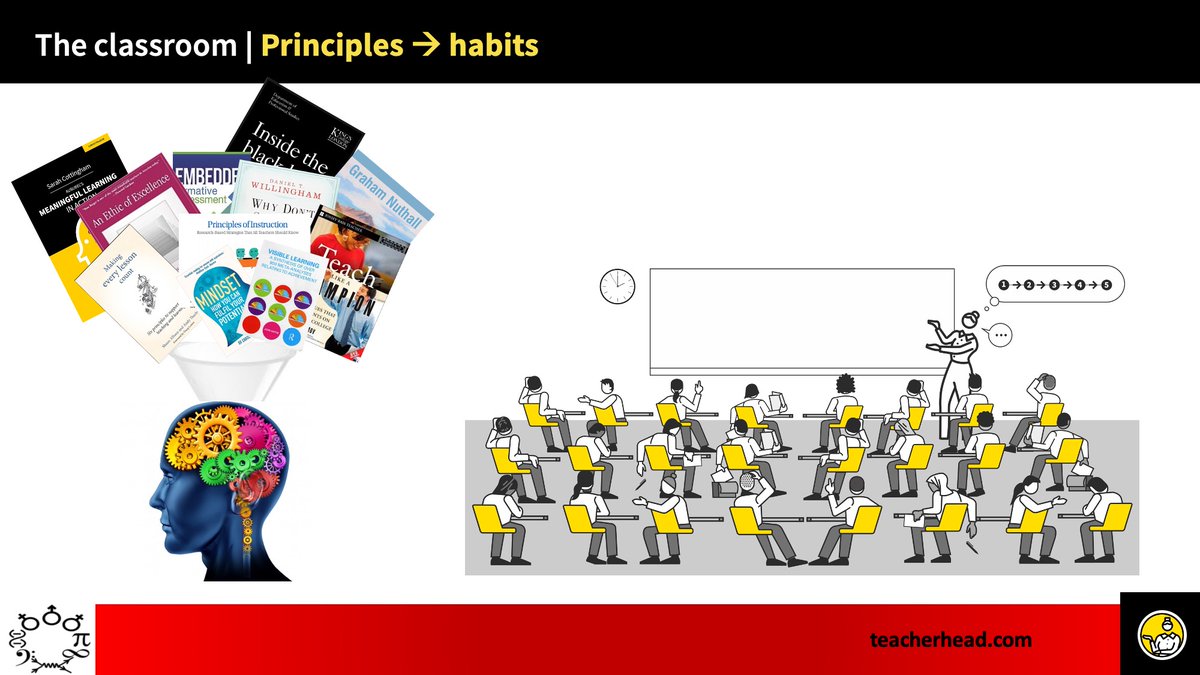
Finally - the value of evidence engagement is only realised if our habits change positively as a result. This needs us to develop and master routines and techniques that embed the concepts,, we can't and won't be mentally browsing our CPD libraries during a lesson! #rED23
• • •
Missing some Tweet in this thread? You can try to
force a refresh

Some thoughts from recent discussions and observations: 1. A lot of teaching is too abstract and out of context for weakest learners. Not enough scene setting - images, videos, real objects, experiences, stories, concrete examples. Make it real, concrete, vivid. Spell it out.
2. Modelling is a process that should only end when everyone can do what you’re modelling. They all need a chance to do it.. so you need to check they all can. Reteach and scaffold as needed - but at least check. Can *everyone* do the equation , paragraph, explanation, skill.?
3. It’s so common for a few students’ answers to be taken as representative of the class. Show-me boards, proper structured pair talk or full circulation checks ensure all students think, practice, make meaning; you have to do these things or else you have no idea how it’s going
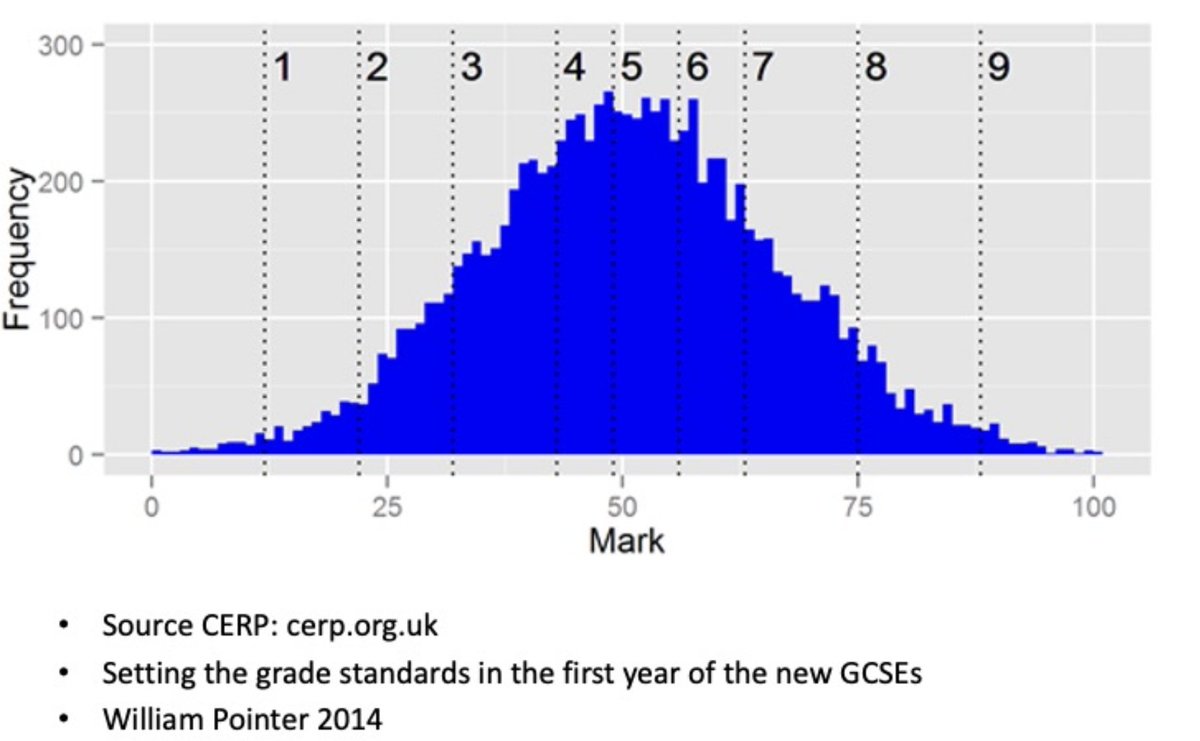
Thoughts on GCSE Grades. 🧵 In general we're not at peace with the realities of grading. You can't have comparative standards AND have everyone succeed above a certain level. The bell curve is not imposed.. there's no conspiracy. It's an outcome of cohort performance.
25 % of students will always be in the bottom 25%. Only 5 % get to be in the top 5%. Shocking, I know. The arbitrary part is the decision about grade boundaries and notions of pass/fail. As soon as you put lines along the continuum to represent standards, you create cliff edges
Adjacent marks falling either side of the line are, in reality equal within the margin or error - but the outcomes for learners can be radically different if the cliff edge has signficance. We're not comfortable with that. But that's always been the case.
After 5 years of @WALKTHRUs_5 Some reflections on CPD and coaching. 1. There are several components needed to translate ideas about teaching and learning into improved practice that can improve learning - and some are often so underdeveloped that change just doesn’t happen …
2. You need a source of ideas.. some schools and teams within them are not switched into a flow of thinking about learning - or only feed on it second hand. Sharing ideas is vital —but obviously books, blogs, conferences, one-pagers etc .. don’t change things in themselves.
3. Teachers don’t improve their practice because they attend a PD session or read a book or spend time watching videos and taking a quiz on a CPD platform… unless they actively then turn new thinking into changes in practice in a sustained way, when nobody is looking.
I was asked to suggest some key essentials and pitfalls for developing coaching; here' s a short 🧵 of what I gave them.
I divided it into System - for the overall structure - and Coaching - for the sessions themselves. ....
System Essentials:
-Create the structures needed: iterative cycles, observation/video; embed the time
- Follow a coaching model that fosters situation assessment; generates agreed action steps.
- Train coaches: build expertise around a shared framework describing great teaching
System Pitfalls:
- Don’t assume people can find time squeezed into their schedules.
- Don’t let the recording process be a workload burden: Keep it light touch, completed in sessions.
- Don’t assume everyone knows techniques across a school: train everyone with a shared framework
Was meaning to blog this but was getting distracted so a rare🧵:
I see 100s of lessons and teachers and it’s clear to me the best teaching appears fluid and artful but is always built on sound techniques deployed with purpose; intentionality; precision.. /n
These techniques support ALL students to engage, to listen, think, practise and make sense of the ideas. The techniques provide feedback to the teacher about how students are doing; they check for understanding and respond and adapt. ..
It’s difficult to do well with 30 students; it’s hard to check in on 30 students at once or to notice if they’re struggling. These aren’t basic techniques if basic means ‘easy’; they are fundamental. Core. And need to be crafted, worked on constantly. ..