SCHOOL ATTENDANCE 🧵
Are you a headteacher losing sleep over how to improve your pupil attendance rates?
If so, THIS 👇🏻 is the most important chart you need to see.
This chart holds the answer to your problem.
And, even better, it’s a fixable problem.
Read on… 🧵
Are you a headteacher losing sleep over how to improve your pupil attendance rates?
If so, THIS 👇🏻 is the most important chart you need to see.
This chart holds the answer to your problem.
And, even better, it’s a fixable problem.
Read on… 🧵

Pupil absences due to illness alone have increased from a pre-pandemic average of 2.6% up to 3.9%.
That’s a 50% rise!
The pandemic has been going on so long, it seems we’ve forgotten what it was like before.
Children never used to be off school sick nearly as much as this.
That’s a 50% rise!
The pandemic has been going on so long, it seems we’ve forgotten what it was like before.
Children never used to be off school sick nearly as much as this.

Now let’s look specifically at this time last year: last Autumn term 2022/23.
This is when our kids were hit hardest.
By the end of that term, absences purely due to illness were even higher than they’d been the year before when the first Omicron wave had just hit full force.
This is when our kids were hit hardest.
By the end of that term, absences purely due to illness were even higher than they’d been the year before when the first Omicron wave had just hit full force.

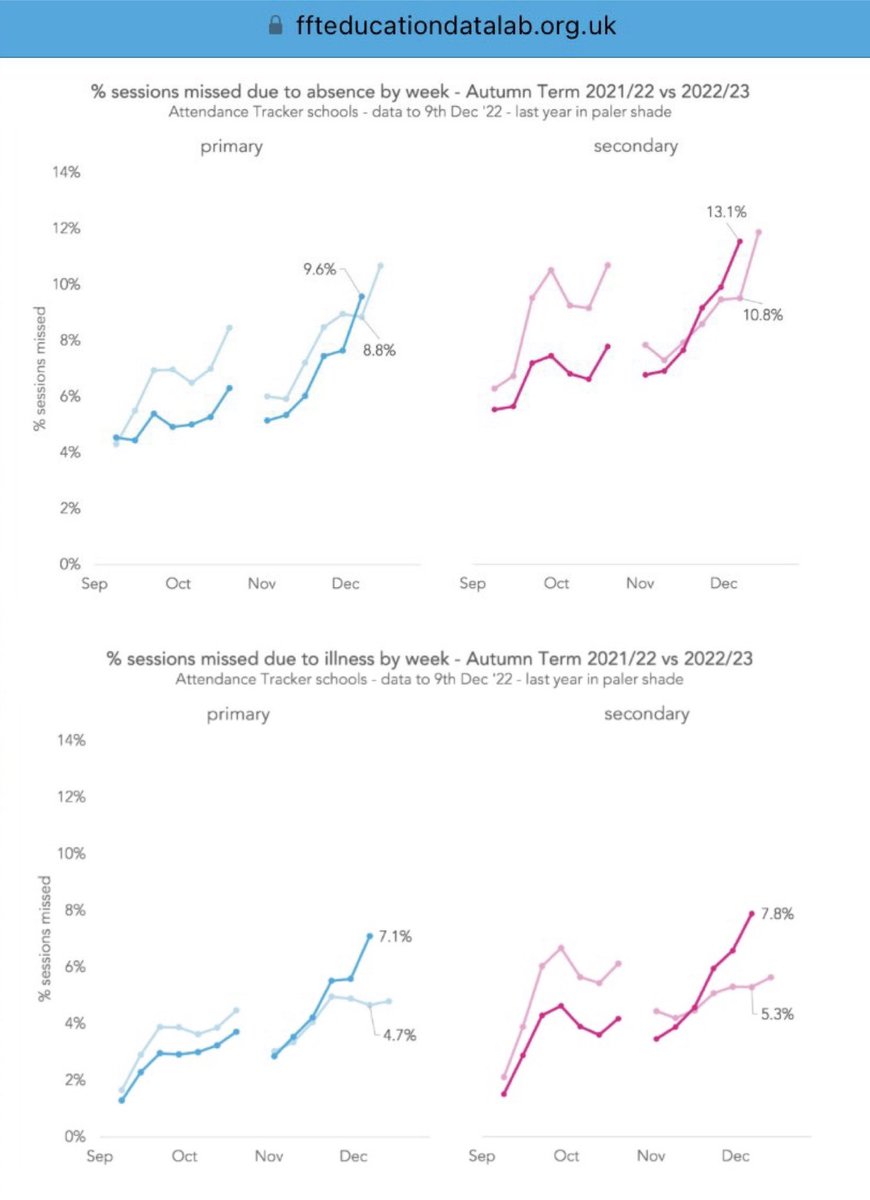
If you’re wondering what impact this illness absence had on overall absence rates, here it is 👇🏻
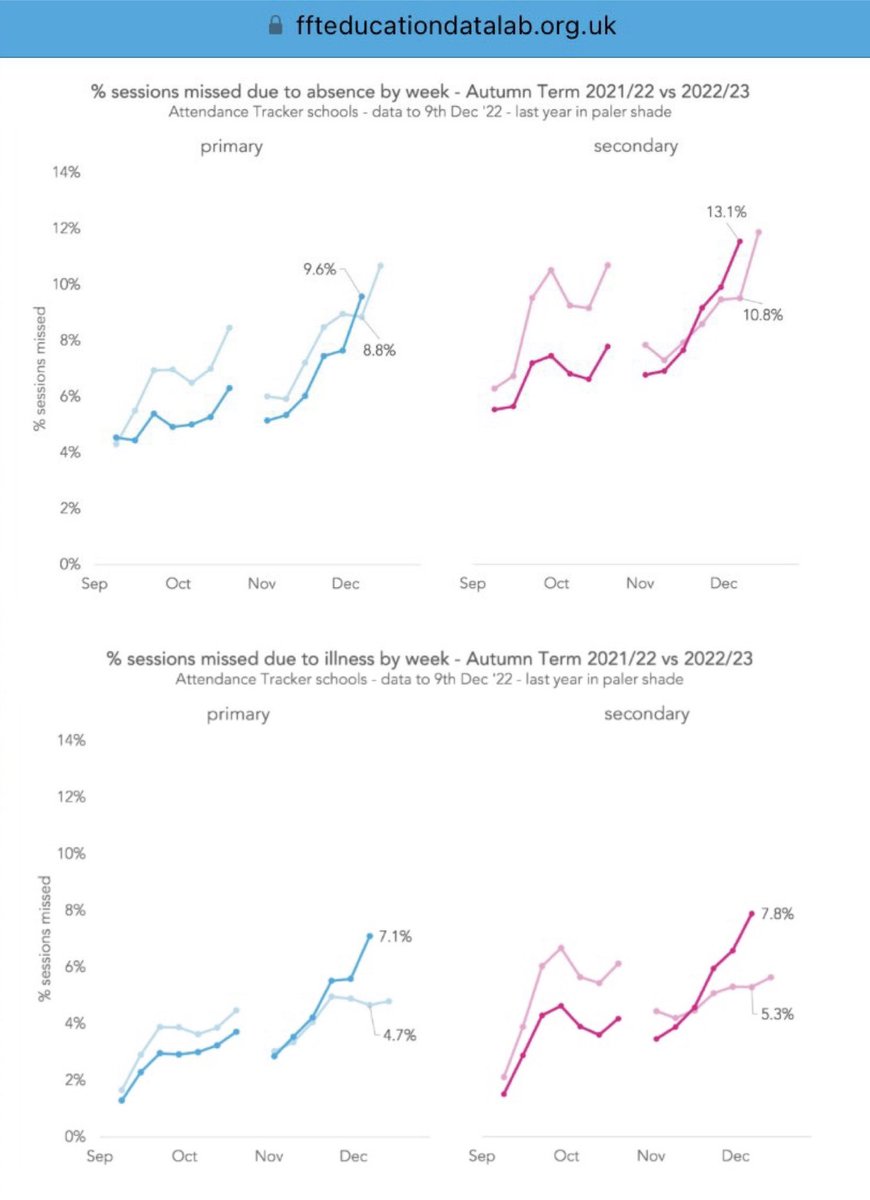
The charts at the top show *overall* pupil absence rates week-by-week.
The charts at the bottom are the ones we were looking at before: absences *purely due to illness*.
The charts at the top show *overall* pupil absence rates week-by-week.
The charts at the bottom are the ones we were looking at before: absences *purely due to illness*.

In the last week of Autumn term 2022/23, absences soared to:
𝙋𝙧𝙞𝙢𝙖𝙧𝙮
📍overall absence rate: 9.6%
📍illness absence rate: 7.1%
➡️74% of absences due to illness
𝙎𝙚𝙘𝙤𝙣𝙙𝙖𝙧𝙮
📍overall absence rate: 13.1%
📍illness absence rate: 7.8%
➡️60% of absences due to illness
𝙋𝙧𝙞𝙢𝙖𝙧𝙮
📍overall absence rate: 9.6%
📍illness absence rate: 7.1%
➡️74% of absences due to illness
𝙎𝙚𝙘𝙤𝙣𝙙𝙖𝙧𝙮
📍overall absence rate: 13.1%
📍illness absence rate: 7.8%
➡️60% of absences due to illness
If we average it out over the *whole* of last Autumn term:
𝙋𝙧𝙞𝙢𝙖𝙧𝙮:
📍overall absence rate: 6.0%
📍illness absence rate: 3.8%
➡️63% of absences due to illness
𝙎𝙚𝙘𝙤𝙣𝙙𝙖𝙧𝙮:
📍overall absence rate: 8.6%
📍illness absence rate: 4.4%
➡️51% of absences due to illness
𝙋𝙧𝙞𝙢𝙖𝙧𝙮:
📍overall absence rate: 6.0%
📍illness absence rate: 3.8%
➡️63% of absences due to illness
𝙎𝙚𝙘𝙤𝙣𝙙𝙖𝙧𝙮:
📍overall absence rate: 8.6%
📍illness absence rate: 4.4%
➡️51% of absences due to illness
Of course, pupil attendance is a complex issue & there are many underlying contributors.
The following have all been cited as key drivers:
📍increased truancy
📍an increase in child mental health problems
📍cost of living crisis
📍loss of routine during school closures.
The following have all been cited as key drivers:
📍increased truancy
📍an increase in child mental health problems
📍cost of living crisis
📍loss of routine during school closures.
Yes, these do all play a part in the bigger picture. But this narrative completely fails to address the elephant in the room…
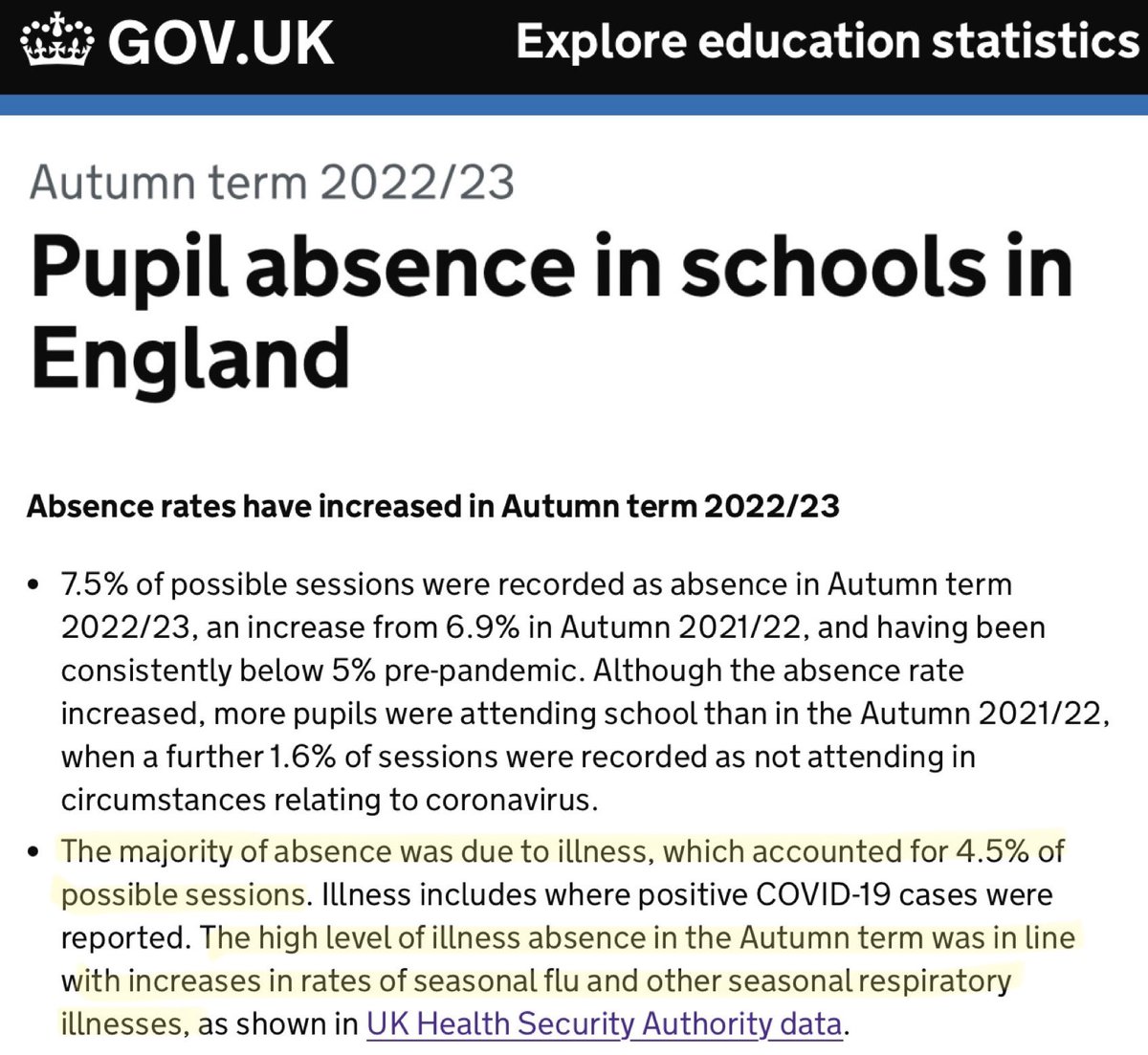
The primary driver of the high rates of pupil absence is ILLNESS.
It’s right there in black & white on the government website…
The primary driver of the high rates of pupil absence is ILLNESS.
It’s right there in black & white on the government website…
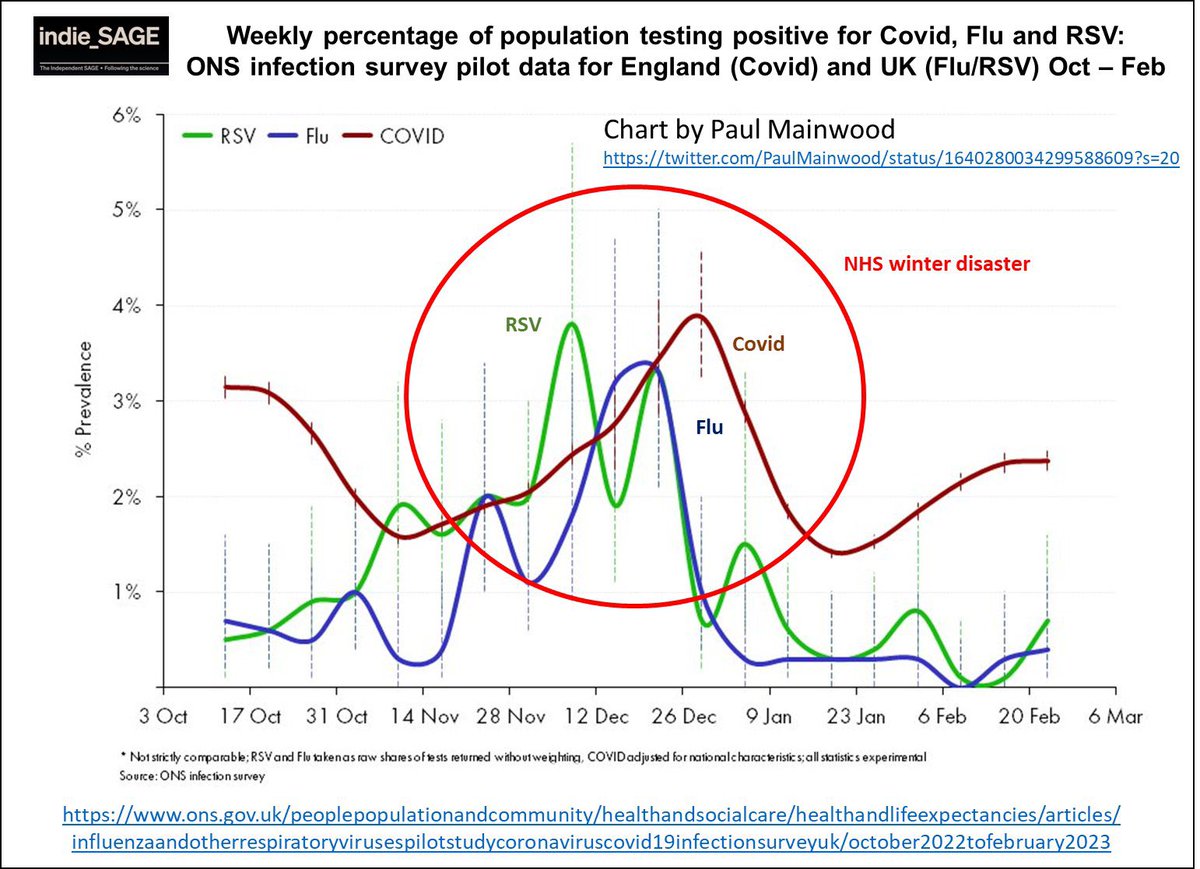
And if we look back at the UKHSA data, we can see exactly what was happening last Autumn Term…
That’s when the UK was hit hard by the triple whammy of Covid, flu & RSV all circulating at very high levels simultaneously.
Scarlet fever, norovirus & measles also took their toll.
That’s when the UK was hit hard by the triple whammy of Covid, flu & RSV all circulating at very high levels simultaneously.
Scarlet fever, norovirus & measles also took their toll.
But there was such an obsession with improving absence rates at all costs that the basics of infection control were just abandoned.
Children were told that they need to ‘show resilience & drag themselves into school’ even if they were unwell.
And so the illnesses spread.
Children were told that they need to ‘show resilience & drag themselves into school’ even if they were unwell.
And so the illnesses spread.

This year, it looks like we’re set to make the same mistakes all over again.
There’s a huge push towards a totally unrealistic 100% attendance target.
But forcing sick kids to come to school is totally counter-intuitive.
It only makes things WORSE by spreading the germs.
There’s a huge push towards a totally unrealistic 100% attendance target.
But forcing sick kids to come to school is totally counter-intuitive.
It only makes things WORSE by spreading the germs.

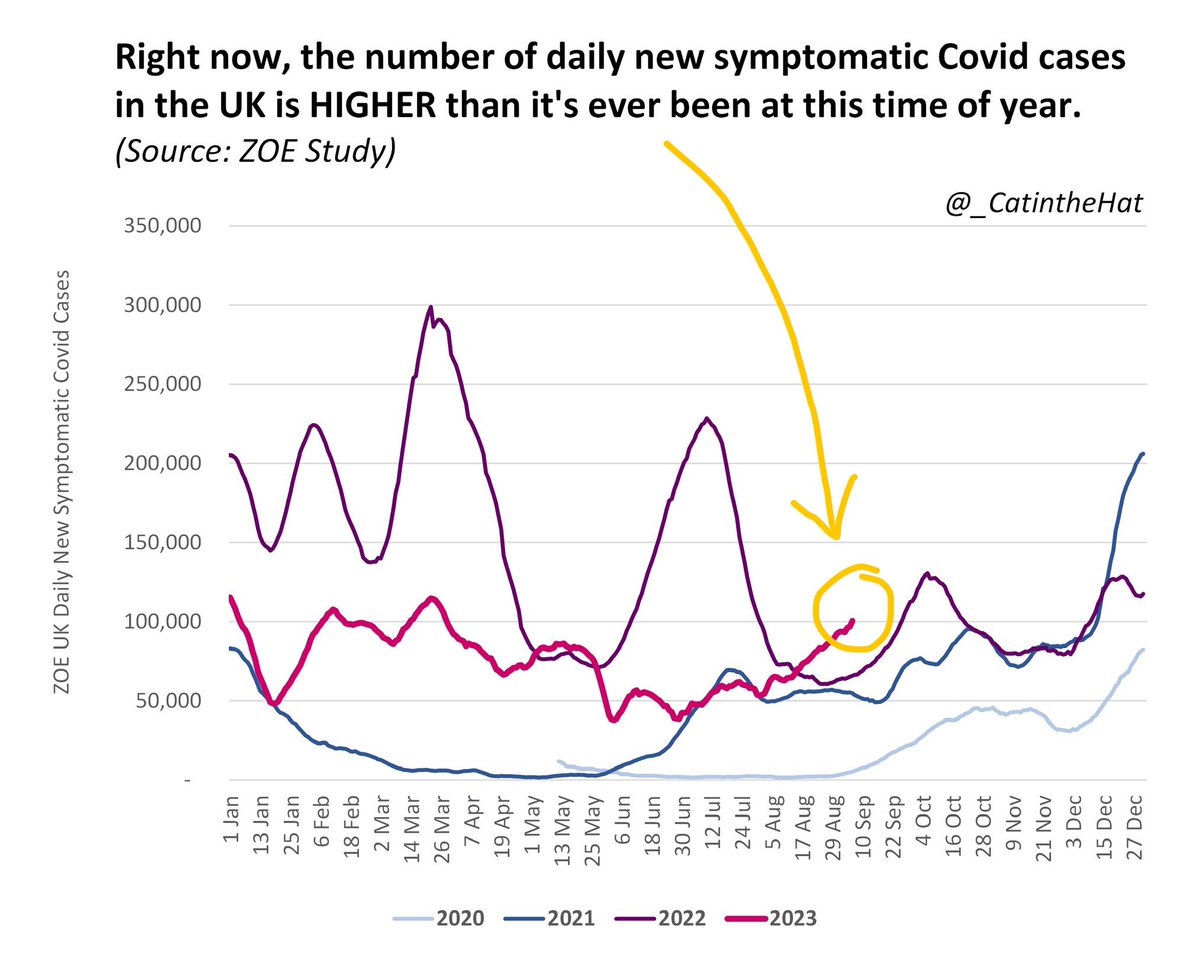
To make matters worse, we’re starting this Autumn term with Covid rates even HIGHER than they were this time last year…
…and the year before…
…and the year before that!
In fact, it’s currently worse than it was during any of the 3 national lockdowns.
…and the year before…
…and the year before that!
In fact, it’s currently worse than it was during any of the 3 national lockdowns.
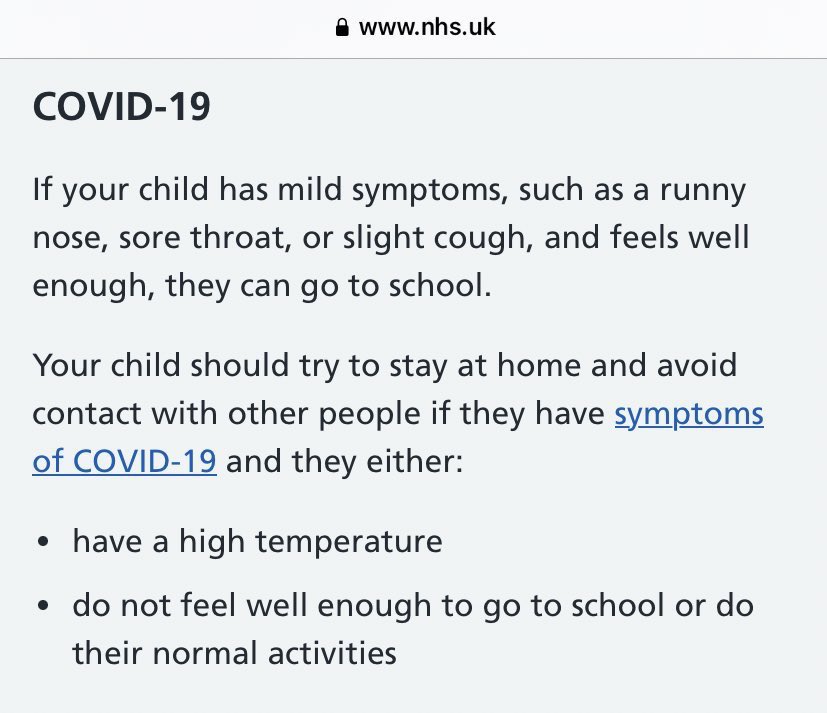
The latest government guidance doesn’t exactly help either.
If your child has symptoms of Covid (a runny nose, sore throat or cough), feel free to send them in to school anyway!
There’s no recognition of the fact that this will just start countless new chains of transmission.
If your child has symptoms of Covid (a runny nose, sore throat or cough), feel free to send them in to school anyway!
There’s no recognition of the fact that this will just start countless new chains of transmission.
Instead of just one child being ill at home, you end up with the entire class being off sick… and probably the teacher too!
In the US, schools went back a few weeks ago and already multiple schools have had to close down due to Covid. There are no teachers left to teach!
In the US, schools went back a few weeks ago and already multiple schools have had to close down due to Covid. There are no teachers left to teach!

Talking of teachers…
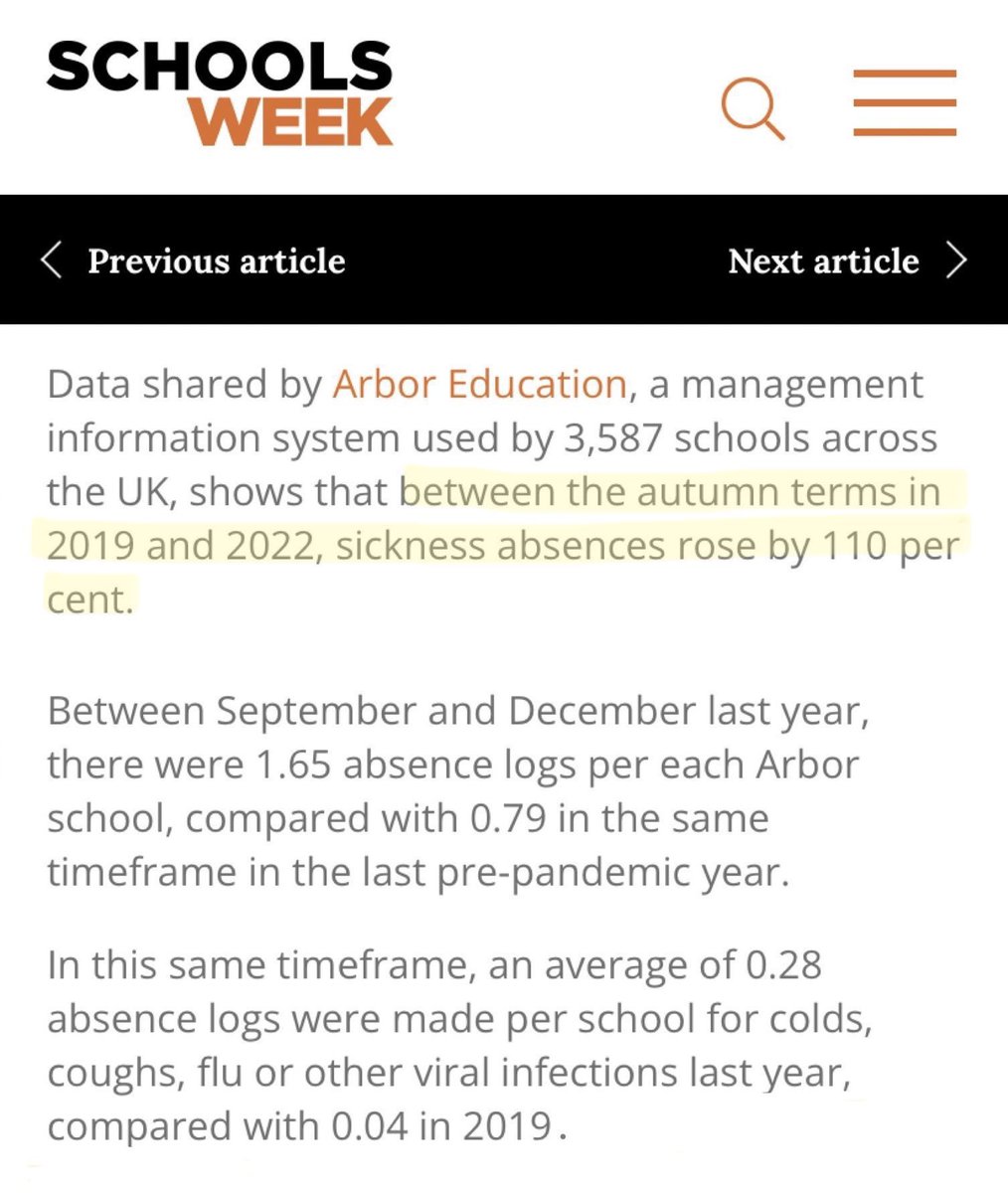
Last Autumn term (2022/23), staff sickness absence MORE THAN DOUBLED across the UK compared to the pre-pandemic Autumn term 2019.
Absences specifically due to colds, flu & other (unnamed!) viruses were 7 TIMES HIGHER in Autumn 2022 vs Autumn 2019.
Last Autumn term (2022/23), staff sickness absence MORE THAN DOUBLED across the UK compared to the pre-pandemic Autumn term 2019.
Absences specifically due to colds, flu & other (unnamed!) viruses were 7 TIMES HIGHER in Autumn 2022 vs Autumn 2019.
At my kids’ school, term only started a few days ago but I already know of 3 teachers who are in teaching with a sore throat & hoarse voice… despite the fact they can barely speak!
These are two of the top 10 symptoms of Covid, but I doubt they’ve taken a Covid test.
These are two of the top 10 symptoms of Covid, but I doubt they’ve taken a Covid test.

I just hope they don’t end up developing Long Covid…
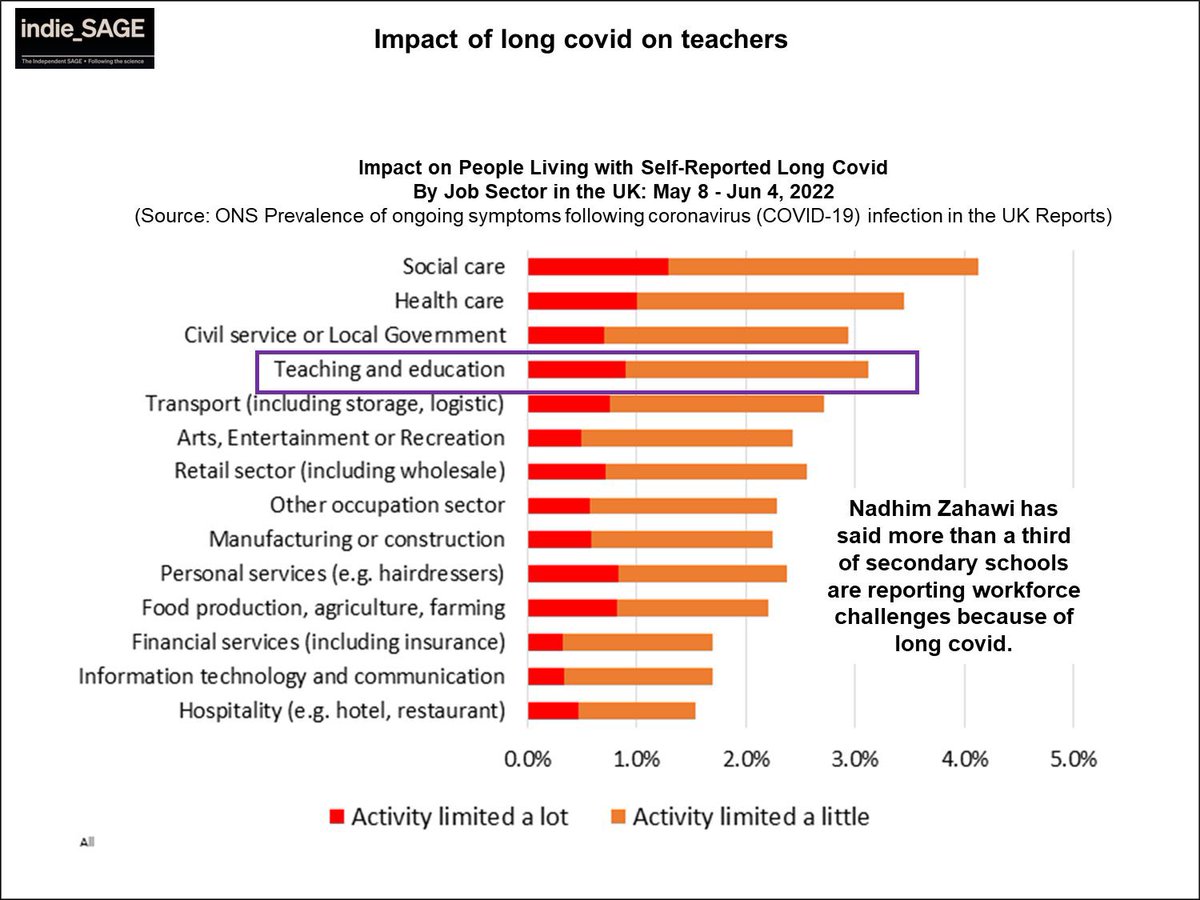
Teaching already has one of the highest rates of Long Covid of any profession.
DfE research also shows that a third of secondary schools & a quarter of primary schools have reported workforce challenges due to Long Covid.
Teaching already has one of the highest rates of Long Covid of any profession.
DfE research also shows that a third of secondary schools & a quarter of primary schools have reported workforce challenges due to Long Covid.
https://twitter.com/chrischirp/status/1550542389084839936
In my very first post in this thread, I promised you that this was a fixable problem.
And it is. To some degree, at least.
The answer is to CLEAN THE AIR!
There’s now a mountain of evidence about how cleaning the air can massively reduce the spread of Covid and other viruses.
And it is. To some degree, at least.
The answer is to CLEAN THE AIR!
There’s now a mountain of evidence about how cleaning the air can massively reduce the spread of Covid and other viruses.
Opening the windows or turning existing mechanical ventilation systems up to full blast is one way to clean the air.
This lets stale, virus-laden indoor air OUT & brings fresh outdoor air IN.
Ventilation delivering 6 air changes per hour can reduce the spread of Covid by >82%!
This lets stale, virus-laden indoor air OUT & brings fresh outdoor air IN.
Ventilation delivering 6 air changes per hour can reduce the spread of Covid by >82%!
https://twitter.com/_catinthehat/status/1637143637145399298
But it isn’t always possible or practical to keep windows fully open…
📍some may be sealed shut;
📍outdoor air may be heavily polluted if near a busy road;
📍in Winter, it may be too cold;
📍and in Summer, it can aggravate hayfever symptoms.
📍some may be sealed shut;
📍outdoor air may be heavily polluted if near a busy road;
📍in Winter, it may be too cold;
📍and in Summer, it can aggravate hayfever symptoms.
Luckily we have another tool in our toolkit:
💨 HEPA air filters! 💨
HEPA filters don’t replace the air in a room with ‘new’ air. Instead, they clean the air already in the room, filtering out viruses & other harmful contaminants.
They can HUGELY reduce the spread of illness.
💨 HEPA air filters! 💨
HEPA filters don’t replace the air in a room with ‘new’ air. Instead, they clean the air already in the room, filtering out viruses & other harmful contaminants.
They can HUGELY reduce the spread of illness.
https://twitter.com/_catinthehat/status/1698679050598752647
This Swiss study examined the effectiveness of air filters at reducing Covid transmission in a typical classroom:
Even with windows CLOSED, air filters with a clean air delivery rate of 800m3/h led to a 5-fold decrease in the viral dose that pupils are exposed to.
Even with windows CLOSED, air filters with a clean air delivery rate of 800m3/h led to a 5-fold decrease in the viral dose that pupils are exposed to.
https://twitter.com/SwissMedWkly/status/1532660108320292866

Now just imagine how much we’d reduce the spread of illness (and, in turn, reduce the number of pupil absences) if there was an air filter in every classroom.
Why are we even talking about it?
Why aren’t we just *doing* it?
chemistryworld.com/features/can-w…
Why are we even talking about it?
Why aren’t we just *doing* it?
chemistryworld.com/features/can-w…
If the DfE were serious about wanting to reduce pupil (and staff) absence rates, the very FIRST thing they should be doing is tackling the spread of illness…
…by installing air filters and telling sick kids to stay at home.
In the meantime, it’s each school for themselves.
…by installing air filters and telling sick kids to stay at home.
In the meantime, it’s each school for themselves.
Yes, there’s an upfront capital cost…
But, in the long run, you could actually SAVE money.
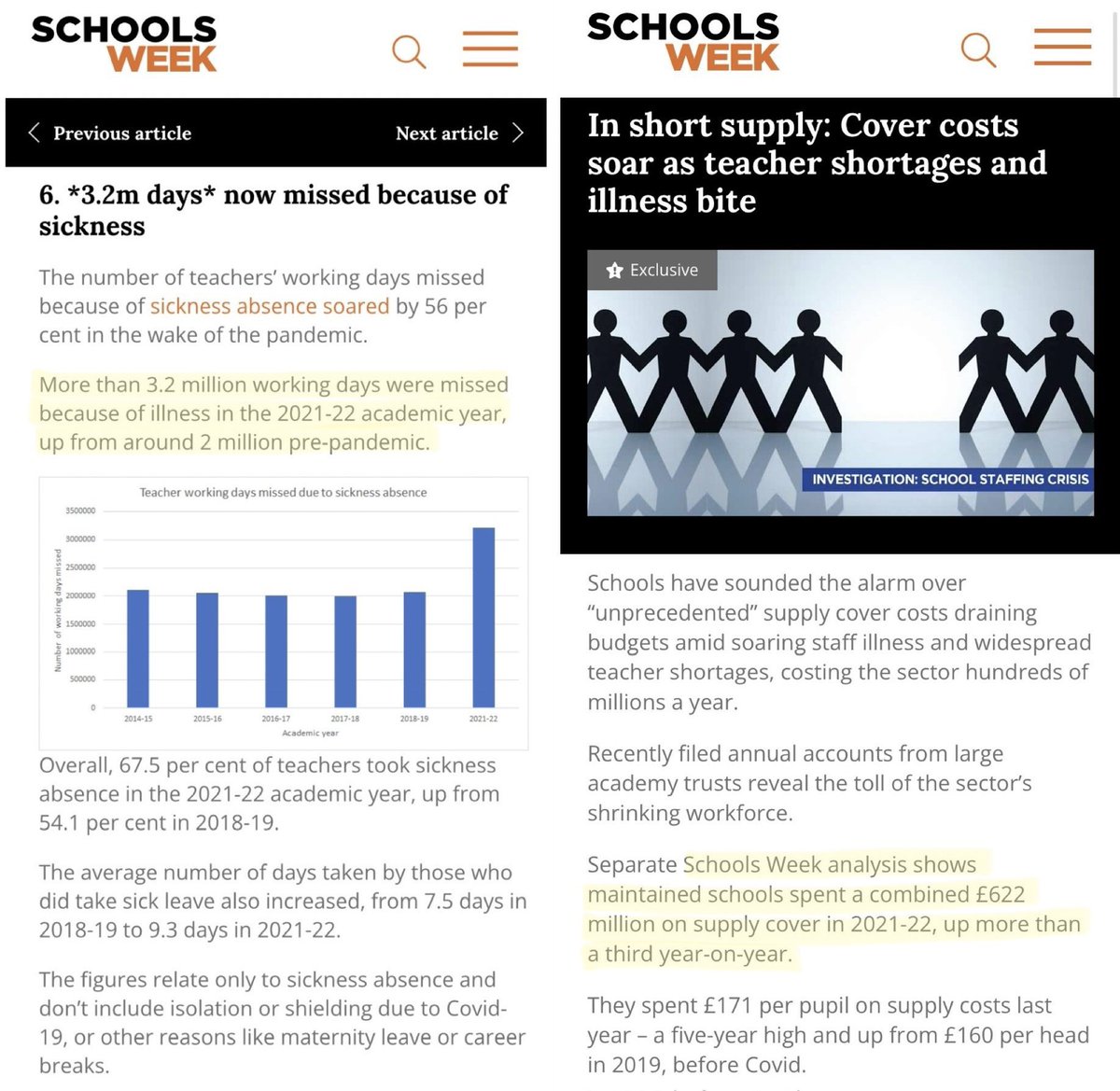
3.2m teaching days were missed in 2021/22 due to staff illness.
That led to a £622m bill on supply teacher costs, equivalent to £171 per pupil.
That could buy a LOT of air filters.
But, in the long run, you could actually SAVE money.
3.2m teaching days were missed in 2021/22 due to staff illness.
That led to a £622m bill on supply teacher costs, equivalent to £171 per pupil.
That could buy a LOT of air filters.
Are you convinced that air filters are worth investing in yet?
If so, a final word of warning…
Please DON’T buy one of the filter models on the DfE air cleaner marketplace.
These are not fit for purpose for classrooms and there are plenty of better options on the market.
If so, a final word of warning…
Please DON’T buy one of the filter models on the DfE air cleaner marketplace.
These are not fit for purpose for classrooms and there are plenty of better options on the market.
https://twitter.com/_catinthehat/status/1655288121980846087
@DanielKebedeNEU @strickomaster @secretHT1 @FloraSCooper @HonestHeadteac1 @smithsmm @RaeSnape @Headteacherchat @PieCorbett @TTRadioOfficial @RogersHistory @PaulGarvey4 @CensoredHead @chrisdysonHT @miss_mcinerney @MrHtheteacher @vicgoddard @teachwellall @SwailesRuth
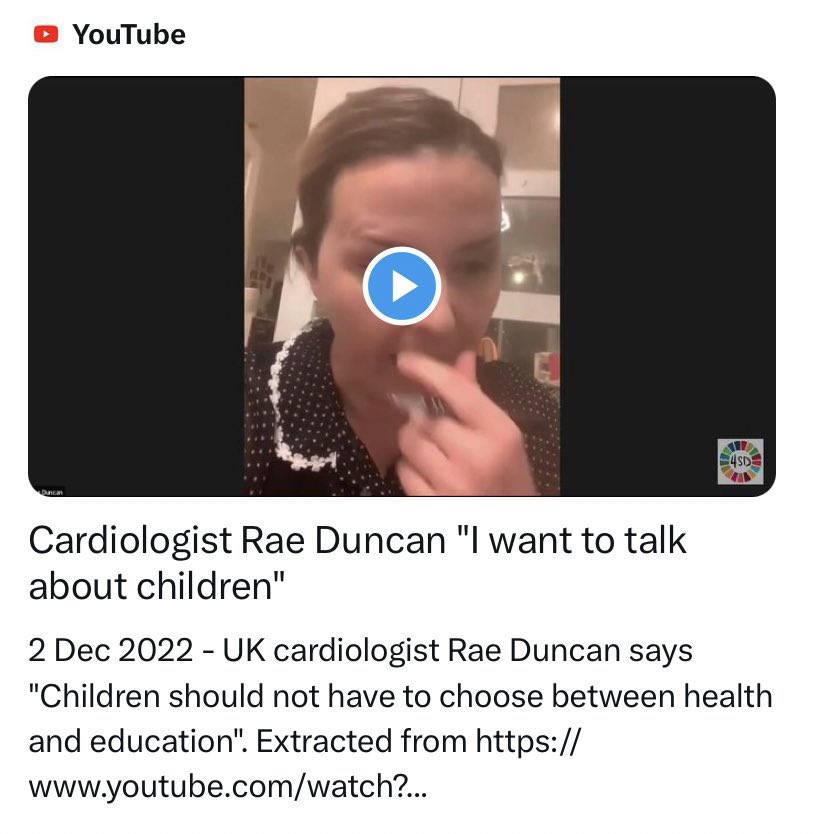
If you’re not yet convinced, then please listen to this short video by UK Cardiologist @Sunny_Rae1 where she articulates all the reasons you *should* be convinced from a medical perspective…
And if you’re *still* not convinced, I give up…
And if you’re *still* not convinced, I give up…
@Sunny_Rae1 PS. I won’t actually give up…
Our children need us to fight for them since they can’t do it for themselves.
Our children need us to fight for them since they can’t do it for themselves.
https://twitter.com/_catinthehat/status/1698695239915995418
@Sunny_Rae1 PPS. Here’s one more final attempt to convince you… everything you need to know about the benefits of air filters is right here 👇🏻
https://twitter.com/_CatintheHat/status/1701148905096790092
@Sunny_Rae1 PPPS. This just came out today too…
Bradford air filter trial: Schools with air filters had significantly lower pupil absence rates than those without.
Bradford air filter trial: Schools with air filters had significantly lower pupil absence rates than those without.
https://twitter.com/_catinthehat/status/1701186507497701616
• • •
Missing some Tweet in this thread? You can try to
force a refresh