1/ Here's a good trivia question: the apparent destruction by Ukraine of the Kilo-class submarine 'Rostov-on-Don' marks only the second time since World War II that a submarine has been confirmed lost due to enemy action in wartime. What was the first? Read on to find out. ⬇️
2/ Many submarines have been lost through accidents since the end of World War II. The United States lost 4, the USSR and Russia lost 18, and other countries lost a handful of vessels as well. But only one other country definitely lost one due to enemy action: Argentina.
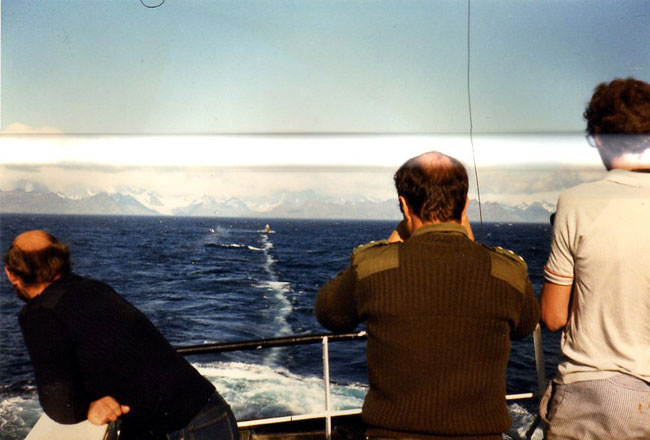
3/ The submarine in question was the ARA Santa Fe, originally the US Navy's Balao-class diesel-electric submarine USS Catfish. Launched in November 1944, she was sold to Argentina in 1971. She was to become the last WWII-era submarine to be used in combat.
4/ Santa Fe and her sister vessel, ARA Santiago del Estero (ex-USS Chivo), served alongside new Type 209 submarines from West Germany. Both vessels were active during the Falklands War, but only Santa Fe participated in combat.
5/ On 2 April 1982, Santa Fe landed commandos on East Falkland near the islands' capital, Stanley. After returning to Argentina, she embarked on a second mission to the remote British island of South Georgia on 16 April, 1,541 km southeast of the Falklands.
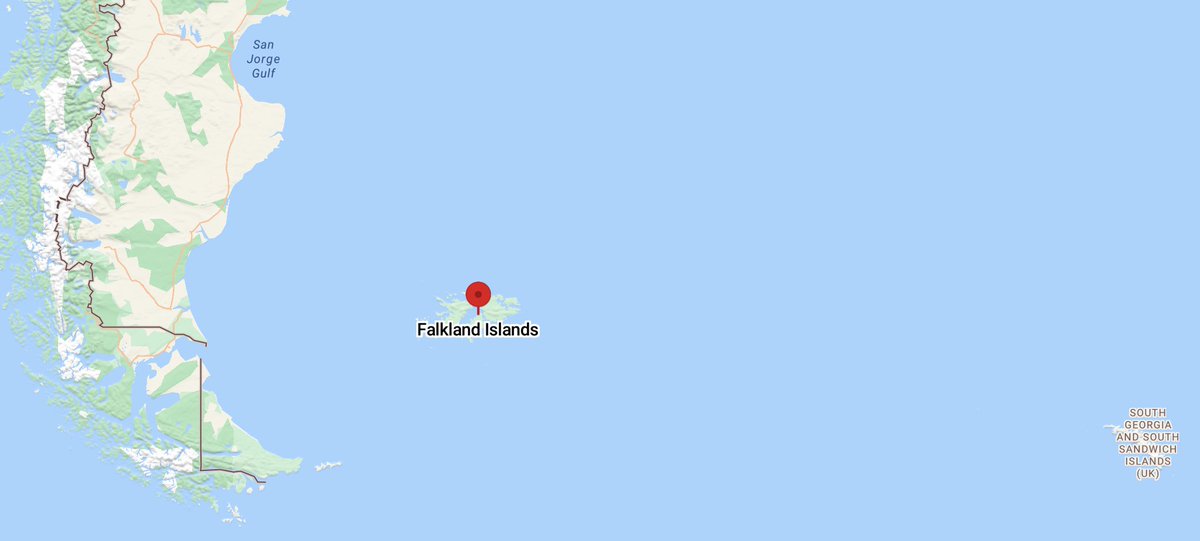
6/ Despite her age and poor armament – twenty WWII-era Mk14 torpedoes and three modern Mk37s – she was tasked with transporting marines to South Georgia and then attacking the slower ships at the 'tail' of the British fleet in the South Atlantic.
7/ The vessel reached Grytviken, the only settlement on South Georgia, which Argentinian forces had seized on 3 April. Santa Fe unloaded the marines to reinforce the small Argentinian garrison there and set off back out to sea to find British ships to attack.
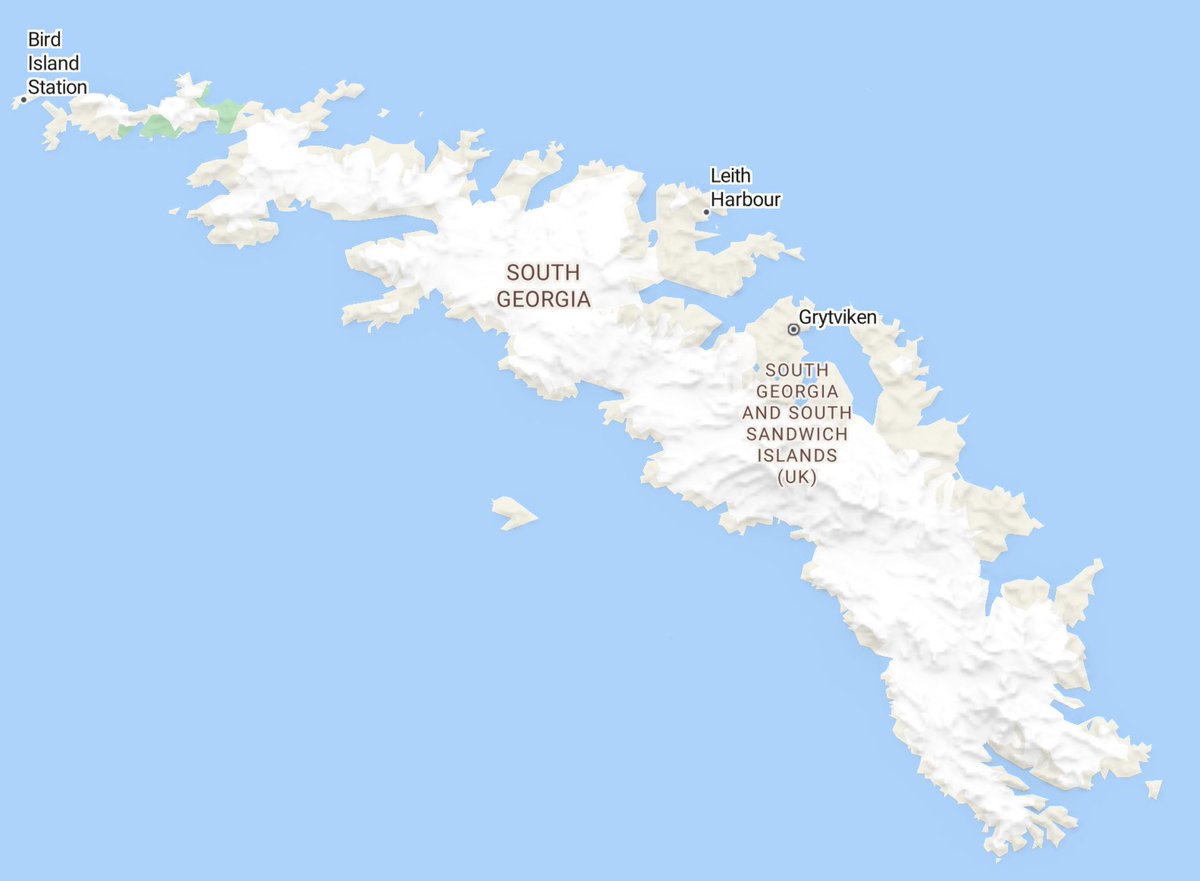
8/ However, she was detected by the sonar of the British destroyer HMS Antrim. A Wessex helicopter took off from the Antrim to find the submarine, which was travelling on the surface. The Wessex dropped two Mk.XI Mod3 depth charges, straddling Santa Fe.
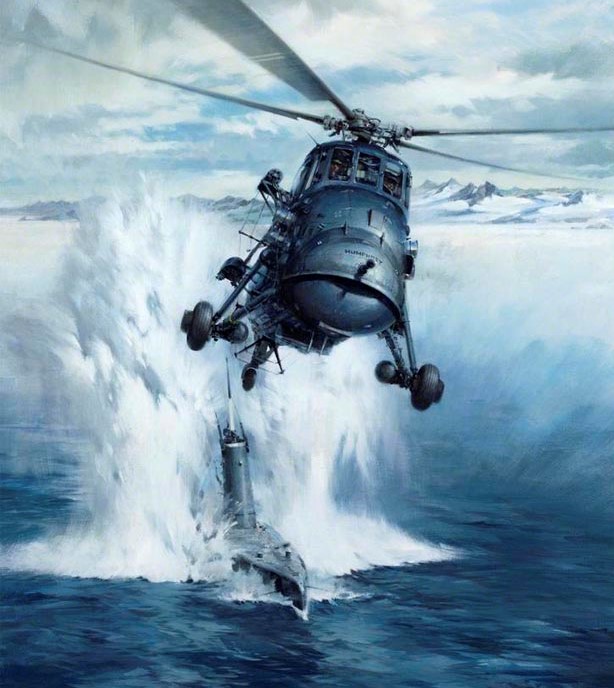
9/ The explosions severely damaged Santa Fe, forcing her captain to turn around and head back to South Georgia. She could no longer submerge. The British continued pursuing the submarine, launching a Lynx ASW helicopter from HMS Brilliant armed with a Mk46 sonar-guided torpedo.
10/ Unluckily for the British, the torpedo had been designed to target deep-diving Soviet submarines; it had never been meant to target surfaced vessels and was programmed with a minimum depth. It could not lock onto Santa Fe and passed harmlessly underneath the vessel.
11/ The Lynx began strafing the submarine with its door-mounted machine gun, while Santa Fe's crew fired back from the vessel with their own small arms. Meanwhile, Wasp helicopters armed with with AS.12 air-to-surface missiles took off from HMS Plymouth and HMS Endurance.
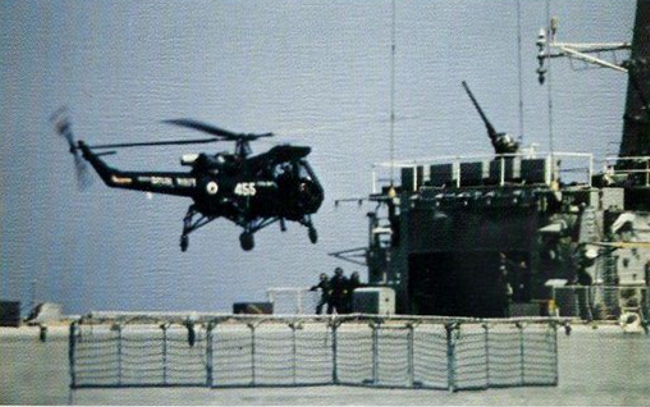
12/ This time the British scored hits, achieving at least four and possibly five hits against Santa Fe's sail. However, the missiles had been designed to attack steel targets; the sail was merely fibreglass and light alloy. One missile went straight through without detonating.
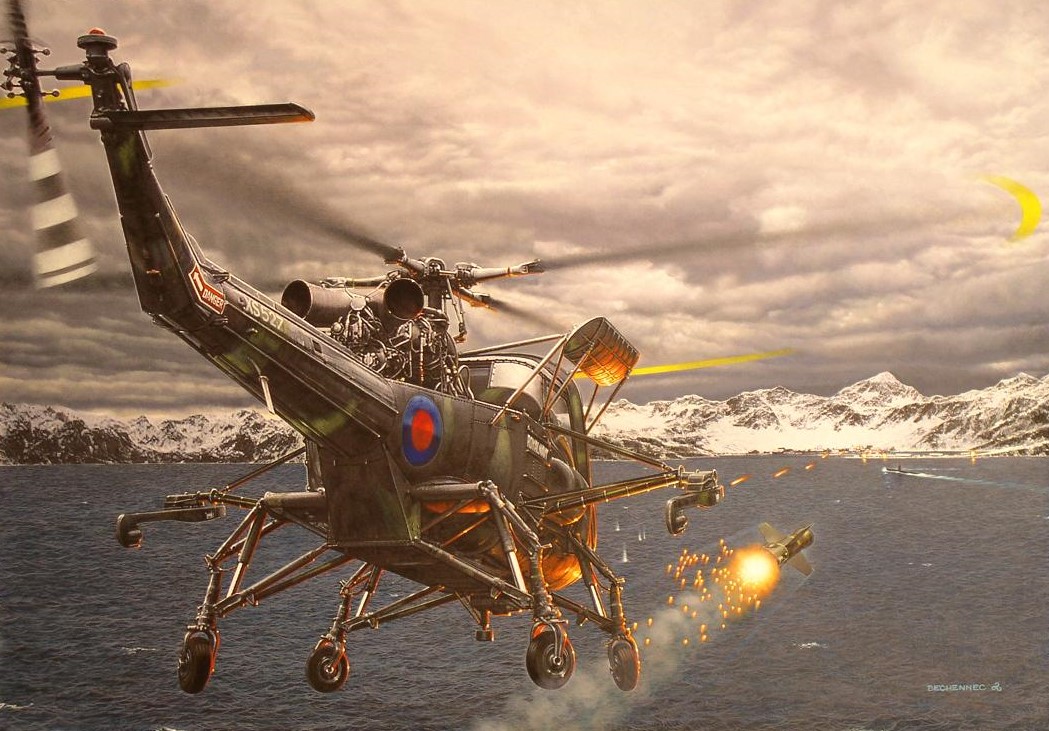
13/ The other missiles did detonate, injuring a number of Santa Fe's crew, one seriously. The crippled submarine made it back to Grytviken but was immediately overtaken by the British recapture of the island on 25 April 1982. With no hope of escape, her captain surrendered.
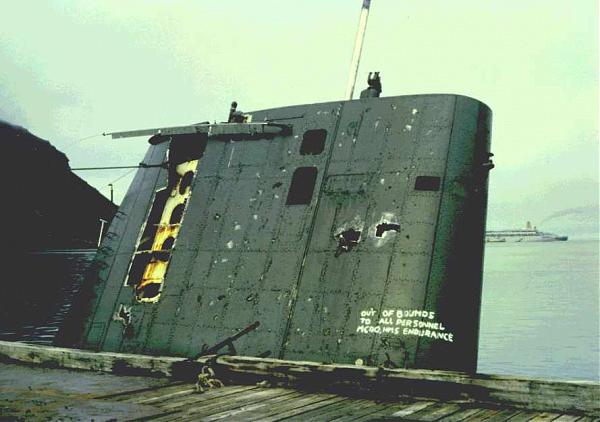
14/ The British attempted to move the stricken submarine away from the quay to guard against the danger of an accidental detonation of her 23 torpedoes. However, Santa Fe partially sank and an Argentinian sailor, PO Felix Artuso, was shot dead by a British soldier.
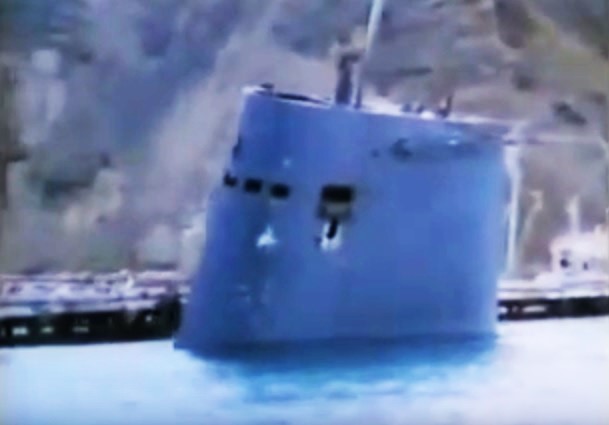
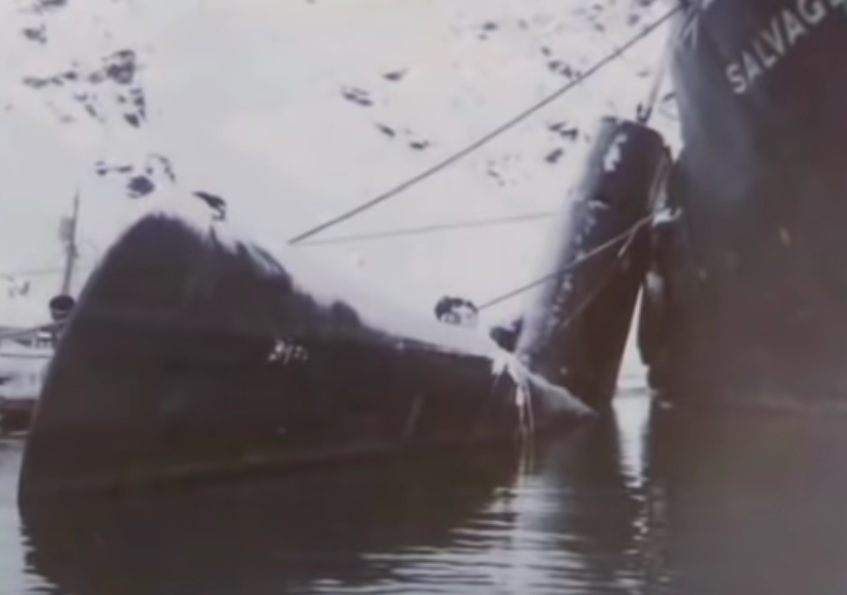
15/ The vessel was eventually dragged into deeper water but then sank fully while under tow. She was raised in a risky and difficult operation in February 1985 but sank again under tow, going down 9 km off South Georgia in 358 m of water on 20 February.
16/ (Note: one other submarine was lost in a post-WWII war – the PNS Ghazi in the Indo-Pakistani war of 1965. However, the cause of its loss has never been clearly established, with India claiming to have sunk it and Pakistan claiming it to have been lost through accident.) /end
• • •
Missing some Tweet in this thread? You can try to
force a refresh

1/ Denmark was preparing to fight the United States over Greenland, according to Scandinavian news reports. Around 1,000 Danish troops and a frigate with anti-ship and anti-aircraft capabilities are being sent to Greenland, with standing orders to fight invading forces. ⬇️
2/ Prior to Donald Trump's apparent climbdown after the recent Davos summit, Denmark planned to send around 1,000 soldiers to Greenland during 2026. Around 300 have already arrived in Kangerlussuaq and Nuuk, supplemented by a French mountain infantry unit.
3/ Denmark has also deployed the frigate Peter Willemoes, which has advanced anti-aircraft and anti-ship capabilities, to patrol off western Greenland. The deployment will release ice-capable Thetis-class patrol vessels to operate nearer inshore.
1/ While Kyiv freezes under Russian bombardment, on the other side of the front line an occupied Ukrainian city of 100,000 is also freezing – this time due to Russian corruption and neglect. Russian warbloggers say that the situation is catastrophic. ⬇️
2/ Inhabitants of Alchevsk in the Luhansk region – which has been under Russian occupation since 2014 – have been writing in desperation to anyone who will listen to plead for help with a disastrous heating situation which they say has been ongoing since October 2025.
3/ Warblogger Sergei Kolyasnikov says that he is receiving "dozens of ... letters. Day after day" describing the problems being faced by residents, who say they are still being charged for heating that they are not receiving from the city's central heating system.
1/ Russian air defence soldiers complain that they are being paid as little as $133 a week and that the Russian government is failing to pay them bonuses promised for shooting down Ukrainian drones. Not surprisingly, this isn't helping morale. ⬇️
2/ 'Two Majors' writes:
"The enemy launches over a hundred drones daily into our regions. And not all of them are included in public statistics: many are shot down, for example, over the Zaporizhzhia region [of Ukraine]."
3/ "Therefore, an adequate solution to the problems of air defence personnel and mobile fire teams is an important and necessary task. We were told (some time ago):
1/ The Russian army has adopted infiltration tactics to slip past Ukrainian defences, dividing platoons into a handful of men who advance as far as they can, entrench, and await reinforcements. A Russian warblogger comments on this tactic's limitations. ⬇️
2/ This change of approach since 2024 has enabled Russia to advance slowly, though still generating heavy losses along the way. 'Archangel Spetsnaz' writes:
"Indeed, assault tactics have changed dramatically."
3/ "The wide range of detection and engagement systems and means has, figuratively speaking, "brought to its knees the old tactics," whereby company/battalion-sized offensives were carried out at the frontier.
1/ Huge numbers of Russian soldiers are dying unnecessarily in Ukraine because commanders at every level are falsifying claims of success, according to Russian warbloggers. "To back up their words, they're sending people to their deaths," says one front-line soldier. ⬇️
2/ The image above is an extract from an official Russian Ministry of Defence map showing a completely fictional front line around Kupyansk in Ukraine's Kharkiv region. Commanders falsely reported having taken settlements around the city before it was regained by Ukraine.
3/ Russian commentators call this practice "taking on credit" (as in amassing credit card debt). Commanders have both financial and career motivations for making false reports of success, which are relayed all the way up to Vladimir Putin himself.
1/ A poetry reading by Russian ultra-nationalists in Krasnodar has been violently suppressed by Russian security forces, much to the dismay of their online supporters. The incident highlights how much Putin's regime fears being outflanked from the nationalist right. ⬇️
2/ Members and supporters of the National Bolshevik movement, founded by the late poet and Soviet-era dissident Eduard Limonov, were holding a regularly scheduled reading of Limonov's works in Krasnodar on 17 January when they were interrupted by a law enforcement raid.
3/ According to the 'Carefree Carpenter Z' Telegram channel, "Everything was proceeding as usual when operatives from the regional "Centre E" and the FSB, armed with automatic rifles, burst into the loft space specially rented for the event."