1/ Here's a good trivia question: the apparent destruction by Ukraine of the Kilo-class submarine 'Rostov-on-Don' marks only the second time since World War II that a submarine has been confirmed lost due to enemy action in wartime. What was the first? Read on to find out. ⬇️
2/ Many submarines have been lost through accidents since the end of World War II. The United States lost 4, the USSR and Russia lost 18, and other countries lost a handful of vessels as well. But only one other country definitely lost one due to enemy action: Argentina.
3/ The submarine in question was the ARA Santa Fe, originally the US Navy's Balao-class diesel-electric submarine USS Catfish. Launched in November 1944, she was sold to Argentina in 1971. She was to become the last WWII-era submarine to be used in combat.
4/ Santa Fe and her sister vessel, ARA Santiago del Estero (ex-USS Chivo), served alongside new Type 209 submarines from West Germany. Both vessels were active during the Falklands War, but only Santa Fe participated in combat.
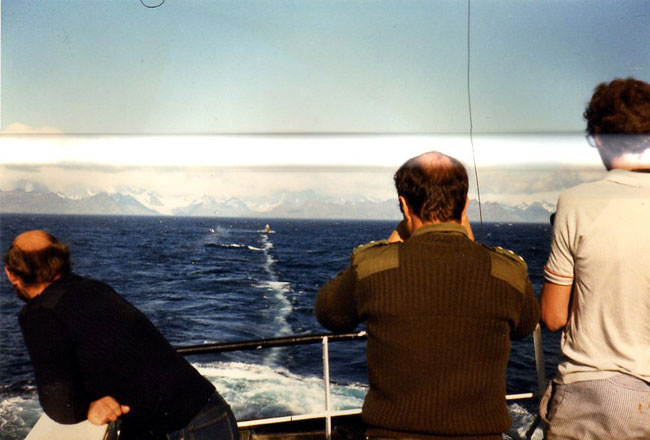
5/ On 2 April 1982, Santa Fe landed commandos on East Falkland near the islands' capital, Stanley. After returning to Argentina, she embarked on a second mission to the remote British island of South Georgia on 16 April, 1,541 km southeast of the Falklands.
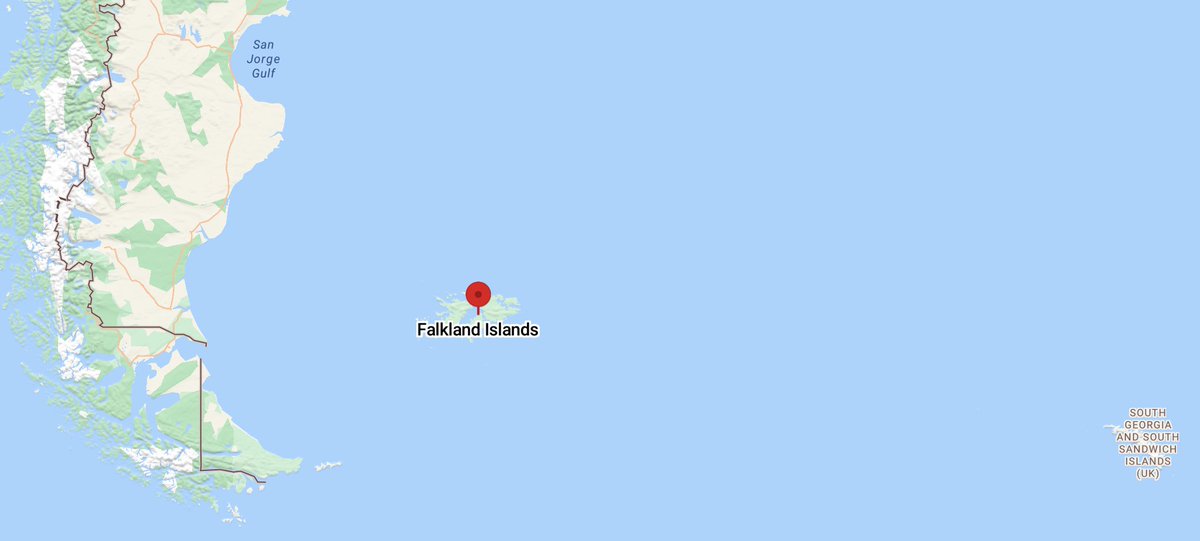
6/ Despite her age and poor armament – twenty WWII-era Mk14 torpedoes and three modern Mk37s – she was tasked with transporting marines to South Georgia and then attacking the slower ships at the 'tail' of the British fleet in the South Atlantic.
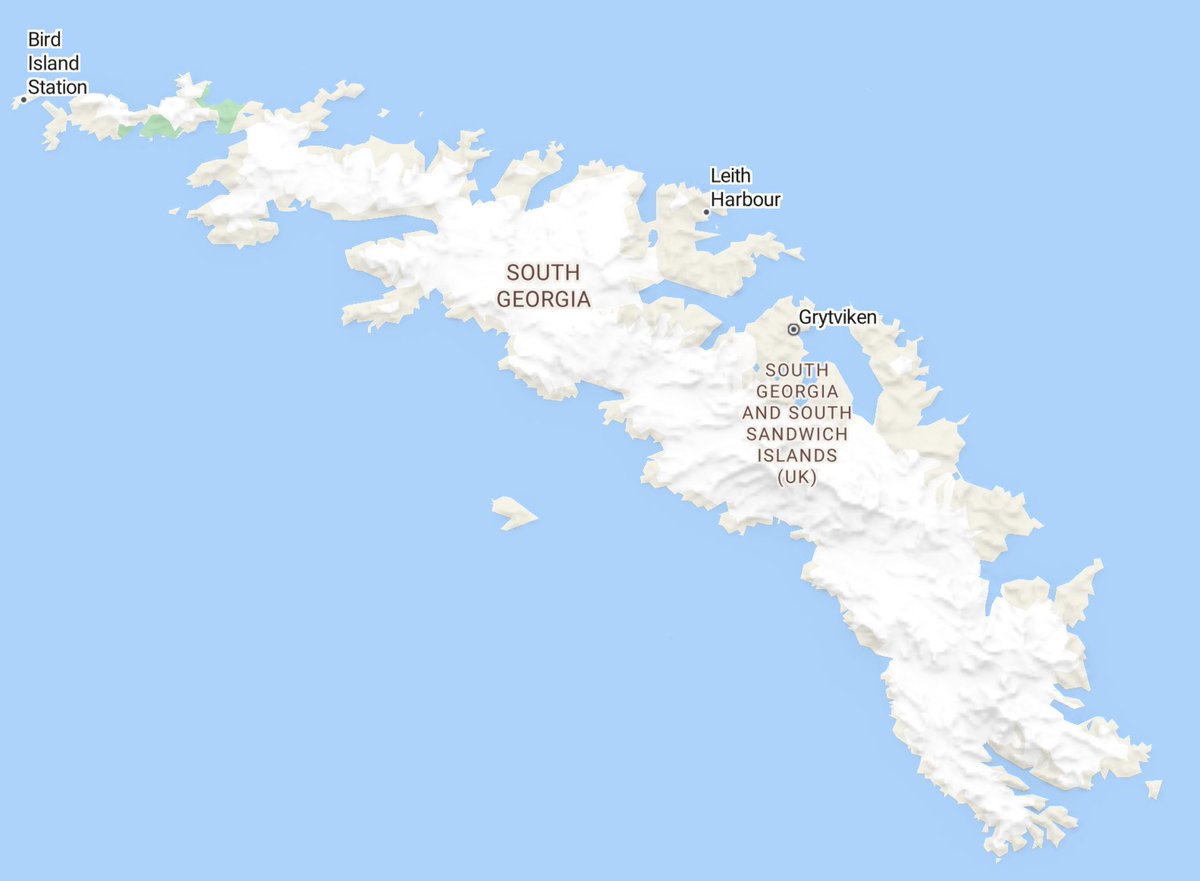
7/ The vessel reached Grytviken, the only settlement on South Georgia, which Argentinian forces had seized on 3 April. Santa Fe unloaded the marines to reinforce the small Argentinian garrison there and set off back out to sea to find British ships to attack.
8/ However, she was detected by the sonar of the British destroyer HMS Antrim. A Wessex helicopter took off from the Antrim to find the submarine, which was travelling on the surface. The Wessex dropped two Mk.XI Mod3 depth charges, straddling Santa Fe.
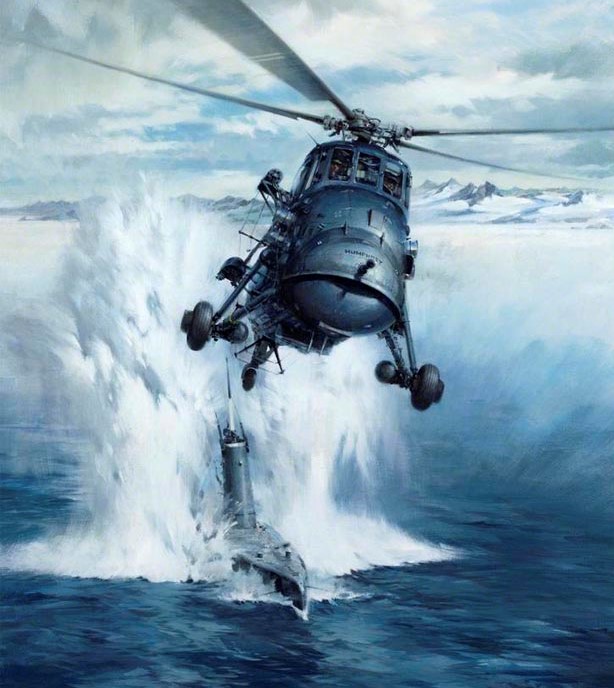
9/ The explosions severely damaged Santa Fe, forcing her captain to turn around and head back to South Georgia. She could no longer submerge. The British continued pursuing the submarine, launching a Lynx ASW helicopter from HMS Brilliant armed with a Mk46 sonar-guided torpedo.
10/ Unluckily for the British, the torpedo had been designed to target deep-diving Soviet submarines; it had never been meant to target surfaced vessels and was programmed with a minimum depth. It could not lock onto Santa Fe and passed harmlessly underneath the vessel.
11/ The Lynx began strafing the submarine with its door-mounted machine gun, while Santa Fe's crew fired back from the vessel with their own small arms. Meanwhile, Wasp helicopters armed with with AS.12 air-to-surface missiles took off from HMS Plymouth and HMS Endurance.
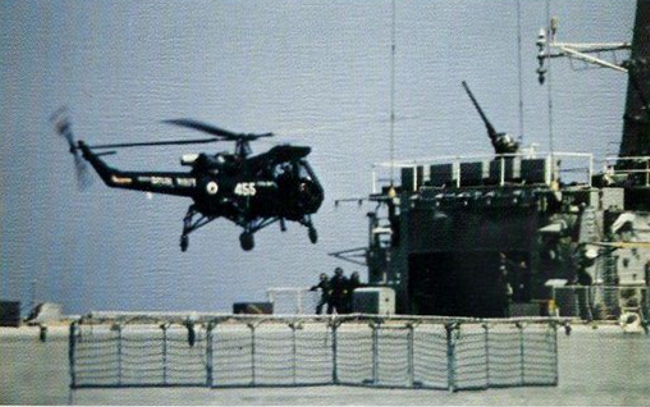
12/ This time the British scored hits, achieving at least four and possibly five hits against Santa Fe's sail. However, the missiles had been designed to attack steel targets; the sail was merely fibreglass and light alloy. One missile went straight through without detonating.
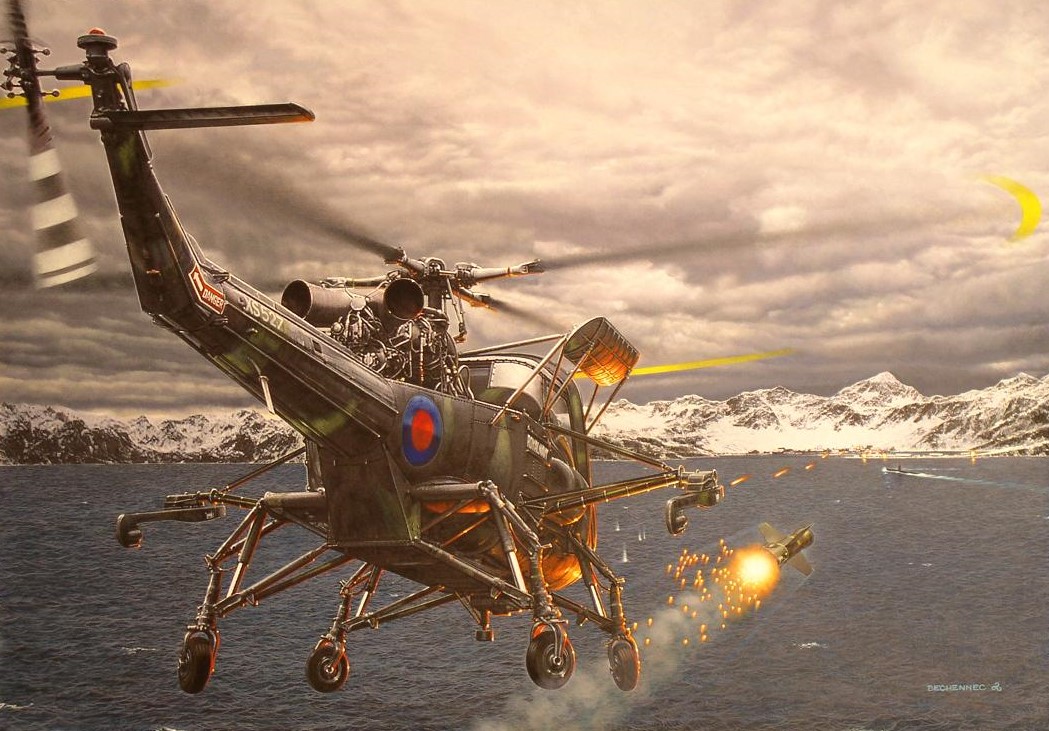
13/ The other missiles did detonate, injuring a number of Santa Fe's crew, one seriously. The crippled submarine made it back to Grytviken but was immediately overtaken by the British recapture of the island on 25 April 1982. With no hope of escape, her captain surrendered.
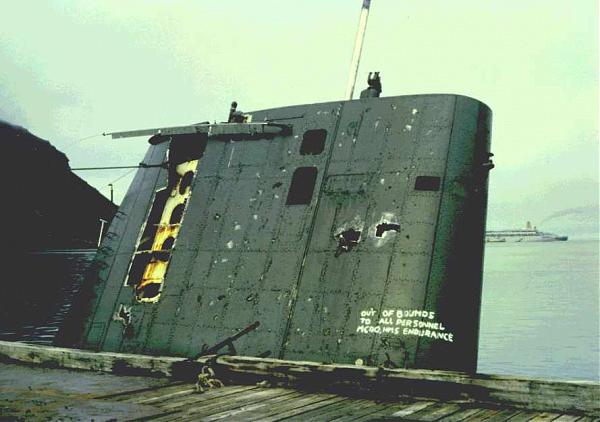
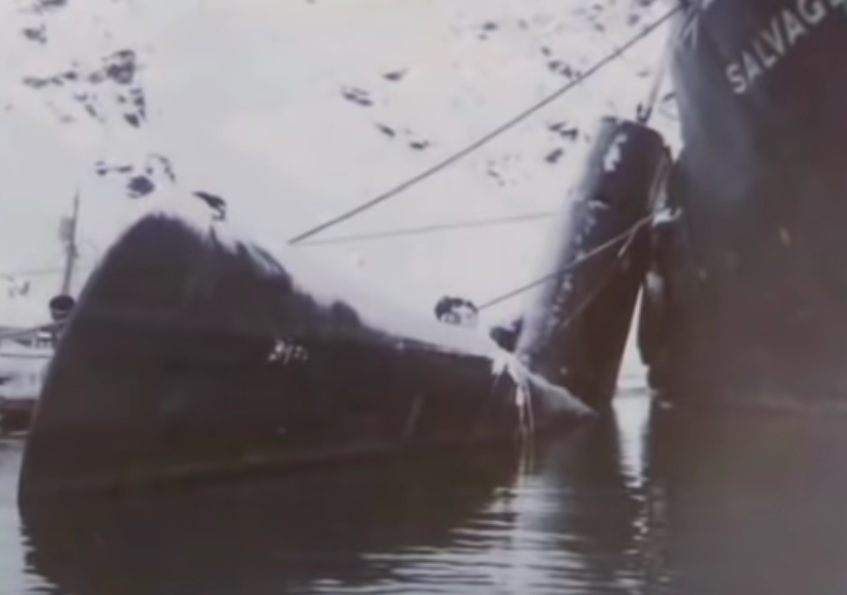
14/ The British attempted to move the stricken submarine away from the quay to guard against the danger of an accidental detonation of her 23 torpedoes. However, Santa Fe partially sank and an Argentinian sailor, PO Felix Artuso, was shot dead by a British soldier.
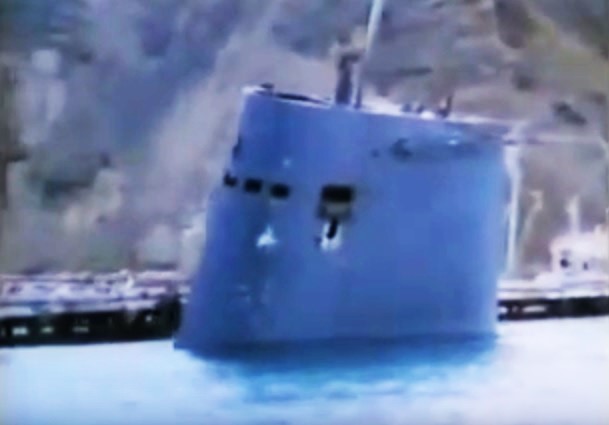
15/ The vessel was eventually dragged into deeper water but then sank fully while under tow. She was raised in a risky and difficult operation in February 1985 but sank again under tow, going down 9 km off South Georgia in 358 m of water on 20 February.
16/ (Note: one other submarine was lost in a post-WWII war – the PNS Ghazi in the Indo-Pakistani war of 1965. However, the cause of its loss has never been clearly established, with India claiming to have sunk it and Pakistan claiming it to have been lost through accident.) /end
• • •
Missing some Tweet in this thread? You can try to
force a refresh

1/ Last night's highly successful Ukrainian attack against a drydock in Sevastopol appears to have caused significant damage to a Kilo-class submarine, the Rostov-on-Don (B-237), as well as to a Ropucha-class landing ship.
2/ Ian Matveev has written a useful thread explaining why this is so significant and why the submarine may have been the principal intended target. Translation follows below. ⬇️
By @ian_matveev:
Which submarine was attacked in Sevastopol?
3/ It is reported to be the Rostov-on-Don, Project 636.3 "Varshavyanka", a multipurpose diesel submarine with Kalibr missiles. Let me tell you more about it in a short thread.
1/ Systemic discrimination against people from Russia's regions – affecting not just ethnic minorities, but ethnic Russians as well – is to blame for the disproportionate numbers of war casualties among the country's minority groups, according to the author of a study. ⬇️
2/ Maria Vyushkova, the co-author (with Yevgeny Sherkhonov) of a study on Russian ethnic minority casualty rates in the Ukraine war, has explained their findings in an interview with Azatliq, Radio Liberty's Tatar service. brill.com/view/journals/…
3/ Vyushkova and Sherkhonov were able to confirm widespread reports that ethnic minorities have experienced a disproportionate percentage of casualties compared with the percentage of their population in Russia.
1/ One of Russia's richest women is allegedly rueing Yevgeny Prigozhin's demise: she will no longer be able to join wealthy convicts and organised crime bosses in paying a large bribe to 'enlist' with the Wagner Group, stay somewhere safe and get a pardon after six months. ⬇️
2/ The VChK-OGPU Telegram channel reports that Prigozhin's death has "buried the market for buying parole from prison under the guise of criminals' participation in the war." They were kept safe in Wagner-run hospitals before returning to freedom with a pardon from Putin.
3/ According to the VChK-OGPU's sources, Prigozhin's plane crash came at a particularly bad time for Olga Mirimskaya, who was allegedly negotiating a $5 million fee to become – notionally at least – Wagner's first female mercenary.
1/ A Russian nationalist symbol has become the latest target of paranoia about anything that looks even slightly like the flag of Ukraine. The police were called after a wreath in blue, yellow and red was left at a Moscow memorial. ⬇️
2/ The wreath was in the colours of the flag of the Rostov region and the short-lived Don Cossack Republic rather than the blue and yellow of the Ukrainian flag, but a local resident reportedly overlooked the red colour and thought it was a pro-Ukrainian wreath.
3/ It had been laid at the equestrian statue to Cossack ataman (leader) Matvei Platov in Moscow's Lefortovo Park. The wreath was presumably left to mark the anniversary of Platov's birth on 19 August 1753. He commanded the Don Cossacks in the Napoleonic wars.
1/ A senior Russian officer has been arrested and charged with embezzlement and taking bribes for the demilitarisation of old tanks and infantry fighting vehicles. Colonel Ilya Timofeev is accused of taking bribes worth millions of rubles and plundering military funds. ⬇️
2/ The Russian newspaper Kommersant reports on the arrest of Colonel Timofeev, the head of the Recycling Service of the Main Armored Directorate (GABTU) of the Russian Ministry of Defence. He has been placed in a pre-trial detention centre to prevent him fleeing Russia.
3/ The colonel was investigated by the FSB's Military Counterintelligence Department (DVKR) and the military investigation branch of the Investigative Committee, roughly Russia's equivalent of the FBI. He was arrested at the end of August 2023.
1/ A study shows that there are large differences in pay and mortality rates for Russian soldiers from different parts of the country. Men from Moscow and St Petersburg are paid far more and have a lower chance of dying than those from poor regions like Chuvashia or Buryatia. ⬇️
2/ The independent Russian news outlet Govorit NeMoskva has reviewed military pay, benefits and mortality rates across Russia. It has found that St Petersburg – Vladimir Putin's home town – is by far the most generous, paying six times more than the lowest-paying regions.
3/ At the same time, soldiers from Moscow and St Petersburg have significantly lower mortality rates that those from Buryatia, Tuva and North Ossetia – all three of which are among Russia's poorest regions.