Jim Bianco Profile picture
Sep 22, 2023 8 tweets 3 min read Read on X
1/8

🧵on where the bond market stands.

----

Recall that last year was the worst total return year for the bond market in history.

Here is a chart back to 1801 to remind everyone how bad last year was. Image
2/8

So naturally, global fund managers turned very bullish for 2023.

Here are the August BofA Global Fund Manager Survey results showing they are more bullish on bonds than at any time in 20+ years of this survey.

Mean Reversion is a power drug on Wall Street. Image
3/8

So far it is not quite working out the way they hoped.

This is a chart of the most popular bond market benchmark, the Bloomberg US Aggregate Index

YTD (through Sept 21) AGG is DOWN -0.59%. This is the 8th worst year ever (out of 47 years) Image
4/8

The Global AGG is doing worse ... -1.35% YTD (through Sept 21) Image
5/8

Here are the total returns for the yield curve through Sept 21.

The longer the duration (maturity), the worse the return. Everything longer than 5-year is down on the year. Image
6/8

So, about those managers and strategists that have been predicting a bullish year for bonds ... Image
7/8

What will it take for bonds to rally (yds fall)?

Something "bad" to happen (see March when all the banks failed in the same week). You can hedge this by shorting stocks.

A capitulation on the bond bull thesis and recognition we have a long-term "sticky" inflation problem.
8/8

Until one (or both) of these happens, bonds will be volatile and stay under pressure.

• • •

Missing some Tweet in this thread? You can try to force a refresh

 

Keep Current with Jim Bianco

Jim Bianco Profile picture

Stay in touch and get notified when new unrolls are available from this author!

Read all threads

This Thread may be Removed Anytime!

PDF

Twitter may remove this content at anytime! Save it as PDF for later use!

Try unrolling a thread yourself!

how to unroll video
  1. Follow @ThreadReaderApp to mention us!

  2. From a Twitter thread mention us with a keyword "unroll"
@threadreaderapp unroll

Practice here first or read more on our help page!

More from @biancoresearch

Mar 11
1/6

Ten seafarers have now been killed in 13 attacks on merchant vessels since the Iran conflict erupted on February 28 — more than the 7 U.S. servicemen killed in the war.

The focal point is shifting: can the Strait of Hormuz be reopened? Is the Administration pivoting to that mission?

Every day without a visible path to reopening, the market will price in more risk.

x.com/MikeSchuler/st…

@johnkonrad @mercoglianos
2/6

The problem: the Administration APPEARS to not be taking the Strait threat seriously. The contradiction is stark:

- Trump to tanker captains: "These ships should go through the Strait of Hormuz and show some guts, there's nothing to be afraid of..."

- The U.S. Navy, citing risk of attacks as "too high," says it is unable to provide escorts — despite near-daily requests from the shipping industry.

WTF!

x.com/foxandfriends/…
x.com/FreightWaves/s…
3/6

Yesterday, Joint Chiefs Chairman Gen. Dan Caine was asked about naval escorts in the Strait. His answer:

"If tasked to escort, we'll look at the range of options to set military conditions to be able to do that..."

Did he just admit they don't have a plan — and haven't started one?

Read 6 tweets
Mar 9
1/5

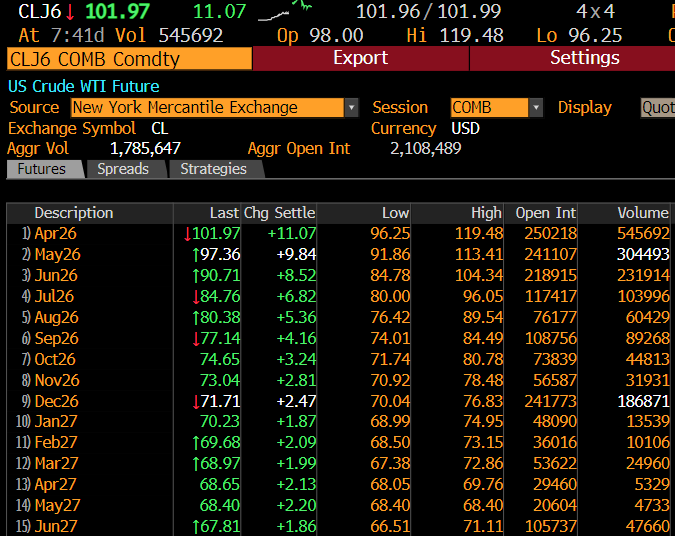
A 10% increase in energy prices that persists for a year would push global inflation up by 40 basis points and slow economic growth by 0.1-0.2%, International Monetary Fund Managing Director Kristalina Georgieva said.

So, what price measures "persists for a year?"

🧵
2/5

As the table below shows, crude oil futures prices for delivery into 2027 are trading in extreme backwardation. Image
3/5

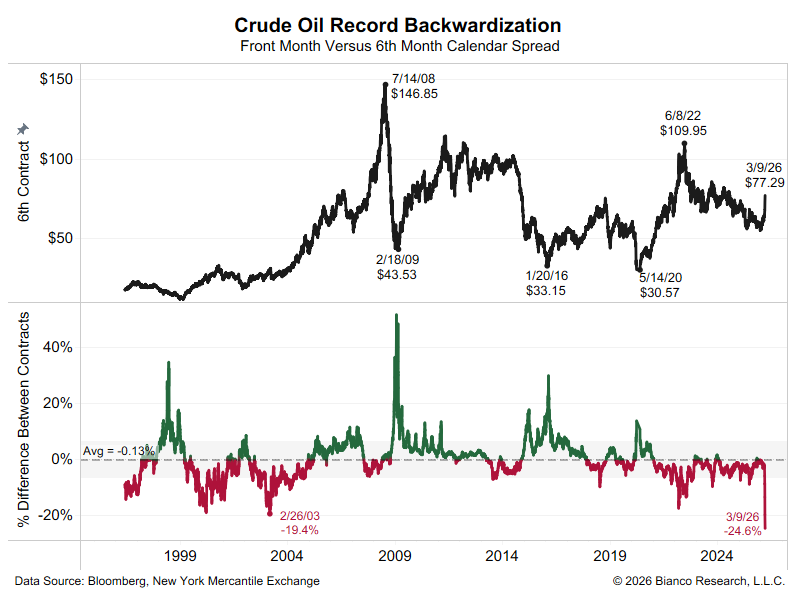
Below is the calendar spread between the first contract (now April) and the 6th contract (now September).

As the bottom panel shows, this spread is -25%, a record since the mid-1990s when the contract specifications were last changed. Image
Read 5 tweets
Feb 7
1/4

I fear this is spot on.

@CryptoNobler's thread unpacks $BTC's "synthetic supply" problem. ETFs, structured notes (@CryptoHayes), futures, options, swaps, lending—all flood the system with "paper" BTC.

When it swamps real demand, price crashes.

x.com/CryptoNobler/s… x.com/coinbureau/sta…
2/4

@CryptoHayes: structured notes on $IBIT flooded $BTC with synthetic supply → forced liquidations turbocharged the dump.

Next rally? TradFi piles into ETFs → Wall Street "prints" more synthetics.

Price discovery decoupled from on-chain.

Volatility on steroids
3/4

Wall Street's entry turned BTC into a pseudo-fractional reserve system.

21M cap? On-chain only—price discovery swims in synthetic street "printing."

Fractional is inherently unstable. That's why banks need heavy regs (Fed/Treasury/OCC/FDIC).

On-chain BTC only needs code.
Read 4 tweets
Feb 1
1/6

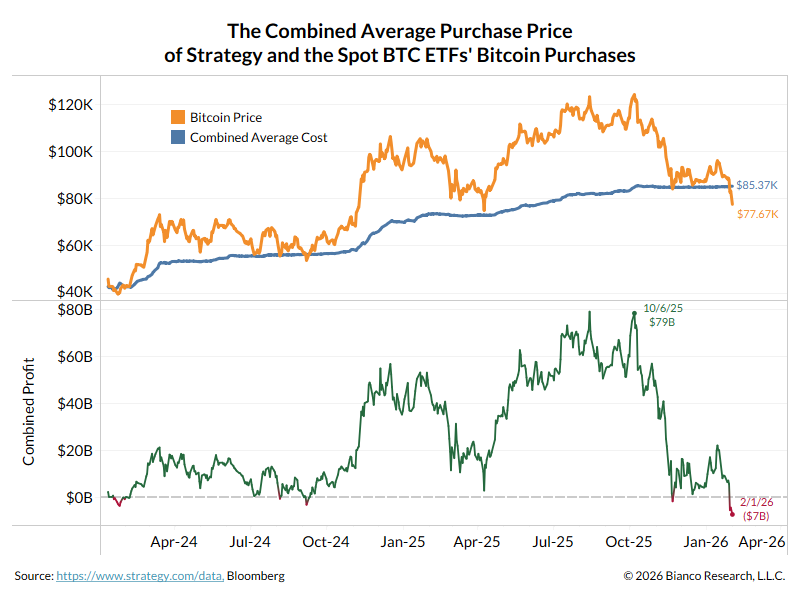
10% of the outstanding $BTC is held by $MSTR and the 11 Spot BTC ETFs.

These are the ways normies hold $BTC in regulated brokerage accounts.

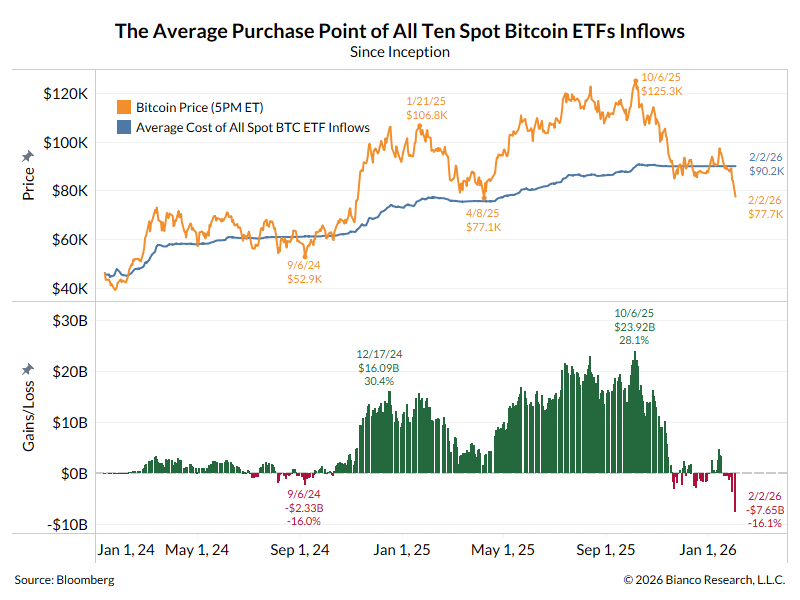
Collectively, the avg purchase price is $85.36K, meaning the average is now ~$8k underwater, with an unrealized loss of ~$7B.
🧵 Image
2/6

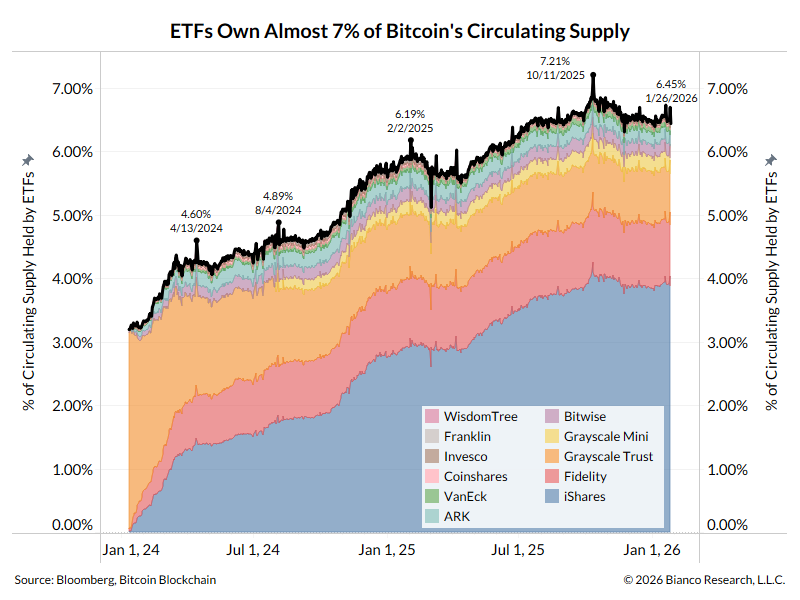
The 11 biggest spot $BTC ETFs now hold 1.29M $BTC – worth over $115B (Friday PM).

These ETFs hold roughly 6.5% of all $BTC in circulation.

The 3 largest – iShares’ $IBIT (blue), Fidelity’s $FBTC (red), and Grayscale’s $GBTC (orange) – hold 5.65%. Image
3/6

The 11 Spot $BTC ETFs average purchase price is ~$90.2K (blue), about $13K (16%) above the current price (bottom panel).

Note these ETFs are collectively on a record 10 consecutive outflow days. $BTC is down ~8% since Friday's NYSE close. Image
Read 6 tweets
Jan 19
1/11

What is Housing?

Affordable shelter or path to retirement?

It cannot be both.

We tried to make it both in the early 2000s and almost wrecked the financial system.

🧵 Image
2/11

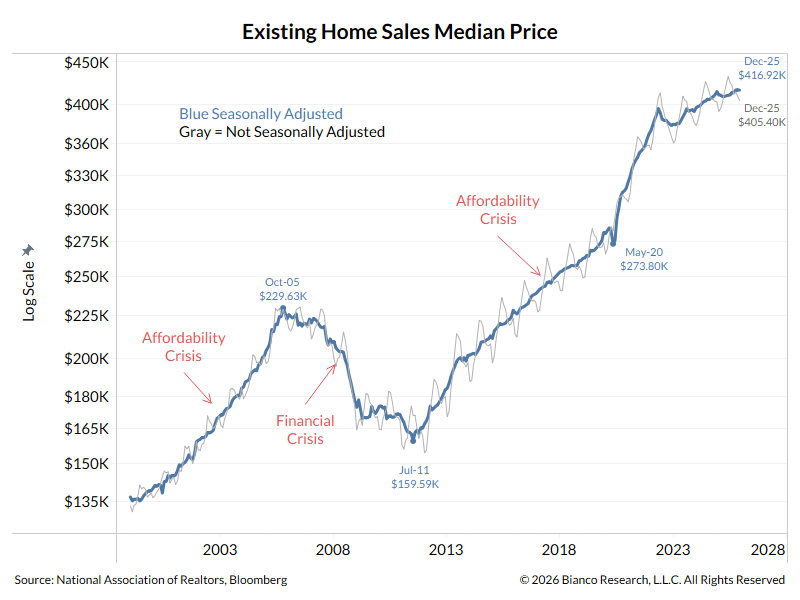
The average home price is $417K (above), an all-time high.

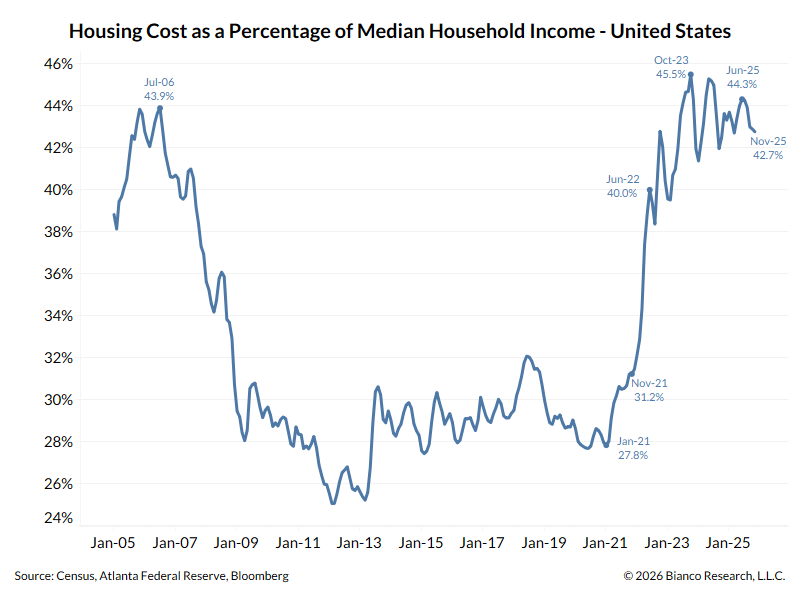
This means around 43% of a median household income (~$84K) goes to housing.

For the last three years, this has been comparable to the (unsustainable) housing peak in 2006. Image
3/11

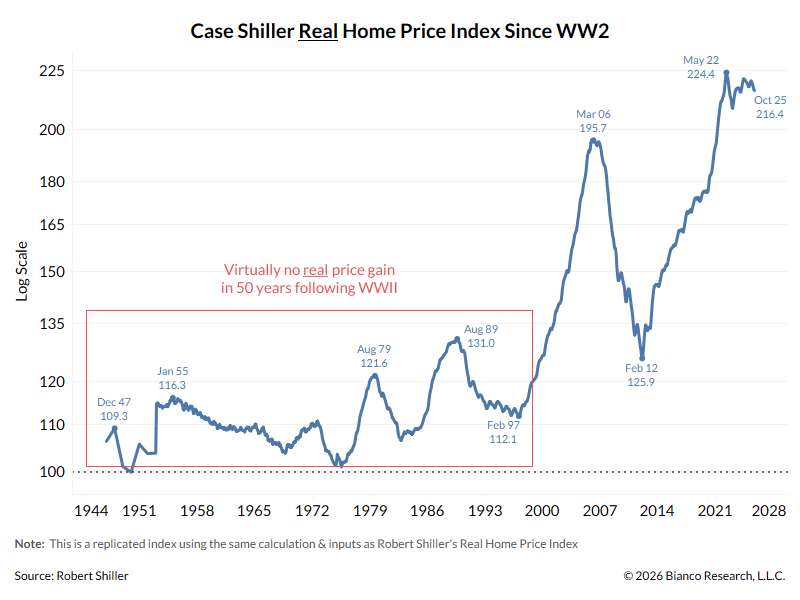
For 50 years, from the end of World War II through 1997 (red box), housing was affordable. Prices rose by the inflation rate.

In other words, it held its value but remained within reach of most renters/first-time homebuyers. Image
Read 11 tweets
Jan 4
1/5

Thoughts on market reaction to the Venezuela news.

tl:dr

The spigot in Venezuela waiting to be opened to flood the world with crude oil and lower its price has been broken for a while.

It will take several years to fix it.
2/5

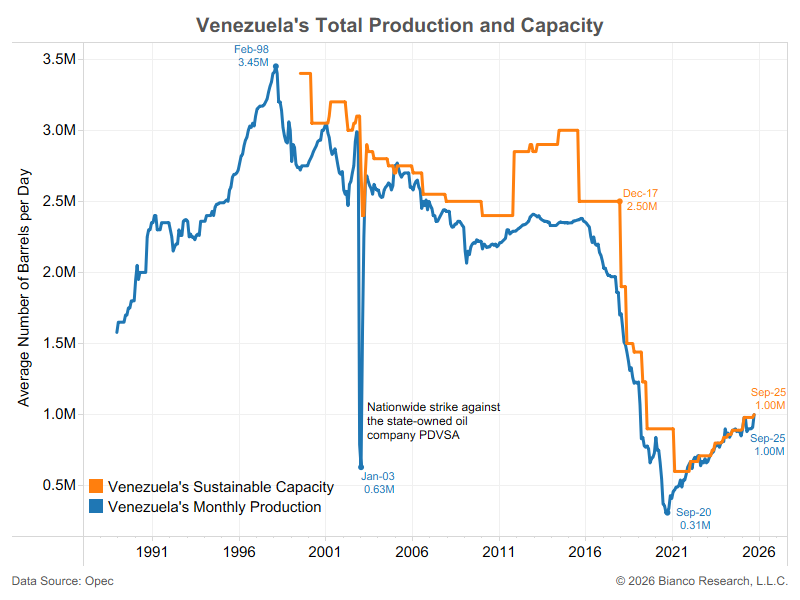
Venezuela is a founding member of OPEC their official statistics show its production (blue) is down 71% from its 1998 peak.

Its sustainable capacity (max output in within 90 days and held for a year) is 1M barrels/day (orange).

Venezuela is at its maximum now. Image
3/5

Why the big production decline?

Socialist Hugo Chávez was elected in December 1998. He turned out to be a brutal dictator. Only to be replaced by an even more brutal dictator, Nicolás Maduro, when Chávez died in March 2013.
Read 5 tweets

Did Thread Reader help you today?

Support us! We are indie developers!


This site is made by just two indie developers on a laptop doing marketing, support and development! Read more about the story.

Become a Premium Member ($3/month or $30/year) and get exclusive features!

Become Premium

Don't want to be a Premium member but still want to support us?

Make a small donation by buying us coffee ($5) or help with server cost ($10)

Donate via Paypal

Or Donate anonymously using crypto!

Ethereum

0xfe58350B80634f60Fa6Dc149a72b4DFbc17D341E copy

Bitcoin

3ATGMxNzCUFzxpMCHL5sWSt4DVtS8UqXpi copy

Thank you for your support!

Follow Us!

:(