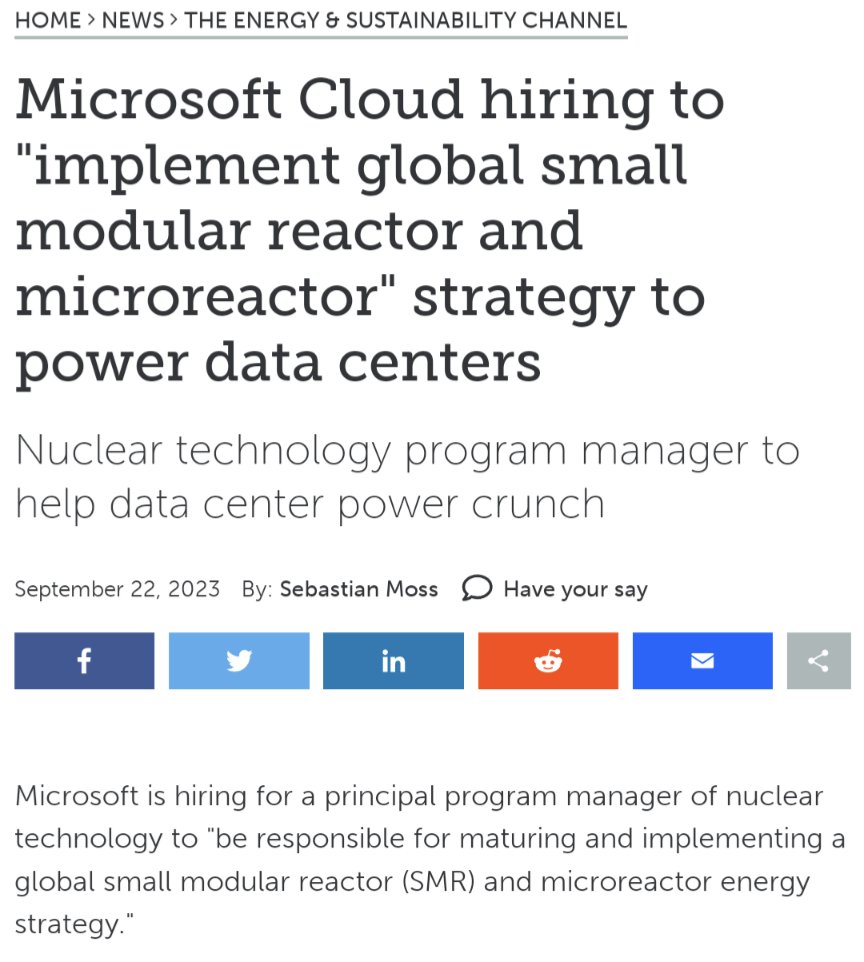
Word is out: Microsoft is plunging ahead on nuclear energy.
They want a fleet of reactors powering new data centers. And now they're hiring people from the traditional nuclear industry to get it done.
Why?
Lack of stable long-term power, whether clean or dirty, is constraining Microsoft's growth. They need to build big data centers that consume electricity all the time and the old assumption that somebody else's reliable plants will always be around to firm up your wind and solar is falling apart.
It certainly helps that founder Bill Gates was one of the earliest big business converts to nuclear energy, investing his own money to develop new reactors.
But Microsoft, like many companies, was held back by what we might consider "Enron-ism" infecting its energy thinking: renewable energy credits plus markets plus cute little lies to the public about how electricity works. Greenwashed fossil/hydro/nuclear with the ESG stamp of approval.
The problem? Eventually you run out of other people's cheap firm power.
So Microsoft has recently become a leader in openly asserting that nuclear energy counts as clean energy, as opposed to the ongoing cowardice we see from the other big tech companies who lie to the public about being "100% renewable powered."
Sure, the lawyers said it was okay to lie, but the lie doesn't give you a permanent supply of cheap reliable energy. That comes from nuclear.
A world is coming where only the tech companies willing to become nuclear power developers may get to keep expanding their cloud businesses, and only countries open to new reactors get to host this expansion.
A world where tech companies with 50% margins become the only survival hope for traditional industrial concerns with 5% margins who need someone else to bootstrap a proper electricity supply.
Where diesel backup generators are replaced with microreactors reliable enough to be trusted to keep a cluster of facilities secure in the case of public grid failure.
The race is on.

They want a fleet of reactors powering new data centers. And now they're hiring people from the traditional nuclear industry to get it done.
Why?
Lack of stable long-term power, whether clean or dirty, is constraining Microsoft's growth. They need to build big data centers that consume electricity all the time and the old assumption that somebody else's reliable plants will always be around to firm up your wind and solar is falling apart.
It certainly helps that founder Bill Gates was one of the earliest big business converts to nuclear energy, investing his own money to develop new reactors.
But Microsoft, like many companies, was held back by what we might consider "Enron-ism" infecting its energy thinking: renewable energy credits plus markets plus cute little lies to the public about how electricity works. Greenwashed fossil/hydro/nuclear with the ESG stamp of approval.
The problem? Eventually you run out of other people's cheap firm power.
So Microsoft has recently become a leader in openly asserting that nuclear energy counts as clean energy, as opposed to the ongoing cowardice we see from the other big tech companies who lie to the public about being "100% renewable powered."
Sure, the lawyers said it was okay to lie, but the lie doesn't give you a permanent supply of cheap reliable energy. That comes from nuclear.
A world is coming where only the tech companies willing to become nuclear power developers may get to keep expanding their cloud businesses, and only countries open to new reactors get to host this expansion.
A world where tech companies with 50% margins become the only survival hope for traditional industrial concerns with 5% margins who need someone else to bootstrap a proper electricity supply.
Where diesel backup generators are replaced with microreactors reliable enough to be trusted to keep a cluster of facilities secure in the case of public grid failure.
The race is on.
• • •
Missing some Tweet in this thread? You can try to
force a refresh