The IEA's 2021 Net Zero Roadmap was groundbreaking.
Today, their first update is released.
What has changed in 2½ years?
My 6 observations... 🧵
Today, their first update is released.
What has changed in 2½ years?
My 6 observations... 🧵
https://twitter.com/IEA/status/1706534310952546774
Downgraded: CO2 capture (CCS), CO2 removal, hydrogen, (+bioenergy). These hyped solutions (some say distractions) get a reality check.
Upgraded: solar, batteries, EV and electrification. It's clearer than ever that our future energy system will run on clean power.
Upgraded: solar, batteries, EV and electrification. It's clearer than ever that our future energy system will run on clean power.

Again, this report doesn't mention "fossil fuel phaseout"🤔
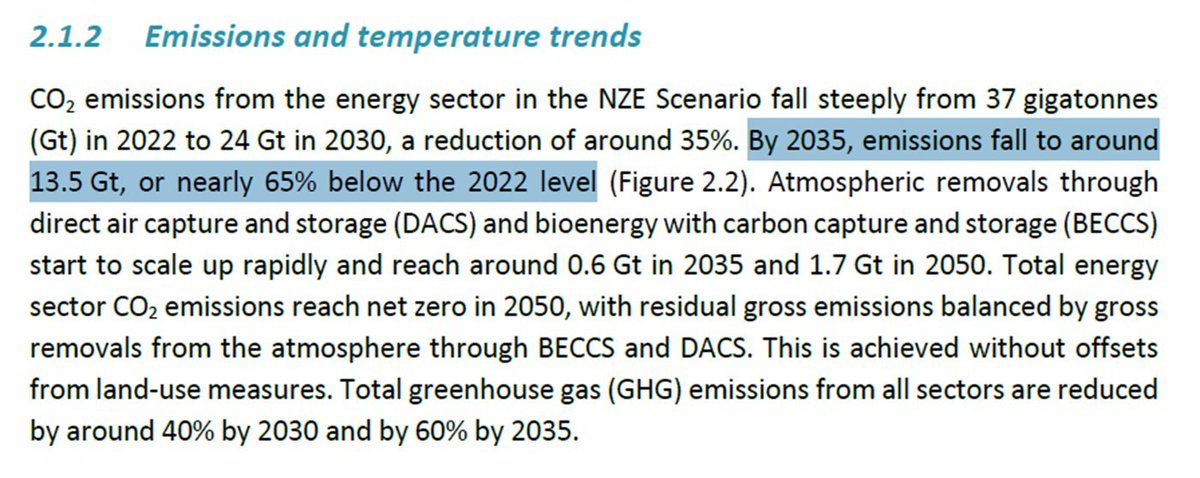
BUT CO2 emissions - and therefore fossil fuel use - fall by ⅔rds(!) in a little more than a decade (from 2022 to 2035).
Surely reducing the first ⅔rds ASAP is more important than arguing when the last ⅓rd will stop?
BUT CO2 emissions - and therefore fossil fuel use - fall by ⅔rds(!) in a little more than a decade (from 2022 to 2035).
Surely reducing the first ⅔rds ASAP is more important than arguing when the last ⅓rd will stop?
Lots of solutions are needed. From the 2021 report, it was hard to tell the most important.
In this report, they make it easier for us.
Four solutions give 80% of the effort to 2030:
In this report, they make it easier for us.
Four solutions give 80% of the effort to 2030:
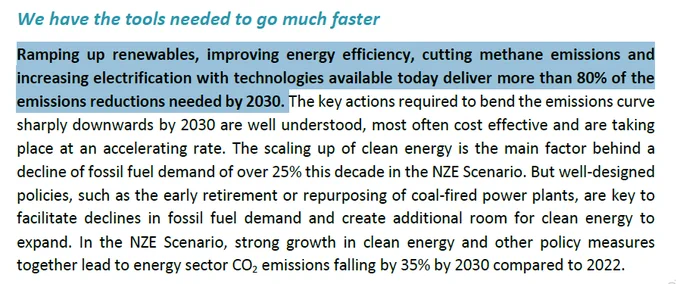
Priorities=>
1. Tripling renewables
2. Doubling energy efficiency
3. Cut methane by ¾'s
Hold up, where is "electrification"? It's missing in this key graphic b/c it overlaps with efficiency (EV's+heat pumps use ⅓rd primary energy), and it overlaps renewables (which power them).
1. Tripling renewables
2. Doubling energy efficiency
3. Cut methane by ¾'s
Hold up, where is "electrification"? It's missing in this key graphic b/c it overlaps with efficiency (EV's+heat pumps use ⅓rd primary energy), and it overlaps renewables (which power them).
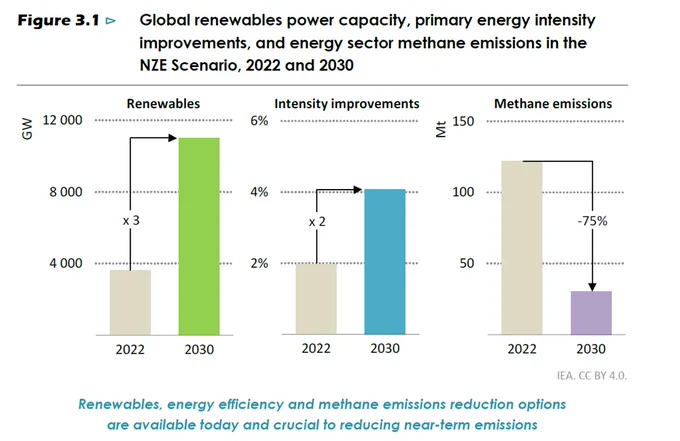
But international policy makers are simple people. Even 4 solutions is too complicated;)
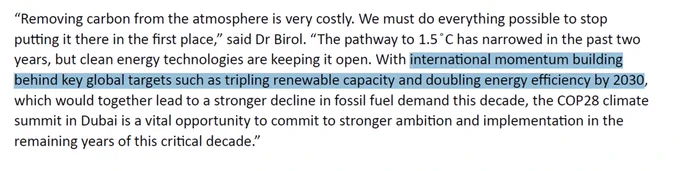
The IEA want you to remember only two solutions: tripling renewables and doubling energy efficiency.
The IEA want you to remember only two solutions: tripling renewables and doubling energy efficiency.
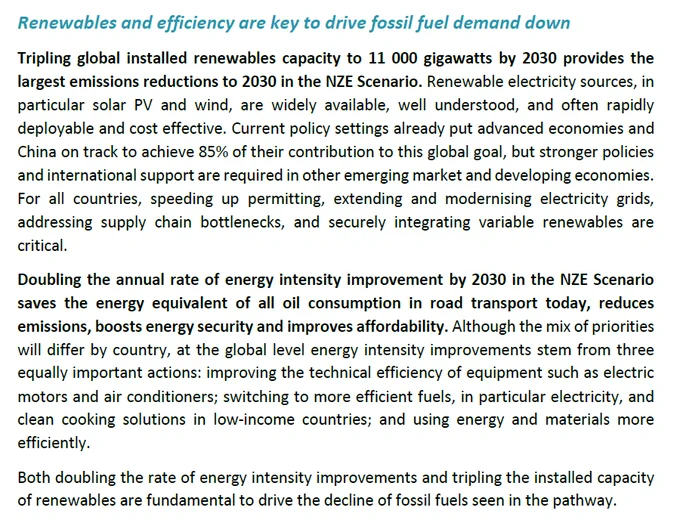
So as we go towards COP28, the IEA clearly want to get a global deal that triples renewables and doubles energy efficiency... and that would give us the two most important building blocks to reduce fossil fuel use by ⅔rd's by 2035.💪<END>
• • •
Missing some Tweet in this thread? You can try to
force a refresh