THE HOLE IN ONITSHA
One day, a large hole opens up in the main road into Onitsha, a major city in Nigeria. Instead of simply repairing it, the Nigerians start to adjust to the new reality of the giant hole at the city’s entrance. The Short-Termism quickly becomes established 🧵
One day, a large hole opens up in the main road into Onitsha, a major city in Nigeria. Instead of simply repairing it, the Nigerians start to adjust to the new reality of the giant hole at the city’s entrance. The Short-Termism quickly becomes established 🧵
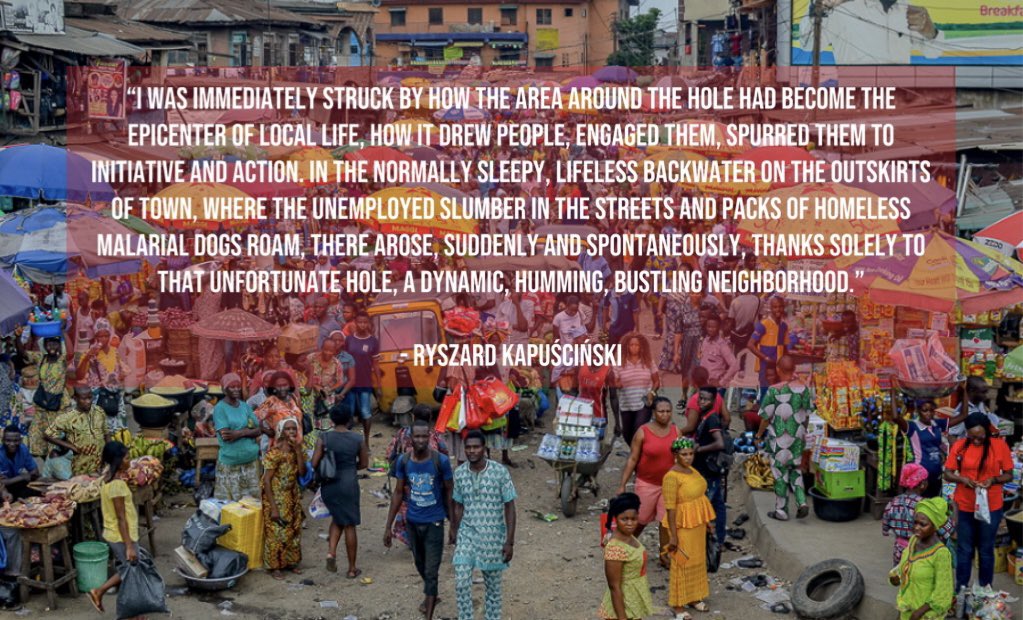
The Story in this thread is from Polish Author Ryszard Kapuściński’s Book ‘The Shadow of the Sun’, about his real experiences during his time in Africa. In the Story, the Author has hired a car to drive to Onitsha to visit the city’s famous market when, arriving at the edge of the city, he finds traffic has stopped completely. The consequences of the lack of maintenance have create a bizarre spectacle at the city’s entrance. The Nigerians have adjusted their lives around the giant hole - and do not seem to want to repair it.
Several kilometers before Onitsha the road turns in a gentle arc toward town. As we approached, we could see cars already backed up on the arc--a monumental traffic jam--and it was clear we would have to wait, since this was the only road into town from this direction. It is called Oguta Road, and it ends--far, very far, from here--in that famous market. For now, however, we were standing behind several trucks in an immensely long line. A half hour passed, then an hour. The local drivers were obviously familiar with this situation, for they spread out with insouciance in the roadside ditch. But I was in a hurry: I was supposed to return that same day to Port Harcourt, three hundred kilometers away. The road was narrow, two lanes, and our car stood squeezed amid other vehicles with no chance of maneuvering. So I set out on foot alone to investigate the cause of the obstruction.
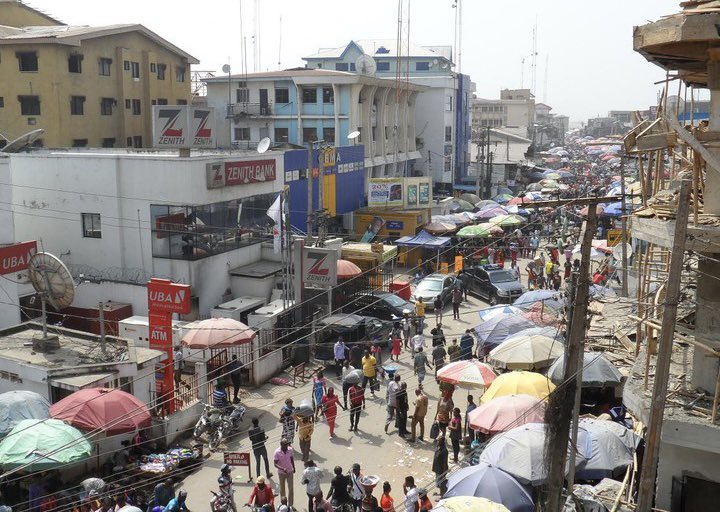
It was hot, at noon of course, so I dragged myself along slowly, one step at a time. Finally, I reached my goal. By now I was already in town; low brick houses covered in rusty corrugated iron stood on both sides of the street, and there were street-level shops. In the shade of wide verandas tailors sat at their sewing machines, women were washing and hanging up laundry. In one spot the street was crowded; there was a noisy, nervous commotion, engines were roaring, you could hear shouting and calling. Once I had pushed myself through the throng I saw an enormous gaping hole in the middle of the street: huge, wide, several meters deep. It had steep, sheer sides, and its bottom was an opaque, muddy pond. The street was so narrow here that you couldn't go around the hole, and everyone who wanted to drive into town had to descend first into this abyss, plunge into its swampy waters, and then hope that someone, somehow, would pull them out.
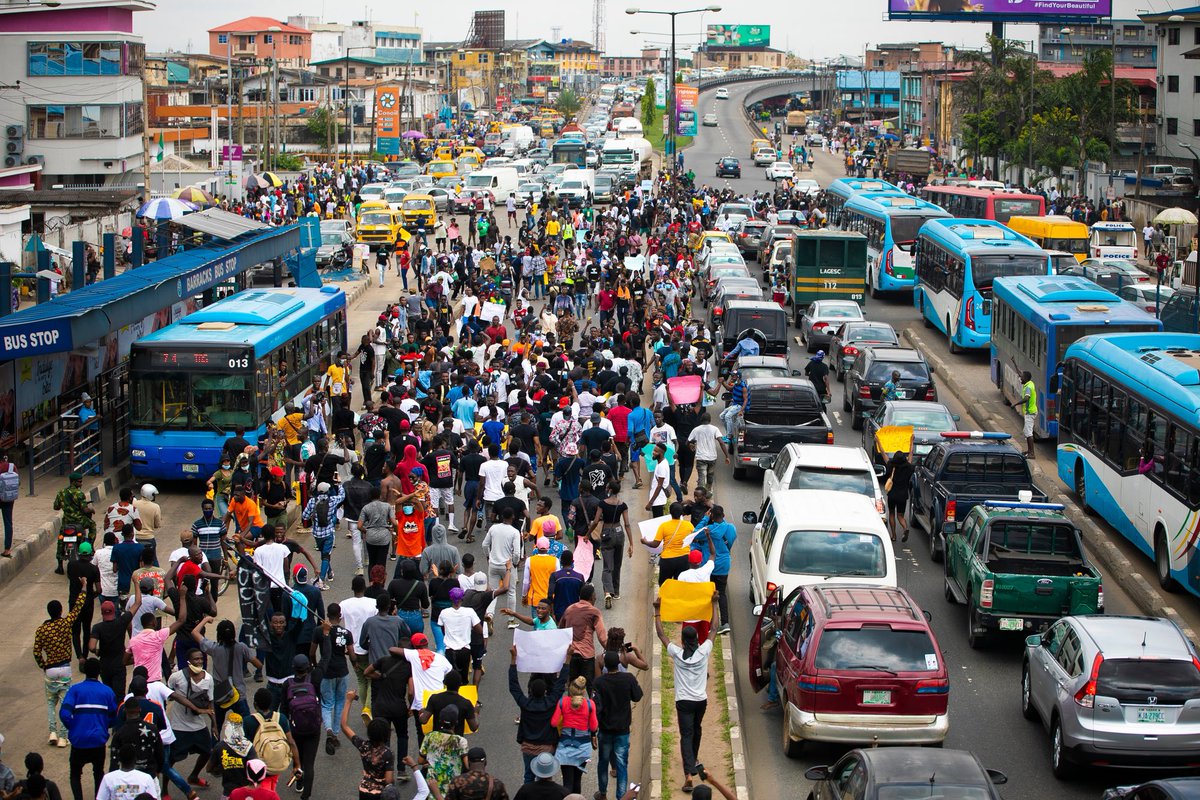
And that's exactly what was happening now. At the bottom of the hole, half immersed in water, stood a huge truck loaded with sacks of peanuts. A bunch of half-naked boys were unloading it, clambering up to street level with the sacks. Another group was fastening ropes to the truck, to help haul it out of the pit. Still others were sloshing about in the water, trying to lay planks and beams under wheels. Those who had no more strength would climb up to rest awhile. Rows of women were positioned around the brim, selling hot food--rice with a spicy sauce, cassava pancakes, baked yams, peanut soup. Others were hawking homemade lemonade, rum, banana beer. Some boys were selling cigarettes and chewing gum.
In the end, when everything was ready and the peanuts had been unloaded, the teams set about extricating the truck. Some of the boys, cheered on with shouts, pulled on the ropes; others pushed with their shoulders against the vehicle's sides. The truck resisted, went in reverse, practically stood on end. But finally, as a result of all these joint efforts, it reared up and onto the asphalt. The onlookers applauded and slapped one another on the back; the neighborhood children danced and clapped their hands.
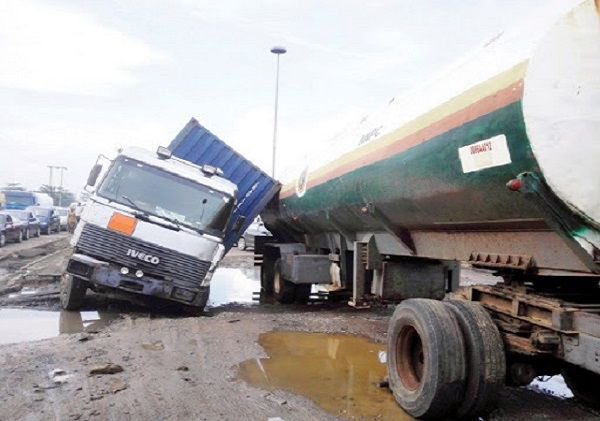
Barely a moment had passed, and the next car in line was already swimming at the bottom of the abysmal pit. I noticed that an entirely different group of people set about pulling it out. They had their own ropes, chains, planks, and shovels. Those who had been working on the previous vehicle had already dispersed somewhere. The work was immensely difficult and laborious--this was a particularly heavy machine, an enormous Bedford. They had to haul it out by degrees, little by little. At the conclusion of each phase, work would cease and a long discussion would ensue about which methods of towing might now prove to be the most effective. The Bedford kept slipping, its engine roared as if it were demented, its platform tilted dangerously to one side.
With each vehicle the hole grew deeper and deeper. Its bottom was an increasingly slimy, sticky goo, in which tires spun in place, splashing and spraying everyone with lumps of mud and streams of gravel. I estimated that we had a two to three-day wait before our turn in the pit finally came. I wondered, how much would the rescuers charge to pull us out? But there was a more pressing question: how do we get out of this trap? I was no longer thinking about the market in Onitsha, about its colorful commotion, its fairground literature. I wanted to get out of here--I had to go back. But first I went to explore briefly the area around this catastrophically potholed, jammed Oguta Road. To see what it looks like. To gather some intelligence. Listen to what's being said.

I was immediately struck by how the area around the hole had become the epicenter of local life, how it drew people, engaged them, spurred them to initiative and action. In the normally sleepy, lifeless backwater on the outskirts of town, where the unemployed slumber in the streets and packs of homeless malarial dogs roam, there arose, suddenly and spontaneously, thanks solely to that unfortunate hole, a dynamic, humming, bustling neighborhood. The hole created work for the unemployed, who formed teams of rescuers and made money hauling cars out of the pit. It brought new customers for the women operating the portable sidewalk eateries. Because of the attendant traffic jam, shoppers appeared perforce in the previously empty local shops--the passengers and drivers of cars waiting to get through. Hawkers of cigarettes and cold drinks found buyers for their wares.

More: I noticed fresh, clumsy, hand-painted signs on the surrounding houses: "Hotel," aimed at those who were forced to spend the night waiting for their turn in the hole. Local car-repair shops revived as drivers, taking advantage of the enforced stop, used the time to repair damages, pump up tires, recharge batteries. Tailors and shoemakers had more work, barbers appeared; I noticed witch doctors making their rounds, offering herbs, snake skins, and rooster feathers, ready to cure anyone in an instant. In Africa, all these professions are performed by people in motion, wandering about, searching out clients, and if an opportunity like the hole in Onitsha arises, they quickly converge there in large numbers. Social life, too, was reinvigorated: the area around the hole became a place for meetings, conversation, and discussion, and, for the children, a playground.

The curse of drivers traveling to Onitsha became the salvation of the residents of Oguta Road, and of this entire neighborhood. It was further proof that every evil thing has its defenders, because everywhere there are those whom evil sustains, for whom it is an opportunity, life itself. For a long time, people did not allow this hole to be repaired. I know this because when years later I was telling someone in Lagos with great emotion about my adventure in Onitsha, he replied with an absolutely indifferent tone of voice: "Onitsha? It's always like that in Onitsha."
Available Here: disjectamembra2014.blogspot.com/2014/09/ryszar…
• • •
Missing some Tweet in this thread? You can try to
force a refresh