Read on Twitter
🇪🇺 - EU will publish list of critical technologies today - a key step to kickstart Europe's de-risking efforts vis à vis China
• A short thread with graphs on why this list matters, what we can expect, and what's next for EU de-risking plans 👇🧵 [1/8]
• A short thread with graphs on why this list matters, what we can expect, and what's next for EU de-risking plans 👇🧵 [1/8]
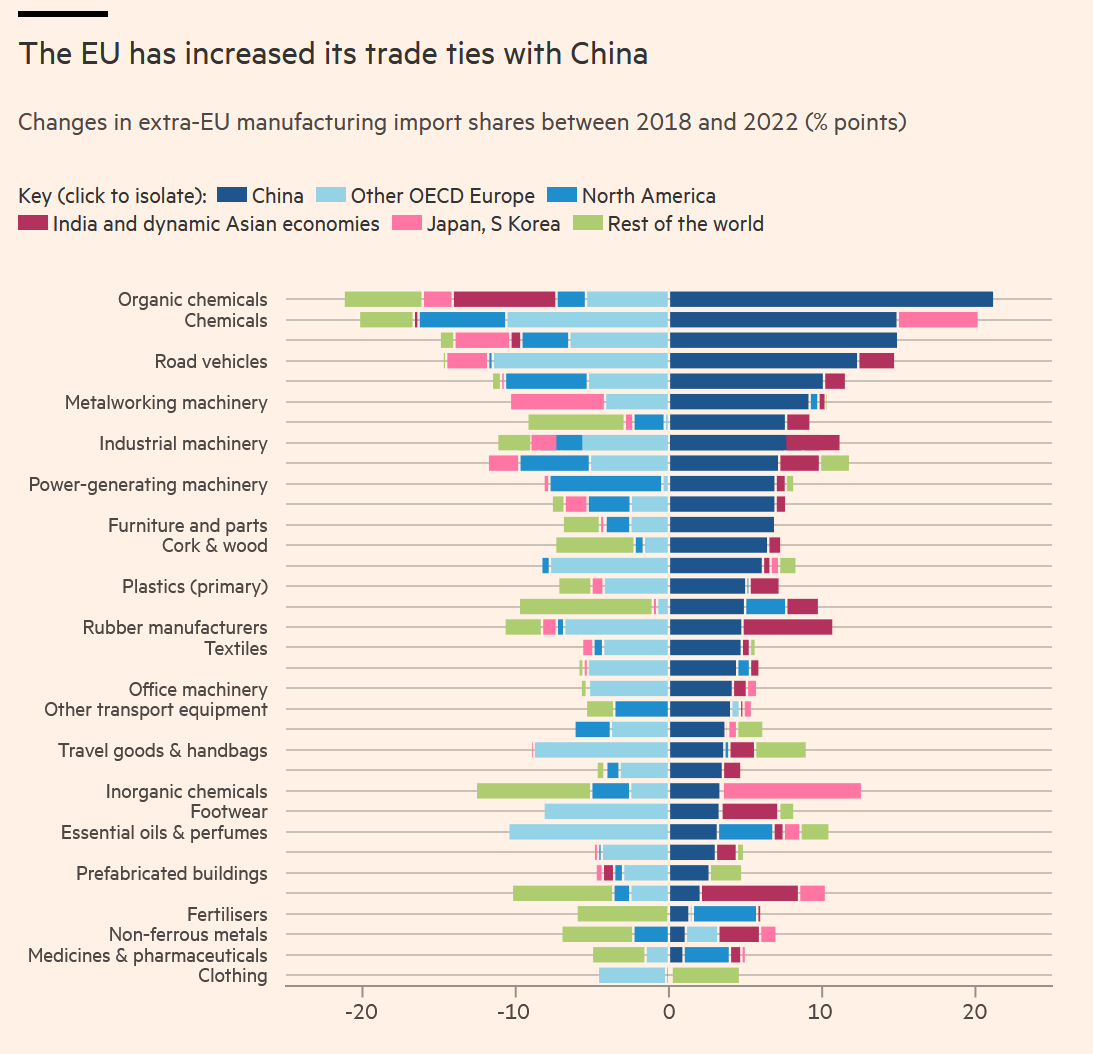
• Publication of EU list of critical tech will be signal of bloc's willingness/ability to pursue de-risking
• List will provide concrete insights into EU thinking about what risk of doing business with China really is – a key question to answer before de-risking [2/8]
• List will provide concrete insights into EU thinking about what risk of doing business with China really is – a key question to answer before de-risking [2/8]
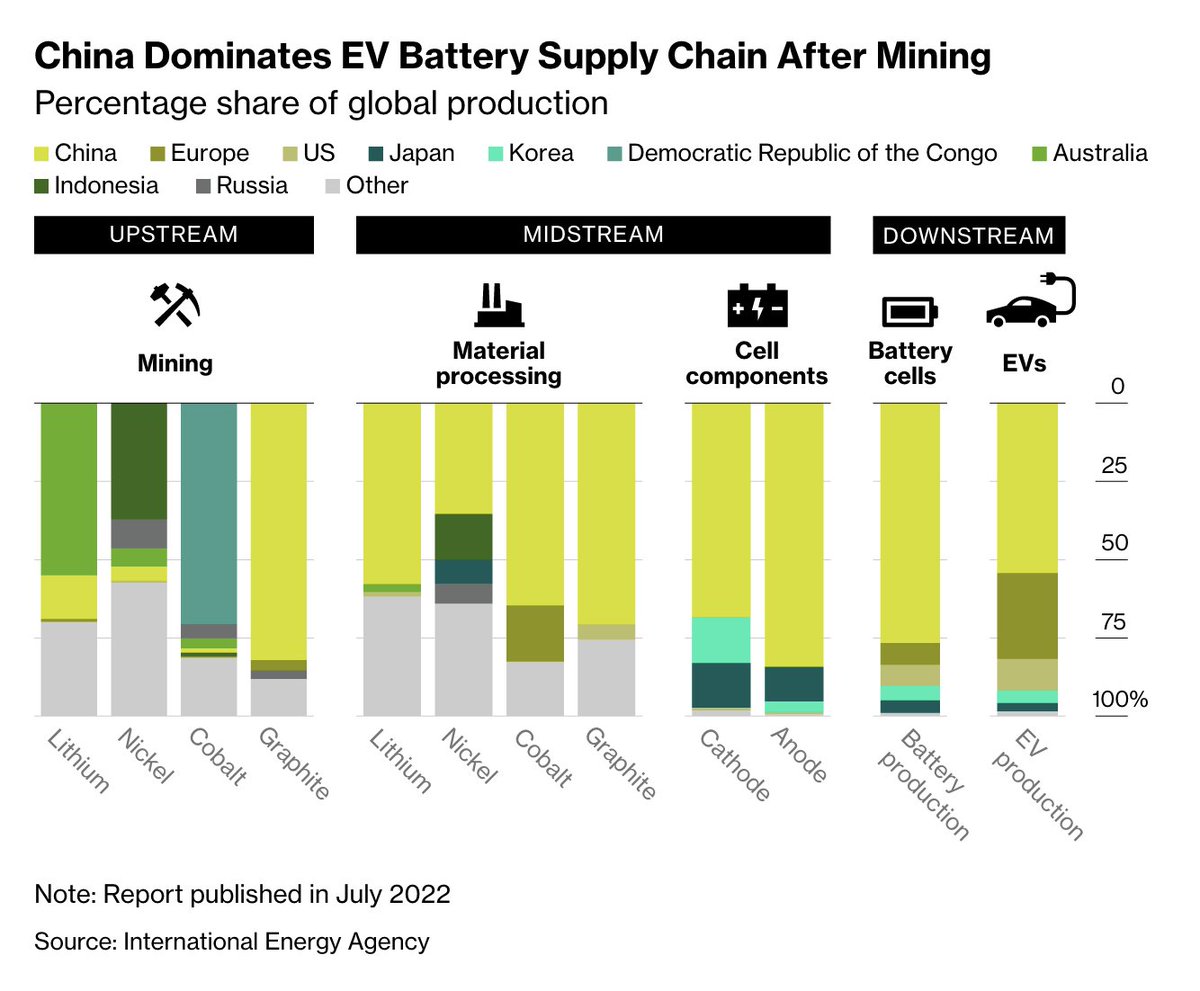
• By selecting only few flagship, priority sectors, EU will be keen to reiterate message that it is willing to de-risk, not decouple, from China
• EU also wants to show that it is carving its own, European, de-risking strategy, instead of following US lead in the field [3/8]
• EU also wants to show that it is carving its own, European, de-risking strategy, instead of following US lead in the field [3/8]
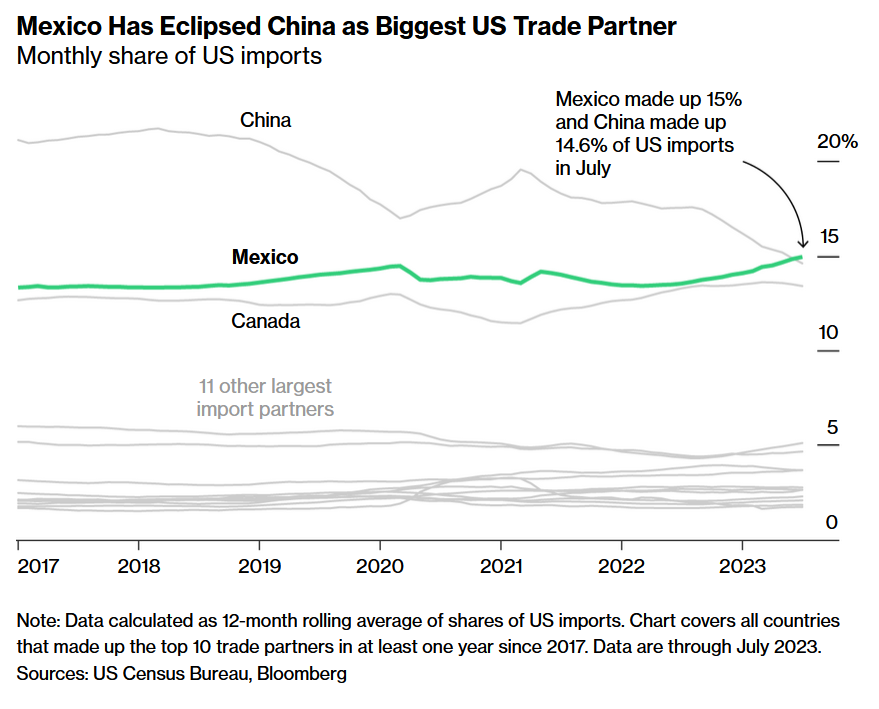
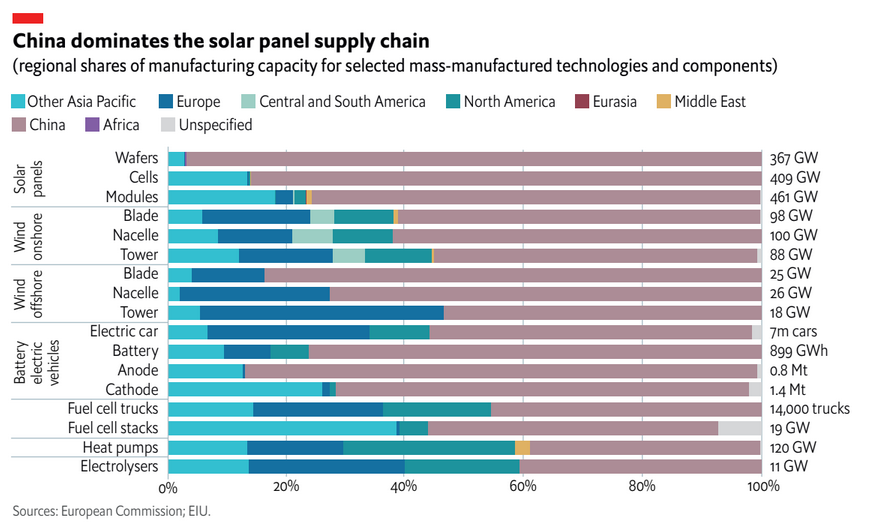
• List will almost certainly include tech related to green energy transition - a key area for EU de-risking
• EU wants to ensure safety of supplies for critical raw materials (lithium), tech (EV batteries) and equipment (solar panels) that are vital for net-zero economy [4/8]
• EU wants to ensure safety of supplies for critical raw materials (lithium), tech (EV batteries) and equipment (solar panels) that are vital for net-zero economy [4/8]
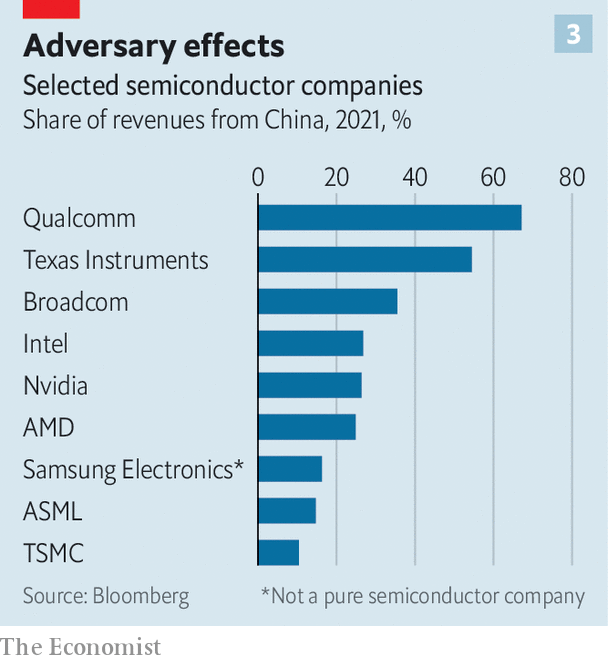
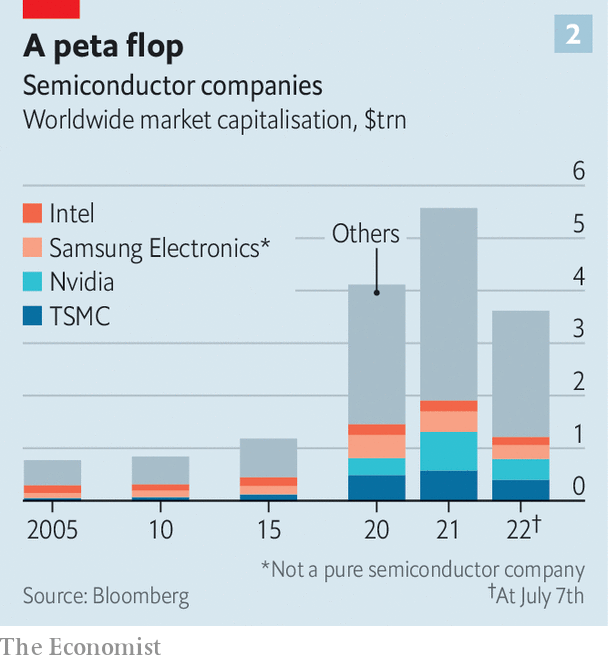
• List will also likely include know-how related to semiconductors, Artificial Intelligence (AI) and quantum computing
• EU's efforts to mitigate risks associated with these technologies stem from their dual nature: these tech have both civilian and military applications [5/8]
• EU's efforts to mitigate risks associated with these technologies stem from their dual nature: these tech have both civilian and military applications [5/8]
• List will be of critical importance to private firms: document will likely define which sectors could fall under remit of potential EU tool to screen outbound investment, notably to China
• Adoption of such a tool would signal greater EU-US alignment on de-risking [6/8]
• Adoption of such a tool would signal greater EU-US alignment on de-risking [6/8]
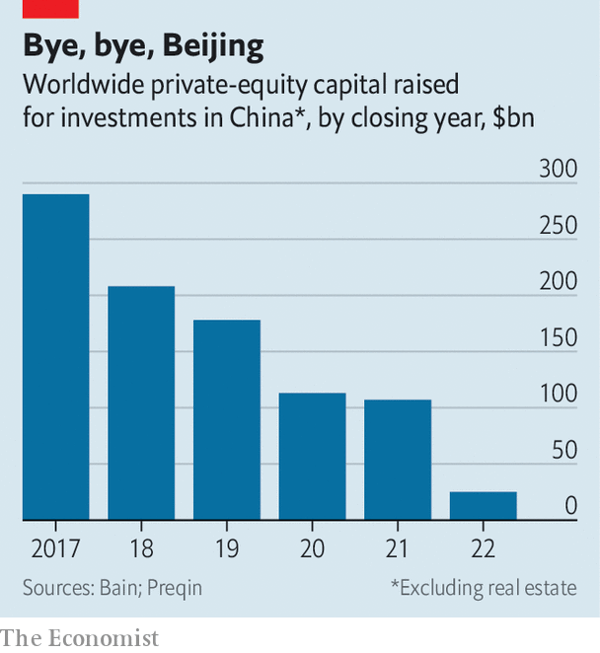
• Discussions on outbound FDI screening show how Western countries are willing to enforce intrusive measures that were previously unthinkable
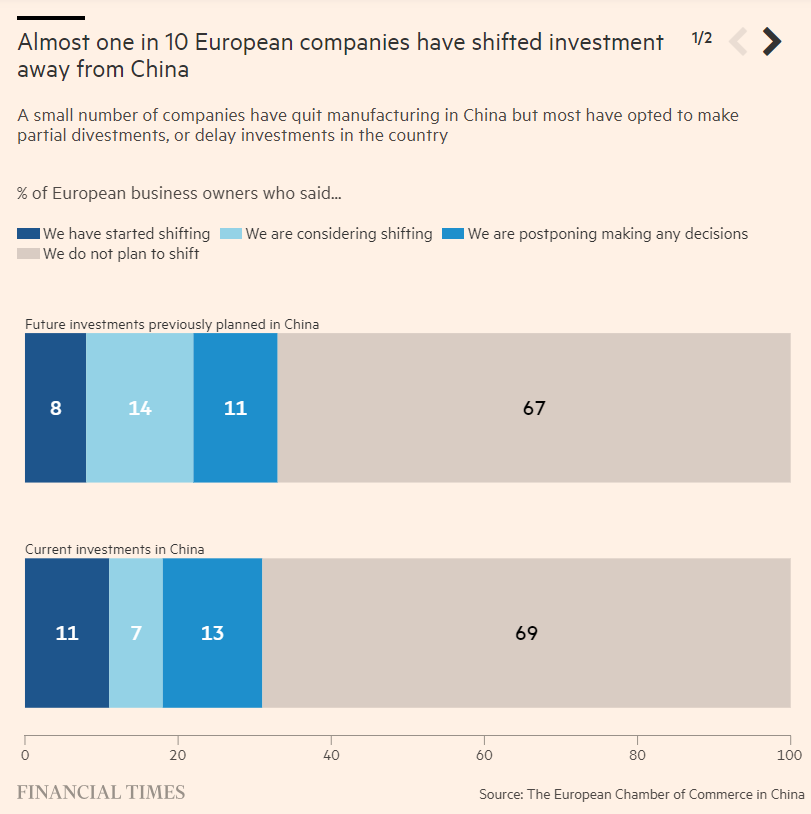
• Yet getting companies on board with de-risking will be difficult: two-thirds of EU firms have no plans to shift away from China [7/8]
• Yet getting companies on board with de-risking will be difficult: two-thirds of EU firms have no plans to shift away from China [7/8]
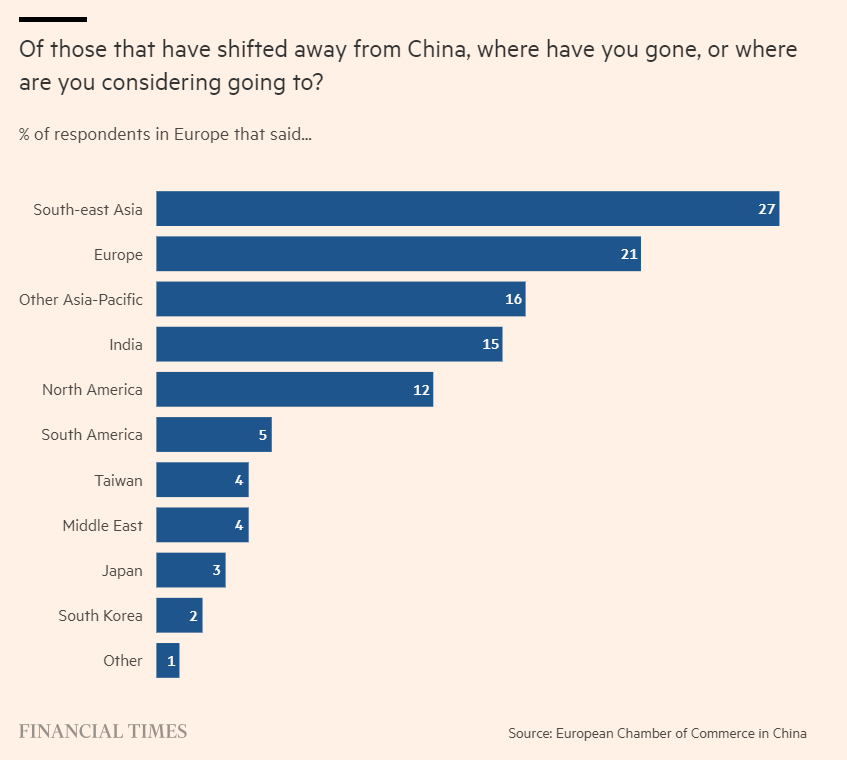
• Overall, bridging gap between de-risking rhetoric and practice will remain hard for EU
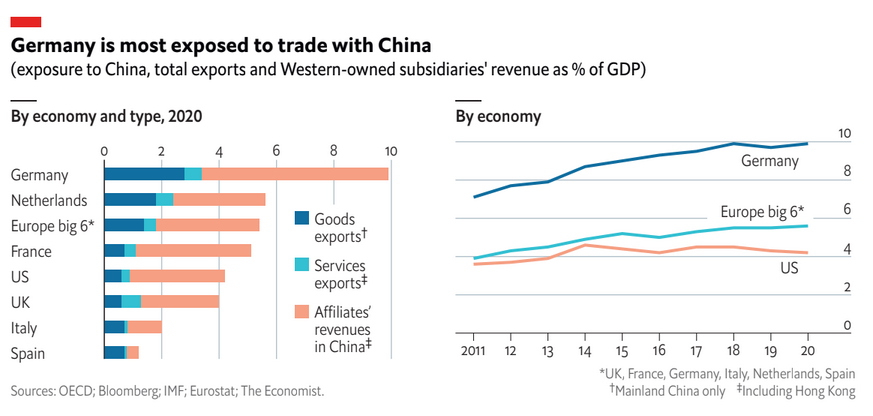
• Politically, de-risking plans have created divisions among EU member states
• In particular, Germany's economy remains far more exposed to China than other European economies
[8/8 - END]
• Politically, de-risking plans have created divisions among EU member states
• In particular, Germany's economy remains far more exposed to China than other European economies
[8/8 - END]
• • •
Missing some Tweet in this thread? You can try to
force a refresh