Imagine how morally depraved a society must be to demolish this.
NYC's Penn Station was torn down in 1963 to build Madison Square Garden, and the station was forced underground.
“One entered the city like a god; one scuttles in now like a rat.”
A reminder of how it looked 🧵
NYC's Penn Station was torn down in 1963 to build Madison Square Garden, and the station was forced underground.
“One entered the city like a god; one scuttles in now like a rat.”
A reminder of how it looked 🧵
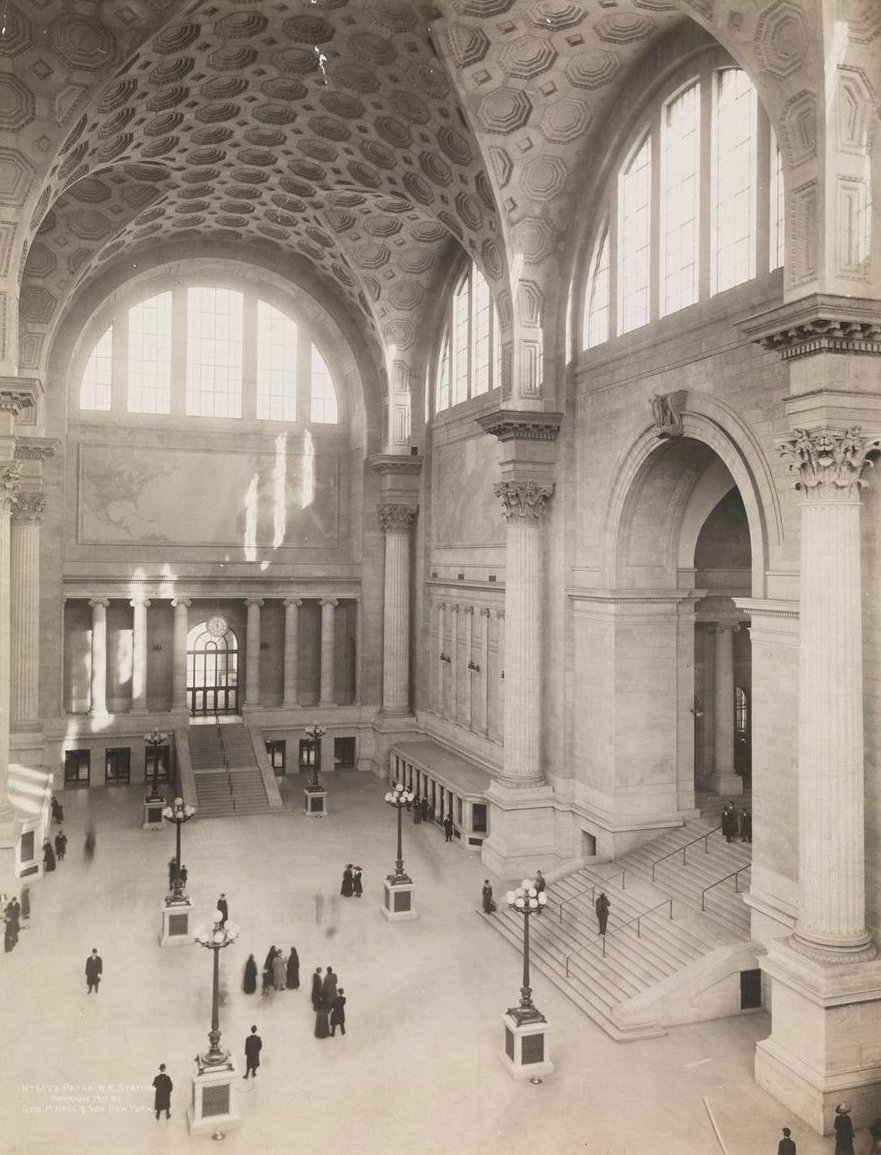
The main waiting room was NYC's largest indoor space. Both the interior and exterior drew inspiration from St. Peter's Basilica and the Bank of England.

The Corinthian columns of the main waiting room led up to a majestic marble ceiling that was 150 feet high.

The soaring train shed featured arching steel girders, staggered mezzanines, and glass-block floors that let sunlight through to the tracks.

A huge clock hung under the glass dome in the main concourse.

Inspired by the Baths of Caracalla in Rome, it was the fourth-largest building on Earth.

Travelers entered through an exterior facade of massive Doric columns. It was described as "a great Doric temple to transportation".

The exterior was adorned with mighty, freestanding stone eagles, weighing up to 5,700 pounds each.

"Pennsylvania Station was built to last forever, but due to greed and myopia, the magnificent structure was put to the wrecking ball just over fifty years after it was built."

• • •
Missing some Tweet in this thread? You can try to
force a refresh