Yesterday, the Court of Appeals for the 11th Circuit in Atlanta issued an en banc ruling in US v. Pate, which could have potential ramifications for removal proceedings in Georgia v. Trump et al. or minimally offers insight to the judges' thinking. #gapolmedia.ca11.uscourts.gov/opinions/pub/f…
Pate who says he's the “heir to the kingdom of Morocco,” filed liens against property owned by individuals Pate thought wronged him including a former IRS Commissioner and a former Treasury Secretary. Pate was charged under 18 U.S.C. § 1521, which criminalizes retaliatory liens.
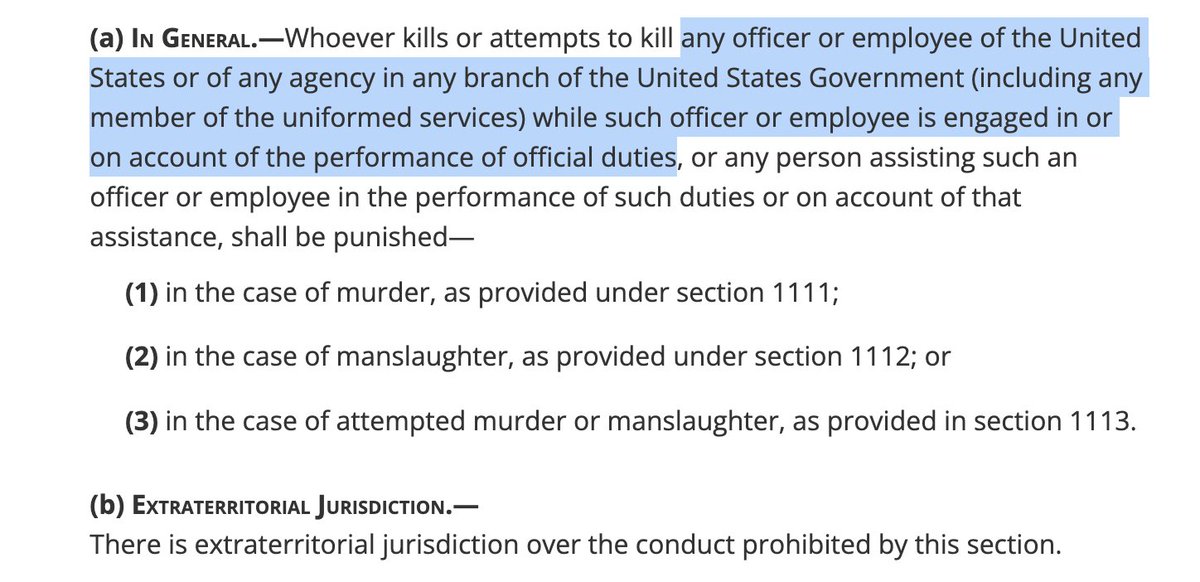
However, retaliatory liens are unlawful when made against persons included under 18 U.S.C. § 1114. So, who are those people? "[A]ny officer or employee of the United States... while such officer or employee is engaged in or on account of the performance of official duties..."
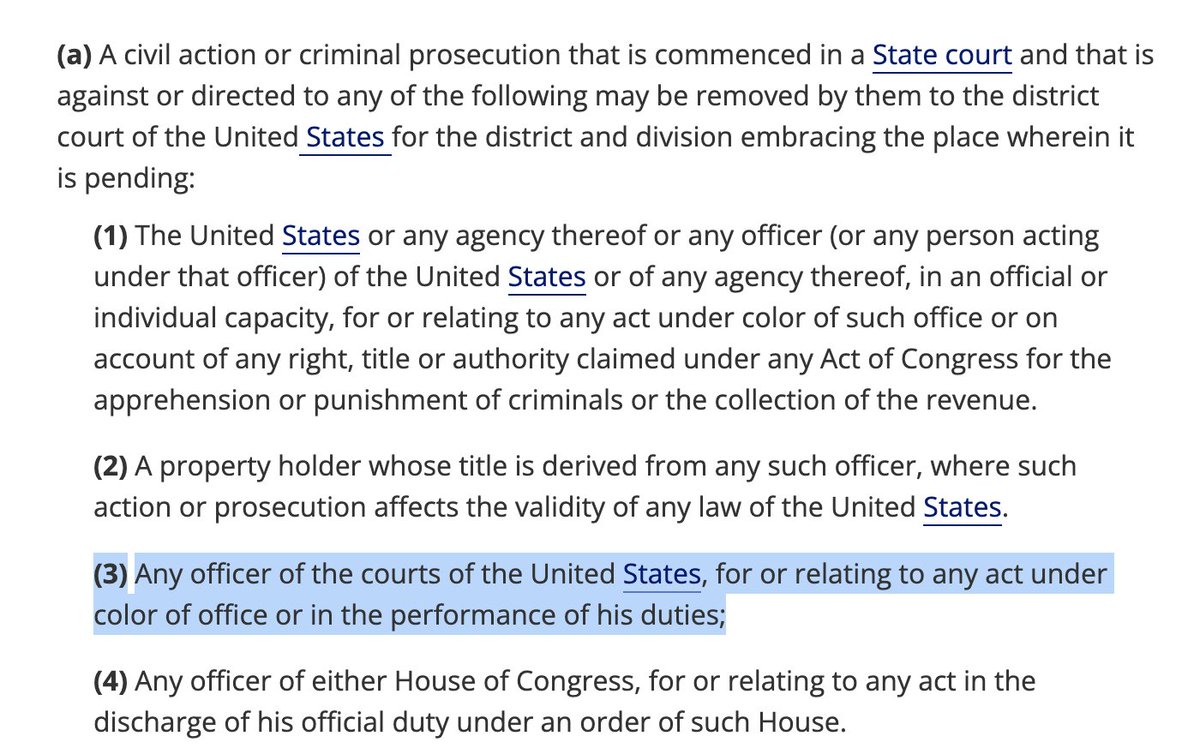
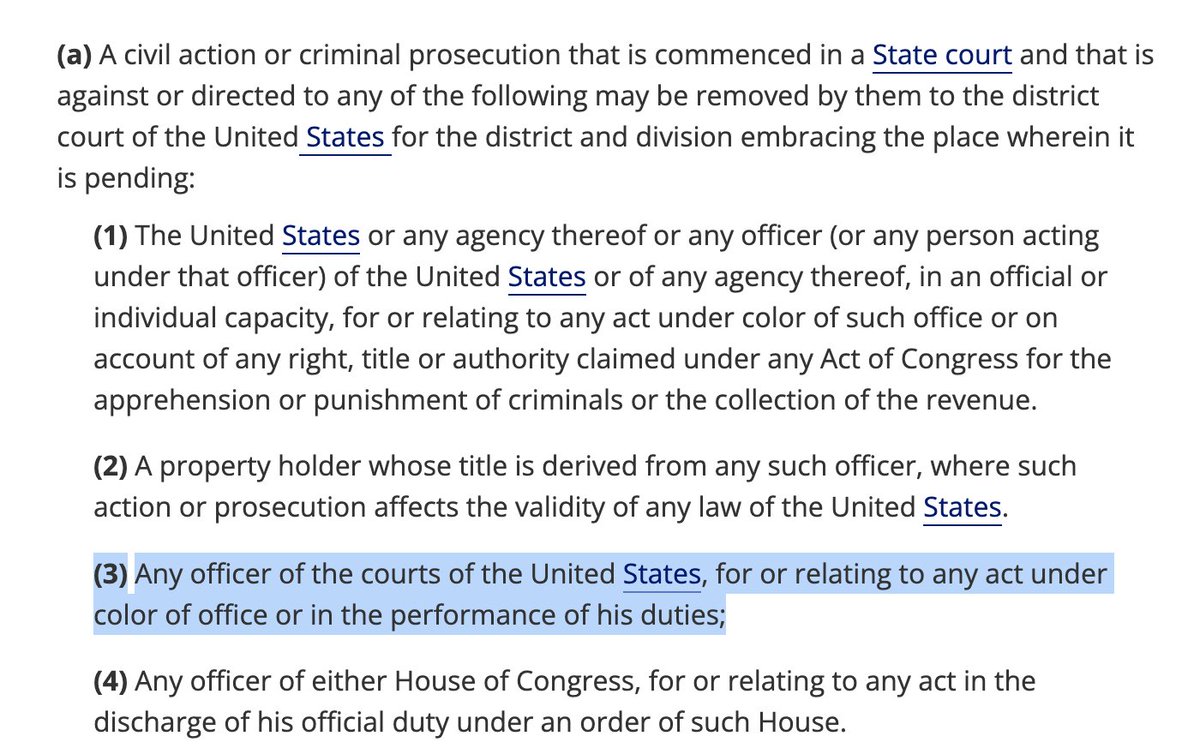
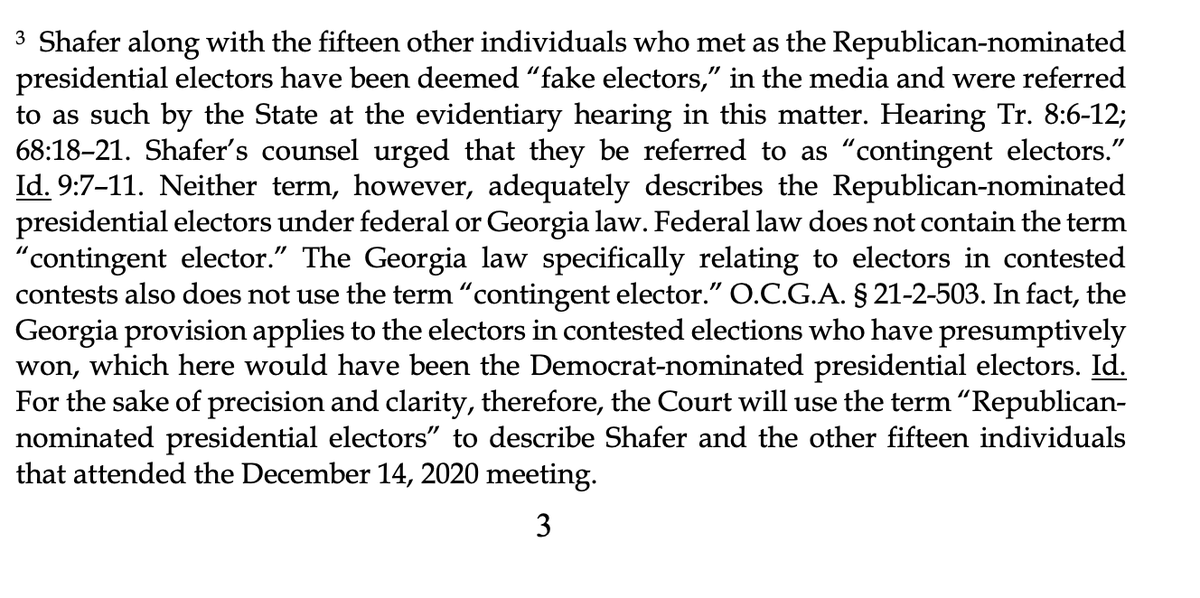
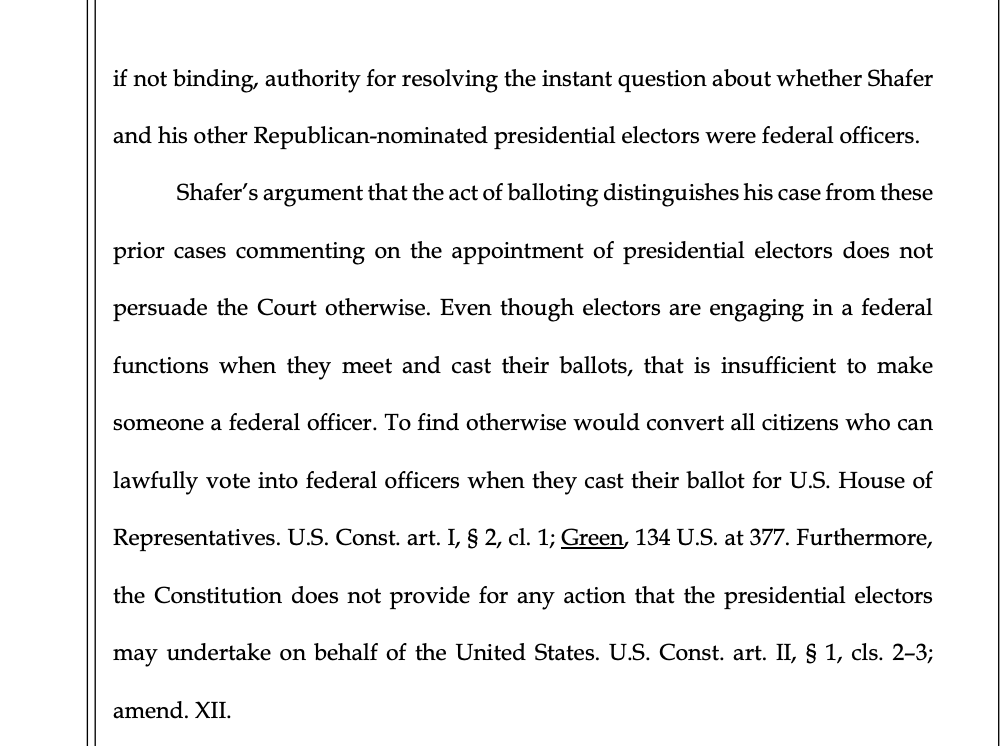
Sounds a bit like the removal statute, *though to be clear* there are meaningful differences in the statutory text. The left image is the removal statute, 1442, and the right is the statute incorporated in the liens law, 1114.
In Pate, the government argued the retaliatory liens were unlawful because federal law's usage of "on account of the performance of official duties" means former federal officials are protected against these bad liens when the motivation is their past status as federal officials.
The 11th Cir said, "no." When Pate filed the retaliatory liens against the property, the owners were not in federal service. The court rejected that the statute's language means the inquiry should be about *why* the lien was filed. Rather, the key question is *when* it was filed.
Similar questions arise in the removal statute. One part of the removal language is express about allowing the removal for current and former federal officers (first image) but not the text related to the Fulton County cases (second image). And the 11th Circuit asked about this.
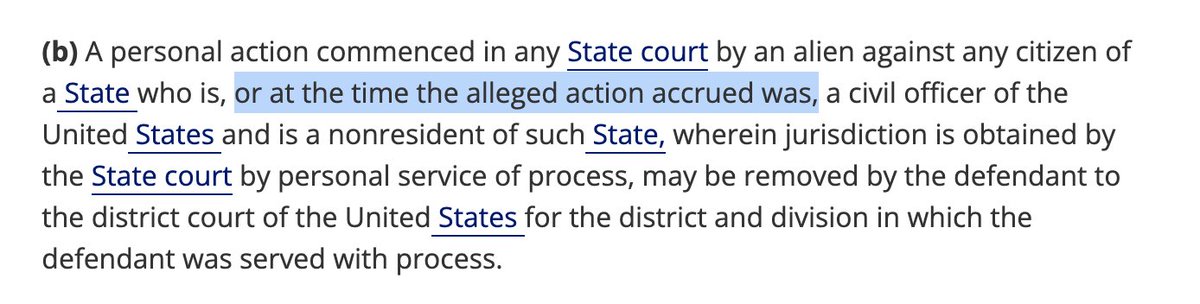
One might wonder given the very restrictive interpretation of federal law in Pate-- a kind of strangulating textualism-- whether the 11th Circuit was already contemplating/leaning into the idea that former federal officials being prosecuted in state court can be removed at all.
I, for one, was skeptical of that argument and remain so despite the appellate court's inquiries. However, the decision in Pate makes me think the 11th Circuit is ready to disagree with me.
I want to be very, very, very clear. These are not identical statutes and so mapping one issue onto the other is not perfectly predictive nor controlling, but it is fair to say this not the kind of news you want if you're Mark Meadows, Jeff Clark, or the among the GOP electors.
cc: @ClarkGSULaw @espinsegall @lee_kovarsky
*is not the kind of news you want, to be even more clear.
• • •
Missing some Tweet in this thread? You can try to
force a refresh

In Fulton County Superior Court, lawyers are arguing that Ga. RICO cannot be the basis for charges related to the 2020 election because the DA has not alleged the defendants engaged in racketeering activity for either a pecuniary benefit or to foment physical threats of violence.
Judge McAfee says the intent of the General Assembly in adopting Georgia RICO, as expressed in the purpose clause, was to target financial crimes and criminal violence, but the text of the statute doesn't have such restrictive language.
I take professorial notice that @AnnaBower is taking detailed notes and I am sorry I did not attend in person today.
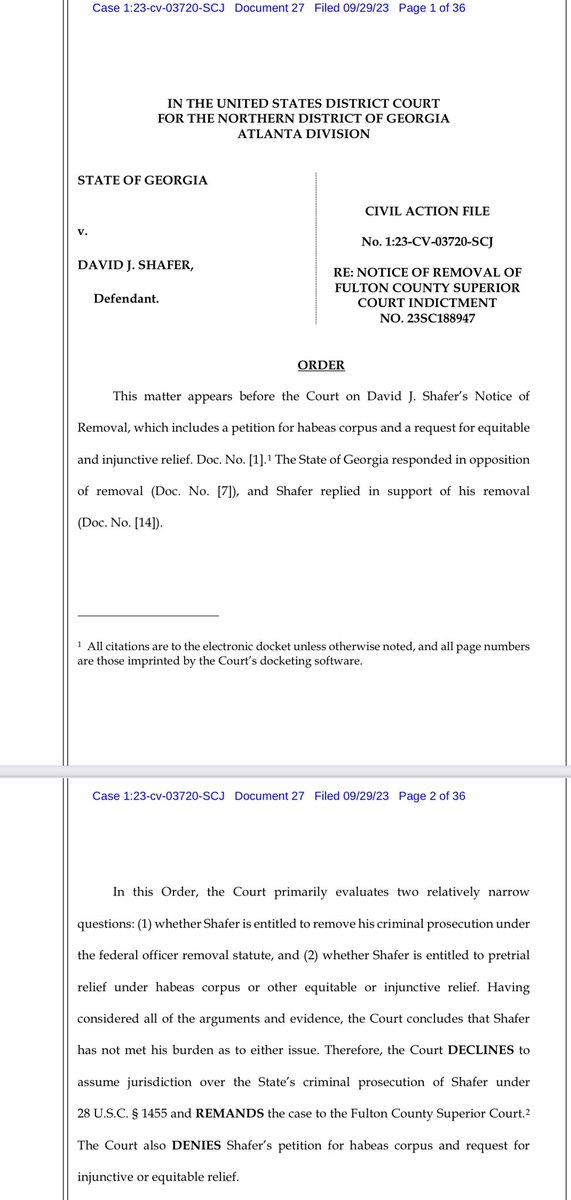
Judge Jones DENIES David Shafer’s, a GOP elector, motion to remove to federal court, remanding the case back to Fulton County Superior Court.
Important first note (and I think a good one to note), Judge Jones refers to the defendants here as "Republican-nominated electors" as a neutral term.
The federal court finds that the Republican-nominated electors are not federal officers because they do not control any federal office or make policy, rather the Electoral College is designated to select the president in a way akin to any voter does for a member of Congress.
🚨🚨🚨 Fulton County Defendant Scott Hall is currently taking a plea in the Georgia RICO election case.
Hall is the Atlanta-area bail bondsman who was accused of conspiring to hack election data in Coffee County in violation of Georgia RICO and conspiracy to commit election fraud.
Sounds like we have five counts of unlawful election interference under OCGA § 21-2-597.
In these removal cases, folks tend to conflate "under color of law" and "lawful." It is about the trappings of office or appearance of authority. "The dispositive issue is whether the official was acting pursuant to the power he/she possessed by state authority or .... #gapol
... acting only as a private individual." The question really is whether Meadows or Clark or the fake electors were relying on vested authority to do the underhanded things they were doing. The answer is not really. None of these folks really needed their official power to do...
the things they were doing. Meadows engaged in activity fed law disallows under the Hatch Act and weren't terribly special in terms of official authority. Clark was just out there writing letters. Now, if he threatened unlawful prosecutions as a DOJ official... different story.
From the Clark hearing. His lawyers argue that Clark was engaged in the DOJ's ordinary deliberative process while the Fulton DA (with Jody Hunt) say Clark's work to overturn the Georgia election was (1) based on a lie (2) was not his job (3) and it wasn't any DOJ employee's job
There's confusion about whether or not Donald Trump ordered or asked Clark to write the letter to Georgia legislators that got him in hot water or whether Trump even knew Clark when he drafted the letter. And of course it was Rep. Scott Perry who put Clark in the spotlight.
Clark's team says none of this matters because even if he wasn't acting in good faith he was still doing it with the trappings of his office (not a bad argument) but they did not offer what federal defense there would be other than some broad Supremacy Clause/Take Care claim.
I think this is a trap that Fani Willis should not walk into. The consensus has generally been (and I think correct) that the current status of the defendant does not matter but what does matter is whether the acts that undergird the legal action are related to official duties.
Willis should shut this down despite it maybe giving Meadows a defeat. First, it is a nasty kind of textualism that conservatives like and liberals should reject. Second, it introduces more unnecessary confusion and opens the door to a greater likelihood of Supreme Court review.
Third, it makes little theoretical sense. If the idea of removal is the provide a neutral venue to persons employed by the gov’t or empowered by federal law from vindictive actions in state court, then the D’s current status is irrelevant. It’s about protecting federal integrity.