Read on Twitter
“India isn’t ready to be a superpower”
That’s a controversial argument
But is it true? 🧵
That’s a controversial argument
But is it true? 🧵

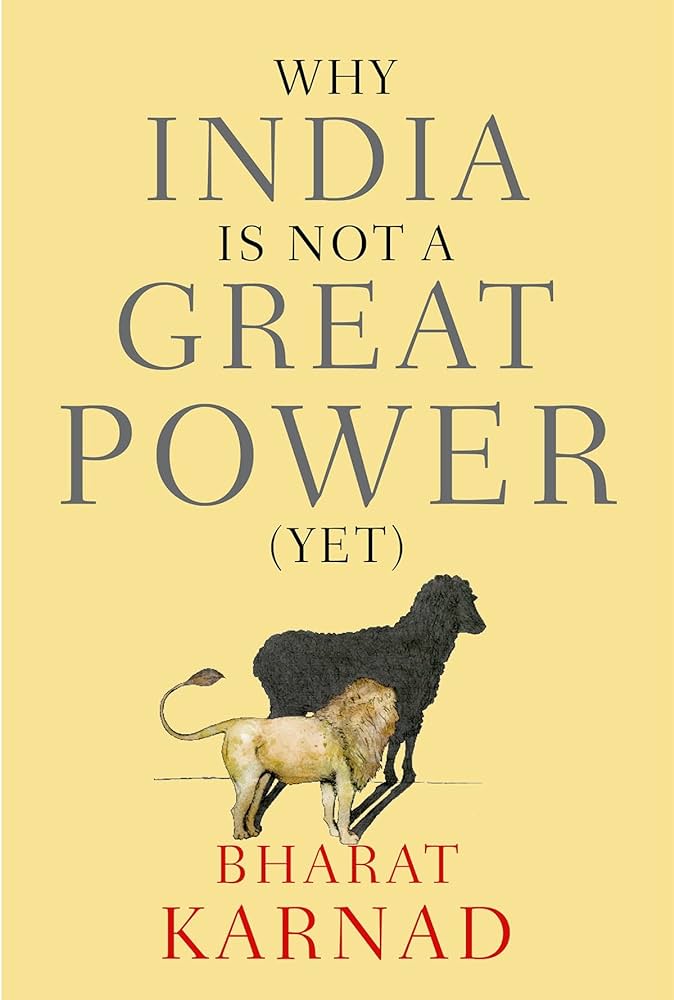
In 2015, noted analyst Bharat Karnad wrote "Why India is Not A Great Power (Yet)"
Karnad argues that despite its large population, economic heft and military strength, India has not become a major power
Karnad argues that there are a bunch of things that 🇮🇳 does wrong
Karnad argues that despite its large population, economic heft and military strength, India has not become a major power
Karnad argues that there are a bunch of things that 🇮🇳 does wrong
He says India suffers from:
1. Lack of a concrete geopolitical vision
2. A lazy attitude
2. Weak politicians & bureaucrats
3. Major social challenges like poverty and inequality
4. An underdeveloped defence ecosystem
These factors are stopping 🇮🇳 from becoming a great power
1. Lack of a concrete geopolitical vision
2. A lazy attitude
2. Weak politicians & bureaucrats
3. Major social challenges like poverty and inequality
4. An underdeveloped defence ecosystem
These factors are stopping 🇮🇳 from becoming a great power
1⃣. No vision
Karnad argues that great powers through history have all had an outward-looking national vision that is backed by strong leaders and efficient bureaucracies
This vision and a sense of national destiny sets great powers apart from the rest
Karnad argues that great powers through history have all had an outward-looking national vision that is backed by strong leaders and efficient bureaucracies
This vision and a sense of national destiny sets great powers apart from the rest
Take, for example, the United States
As America was rising in the 19th century, the concept of "Manifest Destiny" became popular
This concept held that America was destined to expand and grow its territory & power partly because the country had 'divine backing'
As America was rising in the 19th century, the concept of "Manifest Destiny" became popular
This concept held that America was destined to expand and grow its territory & power partly because the country had 'divine backing'
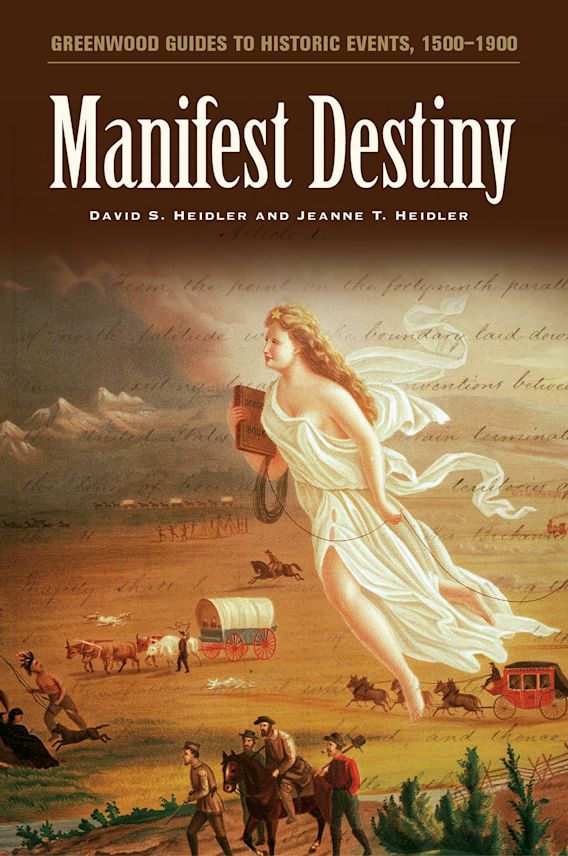
It became an important part of America's foreign policy in the 19th century
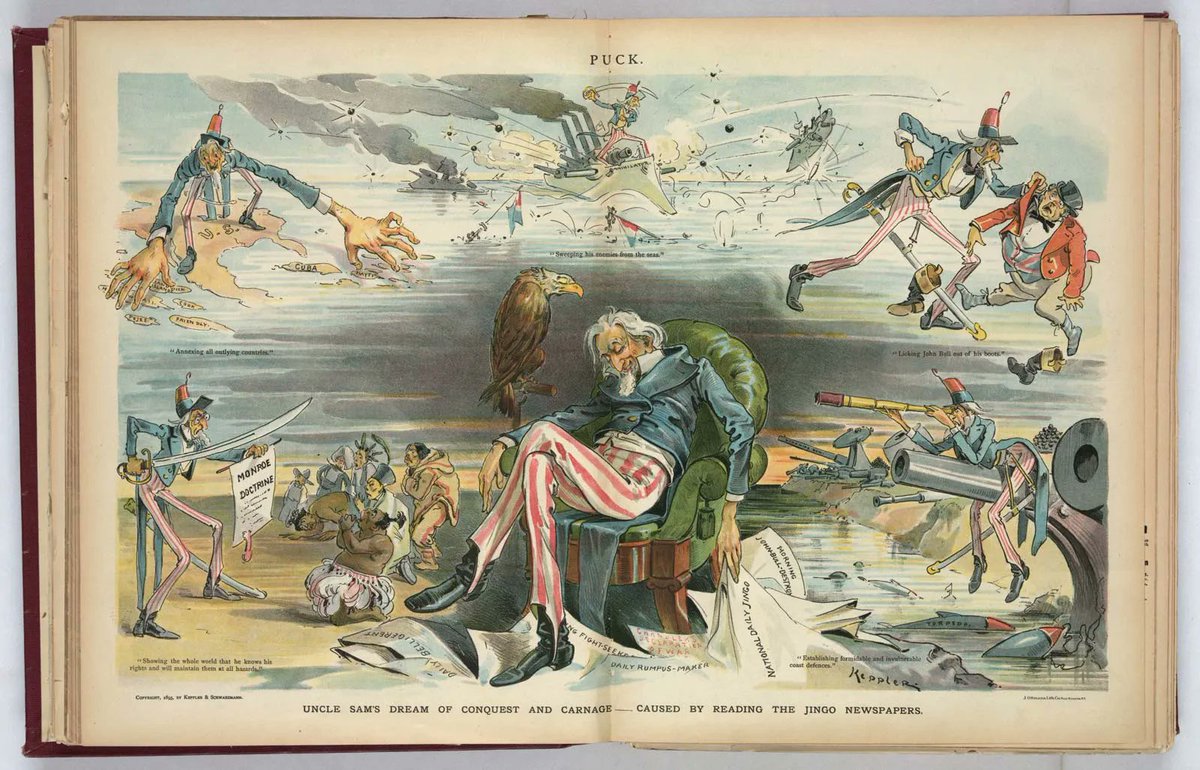
It drove the US to defeat older powers like Spain & take over territory
The bottom line is that America's rise was fueled by an outward-looking national vision that was broadly popular
It drove the US to defeat older powers like Spain & take over territory
The bottom line is that America's rise was fueled by an outward-looking national vision that was broadly popular
India, by contrast, has no similar vision
It is clear that many Indians want their country to be a great power
BUT, neither politicians nor the country's diplomats have seriously attempted to construct a single national vision that unites the Indian public behind that goal
It is clear that many Indians want their country to be a great power
BUT, neither politicians nor the country's diplomats have seriously attempted to construct a single national vision that unites the Indian public behind that goal
In fact, Karnad argues that many prominent thinkers in the country aren't actually convinced that India can or should be a great power
Prominent historian Ramachandra Guha, for instance, believes 🇮🇳 shouldn't even try to be a superpower
Prominent historian Ramachandra Guha, for instance, believes 🇮🇳 shouldn't even try to be a superpower
Karnad quotes former National Security MK Narayanan who argued that a becoming a great power would require "deployment of scare resources and hence is 'an unaffordable luxury' that an impoverished India cannot afford"
Without a popular national vision that looks outward to achieve great power status, India is unable to make the reforms or mobilise the resources it needs
Foreign policy and national security issues are, barring some exceptions, seen as disconnected from the average citizen
Foreign policy and national security issues are, barring some exceptions, seen as disconnected from the average citizen
2⃣. Lazy Attitude
The absence of a national vision translates to a pretty laidback attitude to becoming a great power
Karnad argues that India's politicians and diplomats believe that the country will naturally reach this status in time
BUT, this makes them overconfident
The absence of a national vision translates to a pretty laidback attitude to becoming a great power
Karnad argues that India's politicians and diplomats believe that the country will naturally reach this status in time
BUT, this makes them overconfident
Former DRDO Chief VK Saraswat says:
"We are not an ambitious people. Even if we want to become Number One in the world, the attitude is "Haan, ho jayenge" (Well, yes, we will become one in due time) we are not driven; that's the reason for our slow pace of progress"
"We are not an ambitious people. Even if we want to become Number One in the world, the attitude is "Haan, ho jayenge" (Well, yes, we will become one in due time) we are not driven; that's the reason for our slow pace of progress"
Contrast this with Singapore, which is a far smaller country
One its top diplomats, Bilahari Kausikan, said:
"If you're a small country, you gotta start from the premise that you are irrelevant. So every day you wake up and you ask yourself how do I make myself relevant now?"
One its top diplomats, Bilahari Kausikan, said:
"If you're a small country, you gotta start from the premise that you are irrelevant. So every day you wake up and you ask yourself how do I make myself relevant now?"
India has the opposite problem
It is already relevant & Karnad argues that it makes India complacent
Why strive to become a great power today if we'll eventually become one tomorrow?
The lack of a national vision also makes it easier for India's decision makers to cruise along
It is already relevant & Karnad argues that it makes India complacent
Why strive to become a great power today if we'll eventually become one tomorrow?
The lack of a national vision also makes it easier for India's decision makers to cruise along
3⃣. Weak politicians and bureaucrats
Karnad argues that India's national security elite are not serious about making the country a great power
First, the politicians
Very few of 🇮🇳's politicians are interested in foreign policy since their focus is largely on domestic affairs
Karnad argues that India's national security elite are not serious about making the country a great power
First, the politicians
Very few of 🇮🇳's politicians are interested in foreign policy since their focus is largely on domestic affairs
That means they often lack the will, expertise or the vision to push foreign policy in a particular direction
Second, the bureaucracy
While India's diplomats and military are competent, they've got problems
India's Foreign Ministry is underfunded and has too few diplomats
Second, the bureaucracy
While India's diplomats and military are competent, they've got problems
India's Foreign Ministry is underfunded and has too few diplomats
Karnad argues the Ministry of Defence is run by IAS officers who aren't defence experts
Bureaucrats are also occupied with day-to-day operations
This leaves little time for big strategic thinking
All of this means 🇮🇳 hasn't developed the attitude it needs to be a great power
Bureaucrats are also occupied with day-to-day operations
This leaves little time for big strategic thinking
All of this means 🇮🇳 hasn't developed the attitude it needs to be a great power
4⃣. Military and Hard Power problems
Karnad argues that the effective use of hard power and military diplomacy is an essential skill for great powers
Unfortunately, India hasn't picked this up yet
India's military is still fairly cut off from foreign policy decision making
Karnad argues that the effective use of hard power and military diplomacy is an essential skill for great powers
Unfortunately, India hasn't picked this up yet
India's military is still fairly cut off from foreign policy decision making
That is because of infighting between the foreign ministry and the military
As former Foreign Minister Jaswant Singh said, there is a "lack of planning (which has) rendered our foreign and defence policy functions as two separate...activities rather than as a functional whole"
As former Foreign Minister Jaswant Singh said, there is a "lack of planning (which has) rendered our foreign and defence policy functions as two separate...activities rather than as a functional whole"
There is also no single National Security Strategy that can integrate defence & diplomatic efforts
"The lack of vision or strategy document (to get everybody on the same page) means that we don't know what we want and no one knows what's right," says a former Air Force chief
"The lack of vision or strategy document (to get everybody on the same page) means that we don't know what we want and no one knows what's right," says a former Air Force chief
Besides this, Karnad has the usual complaints about the Indian military
- Too many inter-service rivalries & little co-ordination
- An weak domestic defence manufacturing system
- Dependency on foreign defence imports
- Inability to adopt new technologies
- Too many inter-service rivalries & little co-ordination
- An weak domestic defence manufacturing system
- Dependency on foreign defence imports
- Inability to adopt new technologies
5⃣. Economic and social problems
Great powers also have strong economies & social mobility
Karnad argues that while India's economy is set to see strong economic growth, social inequality & poverty remain high & mobility is low (comparable to Latin American countries)
Great powers also have strong economies & social mobility
Karnad argues that while India's economy is set to see strong economic growth, social inequality & poverty remain high & mobility is low (comparable to Latin American countries)
Great powers have also historically been great at manufacturing goods
These industries build industrial capacity & provide millions of well-paid jobs
BUT, India's manufacturing sector contributes just 15-17% of GDP
These industries build industrial capacity & provide millions of well-paid jobs
BUT, India's manufacturing sector contributes just 15-17% of GDP
This also feeds into unemployment
In 2022, ~ 25% of Indian youths were unemployed (World Bank)
That is not great news since 🇮🇳's workforce will expand by 8 million every year till 2030
This may mean social instability and division, which could threaten 🇮🇳's external ambitions
In 2022, ~ 25% of Indian youths were unemployed (World Bank)
That is not great news since 🇮🇳's workforce will expand by 8 million every year till 2030
This may mean social instability and division, which could threaten 🇮🇳's external ambitions
If you enjoy content like this, please do consider following me (@MattooShashank) on Twitter!
I write threads on Indian foreign policy and diplomatic history
I'm also on:
Instagram: instagram.com/shashankmattoo
I write threads on Indian foreign policy and diplomatic history
I'm also on:
Instagram: instagram.com/shashankmattoo
• • •
Missing some Tweet in this thread? You can try to
force a refresh