Some of the determinants of fertility decline, such as female education (everywhere) and government population control initiatives (most famously China, India, and Iran) are widely accepted. Others, such as the effects of media and nebulous culture, are more controversial.
Evidence from Brazil suggests that yes, media does have an independent effect on fertility. This study looked at the effects of one particular type of media: Globo soap operas, access to which was rolled out differentially from 1970-1990 and which were incredibly popular.
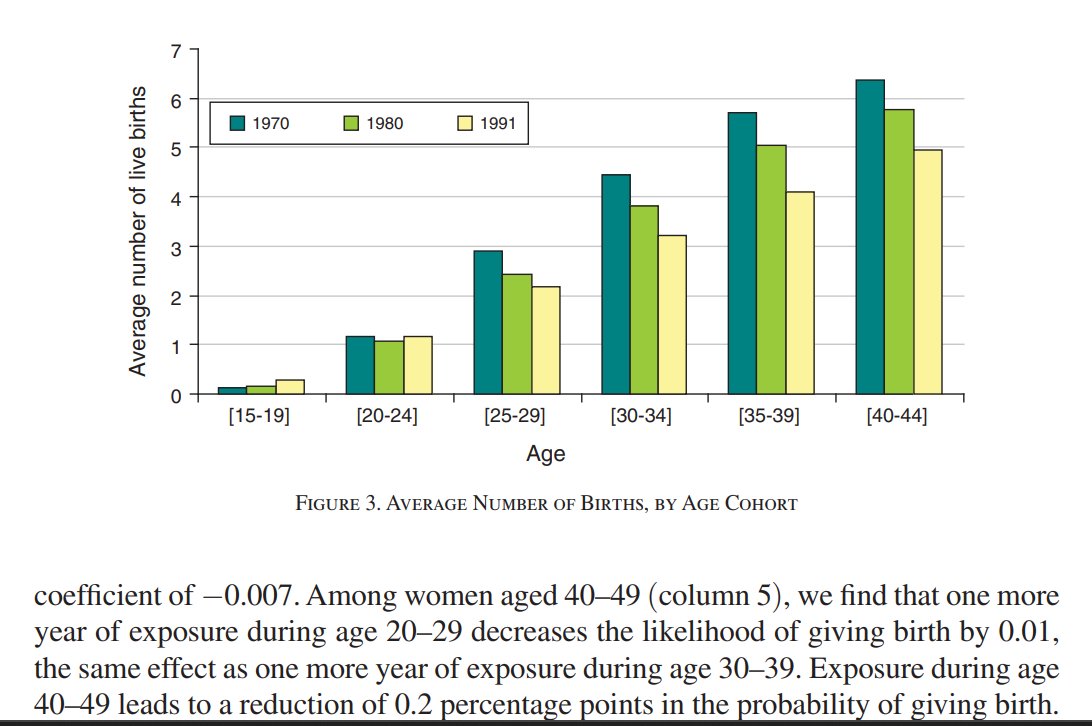
Brazil's fertility collapse 1960-present was extremely rapid. From a TFR of 6.3 in 1960 to 2.3 in 2000 to 1.66 in 2023. This without any active state-enforced population control measures and with abortion (and, for a time, even advertising contraception) illegal.
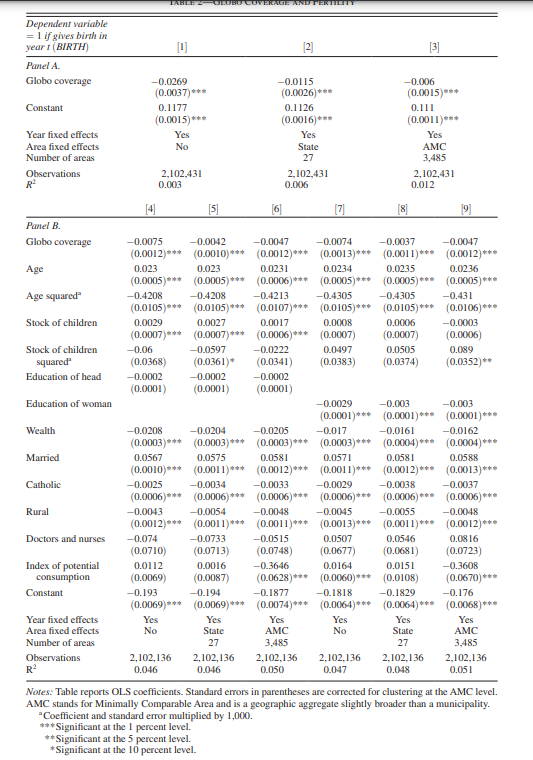
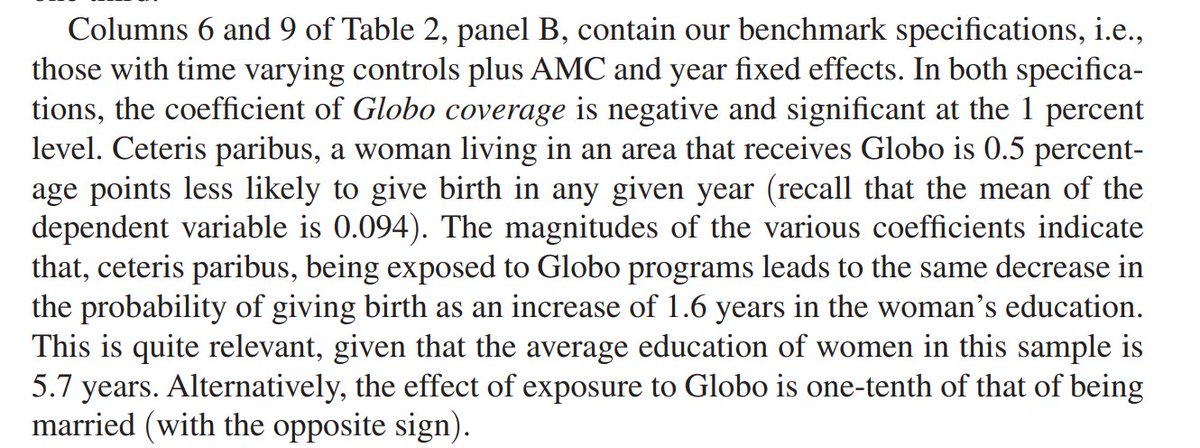
After controlling for many, many potential confounders (including all of the obvious ones, such as development, education, religion, etc), this study found that Globo access explains about 7% of Brazilian fertility. This is nontrivial; 2/3 the effect of increasing education.
Globo soap opera female characters were much more likely to be childless or have small families (1 or 2 kids) then Brazilians, less likely to marry, more likely to cheat and divorce, and more likely to see upward mobility. This is posited to change people's family expectations.
This is their model and a table containing the various observed variables they controlled for. They also controlled for the general decline in fertility across the country to ensure they were only measuring area-specific effects.
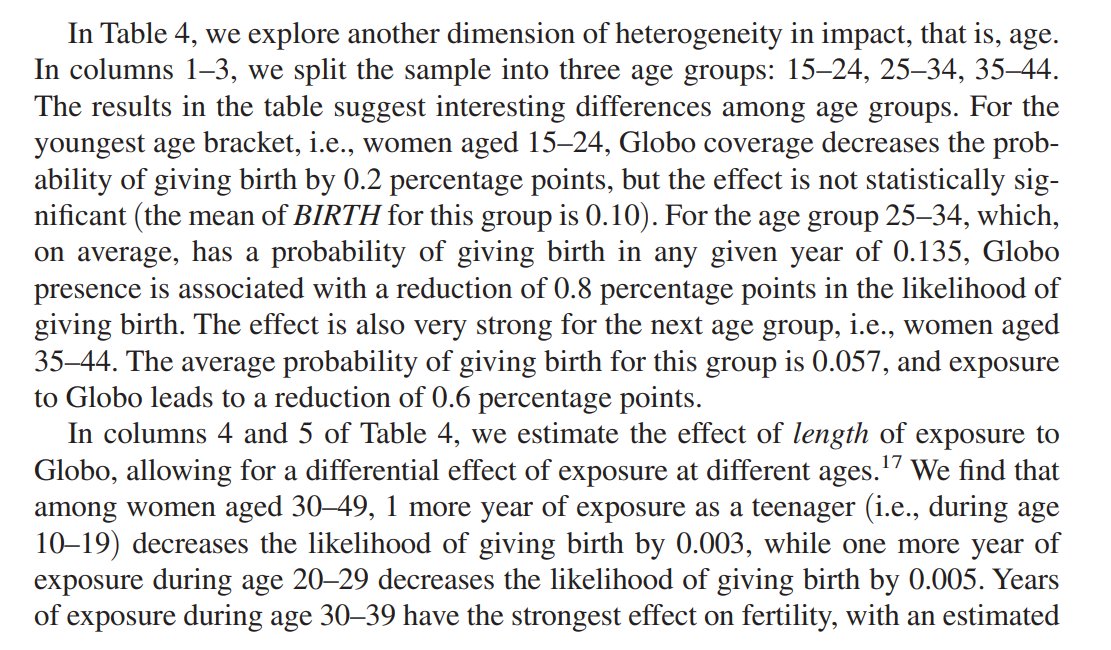
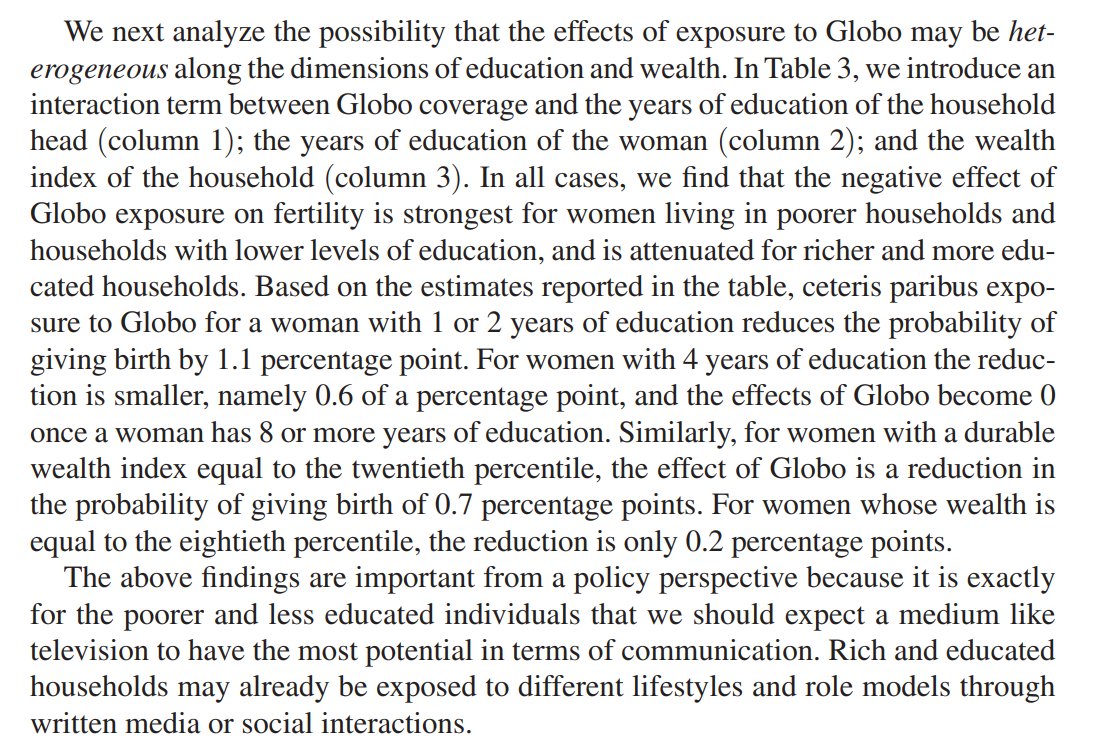
These effects are heterogenous: poorer and less educated (read: illiterate, since this is Brazil) women are more affected. This makes sense, since TV soap operas are smaller and less influential part of the media diet of intelligent people.
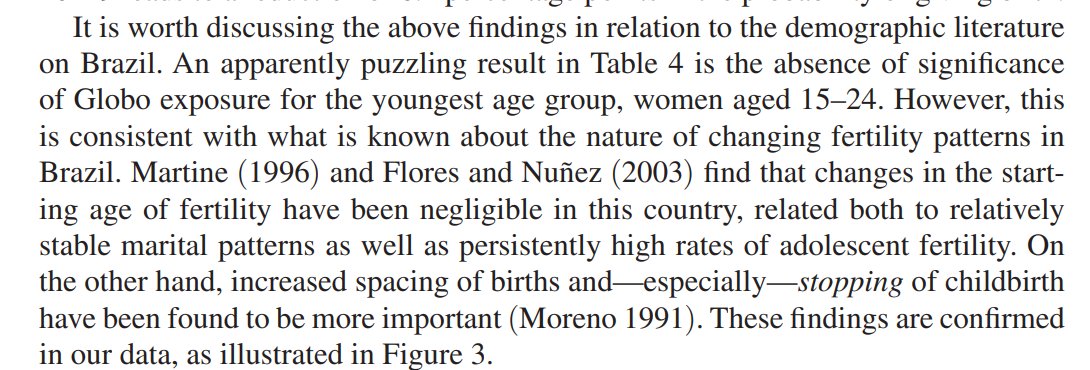
There is also age heterogeneity - it affects older women more then younger women. This also makes sense, as unlike, say, the US, Brazilian fertility decline is largely driven by stopping births earlier rather than starting later.
They use multiple falsification checks to test for robustness. In particular, their estimated effects do not begin until 1 year after Globo access to an area.
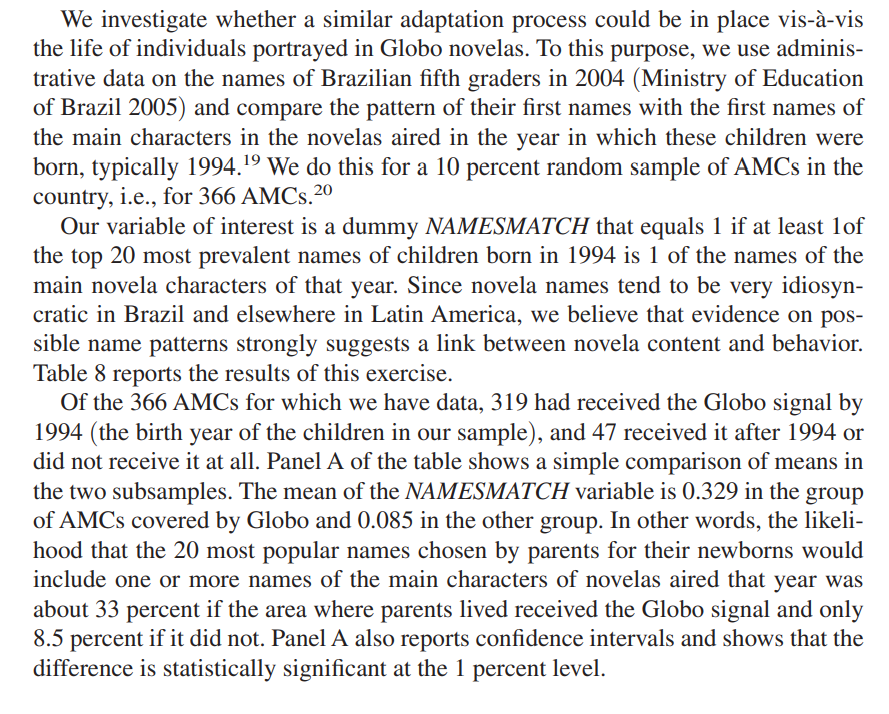
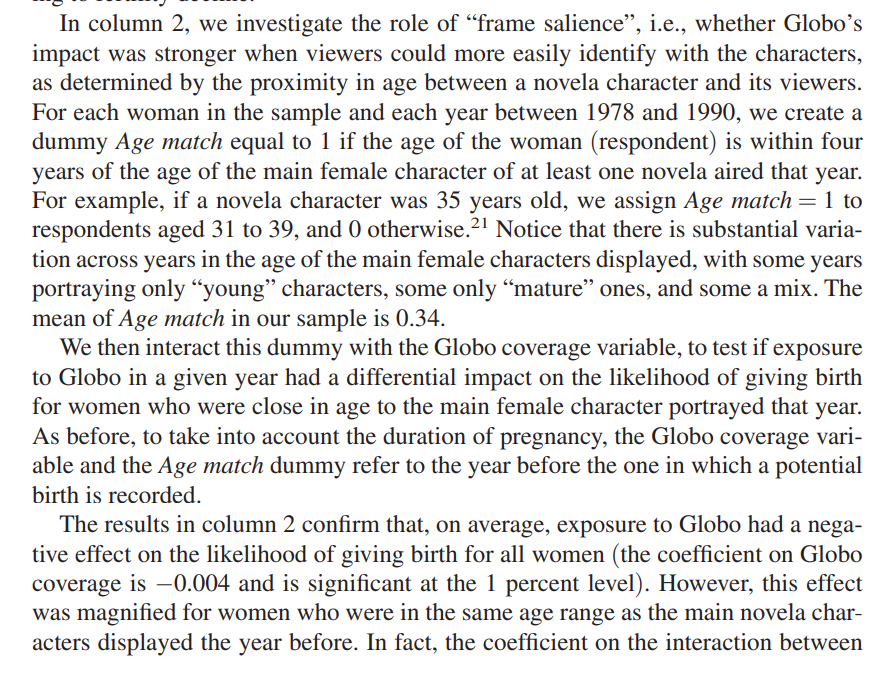
They also demonstrate that it appears to be the soap operas in particular, and not Globo or TV generally, by showing the effect can be predicted by the change people naming children after soap opera characters and is stronger among women more like that year's female characters.
• • •
Missing some Tweet in this thread? You can try to
force a refresh

Employers hiring people and then training them in the specific skills they require has declined as a hiring model for decades, in favor of a hiring market where employers look for people who already have those skills.
In the training/internal labor markets model, a company struggling to find specific skills will train promising entry-level employees. In the hiring market model, they can raise wages or otherwise improve conditions. In both, they can also substitute technology for labor.
Neither a hiring market nor training model for matching jobs to seekers is compatible with "skill shortages" as a concept, which implicitly assumes skills are fixed and once people with those skills run out employers can do nothing (except through immigration or schooling).
"Fire and Blood: A History of Mexico" (TR Fehrenbach, 1973/1995) thread of threads. Mesoamerican civilization was horrifying and very backwards by Old World standards, but unique.
Excerpts from TR Fehrenbach's "Fire and Blood: A History of Mexico" (1995). The PRI had massively expanded higher education. These universities were entirely 'free'/self-governing and became locuses of left-wing organizing.
In 1968, security forces fired upon a massive student demonstration/riot against the Olympic Games.
By 1970 Mexico had made enormous progress; the national income increased sixfold while the death rate dropped by half. But Mexico was still struggling with foreign-exchange; the govt pursued import-substitution to improve balance-of-payments.
Thread with excerpts from the Partido Nacional Revolucionario (PNR) section of TR Fehrenbach's "Fire and Blood: A History of Mexico" (1995). Calles created the PNR in 1929 to institutionalize the govt and Revolution, creating a Mexican party-state.
The Calles/Obregon governments were corrupt, but never succumbed to paranoia; there was no equivalent to the Soviet or Chinese liquidations of class enemies, the press was free, and the average Mexican had nothing to fear from the govt (Red Terror against the Church aside).
Roughly 19M acres were redistributed through 1933; most land remained with latifundios. But the new latifundios were not like the old ones, they were commercial enterprises rather than social systems. The clerics, army, and latifundistas were all tamed by Calles/Obregon.
Thread with excerpts from TR Fehrenbach's "Fire and Blood: A History of Mexico" (1995), on post-Revolutionary Mexico. To justify land reform, the revolutionaries revived the principle that expropriation was justifiable if the national interests demanded it.
The Constitutionalists defeated the Villistas in battle and assassinated the leader of the last revolutionary faction, Zapata, by treachery.
Carranza, the erstwhile leader of the victorious Constitutionalists, dug his own grave by trying to promote someone other than Obregon to the presidency after him; he was forced to flee the capital, run down, and murdered.
Excerpts from TR Fehrenbach's "Fire and Blood: A History of Mexico" (1973). The Porfiriato gave Mexico a generation of stability and development for the first time since independence. This left Mexico overdue for another civil war: the Mexican Revolution.
One problem was that the Porfirian school system had created a large, literate middle structure (not class). These educated mestizos became dissatisfied due to lack of opportunity; growth was rapid but not rapid enough to absorb them all.
The Revolution kicked off in 1910, when Diaz announced he'd won reelection with 99% of the vote. This kicked off an insurgency in Chihuahua, in the mestizo, frontier north.