New post on the Baby Boom (link in next Tweet).
Below replacement fertility is a major problem, particularly among the world's most advanced and civilized countries. Most of the West has been below replacement for two generations, and the rest of the world is joining us.
Below replacement fertility is a major problem, particularly among the world's most advanced and civilized countries. Most of the West has been below replacement for two generations, and the rest of the world is joining us.

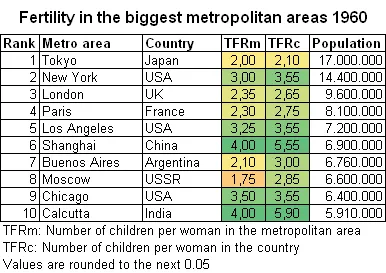
But this isn't the first time this has happened. Much of the West was below replacement during the interwar period (1920s and 1930s) as well, with the extreme case of interwar Vienna having a fertility rate equal to Seoul today! arctotherium.substack.com/p/the-baby-boom
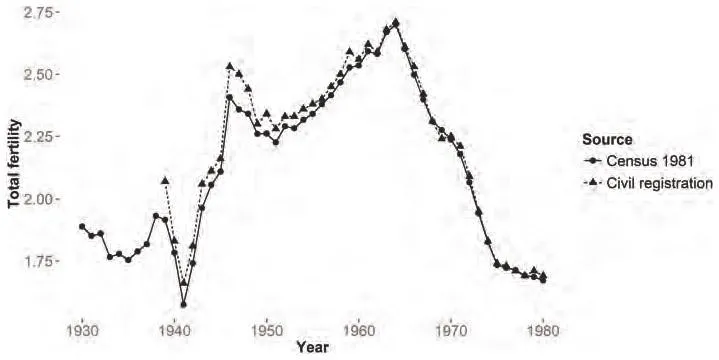
Demographers at the time predicted what we're seeing today: inevitable demographic decline, leading to low innovation, stagnant economic growth, and weakness against the Rising Tide of Color.
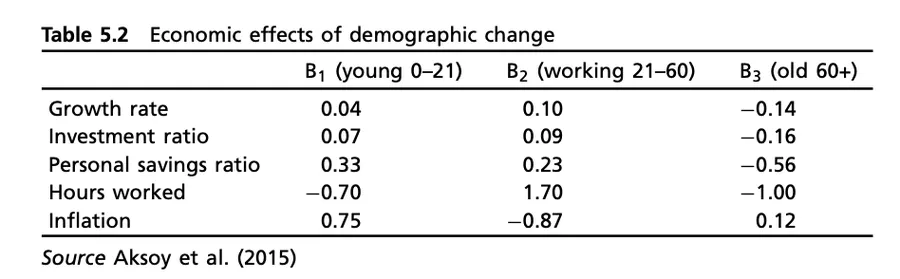
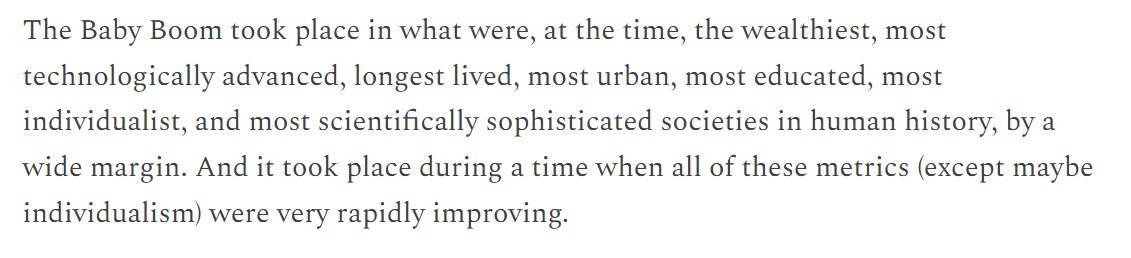
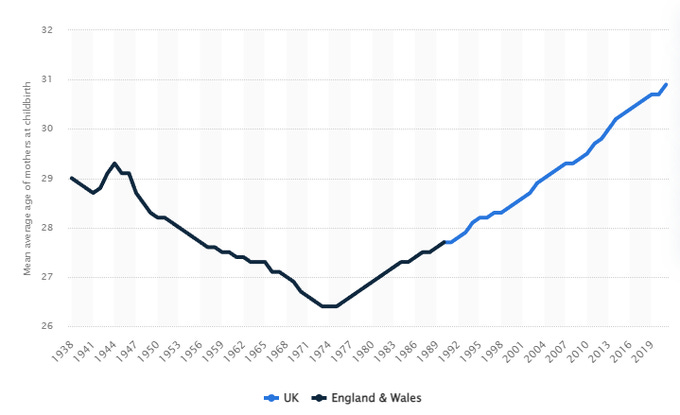
But this didn't happen. Beginning in the late 1930s, fertility rates across the whole West spiked. This boom was concentrated among the world's most advanced nations (Anglosphere, Scandinavia, and Northwestern Europe).
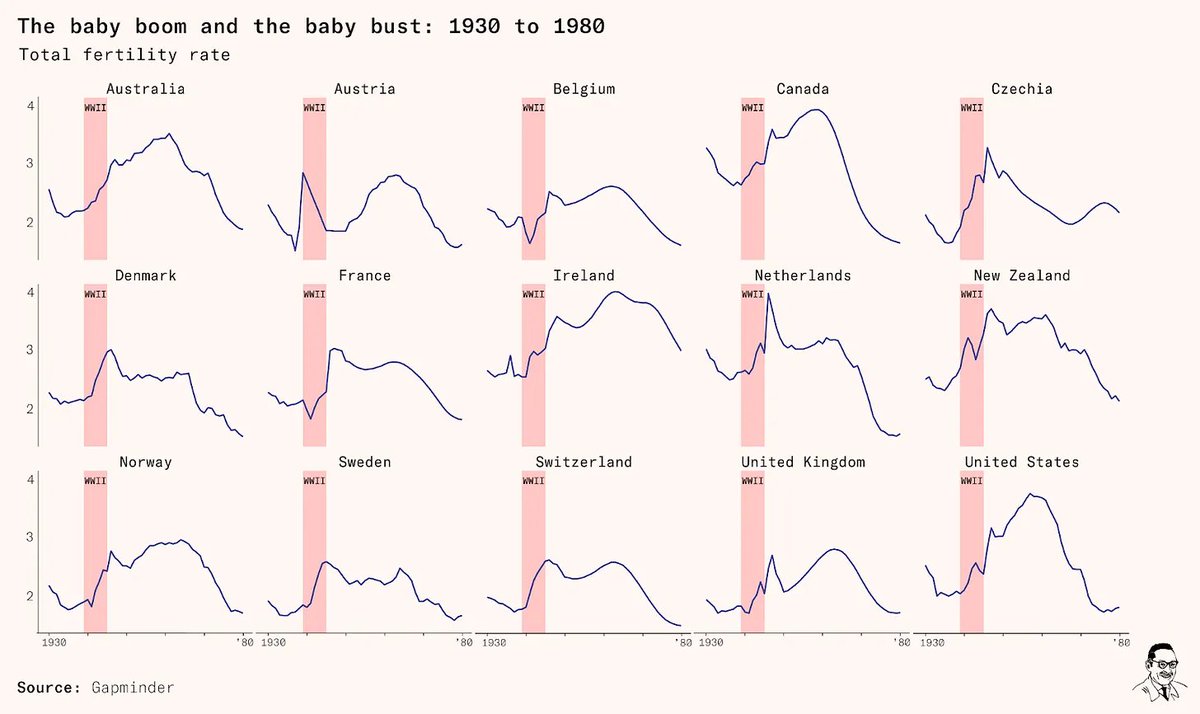
The Baby Boom was a big deal! It looks less impressive on a TFR graph, but using the correct metric of net fertility, it effectively undid the whole First Demographic transition, solving Western demographics for half a century.
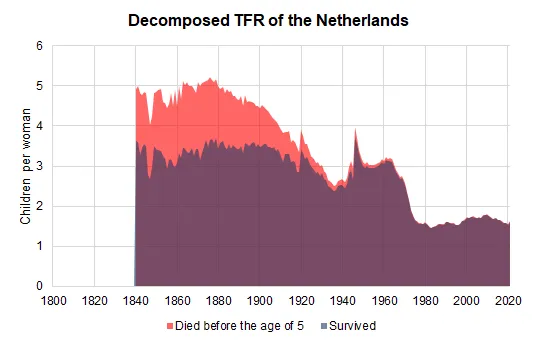
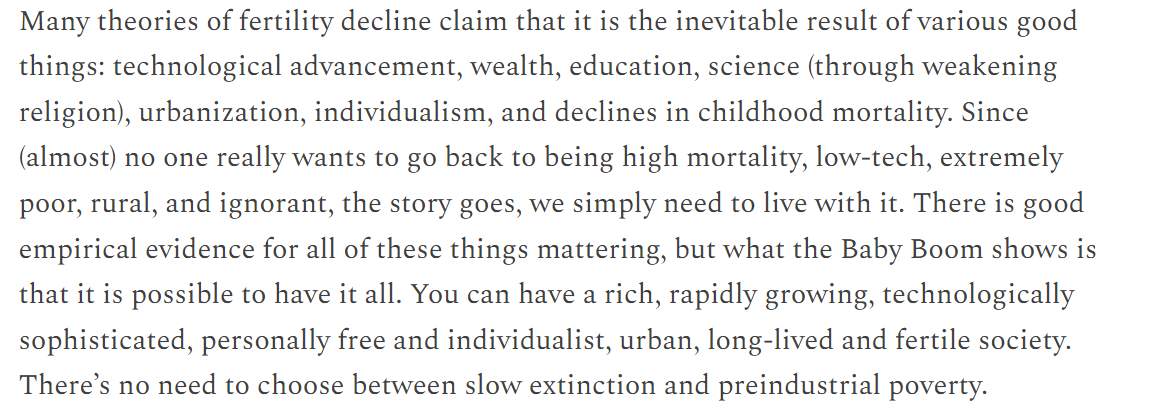
This is extremely impressive, because it shows you can have it all: a modern, First World society and rapid population growth. You don't need to imitate rural Pakistan or pack your country full of breeder cults to have a TFR above 2.
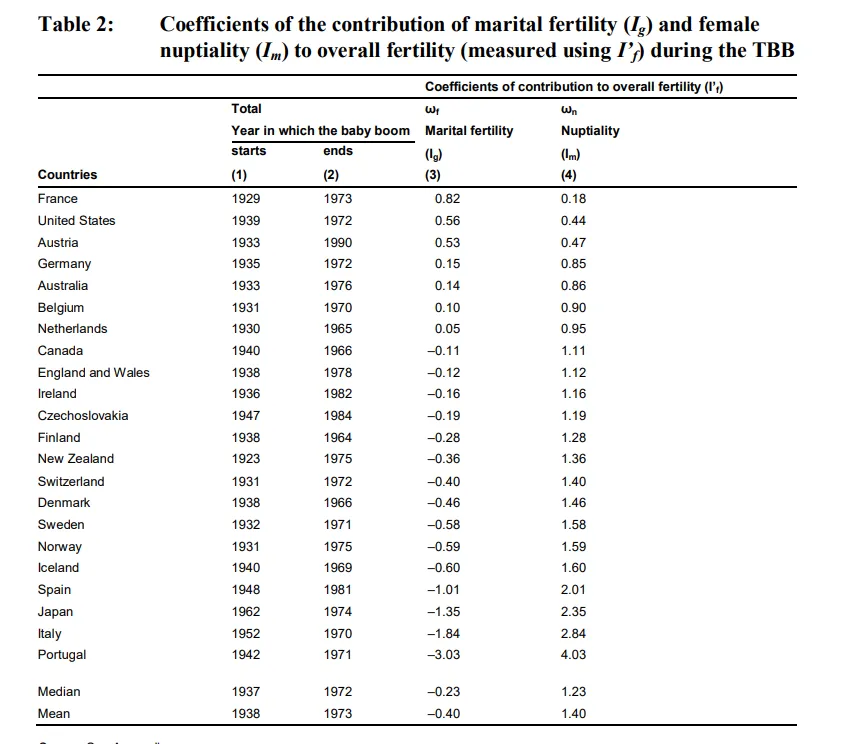
So what caused this? The answer, it turns out, is just marriage. Lots more marriage, at younger ages, leading to more babies. Marital fertility stayed constant or even decreased in most Boom countries, but fraction married (at a young age) spiked massively.


The most surprising thing I learned when writing this is that marital fertility didn't significantly increase in most Boom countries. This is because most of my prior reading was on the US (very important) and France (1st demographic transition), which were the major exceptions.
So what caused this marriage boom? As it turns out, the answer is a rise in young men's status and wages relative to young women's. This began before the war in some countries, but was probably accelerated by it.
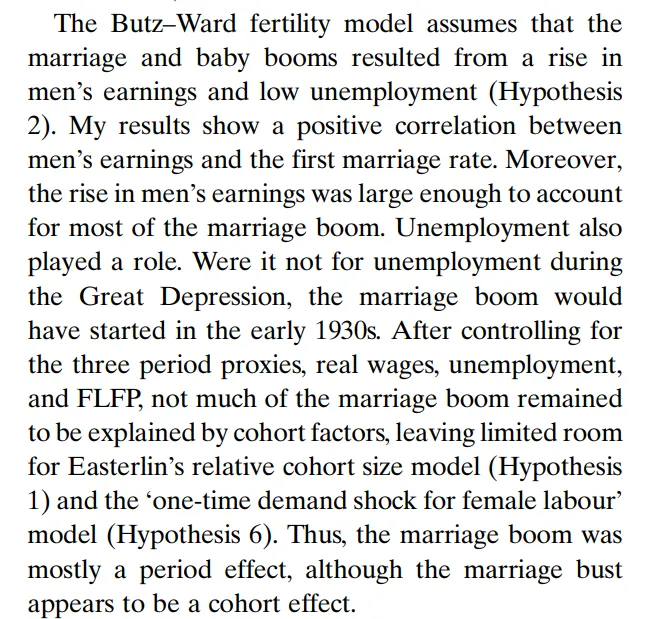
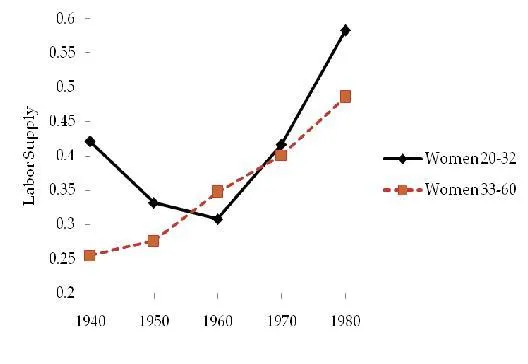

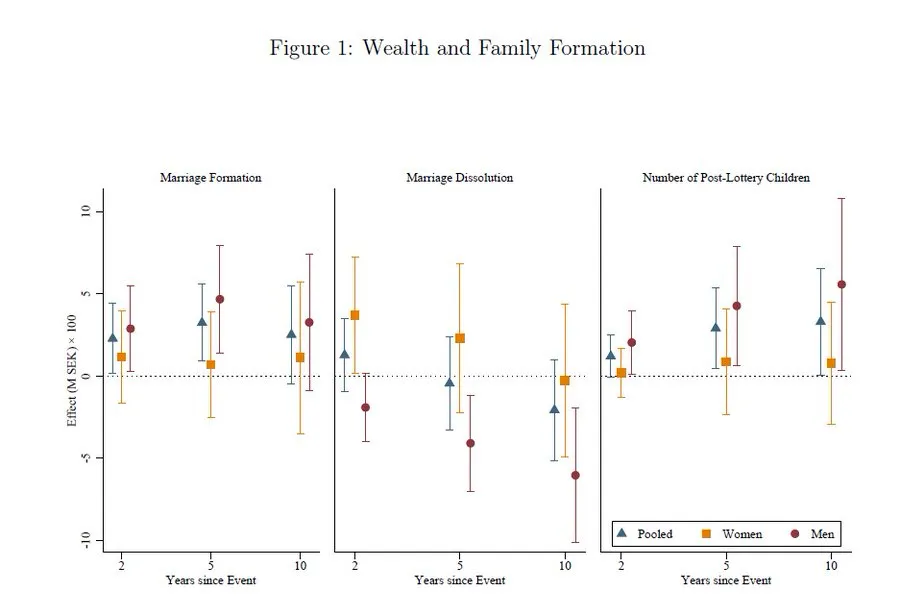
Note that this is a relative rise, not an absolute rise. Women in 1960 were better paid and more educated then their parents, just less relative to their prospective husbands
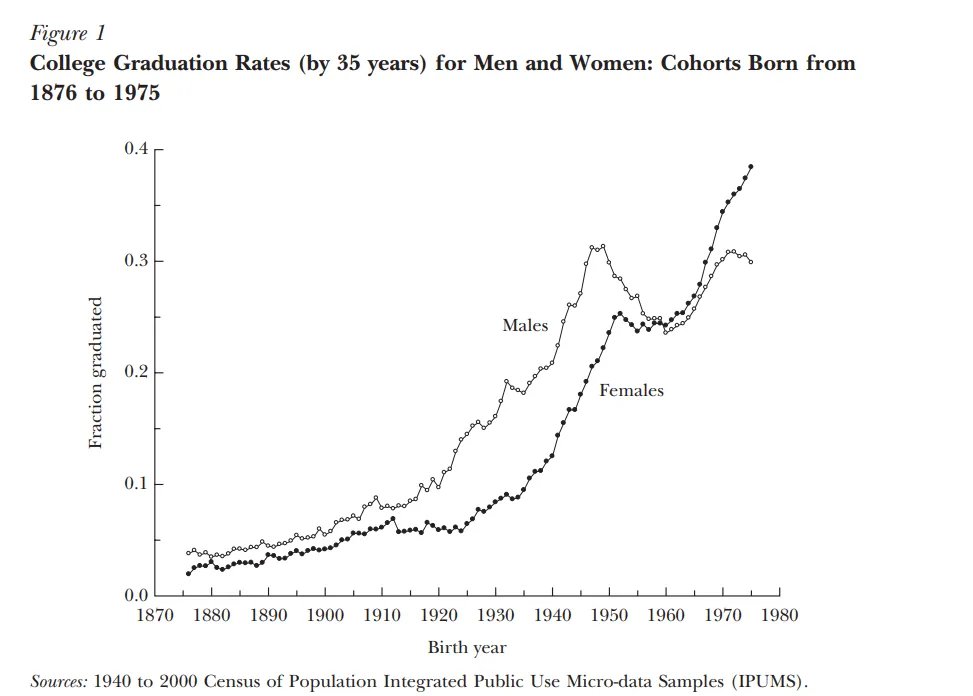
So what ended the Baby Boom? The obvious candidate is the marriage bust beginning around 1970, triggered basically by second wave feminism. Specifically: the male wage/education advantage collapsed, no fault divorce + the Sexual Revolution reduced the benefits of marriage.
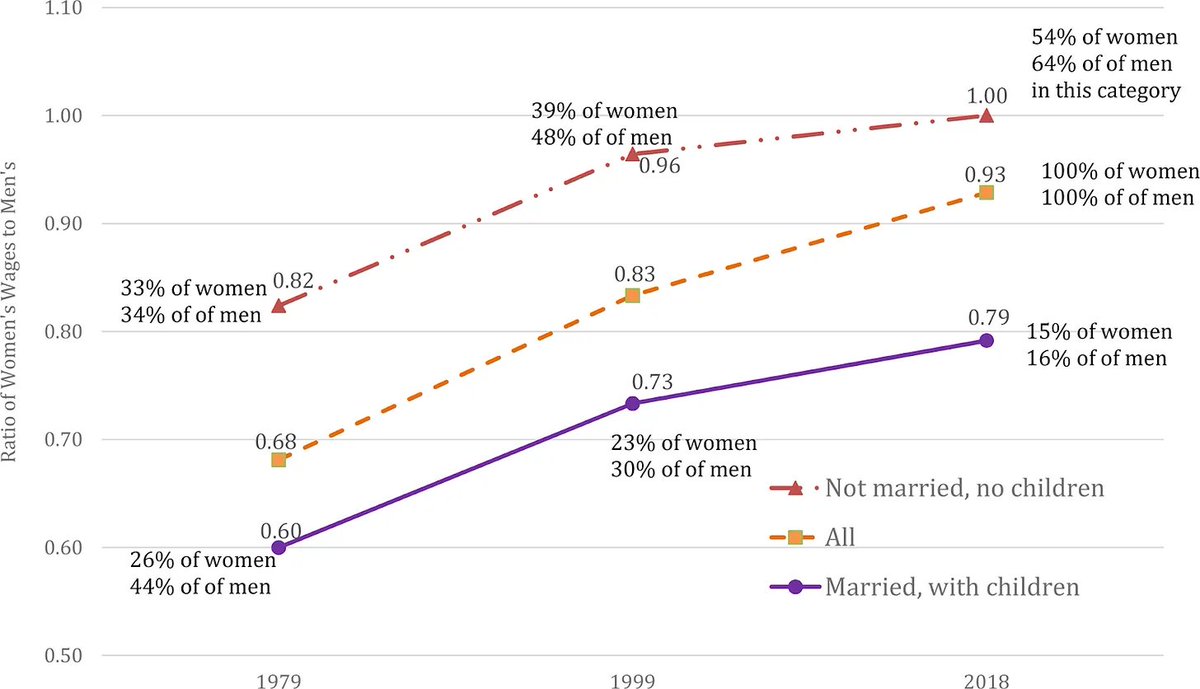
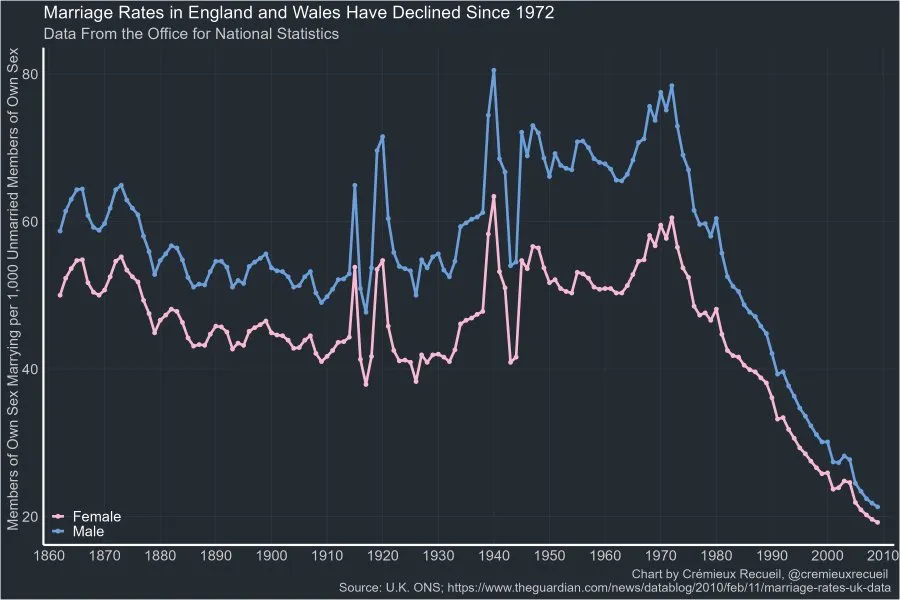

The huge expansion of the welfare state, which transfers immense sums of money from (mostly married) men to (mostly single) women didn't help matters.

I also note the existence of a broader "Baby Boom pattern." Many social science graphs look like this: deterioration in the early 20th century, massive improvement mid-century, followed by further deterioration after 1970 or so. 50's nostalgia exists for good reason!
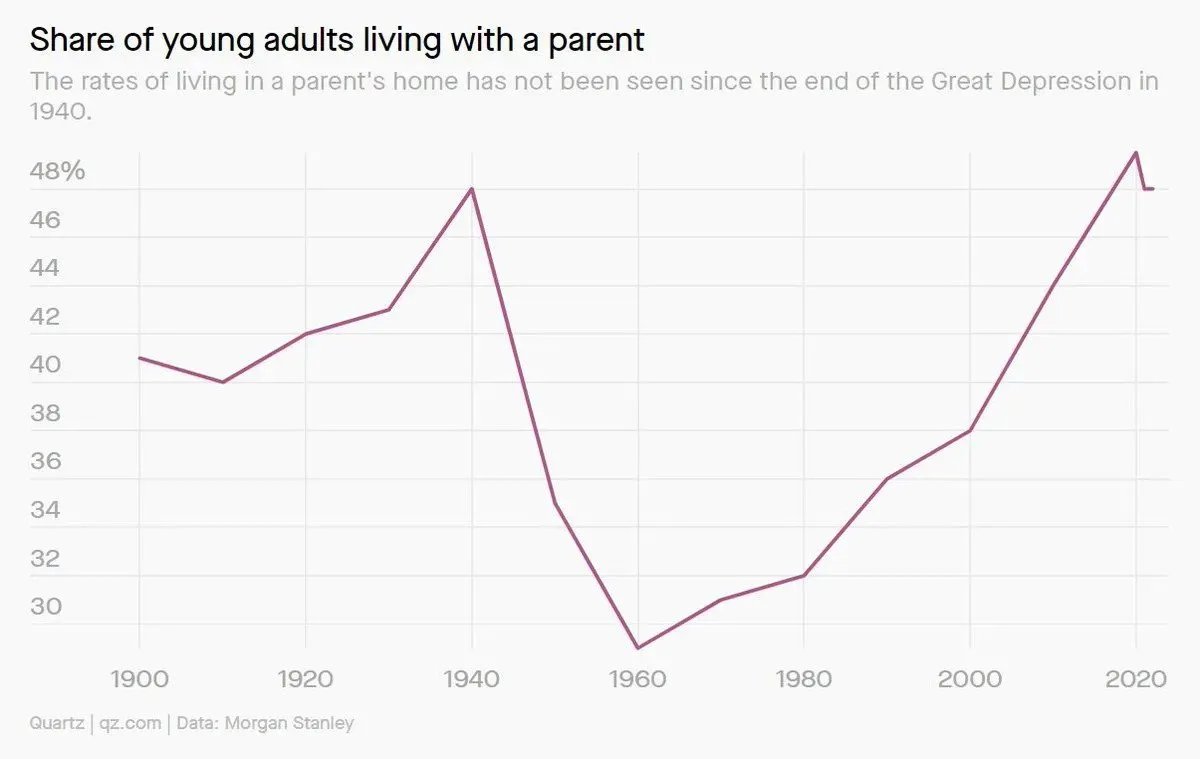
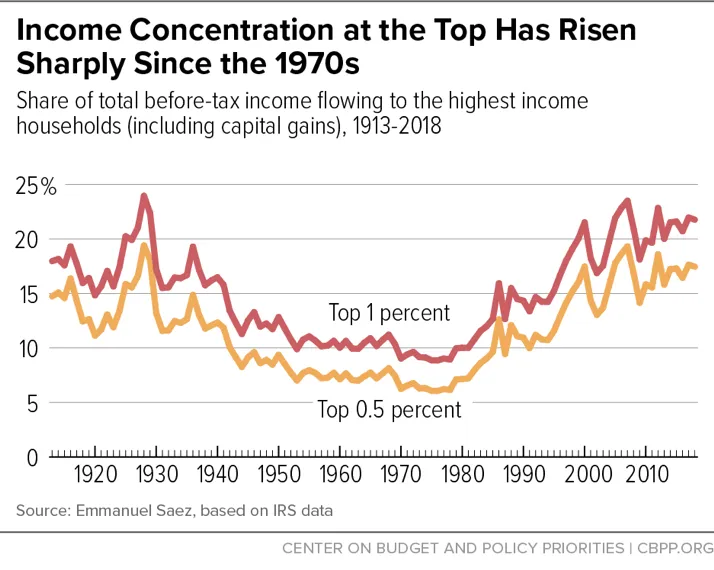

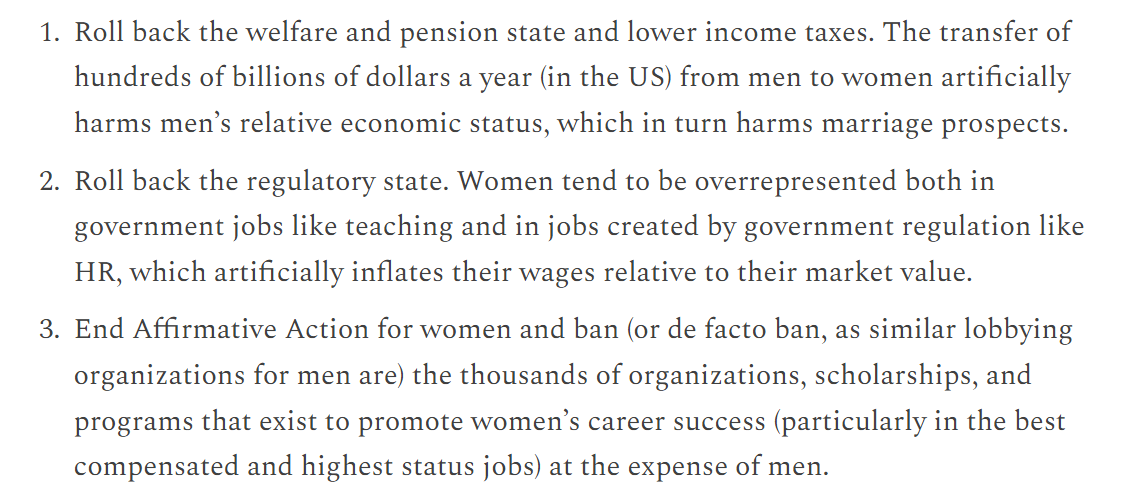
I conclude by offering some prescriptions for the future. Many are entirely compatible with regular politics. In particular, pro-natalist monetary incentives should be targeted at (married) men, not at women.


What's the lesson here?
1) Many modern problems were solved in the *recent* past. Just because a trend is bad and seem universal doesn't mean it can't be reversed. Don't blackpill.
2) You don't have to pick between a First World country and children.
1) Many modern problems were solved in the *recent* past. Just because a trend is bad and seem universal doesn't mean it can't be reversed. Don't blackpill.
2) You don't have to pick between a First World country and children.
May be interested:
@Known2Cali4nia
@extradeadjcb
@FavelaOverlord
@Known2Cali4nia
@extradeadjcb
@FavelaOverlord
• • •
Missing some Tweet in this thread? You can try to
force a refresh