The Kalman Filter was once a core topic in EECS curricula. Given it's relevance to ML, RL, Ctrl/Robotics, I'm surprised that most researchers don't know much about it, and many papers just rediscover it. KF seems messy & complicated, but the intuition behind it is invaluable
1/4
I once had to explain the Kalman Filter in layperson terms in a legal matter (no maths!). No problem, I thought. Yet despite being taught the subject by one of the greats (A.S. Willsky) & having taught the subject myself, I found this startlingly difficult to do.
2/4
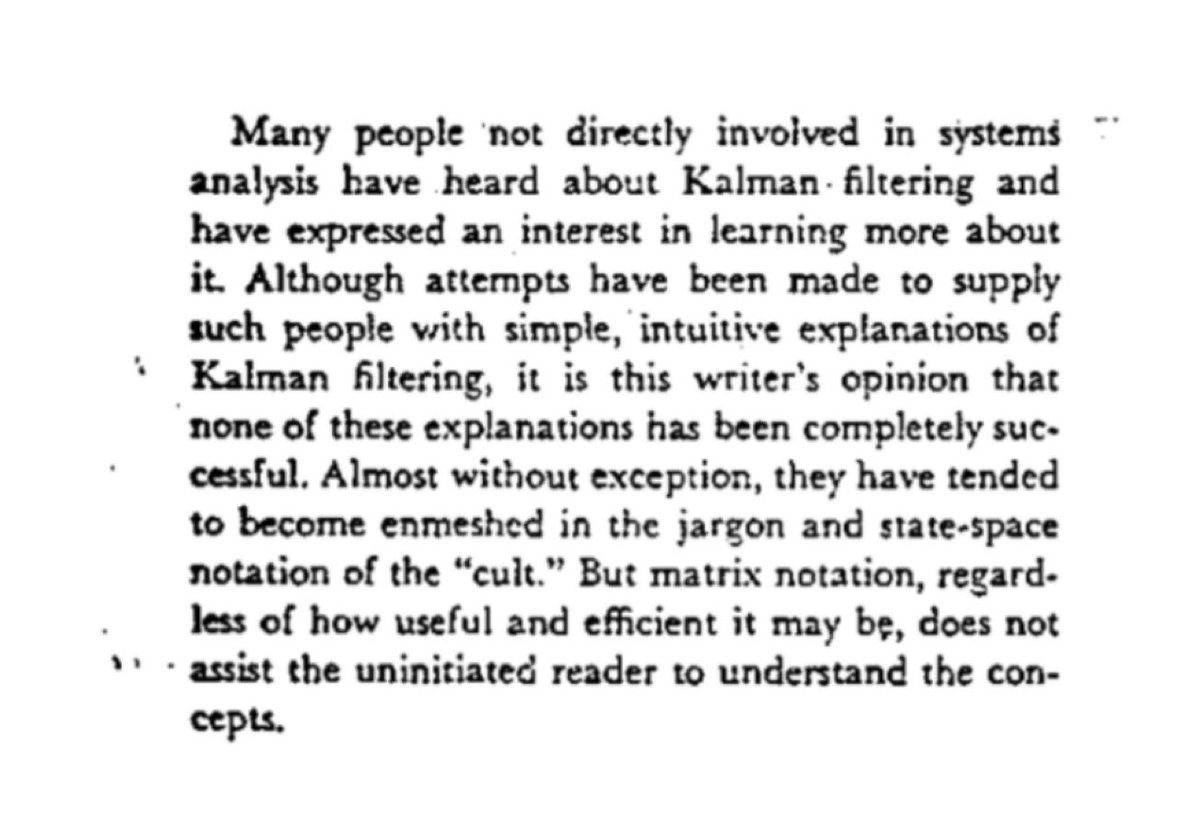
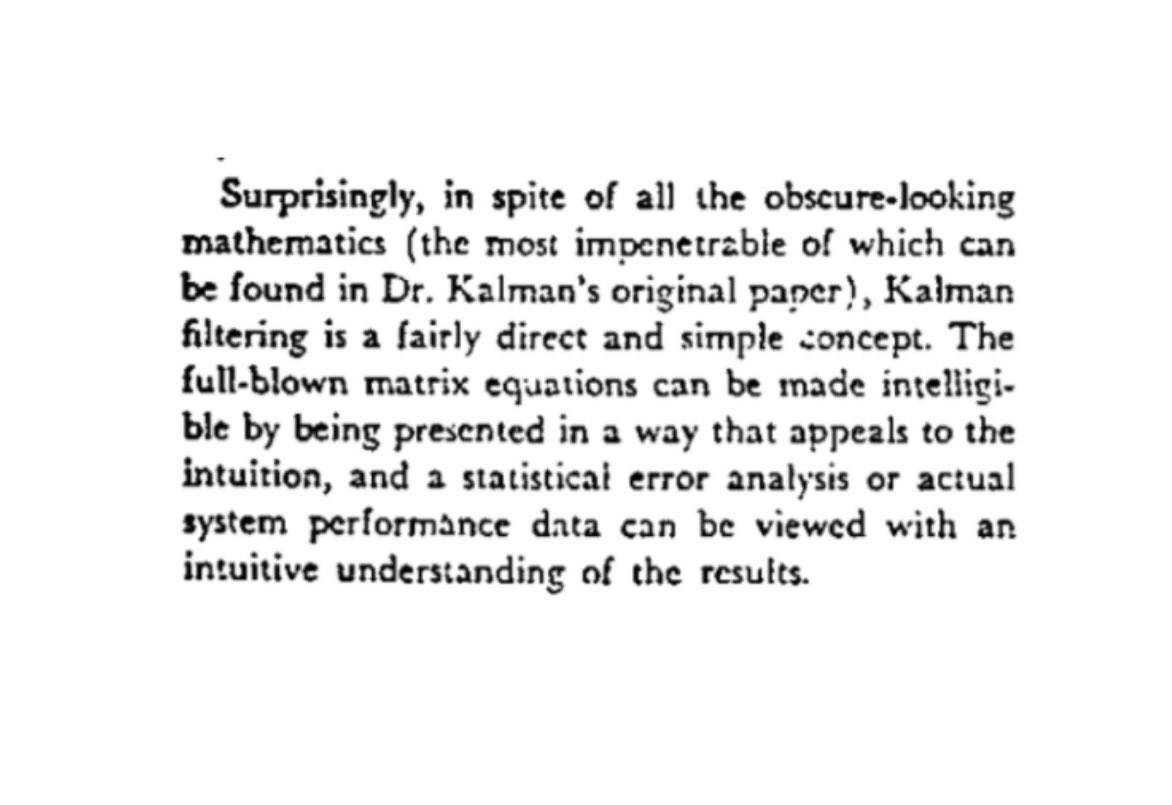
I was glad to find this little gem. It’s a 24-page writeup that is a great teaching tool, especially in introductory classes, and particularly at the undergraduate level.
The writeup seems to be out of print, but still available (albeit at a rather outrageous price)
3/4
One of the very first applications of the Kalman filter was in aerospace, namely NASA’s early space missions. There’s a wonderful historical account of how the Kalman Filter went from theory to practical tool for both NASA and the aerospace industry.
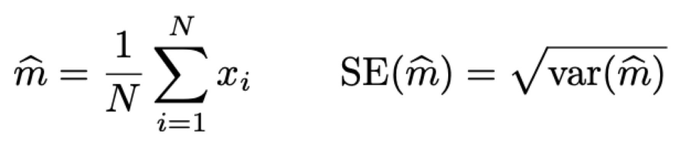
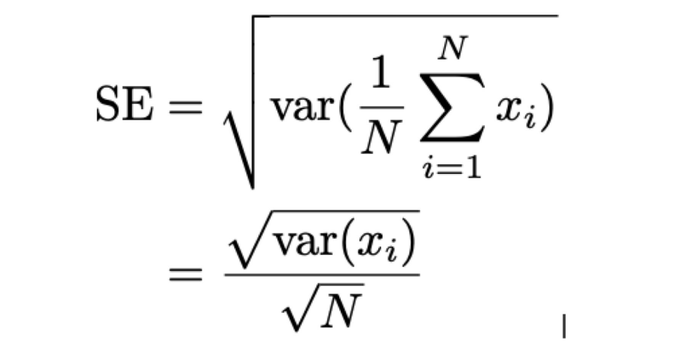
I wrote a thread on sequential estimation (of a constant A, in this toy example) to illustrates the idea. Of course the KF is far more general - it tracks *dynamic* systems where the internal state is itself evolving & subject to uncertainties of its own
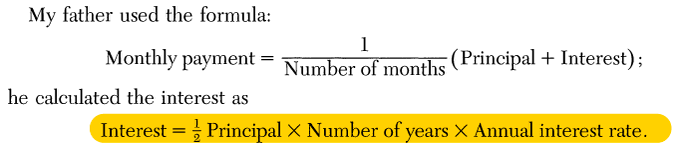
Years ago when my wife and I we were planning to buy a home, my dad stunned me with a quick mental calculation of loan payments.
I asked him how -he said he'd learned the strange formula for compound interest from his father, who was a merchant born in 19th century Iran
1/4
The origins of the formula my dad knew is a mystery, but I know it has been used in the bazaar's of Iran (and elsewhere) for as long as anyone can remember
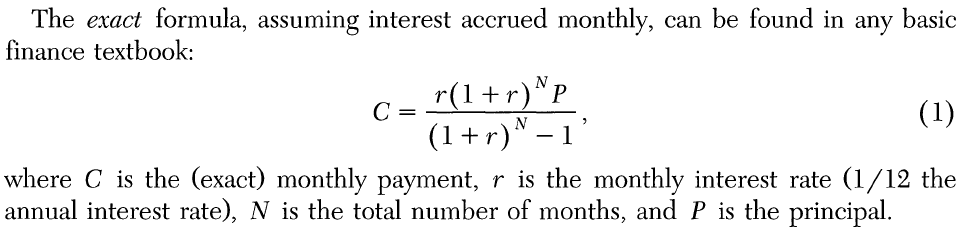
It has an advantage: it's very easy to compute on an abacus. The exact compounding formula is much more complicated
2/4
I figured out how the two formulae relate: the historical formula is the Taylor series of the exact formula around r=0.
But the crazy thing is that the old Persian formula goes back 100s (maybe 1000s) of years before Taylor's, having been passed down for generations
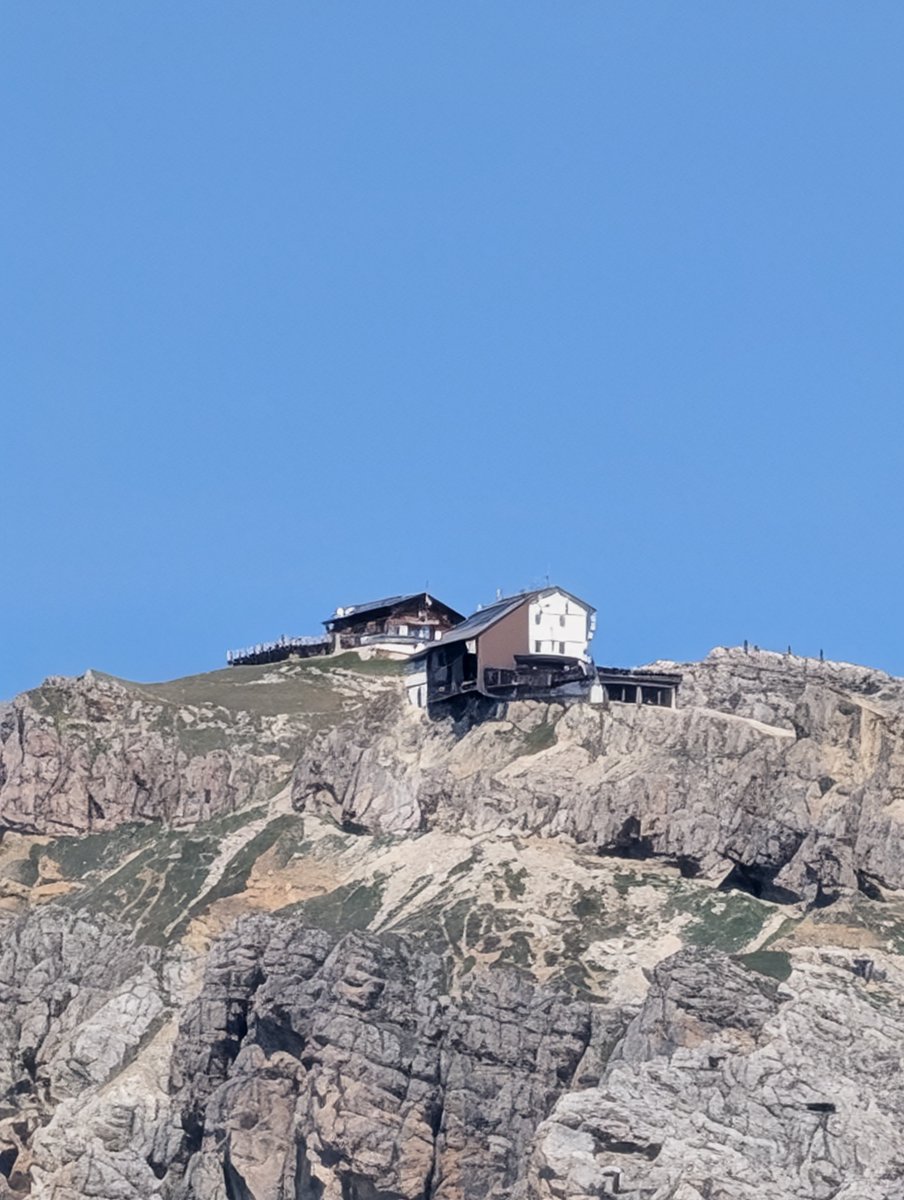
Yesterday at the @madebygoogle event we launched "Pro Res Zoom" Pixel 10Pro series. I wanted to share a little more detail, some examples and use cases. The feature enables a combined optical + digital zoom up to 100x magnification. It builds on our optical 5x tele camera.
1/n
Shooting at mags well above 30x requires that the 5x optical capture be adapted and optimized for such conditions, yielding a high quality crop that's fed to our upscaler. The upscaler is a large enough model to understand some semantic context to try & minimize distortions
2/n
Given the distances one might expects to shoot at such high magnification, it's difficult to get every single detail in the scene right. But we always aim to minimize unnatural distortions and stay true to the scene to the greatest extent possible.
Receiver Operating Characteristic (ROC) got its name in WWII from Radar, invented to detect enemy aircraft and ships.
I find it much more intuitive than precision/recall. ROC curves show true positive rate vs false positive rate, parametrized by a detection threshold.
1/n
ROC curves show the performance tradeoffs in a binary hypothesis test like this:
H₁: signal present
H₀: signal absent
From a data vector x, we can write ROC directly in terms of x. But typically, some T(x) - a test statistic - is computed, and compared to a threshold γ
2/n
ROC curves derived from general likelihoods are always monotonically increasing
This is easy to see from the definition of Pf and Pd. The slope of the ROC curve is non-negative.
Pro-tip: If you see a ROC curve in a paper or talk that's not so, ask why.
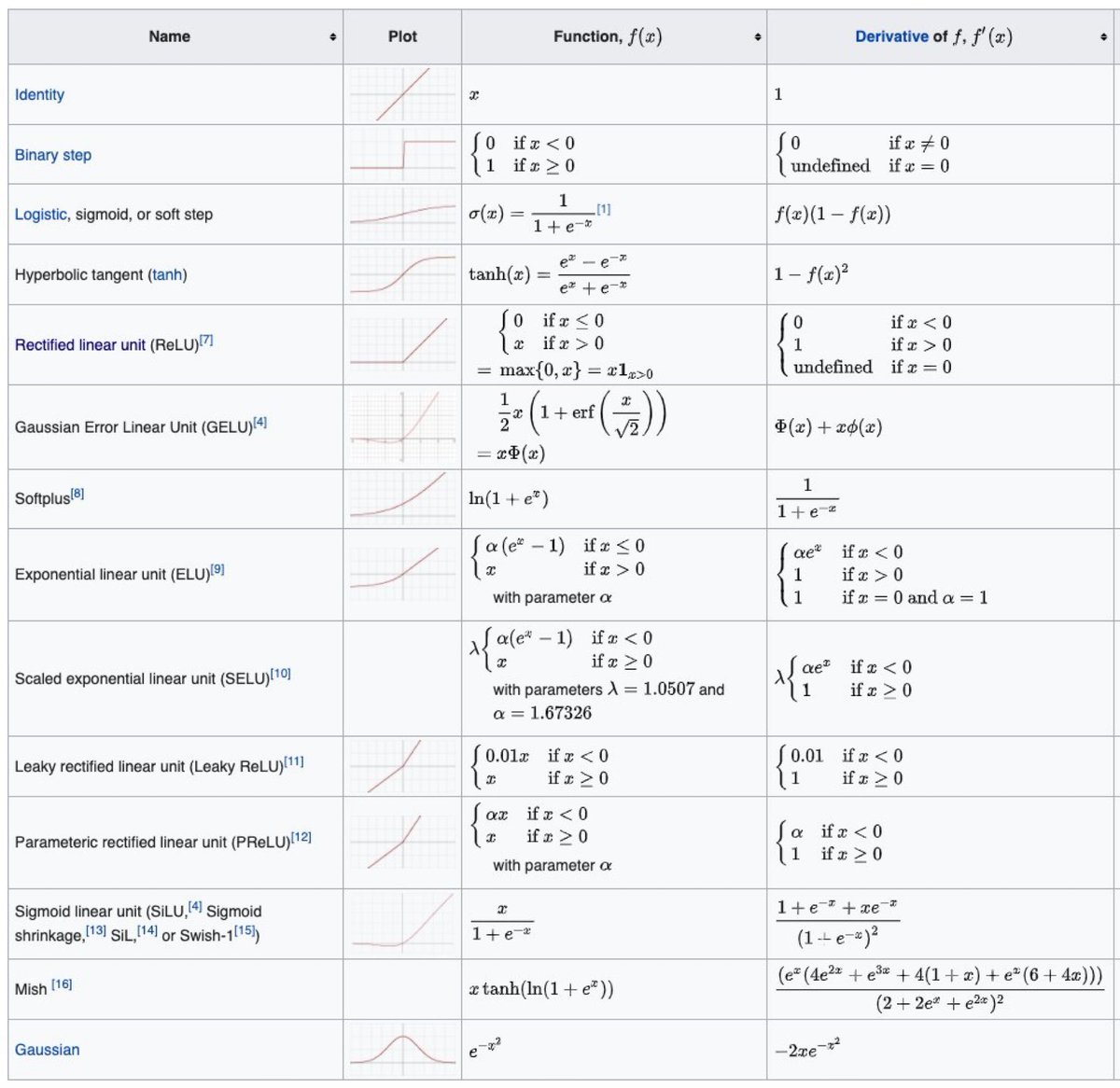
The choice of nonlinear activation functions in neural networks can be tricky and important.
That's because iterating (i.e. repeatedly composing) even simple nonlinear functions can lead to unstable, or even chaotic behavior, even with something as simple as a quadratic.
1/n
Some activations are more well-behaved than others. Take ReLU for example:
r(x) = max{0,x}
its iterates are completely benign r⁽ⁿ⁾(x) = r(x), so we don't have to worry.
Most other activations like soft-plus are less benign, but still change gently with composition.
2/n
Soft-plus:
s(x) = log(eˣ + 1)
has a special property: its n-times self-composition is really simple
s⁽ⁿ⁾(x) = log(eˣ + n)
With each iteration, s⁽ⁿ⁾(x) changes gently for all x.
This form is rare -- most activations don't have a nice closed form iterates like this
3/n
Tweedie's formula is super important in diffusion models & is also one of the cornerstones of empirical Bayes methods.
Given how easy it is to derive, it's surprising how recently it was discovered ('50s). It was published a while later when Tweedie wrote Stein about it
1/n
The MMSE denoiser is known to be the conditional mean f̂(y) = 𝔼(x|y). In this case, we can write the expression for this conditional mean explicitly:
2/n
Note that the normalizing term in the denominator is the marginal density of y.