Among them were the "Enemies of the people"—the bourgeois educated elite.
Despite having everything taken from them, their descendants are more educated than their peers today.
Short🧵
Areas near Gulags today which had greater numbers of "Enemies of the people" in the past are now more developed, as indicated by satellite imagery of nightlights.
The economic benefits of having these immiserated intellectuals' descendants in an area today are visible in other ways.
For example, a one standard deviation increase in an area's "Enemies of the people" comes with 65% higher profits per employee and 22% higher average wages.
Here's a chart of interest rates over seven centuries.
But something stands out: Where are all the Jewish loans?
Jews have had a reputation for making loans for centuries, but this analysis explicitly omits them. The reason is simple: Jewish loans were different.
Short🧵
In the premodern world, religious restrictions on moneylending abounded.
Since states were weak and Christians had no ability to charge usurious rates, Christian finance was handicapped. So the enterprise came to be dominated by Jews, who weren't similarly restricted.
Rulers were not unaware of this. In fact, they regularly made attempts to attract Jews to their towns and cities.
Sometimes town representatives would even beseech their lords to let them bring Jews to their towns because, TL;DR: 'think of the poor people!'
Have you ever wanted one page that tells you where Americans have come from over America's whole history?
I just wrote it!
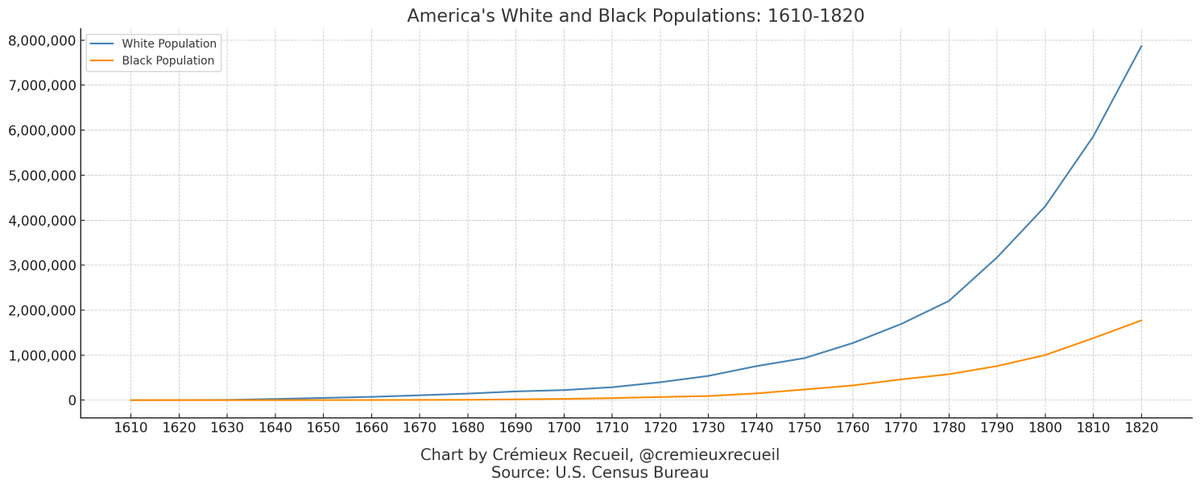
Here's how the U.S. population looked prior to when it began collecting immigration statistics:
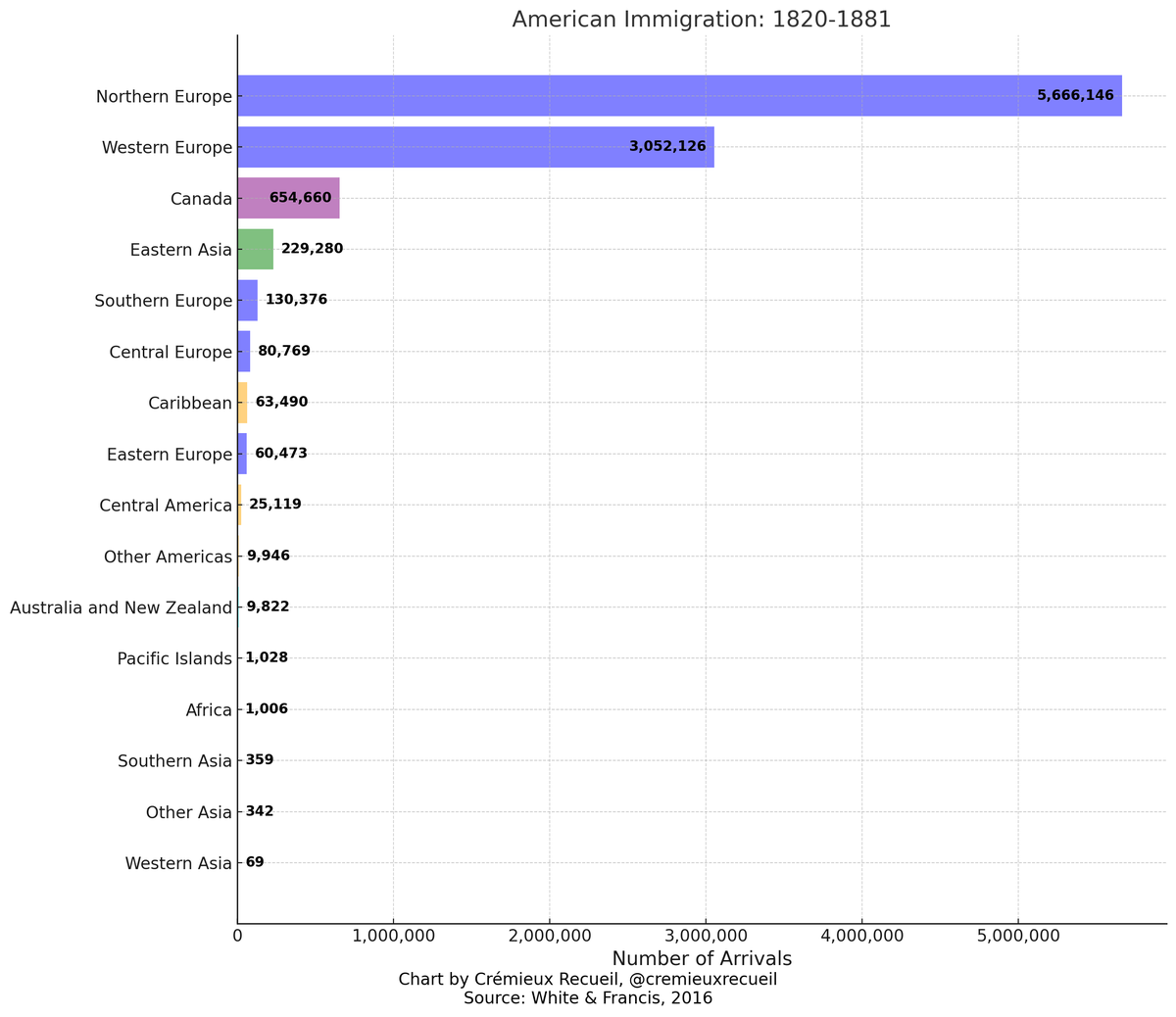
Immigration statistics began being formally collected with the passage of the Steerage Act in 1819.
Between then and the passage of the Immigration Act of 1882, here's where immigrants came from:
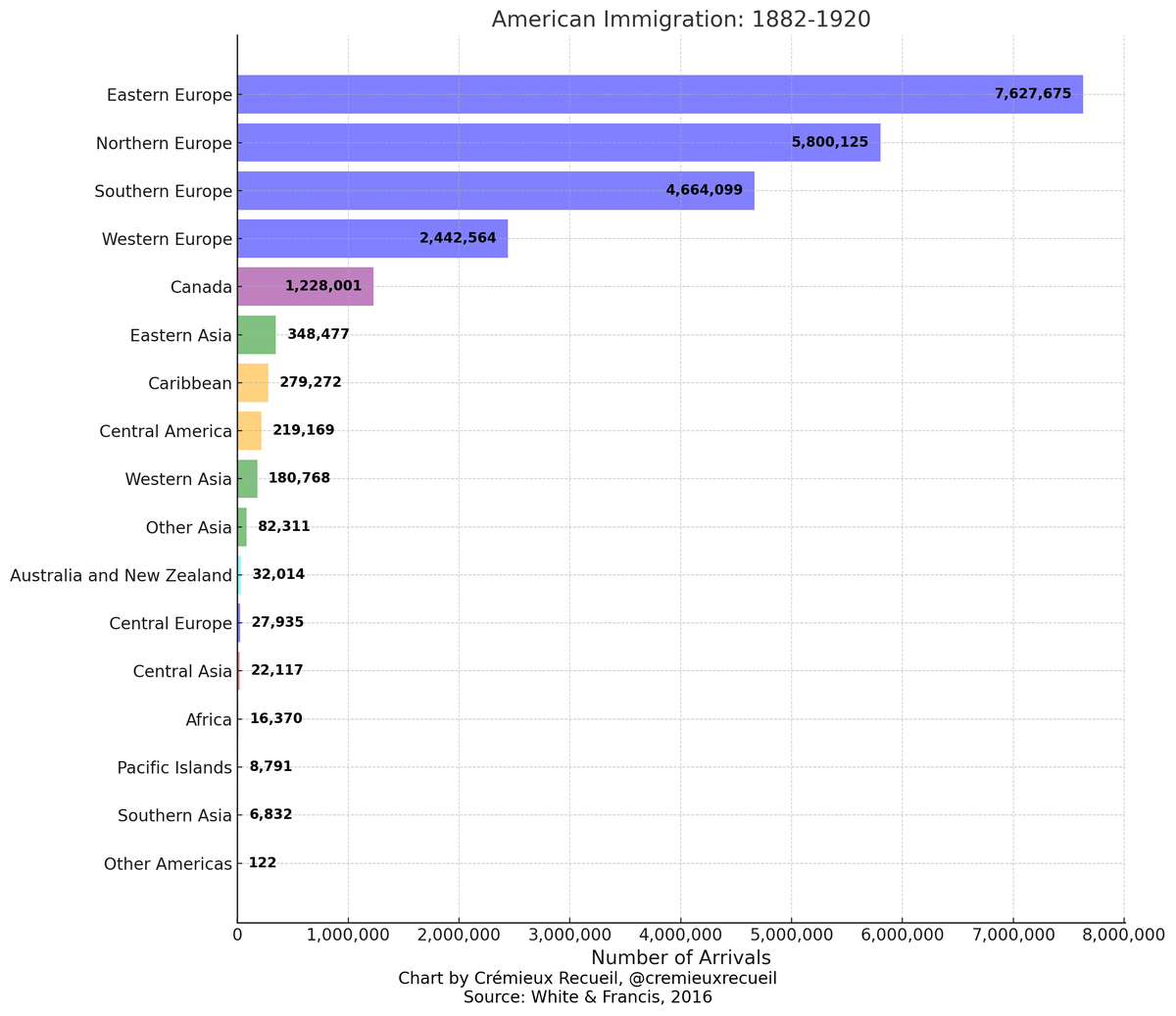
Between the passage of the Immigration Act of 1882 and the Emergency Quota Act of 1921, American arrivals remained mostly European, but there were internal changes:
China has been trying to get young people to player fewer video games for years.
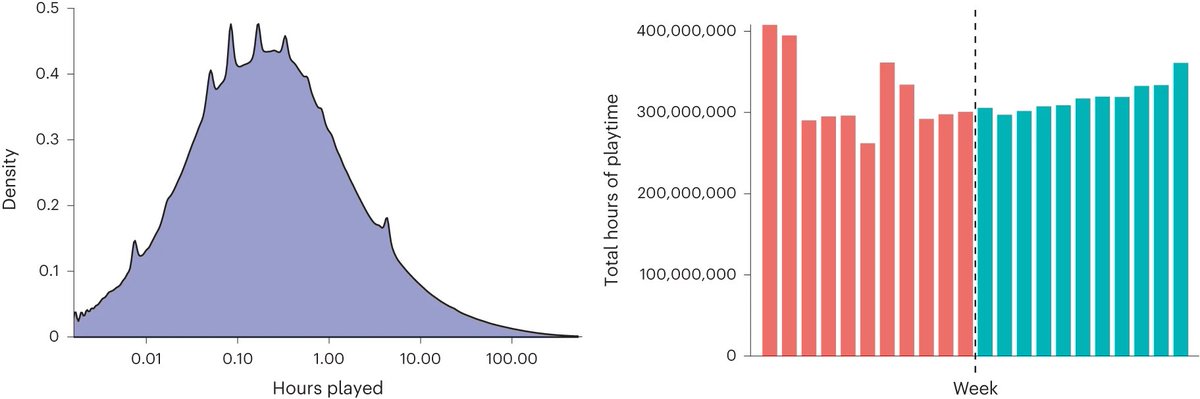
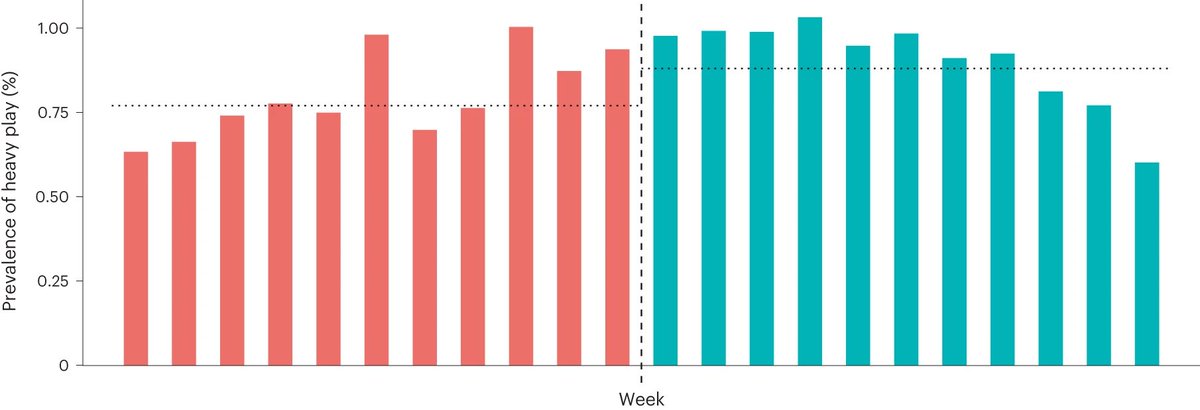
In 2019, they tried to limit players under 18 years of age to 1.5 hours of daily play. Did that work?
The answer seems to be "No".
First, look at total playtime before (red) and after (cyan).
The dataset used here is massive and included 2,486,192,234 unique gamer profiles.
Here's how things look for the percentage of people involved in heavy play (i.e., <4 hours per day, 6 days per week).
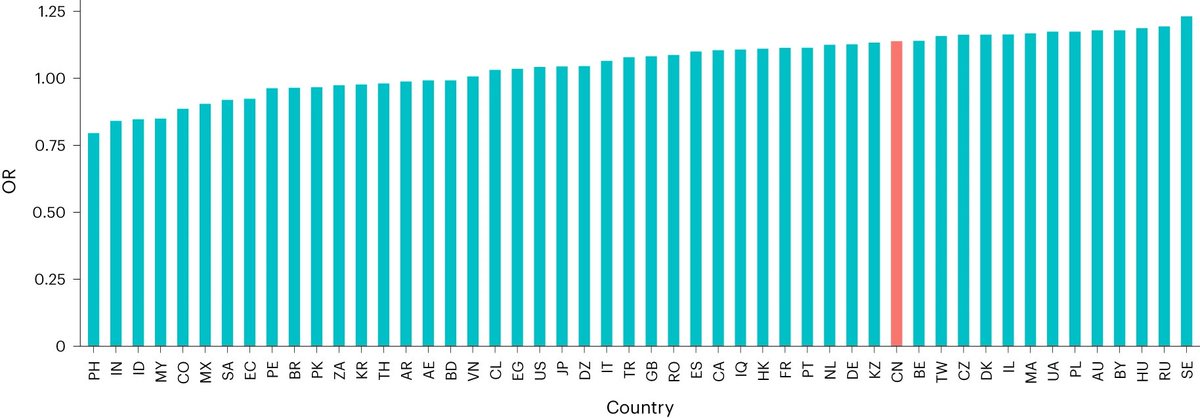
Here's the odds of heavy play before and after China's regulation went into place across 50 different countries from another of these authors' datasets.
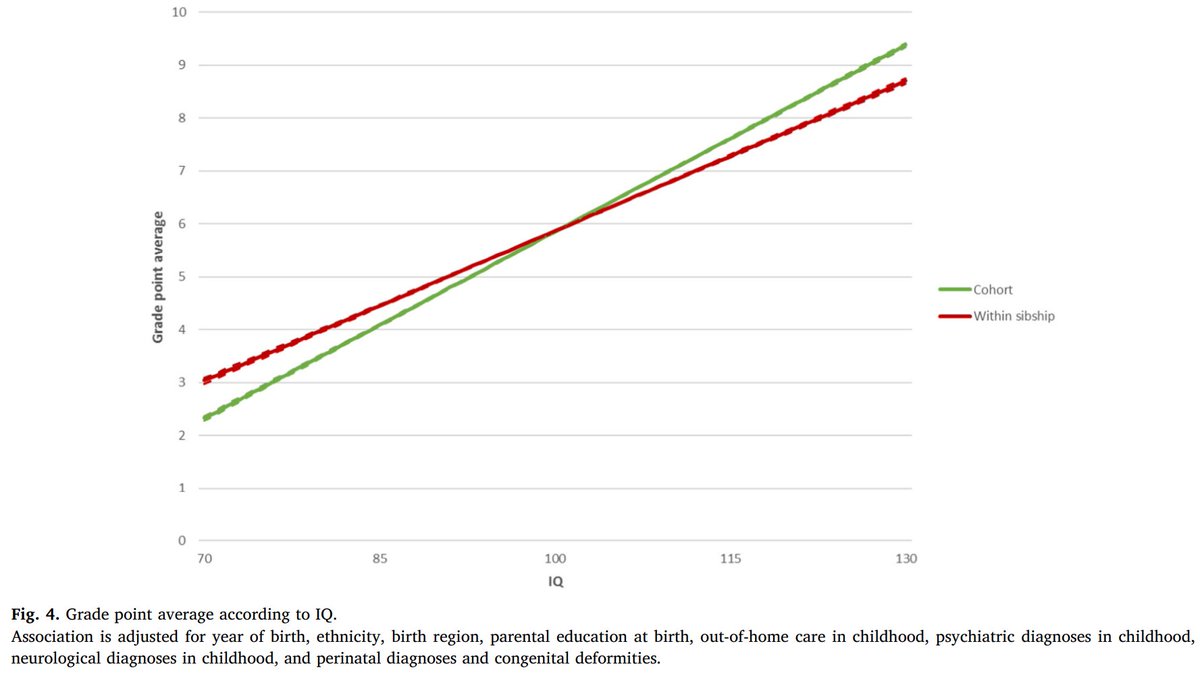
Kids from more deprived neighborhoods tend to have lower GPAs.
But is it because their neighborhood is impacting their learning?
Probably not!
Within families, the effect of neighborhood deprivation on student GPAs is nullified.
This large dataset obviously has data on siblings, so the exposure differences between them can be used to quantify the contributions of things like neighborhoods, schools, families, and more to student GPAs.
The result?
Well, not much neighborhood or school effect.
There are some other interesting details in here, like that the birth order effect seems to be suppressed between families, but it does show up within families, like with fertility and income.
Also, students with foreign backgrounds seem to have higher GPAs.