Dr. Meryl Nass (MIT ’75) is a small-town doctor concerned with issues of national importance. She's an internist in Bar Harbor, Maine.
One of Nass's two sons is also an MIT alum; Jake Abernethy ’02 is a PhD candidate at Berkeley. She notes that her boys are related to
One of Nass's two sons is also an MIT alum; Jake Abernethy ’02 is a PhD candidate at Berkeley. She notes that her boys are related to
https://twitter.com/NassMeryl/status/1721002993858879588
Richard Cockburn Maclaurin—MIT's president from 1909 to 1920—through their dad.
During Maclaurin’s tenure as president of MIT, the Institute moved across the Charles River from Boston to its present campus in Cambridge.
When MIT moved to its current location in Cambridge
During Maclaurin’s tenure as president of MIT, the Institute moved across the Charles River from Boston to its present campus in Cambridge.
When MIT moved to its current location in Cambridge
in 1917, Pierre S. du Pont, T. Coleman du Pont and Charles Hayden donated $215,000 to house the Department of Mining, Engineering and Metallurgy (now the Department of Materials Science and Engineering).
John Jacob Raskob was hired in 1901 by Pierre S. du Pont as a personal
John Jacob Raskob was hired in 1901 by Pierre S. du Pont as a personal
secretary. In 1911, Raskob became assistant treasurer of DuPont, in 1914 treasurer, and in 1918 president for finance of both DuPont and General Motors. Raskob had been an early investor in General Motors and had engineered DuPont's ownership of 43% of GM, purchased from the
financially troubled William C. Durant.
Raskob held the head financial job at both GM and DuPont until 1928, when he resigned from GM in a dispute with chairman Alfred P. Sloan.
Founded in 1923, Ethyl Corp was formed by General Motors and Standard Oil of New Jersey (Esso).
Raskob held the head financial job at both GM and DuPont until 1928, when he resigned from GM in a dispute with chairman Alfred P. Sloan.
Founded in 1923, Ethyl Corp was formed by General Motors and Standard Oil of New Jersey (Esso).
General Motors had the "use patent" for tetraethyllead (TEL) as an antiknock, based on the work of Thomas Midgley Jr., Charles Kettering, and later Charles Allen Thomas, and Esso had the patent for the manufacture of TEL.
In 1945, the chairman of General Motors, Alfred P. Sloan,
In 1945, the chairman of General Motors, Alfred P. Sloan,
donated $4.0 million to create the Sloan-Kettering Institute for Cancer Research through his Sloan Foundation, and Charles F. Kettering, GM's vice president and director of research, personally agreed to oversee the organization of a cancer research program based on industrial
techniques.
The originally independent research Memorial Sloan Kettering Cancer Center was built adjacent to Memorial Hospital.
In 1948, Cornelius P. Rhoads became the director of Memorial. Rhoads had run chemical weapons programs for the United States Army in World War II,
The originally independent research Memorial Sloan Kettering Cancer Center was built adjacent to Memorial Hospital.
In 1948, Cornelius P. Rhoads became the director of Memorial. Rhoads had run chemical weapons programs for the United States Army in World War II,
and had been involved in the work that led to the discovery that nitrogen mustards could potentially be used as cancer drugs.
The Jackson Laboratory was founded by Clarence Cook Little, a former University of Maine and University of Michigan president, in 1929 in
The Jackson Laboratory was founded by Clarence Cook Little, a former University of Maine and University of Michigan president, in 1929 in
Bar Harbor, Maine under the name Roscoe B. Jackson Memorial Laboratory with the purpose of discovering the causes of cancer and other diseases through research on mammals.
The campus was built on 13 acres of land donated by George Dorr. Initial funding for the laboratory campus
The campus was built on 13 acres of land donated by George Dorr. Initial funding for the laboratory campus
came from Edsel Ford, the son of Henry Ford, and from Roscoe B. Jackson, a one-time head of the Hudson Motor Car Company, for whom the institution is named.
George Dorr first visited Mount Desert Island as a fifteen-year-old in 1868, on a vacation with his parents. On that visit
George Dorr first visited Mount Desert Island as a fifteen-year-old in 1868, on a vacation with his parents. On that visit
they decided to buy oceanfront property at Compass Harbor, just outside downtown Bar Harbor.
The Dorr’s summer neighbor was Harvard University president Charles William Elliot.
John D. Rockefeller Jr. began construction of a carriage-road system on private land in 1913. It was
The Dorr’s summer neighbor was Harvard University president Charles William Elliot.
John D. Rockefeller Jr. began construction of a carriage-road system on private land in 1913. It was
developed and expanded as public land with the help of Dorr.
William Coley started his cancer investigations after the death of one of his first patients, Elizabeth Dashiell, from sarcoma. Dashiell was a close childhood friend of John D. Rockefeller Jr., who later indicated that
William Coley started his cancer investigations after the death of one of his first patients, Elizabeth Dashiell, from sarcoma. Dashiell was a close childhood friend of John D. Rockefeller Jr., who later indicated that
her death was what first motivated his subsequent funding of cancer research.
Although Coley claimed successful treatment of hundreds of patients, the absence of proven benefit or reproducibility led to broader emphasis on surgery and on the newly developing field of
Although Coley claimed successful treatment of hundreds of patients, the absence of proven benefit or reproducibility led to broader emphasis on surgery and on the newly developing field of
radiation therapy.
Coley had arranged for a wealthy friend to provide funds to purchase two x-ray machines for his use. However, after several years of experience, Coley came to the conclusion that the effect of that primitive x-ray therapy in the untrained hands of
Coley had arranged for a wealthy friend to provide funds to purchase two x-ray machines for his use. However, after several years of experience, Coley came to the conclusion that the effect of that primitive x-ray therapy in the untrained hands of
experimenters was localized, temporary, and not curative. The scientific majority disagreed, most notably his contemporary James Ewing.
From its creation in 1893, to 1962 with the introduction of the Kefauver Harris Amendment, Coley's toxins were being used to treat several
From its creation in 1893, to 1962 with the introduction of the Kefauver Harris Amendment, Coley's toxins were being used to treat several
types of cancers around the world. In the United States, it was exclusively sourced by Parke-Davis, America's oldest and largest drug maker at the time.
Parke-Davis filed a lawsuit against H. K. Mulford Company alleging infringement of its Adrenalin patents. The ruling in favor
Parke-Davis filed a lawsuit against H. K. Mulford Company alleging infringement of its Adrenalin patents. The ruling in favor
of Parke-Davis by Judge Learned Hand is considered crucial to modern patent law.
Like Bayer with heroin; before the criminalization of cocaine, the drug was sold by Parke-Davis in various forms.
In October 1915, Aleister Crowley, author of Diary of a Drug Fiend and The
Like Bayer with heroin; before the criminalization of cocaine, the drug was sold by Parke-Davis in various forms.
In October 1915, Aleister Crowley, author of Diary of a Drug Fiend and The
Confessions of Aleister Crowley, stopped by Parke-Davis in Detroit, where, according to Crowley, the cooperation was complete. "[They] were kind enough to interest themselves in my researches in Anhalonium lewinii (peyote) and made me some special preparations on the lines
indicated by my experience which proved greatly superior to previous preparations."
Parke-Davis developed the first bacterial vaccine, and the company was thus known as a pioneer in the field of vaccinology. It was also among the five firms contracted to manufacture the original
Parke-Davis developed the first bacterial vaccine, and the company was thus known as a pioneer in the field of vaccinology. It was also among the five firms contracted to manufacture the original
Salk killed-virus vaccine.
In the 1950s, Parke-Davis employed Jonas Salk as a consultant on vaccine adjuvants. Parke-Davis was also involved in manufacturing the polio vaccine. It took Salk much effort to convince Parke-Davis to follow his production protocols exactly.
In the 1950s, Parke-Davis employed Jonas Salk as a consultant on vaccine adjuvants. Parke-Davis was also involved in manufacturing the polio vaccine. It took Salk much effort to convince Parke-Davis to follow his production protocols exactly.
For about six months Parke-Davis had the exclusive contract to produce the vaccine for field trials but in February 1954 the National Foundation for the Prevention of Polio reneged on the contract and opened vaccine production to other companies as well.
The Koprowski family
The Koprowski family
reunited to Brazil, where Hilary Koprowski worked in Rio de Janeiro for the Rockefeller Foundation. His field of research for several years was finding a live-virus vaccine against yellow fever. After World War II the Koprowskis settled in Pearl River, New York, where Hilary was
hired as a researcher for Lederle Laboratories, the pharmaceutical division of American Cyanamid.
Here he began his polio experiments, which ultimately led to the creation of the first oral polio vaccine. Koprowski served as director of the Wistar Institute, 1957–91, during
Here he began his polio experiments, which ultimately led to the creation of the first oral polio vaccine. Koprowski served as director of the Wistar Institute, 1957–91, during
which period Wistar achieved international recognition for its vaccine research and became a National Cancer Institute Cancer Center.
While at Lederle Laboratories,Hilary Koprowski created an early polio vaccine, based on an orally administered attenuated polio virus. In
While at Lederle Laboratories,Hilary Koprowski created an early polio vaccine, based on an orally administered attenuated polio virus. In
researching a potential polio vaccine, he had focused on live viruses that were attenuated (rendered non-virulent) rather than on killed viruses (the latter became the basis for the injected vaccine subsequently developed by Jonas Salk).
Albert Sabin's early work with
Albert Sabin's early work with
attenuated-live-virus polio vaccine was developed from attenuated polio virus that Sabin had received from Koprowski.
In addition to his work on the polio vaccine, Koprowski (along with Stanley Plotkin and Tadeusz Wiktor) did significant work on an improved vaccine against
In addition to his work on the polio vaccine, Koprowski (along with Stanley Plotkin and Tadeusz Wiktor) did significant work on an improved vaccine against
rabies.
During his time at Wistar, Stanley Plotkin worked on several vaccines; chief among them are vaccines for rubella, rabies, rotavirus, and cytomegalovirus (CMV). He developed a vaccine for rubella, based upon the RA 27/3 strain of the virus (also developed by Plotkin
During his time at Wistar, Stanley Plotkin worked on several vaccines; chief among them are vaccines for rubella, rabies, rotavirus, and cytomegalovirus (CMV). He developed a vaccine for rubella, based upon the RA 27/3 strain of the virus (also developed by Plotkin
using WI-38, a fetal-derived human cell line), which was released to the public in 1969.
The enabling technology was the WI-38 cell strain gifted to Plotkin by Leonard Hayflick also of the Wistar.
In 1959, Hayflick developed the first inverted microscope for use in cell
The enabling technology was the WI-38 cell strain gifted to Plotkin by Leonard Hayflick also of the Wistar.
In 1959, Hayflick developed the first inverted microscope for use in cell
culture research.
WI-38 is a diploid human cell line composed of fibroblasts derived from lung tissue of a 3-month-gestation female fetus. The fetus came from the elective abortion of a Swedish woman in 1963.
WI-38 is a diploid human cell line composed of fibroblasts derived from lung tissue of a 3-month-gestation female fetus. The fetus came from the elective abortion of a Swedish woman in 1963.
In addition, WI-38 cells could be frozen, then thawed and exhaustively tested. These advantages led to WI-38 quickly replacing primary monkey kidney cells for human virus vaccine production.
Unlike the HeLa cell line, which were cancerous cells, WI-38 was a normal human cell
Unlike the HeLa cell line, which were cancerous cells, WI-38 was a normal human cell
population. Researchers in labs across the globe have since used WI-38 in their discoveries, most notably Hayflick in his development of human virus vaccines.
In 1951, a woman named Henrietta Lacks was admitted to the Johns Hopkins Hospital with symptoms of irregular
In 1951, a woman named Henrietta Lacks was admitted to the Johns Hopkins Hospital with symptoms of irregular
vaginal bleeding; she was subsequently treated for cervical cancer.
Her first treatment was performed by Lawrence Wharton Jr., who at that time collected tissue samples from her cervix without her consent.
Her cervical biopsy supplied samples of tissue for clinical evaluation
Her first treatment was performed by Lawrence Wharton Jr., who at that time collected tissue samples from her cervix without her consent.
Her cervical biopsy supplied samples of tissue for clinical evaluation
and research by George Otto Gey, head of the Tissue Culture Laboratory.
Due to the unusual growth capabilities of the HeLa cell line, it also contaminated many cell cultures and ruined years of research, as discovered by Stanley Gartler in 1966.
In 1967, Gartler became
Due to the unusual growth capabilities of the HeLa cell line, it also contaminated many cell cultures and ruined years of research, as discovered by Stanley Gartler in 1966.
In 1967, Gartler became
interested in establishing a system for studying human genetics in somatic cell culture. He initially studied eighteen (supposedly) independently derived established human cell lines obtained from the American Type Culture Collection, including HeLa 

American Type Culture Collection (ATCC), along with the Centers for Disease Control, sold or sent biological samples of anthrax, West Nile virus and botulism to Iraq up until 1989, which Iraq claimed it needed for medical research.
The Departments of Commerce and of Defense had
The Departments of Commerce and of Defense had

approved the shipments. A number of these materials were used for Iraq's biological weapons research program, while others were used for vaccine development.
For example, the Iraqi military settled on the American Type Culture Collection strain 14578 as the exclusive anthrax
For example, the Iraqi military settled on the American Type Culture Collection strain 14578 as the exclusive anthrax


strain for use as a biological weapon, according to Charles Duelfer.
Duelfer was the Deputy Executive Chairman and then Acting Chairman of the UN Special Commission on Iraq (UNSCOM) from 1993 until its termination in 2000.
The Commission was established following the Gulf War
Duelfer was the Deputy Executive Chairman and then Acting Chairman of the UN Special Commission on Iraq (UNSCOM) from 1993 until its termination in 2000.
The Commission was established following the Gulf War
by the UN Security Council to monitor and eliminate Iraq's WMD.
Steven Hatfill and his collaborator, SAIC vice president Joseph Soukup, commissioned William C. Patrick III, retired head of the old US bioweapons program (who had also been a mentor of Hatfill) to write a report
Steven Hatfill and his collaborator, SAIC vice president Joseph Soukup, commissioned William C. Patrick III, retired head of the old US bioweapons program (who had also been a mentor of Hatfill) to write a report
on the possibilities of terrorist anthrax mailing attacks.
The resulting report, dated February 1999, was subsequently seen by some as a "blueprint" for the 2001 anthrax attacks.
FBI Director Robert Mueller changed leadership of the investigation in late 2006, and at that time
The resulting report, dated February 1999, was subsequently seen by some as a "blueprint" for the 2001 anthrax attacks.
FBI Director Robert Mueller changed leadership of the investigation in late 2006, and at that time
another suspect, USAMRIID bacteriologist Bruce Ivins, became the main focus of the investigation.
Nancy Haigwood contacted the Federal Bureau of Investigation in early 2002 after she had suspicions that Bruce Edwards Ivins was behind the 2001 anthrax attacks.
Nancy Haigwood contacted the Federal Bureau of Investigation in early 2002 after she had suspicions that Bruce Edwards Ivins was behind the 2001 anthrax attacks.

From 1998 to 2007, Claire Fraser was president and director of The Institute for Genomic Research (TIGR) in Rockville, MD.
Claire Fraser's work on the 2001 Amerithrax investigation led to the identification of four genetic mutations in the anthrax spores that enabled the FBI to
Claire Fraser's work on the 2001 Amerithrax investigation led to the identification of four genetic mutations in the anthrax spores that enabled the FBI to


trace the material back to its original source.
The J. Craig Venter Institute (JCVI) is a non-profit genomics research institute founded by J. Craig Venter, Ph.D. in October 2006.
The institute was the result of consolidating four organizations: the Center for the Advancement
The J. Craig Venter Institute (JCVI) is a non-profit genomics research institute founded by J. Craig Venter, Ph.D. in October 2006.
The institute was the result of consolidating four organizations: the Center for the Advancement
of Genomics, The Institute for Genomic Research (TIGR), the Institute for Biological Energy Alternatives, and the J. Craig Venter Science Foundation Joint Technology Center. It has facilities in Rockville, Maryland and San Diego, California.
The J. Craig Venter Institute (JCVI) was sold to the University of California, San Diego, in 2022.
UC San Diego is closely affiliated with several regional research centers, such as the Salk Institute, the Sanford Burnham Prebys Medical Discovery Institute, the
UC San Diego is closely affiliated with several regional research centers, such as the Salk Institute, the Sanford Burnham Prebys Medical Discovery Institute, the
Sanford Consortium for Regenerative Medicine, and the Scripps Research Institute.
Herbert York was the founding Chancellor of the University of California San Diego (1961–1964, 1970–1972).
During World War II, York was a physicist at the Berkeley Radiation Laboratory and at
Herbert York was the founding Chancellor of the University of California San Diego (1961–1964, 1970–1972).
During World War II, York was a physicist at the Berkeley Radiation Laboratory and at

Oak Ridge National Laboratory as part of the Manhattan Project.
York was the first director of Lawrence Livermore National Laboratory from 1952 to 1958. After leaving the laboratory in 1958, he held numerous positions in both government and academia, including the first
York was the first director of Lawrence Livermore National Laboratory from 1952 to 1958. After leaving the laboratory in 1958, he held numerous positions in both government and academia, including the first
Chief Scientist of the Advanced Research Projects Agency, and the first Director of Defense Research and Engineering.
Originally known as the Advanced Research Projects Agency (ARPA), Defense Advanced Research Projects Agency (DARPA) was created on February 7, 1958, by
Originally known as the Advanced Research Projects Agency (ARPA), Defense Advanced Research Projects Agency (DARPA) was created on February 7, 1958, by
President Dwight D. Eisenhower in response to the Soviet launching of Sputnik 1 in 1957.
With the launching of Sputnik in 1957, Joshua Lederberg became concerned about the biological impact of space exploration. In a letter to the National Academies of Sciences, Lederberg
With the launching of Sputnik in 1957, Joshua Lederberg became concerned about the biological impact of space exploration. In a letter to the National Academies of Sciences, Lederberg


outlined his concerns that extraterrestrial microbes might gain entry to Earth onboard spacecraft, causing catastrophic diseases.
Lederberg also argued that, conversely, microbial contamination of manmade satellites and probes may obscure the search for extraterrestrial life.
Lederberg also argued that, conversely, microbial contamination of manmade satellites and probes may obscure the search for extraterrestrial life.
Lederberg advised quarantine for returning astronauts and equipment and sterilization of equipment prior to launch. Teaming up with Carl Sagan, his public advocacy for what he termed exobiology helped expand the role of biology in NASA.
In 1979, Joshua Lederberg became a member of the U.S. Defense Science Board and the chairman of President Jimmy Carter's President's Cancer Panel. In 1989, he received National Medal of Science for his contributions to the scientific world.
In 1994, Joshua Lederberg headed the
In 1994, Joshua Lederberg headed the

Department of Defense's Task Force on Persian Gulf War Health Effects, which investigated Gulf War Syndrome.
Lederberg married fellow scientist Esther Miriam Zimmer in 1946; they divorced in 1966. He married psychiatrist Marguerite Stein Kirsch in 1968. He was survived by
Lederberg married fellow scientist Esther Miriam Zimmer in 1946; they divorced in 1966. He married psychiatrist Marguerite Stein Kirsch in 1968. He was survived by

Marguerite, their daughter, Anne Lederberg, and his stepson, David Kirsch.
At the University of Chicago, Carl Sagan worked in the laboratory of geneticist Hermann Joesph Muller.
In 1947, James Watson left the University of Chicago to become a graduate student at
At the University of Chicago, Carl Sagan worked in the laboratory of geneticist Hermann Joesph Muller.
In 1947, James Watson left the University of Chicago to become a graduate student at

Indiana University, attracted by the presence at Bloomington of the 1946 Nobel Prize winner Hermann Joseph Muller, who in crucial papers published in 1922, 1929, and in the 1930s had laid out all the basic properties of the heredity molecule that Schrödinger presented in his
1944 book.
James Watson received his PhD degree from Indiana University in 1950; Salvador Luria was his doctoral advisor.
In 1972, Salvador Luria became chair of The Center for Cancer Research at MIT. The department he established included future Nobel Prize winners
James Watson received his PhD degree from Indiana University in 1950; Salvador Luria was his doctoral advisor.
In 1972, Salvador Luria became chair of The Center for Cancer Research at MIT. The department he established included future Nobel Prize winners

David Baltimore, Susumu Tonegawa, Phillip Allen Sharp and H. Robert Horvitz.
In 1995, the FBI confirmed that Phillip Allen Sharp received a letter from Ted Kaczynski, insinuating that Sharp would become a target of the Unabomber because of his work in genetics.
In 1995, the FBI confirmed that Phillip Allen Sharp received a letter from Ted Kaczynski, insinuating that Sharp would become a target of the Unabomber because of his work in genetics.
Louis Joseph Freeh (born January 6, 1950) served as the fifth Director of the FBI from September 1993 to June 2001.
Other cases handled by the FBI during Freeh's tenure included the death of White House counsel Vince Foster (in 1993), allegations of incompetence at the
Other cases handled by the FBI during Freeh's tenure included the death of White House counsel Vince Foster (in 1993), allegations of incompetence at the

FBI crime laboratory, investigation of the Oklahoma City bombing (1995) and the capture and prosecution of Timothy McVeigh.
Freeh was replaced by Thomas J. Pickard, who served as acting FBI Director for 71 days until being replaced by Robert Mueller.
Freeh was replaced by Thomas J. Pickard, who served as acting FBI Director for 71 days until being replaced by Robert Mueller.
In 2009, Louis Freeh was hired by Saudi Arabian Prince Bandar bin Sultan as his legal representative on issues surrounding the Al-Yamamah arms deal.
In 1987, Steven Hoffenberg met Jeffrey Epstein through a British defense contractor named Douglas Leese (died 2011), who
In 1987, Steven Hoffenberg met Jeffrey Epstein through a British defense contractor named Douglas Leese (died 2011), who


Hoffenberg claimed was an arms dealer.
Leese was, with Saudi Adnan Khashoggi and Prince Bandar bin Sultan Al Saud, architect in the billion dollar Al-Yamamah arms deal, Britain's biggest arms deal ever concluded – earning the prime contractor, BAE Systems, at least £43 billion
Leese was, with Saudi Adnan Khashoggi and Prince Bandar bin Sultan Al Saud, architect in the billion dollar Al-Yamamah arms deal, Britain's biggest arms deal ever concluded – earning the prime contractor, BAE Systems, at least £43 billion


in revenue between 1985 and 2007.
In 2000, Omar al-Bayoumi opened bank accounts for two of the hijackers involved with the September 11 attacks. Shortly thereafter, Al-Bayoumi's wife received payments totaling tens of thousands of dollars from Princess Haifa bint Faisal, the
In 2000, Omar al-Bayoumi opened bank accounts for two of the hijackers involved with the September 11 attacks. Shortly thereafter, Al-Bayoumi's wife received payments totaling tens of thousands of dollars from Princess Haifa bint Faisal, the
wife of Saudi Arabian ambassador Bandar bin Sultan through a Riggs bank account.
Upon discovery of these transactions, the Federal Bureau of Investigation (FBI) began investigating the bank for possible money laundering and terrorist financing. Although the FBI and later the
Upon discovery of these transactions, the Federal Bureau of Investigation (FBI) began investigating the bank for possible money laundering and terrorist financing. Although the FBI and later the

9/11 Commission ultimately stated that the money was not intentionally being routed to fund terrorists, investigators were surprised at the lax safeguards at the bank.
Many of these transactions involved Prince Bandar personally, often transferring over $1 million at a time.
Many of these transactions involved Prince Bandar personally, often transferring over $1 million at a time.
According to British investigations on the Al-Yamamah arms deal, Bandar received over $1.5 billion in bribery from BAE Systems, laundered through Riggs Bank.
In 1994, Riggs officials invited Augusto Pinochet to open an account.
In 1980 the economist Arnold Harberger of the
In 1994, Riggs officials invited Augusto Pinochet to open an account.
In 1980 the economist Arnold Harberger of the
Harvard University was selected as head of Harvard Institute for International Development (HIID).
The announcement met with protests from students and staff since Harberger had previously advised the Augusto Pinochet military regime in Chile.
He withdrew and Dwight Perkins,
The announcement met with protests from students and staff since Harberger had previously advised the Augusto Pinochet military regime in Chile.
He withdrew and Dwight Perkins,
an economist and specialist in China, took the job.
After the collapse of the Soviet Union, the economist Jeffrey Sachs became head of the institute.
After the collapse of the Soviet Union, the economist Jeffrey Sachs became head of the institute.


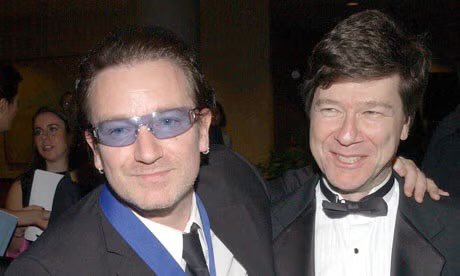

In the spring of 2020, Richard “Dick Whore” Horton, editor of The Lancet, appointed Jeffrey Sachs as chair of its COVID-19 Commission, whose goals were to provide recommendations for public health policy and improve the practice of medicine.
Sachs set up a number of task
Sachs set up a number of task


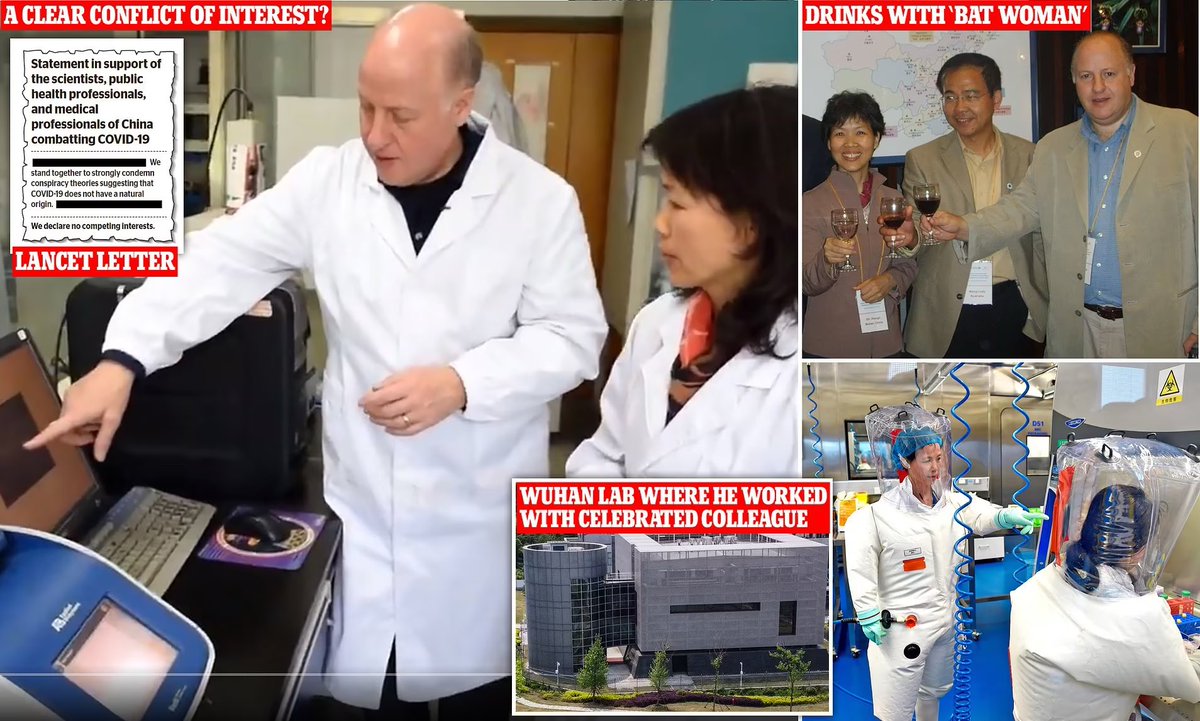
forces, including one on the origins of the virus. Sachs appointed British American disease ecologist Peter Daszak, a colleague of Sachs' at Columbia University Mailman School of Public Health, to head this task force, two weeks after the Trump administration prematurely ended a

federal grant supporting a project led by Daszak, EcoHealth Alliance, which worked with the Wuhan Institute of Virology.
The Global Virome Project (GVP) is an American-led international collaborative research initiative based at the One Health Institute at the
The Global Virome Project (GVP) is an American-led international collaborative research initiative based at the One Health Institute at the
University of California, Davis. The project was co-launched by EcoHealth Alliance president Peter Daszak, Nathan Wolfe and Edward Rubin of Metabiota, and former Chinese Center for Disease Control and Prevention director George F. Gao.


The Skoll Foundation partnered with Google's philanthropic arm, to fund Nathan Wolfe's 2008 research into cross-species transmission amongst Cameroonian bushmeat hunters. Google.org

• • •
Missing some Tweet in this thread? You can try to
force a refresh