Read on Twitter
A quick thread reflecting on Zahawi, Barrowman and Mone. Why libel law rewards liars, and how we could change it:
Baroness Mone introduced a company, PPE Medro, to the "VIP fast lane" for supplying PPE to the Government during the pandemic. There was copious evidence that she and/or her husband, Douglas Barrowman, ran the company. 

In December 2020, a lawyer instructed by Mone and Barrowman told the Guardian that “any suggestion of an association” between the Tory peer and PPE Medpro would be “inaccurate”, “misleading” and “defamatory”.

But now a representative of Mone and Barrowman has admitted that Barrowman funded and ran PPE Medpro.

Nadhim Zahawi said he would sue the Independent if it reported he was under investigation by HMRC.

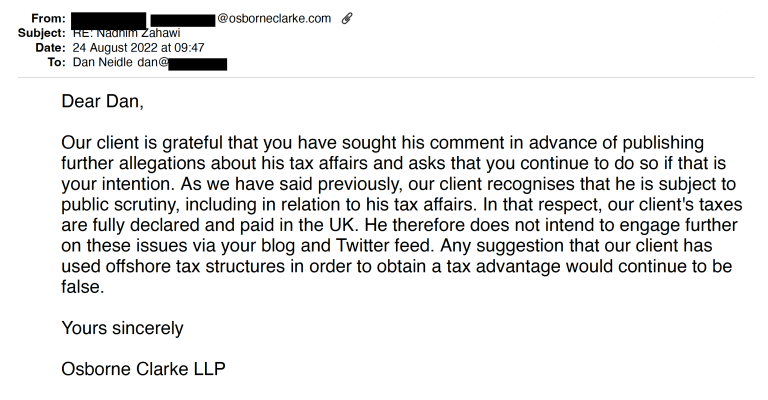
Zahawi's lawyers accused me of defamation for saying he was lying about his tax affairs, and claimed that Zahawi's taxes were "fully declared and paid in the UK".
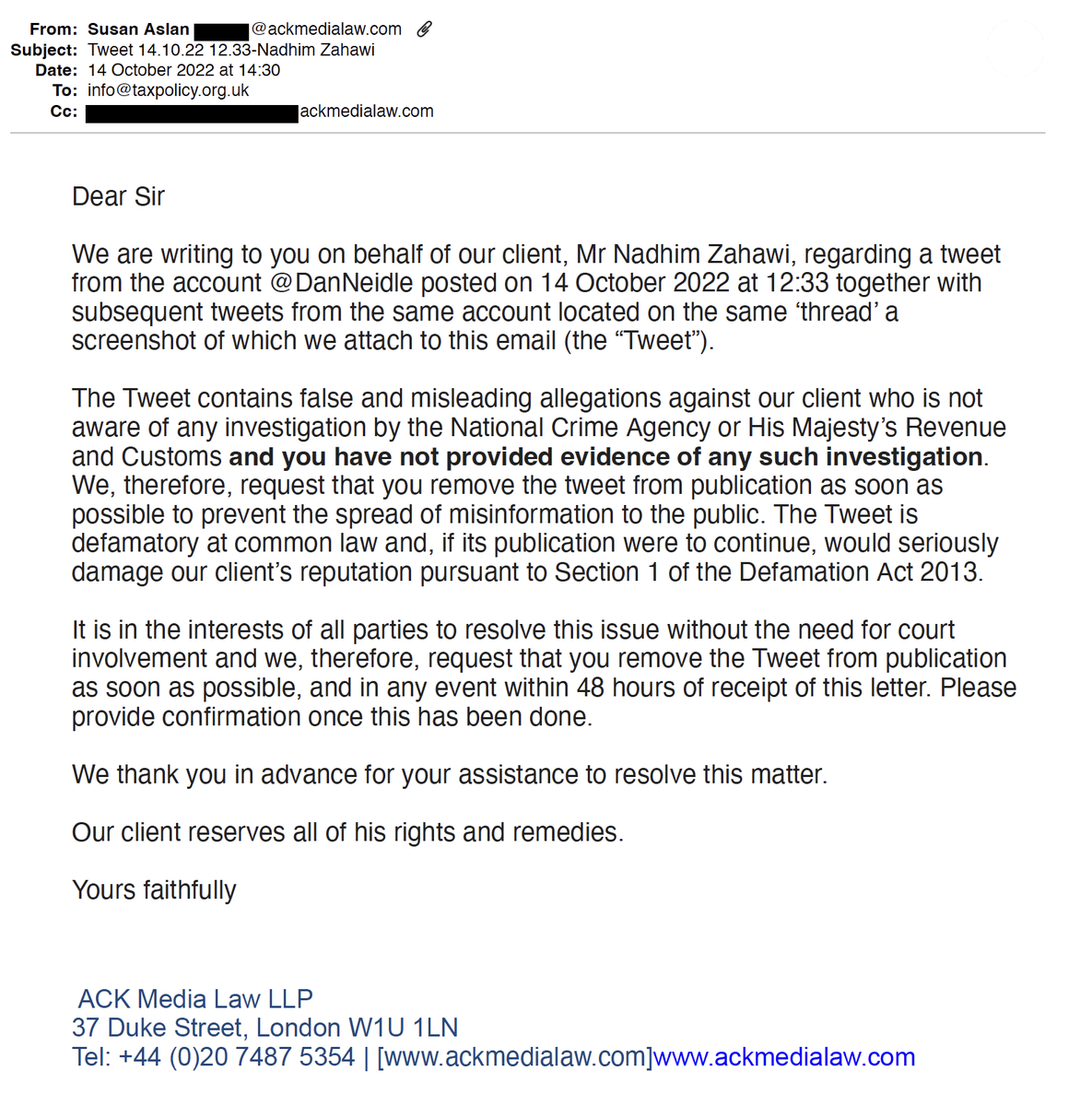
Another firm instructed by Zahawi subsequently wrote to me and said Zahawi was not aware of any investigation by HMRC.
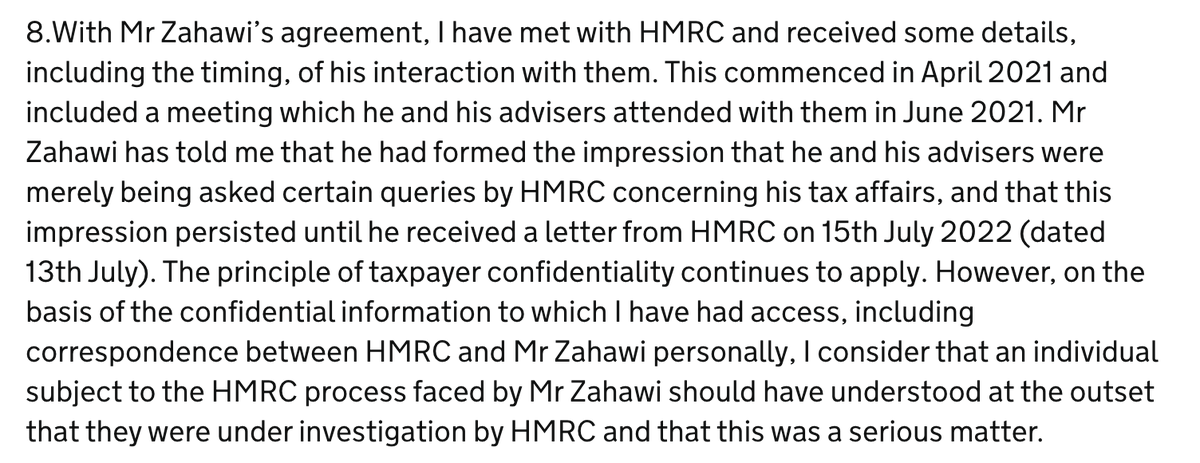
It was eventually revealed that Zahawi had been investigated by HMRC for over a year before these stories broke. The Prime Minister's ethics adviser concluded that Zahawi should have understood he was under investigation.
In both cases, a libel threat was made based upon a falsehood.
Were they lying?
I cannot read Mone, Barrowman or Zahawi's minds, and it is conceptually possible that all were being honest.
I cannot read Mone, Barrowman or Zahawi's minds, and it is conceptually possible that all were being honest.
For example, Mone and Barrowman may have thought that Barrowman's deep connection to PPE Medpro was not an "association". Zahawi may have not realised he was under investigation. It is also just about possible that they were not aware of the statements being made by their lawyers
But i my judgment these explanations are less likely than the alternative: Mone, Barrowman, and Zahawi intentionally instructed their lawyers to make false statements, to prevent people publishing unfavourable stories about them - stories they knew were substantively true.
In my opinion, they likely lied.
If a libel case proceeds to court, and the claimant lies on the witness stand, then that is perjury, and prominent people have been prosecuted for it.
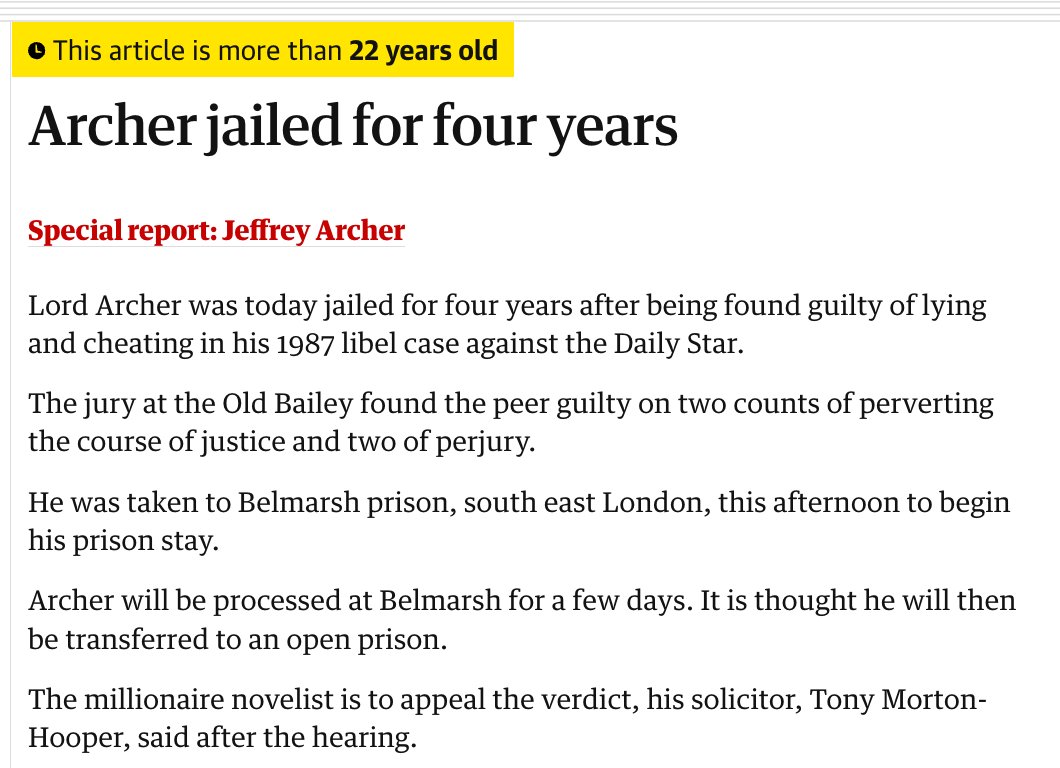
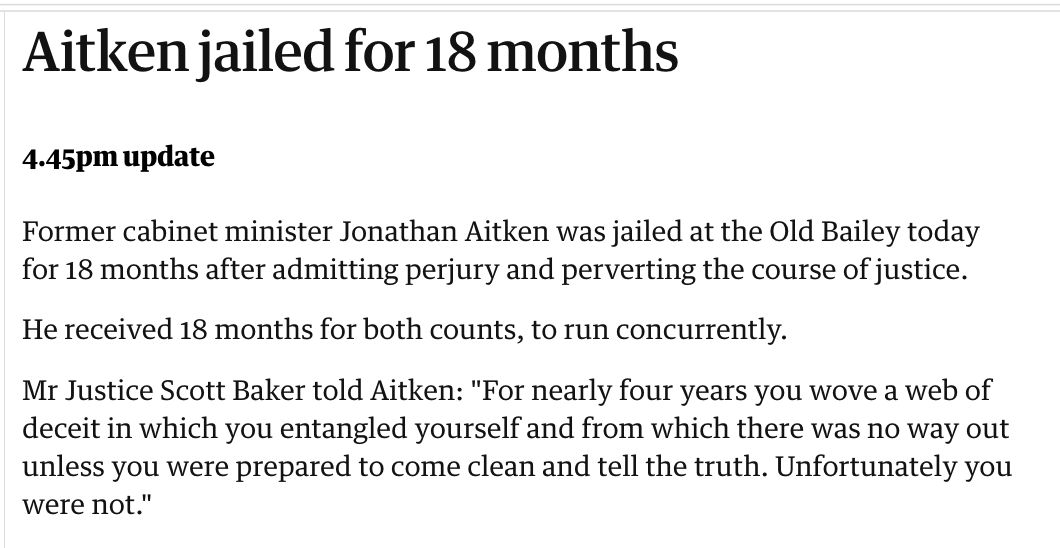
But if a claimant lies in libel correspondence, directly or through their lawyers, and the matter never reaches trial, then there is no consequence.
Except one: often the lie will be effective, and the story quashed, without ever seeing a courtroom.
Except one: often the lie will be effective, and the story quashed, without ever seeing a courtroom.
This is the "mathematics of libel".
If you're faced with a wealthy litigant then it's usually rational for you to withdraw it and avoid defamation proceedings, even if you're certain your story is true.
If you're faced with a wealthy litigant then it's usually rational for you to withdraw it and avoid defamation proceedings, even if you're certain your story is true.
Why? Because if you win you will devote perhaps a year of your life to the litigation, and end up out of pocket by a few £100k.
If you lose, you could be on the hook for £1m or more. Or you could give up now, and hopefully pay nothing.
If you lose, you could be on the hook for £1m or more. Or you could give up now, and hopefully pay nothing.
This is the rational choice which - appallingly but inevitably - is forced on people by our defamation law.
So if you want to stop people writing the truth about you, you just need two things: money to pay the lawyers, and the willingness to lie. The mathematics of libel will then do the rest, and force that annoying journalist to back down.
And in the - usually unlikely - event they don't, you can just walk away, free from consequence. It's a one-way bet.
We need to change this calculation.
Some suggestions:
Some suggestions:
1. Any "letter before action" threatening defamation proceedings could be required to be accompanied by a "statement of truth".
The claimant would have to say, under threat of perjury, that the statements in the letter are correct, and that the defamatory statement complained of is false. Lying in correspondence would then have a consequence.
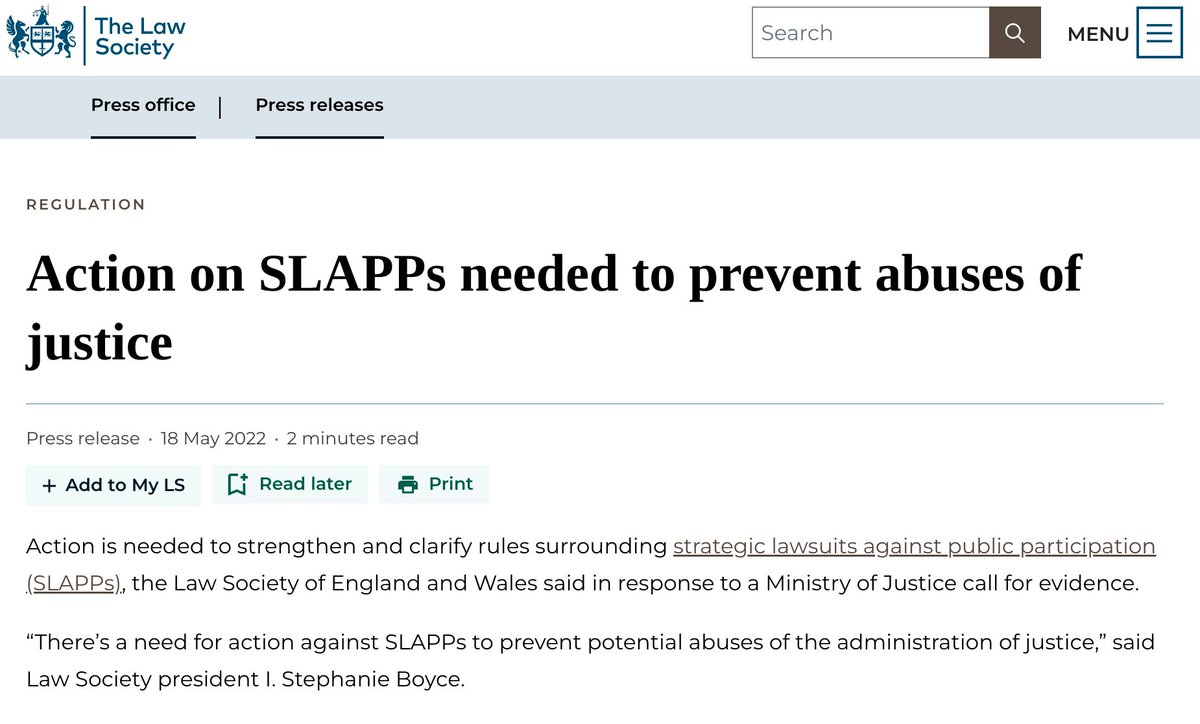
2. The new anti-SLAPP law is welcome, but only applies to cases involving economic crime. It wouldn't have applied to Zahawi, and it's doubtful it would have applied to Barrowman/Mone. The law could easily be extended to all defamation cases.
3. The Solicitors Regulation Authority could discipline solicitors who make false factual claims in defamation correspondence without having taken appropriate steps to verify the claims, or who remain acting for a client past the point it is clear the client lied.
I am hopeful they will do so in both the Zahawi and Mone/Barrowman cases.
4. Or more radical libel reform: the writer Edward Lucas has suggested a speedy and lawyer-free dispute resolution service for defamation cases, much like a small claims court. thetimes.co.uk/article/the-na…
The best argument against this is that the floodgates would open, and the new court become overwhelmed with claims from ordinary people. But that's a terrible indictment of the current law - that it's only viable because only the rich can afford it.
5. So perhaps we need a change which is equally radical but much simpler: require that public figures can only sue for defamation if they can demonstrate the authors acted maliciously, with knowing or reckless disregard for the truth.
We could go further, and require that this point is always heard as a preliminary issue before any defamation action can proceed, with the defendant's costs payable in full if the claimant fails to demonstrate malice.
One way or another, we need to end the mathematics of libel, and make it rational for people telling the truth to continue to tell the truth.
A longer version of this thread, with footnotes and links to sources, is here: taxpolicy.org.uk/2023/11/07/lib…
The @david_conn story in the Guardian, revealing the Mones' admission, is here: theguardian.com/uk-news/2023/n…
• • •
Missing some Tweet in this thread? You can try to
force a refresh