We have reached an agreement in principle for Sam Altman to return to OpenAI as CEO with a new initial board of Bret Taylor (Chair), Larry Summers, and Adam D'Angelo.
We are collaborating to figure out the details. Thank you so much for your patience through this.
• • •
Missing some Tweet in this thread? You can try to
force a refresh

Introducing a limited preview of GPT-5.6 Sol, our next generation frontier model, as well as GPT-5.6 Terra, a balanced model for efficient, everyday work, and GPT-5.6 Luna, a fast and affordable model for high-volume work.
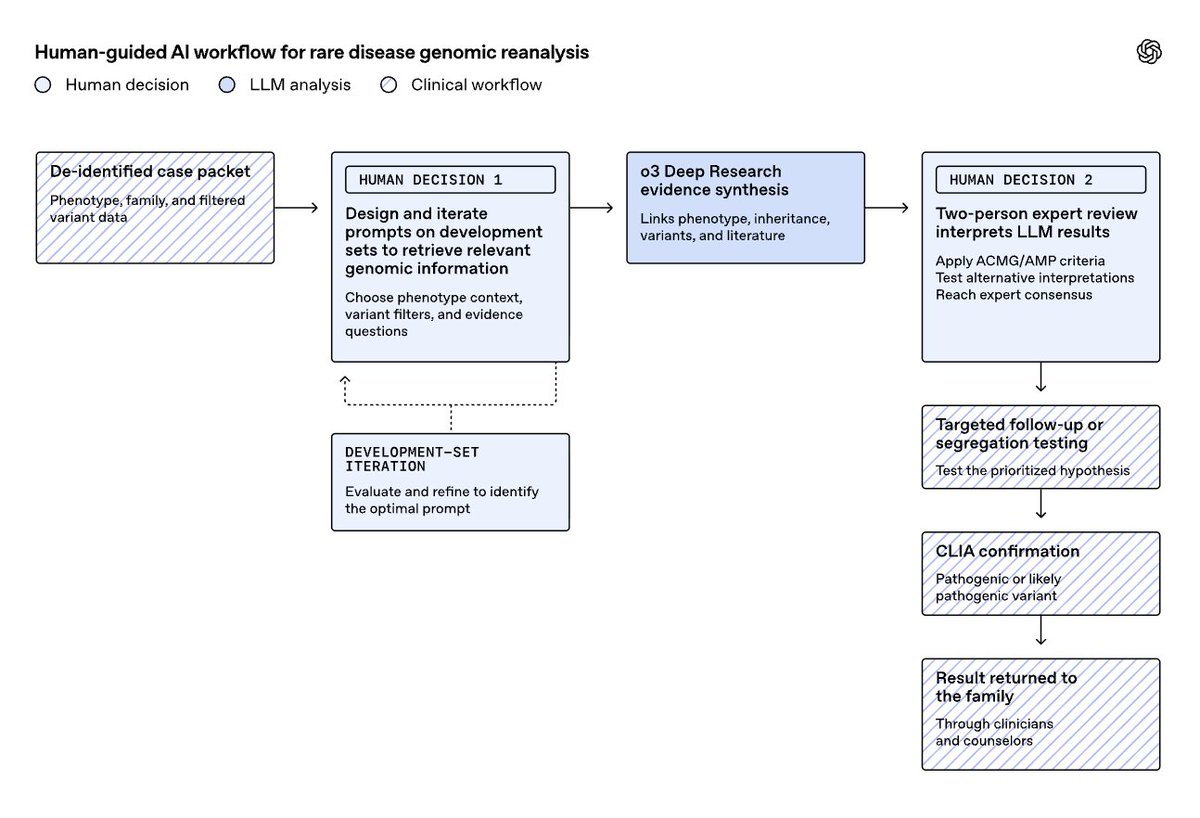
Together with researchers at Boston Children’s Hospital and Harvard, we published a study in NEJM AI showing how o3 Deep Research helped clinicians revisit previously unsolved rare pediatric disease cases, and find answers for families who had waited years.
The team reanalyzed 376 de-identified cases that had already gone through genetic testing and expert review, helping identify 18 diagnoses across neurodevelopmental disorders, rare neuromuscular disease, sudden unexpected death in pediatrics, and early-onset psychosis.
Rare disease diagnosis is challenging, as sequencing can surface millions of variants, and medical knowledge changes constantly.
o3 Deep Research helped connect clinical features, inheritance patterns, variant evidence, and scientific literature into hypotheses for specialists to review.
Every result went through human adjudication and clinical confirmation. AI’s role here was to help experts reason through complex, fragmented evidence faster and more thoroughly.
Introducing Daybreak: frontier AI for cyber defenders.
Daybreak brings together the most capable OpenAI models, Codex, and our security partners to accelerate cyber defense and continuously secure software.
A step toward a future where security teams can move at the speed defense demands.
Find and fix vulnerabilities earlier with Daybreak
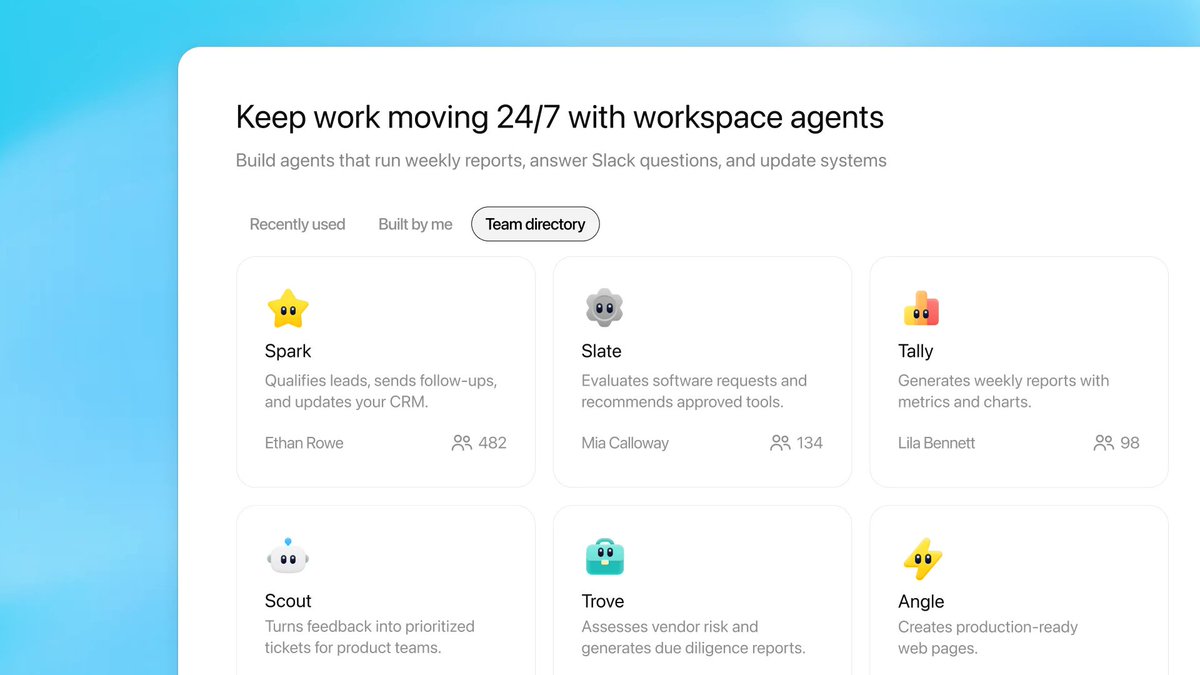
Introducing workspace agents in ChatGPT—shared agents that can handle complex tasks and long-running workflows across tools and teams.
Agents are built to help with the kind of work that takes time, context, and follow-through: coordinating across tools, tracking progress, and moving tasks forward without needing constant supervision.
A state-of-the-art image model that can take on complex visual tasks and produce precise, immediately usable visuals, with sharper editing, richer layouts, and thinking-level intelligence.
Video made with ChatGPT Images
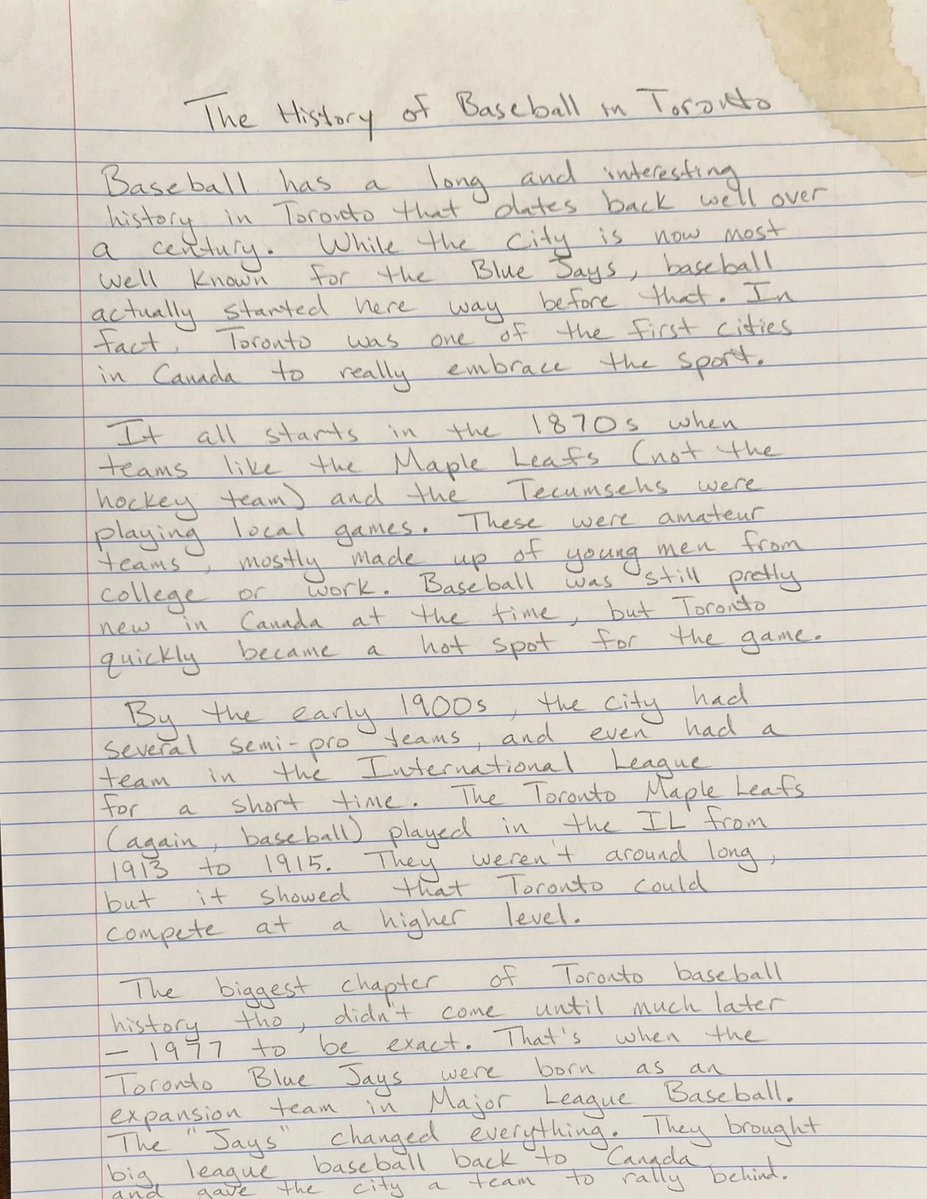
ChatGPT Images 2.0 is a step change in detailed instruction following, placing and relating objects accurately, and rendering dense text, with the ability to generate across aspect ratios.
It’s also accurate across languages and uses its expanded visual and world knowledge to fill in the gaps for you, so you get smarter images with less prompting.
ChatGPT Images 2.0 can conceptualize more sophisticated images, and then actually bring that vision to life effectively.
It’s able to follow instructions, preserve requested details, and render the fine-grained elements that often break image models: small text, iconography, UI elements, dense compositions, and subtle stylistic constraints, all at up to 2K resolution.