(1/21) In what will probably be the last of my threads about the T-64's technical minutiae, I'd like to talk about the BKP transmission. 

(2/21) To understand the BKP we must first go back to the T-34, which had a 4-speed gearbox (later improved 5-speed one) connected to an 'onboard/side friction clutch' (бортовой фрикцион), that also contained band brakes. This system was inherited from the Christie M1940 tank.


(3/21) Steering was accomplished via clutch braking: disengage the clutch on one side and apply brakes to slow the track, turning the tank towards that side.
(4/21) While very simple, this method required a lot of effort on the part of the driver handling the levers. It also wasted a lot of engine power and put a lot of wear on the brakes and clutches.
(5/21) Later in the war, the KV-1S and IS tanks received more efficient epicyclic (planetary) steering gear (планетарный механизм поворота). These were also considered for the T-34 and T-44, but the T-44 ended up using friction clutches, at least as originally built.
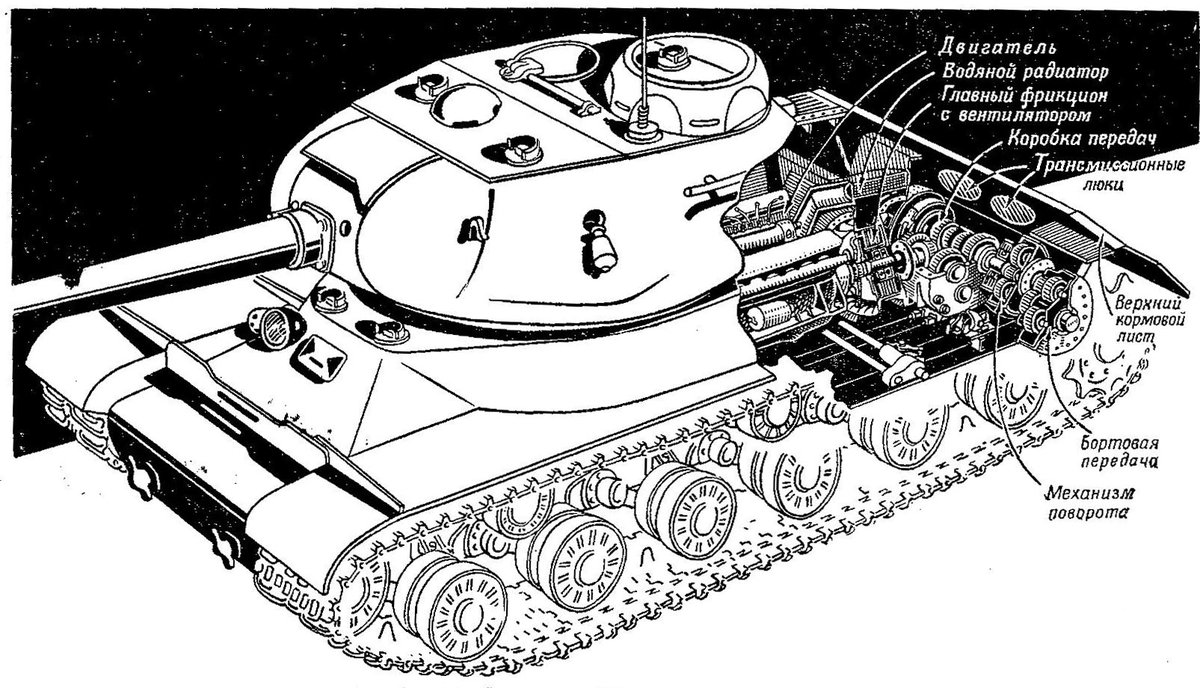
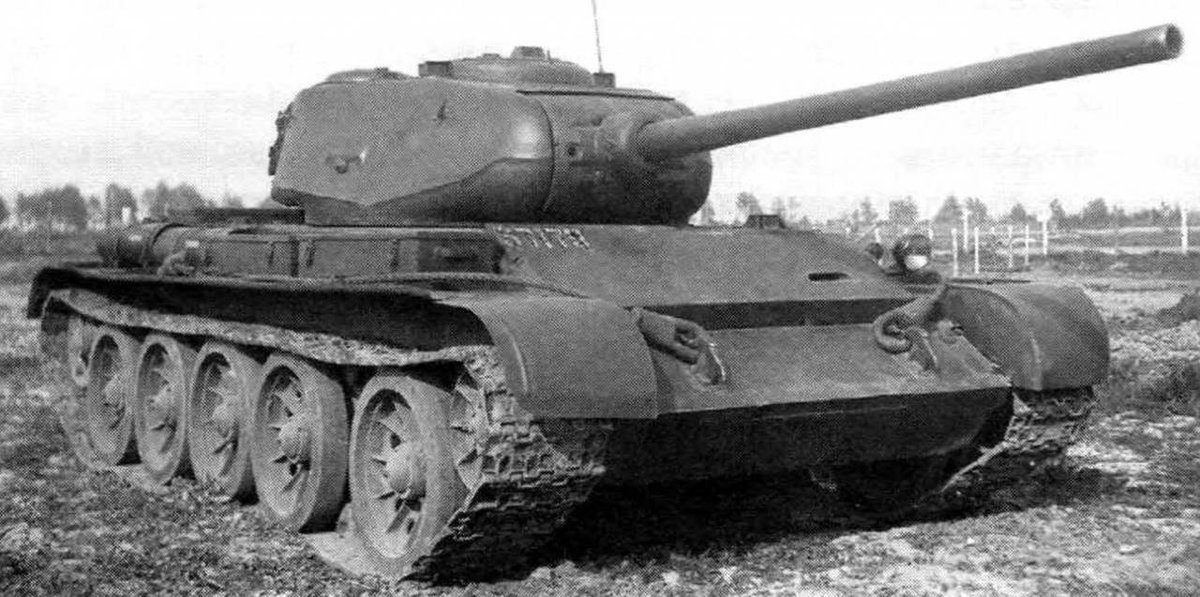
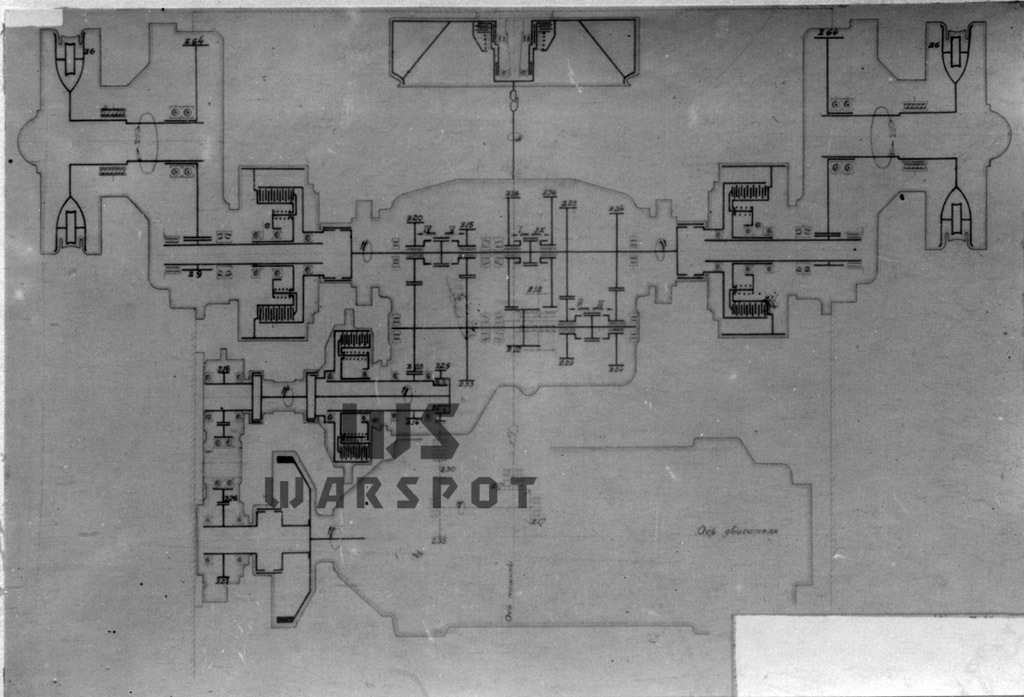
(6/21) Starting with the T-44, Soviet medium tanks switched to the transverse engine layout, which had not been used on Soviet tanks since the MS-1. Planetary steering gear (2 & 5) was then introduced on the T-54, and subsequently retrofitted to T-44Ms in the 1960s.
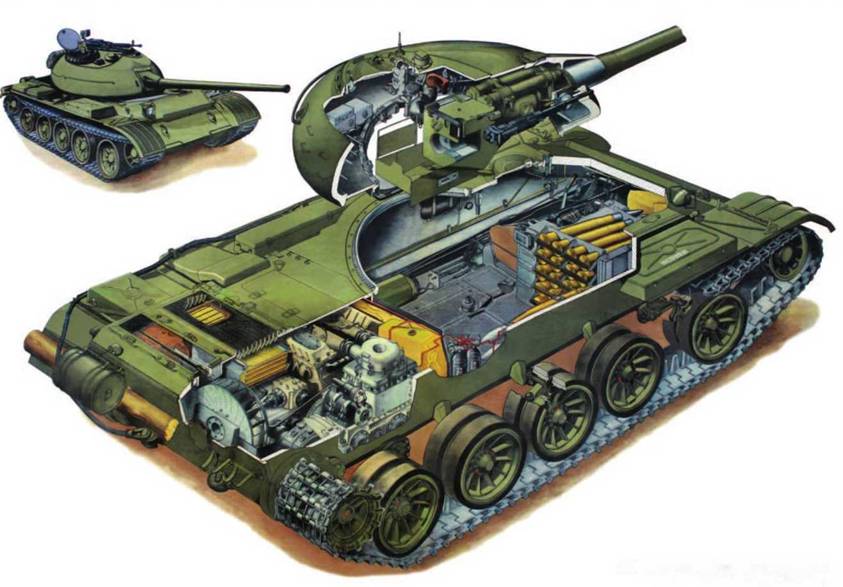
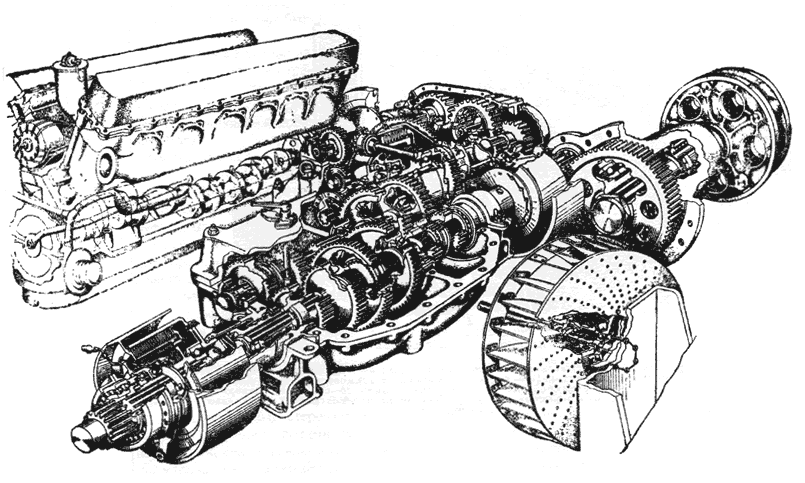
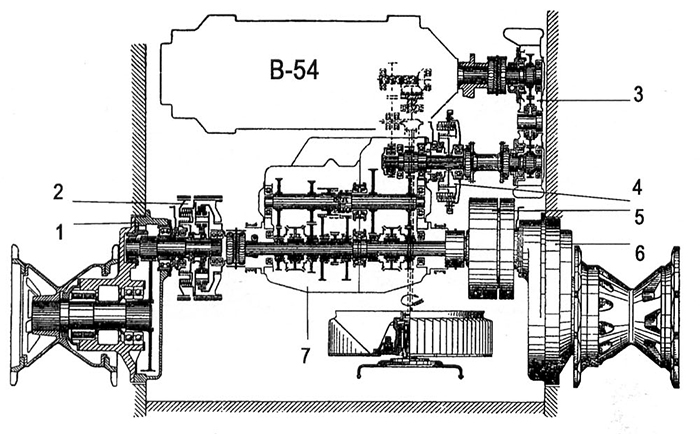
(7/21) The T-54's transmission can be roughly divided into the following parts. The T-55 and T-62 are mostly identical.
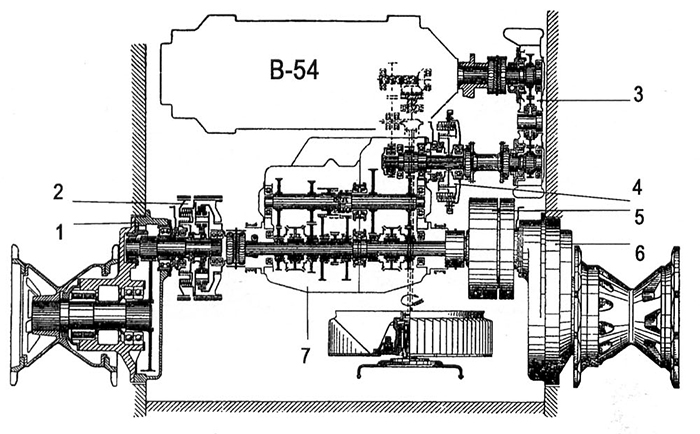
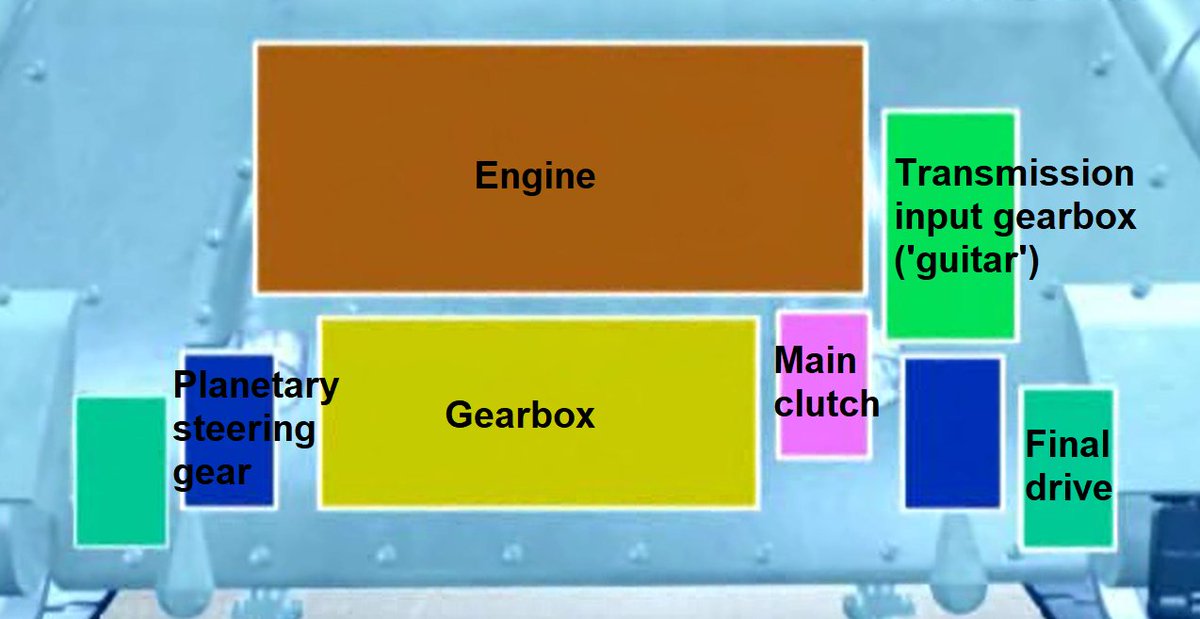
(8/21) In his quest to reduce the next-generation T-64's weight as much as possible, Morozov's team invented a new transmission unit known as the бортовые коробки передач (BKP — 'onboard gearbox'). It combines the functions of the gearbox, final drive, and planetary steering.
(9/21) The T-64's BKP is designed to directly interface with the 5TDF engine, eliminating the need for a main clutch or input gearbox, like on the T-54. It can be structurally divided into the planetary gearbox (PKP) and the final drive, which is attached to the drive wheels.
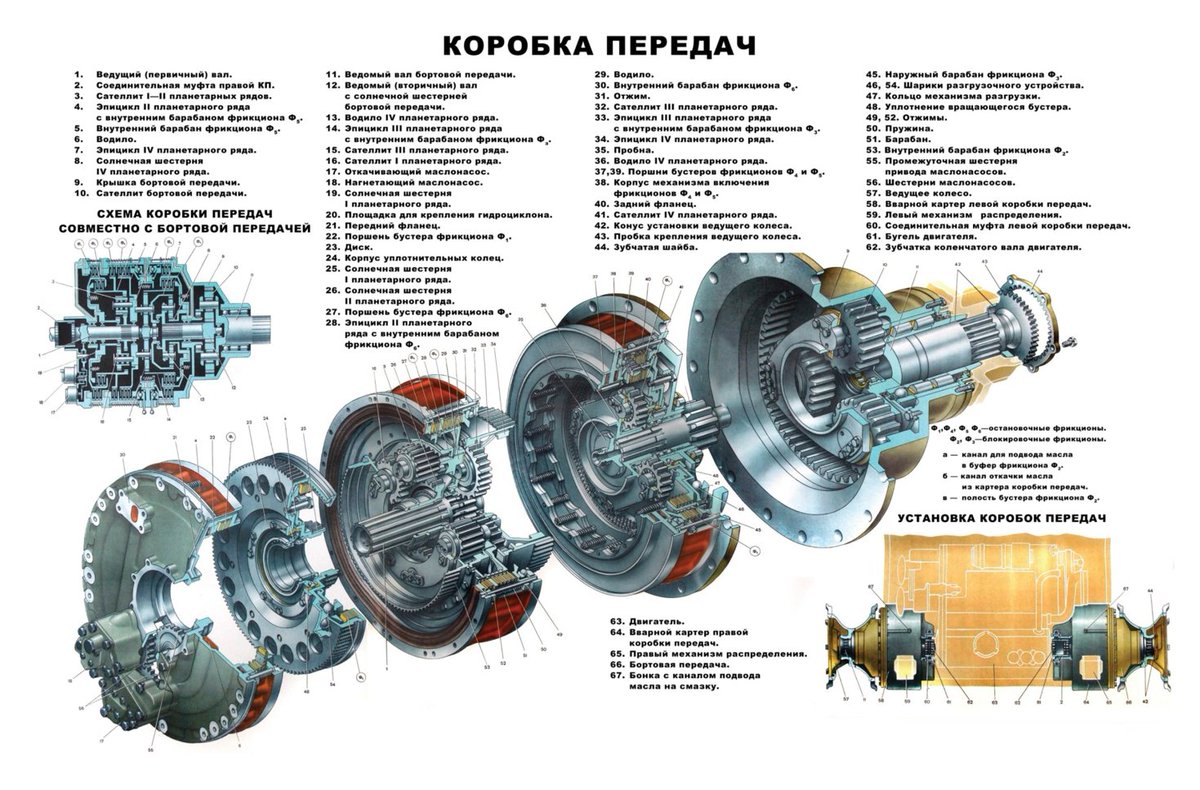

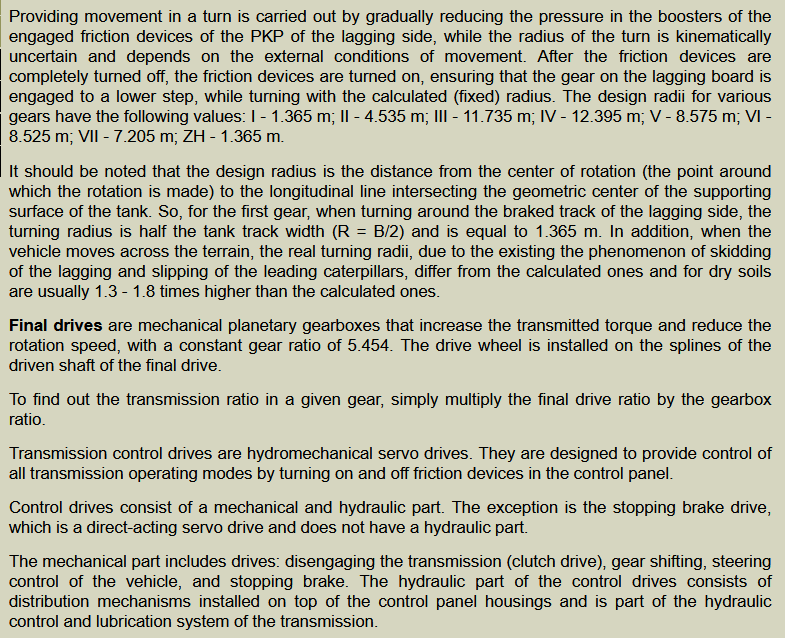
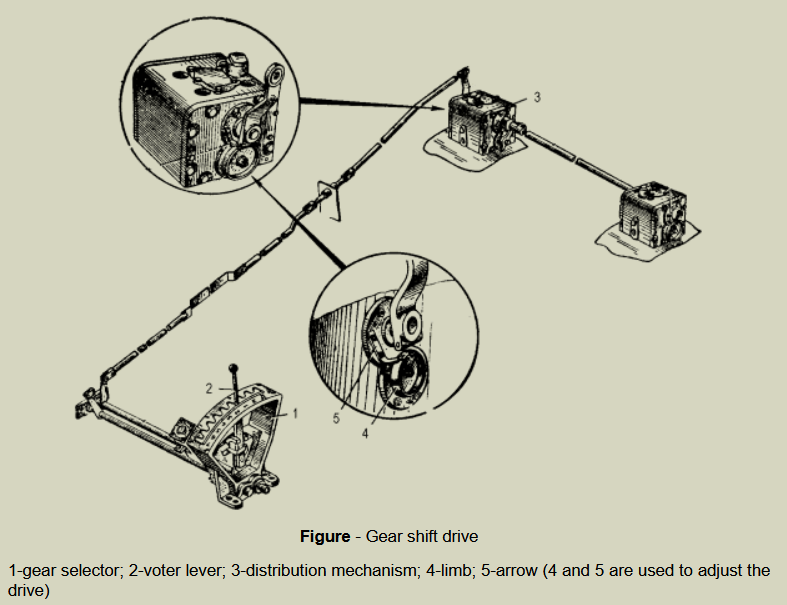
(10/21) Gear shifting is done with a gear shift drive and the distribution mechanisms, and the two turning levers are used to steer to one side or the other. There are 7 forward + 1 reverse gears on the T-64's BKPs.
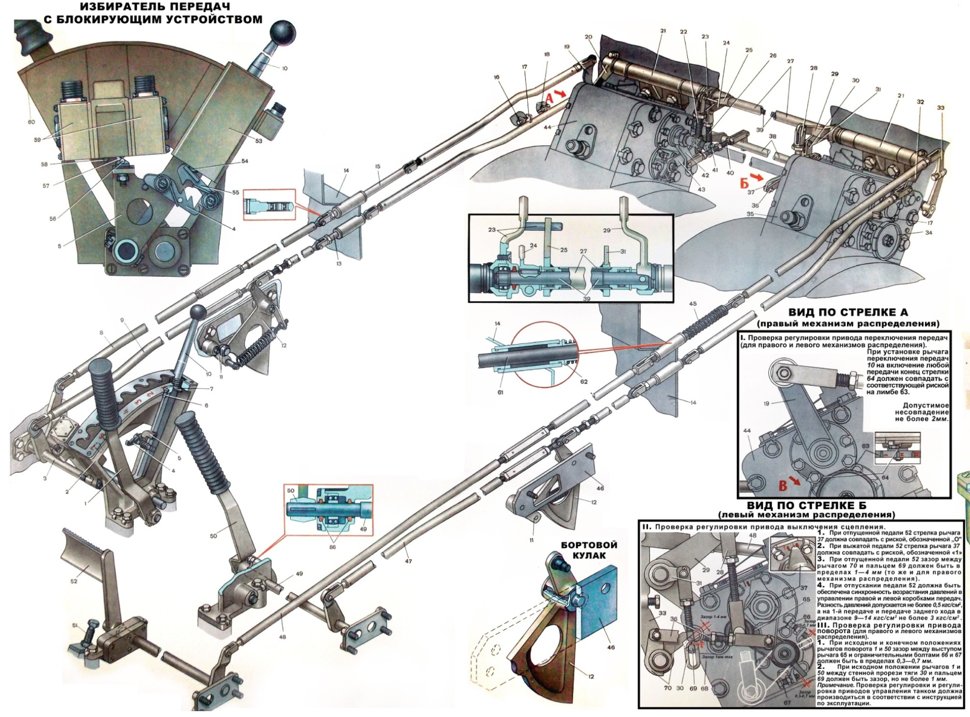
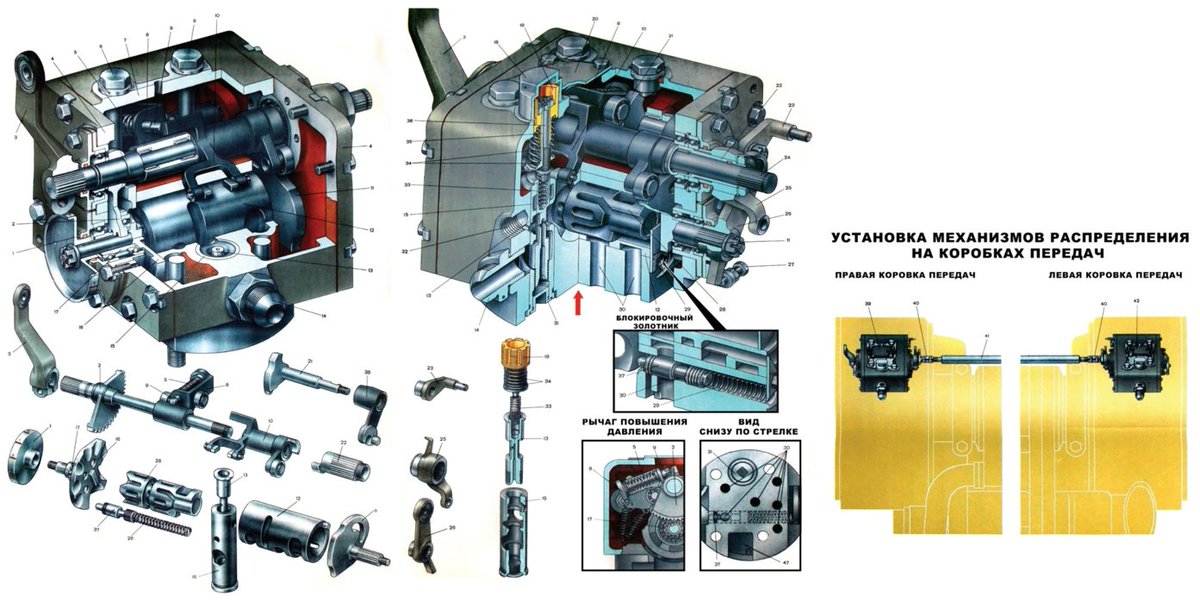
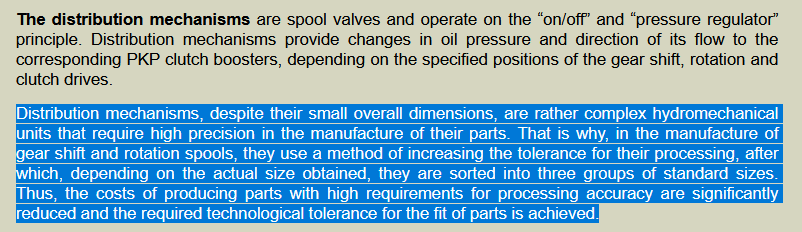
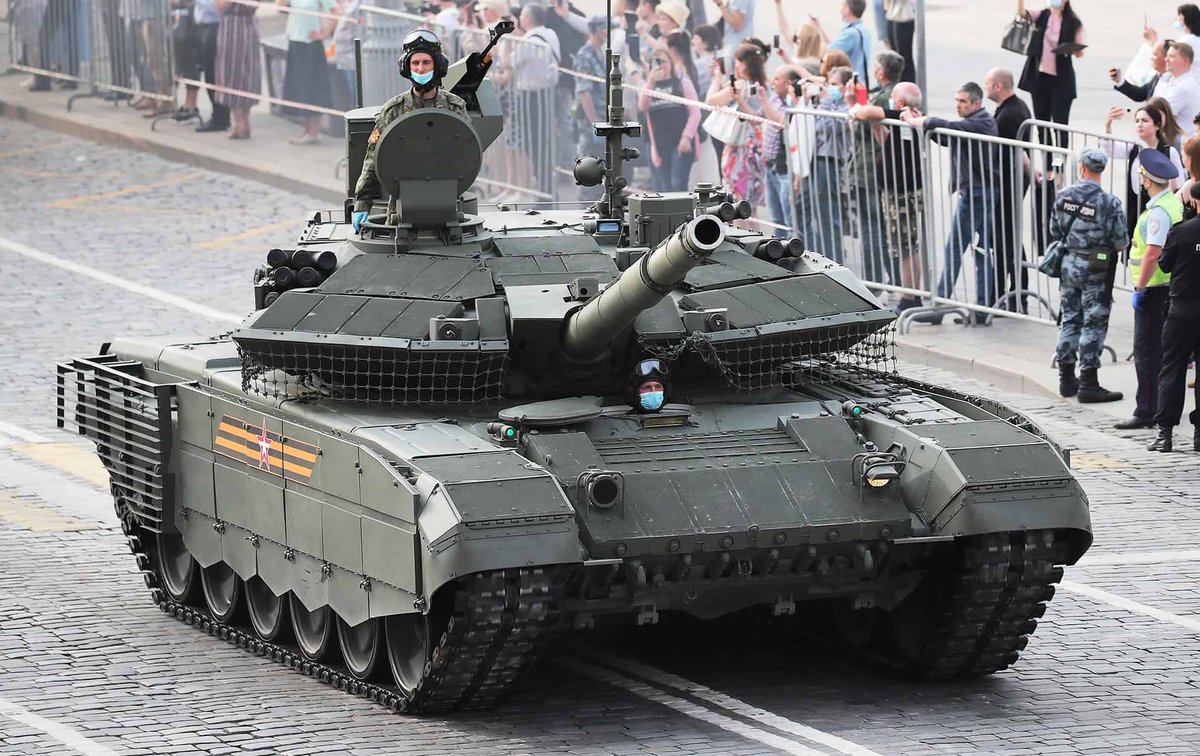
(11/21) The BKP, in one form or another, is used by ALL Soviet, Russian, and Ukrainian tanks that have entered service since the T-64. This includes both the T-84/BM Oplot and the T-90M. The T-64, T-72, and T-80 families' BKPs are, however, NOT interchangeable.
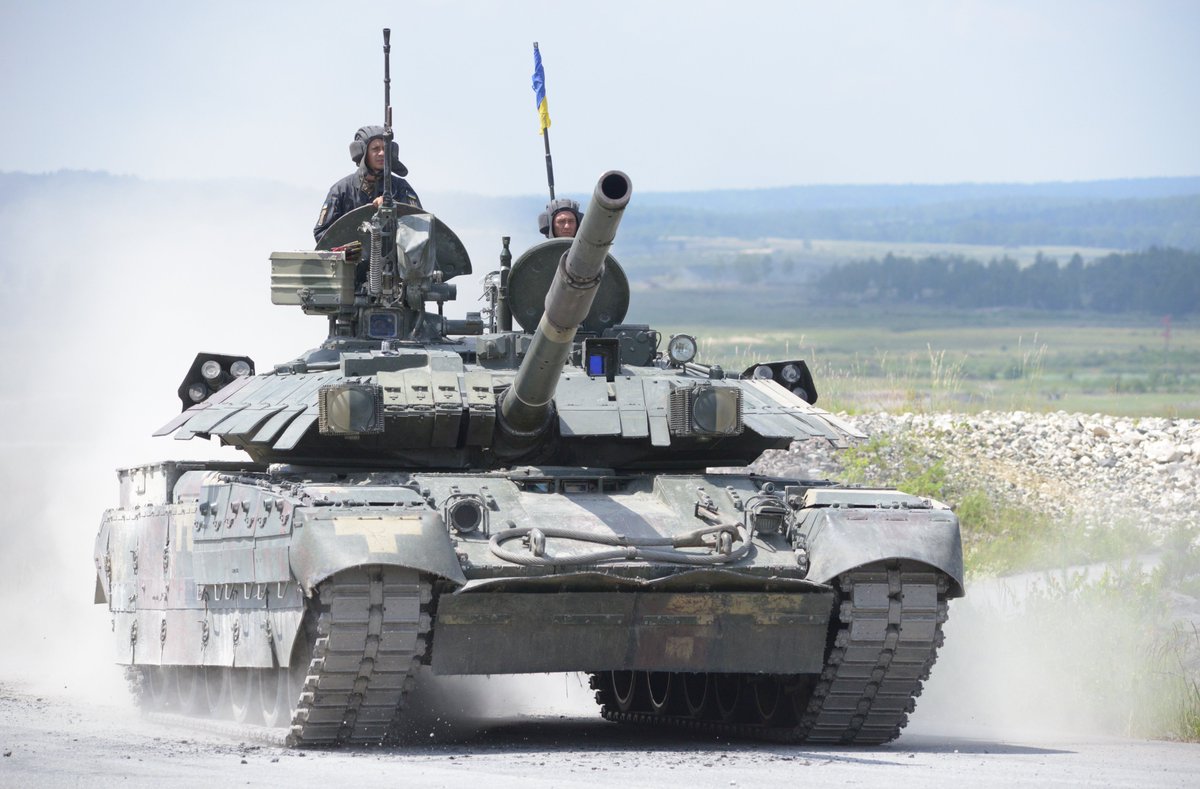
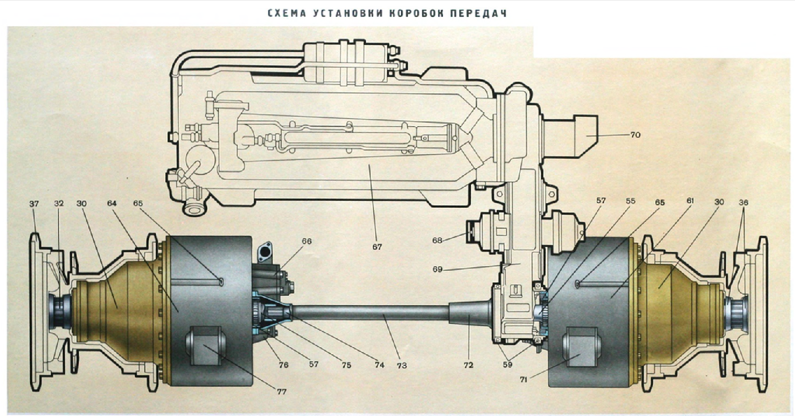
(12/21) On T-72s, because the BKPs cannot directly interface with the V-12 engines, they are attached to a shaft, which is driven by an input gearbox, somewhat reminiscent of the T-54 family. It is one reason why the T-72 has a longer engine compartment than the T-64 and T-80.
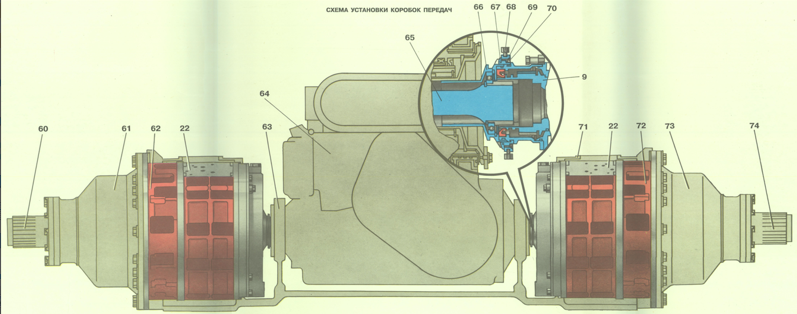
(13/21) T-80s have a more similar arrangement to the T-64, with BKPs directly attached to the gas turbine 'monoblock'.
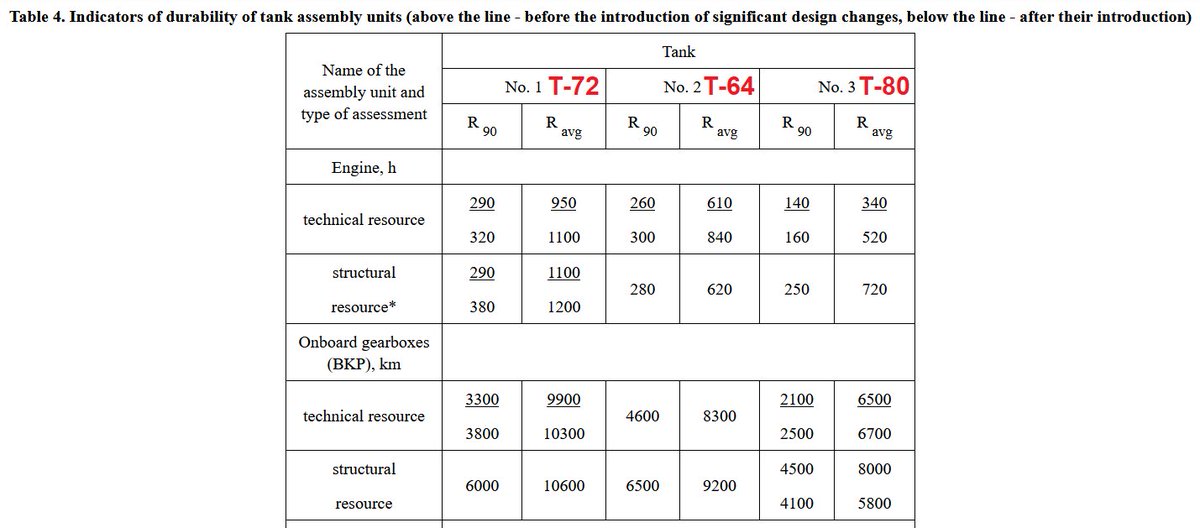
(14/21) The BKPs are very compact, simple, and highly efficient transmission units in terms of power transfer. They are also quite reliable, with the T-64's BKPs proving the most reliable of the three in controlled military operation tests.
btvt-info.translate.goog/5library/vot_n…
btvt-info.translate.goog/5library/vot_n…
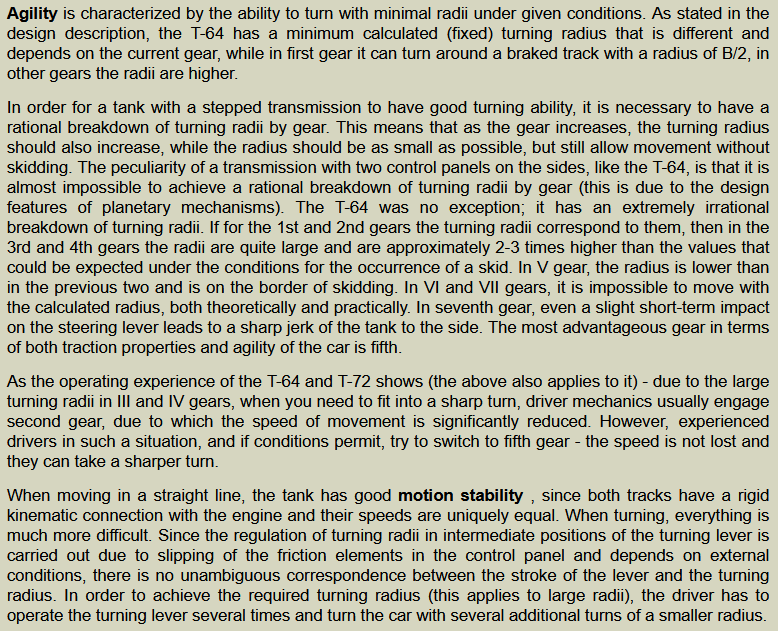
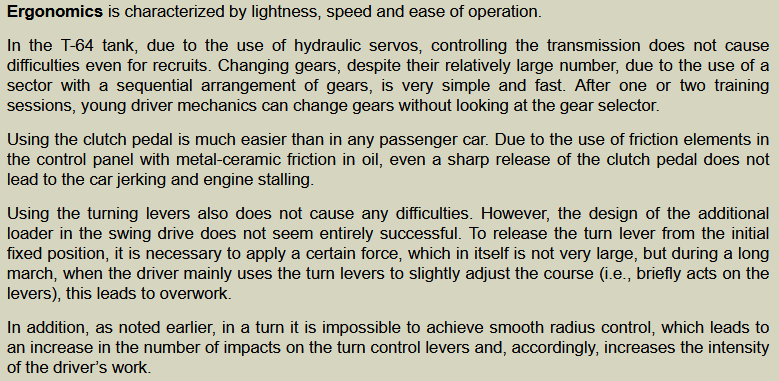
(15/21) However, they have significant drawbacks as well. The most serious of these are in the turning performance.

(16/21) Standard T-64/T-72/T-80 BKPs, as designed, also only have 1 reverse gear, which heavily restricts their reverse speed (~4 km/h in T-64/72s).
https://twitter.com/AndreiBtvt/status/1729884807017238876
(17/21) It is possible to modify the BKP to provide a high reverse speed, however. This was done for the BM Oplot family.
dzen.ru/a/YV7btA62cUBB…
dzen.ru/a/YV7btA62cUBB…
(18/21) The Soviets tested automatic gear shifting on the T-64 as early as the 1980s, but for various reasons, no Soviet tank entered service with automatic gear shifting; only the BM Oplot family (T-84 shown) and T-90M have it today.
btvt-info.translate.goog/5library/vbtt_…
btvt-info.translate.goog/5library/vbtt_…
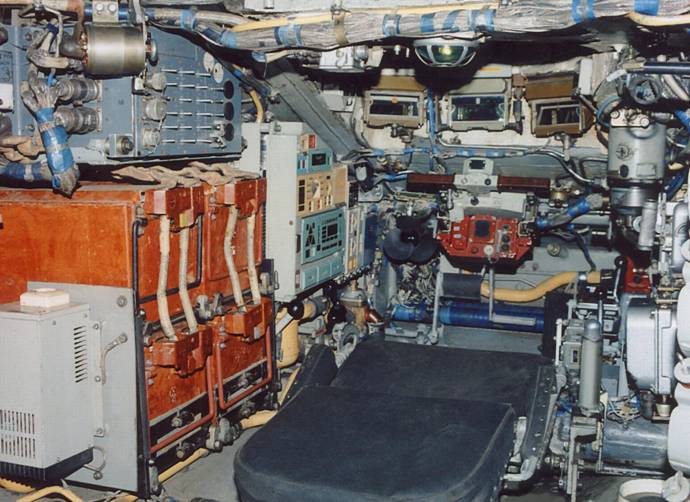
(19/21) According to the T-64A's repair manual, it is expected to take about 12-13 man-hours to replace a BKP on a T-64, or roughly 6-7 hours for a 2-man crew.
(20/21) A similar operation on the T-72 is expected to take 16 and 21 man-hours for the right and left BKPs, respectively (8 and 10.5 h for a 2-man team). This is because of the added complexity imposed by the T-72's transmission layout.

(21/21) I don't know what the next generation of Ukrainian or Russian tanks will use. The BKP is quite outdated today, but it continues to serve on almost all the tanks currently fighting in Ukraine, over 60 years after it was first introduced on the original T-64.
• • •
Missing some Tweet in this thread? You can try to
force a refresh