HOW TO GET WRINKLES OUT OF A SUIT
Someone asked how to get wrinkles out of tailored garments, such as suits, sport coats, and tailored trousers. I'll tell you how tailors do it, and then talk about how you can do it. 🧵
Someone asked how to get wrinkles out of tailored garments, such as suits, sport coats, and tailored trousers. I'll tell you how tailors do it, and then talk about how you can do it. 🧵

As ever, I think it's helpful to first understand that a suit (or sport coat) is not like casualwear. It's built up from many layers of material—haircloth, canvas, and padding—which are sewn together using techniques like pad stitching to give them a three-dimensional shape.


In a tailor's workshop, this shape will also be pressed in with a heavy industrial iron (which weighs about 15 lbs).
Pressing trousers is relatively straightforward. A tailor presses down on the fabric using a pressing cloth.
Pressing trousers is relatively straightforward. A tailor presses down on the fabric using a pressing cloth.
A pressing cloth is a midweight fabric that protects your tailored garments from an iron's hot plate. A tailor will use a pressing cloth because a hot iron can create shiny spots on dark worsteds, like navy suit pants, or burn marks on light-colored fabrics.


Pressing the legs is easy, as Liverano's workshop demonstrates in the video above. You lay the pressing cloth down and then press down with the iron. But the area around the hips is more complicated, especially if there are pleats.
For this, a tailor will use what's called a tailor's ham, which is basically a round pillow. The waistband and hip area are laid around the pillow, and then the tailor will again press down with the iron. This way, they can create fullness where they need.


These trousers have not been freshly pressed, but you can see how the combination of skilled pattern drafting, sewing, and pressing creates a garment that hangs perfectly. The waistband goes straight across. Pockets don't flare. Everything is perfect.

The same idea applies to jackets, but more so. A jacket is much more complicated than trousers, as it has more shaping through the shoulders and chest. Look at the roundness around the chest area. And the way the conical sleeves hang perfectly.

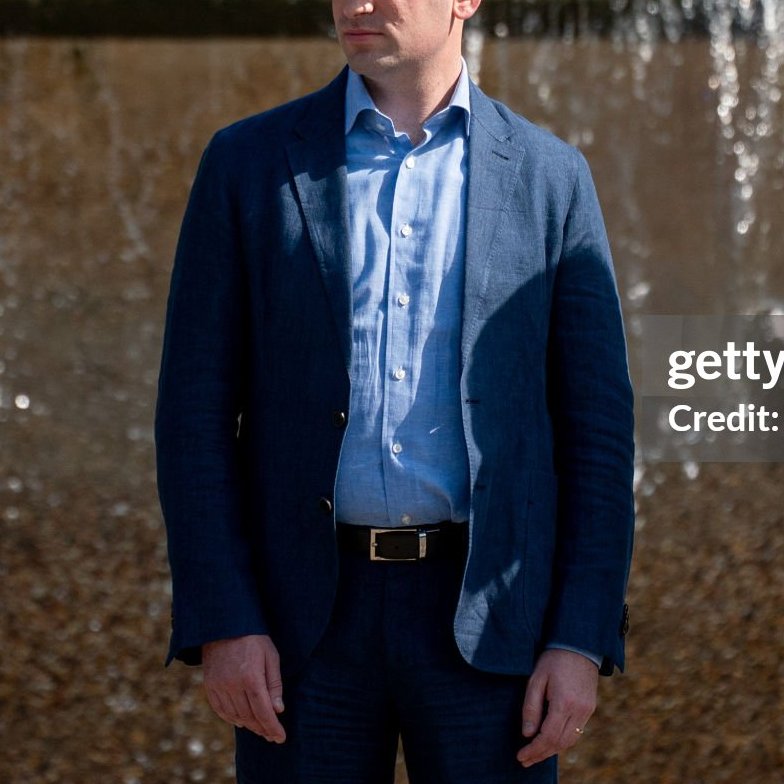
On a well-made jacket, the lapels will also have a nice roll, making them look like they're blooming out of the waist. This is created by skilled pad stitching and proper hand pressing. Gaetz's jacket has no roll bc the construction is not good & lapels have been pressed flat.


This is why pressing a jacket is much more complicated. A tailor will rely on a variety of tools to create the fullness and curves they need. Pressing a jacket properly is quite a skill and requires years of practice and training. Unlikely something you can do at home.
So where does that leave you?
Knowing how this is done in a workshop allows you to think about what you might want to do with your garments at home. If you're just trying to get the wrinkles out of the back of your knees, that's easy.
Knowing how this is done in a workshop allows you to think about what you might want to do with your garments at home. If you're just trying to get the wrinkles out of the back of your knees, that's easy.
Get a pressing cloth from craft stores such as Michaels or Joann Fabrics. They are also available online. Wet the cloth a little with a spray bottle, or soak it and wring it out. Place it between your iron and pants (don't place an iron directly on your pants. Right pic is bad).


A tailor will have a very heavy industrial iron that weighs about 15 lbs. Your iron is much lighter, so you will need to apply some elbow grease. Press DOWN.
For the hips, you can use the tip of your ironing board (pic 1) or sleeveboard (pic 2).
For the hips, you can use the tip of your ironing board (pic 1) or sleeveboard (pic 2).


Why would you buy a sleeveboard? Because they're useful for pressing sleeves, which is often the first area of a suit jacket or sport coat that loses its shape (particularly the sleevehead). They can also be good for touching up lapels.


The chest is a bit more complicated, and I would leave that to the pros. If you don't have someone near you who can hand press garments, consider sending stuff to Rave FABRICARE in Arizona. They're the best dry cleaner in the US. They do everything, including a sponge & press.

The reason you don't want to use devices such as a steamer is because you can wreck your clothing. All this is explained in this thread:
https://twitter.com/dieworkwear/status/1639514996739837952
But let's talk practicality. The info above is about how a top-end tailor would get wrinkles out of your garment. This is most important on high-end tailored garments, which already have a lot of shape built in. Hand pressing is important because you want to preserve that shape.
But your garments at home may be simpler. It might be a J. Crew suit, which is more of an industrial product. A hand press may not have as much of an effect because the innards aren't the same. You may also be in a pinch (wedding day) or don't want to pay for a hand press.

In such cases, maybe you use a steamer. If you do, keep it away from things like the lapel, chest, and shoulders, where it can do real wreckage. Keep it to the bottom half of the garment and steam lightly. Be judicious with the steam. If you go overboard, you can get this:


If you press your trousers, at least use a pressing cloth, so you don't shine up your dark worsteds or create burn marks on light-colored fabrics. Use the tip of the ironing board for hard-to-reach places. Know that some areas of trousers benefit from having some fullness.


The other thing is to just buy garments that don't wrinkle as easily (except for linen, where wrinkles are part of the charm). Again, heavier fabrics wrinkle less than lightweight fabrics. And they can still wear cool.
A 14oz tropical wool, for example, is very breathable and will wear cooler than a 10oz cotton drill. When it comes to how "cool" something wears, the weave is more important than the weight. This stuff below is like a mesh screen.


With these sorts of materials—heavier flannels, high-twist wools, whipcord, etc.—you can get wrinkles out simply by hanging your garments up for a few days. The wrinkles will mostly fall out on their own. Everything really starts at the purchasing stage.

If you really want to go deep into this, here are two resources.
A video showing how you can press your jacket and trousers at home, according to a bespoke tailor
And a written guide by another tailor
tinyurl.com/bkczzh58
tinyurl.com/nhk27n7k
A video showing how you can press your jacket and trousers at home, according to a bespoke tailor
And a written guide by another tailor
tinyurl.com/bkczzh58
tinyurl.com/nhk27n7k
People keep asking me whether they can hang their garments in a steamy bathroom. You don't want to do this for two reasons.
First, steam in any form can distort the garment. Look at the two photos below, which show a jetted pocket on the same suit. The first photo shows the garment after a fresh press. The second photo shows what happens when you run a hot iron's steam over it. This distortion comes because the materials–the wool, canvas, and stitching—can shrink at different rates. You get a puckered mess. You can fix this with a good hand press, but sometimes the damage is permanent.
Second, to the degree that the steamy bathroom will make your garment lose its wrinkles, it can also lose its shape. Think of how a woman shapes her hair with a hot curling iron. The curls are created through a combination of heat *and* pressure (sort of like hand-pressing a garment with a hot iron).
But what happens if you run hot steam through her hair? Her hair would relax, and it would lose all the shape she put into it. This is the same as hanging your garment in a steamy bathroom. Yes, you may lose some wrinkles, but you may also lose some of the shaping. This shaping is what makes tailoring so unique. Suits and sport coats are not like casualwear because they can create very distinctive silhouettes. If you hang your garment in a steamy bathroom, you can wind up with a limp garment.
First, steam in any form can distort the garment. Look at the two photos below, which show a jetted pocket on the same suit. The first photo shows the garment after a fresh press. The second photo shows what happens when you run a hot iron's steam over it. This distortion comes because the materials–the wool, canvas, and stitching—can shrink at different rates. You get a puckered mess. You can fix this with a good hand press, but sometimes the damage is permanent.
Second, to the degree that the steamy bathroom will make your garment lose its wrinkles, it can also lose its shape. Think of how a woman shapes her hair with a hot curling iron. The curls are created through a combination of heat *and* pressure (sort of like hand-pressing a garment with a hot iron).
But what happens if you run hot steam through her hair? Her hair would relax, and it would lose all the shape she put into it. This is the same as hanging your garment in a steamy bathroom. Yes, you may lose some wrinkles, but you may also lose some of the shaping. This shaping is what makes tailoring so unique. Suits and sport coats are not like casualwear because they can create very distinctive silhouettes. If you hang your garment in a steamy bathroom, you can wind up with a limp garment.


• • •
Missing some Tweet in this thread? You can try to
force a refresh