The story of Christmas, told through masterpieces of painting - a thread 🧵
1. The Cestello Annunciation - Sandro Botticelli (1489)
1. The Cestello Annunciation - Sandro Botticelli (1489)
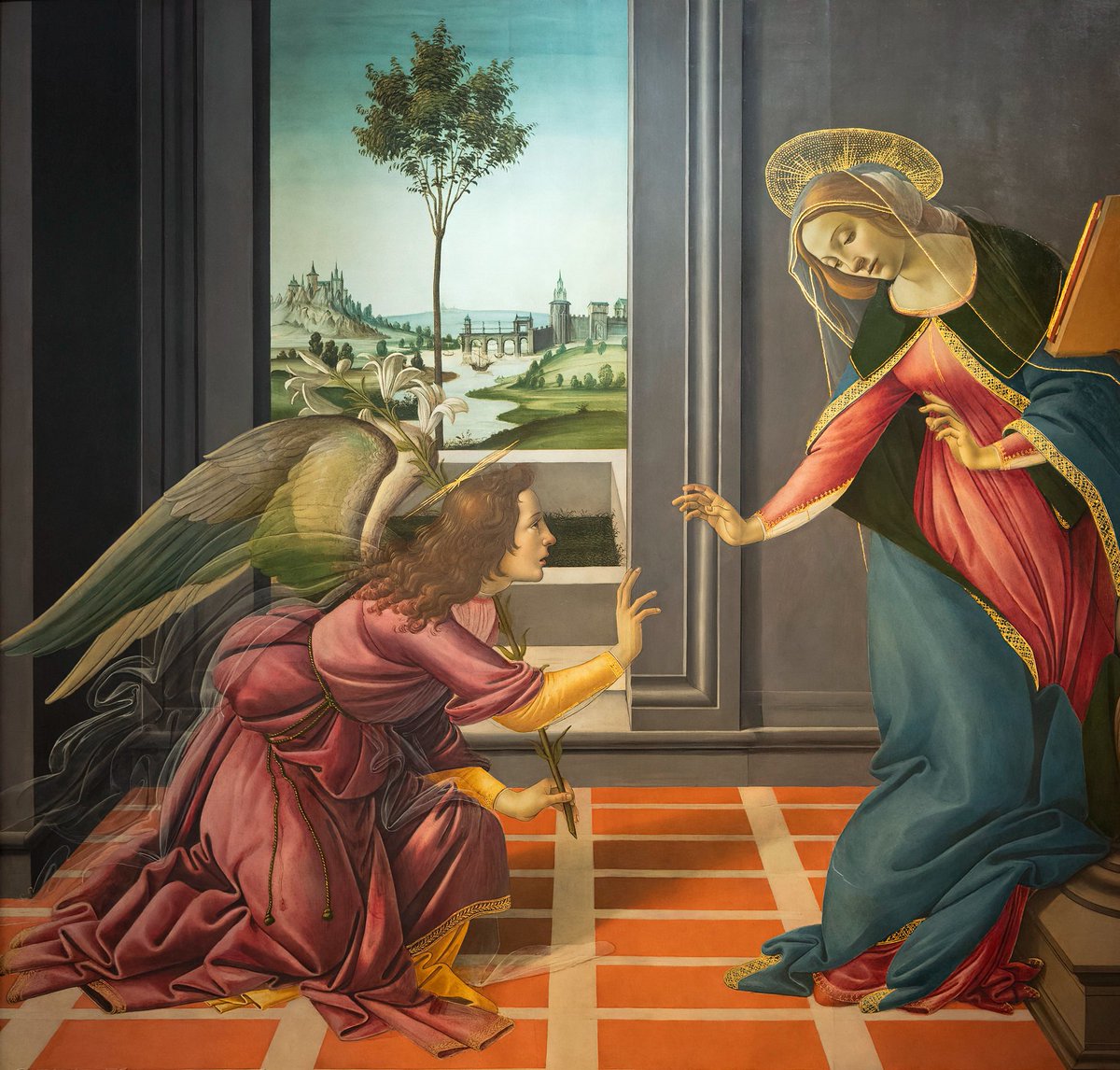
1. The Archangel Gabriel visits Mary with news of her pregnancy. She's shocked by it as you see in her outstretched arms, but Botticelli renders her expression graceful.
The angel's face is reassuring: “Do not be afraid, Mary, for you have found favor with God.”
The angel's face is reassuring: “Do not be afraid, Mary, for you have found favor with God.”

2. The Dream of St. Joseph - Philippe de Champaigne (1643)
Already pledged to marry Mary but pondering divorce (as he wasn't the child's father), Joseph is sent an angel: “do not be afraid to take to you Mary your wife, for that which is conceived in her is of the Holy Spirit.”
Already pledged to marry Mary but pondering divorce (as he wasn't the child's father), Joseph is sent an angel: “do not be afraid to take to you Mary your wife, for that which is conceived in her is of the Holy Spirit.”

3. Joseph and Mary traveling to Bethlehem - Hugo van der Goes (1475)
The couple journey to Bethlehem to participate in Caesar Augustus's census. In a tender moment, Joseph helps his wife down a tricky slope. Mary has dismounted her donkey - it was safer to navigate this by foot.
The couple journey to Bethlehem to participate in Caesar Augustus's census. In a tender moment, Joseph helps his wife down a tricky slope. Mary has dismounted her donkey - it was safer to navigate this by foot.

4. The Census at Bethlehem - Pieter Bruegel the Elder (1566)
Bruegel painted Bethlehem as a Flemish village enduring a harsh winter - like the winter of 1565 he had just witnessed (one of the harshest on record). Mary arrives on the donkey at the forefront of the painting.
Bruegel painted Bethlehem as a Flemish village enduring a harsh winter - like the winter of 1565 he had just witnessed (one of the harshest on record). Mary arrives on the donkey at the forefront of the painting.

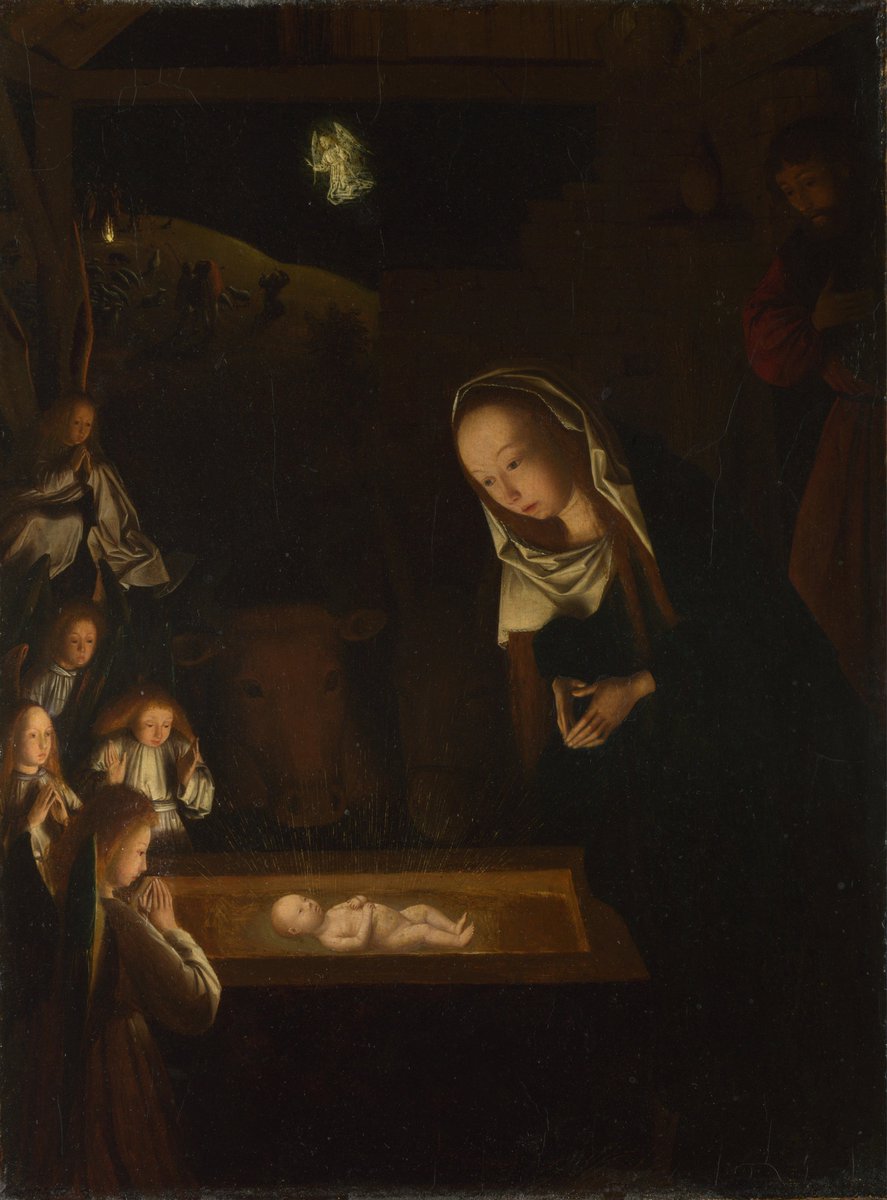
5. The Nativity at Night - Geertgen tot Sint Jans (1490)
On December 25h, Christ is born. The darkness is illuminated by the newborn, and a golden glow lights the faces of Mary and the adoring angels. In the background is a glimpse of the annunciation to the shepherds.
On December 25h, Christ is born. The darkness is illuminated by the newborn, and a golden glow lights the faces of Mary and the adoring angels. In the background is a glimpse of the annunciation to the shepherds.
6. The Adoration of the Shepherds - El Greco (1614)
A dance-like Mannerist painting of the shepherd's visit to see the newborn. They're spellbound by the experience, and Christ's glow lights up the scene.
A dance-like Mannerist painting of the shepherd's visit to see the newborn. They're spellbound by the experience, and Christ's glow lights up the scene.

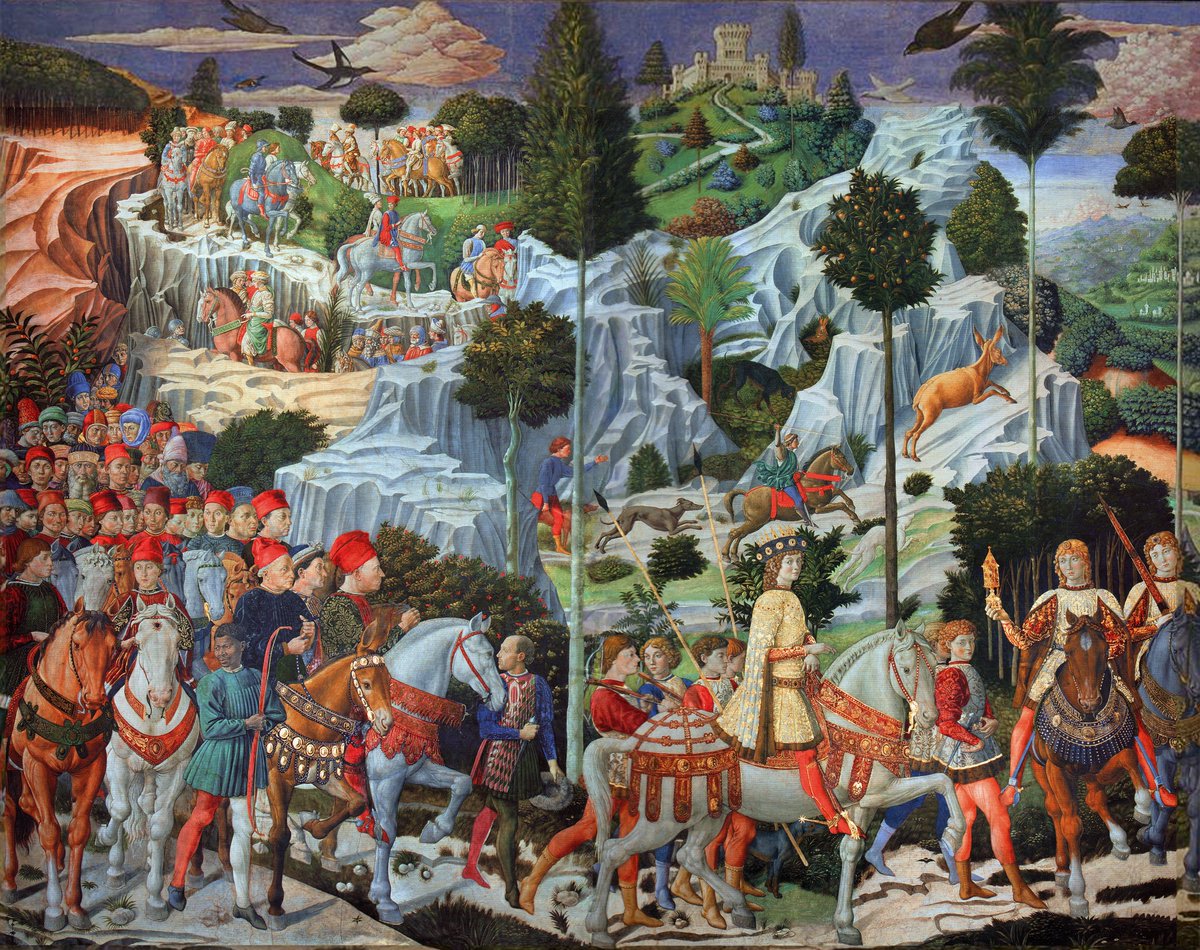
7. The Procession of the Magi - Benozzo Gozzoli (1460)
The wise men travel to Bethlehem to praise the birth. They are accompanied here by an entire cavalcade - a contemporary depiction reflecting the annual Epiphany procession which took place in 15th-century Florence.
The wise men travel to Bethlehem to praise the birth. They are accompanied here by an entire cavalcade - a contemporary depiction reflecting the annual Epiphany procession which took place in 15th-century Florence.
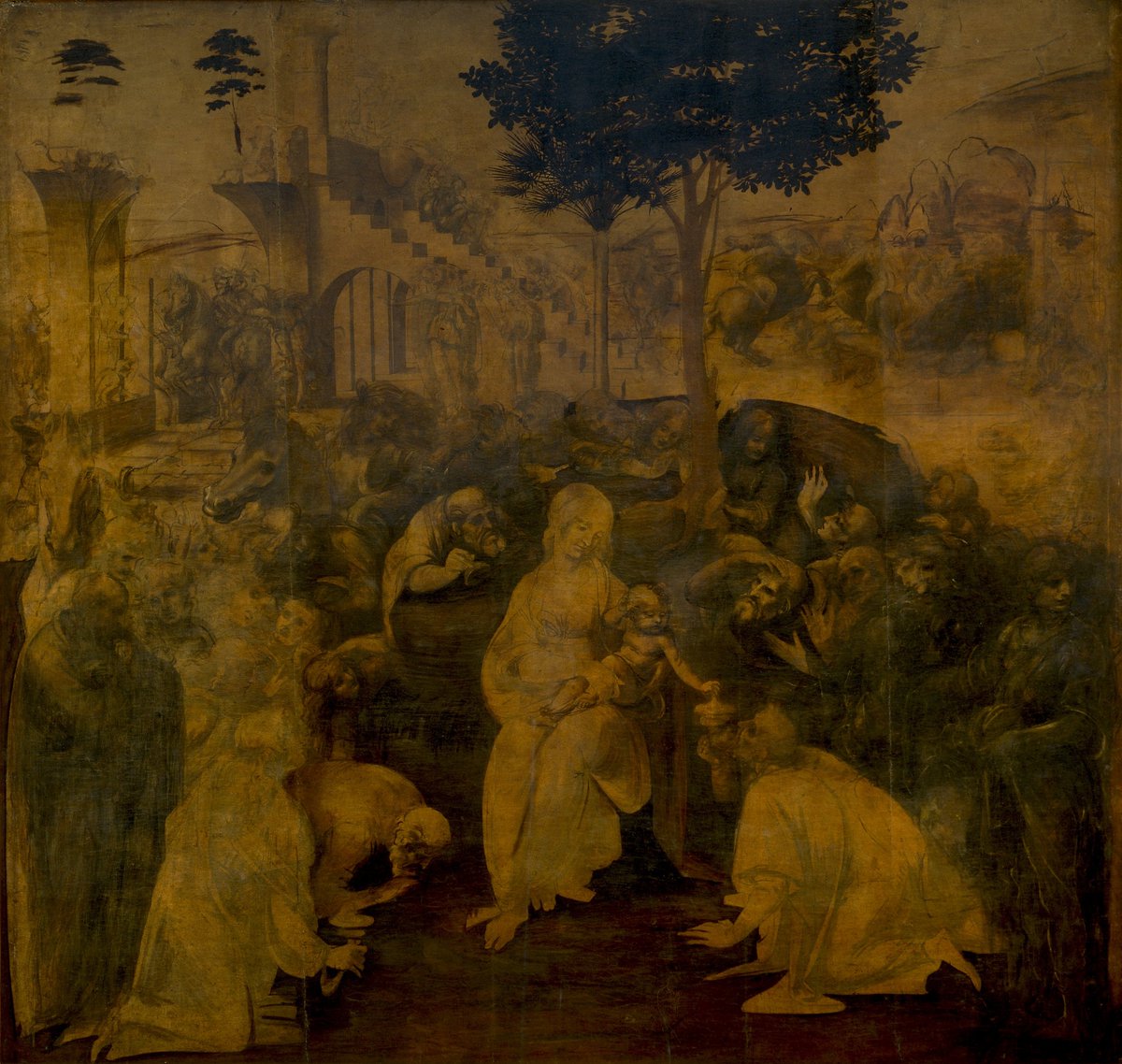
8. The Adoration of the Magi - Leonardo Da Vinci (1481)
Sent by the wicked Herod to gather information, the Magi were stunned upon arrival - bowing down to Christ (they later defied Herod's orders). Leonardo's unfinished masterwork captures their astonishment in a chaotic scene.
Sent by the wicked Herod to gather information, the Magi were stunned upon arrival - bowing down to Christ (they later defied Herod's orders). Leonardo's unfinished masterwork captures their astonishment in a chaotic scene.
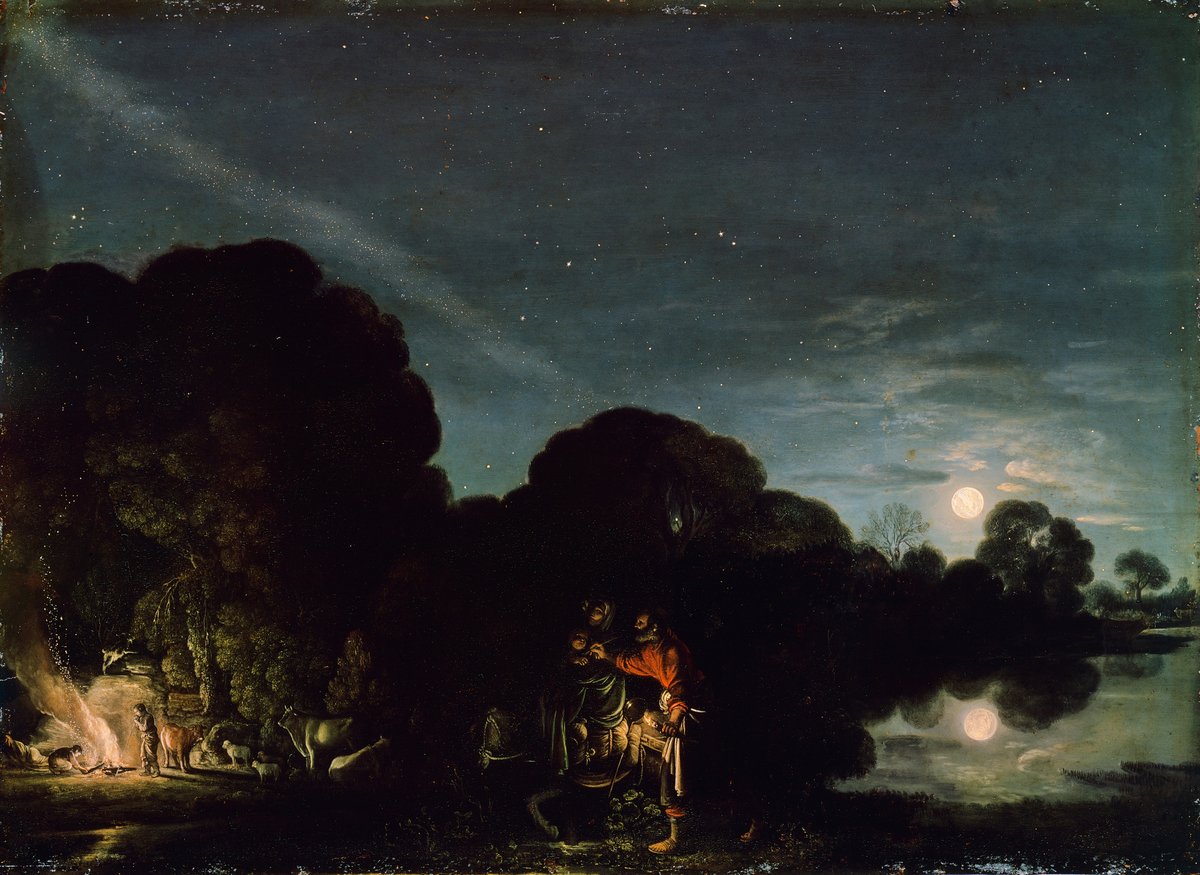
9. The Flight into Egypt - Adam Elsheimer (1609)
Learning of Herod's plan to kill the newborn from an angel, the family is forced to flee. During their escape, another intimate moment is shared - this time set beneath the dramatic moonlight and illuminated by Joseph's torch.
Learning of Herod's plan to kill the newborn from an angel, the family is forced to flee. During their escape, another intimate moment is shared - this time set beneath the dramatic moonlight and illuminated by Joseph's torch.
• • •
Missing some Tweet in this thread? You can try to
force a refresh