On this Christmas, a look at collapsing fertility and the fall of the Roman Empire, how early Christians had higher numbers of surviving children, and how the sect of Christianity grew to inherit the Roman world.
And parallels to the world of today!🧵, please share!
And parallels to the world of today!🧵, please share!

Of all the explanations for the fall of the Roman Empire, low fertility may be the most compelling reason.
We know Rome's population collapsed. But this wasn't a sudden thing due to sacking but was continuous over a number of centuries as this chart by @daveg shows. (2/12)
We know Rome's population collapsed. But this wasn't a sudden thing due to sacking but was continuous over a number of centuries as this chart by @daveg shows. (2/12)

And our best evidence is that low fertility is the cause. Fertility among elite women was less than two births per woman, while replacement fertility (due to high child mortality) was likely above six. (3/12)

There is evidence that ancient Romans practiced birth control extensively.
Notably, surviving writings of Soranus of Ephesus document a range of ways that women could prevent or terminate pregnancy.
Infanticide was common. (4/12)
Notably, surviving writings of Soranus of Ephesus document a range of ways that women could prevent or terminate pregnancy.
Infanticide was common. (4/12)


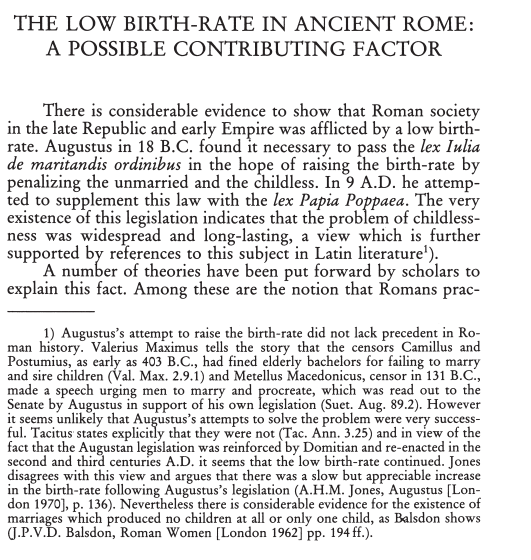
The problem of low birthrates was widely noted at the time, A.M. Devine writes, and the repeated passing of laws aimed at raising low Roman birthrates provides strong support that this was a major and long-running crisis. (5/12)
As the Roman world faced continuous decline, there was a growing group that had very different views around children. In the young Christian movement, children were prized and elevated. Infanticide was rejected. (6/12)

Writing in The Week, P. E. Gobry (@pegobry_en) explains the dramatic cultural differences between the new religion and the old in attitudes toward children and family.
Historian Rodney Stark argues that this conferred a huge demographic advantage to the young faith. (7/12)
Historian Rodney Stark argues that this conferred a huge demographic advantage to the young faith. (7/12)


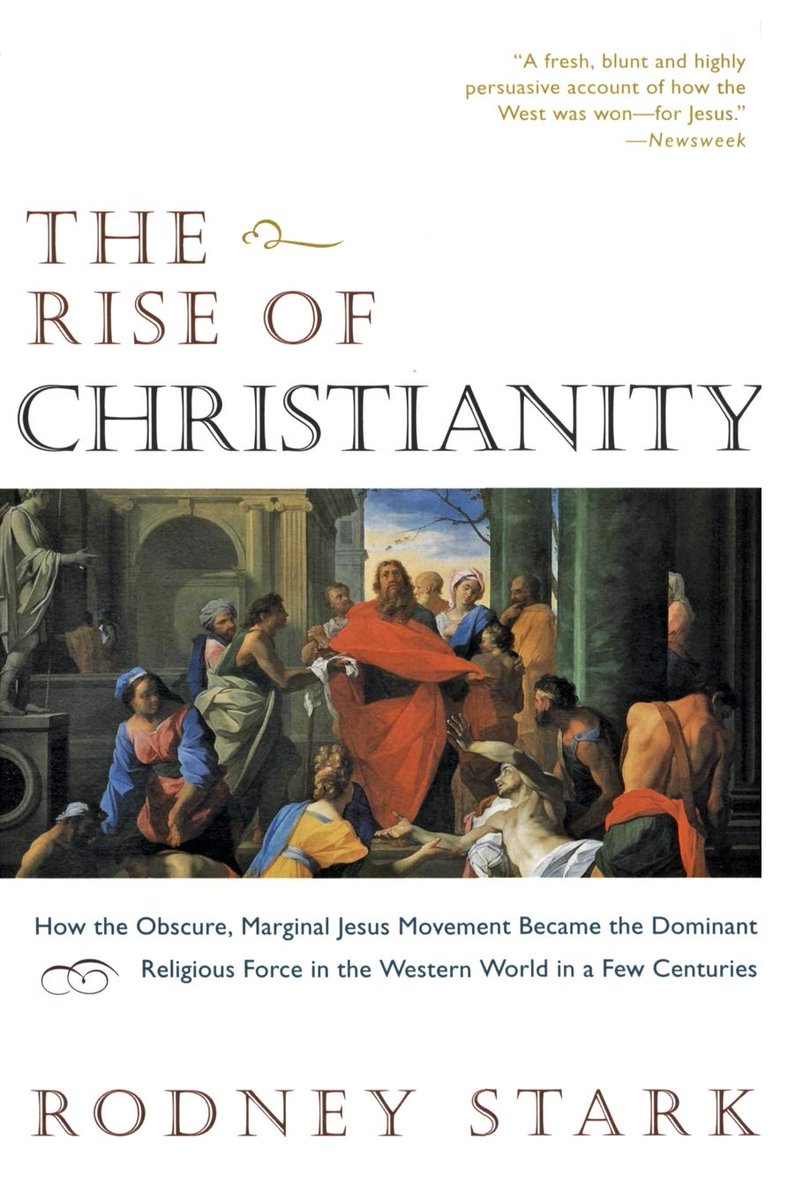
Christianity was not the cause of Rome's decline. Rome was collapsing due to problems with low birthrates that had been ongoing for centuries.
Christians were a remnant of higher fertility and higher child survival in a world of where children weren't sufficiently valued. (8/12)
Christians were a remnant of higher fertility and higher child survival in a world of where children weren't sufficiently valued. (8/12)
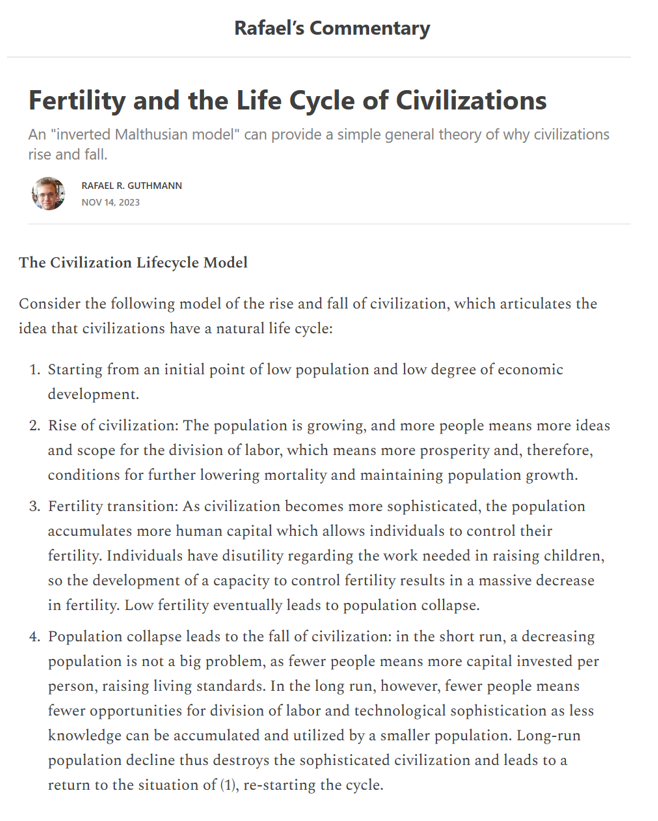
Economist @GuthmannR explains the civilizational life cycle where advancement leads to control of fertility and ultimately population collapse, a pattern that that has eerie parallels with the world of today. (9/12)

As @BirthGauge carefully documents, fertility rates have dramatically collapsed throughout the developed world.
Meanwhile, as with Ancient Rome, Christians and other faith groups are bucking the trend of fertility collapse. Charts by @lymanstoneky and @ryanburge show this. (10/12)
Meanwhile, as with Ancient Rome, Christians and other faith groups are bucking the trend of fertility collapse. Charts by @lymanstoneky and @ryanburge show this. (10/12)



Professor @epkaufm's 2010 book, "Shall the Religious Inherit the Earth?" looks prescient. Thinkers from @robinhanson to @SimoneHCollins share this thesis.
If broader civilization declines due to fertility collapse, leaving a religious remnant, it won't be the first time! (11/12)
If broader civilization declines due to fertility collapse, leaving a religious remnant, it won't be the first time! (11/12)

Will our trajectory be like that of Ancient Rome, or will we find a way to reverse falling fertility broadly across society? (12/12)
Follow and repost this account @MoreBirths for ideas on raising fertility rates. The pinned thread and highlights tab are recommended!
Follow and repost this account @MoreBirths for ideas on raising fertility rates. The pinned thread and highlights tab are recommended!
• • •
Missing some Tweet in this thread? You can try to
force a refresh