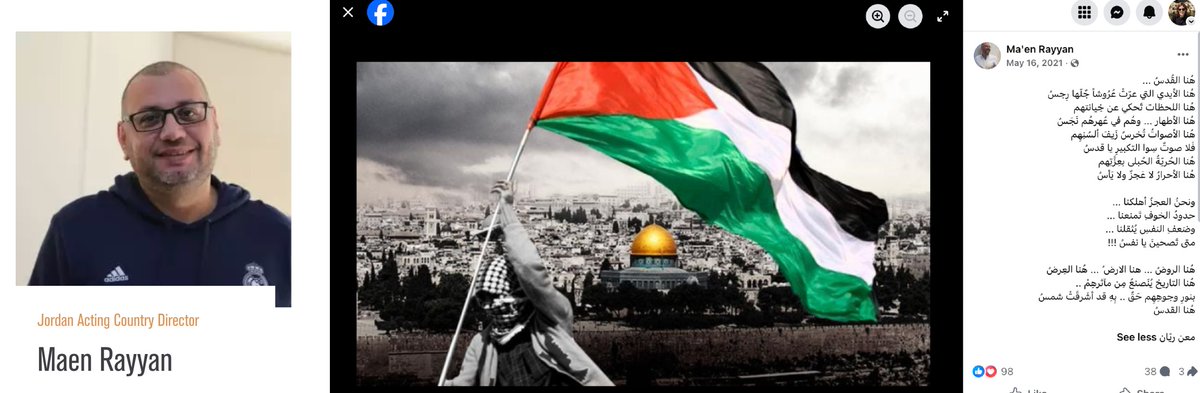
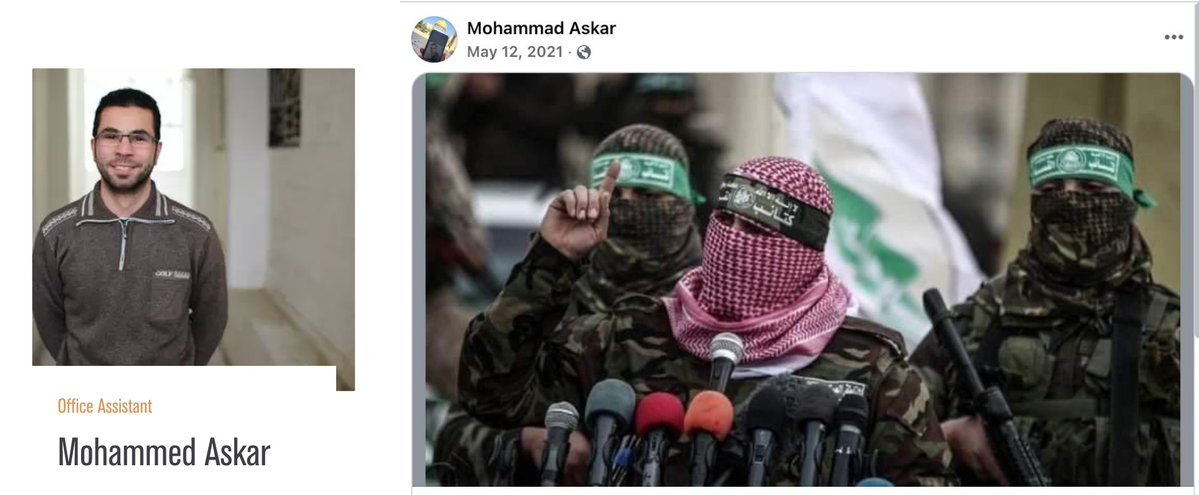
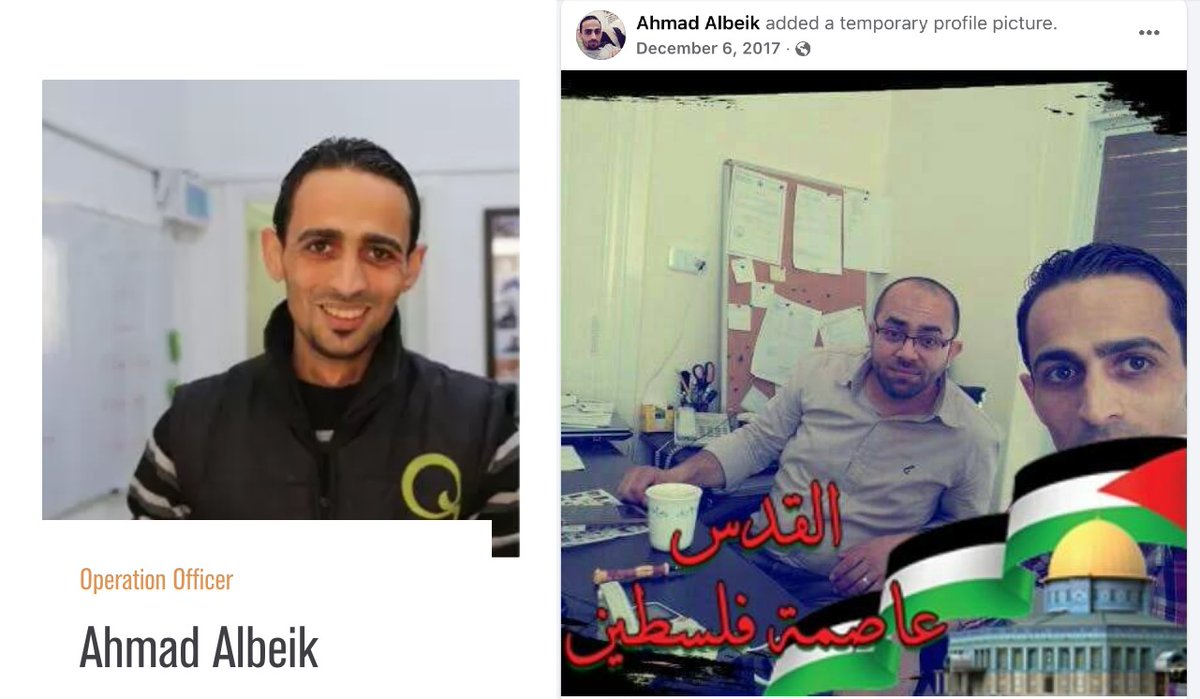
Meet Gazan photojournalist Ashraf Amra. He's been working for media including @AP & @Reuters.
Here he is on Oct. 7 enjoying fellow photojournalist Mohammed Fayq Abu Mostafa's footage of an IDF soldier being lynched after they both infiltrated Israel's border. And there's more.🧵
Here he is on Oct. 7 enjoying fellow photojournalist Mohammed Fayq Abu Mostafa's footage of an IDF soldier being lynched after they both infiltrated Israel's border. And there's more.🧵
Abu Mostafa, a freelancer who has been working for Reuters, says: “We were there two hours ago, since the beginning” & details what he saw at the border & in Sderot.
He describes the breaking into a room where Israelis were hiding before being taken by Hamas terrorists.
He describes the breaking into a room where Israelis were hiding before being taken by Hamas terrorists.
Abu Mostafa then calls on people to cross into Israel's sovereign territory: “An advice, whoever can go – go. It is a one-time event that will not happen again.”
And Amra replies: “Really, it will not repeat itself.”
Read full story here:
🧵continues⬇️honestreporting.com/exposed-gaza-p…
And Amra replies: “Really, it will not repeat itself.”
Read full story here:
🧵continues⬇️honestreporting.com/exposed-gaza-p…
Amra was also at the border earlier in the day. He says:
"I just returned from the Khuza’a area, near the Khuza’a area on the eastern border of the Gaza Strip. Tens of armed Palestinian men are constantly storming the border towards the settlements around Gaza."
"I just returned from the Khuza’a area, near the Khuza’a area on the eastern border of the Gaza Strip. Tens of armed Palestinian men are constantly storming the border towards the settlements around Gaza."
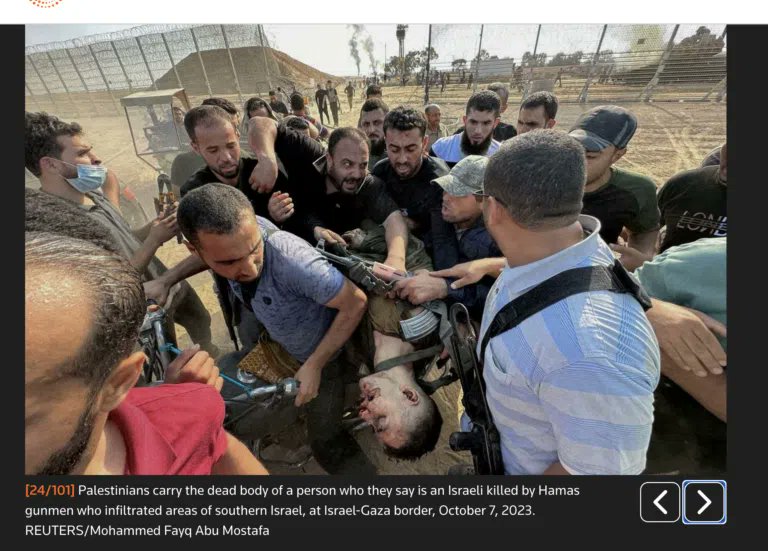
Abu Mostafa’s border photos, one of which seems to show the lynching he had shared on Amra’s Instagram Live, were recently selected by Reuters and The New York Times to be included in their 2023 “Images of the Year.” 
Some media outlets published a photo credited to “Ashraf Amra/Anadolu Agency via Getty Images,” showing a digger breaching the border fence.
Reuters has selected another photo by Amra, taken on October 7 inside Gaza, as one of its “Pictures of the Month” for October 2023.
Reuters has selected another photo by Amra, taken on October 7 inside Gaza, as one of its “Pictures of the Month” for October 2023.


In mid-Sept. Hamas leader Ismail Haniyeh personally visited Amra in an Istanbul hospital, reportedly saying that he appreciated his role in exposing “the crimes of the occupation.” Amra replied that the injury won’t prevent him from returning to his “national role.”
The high-profile hospital visit was not the first time Haniyeh had honored the veteran photojournalist, to whom he presented an award back in 2012.

Does Haniyeh provide such VIP treatment to every Gaza-based journalist who may have been injured while working?
What is the nature of his connection with Amra?
Does it explain Amra’s easy access to coverage of Hamas leadership and training in Gaza?
What is the nature of his connection with Amra?
Does it explain Amra’s easy access to coverage of Hamas leadership and training in Gaza?


🛑 Did these media outlets properly vet Amra and Abu Mostafa before publishing their work?
🛑 Were these outlets aware of the photojournalists' social media activity and of Amra's recognition by the leader of a proscribed terror group? If so, shouldn't they disclose it?
🛑 Were these outlets aware of the photojournalists' social media activity and of Amra's recognition by the leader of a proscribed terror group? If so, shouldn't they disclose it?
🛑 What exactly are their vetting procedures for freelancers in Gaza?
🛑 And, if there are different codes of conduct for freelancers vs. permanent staff, then why isn't that disclosed on every article that a freelancer works on?
🛑 And, if there are different codes of conduct for freelancers vs. permanent staff, then why isn't that disclosed on every article that a freelancer works on?
A commitment to journalistic ethics should prompt the news organizations we have named to answer these very basic questions.
And basic humanity should compel them to answer these questions.
Read the full story ⬇️
honestreporting.com/exposed-gaza-p…
And basic humanity should compel them to answer these questions.
Read the full story ⬇️
honestreporting.com/exposed-gaza-p…
• • •
Missing some Tweet in this thread? You can try to
force a refresh