Dhanu Jatra begins in Bargarh, one of the most unique festivals of it's kind, where an entire town becomes an open air theater to celebrate the story of Krishna's childhood.
Thread 🧵
Thread 🧵

Odisha is one state with it's own unique festivals- Nuakhai, Dhanu Jatra, Boita Bandhana, Raja Parba, and of course the Puri Jagannatha Ratha Yatra, which all add to it's rich culture and traditions.
Dhanu Jaatra is held in month of Pausha as per Hindu calendar. Typically starts on Pausha Shukla Chaturthi and ends on Pausha Purnima, that is end of December to first week of January.
Bargarh is one of those small towns that dot the Indian landscape, located in Western Odisha, close to the border with Chattisgarh. The Eastern Ghats flank the town, and they are quite rich in their flora and fauna.
Historically speaking, the place was originally called Baghar Kota, and for some time, it was the capital of the Chauhan rulers of Sambalpur. Till 1992 the place was part of Sambalpur district.
The late Biju Patnaik, had created the new district Bargarh, out of Sambalpur, with the town as the district HQ. While Odiya is the official language for communication, most of it’s inhabitants speak in Sambalpuri. The famous Sambalpuri sarees are actually produced, sold here.
Dhanu Jatra is basically to celebrate the story of Krishna and his slaying of Kansa, and is so called as it is held during the month of Dhanu. It is celebrated for a period of 11 days, narrating the tale of Krishna and Kansa, through use of dance and drama.
#Dhanujatra
#Dhanujatra
What makes this unique however is the way this play is actually staged. While it does sound similiar to Ram Leela, here, instead of one single stage, the entire town of Bargarh becomes an open air theater itself.
#Dhanujatra
#Dhanujatra
The uniqueness of Dhanu Jatra is that Bargarh and the neighbouring village of Ambupali, become the setting for the entire drama about Krishna and Kansa. Every nook and corner of these two places becomes a setting for the drama, with all the residents joining in.
#dhanuyatra
#dhanuyatra
In a way this is an interactive drama, where the audiences and the actors become one. Imagine 10,000 residents taking part in this entire skit, on their own, and none of them are professional actors per se.
#dhanuyatra #Dhanujatra
#dhanuyatra #Dhanujatra
The Jeera river that flows through Bargarh, becomes the Yamuna, and one of the settings for the play. What is interesting here for the entire duration of the play, the actor who plays Kans becomes the defactor ruler of Bargarh.
#Dhanujatra #dhanuyatra
#Dhanujatra #dhanuyatra
No wonder that the role of Kans is the most coveted one, with the actor playing that role becoming a mini celebrity of sort.
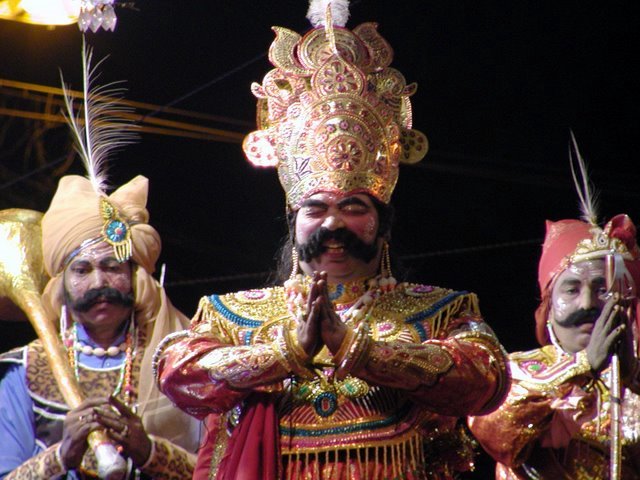
“My dream was to enact the role of Kansa in the Bargarh Dhanu Yatra and I got the opportunity two years ago when the organizing committee selected me for the prestigious role."- Hrushikesh Bhoi, a Govt driver who waited for 10 year s to do this role.
The record though is held by Gopal Sahu, a cop, who played the role of Kans for a record 22 years. And there is no rivalry between the actors here, many do it for sheer love and passion.
Kans here is seen in two stages, during the morning, he is like any other king going around, meeting his subjects, imposing small punishments and fines, listening to their problems.
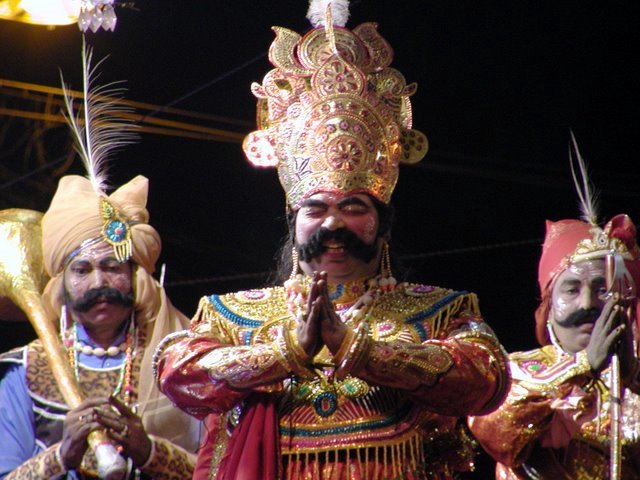

During night time, however Kans retreats to his Rang Mahal, where he spends time with his ministers, plotting on ways to kill Krishna, and invoking the demons. The Rang Mahal is a huge stage that is set up right in the middle of Bargarh town, decorated to look like a palace.
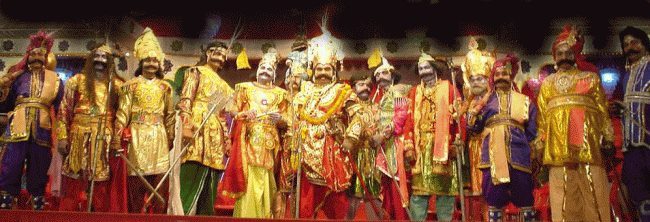
And Ambupali enacts the scenes of Krishna’s life, his growing up under Nanda and Yashoda, his exploits with the demons. The Jeera river becomes the Yamuna, where Krishna performs his Ras Leela dance, while a pond becomes the Kalindi where the battle with Kaliya is depicted.

Also the actors in the skit, deliver their dialogues impromptu sans any script or prompting. For the entire period, the town of Bargarh, is transported into another era, it is like entering a time machine.
You could see Krishna doing one of his playful antics, or Kansa could be walking just past you. You are not the audience watching a play here, you are part of the play here, in some way or other.
You could see Krishna doing one of his playful antics, or Kansa could be walking just past you. You are not the audience watching a play here, you are part of the play here, in some way or other.
And finally the Dhanu Jatra comes to an end, with the last day showing Krishna and Balaram, entering Bargarh( Mathura), with the help of Akrura. The actor who plays Akrura, takes Krishna and Balaram across the town, and people there treat them like real gods.
Krishna and Balaram’s fight with the wrestlers Chanura and Mushtika is enacted live, and finally the festival comes to an end with Krishna killing Kans, and restoring the throne to Ugrasen, Kansa’s father.
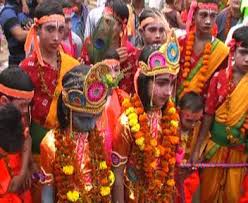
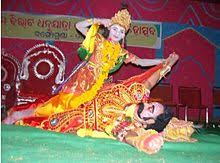
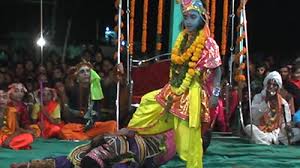
He also frees his real parents Devaki and Vasudev, from the prison, which is another building in the town. The origins of Dhanu Jatra are not very clear, many state that this started after independence,when people celebrated freedom from British rule.
While Kansa and his ministers represented the colonial rulers, Krishna and Balaram, were believed to be the brave revolutionaries who took on them.
In effect it is more of a harvest time festival with farmers and working classes, doing a thanksgiving of sorts. Whatever be the story behind it, fact is Dhanu Jatra is unique in it’s own way.
• • •
Missing some Tweet in this thread? You can try to
force a refresh