How long should you wait between pregnancies?
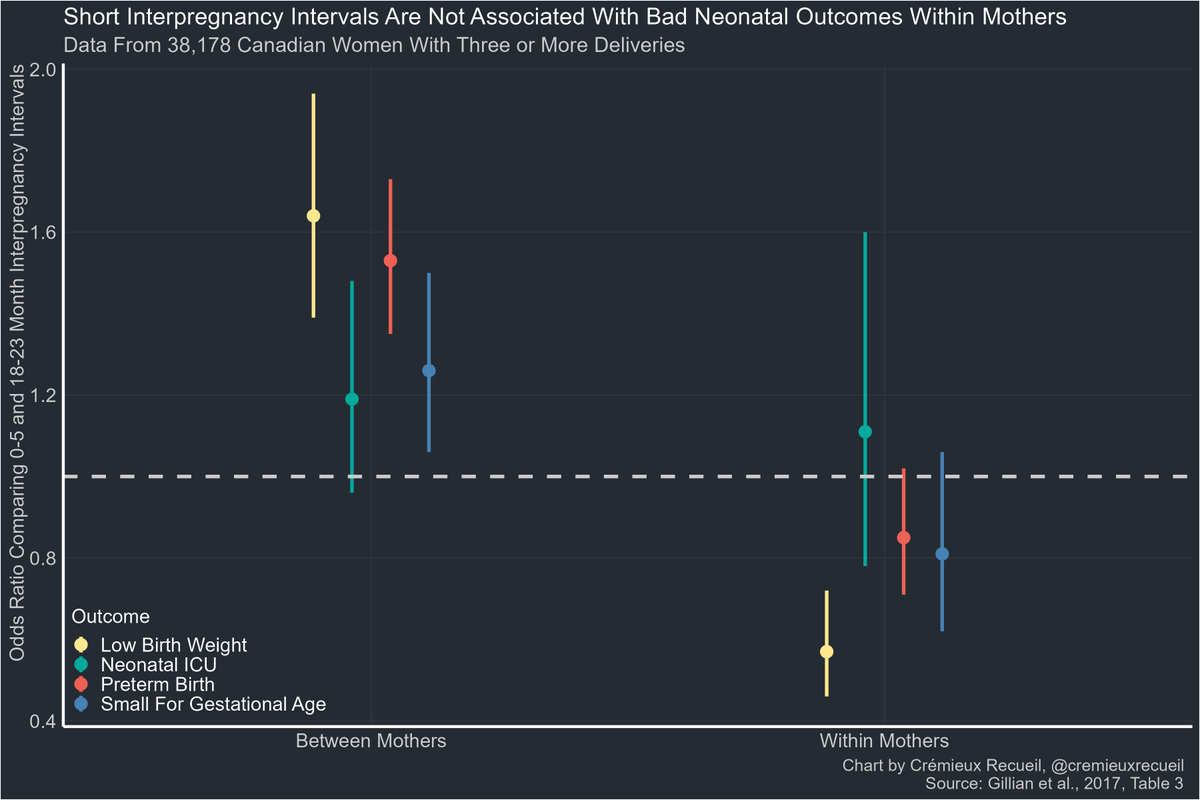
Many studies suggest short timeframes are bad.
But those look at effects between mothers. Estimating the effect within mothers by looking at the same mothers over time, short interpregnancy intervals don't seem bad🧵
Many studies suggest short timeframes are bad.
But those look at effects between mothers. Estimating the effect within mothers by looking at the same mothers over time, short interpregnancy intervals don't seem bad🧵
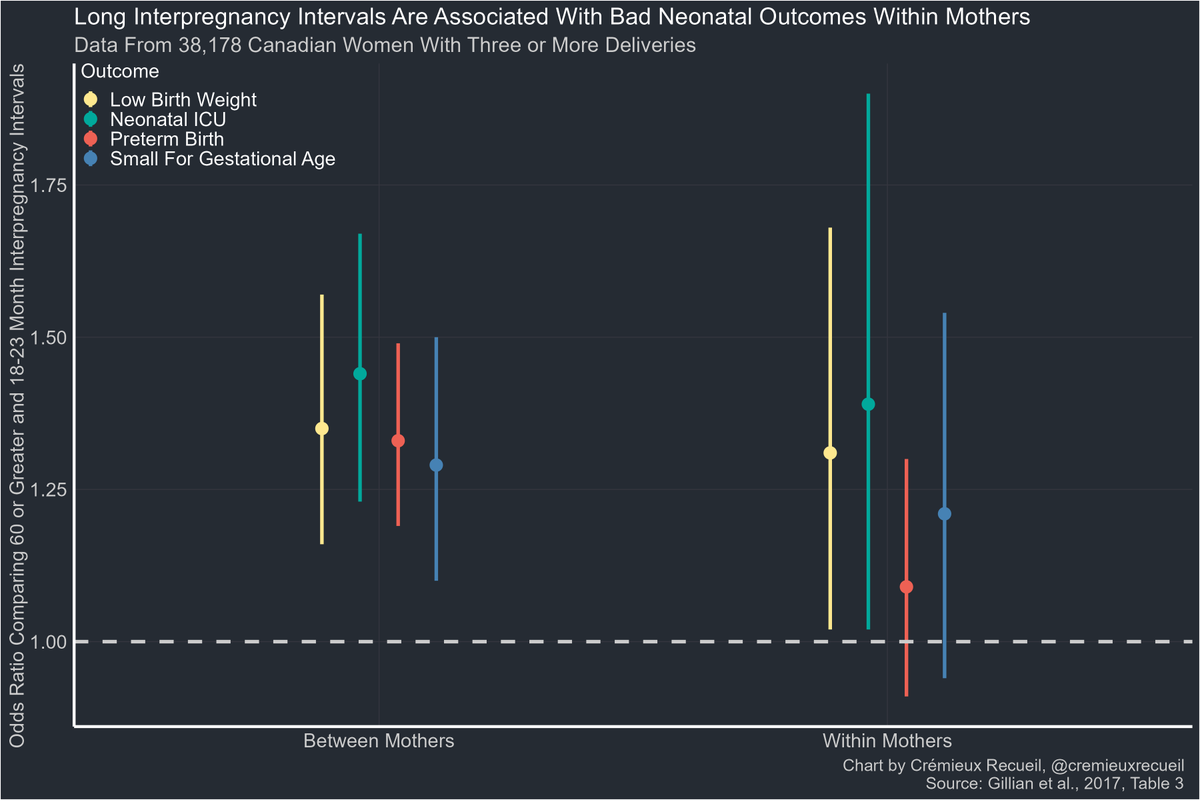
On the other hand, long interpregnancy intervals do seem bad.
I think this one might be down to aging. The estimates are corrected for maternal age, but that doesn't seem like a correction that should work well within mothers.
I think this one might be down to aging. The estimates are corrected for maternal age, but that doesn't seem like a correction that should work well within mothers.
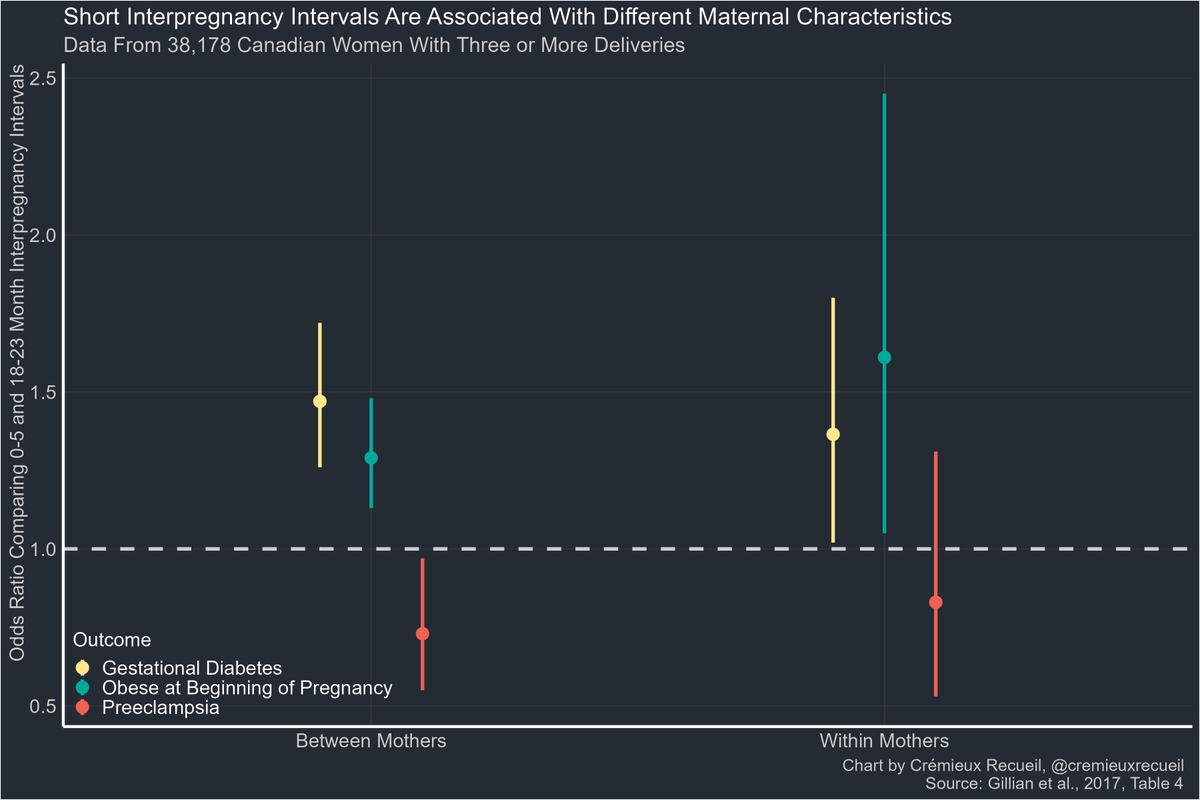
Now we can also look at the relationships between maternal characteristics and short interpregnancy intervals.
As it turns out, it's fairly consistently more obese women who get pregnant quickly. That suggests selection matters!
As it turns out, it's fairly consistently more obese women who get pregnant quickly. That suggests selection matters!
The differences (between/within) in the estimated effects of a short interval were significant excepting neonatal ICU usage. For long intervals, there were no significant differences between/within.
For maternal characteristics, selection was indicated between/within. The design doesn't let us speak to causal effects on gestational diabetes and preeclampsia, but we know the baby doesn't just make people obese at the beginning of pregnancy, while obesity is a risk factor for the other two conditions.
For maternal characteristics, selection was indicated between/within. The design doesn't let us speak to causal effects on gestational diabetes and preeclampsia, but we know the baby doesn't just make people obese at the beginning of pregnancy, while obesity is a risk factor for the other two conditions.
Source: journals.lww.com/greenjournal/f…
• • •
Missing some Tweet in this thread? You can try to
force a refresh