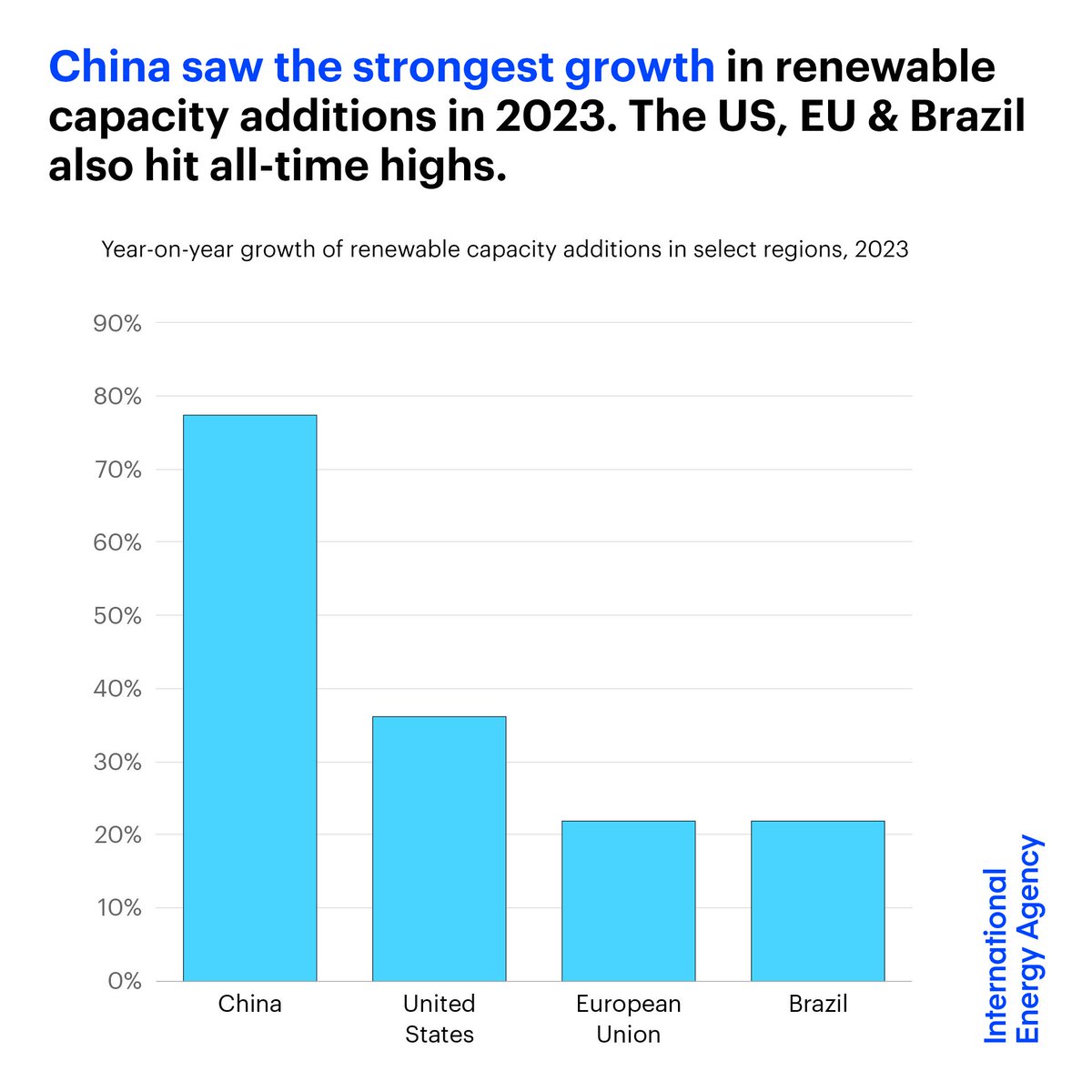
The transformation of the world's power sector means clean sources are set to meet all the increase in global electricity demand in the next 3 years
This is mainly thanks to renewables' huge growth but also nuclear's rebound to a historic high in 2025 ➡️ iea.li/3OdHAe2

This is mainly thanks to renewables' huge growth but also nuclear's rebound to a historic high in 2025 ➡️ iea.li/3OdHAe2

Global electricity demand is set to grow strongly in the years ahead
Most demand growth is in emerging economies, led by China, India & Southeast Asia - but EVs, heat pumps & data centres are pushing up electricity use in advanced economies as well
More: iea.li/3u3PCzh
Most demand growth is in emerging economies, led by China, India & Southeast Asia - but EVs, heat pumps & data centres are pushing up electricity use in advanced economies as well
More: iea.li/3u3PCzh

Growing low-emissions sources, led by solar, puts them on track to account for almost half of global electricity generation by 2026, up from just under 40% in 2023
This pushes power sector emissions into structural decline in the coming years
Read more: iea.li/3ubl4eX
This pushes power sector emissions into structural decline in the coming years
Read more: iea.li/3ubl4eX

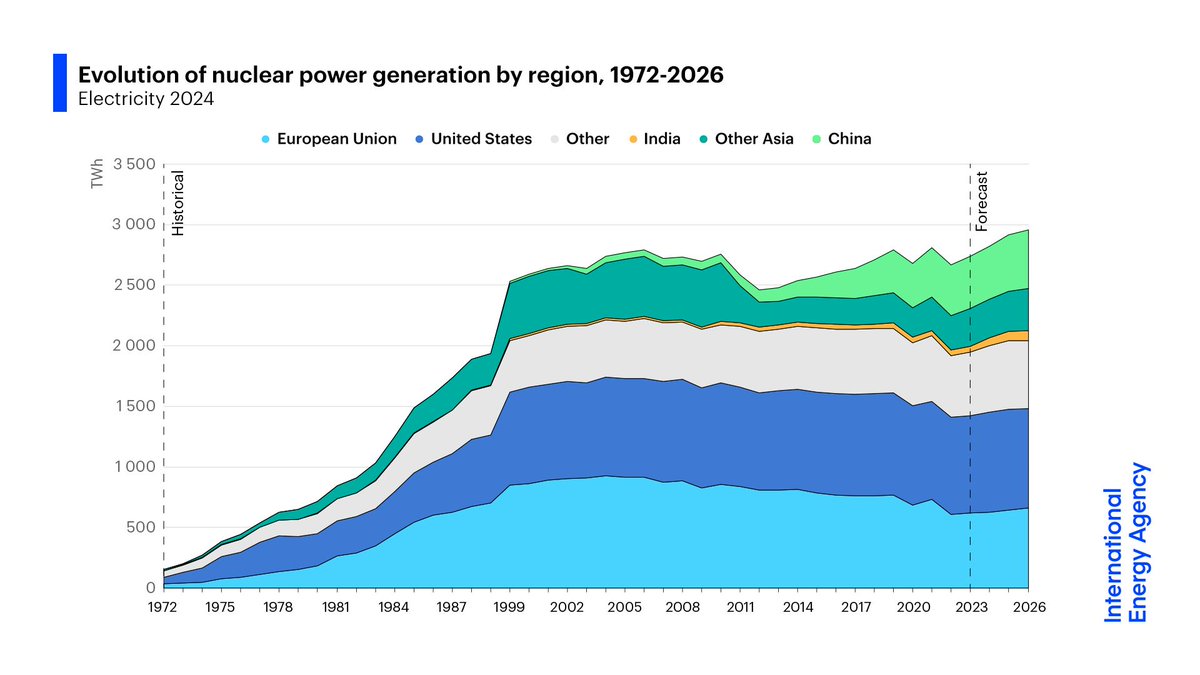
Global nuclear power generation is on course to rise to a new all-time high in 2025
This is the result of recovering output in France, plants coming back online in Japan, and new reactors starting commercial operations in many markets, including in China, India, Korea & Europe
This is the result of recovering output in France, plants coming back online in Japan, and new reactors starting commercial operations in many markets, including in China, India, Korea & Europe
While electricity use per capita in India & Southeast Asia has risen rapidly, it has barely changed in Africa for over 30 years.
Scaling up reliable, affordable & sustainable electricity supply and grids is vital for Africa's economic development and its energy access goals.
Scaling up reliable, affordable & sustainable electricity supply and grids is vital for Africa's economic development and its energy access goals.

Electricity prices were generally lower in 2023 than in 2022. But they varied widely by region, affecting economic competitiveness.
Despite a 50% decline, prices for energy-intensive industries in the European Union in 2023 were almost double those in the United States & China.
Despite a 50% decline, prices for energy-intensive industries in the European Union in 2023 were almost double those in the United States & China.

Find out more about electricity markets, policies & trends around the world in @IEA’s Electricity 2024 report, which we just released today
The full report is freely available on our website ⬇️ iea.li/3u3PCzh
The full report is freely available on our website ⬇️ iea.li/3u3PCzh
• • •
Missing some Tweet in this thread? You can try to
force a refresh