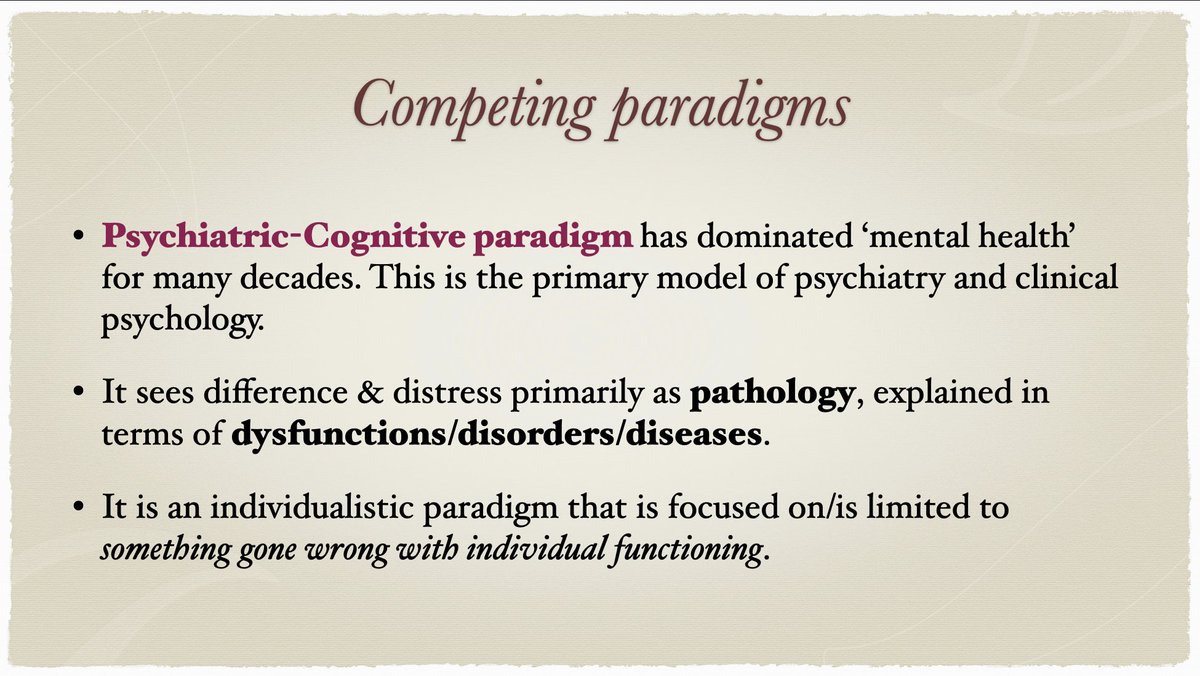
I wanted to share a few slides from my talk @dropthedisorder on Wednesday.
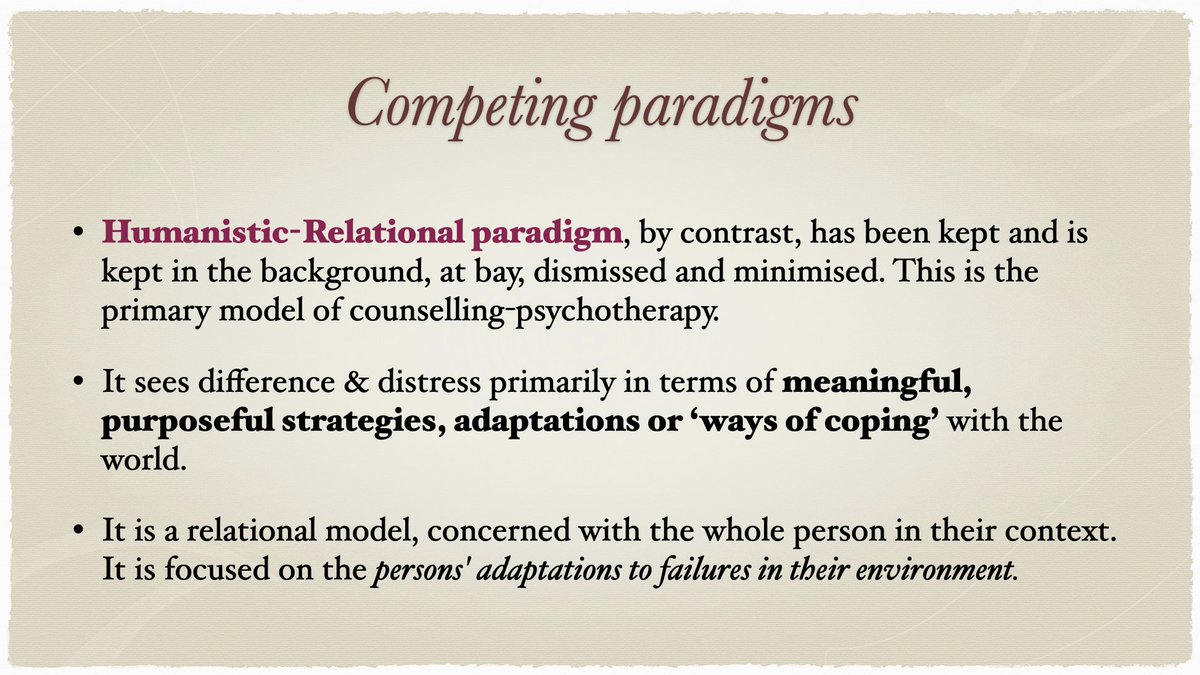
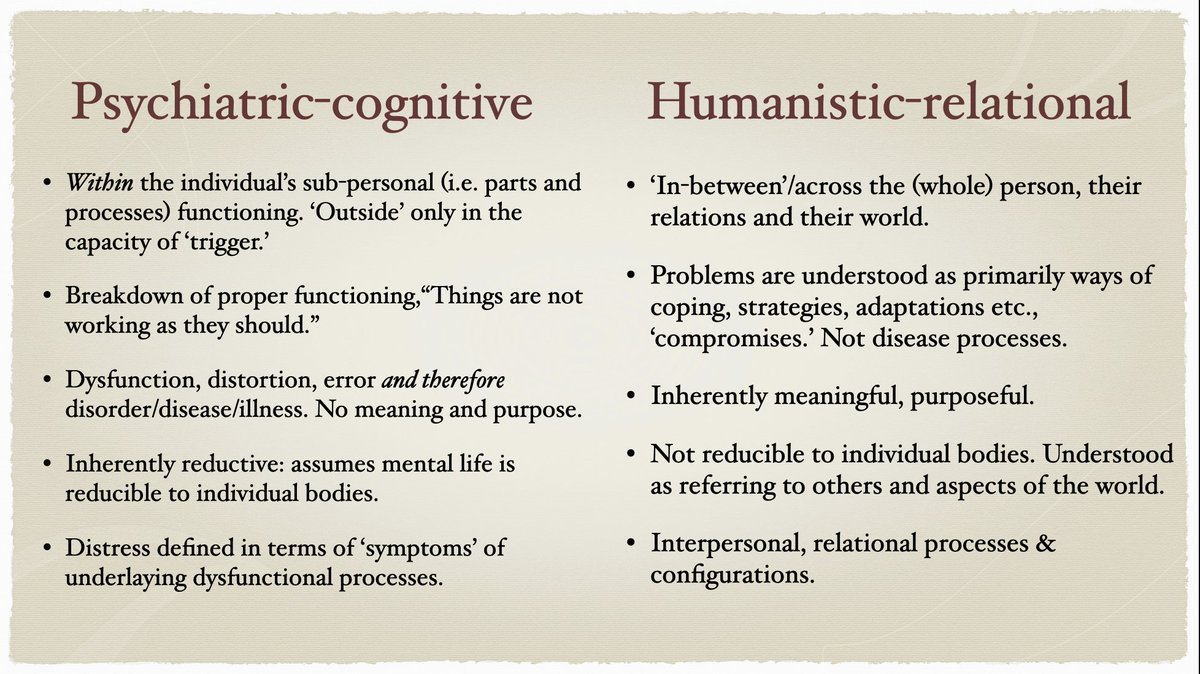
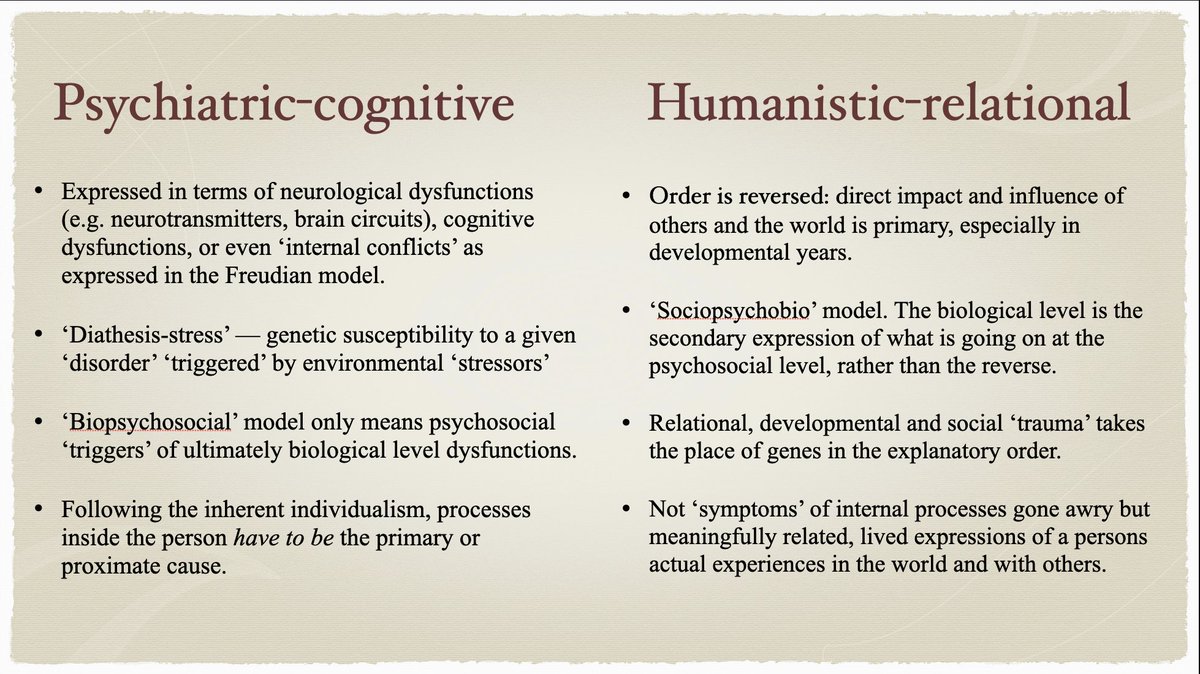
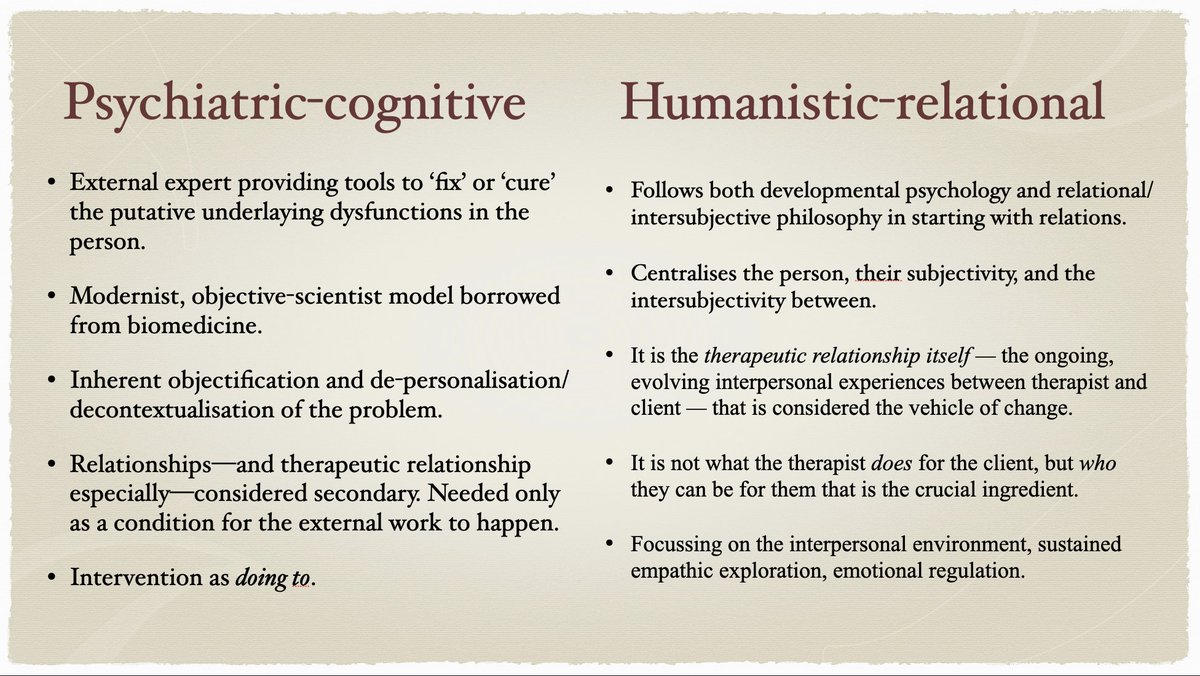
These give definition to what I call the 'Psychiatric-Cognitive' paradigm of psychiatry & cognitive clinical psychology, and the 'Humanistic-Relational' one of counselling-psychotherapy (1/5)
• • •
Missing some Tweet in this thread? You can try to
force a refresh

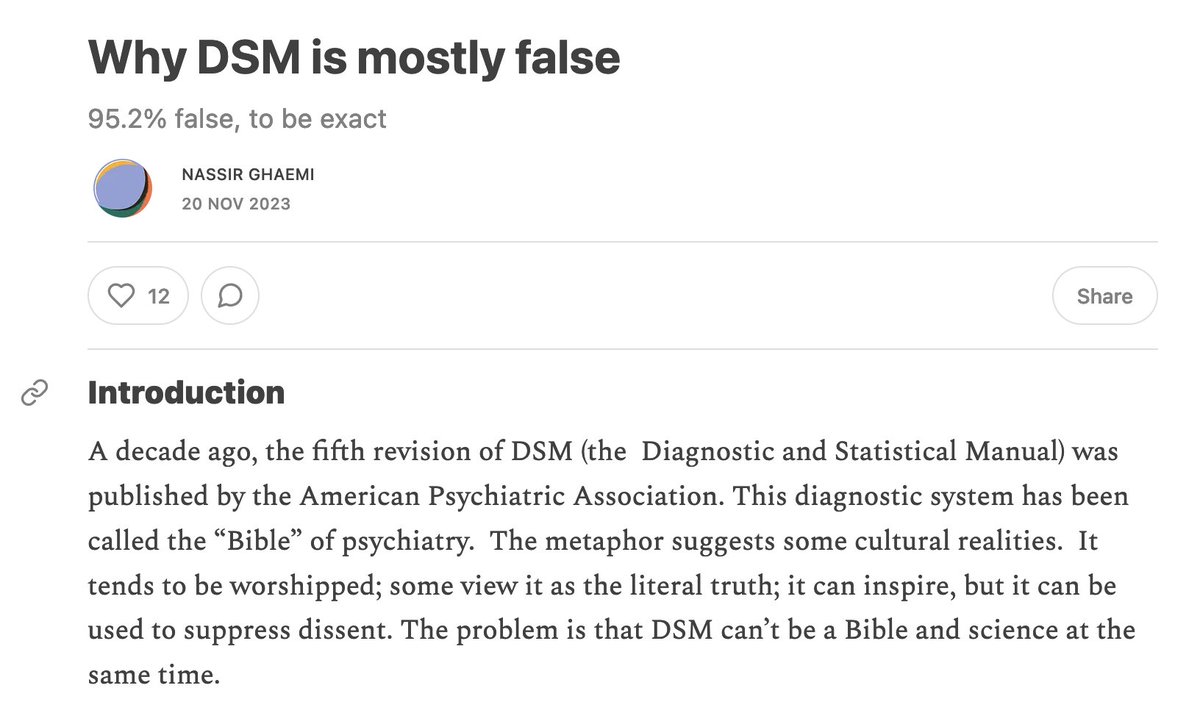
1/5 "What mattered wasn’t what was true based on scientific research, but what was useful, based on the pragmatic beliefs of DSM-IV leaders & APA activists."
If you don't believe 'critics' about the DSM, maybe you'll believe Tufts professor of psychiatry, @nassirghaemia?
2/5 "We have to accept DSM-5 definitions from a legal and practical perspective. We have to use them for insurance forms, and to protect ourselves against lawsuits. But we don't have to believe in them."
3/5 "If we want to know what genes cause a disease, or the biological processes of an illness, we will not find such genes or biological markers using DSM diagnoses. This statement is based on 40 years of failed research in psychiatry, but is also based on simple logic..."
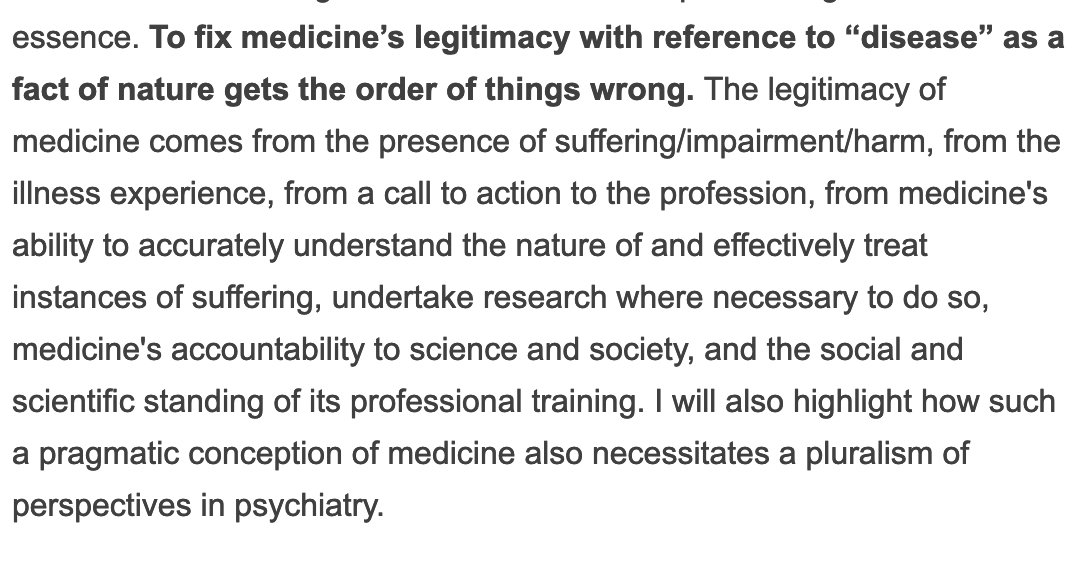
I've had conversations with @awaisaftab on his definition of what makes psychological & emotional distress medical, which he has put in print in response to @justin_garson.
My comments :
1. 'There is suffering/impairment/harm.' True of things that should not be medical..
2. For example, those oppressed by a society often experience these things, but being oppressed is not a medical problem. It iw a socio-political one. If it can't distinguish between the two, that's a serious issue.
3. 'That people experience it as illness' Firstly, many do not. Secondly, that expression of 'illness' is not a medical but a phenomenological one. One can similarly talk about (and many used to) being "spiritually sick" or a "sick society" but these are not medical phenomena.
From "we never said there was a "chemical imbalance"" to "psychiaitrists have always been psychotherapists." A thread 🧵1/
2/ Firstly, it's simply a matter of historical fact that psychiatry divorced itself from psychotherapy.
Previous to the 1980s US psychiatry was all about (Freudian) psychoanalysis. Psychiatrists were psychoanalysts. Since then psychiatrists have been biomedical practitioners.
3/ With the DSM- 3, in the 1980's psychiatry almost entirely rejected psychoanalysis and embraced the "biomedical revolution." Psychoanalysis was no longer relevant; psychiatry was now all about finding and treating biological disorders.
2/ What was so compelling for drug companies—and practically irresistible to psychiatry—was the notion that depression could be explained (and sold) as something that was effectively independent of the person's (adverse) social situations, life events & relationships.
3/ It's not your dead marriage, not the vacuous materialism you breath, not the sociopathic, demeaning institutions you work in every day, not the neglect you experienced as a child, not the harsh messages from your parents lodged inside, not unresolved loss, not racism poverty..
1/2 This latest @PsychTimes article from @MarkLRuffalo (and Daniel Morehead) "Psychotherapy: A Core Psychiatric Treatment" deserves some comment, as its very misleading.
2/ Firstly, they conclude that "the claim that psychiatrists do not learn psychotherapy is false."
Technically true, but the best I've heard of in the training is seeing 2 clients (1 CBT and 1 psychodynamic) over two years.
That *is* learning psychotherapy, but not to...
3/... anywhere near a professional standard. It probably equates to about 300 hours of client work. Compare that to the minimum of 3000 hours needed to be licensed as an MFT in the US. That's 1/10th of the training!