Mick Ryan, AM Profile picture
Feb 8, 2024 8 tweets 2 min read Read on X
This reform agenda, laid out in President Zelenskyy's speech today about the dismissal of General Zaluzhnyi, is worth studying. There are some very interesting aspects. 1/8 🧵 Image
2/ First, a strategy for 2024. Clearly the President is unhappy with the current proposed military strategy for #Ukraine in the coming year. Getting this right, and balancing defensive and offensive operations as well as reconstituting the force, is a big task.
3/ 2nd, there is reference to logistics issues. This is not a new issue; it has been examined by analysts for some time. But it is obviously a priority for Zelenskyy because it has battlefield implications & implications for Ukraine's relationship with those providing support.
4/ 3rd, personnel issues. Once again, not an issue that is new to the Ukrainians or those analysing the war. But it is clearly hurting the military and is hurting Zelenskyy politically. The mobilisation debate is part of this but not the entirety of the challenge to be resolved.
5/ 4th, training. The counter offensive showed shortfalls in combined arms scaling as well as the integration of supporting elements. There have also been issues with basic training because of time available for training. Much that NATO can do to assist here.
6/ 5th, the size and number of headquarters. Ukraine is not the only military with this problem! But, large, numerous HQ are a drain on people and it imposes delay in wartime decision making and adaptation. An important issue for resolution.
7/ Finally, the new drone force highlights the need for wider transformation in how military forces - in Ukraine and beyond - need to think differently about their warfighting concepts and organisations. Much to be done here, in Ukraine and in the west.
8/ You can read the full transcript of Zelenskyy's speech here: president.gov.ua/en/news/vidsog…

• • •

Missing some Tweet in this thread? You can try to force a refresh

 

Keep Current with Mick Ryan, AM

Mick Ryan, AM Profile picture

Stay in touch and get notified when new unrolls are available from this author!

Read all threads

This Thread may be Removed Anytime!

PDF

Twitter may remove this content at anytime! Save it as PDF for later use!

Try unrolling a thread yourself!

how to unroll video
  1. Follow @ThreadReaderApp to mention us!

  2. From a Twitter thread mention us with a keyword "unroll"
@threadreaderapp unroll

Practice here first or read more on our help page!

More from @WarintheFuture

Jun 11
Ukraine has just struck a Russian defence plant with its new long-range FP-5 missiles and damaged a key bridge to Crimea. Things keep getting worse for Putin and Gerasimov. My Part 2 assessment of Russia's losing war, and how Putin might reverse things. 1/5 🧵 Image
2/ Russia is losing its war on Ukraine. But a losing trajectory is not a settled outcome. Part 2 of Losing on Every Dimension examines the five "reversal conditions" that could still rescue Putin, and what the West must do to lock in his defeat.
3/ The most revealing point about these five reversal conditions. With one exception, none lies within Russia's own control: a US settlement, the oil price, China's treasury, North Korean manpower, and Western fatigue. Russia's escape from defeat depends on the decisions of others.
Read 5 tweets
Jun 8
For the first time since the invasion, Russia is losing more troops than it can recruit. Net territorial movement over the past three months has favoured Ukraine. Part 1 of my new assessment, I explore how Russia is "Losing on Every Dimension" - military, cognitive, moral, industrial and economic. 1/7 🧵Image
2/ MILITARY. In 2025 Russia paid roughly 200 casualties per square mile taken. In the first five months of 2026, with a net gain of 17 square miles, it paid over 9,600 per square mile. The meat grinder is grinding through Russian men faster than Russia can produce them. Tactical operations are now unified with mid-range and long-range strikes.
3/ COGNITIVE. Russia's narratives are decoupling from a battlefield made visible by open-source reporting. When Putin has to ask Ukrainian permission to hold parades, and cannot hold an international forum without a Ukrainian attack, his narrative about inevitable war crashes.
Read 7 tweets
May 28
Our darker angels have returned. For a decade, influential scholars argued that major war was on an irreversible decline. Pinker's 'Better Angels' thesis became almost orthodoxy in parts of the security studies world. But, as @lawdavf has written, war has a future. 1/4 🧵 Image
2/ Fast forward to 2024. PRIO records 61 state-based conflicts — the highest since World War II. 129,000 battle deaths. The fourth most violent year since the Cold War. The 2024 data from SIPRI and PRIO is unambiguous: a historic peak in state-based conflicts, the fourth most violent year since the Cold War, and a Russo-Ukrainian war that has now consumed an estimated 500,000 lives.
3/ The analytical failure wasn't just academic. Governments that accepted the 'war is fading' narrative underinvested in defence, deterrence and industrial capacity. Ukraine paid some of the price. But most Western nations are still underinvested in force structure, defence industry, war stocks and most importantly, national will to resist authoritarian aggression.
Read 4 tweets
May 11
China fields a military where 70-80% of soldiers are only children. Every battlefield death risks extinguishing a family line. This demographic reality shapes Xi's strategic calculus in ways Western analysis should pay more attention to. My new piece explores this. 1/5 🧵mickryan.substack.com/p/one-child-on…Image
2/ China's one-child policy ended in 2015. Its military consequences are only beginning. By 2015, ~70% of PLA soldiers and 80% of combat troops came from one-child households. There is almost no historical precedent for a major military force comprised almost entirely of only children.
3/ The research is sobering. Only children are measurably less trusting, less resilient, less risk-tolerant, and less competitive than those with siblings. These are not ideal traits for combat. They are increasingly the defining traits of the PLA's human capital.
Read 5 tweets
Apr 16
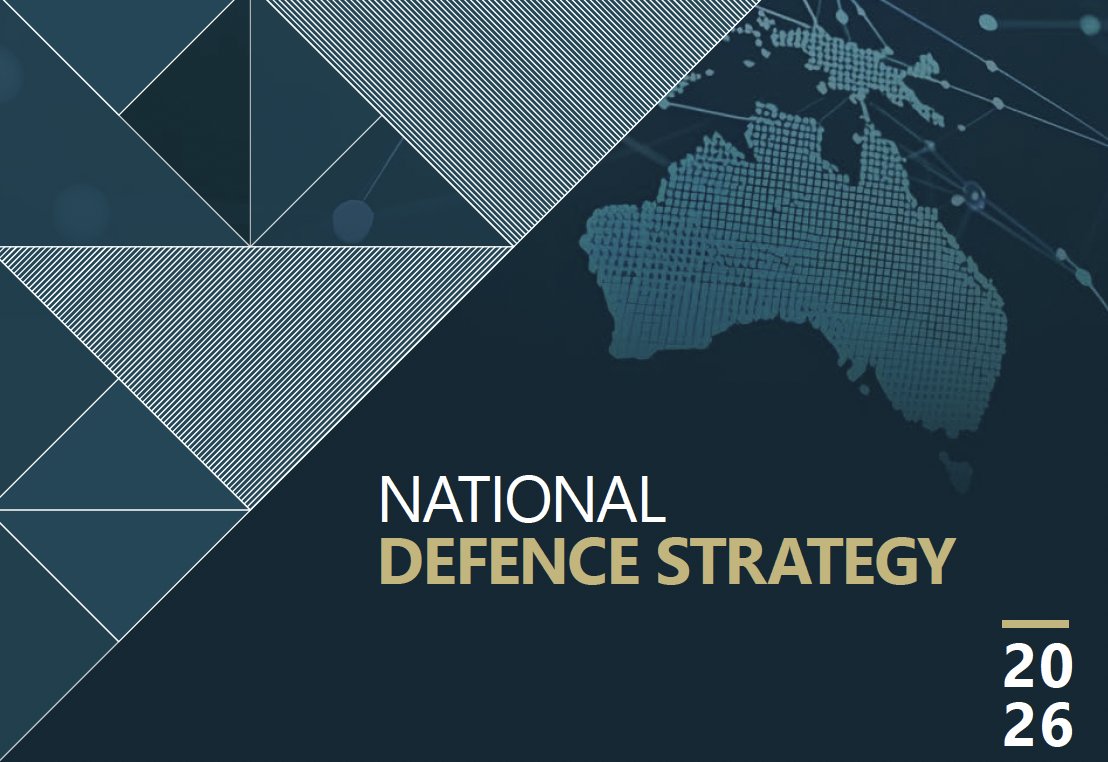
Some initial thoughts on the new Australian National Defence Strategy released today in Canberra. Overall, the focus and trajectory of Australia's defence strategy remains consistent with the 2024 version. There are some notable things worth highlighting. 1/15 🧵🇦🇺 Image
2/ The new NDS shifts more towards a true 'defence' strategy rather than just a 'military' strategy that was described in the 2024 version. There is stronger language around national civil preparedness, fuel security, and economic security. This is good. But these are also topics that should be in a National Security Strategy - if Australia had one!
3/ Spending. There is an uptick in spending. This is a positive. There is a claim that we might get 3% of GDP on defence at some point in the future. The reality is that because we are well short of this now, trying to fund both AUKUS and the ADF at the same time with current spending is challenging (nice word for not possible), and conventional military capabilities are degrading - and not modernising fast enough.
Read 15 tweets
Mar 22
“The advantages of threatening an American ground intervention are real. The advantages of actually committing boots on the ground are also real but more limited. The disadvantages could be numerous.” My weekly update on Iran, Ukraine and the Pacific. 1/6 🧵 Image
2/ Ukraine has achieved something significant in the south. Ukrainian attacks there have disrupted Russian offensive planning, consumed Russian reserve forces, and demonstrated that Ukrainian combined arms operations can impose genuine operational costs. But there is also a trade-off in these southern operations. Gains in the south have come at some cost to northern Donetsk, and Russian forces retain the initiative on what is Russia’s main effort on the ground: the envelopment of Ukraine’s fortress belt and the remainder of Donetsk.
3/ In Iran, the oldest lesson in strategy keeps surfacing: military success in the air and at sea does not automatically translate into political outcomes on the ground. Iran has not been beaten. The question being probably being considered in the Pentagon, Congress and the White House is whether ground forces would ensure that the military campaign achieves a decisive political outcome - or whether it would lead to a larger and more difficult American military commitment to the Middle East with uncertain results.
Read 6 tweets

Did Thread Reader help you today?

Support us! We are indie developers!


This site is made by just two indie developers on a laptop doing marketing, support and development! Read more about the story.

Become a Premium Member ($3/month or $30/year) and get exclusive features!

Become Premium

Don't want to be a Premium member but still want to support us?

Make a small donation by buying us coffee ($5) or help with server cost ($10)

Donate via Paypal

Or Donate anonymously using crypto!

Ethereum

0xfe58350B80634f60Fa6Dc149a72b4DFbc17D341E copy

Bitcoin

3ATGMxNzCUFzxpMCHL5sWSt4DVtS8UqXpi copy

Thank you for your support!

Follow Us!

:(