A thread on how I accidentally blundered into an invisible campaign to censor the internet, and remove inconvenient news stories from Google...
I wrote recently about a fraudulent attempt to use US copyright law to take down an article I’d written which was critical of a fake PR firm, “Mogul Press”. 
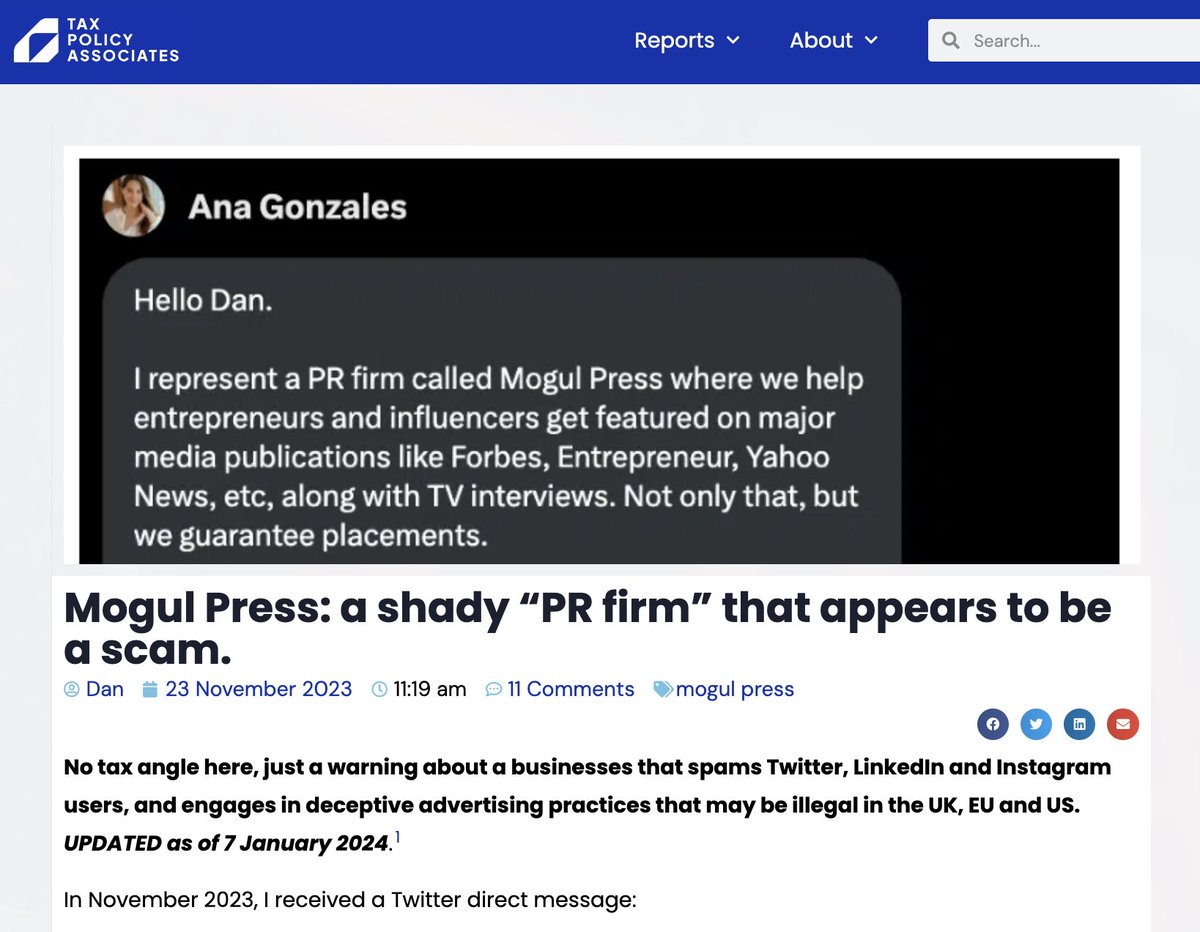
I was shocked to see how they did this – they copied my text into a fake website,1 then filed a takedown notice at Google claiming my article had copied theirs:
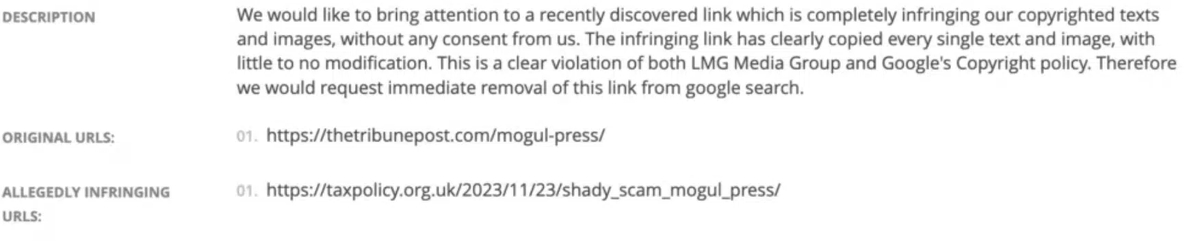
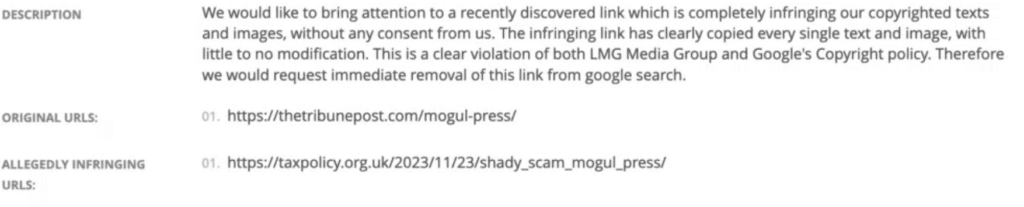
The notice was sent by “LMG Media Group” in the UAE. Which doesn't exist. But Google rather brilliantly accepts takedown notices without checking if the person filing it exists.
Another identical notice was sent by "Lamar Media Corporation" in the US, which also doesn't appear to exist:
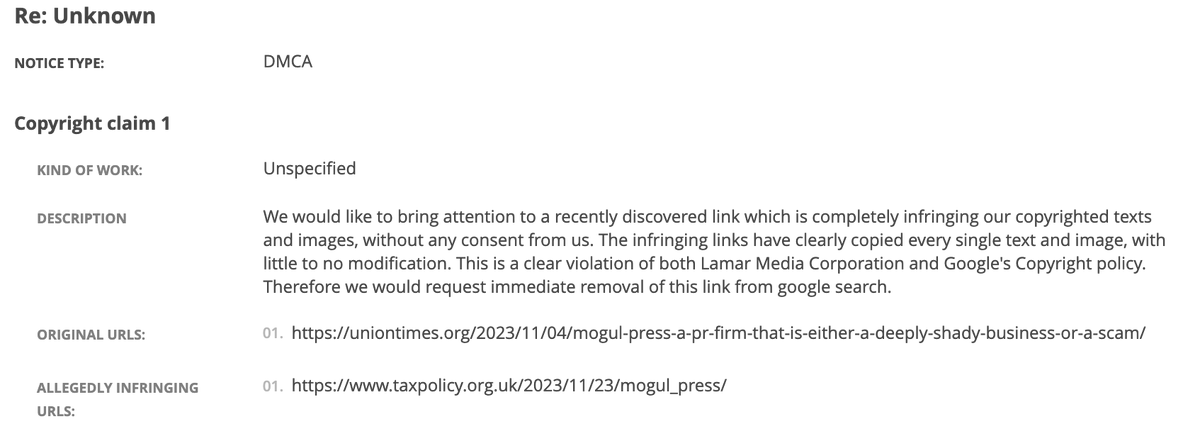
The effect would have been to remove my article from Google searches (if I hadn't challenged the notice).
Note the unusual wording of the two notices: "completely infringing" (which reads like someone without legal training trying to sound like a lawyer).
I wondered if there had been any other similar takedowns, and so searched for other occurrences of that unusual phrase. This search of the Lumen database finds 180 just from "Media Corporation" entities

Each one has identical text, and is sent by a fake company whose name appears to have been randomly generated.
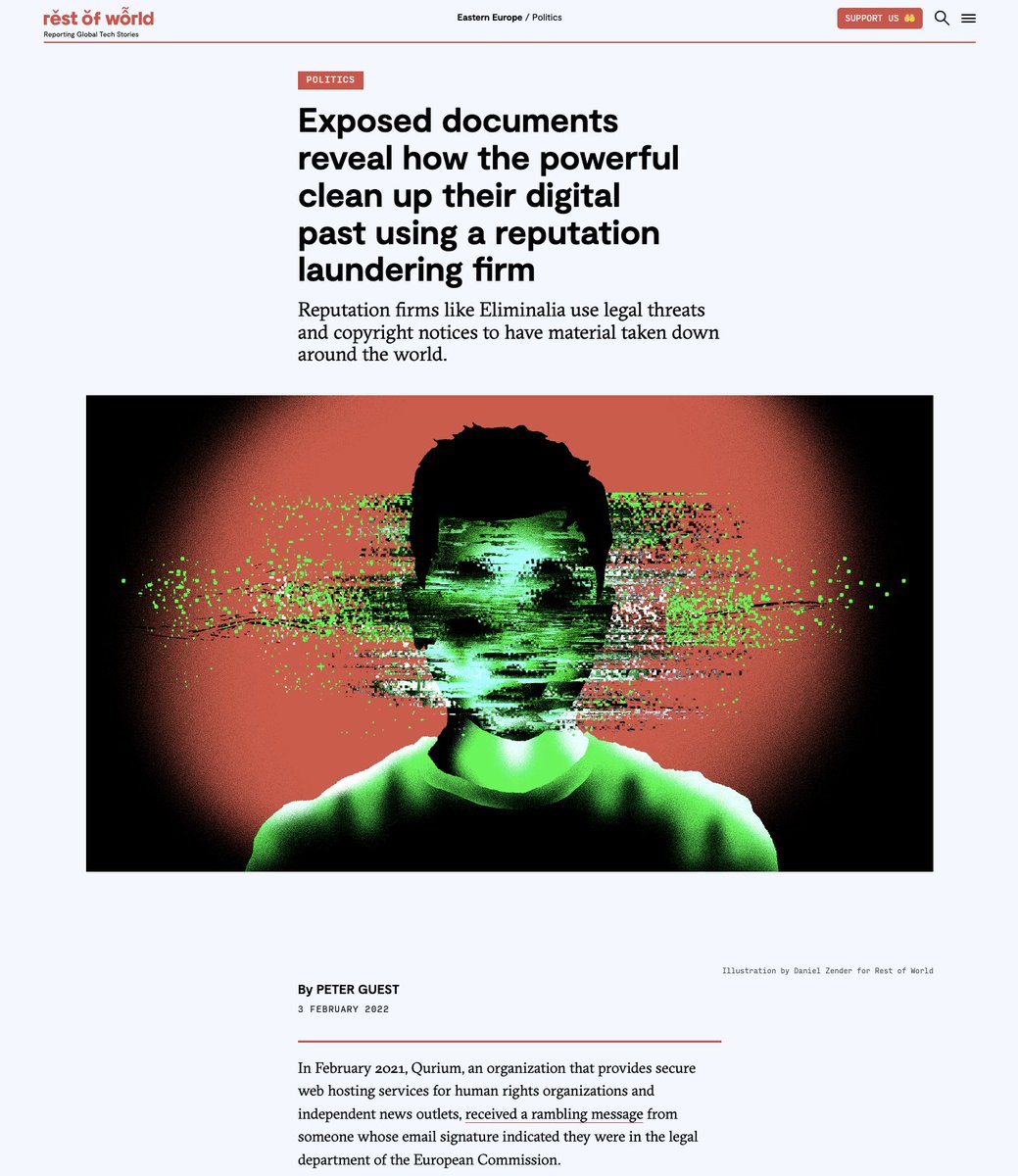
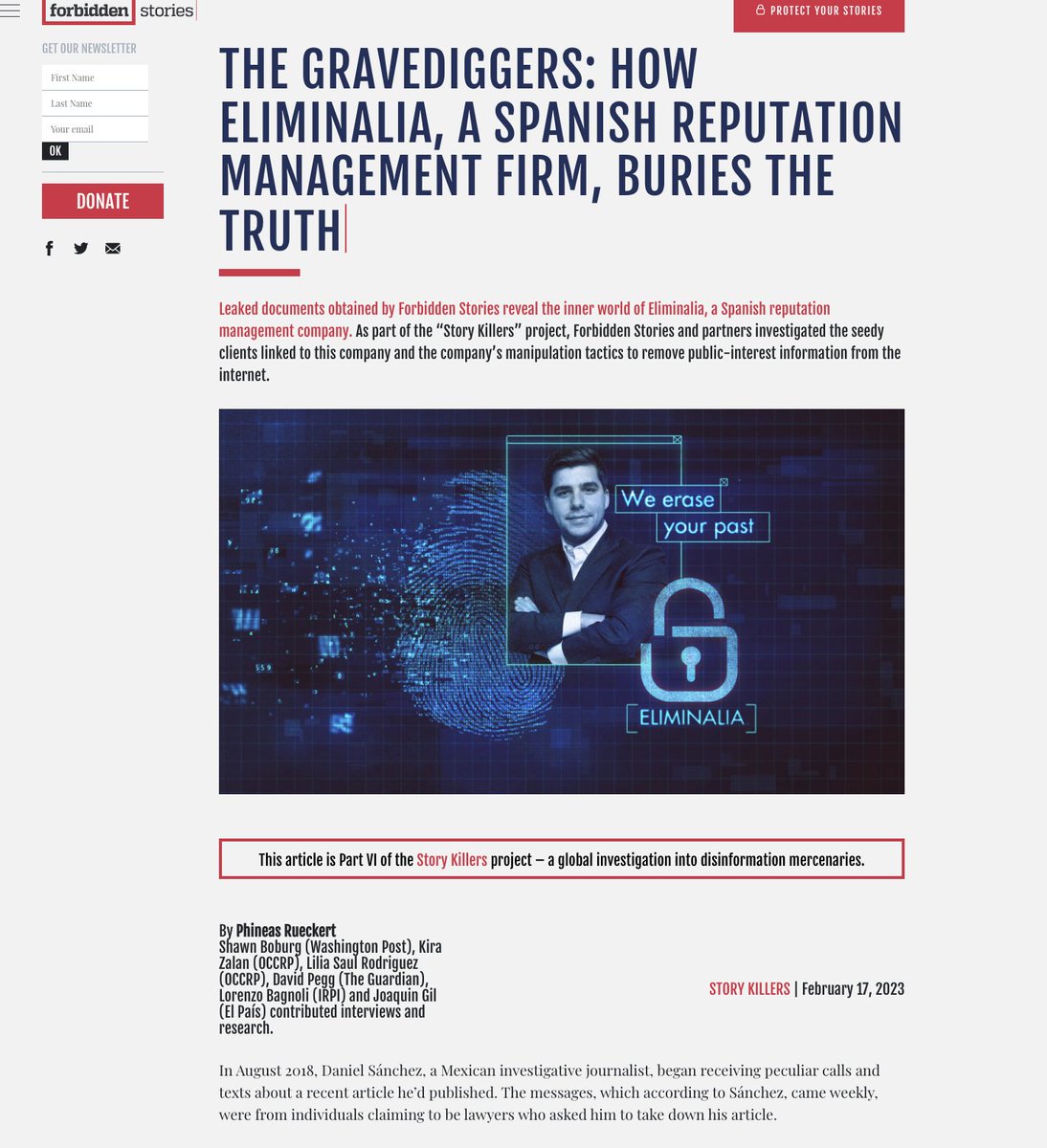
@FbdnStories and @restofworld published investigations into Eliminalia, a Spanish company that monetised this practice at scale, using the exact same technique of creating backdated copies and then fraudulently claiming the copy is the original.
I don't know if what I'm seeing is Eliminalia, or someone else with a similar business model who was hired by Mogul Press.
There's this, trying to take down a report of a solicitor failing to appeal a striking-off:
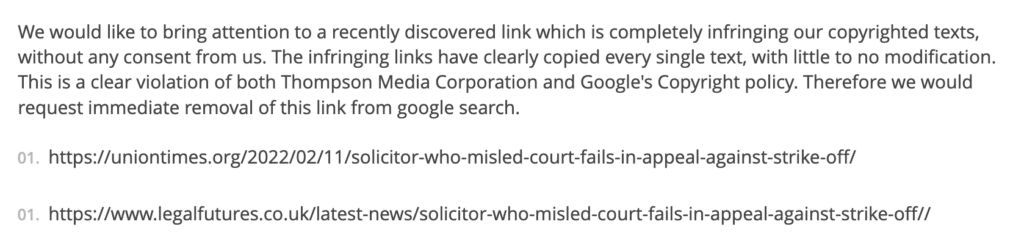
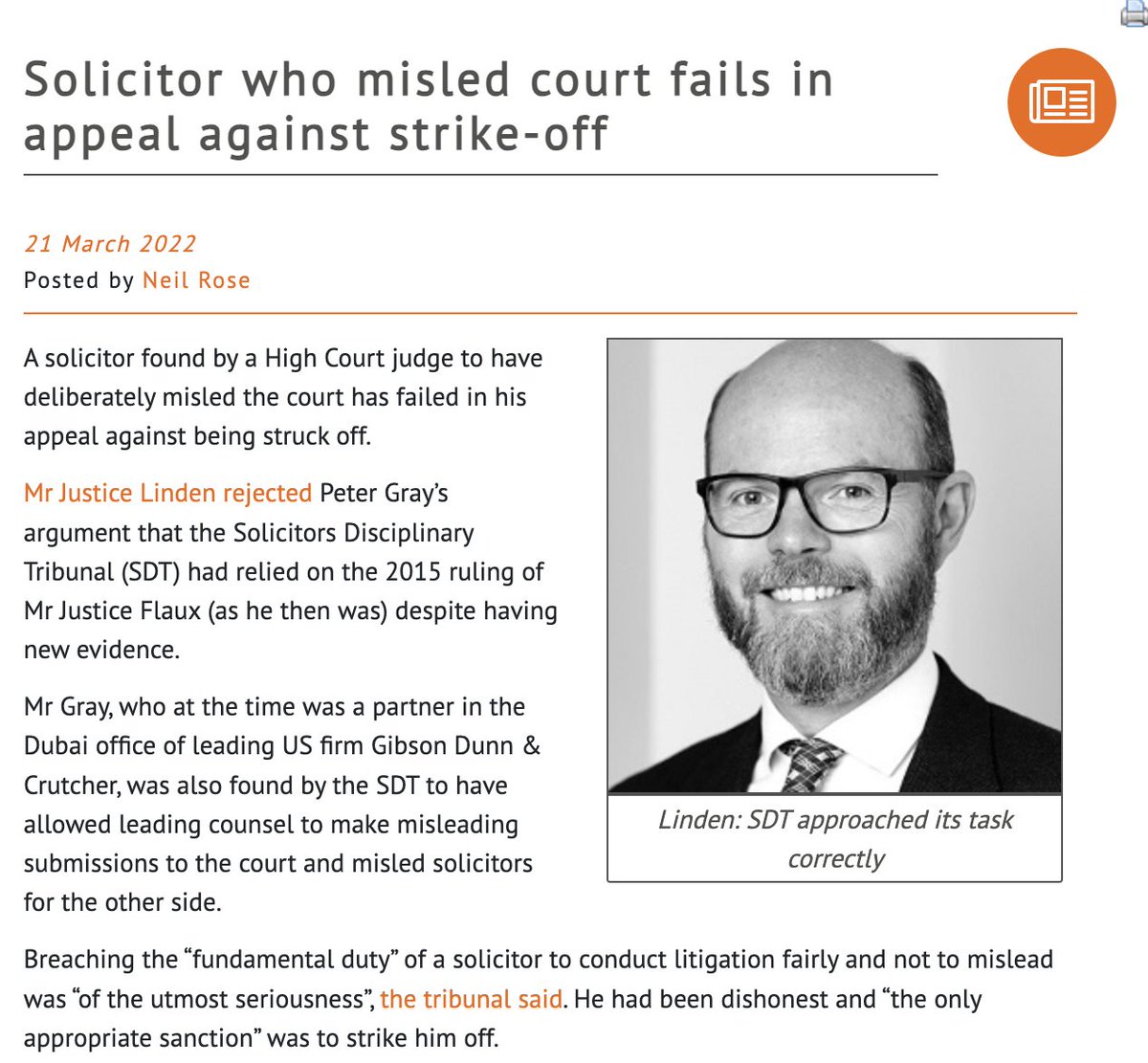
And this, trying to take down another report of that same event:
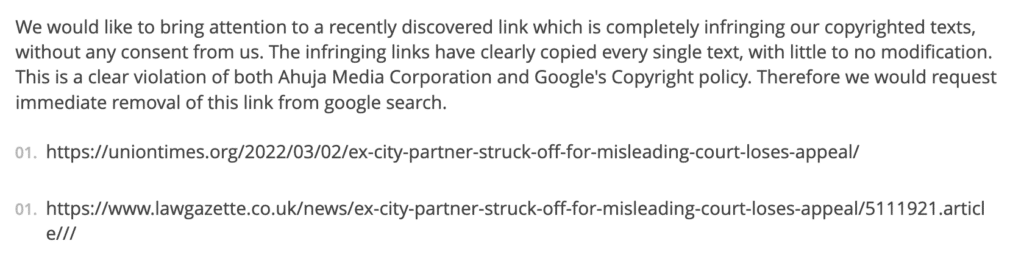
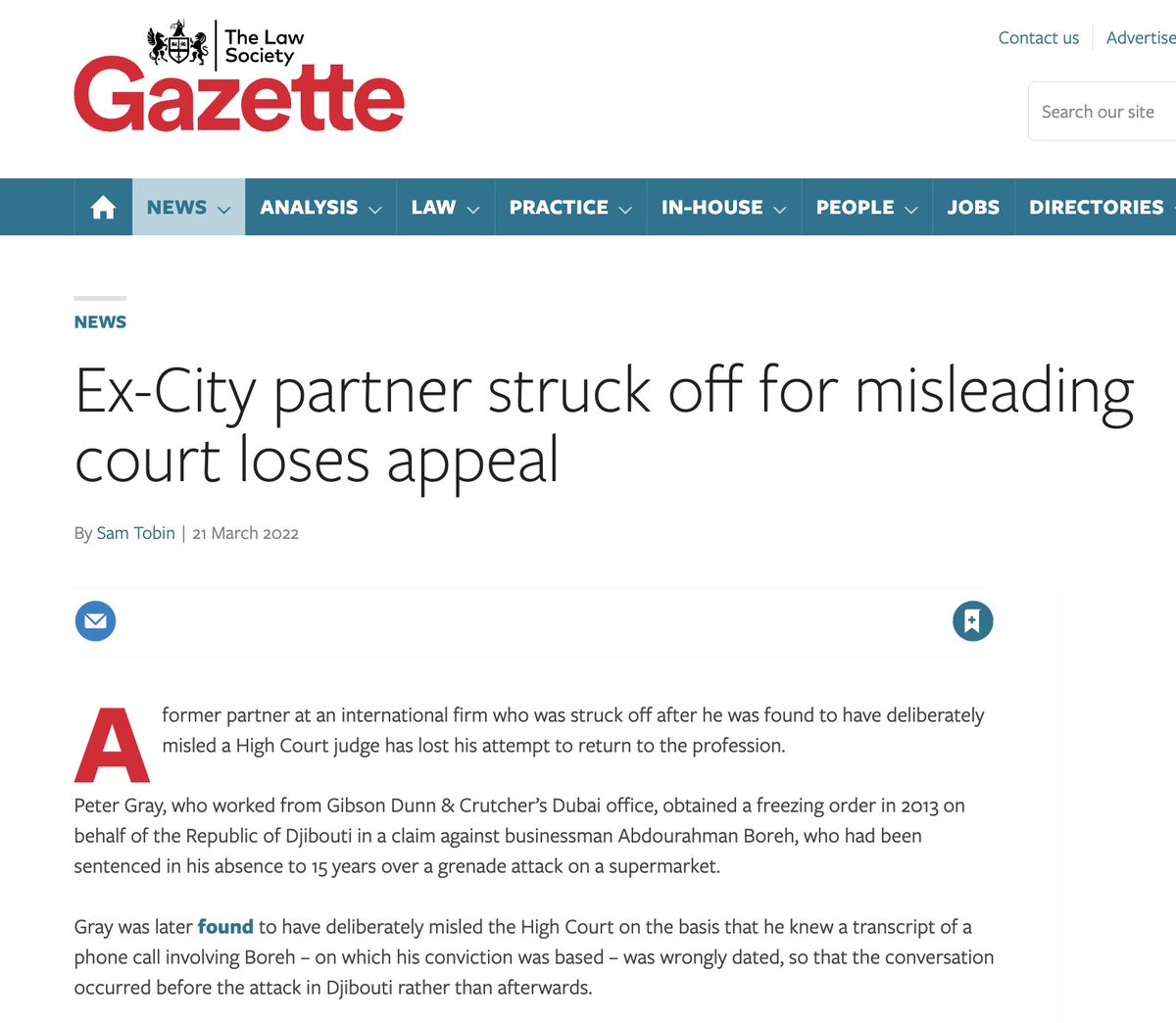
With a duplicate from another made-up company ("Ventuky Media Corporation").
And another from "Bryan Media Corporation", and another from "Yan Media Corporation", and another from "Richards Media Corporation", and another from "Venkata Media Corporation".
And another from "Bryan Media Corporation", and another from "Yan Media Corporation", and another from "Richards Media Corporation", and another from "Venkata Media Corporation".
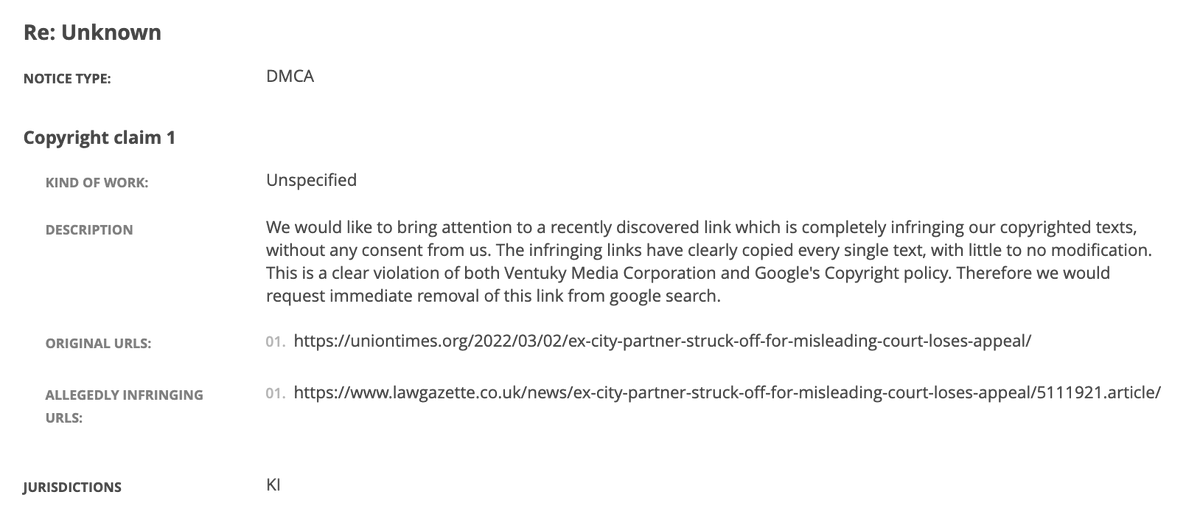
The fraudulent companies set up automated systems that can file zillions of complaints instantly. The victim, however, is unlikely to have any automated way to file counter-notices... they'll have to do so individually.
It's also widely believed that the more reports Google receives, the greater the chance it downgrades the target website in its ranking.
And others have been at this. If you google the name of the solicitor and "striking off" you'll see some search results, then this:

That takes us to this, a differently worded but also fraudulent notice trying to hide another article about the solicitor:
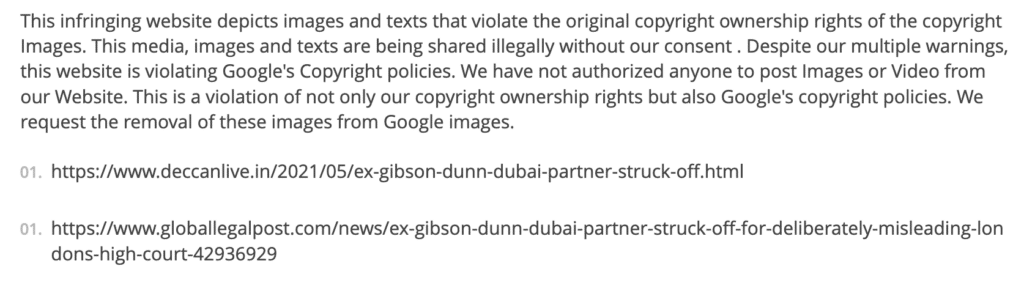
It claims to be sent by BR Law & Co in Abu Dhabi. BR Law does exist, and has an office in Abu Dhabi, but doesn't style itself BR Law & Co. I asked BR Law for comment and didn't hear back.
The former solicitor concerned, his old law firm and his current law firm all deny any involvement in these takedowns. I believe them; even if we ignore the ethics and legality, why take action in January 2024 to remove news from six months earlier?
So the identity of those responsible remains a mystery.
Similar searches reveal more attempts to takedown inconvenient reports.
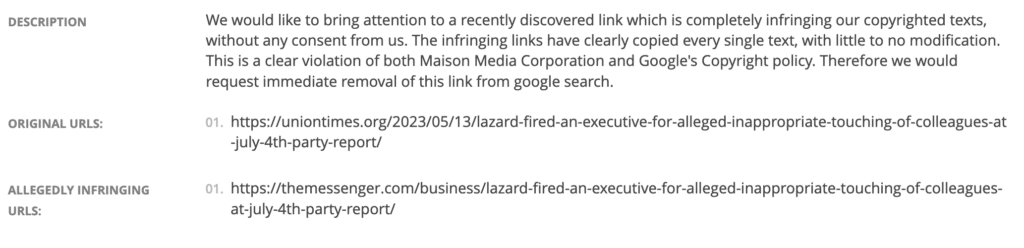
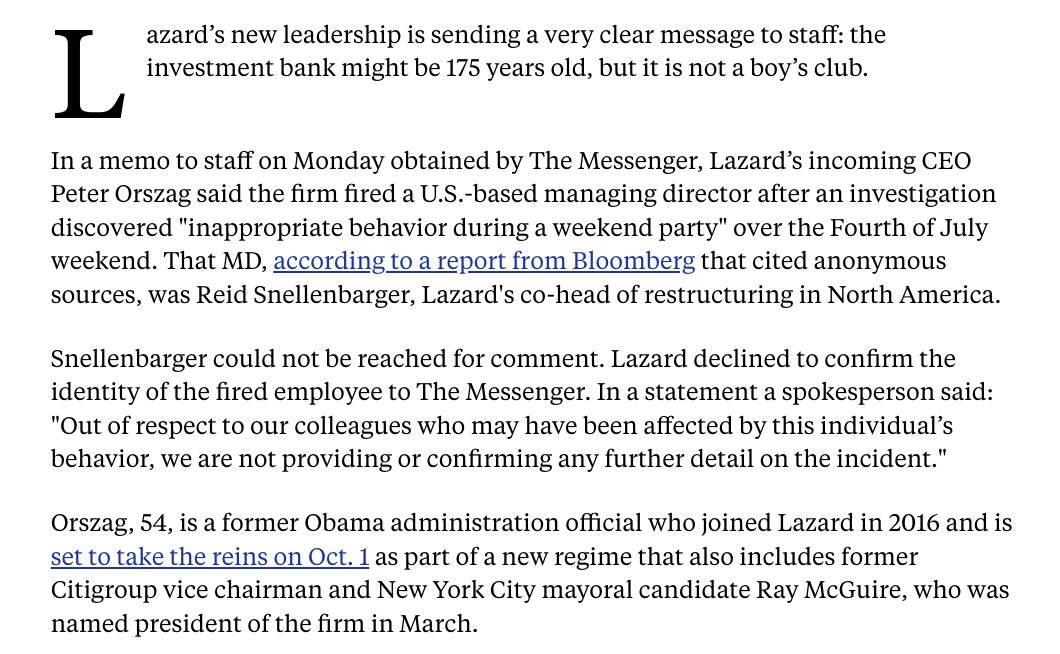
There's this, from the non-existent Maison Media Corporation trying to take down this article about an allegation of sexual misconduct:
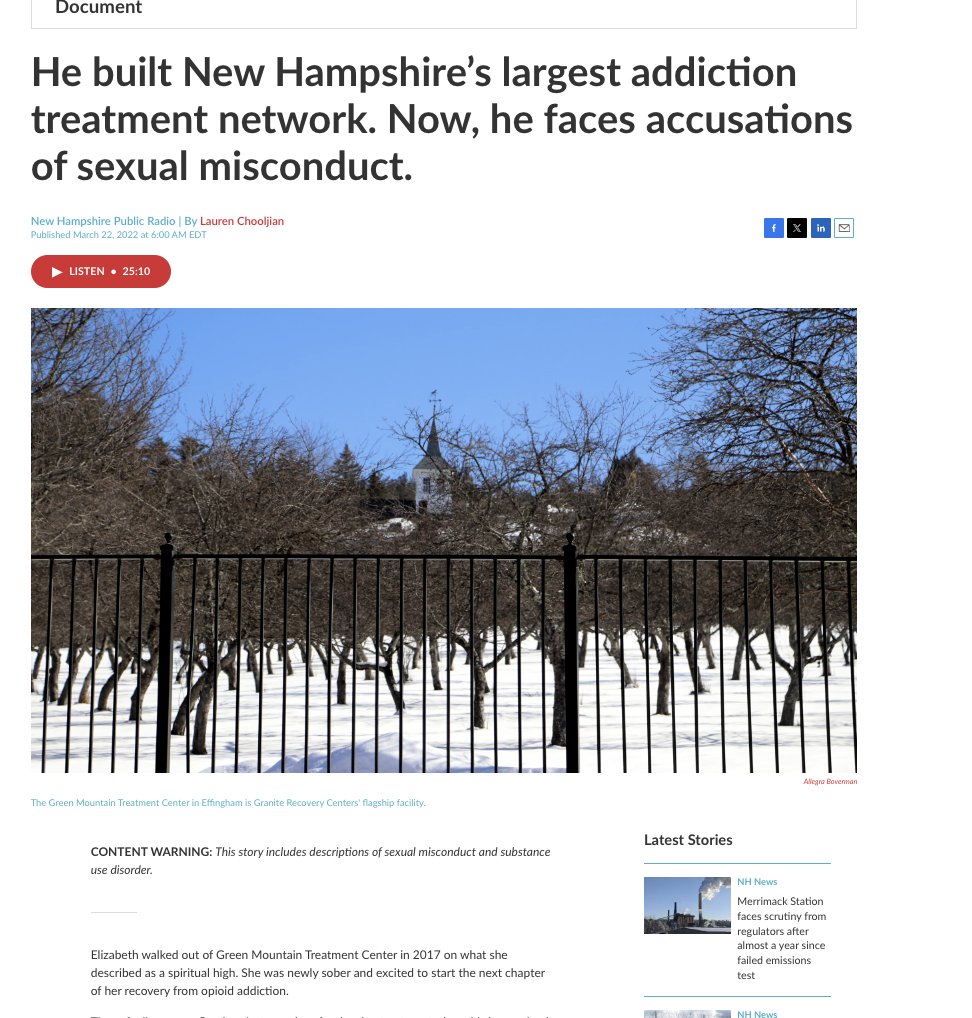
This from the non-existent Sebastian Media Corporation trying to take down this article about another accusation of sexual misconduct:
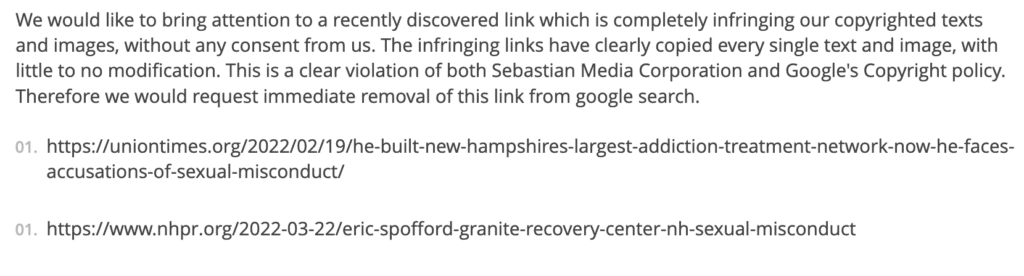
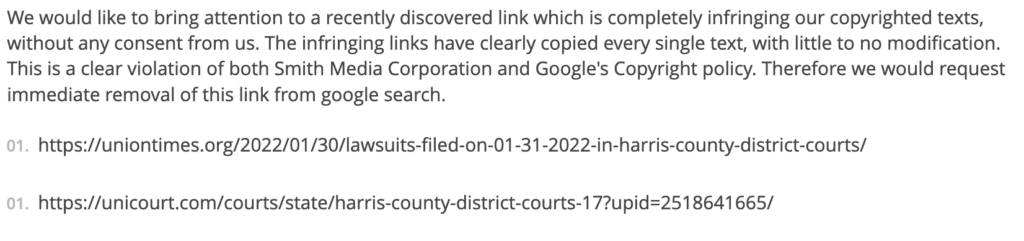
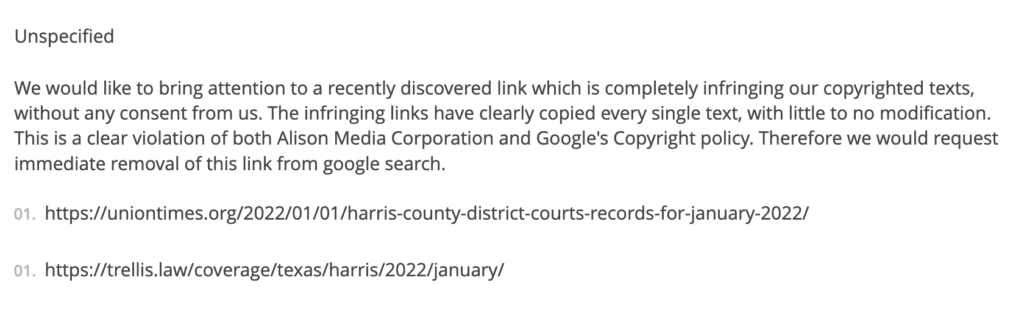
And many non-existent corporations are trying to take down Harris County Texas law reports (I don't know why):
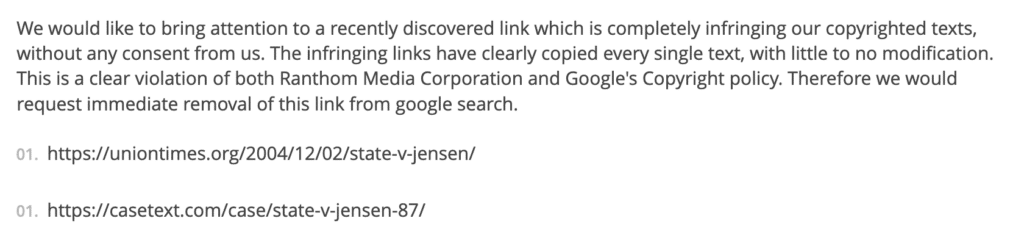
The legal theme continues - here the non-existent Ranthom Media Corporation is trying to take down a Utah case report:
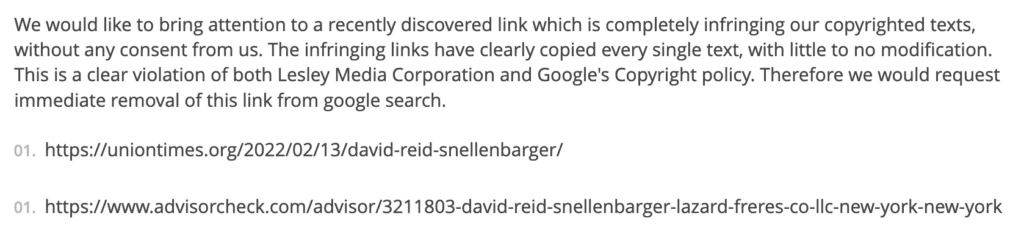
Here, the non-existent Lesley Media Corporation is trying to take down a page with reviews of a financial professional:
And so it goes on.
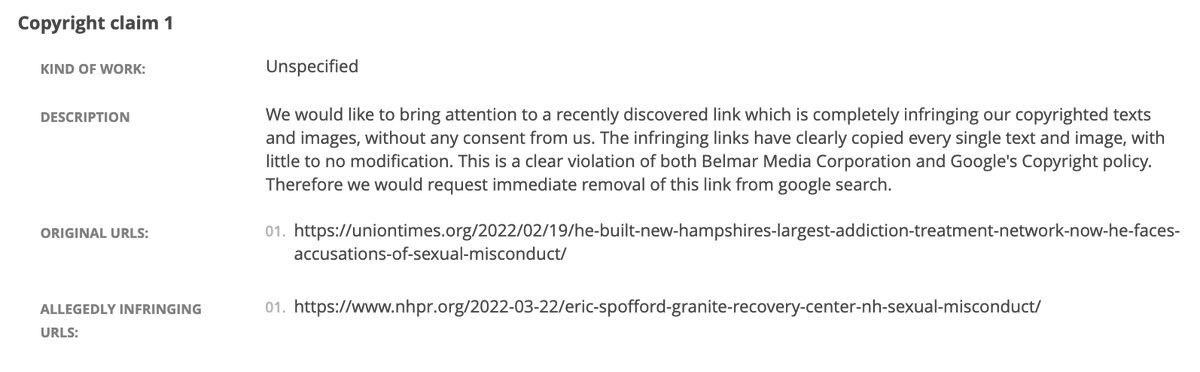
Multiple attempts to take down accusations of sexual misconduct by a founder of a New Hampshire network of addiction clinics.
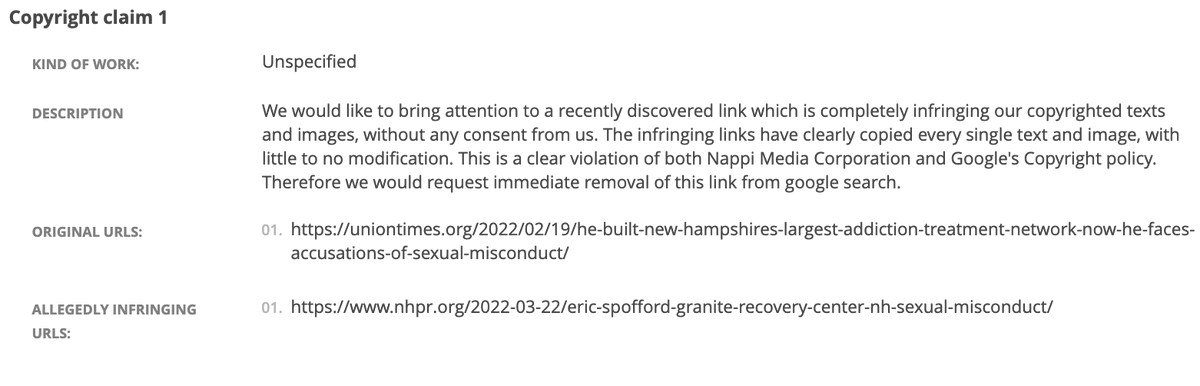
Multiple attempts to take down accusations of sexual misconduct by a founder of a New Hampshire network of addiction clinics.
Lots of attempts to takedown investigative reporting by journalist @mateirosca.
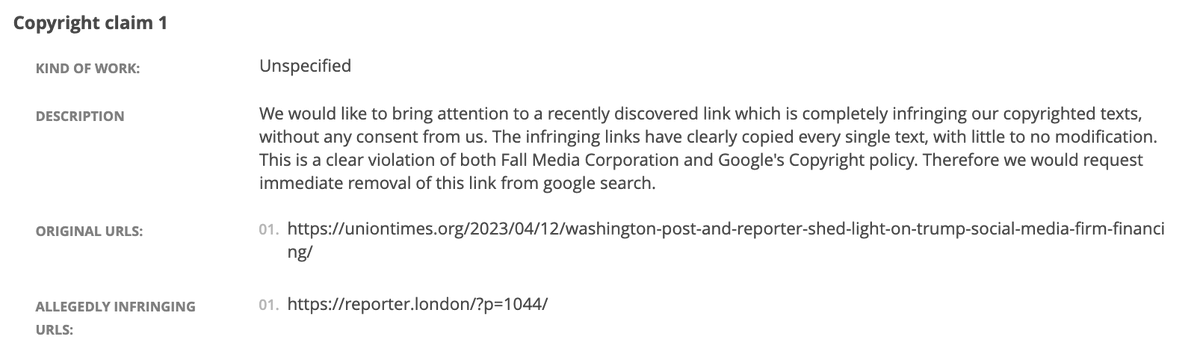
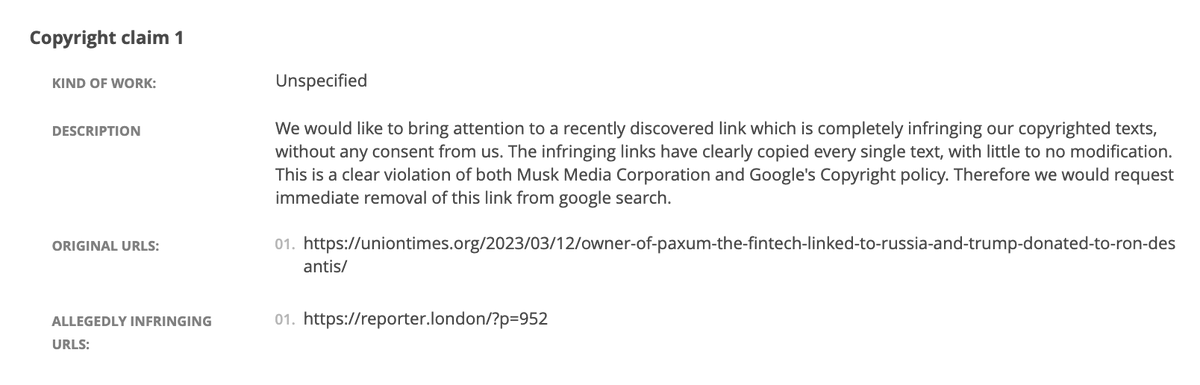
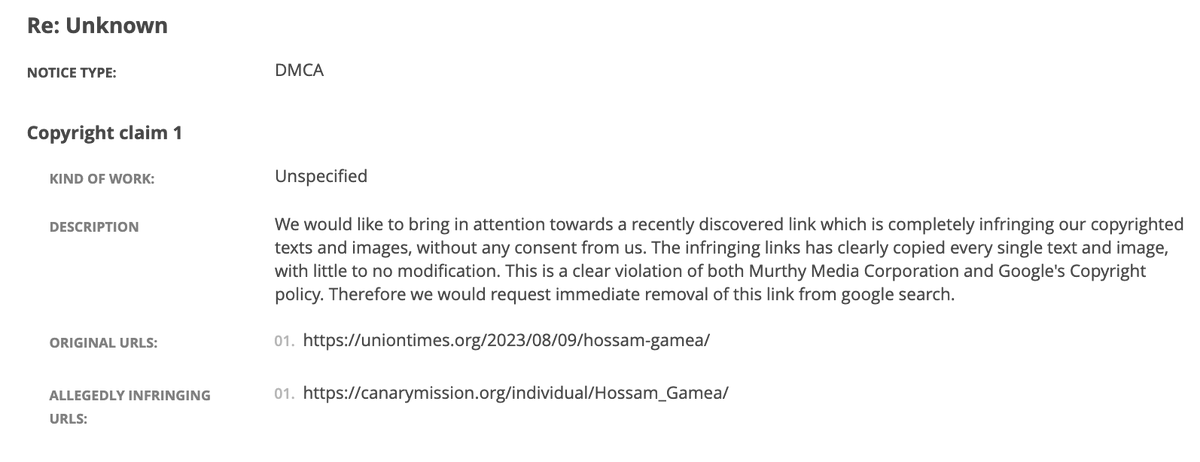
A number of attempts to takedown a report alleging a student is an antisemite.
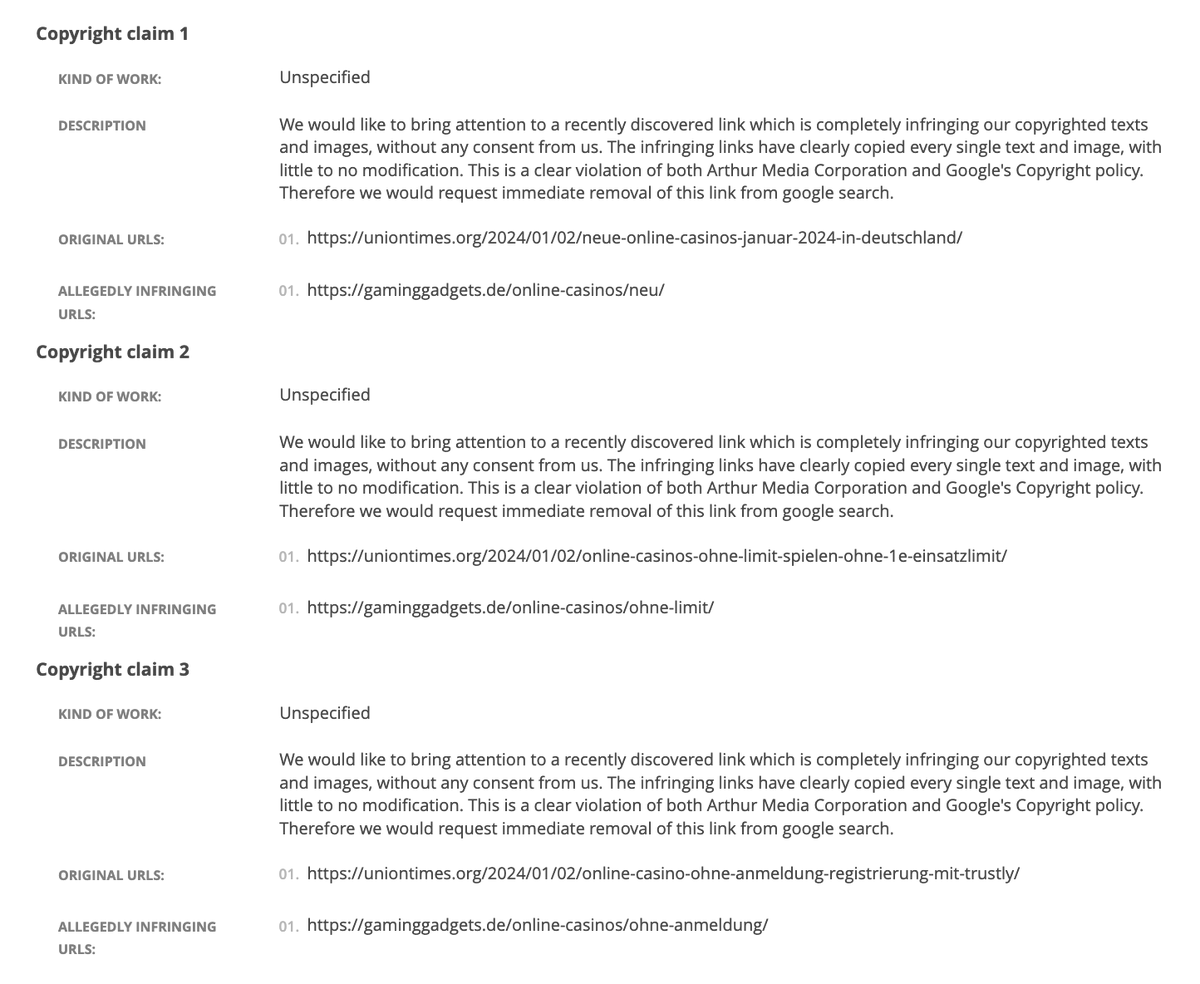
There also appear to be many attempts to take down gambling websites - perhaps by owners of rival websites?
Filing a bad faith takedown notice is a breach of the DMCA; in principle those affected could sue for damages (probably very small) plus attorney fees (potentially large).
More seriously, attempting to gain a financial benefit through a fraudulent filing may amount to a criminal offence in the US (wire fraud) and the UK (false representation fraud and/or a breach of the Computer Misuse Act).
In both cases, criminal liability could extend to the individual paying for the takedown service, if they were aware that the takedown would be fraudulent (and how could it not be?).
The problem here is that Google assists the frauds, by being amazingly trusting and not requiring any proof of the identity of people submitting takedown notices.
I recently "took ownership" of the "knowledge panel" Google displays if someone googles my name. This required an image of my passport and a selfie. It is very unfortunate that Google has much less stringent procedures to file a DMCA takedown notice.
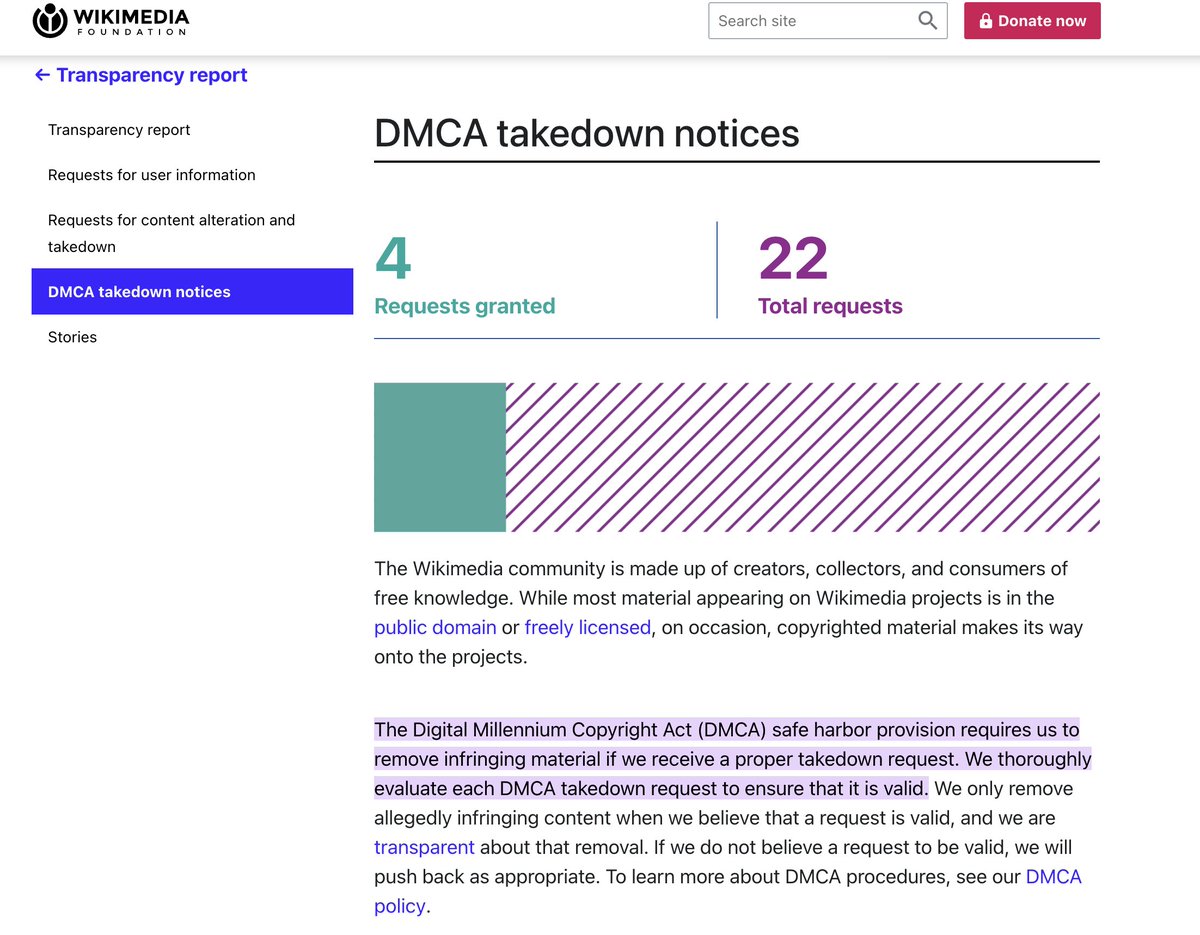
Others are more careful:
A Google spokesperson provided me with this statement:
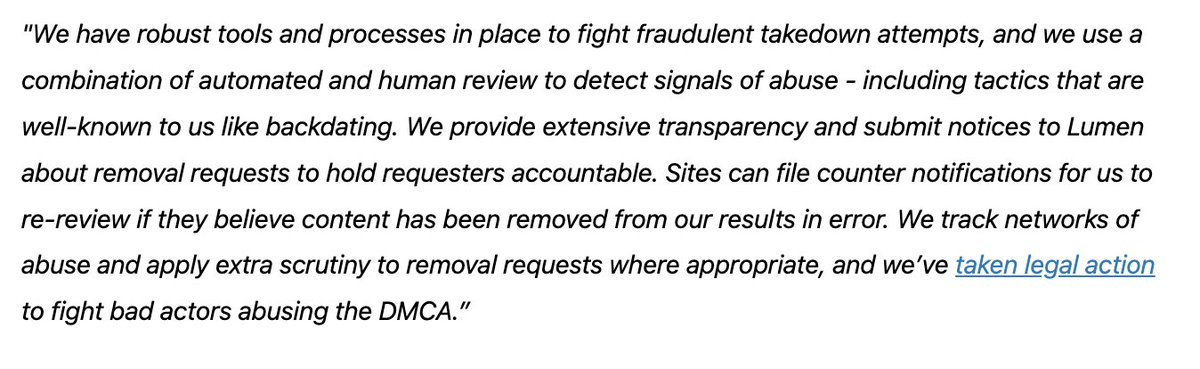
Unfortunately this doesn't seem to be working. The obvious additional step would be for Google to require ID verification for people submitting DMCA claims. It's not at all obvious why they can't do that.
Our full article, with links to sources, is here: taxpolicy.org.uk/2024/02/17/the…
Oh, and many thanks to @lumendatabase for giving me access to their database.
• • •
Missing some Tweet in this thread? You can try to
force a refresh