Use AI to write proven, high-converting copy for increased conversions and higher ROI. Instantly generate top-notch copy for ads, emails, websites, listings, blogs, stories, and more
I cancelled $500/month in SaaS subscriptions last week.
Replaced all of them with Notion + Claude in one afternoon.
Here's how to connect them and 12 prompts that build everything for you (Save for later):
First, connect Notion to Claude (takes 60 seconds):
Step 1: Open claude ai
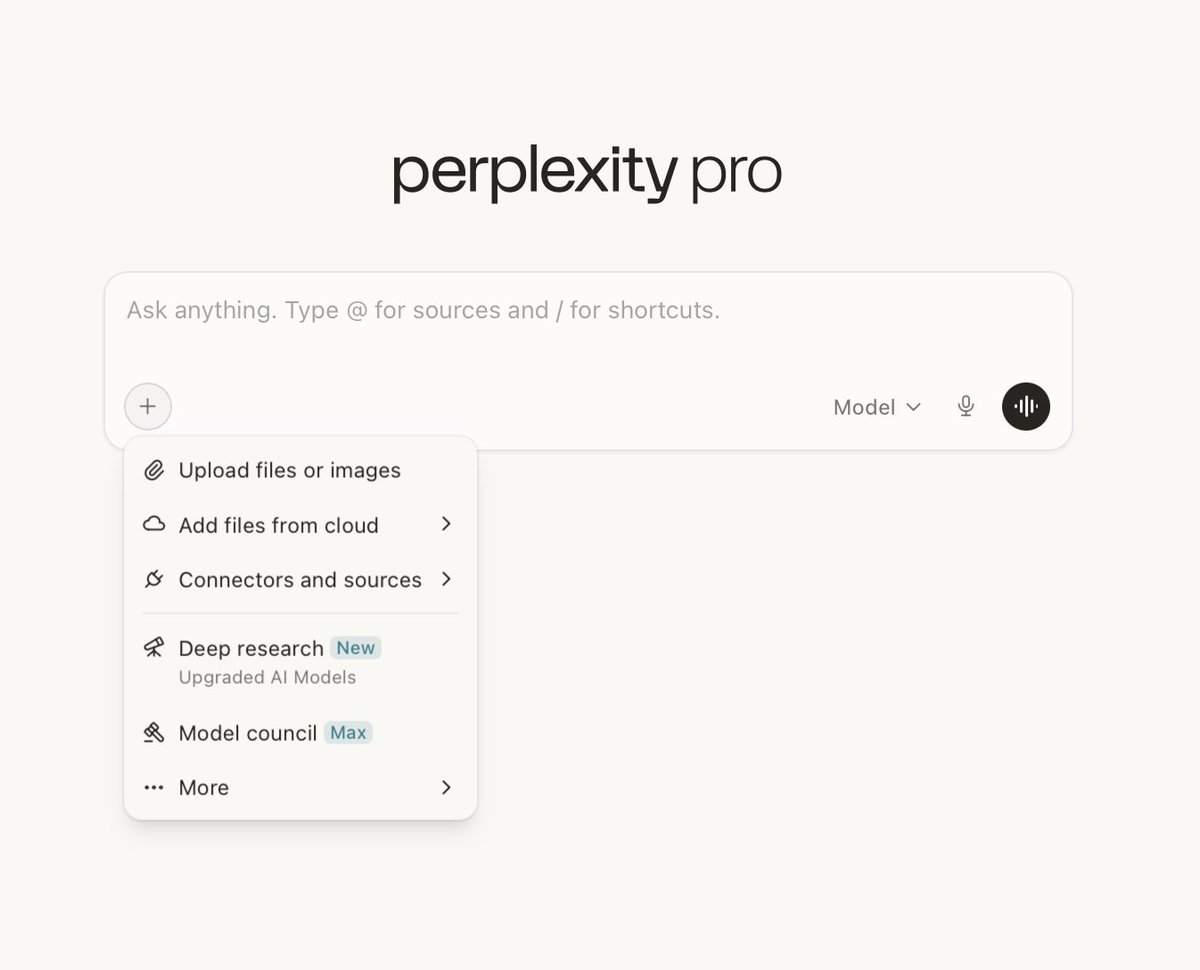
Step 2: Click the search icon (🔌) in the chat box
Step 3: Scroll down → find "Notion" → click "Connect"
Step 4: Authorize Claude to access your Notion workspace
Step 5: Done. Now Claude can read, create, and edit your Notion pages and databases directly.
That's it. Now every prompt below builds things inside your actual Notion workspace.
1/ CRM System
Paste this into Claude:
"Create a CRM system in my Notion workspace.
Build a database called 'Contacts' with these properties: Name (title), Company (text), Role (text), Email (email), Phone (phone), Deal Size (number), Deal Stage (select: Lead, Qualified, Proposal, Negotiation, Closed Won, Closed Lost), Lead Source (select: Referral, Cold Outreach, Inbound, Social Media, Event), Last Contacted (date), Notes (text).
Then create a second database called 'Interactions' with: Contact (relation to Contacts), Date (date), Type (select: Call, Email, Meeting, LinkedIn), Notes (text), Follow Up By (date).
Then create a page called 'CRM Dashboard' that links to both databases and explains how to use the system."
BREAKING: AI can now do market research like McKinsey (for free).
Here are 12 insane Claude Opus 4.6 prompts that replace $5,000 consultant: (Save for later)
1/ Market Sizing & TAM Analysis
You are a McKinsey-level market analyst. I need a Total Addressable Market (TAM) analysis for [YOUR INDUSTRY/PRODUCT].
Please provide:
• Top-down approach: Start from global market → narrow to my segment
• Bottom-up approach: Calculate from unit economics × potential customers
• TAM, SAM, SOM breakdown with dollar figures
• Growth rate projections for the next 5 years (CAGR)
• Key assumptions behind each estimate
• Comparison to 3 analyst reports or market research firms
Format as an investor-ready market sizing slide with clear methodology.
Context: My product is [DESCRIBE PRODUCT], targeting [TARGET CUSTOMER] in [GEOGRAPHY].
2/ Competitive Landscape Deep Dive
You are a senior strategy consultant at Bain & Company. I need a complete competitive landscape analysis for [YOUR INDUSTRY].
Please provide:
• Direct competitors: Top 10 players ranked by market share, revenue, and funding
• Indirect competitors: 5 adjacent companies that could enter this market
• For each competitor, analyze: pricing model, key features, target audience, strengths, weaknesses, and recent strategic moves
• Market positioning map (price vs. value matrix)
• Competitive moats: What makes each player defensible
• White space analysis: Gaps no competitor is filling
• Threat assessment: Rate each competitor (low/medium/high threat)
Format as a structured competitive intelligence report with comparison tables.
My company: [DESCRIBE YOUR BUSINESS AND POSITIONING]
BREAKING: AI can now write, design, and publish an entire book in 48 hours.
Here are 14 insane Gemini 3.0 prompts to become a published author this month: (Save for later):
1. Book Concept Generator
"You are a bestselling book strategist. Generate 5 unique book concepts for [your niche/expertise].
For each concept, provide:
- Compelling title + subtitle
- Target audience demographics
- Unique angle vs existing books
- Estimated market size
- Why readers would pay $20-30
- Trending topics aligned with current demand"
This finds your profitable book idea before you waste months writing the wrong one.
2. Complete Book Outline Builder
"Create a detailed chapter-by-chapter outline for a [genre] book titled [your title] targeting [audience]. Include 10-15 chapters.
For each chapter:
- Chapter title
- 3-5 key points to cover
- Estimated word count (1500-3000)
- Reader transformation by end
- Connection to next chapter
- Compelling hook for chapter 1
- Satisfying conclusion for final chapter"
Your entire book structure in one prompt. No more staring at blank pages.
I don't get why most people don't use Claude for content strategy.
Let me show you 8 prompts that turn it into a $2,000/month ghostwriter-level content partner (and save you weeks of planning):
Prompt 1: Audience Pain Point Miner
"I'm building a content strategy for [brand/creator name] in the [niche] space. Our target audience is [detailed audience description]. Go deep into the psychology of this audience. Identify their top 10 unspoken pain points - not the obvious ones they talk about publicly, but the private frustrations they Google at 2 AM, vent about in Reddit threads, and whisper to friends. For each pain point, provide: the exact language they use to describe it, why existing solutions fail them, the emotional trigger behind the frustration, and one content angle that would make them feel instantly understood. Organize by intensity - start with the pain points that keep them up at night."
This is the research that $150/hour brand strategists charge for. It's the foundation everything else builds on. Without this, you're guessing what your audience wants. With it, every piece of content hits a nerve.
Prompt 2: 30-Day Content Calendar Architect
"I'm creating a 30-day content calendar for [platform: X/LinkedIn/Instagram]. My niche is [niche] and my target audience is [audience]. My content goals are [goals: grow followers, drive email signups, sell a product, build authority]. My brand voice is [2-3 adjectives]. Build me a complete 30-day content calendar with: the content type for each day (thread, single post, carousel, poll, story), a specific topic and angle for each post, the hook or first line written out in full, which content pillar it serves (educational, inspirational, personal, promotional, engagement), and the strategic purpose behind each post. Make sure the calendar has a rhythm - no two consecutive days with the same format, promotional posts are spaced every 5-7 days, and engagement-bait posts appear at least twice per week."
This is what content agencies deliver as a $2,000 monthly retainer. One prompt. Done in 3 minutes. And because Claude's context window holds your entire strategy, every post connects to the bigger picture.
BREAKING: AI can now build you a complete website in 2 hours (for free).
Here are 9 insane Perplexity + Replit prompts that create $5,000 websites in 2 hours (save for later):
The Workflow That Changed Everything:
Most people try to build websites with ChatGPT alone and get stuck.
The secret is splitting the work:
→ Perplexity researches your industry, competitors, and best practices
→ Replit builds and deploys the actual website with AI
One tool thinks. One tool builds. Together they're unstoppable.
Here's the exact roadmap:
Prompt 1: Competitive Website Research (Perplexity)
"Analyze the websites of the top 5 competitors in [your industry]. For each, document: their homepage structure and sections, color schemes and design style, key features and calls-to-action, what makes their design effective, and common patterns across all of them. Cite specific examples with links."
Perplexity pulls real competitor sites with citations.
You'll know exactly what works in your industry before you build anything.
BREAKING: AI can now script, voice, and animate viral documentaries
Here are 15 insane Claude 4.5 prompts to build a faceless YouTube brand in 2026: (Save for later):
Prompt 1: The Viral Topic Miner
I want to build a faceless YouTube channel creating short documentaries in [niche].
Find 10 trending topics that:
→ Have underexploited keyword potential
→ Have 100K–2M monthly searches
→ Are emotional, shocking, or curiosity-driven
→ Can be told in under 10 minutes
→ Have strong comment section engagement
Rank them by viral potential, storytelling strength, and emotional payoff.
Prompt 2: The Netflix-Style Scriptwriter
Write a YouTube documentary script about [topic].
Format as narration + scene direction.
Include:
→ Cold open that hooks in 7 seconds
→ Emotional arc (curiosity, conflict, payoff)
→ 3-act structure like a Netflix episode
→ Voiceover pacing at 140 words per minute
→ Visual timing for 16:9 Sora animations