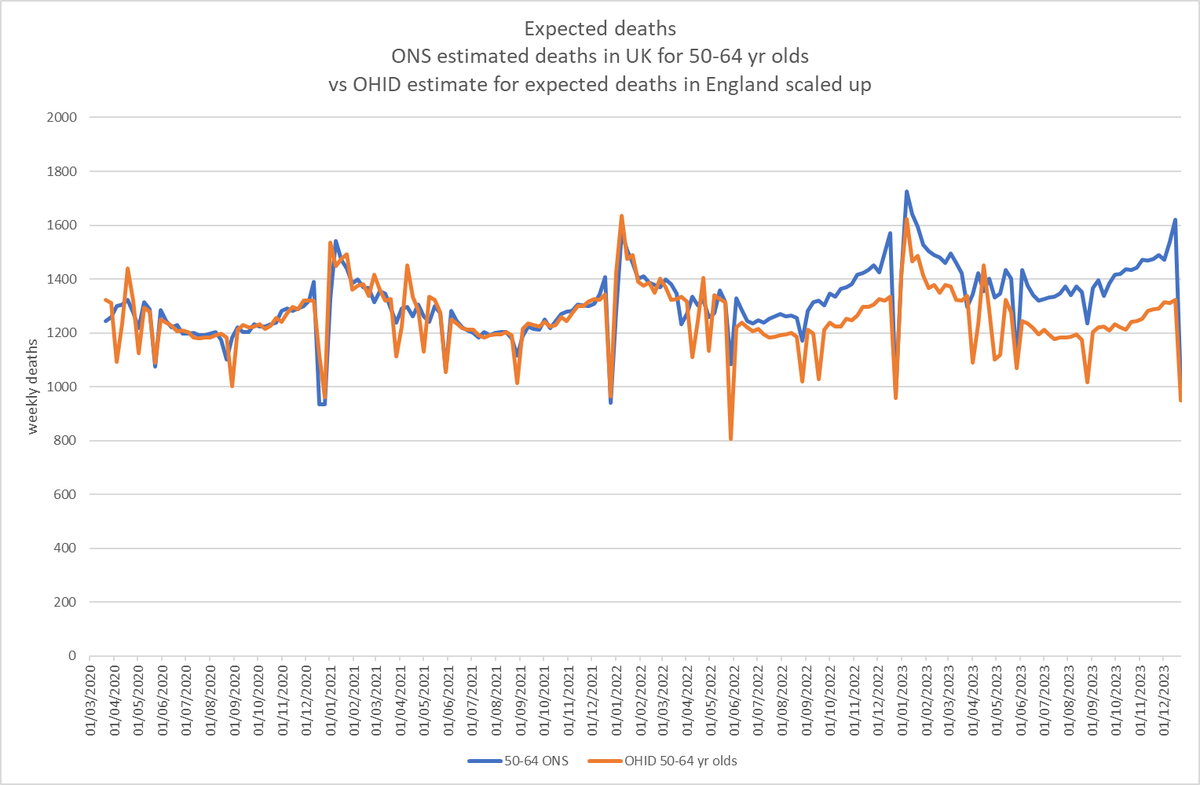
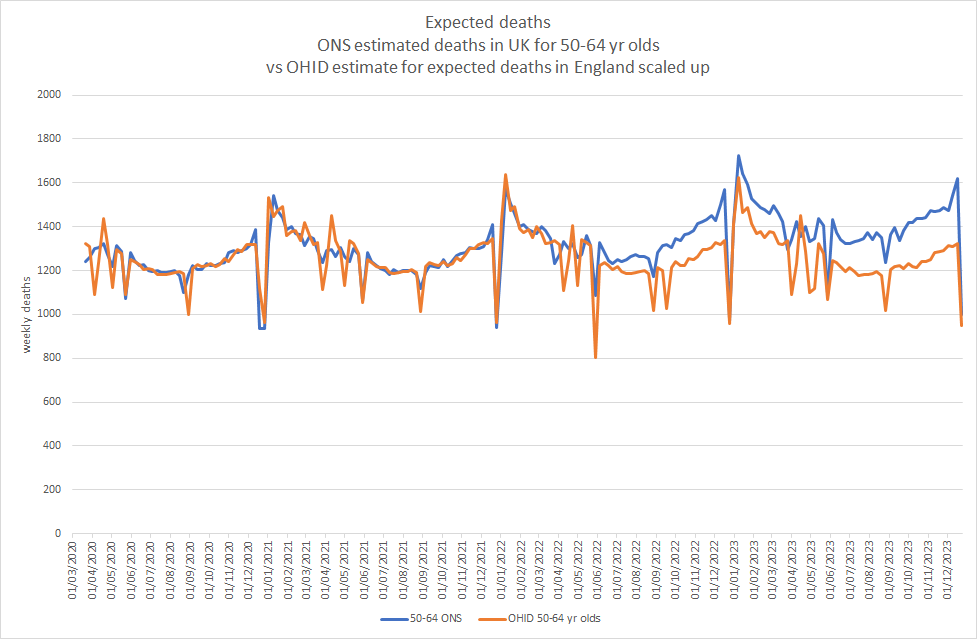
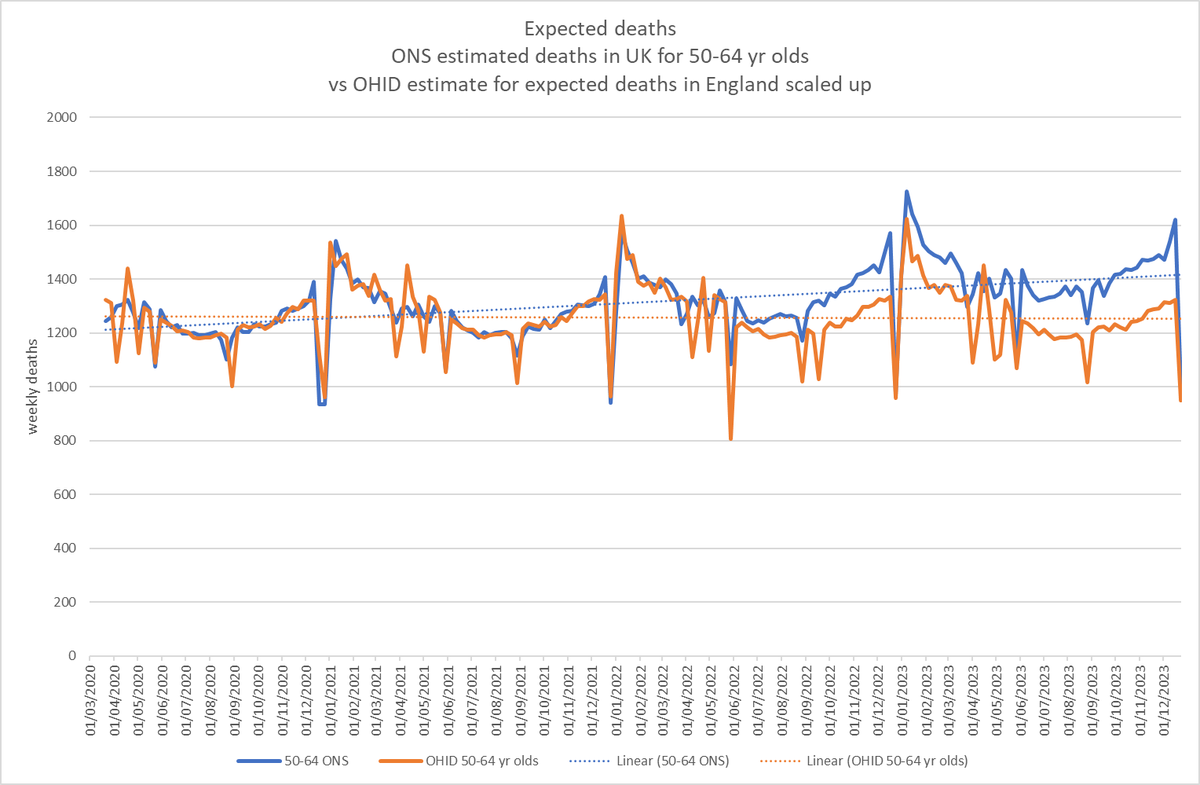
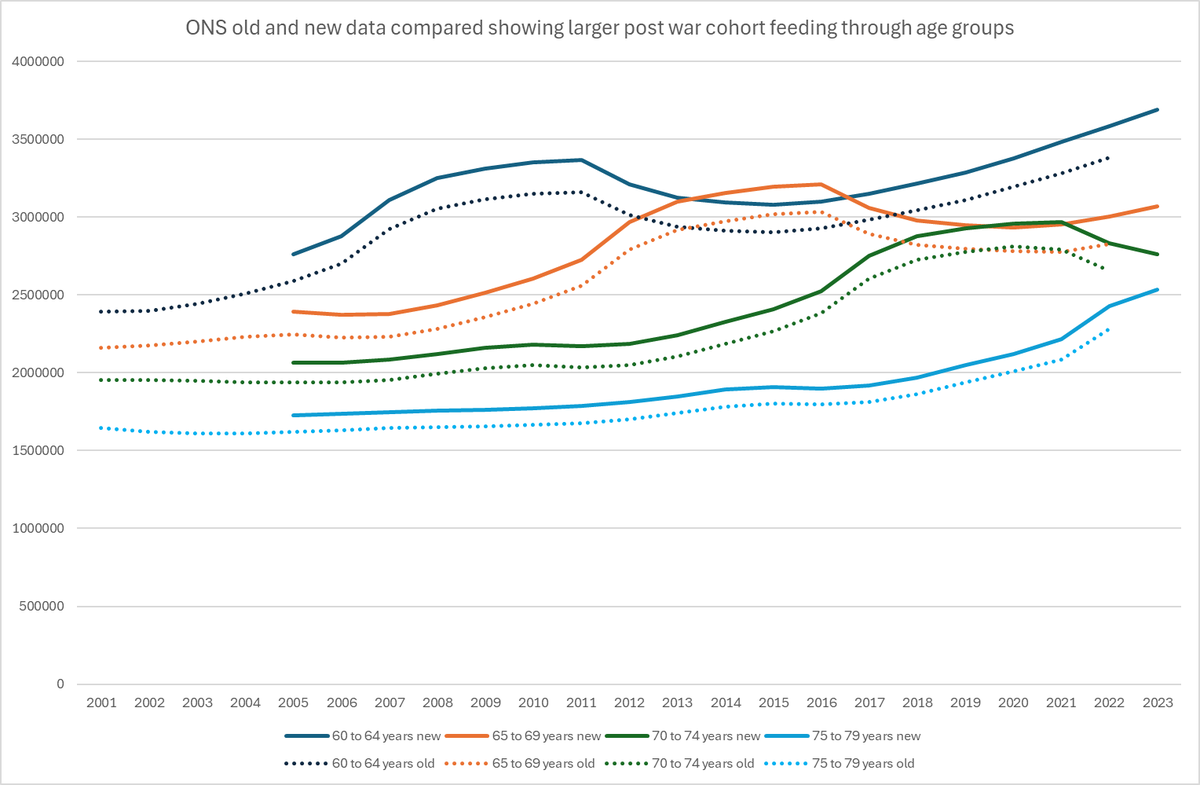
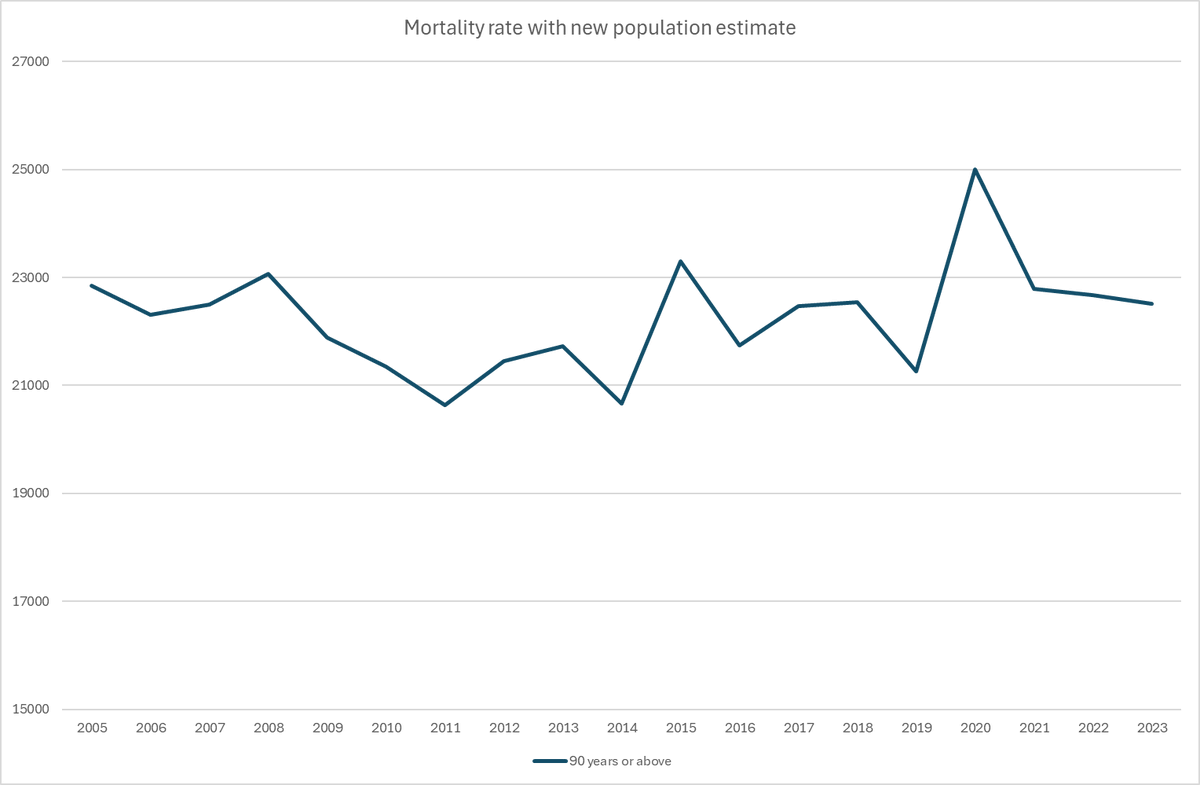
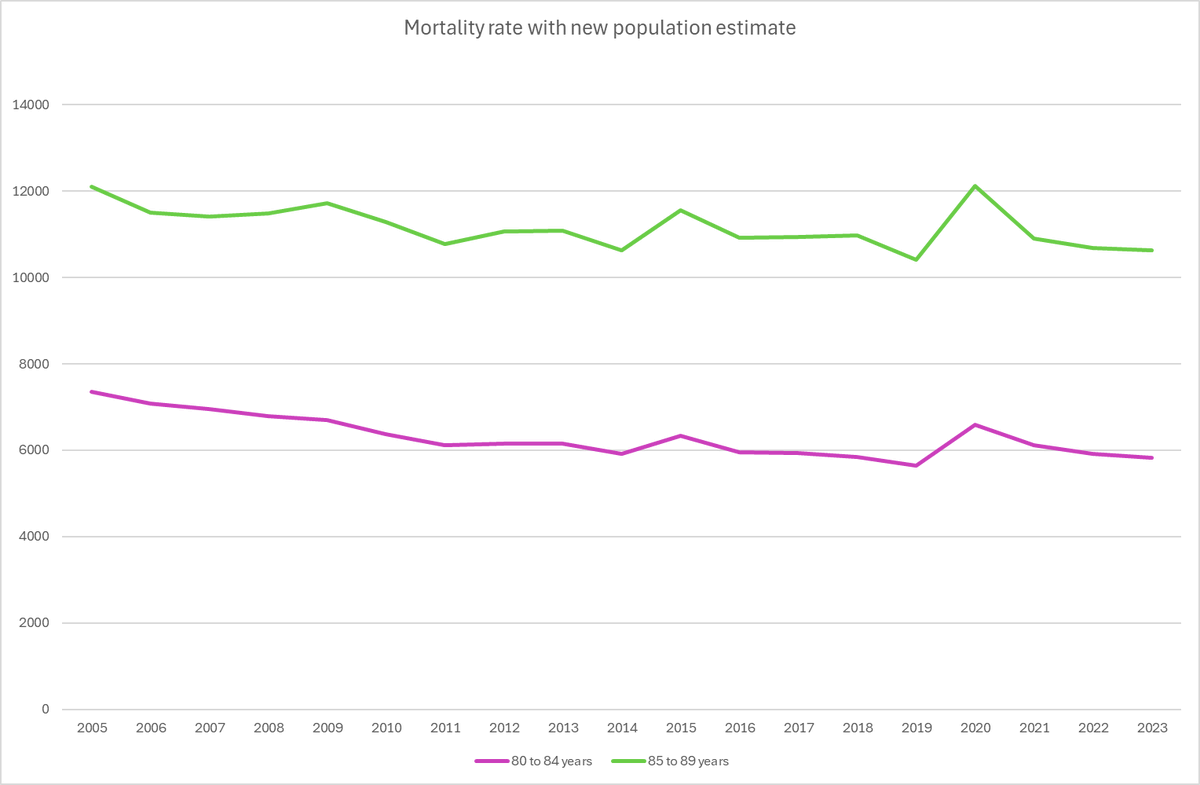
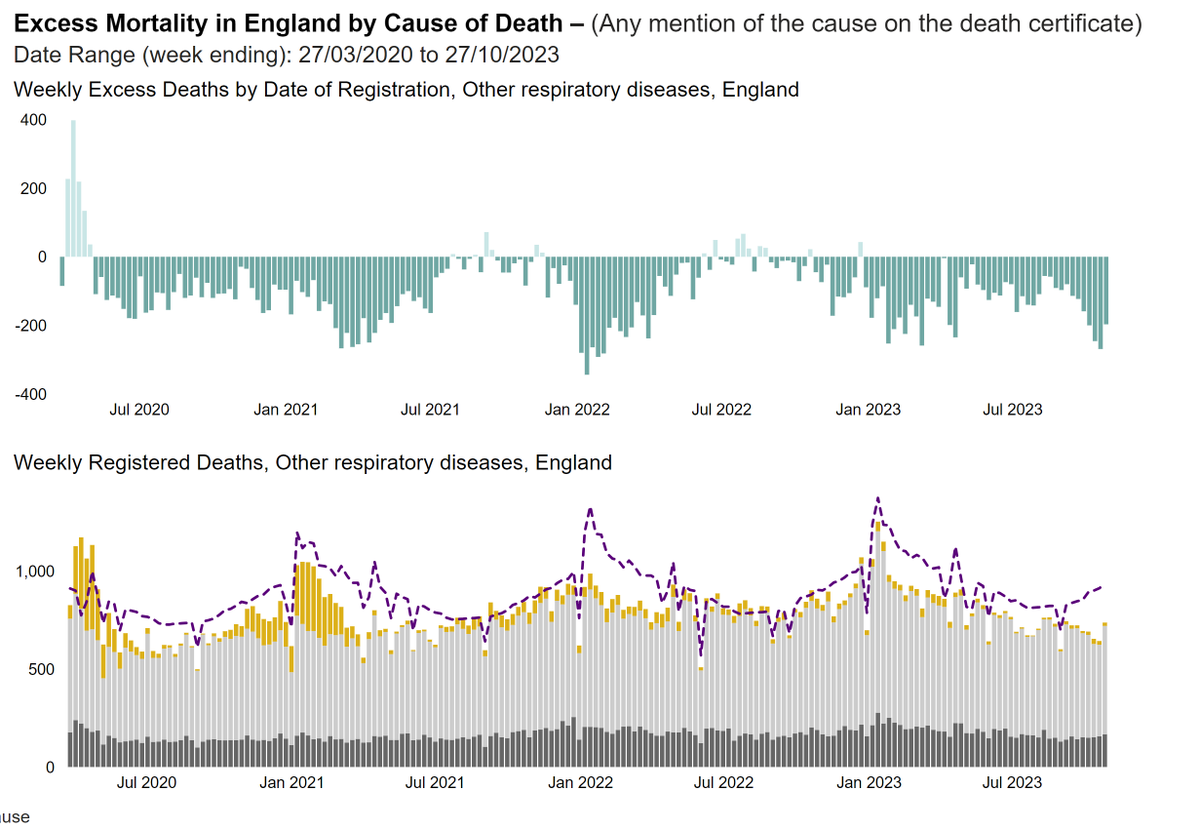
I have buried myself deep in the ONS data today in an attempt to redeem myself after my mistake with accidentally including Wales in my sums earlier this week.
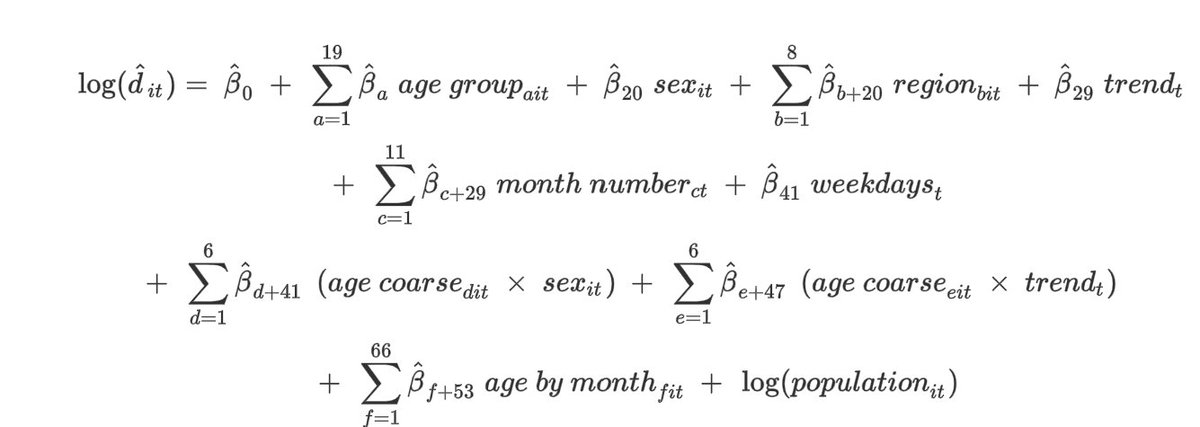
In brief, ONS have moved from predicting deaths based on previous years to modelling them.
It look complex but...
In brief, ONS have moved from predicting deaths based on previous years to modelling them.
It look complex but...
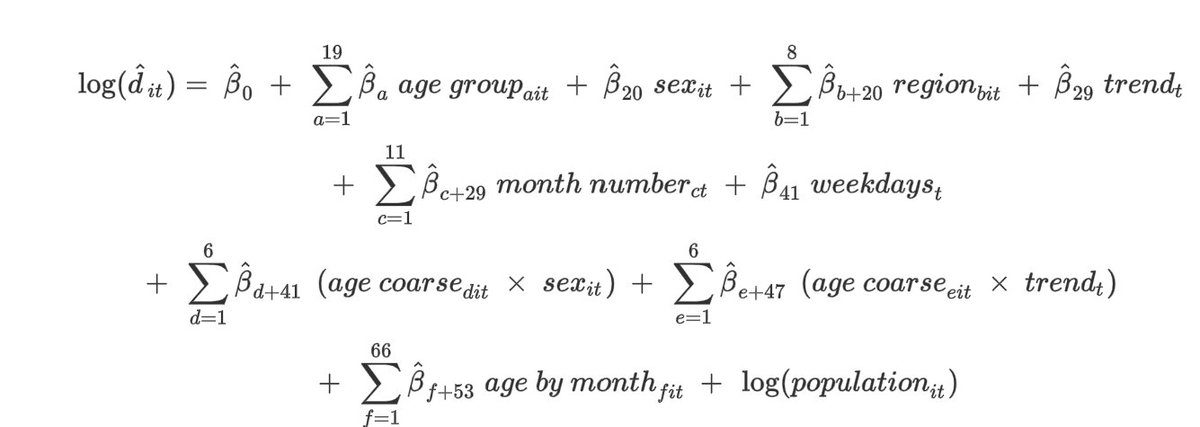
it is mostly justifiable.
Each zigzag sigma symbol just means "add them all up".
The modelling calculates an estimate for lots of small groups and then adds them together.
Each zigzag sigma symbol just means "add them all up".
The modelling calculates an estimate for lots of small groups and then adds them together.
That way each of
· 19 age groups,
· sex,
· 8 regions,
· the preceding trend in an age group (i.e. were deaths increasing or decreasing recently),
· the time of year (although they forgot the 12th month!),
· the day of the week
contribute to expected number of deaths.
· 19 age groups,
· sex,
· 8 regions,
· the preceding trend in an age group (i.e. were deaths increasing or decreasing recently),
· the time of year (although they forgot the 12th month!),
· the day of the week
contribute to expected number of deaths.
Then it does get more complicated as these factors then get combined with each other.
Broader age groups e.g. 30-69 yr olds (age coarse) are weighted to account for:
sex differences in death rates (men die more until only women are left),
differences in trends between the sexes (deaths in men over 90 have been rapidly increasing thanks to survival)
and differences in seasonality (women die more in winter).
Broader age groups e.g. 30-69 yr olds (age coarse) are weighted to account for:
sex differences in death rates (men die more until only women are left),
differences in trends between the sexes (deaths in men over 90 have been rapidly increasing thanks to survival)
and differences in seasonality (women die more in winter).
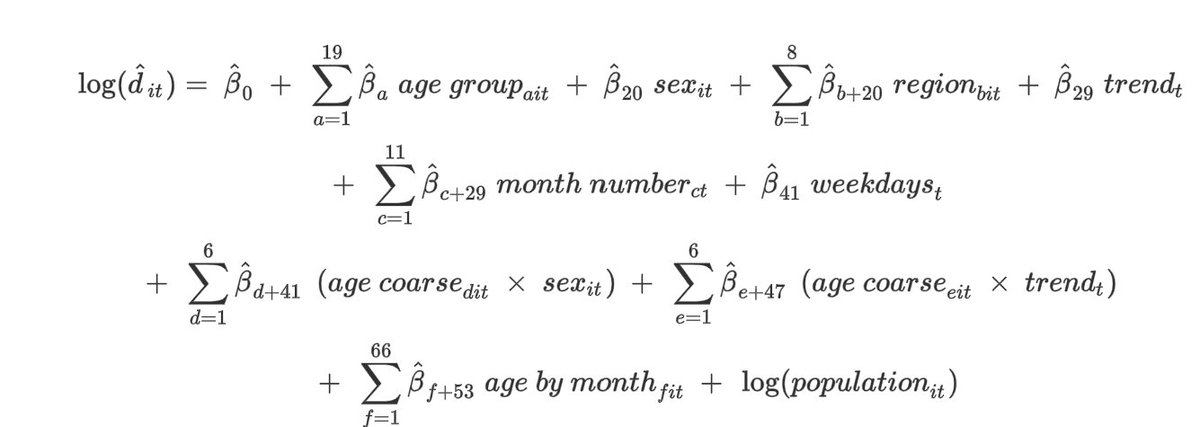
The problem arises with the "trend".
They define it as
"a linear time trend, modelled as a time index ranging from one to the number of periods in the dataset"
without specifying the length of a time period.
They define it as
"a linear time trend, modelled as a time index ranging from one to the number of periods in the dataset"
without specifying the length of a time period.
It means that increases in mortality over time (which might be of note) are incoroporated back into the model.
Deaths increase and the ONS then expects deaths to increase.
This circularity could provide the perfect way to hide a problem.
Deaths increase and the ONS then expects deaths to increase.
This circularity could provide the perfect way to hide a problem.
The @ONS needs to be clear about what time period they are using for this.
@Sarah__Caul
@Sarah__Caul
@ONS @Sarah__Caul @threadreaderapp please unroll
• • •
Missing some Tweet in this thread? You can try to
force a refresh