TL;DR: The Communists persecuted intellectuals, but the intellectuals persisted.
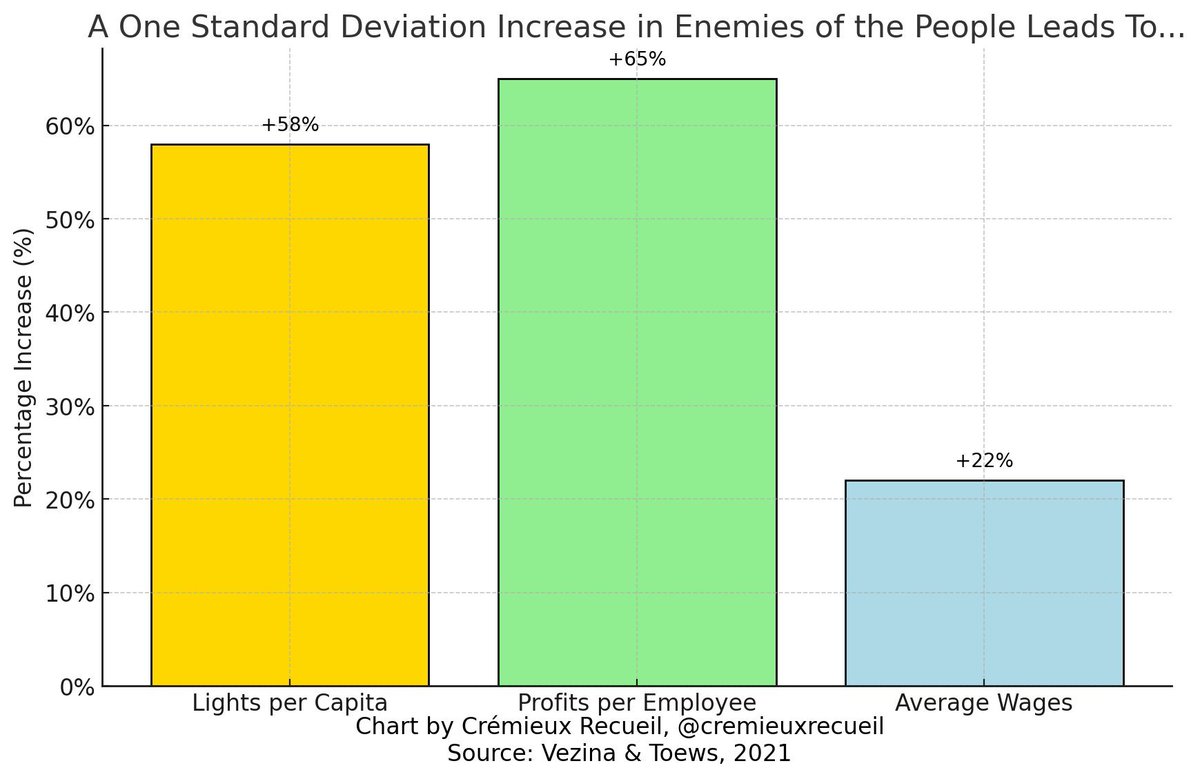
The areas the Soviets sent those "Enemies of the People" to are more successful today, with higher GDPs, more profitable firms, and greater average wages.
The study also found that the descendants of "Enemies of the People" are better off today, despite their grandparents having everything taken from them by the Communists.
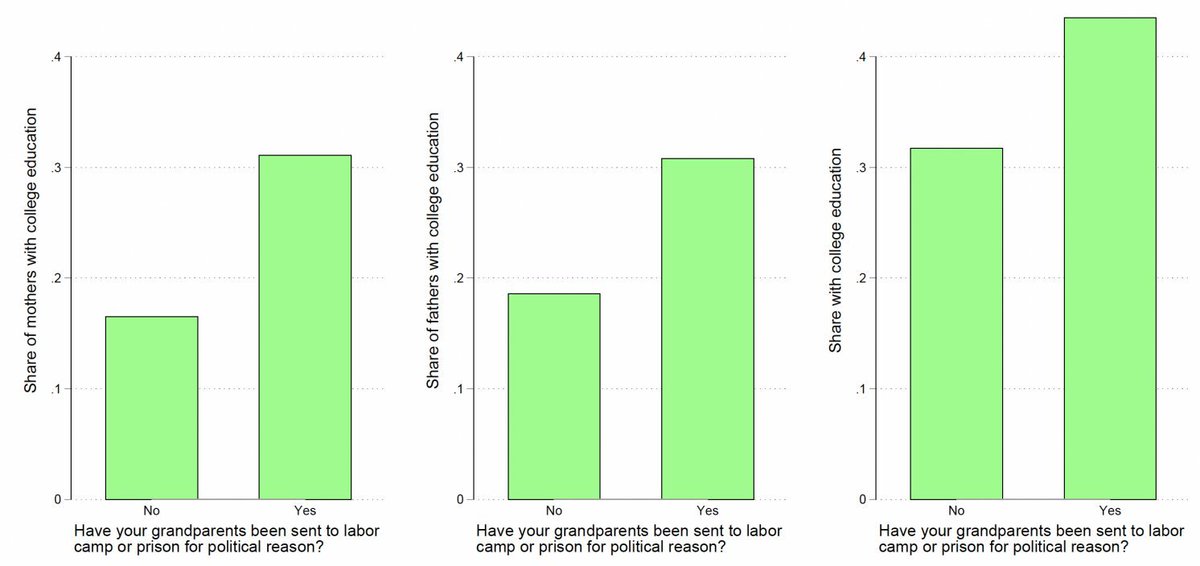
During their lifetimes, "Enemies of the People" faced persecution and prejudice. The Communists were able to steal people's land, possessions, families, and rights, but those people were still able to pass on their brilliance. Today, that still makes all the difference.
• • •
Missing some Tweet in this thread? You can try to
force a refresh

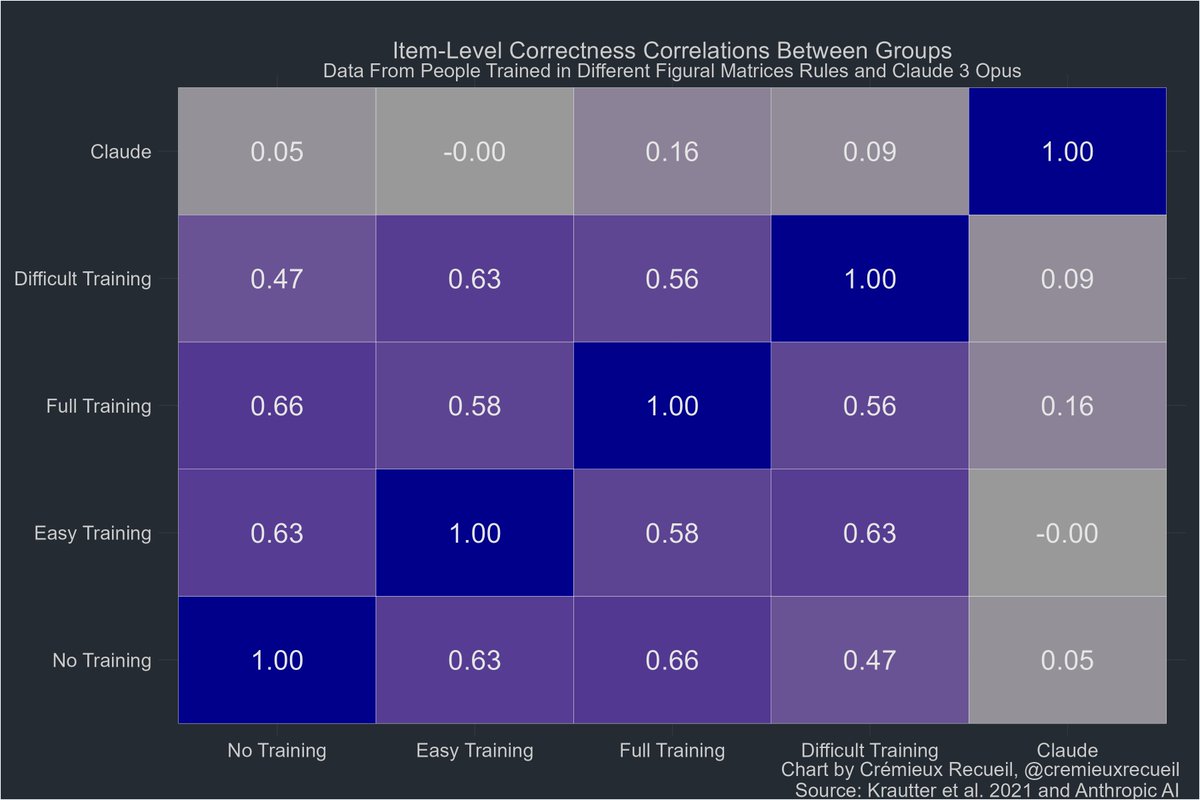
When humans in different groups take IQ tests, the questions that are easy in one group tend to be the ones that are easy in other groups.
But for the Claude Opus LLM, the questions it got right were unrelated to the ones humans tended to get right.
🧵
There's been a lot of talk these past few years about how much smarter machines are getting.
The latest example is how well they perform on actual IQ tests given to humans. The number now is close to average, suggesting that AIs will soon outmatch us in IQ.
But mind the word "suggesting."
The way that LLMs reason about cognitive tests is by no means how humans reason about cognitive tests
Because LLM performance measures something else, there's no reason to think that the things a high IQ predicts for people are predicted for LLMs
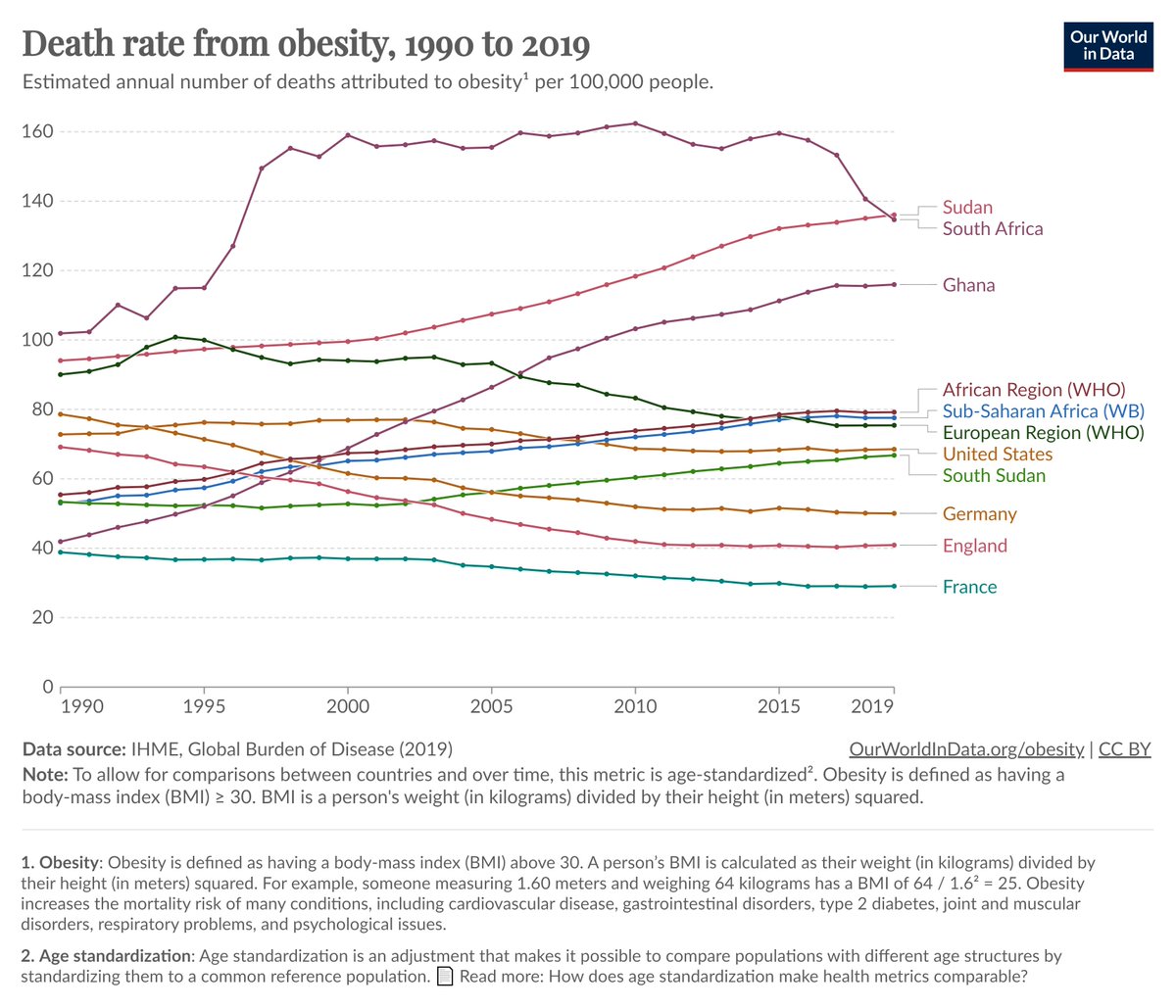
Given that this fact coexists with relatively low obesity rates in Africa, this should serve as a reminder of how unhealthy being fat is and how much medical care has made a difference for the survival of obese people.
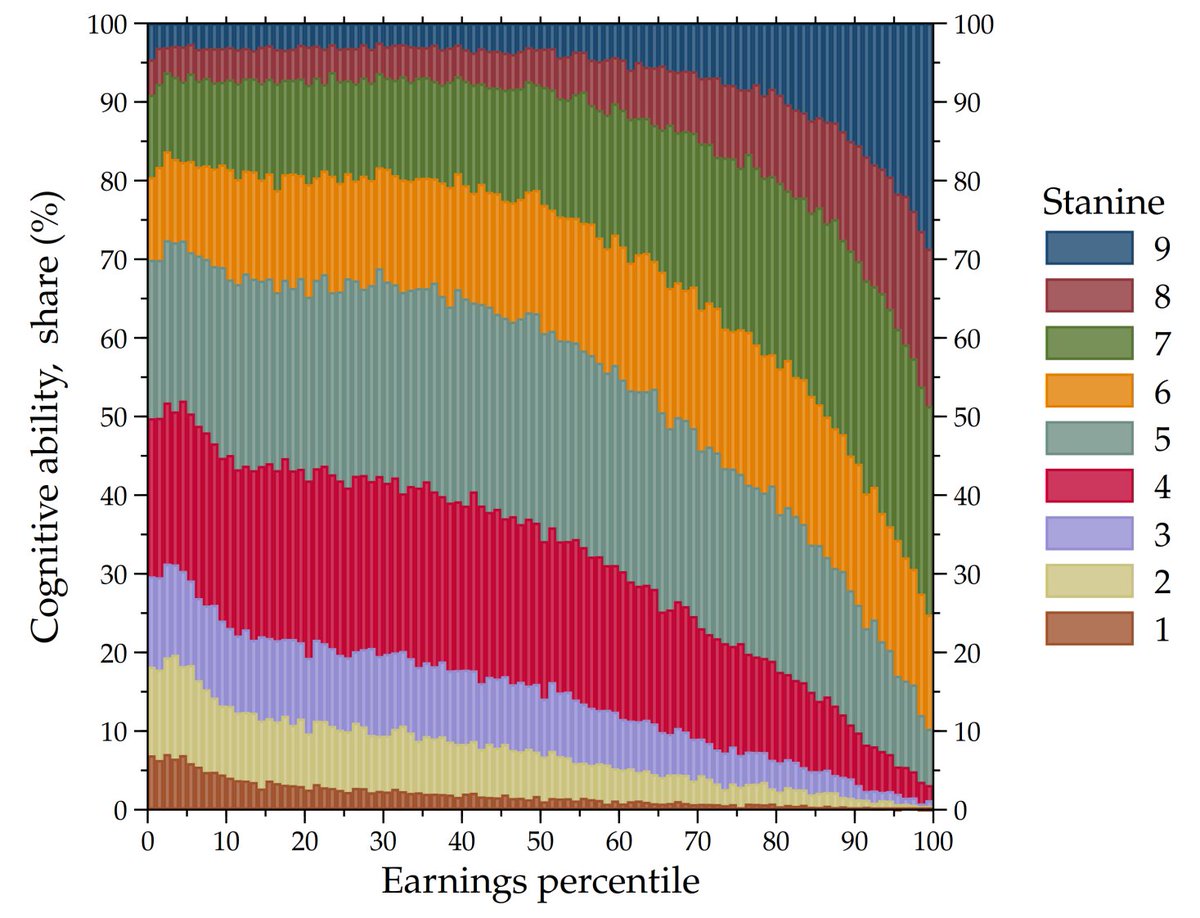
I think this is a nifty way to view the relationship between earnings and cognitive ability🧵
You see some smart people along the whole earnings distribution, but they're more common at the high ends. You see comparatively few dull people at the highest levels.
The relationship is, in general, modest.
It gets stronger when you subset by sex, age, workforce participation, and stronger yet when you look within occupational strata.
But people make many choices and vary in many important ways beyond IQs, so the general relationship? Noisy
For example, people will trade earnings against certain other "intrinsic qualities" of jobs, and they'll often do the reverse too.
Why do women fare so poorly in open source software development?
Is it because people like Stallman make them feel unwelcome?
Maybe not! A lot of the sex difference in success and survival in open source might be down to how devs behave🧵
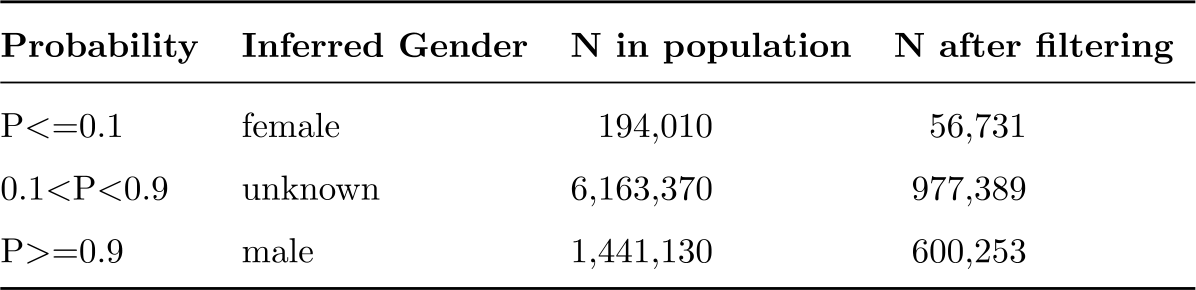
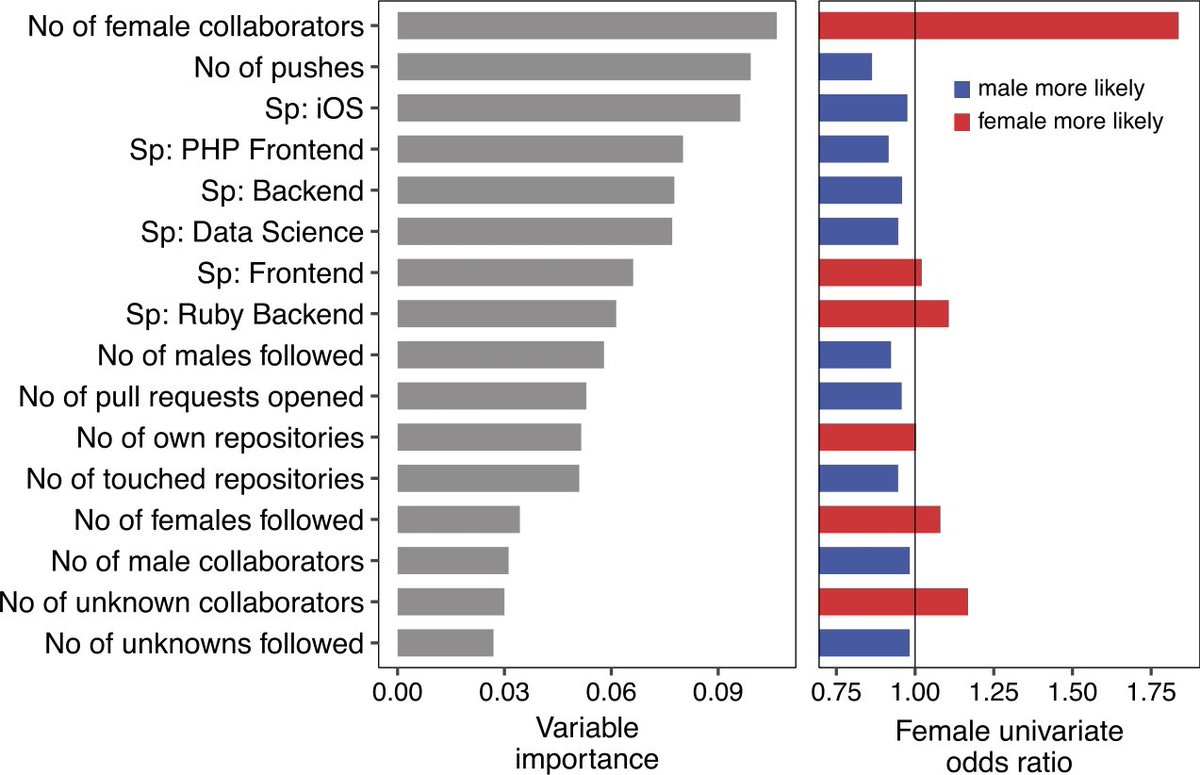
A 2019 paper in the European Physical Journal Data Science gathered data from more than 190,000 female and 1,400,00 male devs on GitHub, and found that gendered behavior might explain a lot of the gaps in success.
Here's the meat: the researchers made a classifier for "femaleness" of devs actions on GitHub, operationalized as the probability of being female given some behavior.
For example, lots of female collaborators? Likely a woman.