I've journaled for 30 minutes every morning for 14 years straight.
No fancy journal. No complex rules.
Just a pen, paper, and 4 simple prompts to help focus my mind and find clarity.
Here's the dead-simple system I use every day:
No fancy journal. No complex rules.
Just a pen, paper, and 4 simple prompts to help focus my mind and find clarity.
Here's the dead-simple system I use every day:

Question #1: "What did I do yesterday?"
The very first thing I do is reflect on the past 24 hours:
• What did I do yesterday?
• How did it feel?
• What did I learn?
I like this prompt because only the most important things come to mind.
Pay attention.
The very first thing I do is reflect on the past 24 hours:
• What did I do yesterday?
• How did it feel?
• What did I learn?
I like this prompt because only the most important things come to mind.
Pay attention.
Question #2: "What am I working on?"
A big part of journaling for me is repeating things I want to internalize:
• Repeating goals
• Repeating mindset patterns
• Repeating feelings & lessons
The more I repeat it in my journal, the more I think about it during the day.
A big part of journaling for me is repeating things I want to internalize:
• Repeating goals
• Repeating mindset patterns
• Repeating feelings & lessons
The more I repeat it in my journal, the more I think about it during the day.
Question #3: "What's coming up?"
Next, I look toward the future.
• What's around the bend?
• What can I start proactively processing through now?
This helps prepare the mind in advance for feelings, challenges, or obstacles—and helps you not feel so "caught off guard."
Next, I look toward the future.
• What's around the bend?
• What can I start proactively processing through now?
This helps prepare the mind in advance for feelings, challenges, or obstacles—and helps you not feel so "caught off guard."
Question #4: "What am I grateful for?"
I end every journaling session with a Thank You.
I thank the path in front of me.
I remind myself I am grateful for every opportunity to learn, whether it's difficult or not.
And I welcome the day to come with open arms.
I end every journaling session with a Thank You.
I thank the path in front of me.
I remind myself I am grateful for every opportunity to learn, whether it's difficult or not.
And I welcome the day to come with open arms.
I started journaling deliberately like this when I was 19 years old.
I'd just gotten back from a rehab trip, and felt extremely lost & confused.
I didn't know what I wanted out of life, or whether I would amount to much.
So I wrote to myself about it.
I'd just gotten back from a rehab trip, and felt extremely lost & confused.
I didn't know what I wanted out of life, or whether I would amount to much.
So I wrote to myself about it.
This has become my favorite part about journaling over long periods of time:
You can literally see the progress in front of you.
Things I journaled about when I was 19, I don't journal about anymore. I've grown out of them.
Keeping a journal documents your growth as a human.
You can literally see the progress in front of you.
Things I journaled about when I was 19, I don't journal about anymore. I've grown out of them.
Keeping a journal documents your growth as a human.
I will keep this habit until the day I die.
I attribute a significant portion of my success over the past 5 years to my daily journaling practice.
There is no better way to hear yourself, become conscious of your thoughts, and take actionable steps forward.
I attribute a significant portion of my success over the past 5 years to my daily journaling practice.
There is no better way to hear yourself, become conscious of your thoughts, and take actionable steps forward.
4 Morning Journaling Prompts That Will Change Your Life:
1/ "What did I do yesterday?"
2/ "What am I working on?"
3/ "What's coming up?"
4/ "What am I grateful for?"
1/ "What did I do yesterday?"
2/ "What am I working on?"
3/ "What's coming up?"
4/ "What am I grateful for?"
That's a wrap!
Want to start writing online?
Here’s a FREE 13,000-word Ultimate Guide + email course with everything you need to:
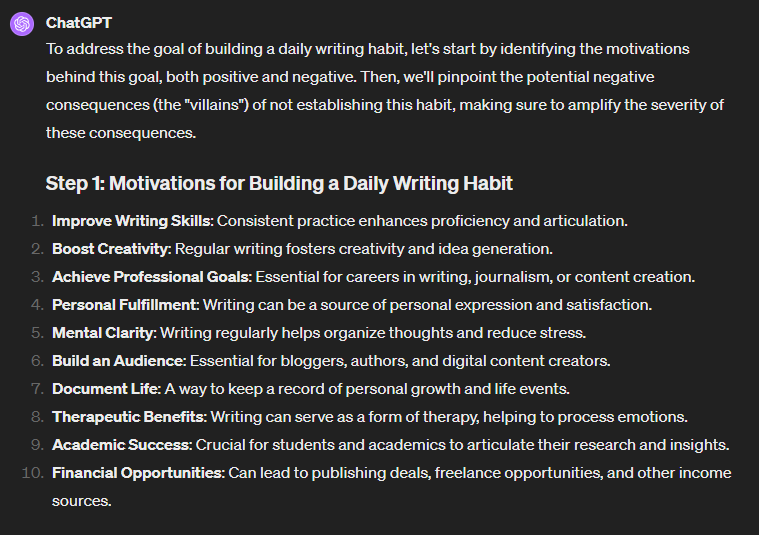
• Build a daily writing habit
• Generate hundreds of ideas
• Start going viral with ease
Get it here: x.startwritingonline.com/?utm_source=co…
Want to start writing online?
Here’s a FREE 13,000-word Ultimate Guide + email course with everything you need to:
• Build a daily writing habit
• Generate hundreds of ideas
• Start going viral with ease
Get it here: x.startwritingonline.com/?utm_source=co…
• • •
Missing some Tweet in this thread? You can try to
force a refresh