Going to do a thread on this book on media bias. It is A. somewhat dated at this point looking at data from the 2008 election and B. very controversial so I will present his arguments and let you decide. amazon.com/Left-Turn-Libe…
Here is a summary of his main arguments. He claims that if there was no media bias McCain would have won the 2008 election: 

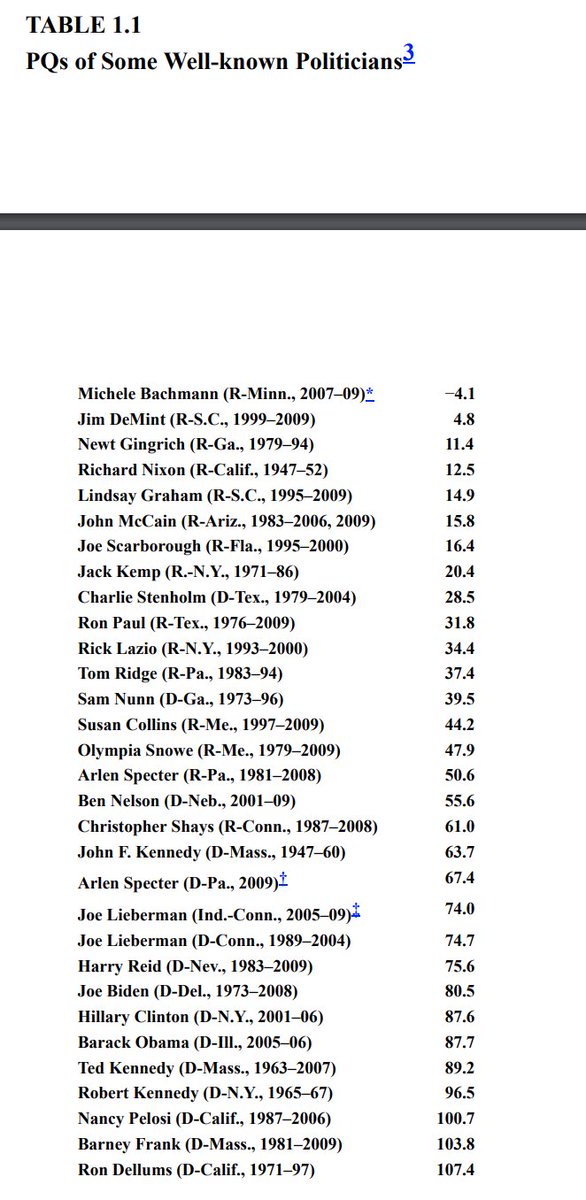
Much of the data from this book uses the PQ a measure that quantifies how liberal or conservative you are. Here are some PQs of prominent politicians:
Estimation of the average PQ of the house and senate over time:

He presents the distortion theory of media bias. The media aren't intentionally lying, they are selectively presenting facts:

Various surveys of journalists political opinions. Unsurprisingly they lean to the left:
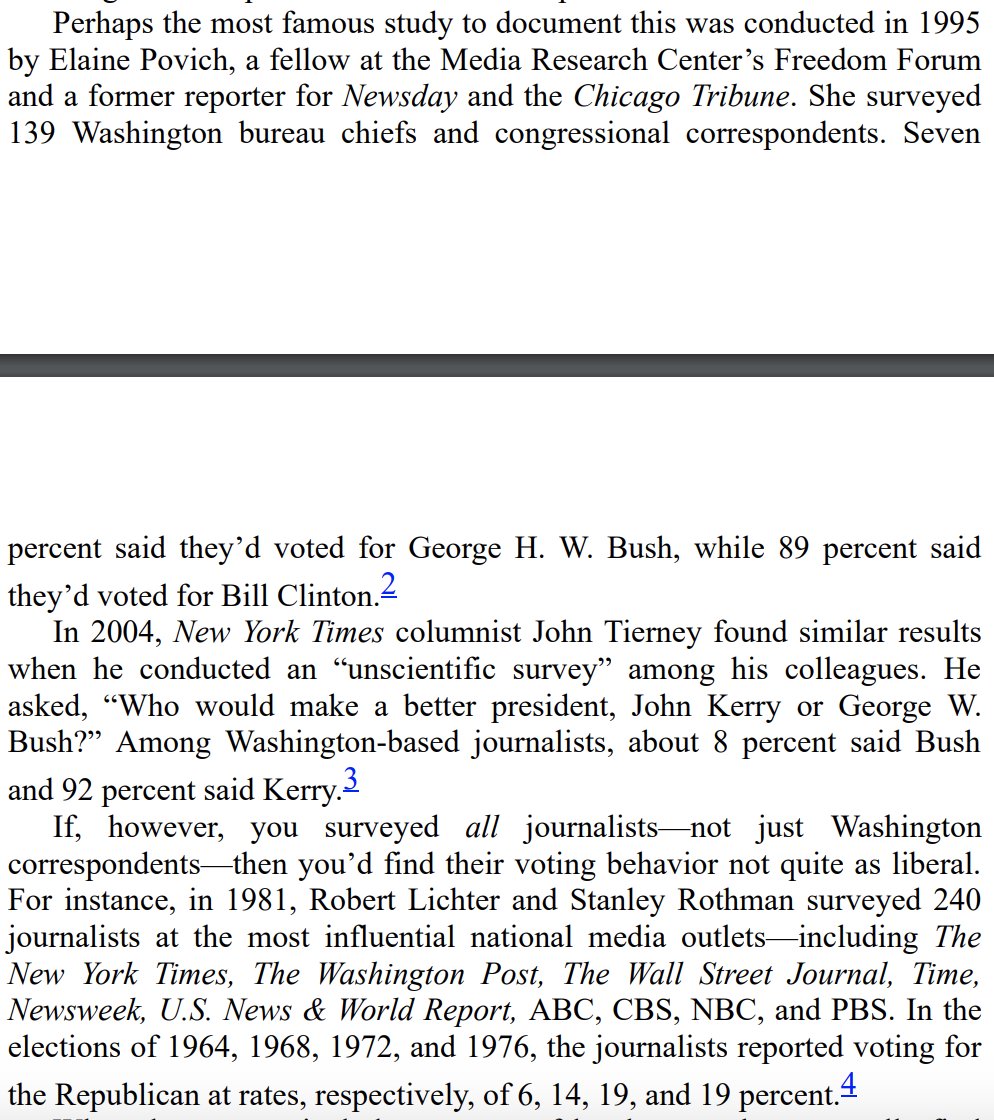
Local news reporters may be slightly more conservative, but still lean overwhelmingly to the left. He estimates that surveys of major national news orgs show reporters vote 85% dem, and non survey based evidence shows them voting 95% dem.

Studies of campaign contributions of journalists:

He compares how liberal journalists are to other groups. It is difficult to find a group as liberal as journalists. (The fact that ppl who don't shop at Walmart is used as a left leaning coalition dates this book lol)

SQ (slant quotient basically PQ for media outlets) of various media outlets:

How frequently news outlets use partial birth abortion vs other terms:

Estimates of the highest of slant quotients of the highest circulating newspapers:

Some people claim that the media is socially liberal and economically conservative. But the analysis of how the Bush tax cuts were covered seems to suggest that isn't true:

News source, the SQ, and what percent of the news it comprises:

So far the book has focused on the idea that the media is liberal. Journalists vote and donate to liberal candidates, they use more liberal framings and buzzwords and site more liberal sources. The next part of the book discusses how much this actually matters.
One study that convinced the authors of the importance of the media. Introducing FOX seemed to make areas more conservative:
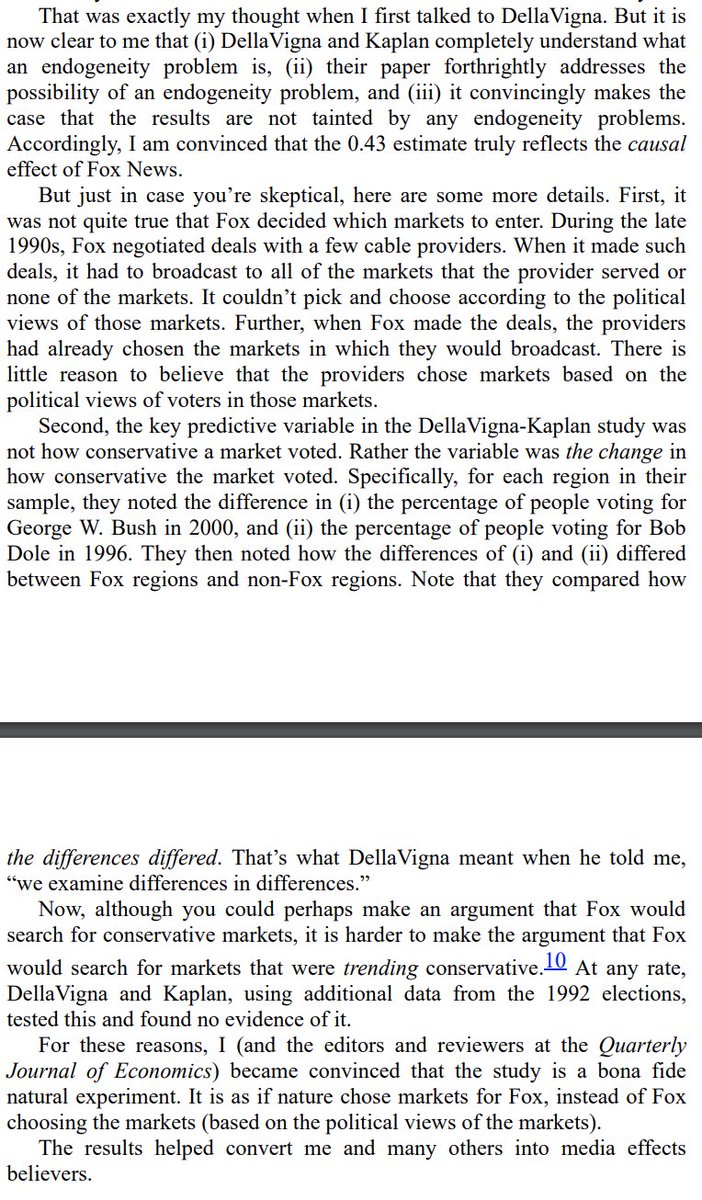
Summary of the three studies that convinced the author of the importance of the media:

The author tries to come up with an estimate for the "media lambda" or basically how much media changes public opinion
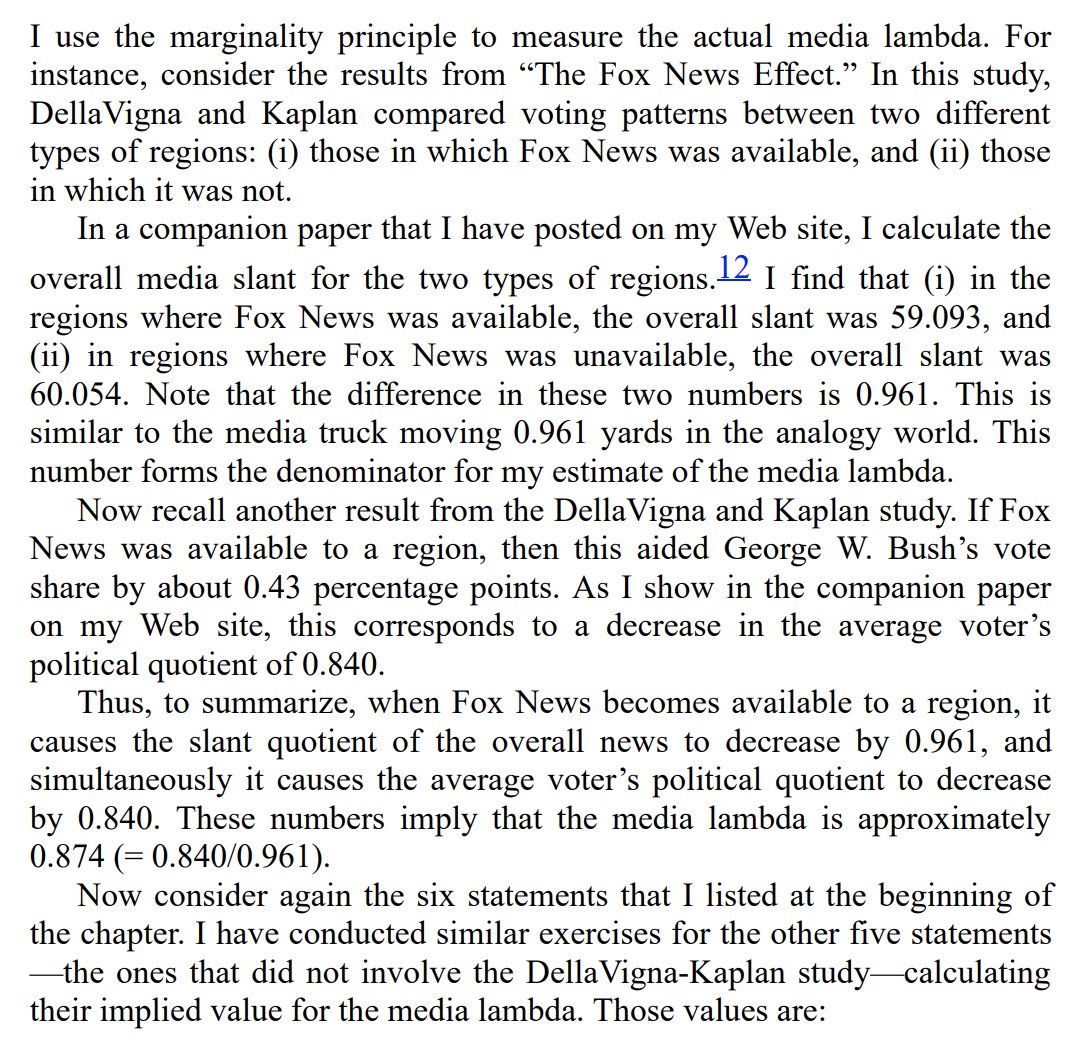
He aggregates some studies to arrive at a value of .7.

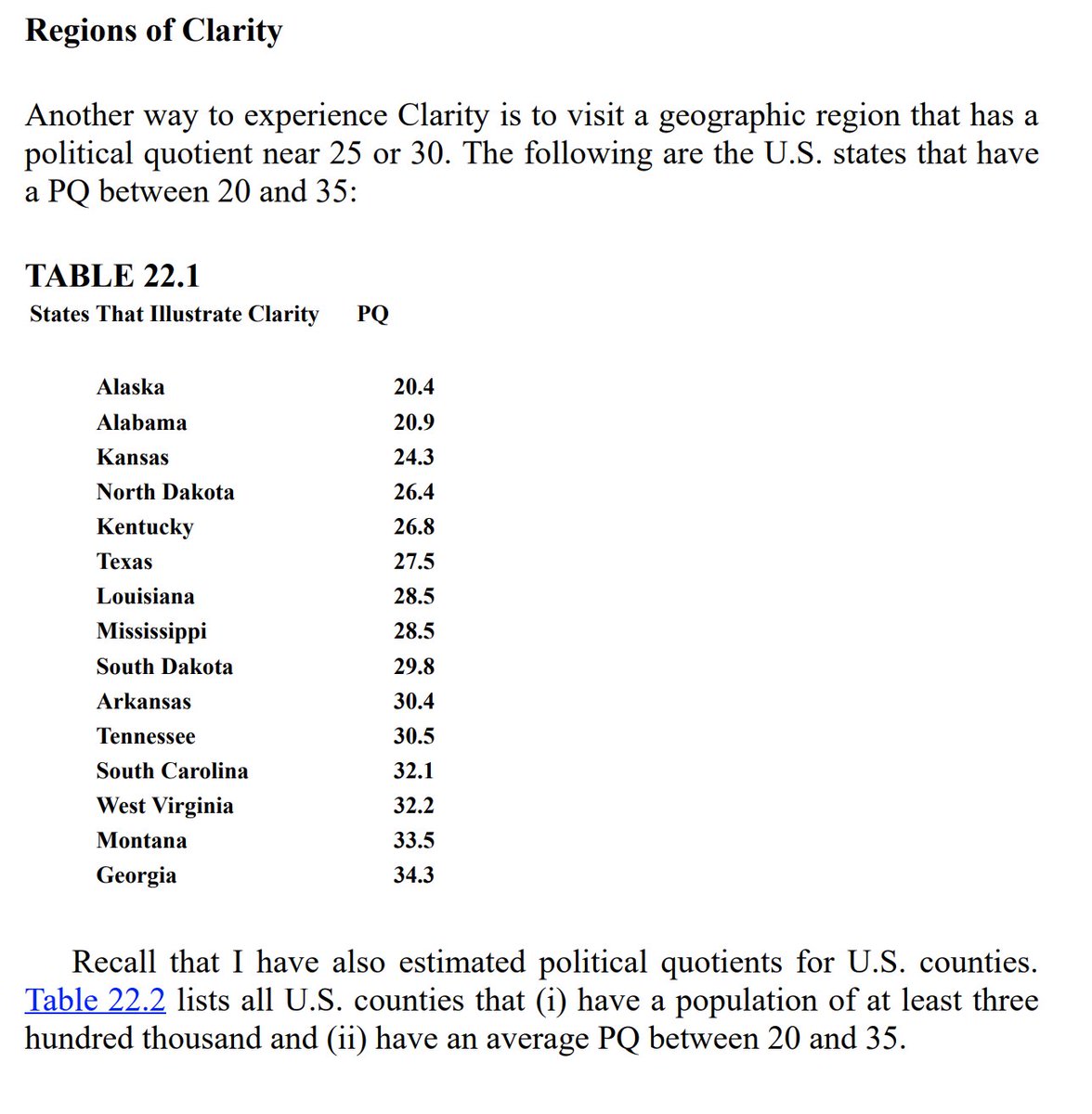
Author uses his estimate for media lambda to argue that if there was no media bias that US pq would be between 25 and 30:
@VDAREJamesK @VDAREJamesK @HbdNrx @s_decatur
• • •
Missing some Tweet in this thread? You can try to
force a refresh