This building is nearly 2,000 years old. How can something so ancient, of such scale, still be standing?
The answer might surprise you... (thread) 🧵
The answer might surprise you... (thread) 🧵
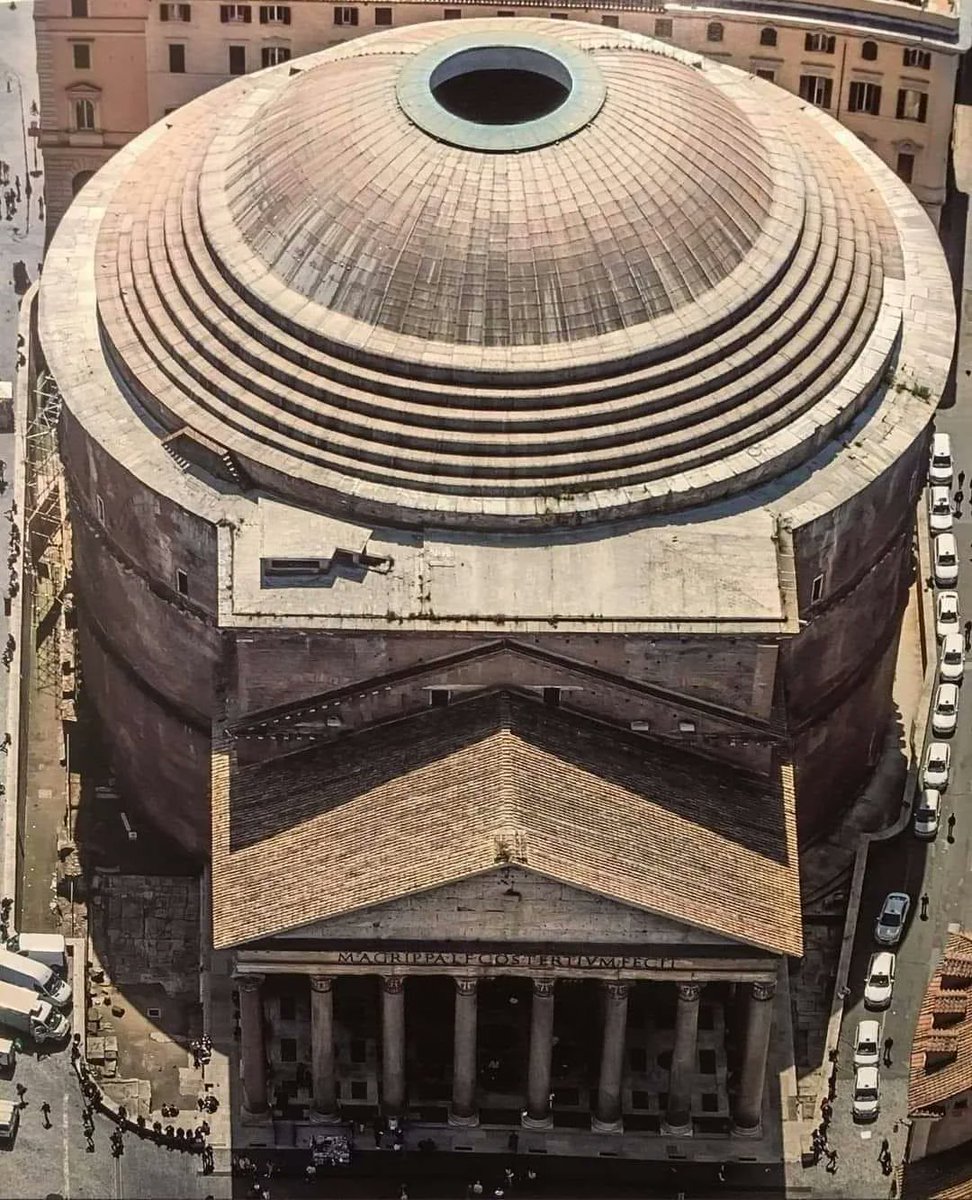
Rome's Pantheon (built by Emperor Hadrian between 119-128 AD) is 142 feet in diameter. Nobody has ever built a bigger unreinforced concrete dome to this day.
How on earth did they do it?
How on earth did they do it?

The Romans believed in wide open spaces, uninterrupted by columns and interior walls like the Greeks used. They wanted interiors to be as inspiring as the exteriors.
So, they innovated mighty hemispherical domes, setting the precedent for millennia to come.
So, they innovated mighty hemispherical domes, setting the precedent for millennia to come.
What made it possible was their ancient formula for concrete.
Incredibly, it wasn't until some research by MIT in 2022 that we truly understood this: the Romans' recipe involved volcanic ash which allows concrete to "self-heal".
Incredibly, it wasn't until some research by MIT in 2022 that we truly understood this: the Romans' recipe involved volcanic ash which allows concrete to "self-heal".

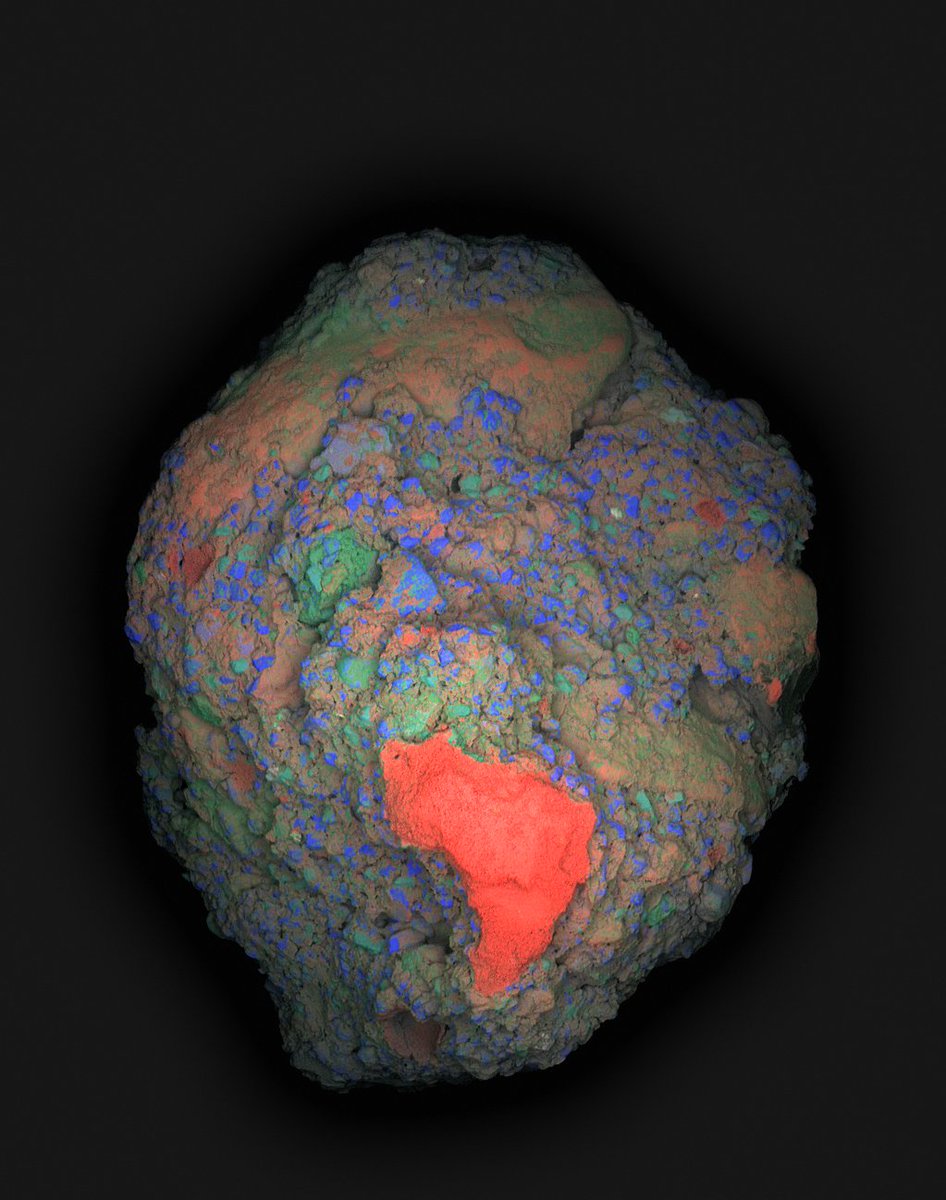
Roman concrete had calcium carbonate lumps called "lime clasts": previously thought to be the result of poor mixing. We now know that water seeping in through cracks in the concrete dissolves the calcium carbonate, forming a solution which then recrystallizes to plug the gaps.
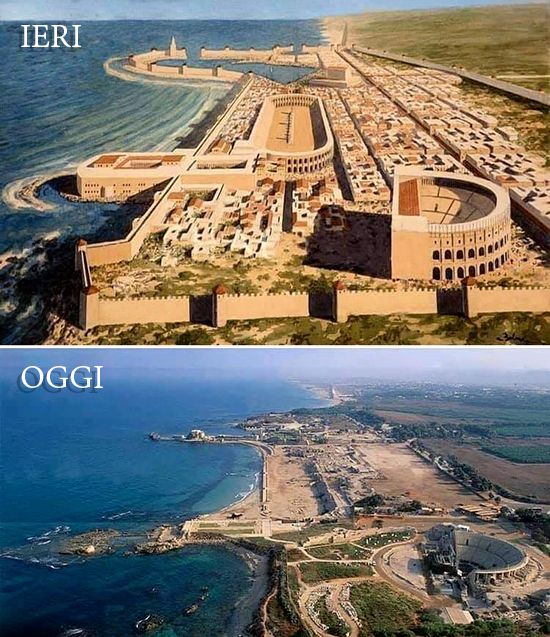
The volcanic ash probably came from Mount Vesuvius, near Naples. The Romans once shipped 20,000 tons of it across the Mediterranean to construct the harbour at Caesarea Maritima in Israel:
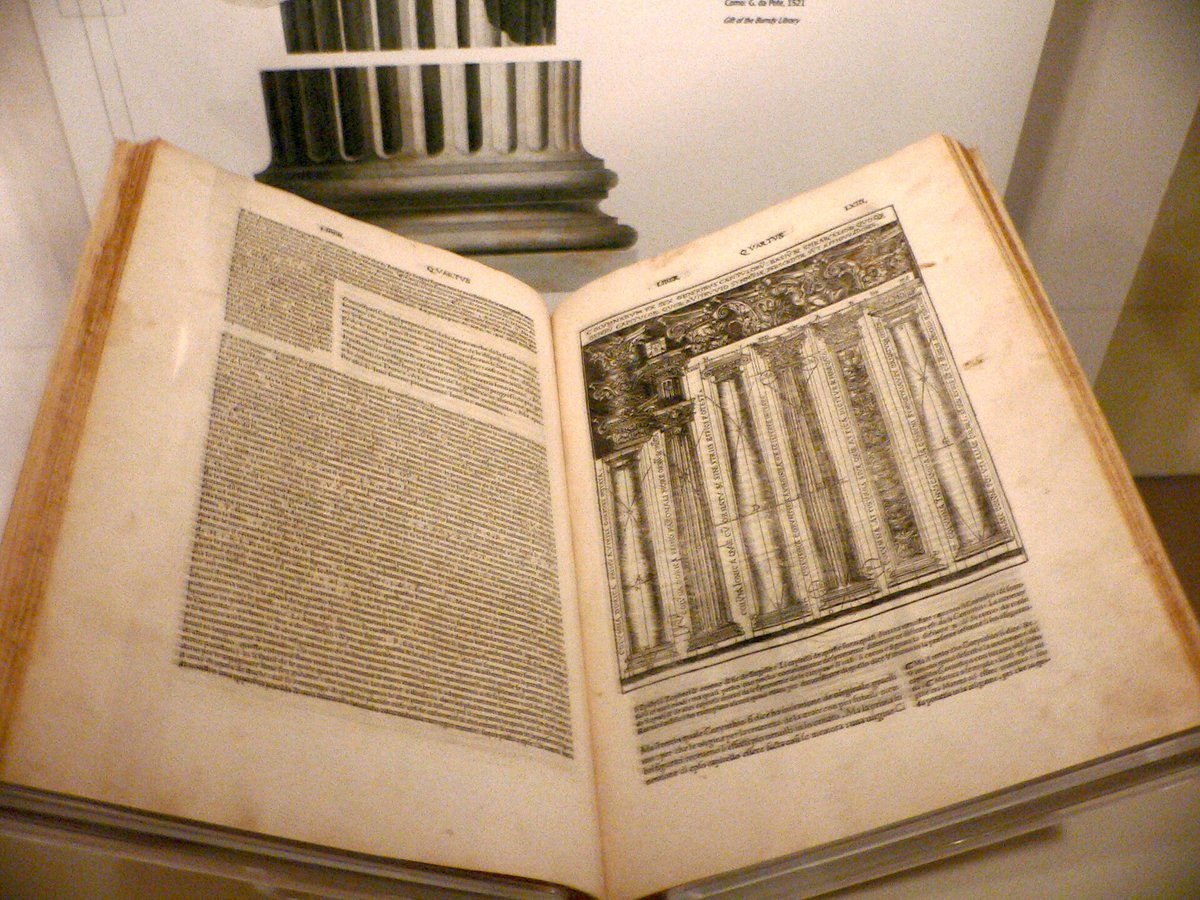
After the Roman Empire fell, the recipe was lost. Only in the 15th century, when a manuscript resurfaced with notes on the recipe, was the race to "re-invent" concrete reignited.
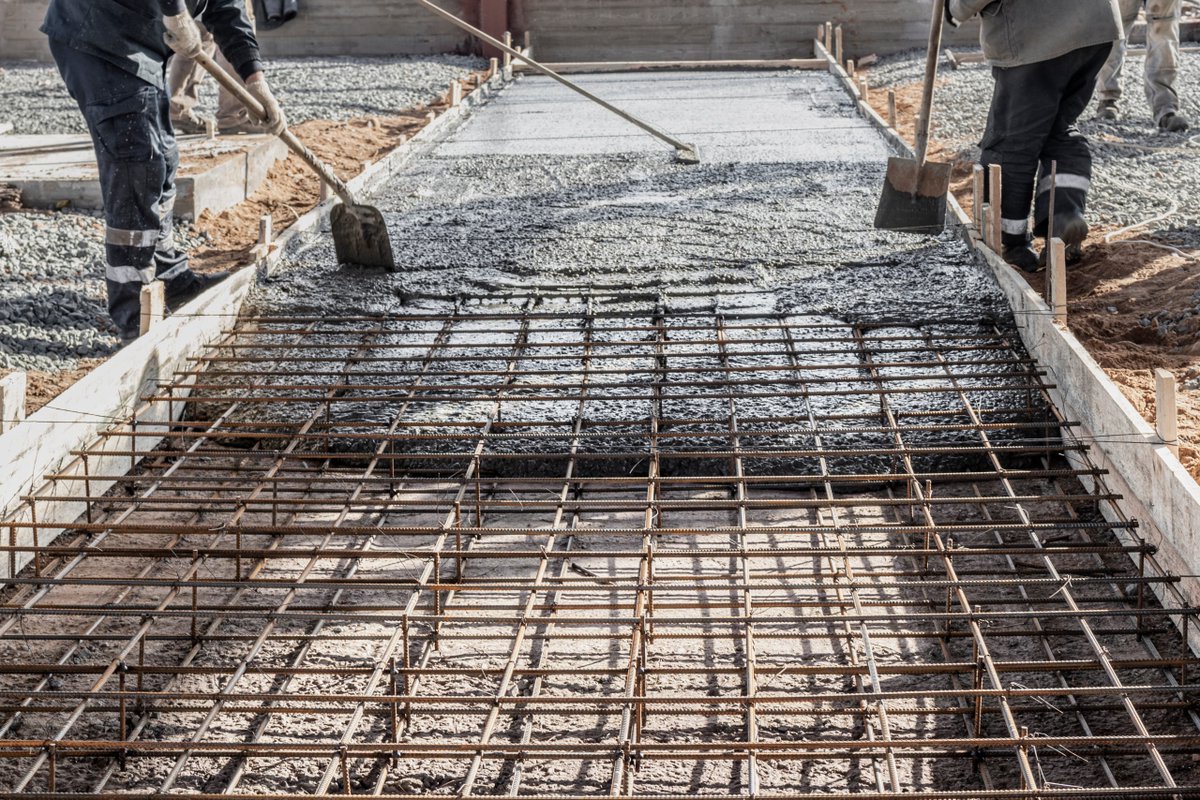
Even today, the concrete we use still hasn't really caught up. It might be stronger, especially when reinforced by steel bars, but it's not as evergreen - those bars tend to corrode over time.
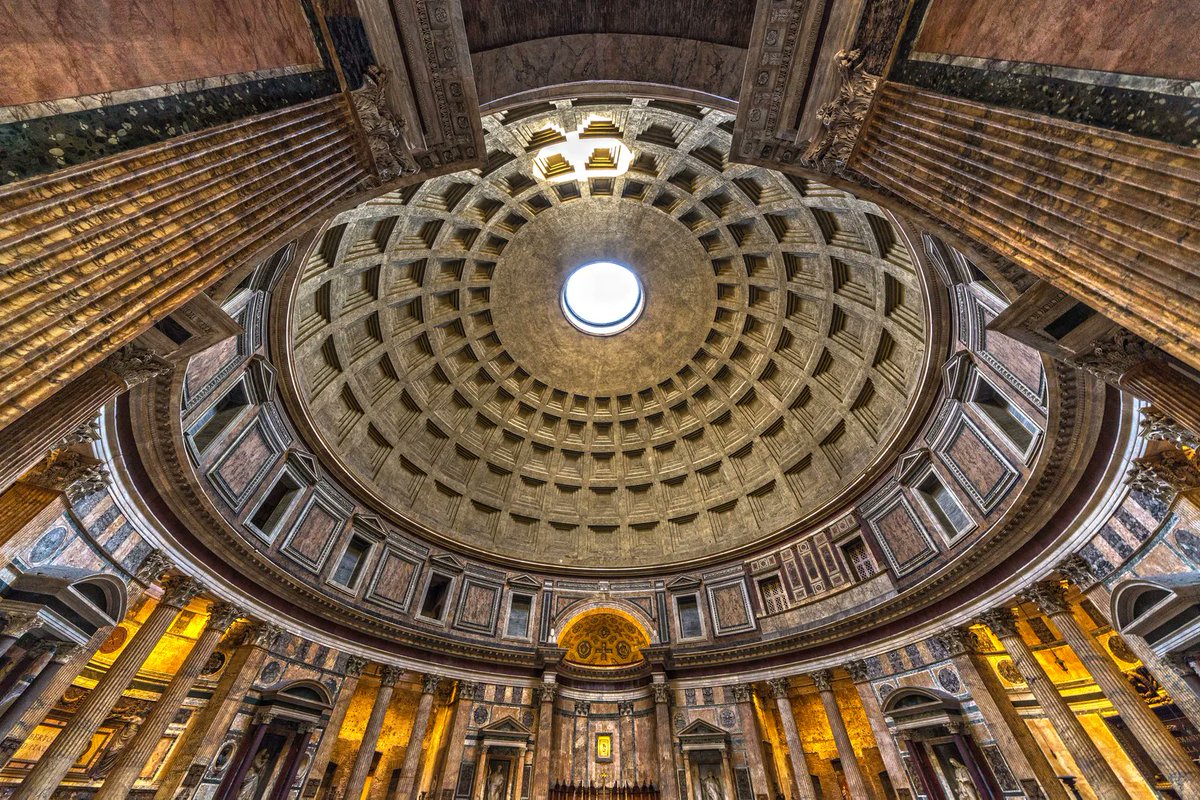
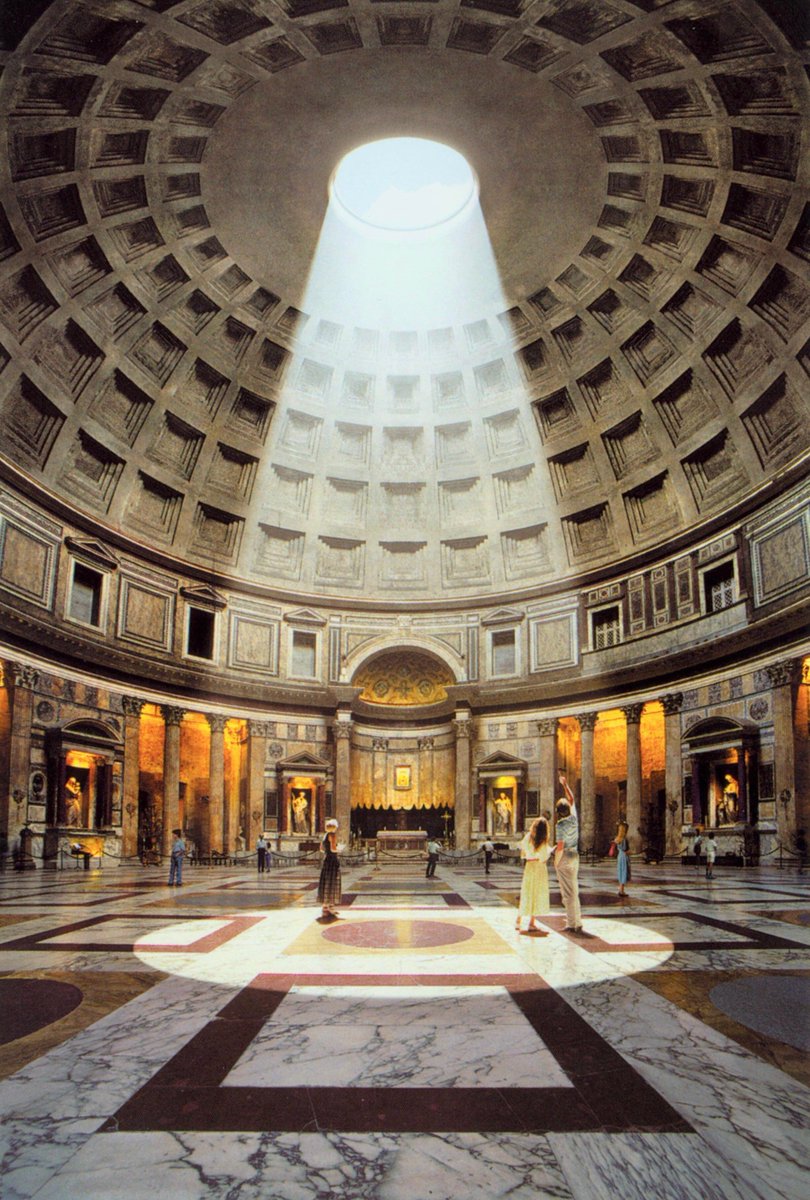
The Pantheon boasts several other architectural innovations, too. The coffered ceiling reduced the weight of the dome, and the mix of concrete was exceptionally light by design - decreasing in density as you move up the dome.
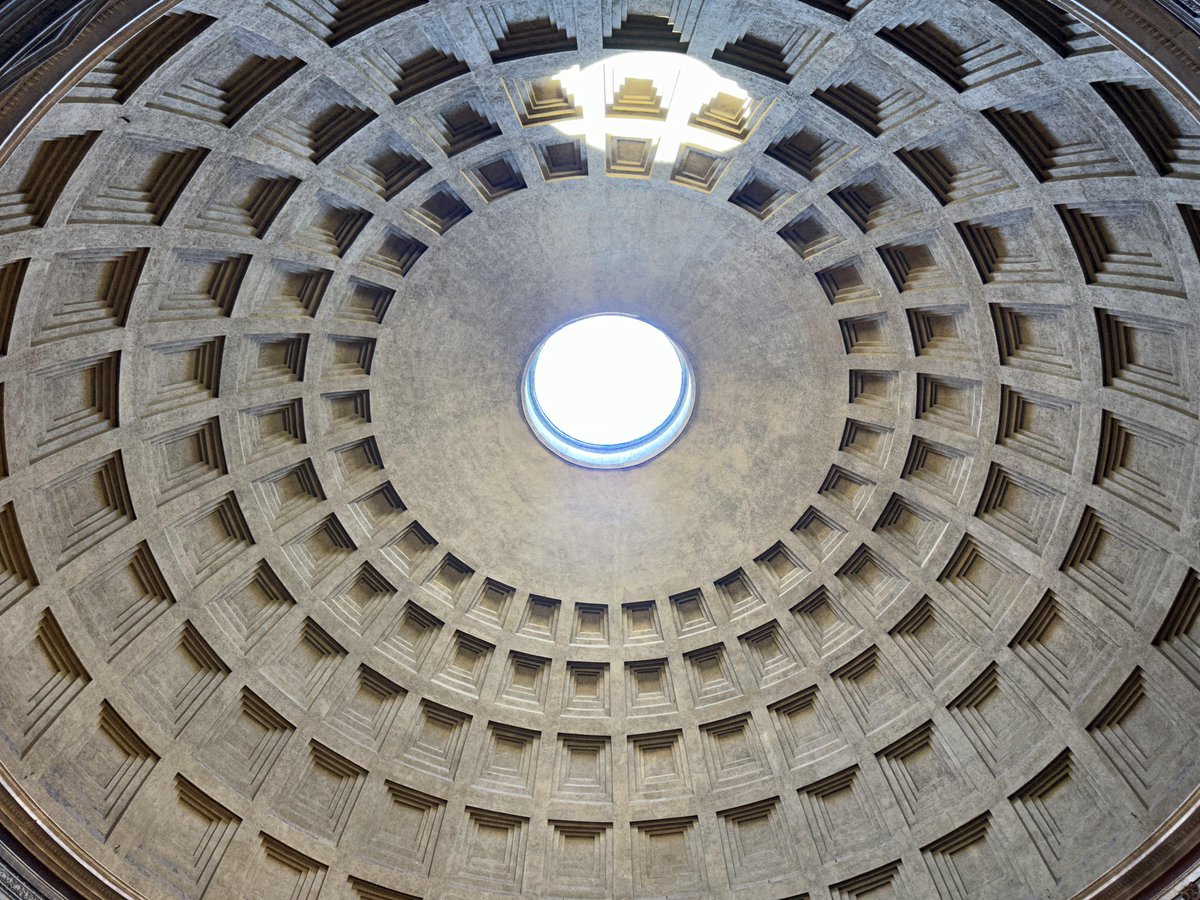
Its most striking feature is a 27-foot wide oculus (itself contributing significant weight reduction). It is completely open to the elements and functions as the building's only light source.
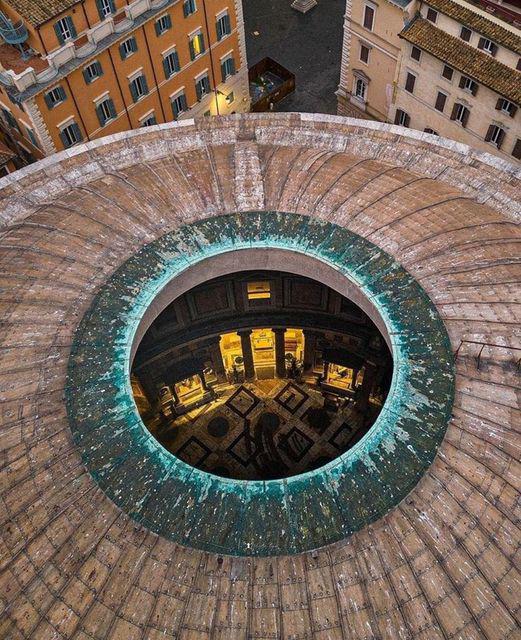
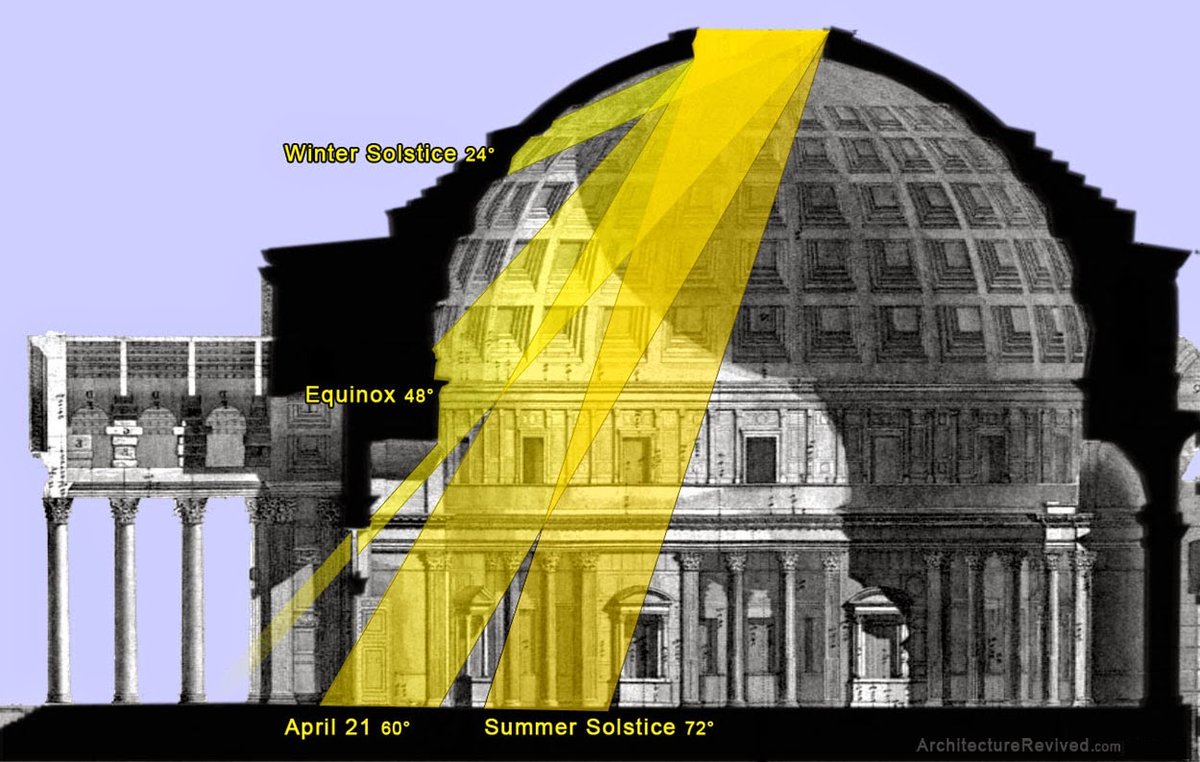
Many believe it was once a giant sundial. Every year at noon on 21 April, traditionally the birthday of Rome, the sun’s rays light up the entrance.
Imagine the Emperor entering the building on such occasions being bathed in glorious sunlight...
Imagine the Emperor entering the building on such occasions being bathed in glorious sunlight...
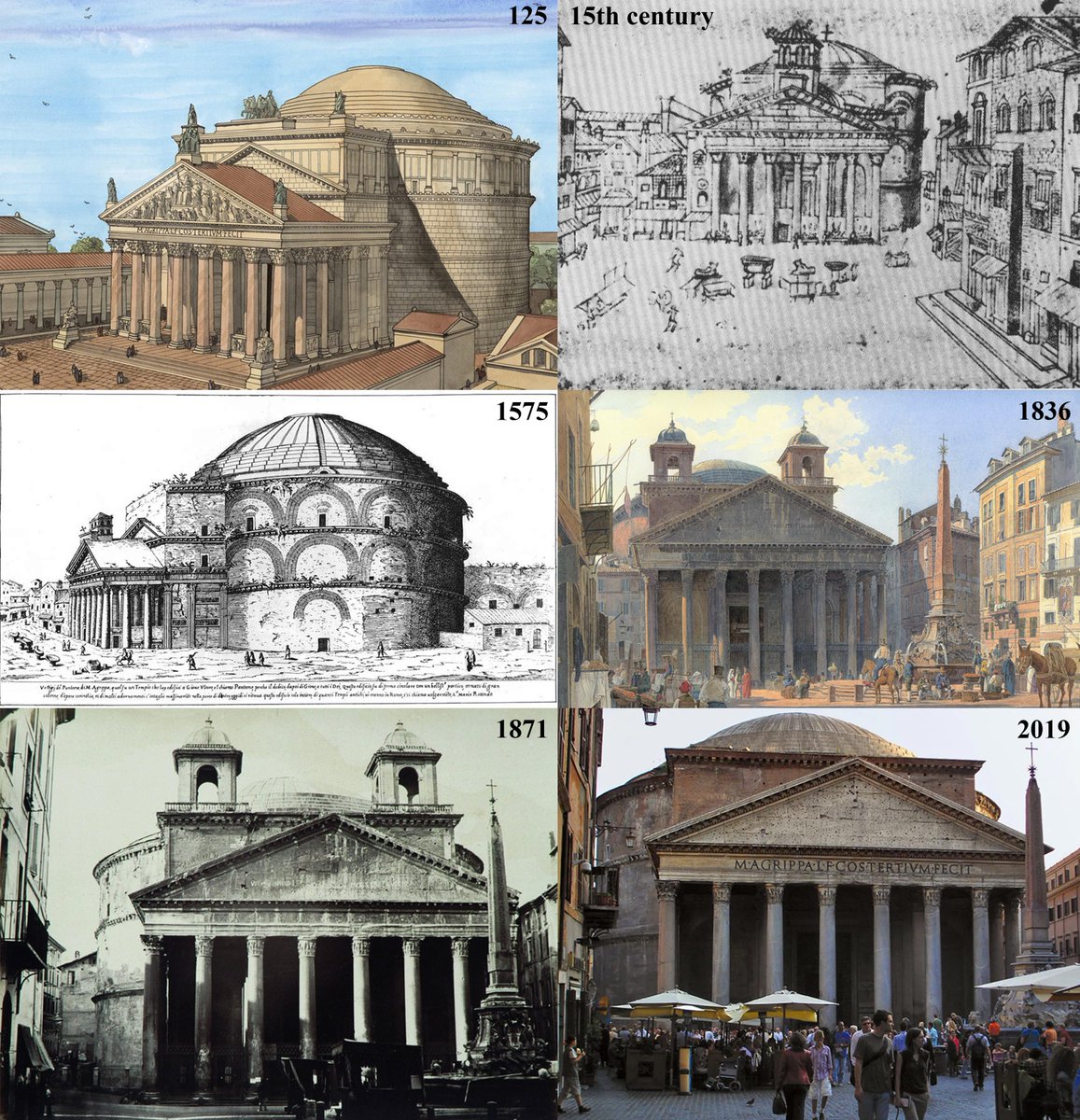
The Pantheon's longevity is nothing short of an architectural miracle. One which weathered invasions and earthquakes for centuries.
And it will likely stand for several more millennia.
And it will likely stand for several more millennia.
But why are there so few Roman structures that survived this perfectly?
The Romans built to resist centuries of persistent onslaught from mother nature - but not looting.
The Romans built to resist centuries of persistent onslaught from mother nature - but not looting.


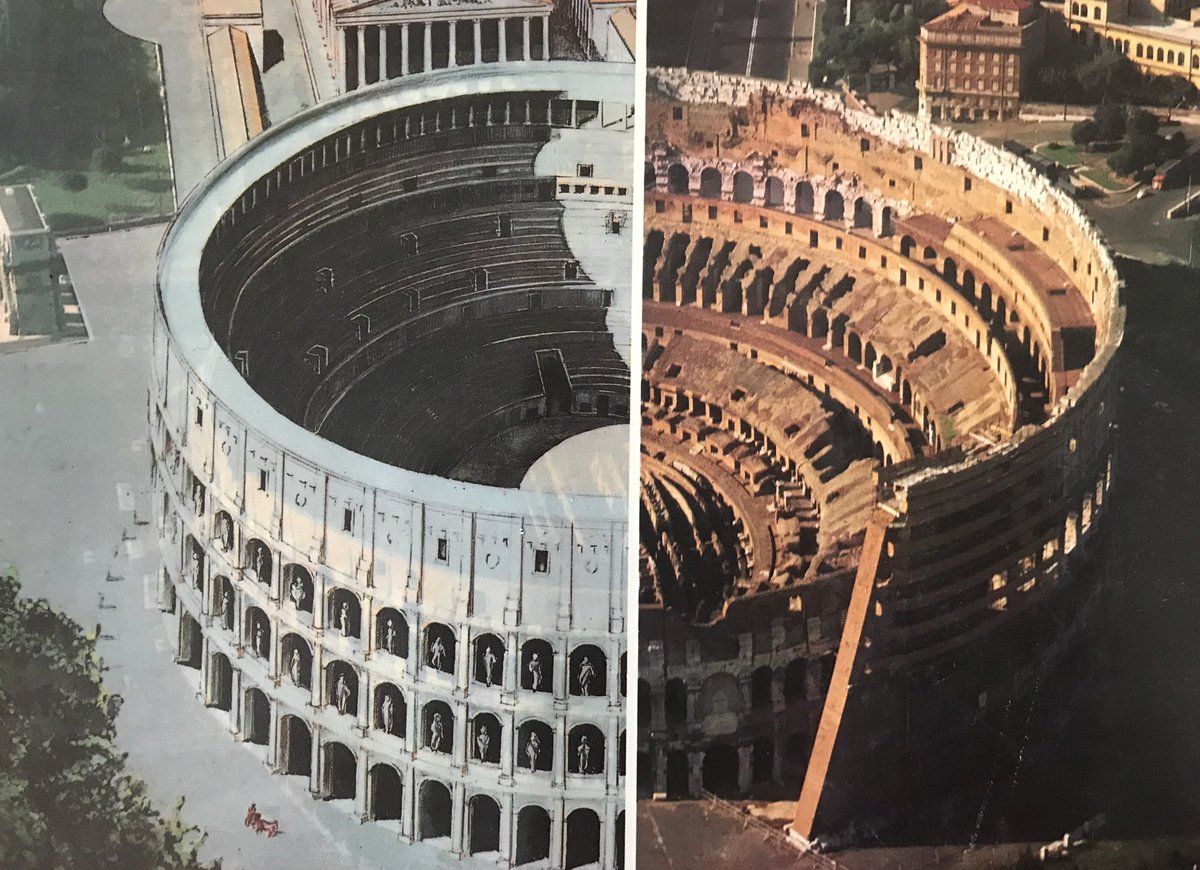
Imperial Rome's great buildings were plundered for their materials for centuries. A single quarryman once took 2,522 cartloads of travertine from the Colosseum in 1452.
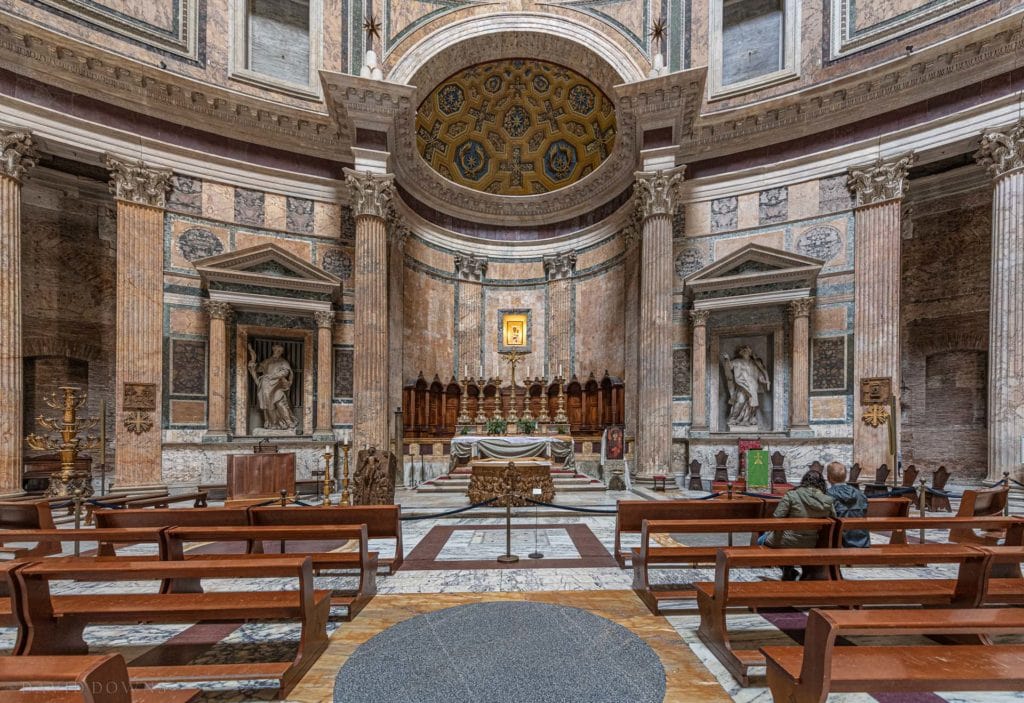
The real reason we get to enjoy the Pantheon in its present condition? In 609 AD it was converted into a church by the Pope, safeguarding it from looters.
And it’s still a church to this day, named the Basilica of St. Mary and the Martyrs.
And it’s still a church to this day, named the Basilica of St. Mary and the Martyrs.
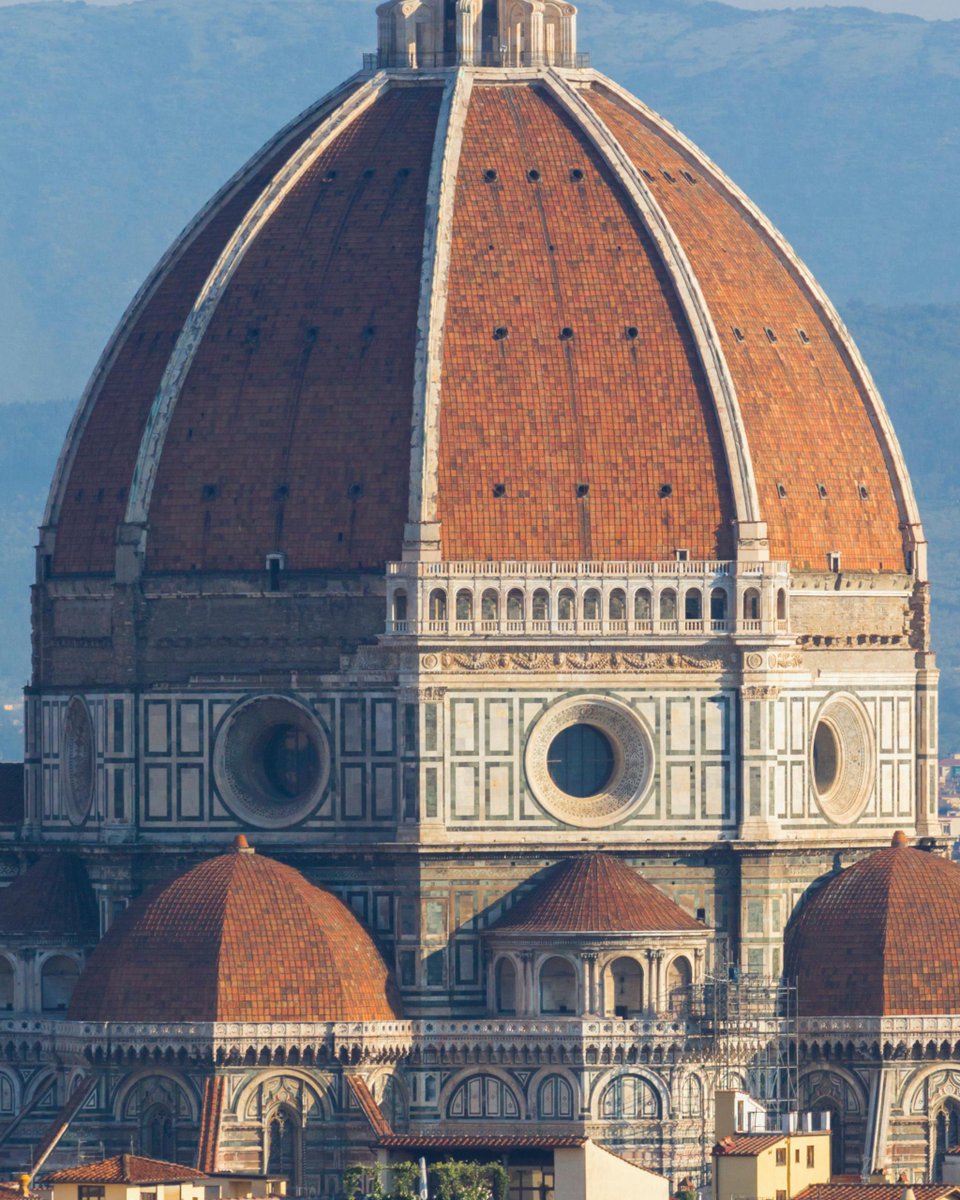
Unsurprisingly, the Pantheon's wondrous dome inspired countless more over the ages. Most notably perhaps is Brunelleschi's design in Florence. That however was built from brick - the ancient concrete formula being long since forgotten.
The Pantheon even won the endorsement of Michelangelo, architect of the dome of St. Peter's Basilica.
Seeing it for the first time in the early 1500s, he called it "an angelic and not a human design".
Seeing it for the first time in the early 1500s, he called it "an angelic and not a human design".
Lovers of great architecture, art and history NEED my weekly newsletter - do NOT miss tomorrow's.
Join 23,000+ other readers (for free) 👇
culturecritic.beehiiv.com/subscribe
Join 23,000+ other readers (for free) 👇
culturecritic.beehiiv.com/subscribe
The annual Pentecost tradition is a moment of extraordinary beauty.
Thousands of rose petals are dropped through the oculus as a choir sings "Veni Sancte Spiritus", known as the Golden Sequence...
Thousands of rose petals are dropped through the oculus as a choir sings "Veni Sancte Spiritus", known as the Golden Sequence...
• • •
Missing some Tweet in this thread? You can try to
force a refresh