A recently published research paper delves into the likely interpolations in Valmiki Ramayan, with a specific focus on two sections:
1. 'Bala Kanda's Original Ramayan'
2. 'Uttara Kanda'
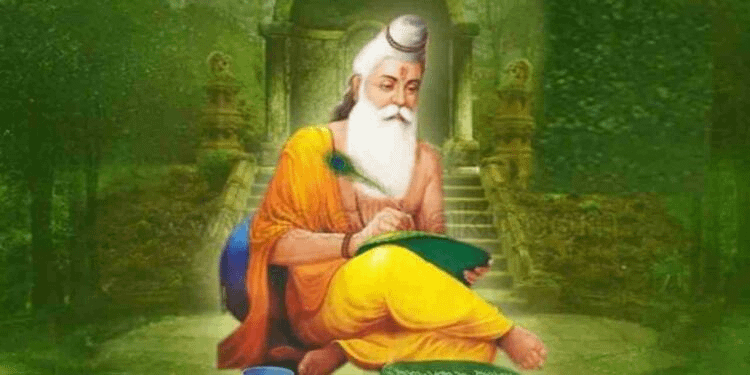
Valmiki Ramayan, often hailed as the national epic of India, was penned by the pioneering poet of the literary world, the 'Adi Kavi' Guru Valmiki.
The paper underscores the unique characteristics of the 'Uttara Kanda,' highlighting its distinct content, texture, and poetic quality. It delves deeper into an exploration of this section, outlining disparities between the 'Uttara Kanda' and the other six Kandas by analyzing nuances of its poetic style including language, style, emotion, and expressions.
Moreover, the research scrutinizes various incidents such as the Phalashruti at the end of 'Yuddha Kanda,' Sita's banishment, Shambuk's termination, the narrative of Valmiki Ramayan sung by Lava-Kusa, and Sita's Agni Pariksha to investigate potential interpolations.
In essence, this research paper offers a comprehensive analysis of these interpolations in Valmiki Ramayan, particularly spotlighting the 'Uttara Kanda.'
Presenting findings of the paper without adding or compressing it. If you are in a hurry this thread is not for you, but since you are reading this line you must go further and comment as a peer reviewer on the research paper link in last tweet...
1/
1. 'Bala Kanda's Original Ramayan'
2. 'Uttara Kanda'
Valmiki Ramayan, often hailed as the national epic of India, was penned by the pioneering poet of the literary world, the 'Adi Kavi' Guru Valmiki.
The paper underscores the unique characteristics of the 'Uttara Kanda,' highlighting its distinct content, texture, and poetic quality. It delves deeper into an exploration of this section, outlining disparities between the 'Uttara Kanda' and the other six Kandas by analyzing nuances of its poetic style including language, style, emotion, and expressions.
Moreover, the research scrutinizes various incidents such as the Phalashruti at the end of 'Yuddha Kanda,' Sita's banishment, Shambuk's termination, the narrative of Valmiki Ramayan sung by Lava-Kusa, and Sita's Agni Pariksha to investigate potential interpolations.
In essence, this research paper offers a comprehensive analysis of these interpolations in Valmiki Ramayan, particularly spotlighting the 'Uttara Kanda.'
Presenting findings of the paper without adding or compressing it. If you are in a hurry this thread is not for you, but since you are reading this line you must go further and comment as a peer reviewer on the research paper link in last tweet...
1/
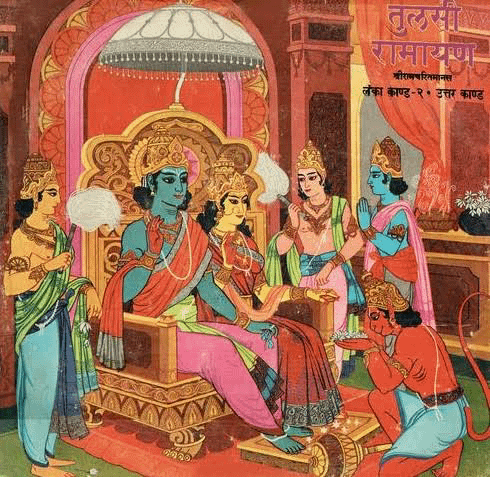
The Valmiki Ramayan comprises around 24,000 shlokas, with each shloka being a verse. These verses are categorized into seven kandas:
1. Bala Kanda
2. Ayodhya Kanda
3. Aranya Kanda
4. Kishkindha Kanda
5. Sundara Kanda
6. Yuddha Kanda
7. Uttara Kanda
The text notes that the Valmiki Ramayan is made up of 500 sargas, but it actually contains over 600 chapters. (xi-xvi)
2/
1. Bala Kanda
2. Ayodhya Kanda
3. Aranya Kanda
4. Kishkindha Kanda
5. Sundara Kanda
6. Yuddha Kanda
7. Uttara Kanda
The text notes that the Valmiki Ramayan is made up of 500 sargas, but it actually contains over 600 chapters. (xi-xvi)
2/
Several factors distinguish 'Uttara Kanda' from the other six Kandas:
1) Literary Style: While the first six Kandas maintain a consistent writing style, 'Uttara Kanda' stands out with its distinct poetic style. The language used in 'Uttara Kanda' also differs from that of the other Kandas.
2) Verse Count: 'Uttara Kanda' contains fewer and less common verses, including unique counts like 18, 20, and 10.
3) Timing and Style Evolution: 'Uttara Kanda' appears to have been added at a later stage, showcasing variations in language, style, emotion, and expression compared to the content from 'Bala Kanda' to 'Yuddha Kanda'.
3/
1) Literary Style: While the first six Kandas maintain a consistent writing style, 'Uttara Kanda' stands out with its distinct poetic style. The language used in 'Uttara Kanda' also differs from that of the other Kandas.
2) Verse Count: 'Uttara Kanda' contains fewer and less common verses, including unique counts like 18, 20, and 10.
3) Timing and Style Evolution: 'Uttara Kanda' appears to have been added at a later stage, showcasing variations in language, style, emotion, and expression compared to the content from 'Bala Kanda' to 'Yuddha Kanda'.
3/
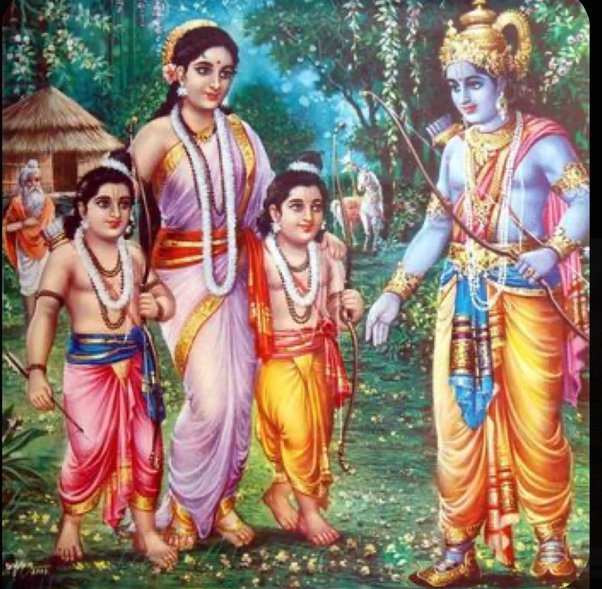
The Valmiki Ramayan was sung by Lava-Kusa:
The story of the Valmiki Ramayan sung by Lava-Kusa is also an interpolated story because the singer of Valmiki Ramayan, which is described in 'Bala Kanda' are, addressed with the word "कुशीलव," "कुशीलवौ तु धर्मज्ञौ " वा.रा. १-४-५.
According to the dictionary, duet singers (युगलगायक) are called कुशीलव, Their names have not been written as लवकुश; otherwise, Guru Valmiki would have written "कुशीलवौ" Instead of "कुशो लवश्च धर्मज्ञौ". (Ramabhadracharya 97, 117). The biggest objection to considering Lava-Kusa as the singer of Ramayan would be that Guru Valmiki would be accused of violating the varna system because Lava Kusa being Ksatriyas Kumar, were educated as such, and they also knew about their lineage. Hence, Ksatriyas Kumar Lava and Kusa have no right to recite Valmiki Ramayan. Guru Valmiki himself is saying this thing in the Phalashruti of the last sarga of 'Yuddha Kanda':
प्रणम्य शिरसा निम्यं श्रोतव्यं क्षत्रियैर्द्विजात् ।
ऐश्वर्य पुत्रलाभश्च भविष्यति न संशयः ।। वा.रा. ६-१२८-१९८
The meaning of this verse is that: The Ksatriyas should listen to Srimad Valmiki Ramayan from the mouth of the best Brahmanas by bowing with love at the feet of the Brahmanas. Due to this, they will undoubtedly benefit from grandeur and son. According to this statement, Lava and Kusa are not entitled to recite the Ramayan because they were born in the Ksatriyas Kula. श्रोतव्यं क्षत्रियौर्द्विजात्! That is to say, a Ksatriyas should listen to the Ramayan only from Brahmanas, but
here, Lava-Kusa are not Brahmanas. That is why the singer of the Valmiki Ramayan is not Lava-Kusa.
There will be another loss of dignity in considering Lava-Kusa as the singer of the Ramayan. According to the fourth sarga of 'Bala Kanda' of Ramayan, the sages, being satisfied with the song of Lava-Kusa, donated them the instruments of penance, ewer, and deer's skin. The right to take alms is due only to the Brahmanas, who are entitled to accept alms and not Ksatriyas Kumar, then why Lava- Kusa are accepting alms here?
प्रीतः कश्विन् मुनिः ताभ्याम् संस्थितः कलशम् ददी।
प्रसन्नो वल्कलम् कश्चिद् ददौ ताभ्याम् महायशाः ।।
अन्यः कृष्णाजिनम् अदद् यज्ञ सूत्रम तथा अपरः ।
कश्चित् कमण्डलुम प्रदान मौजीम्अन्यो महामुनिः ।। वा.रा. १-४-२०/२१
Here, after reciting the Ramayan, Lava and Kusa are taking the alms of the urn, sacred thread, phloem, etc., from someone. At the same time, Ksatriyas takes only blessings from Brahmanas. During the exile, their revered father, Shri Ram, did not take phloem from sages. For this, Kaikeyi was made as an instrument. In this sense, Lava and Kusa are not the singers of Valmiki Ramayan.
4/
The story of the Valmiki Ramayan sung by Lava-Kusa is also an interpolated story because the singer of Valmiki Ramayan, which is described in 'Bala Kanda' are, addressed with the word "कुशीलव," "कुशीलवौ तु धर्मज्ञौ " वा.रा. १-४-५.
According to the dictionary, duet singers (युगलगायक) are called कुशीलव, Their names have not been written as लवकुश; otherwise, Guru Valmiki would have written "कुशीलवौ" Instead of "कुशो लवश्च धर्मज्ञौ". (Ramabhadracharya 97, 117). The biggest objection to considering Lava-Kusa as the singer of Ramayan would be that Guru Valmiki would be accused of violating the varna system because Lava Kusa being Ksatriyas Kumar, were educated as such, and they also knew about their lineage. Hence, Ksatriyas Kumar Lava and Kusa have no right to recite Valmiki Ramayan. Guru Valmiki himself is saying this thing in the Phalashruti of the last sarga of 'Yuddha Kanda':
प्रणम्य शिरसा निम्यं श्रोतव्यं क्षत्रियैर्द्विजात् ।
ऐश्वर्य पुत्रलाभश्च भविष्यति न संशयः ।। वा.रा. ६-१२८-१९८
The meaning of this verse is that: The Ksatriyas should listen to Srimad Valmiki Ramayan from the mouth of the best Brahmanas by bowing with love at the feet of the Brahmanas. Due to this, they will undoubtedly benefit from grandeur and son. According to this statement, Lava and Kusa are not entitled to recite the Ramayan because they were born in the Ksatriyas Kula. श्रोतव्यं क्षत्रियौर्द्विजात्! That is to say, a Ksatriyas should listen to the Ramayan only from Brahmanas, but
here, Lava-Kusa are not Brahmanas. That is why the singer of the Valmiki Ramayan is not Lava-Kusa.
There will be another loss of dignity in considering Lava-Kusa as the singer of the Ramayan. According to the fourth sarga of 'Bala Kanda' of Ramayan, the sages, being satisfied with the song of Lava-Kusa, donated them the instruments of penance, ewer, and deer's skin. The right to take alms is due only to the Brahmanas, who are entitled to accept alms and not Ksatriyas Kumar, then why Lava- Kusa are accepting alms here?
प्रीतः कश्विन् मुनिः ताभ्याम् संस्थितः कलशम् ददी।
प्रसन्नो वल्कलम् कश्चिद् ददौ ताभ्याम् महायशाः ।।
अन्यः कृष्णाजिनम् अदद् यज्ञ सूत्रम तथा अपरः ।
कश्चित् कमण्डलुम प्रदान मौजीम्अन्यो महामुनिः ।। वा.रा. १-४-२०/२१
Here, after reciting the Ramayan, Lava and Kusa are taking the alms of the urn, sacred thread, phloem, etc., from someone. At the same time, Ksatriyas takes only blessings from Brahmanas. During the exile, their revered father, Shri Ram, did not take phloem from sages. For this, Kaikeyi was made as an instrument. In this sense, Lava and Kusa are not the singers of Valmiki Ramayan.
4/

The Phalashruti at the end of 'Yuddha Kanda':
"The Phalashruti of the Valmiki Ramayan is also included at the end of the "Yuddha Kanda', making it the logical ending point of the story since the phalashruti must occur at the end of a text and not in the middle of it" (Rediscovering Rama (Part-1) 2016). It is one of the most significant proof of interpolating 'Uttara Kanda'. The most interesting aspect is that each author writes the Phalashruti at the end of his book, and the same was practised by Guru Valmiki from verse 107 to 123 in the last sarga of 'Yuddha Kanda'. In the next verse, Guru Valmiki is clearly saying this by describing the coronation of Shri Ram and his future stories that-
धर्मयं यशस्यमायुष्यं राज्ञां च विजाअवहम्
आदिकाव्यमिदं चार्ष पुरा वाल्मीकिना कृतम्।। वा.रा. ६-१२८-१०७
This means, that this epic was written at first by Guru Valmiki, which is endowed with righteousness, conferring fame and longevity, fetching victory to kings. If 'Uttara Kanda' had to be written, why was Phalashruti needed here? All the Arsha Granth from Rigveda onwards follow a pattern in which Phalashruti comes at the end of the text. After reading the Phalashruti, the 'Uttara Kanda'was undoubtedly added later. Valmiki Ji also said this-
एवमेतत् पुरावृत्तमाख्यानं भद्रमस्तु वः ।
प्रव्याहरत विस्रब्यं बलं विष्णोः प्रवर्धताम्।। वा. रा. ६-१२८-१२९
एतत् वृत्तम् एवमेव पुरावृत्तम्-Thus, this history ended earlier. एतत् आख्यानम् एवमेव परा वृत्तम्- This is how the story ended; there should be no hesitation in this. विस्रब्धं प्रव्याहरत You sing it with faith. भद्रमस्तु वः वः भद्रमस्तु! May the welfare of those who read and practice the Ramayan and बलं विष्णोः प्रवर्धताम् this increases the strength of Lord Vishnu because Ram is also Vishnu's Vishnu,- means he is 'Maha Vishnu'. The Ramayan of Guru Valmiki begins with 'Bala Kanda' and then culminates in 'Yuddha Kanda' without any possibility of 'Uttara Kanda' being Guru Valmiki's composition because he had already mentioned Phalashruti at the end of 'Yuddha Kanda'. When a Phalashruti has been added, marking the end of Ramayan, how would it be possible to begin another Kanda right after that?
5/
"The Phalashruti of the Valmiki Ramayan is also included at the end of the "Yuddha Kanda', making it the logical ending point of the story since the phalashruti must occur at the end of a text and not in the middle of it" (Rediscovering Rama (Part-1) 2016). It is one of the most significant proof of interpolating 'Uttara Kanda'. The most interesting aspect is that each author writes the Phalashruti at the end of his book, and the same was practised by Guru Valmiki from verse 107 to 123 in the last sarga of 'Yuddha Kanda'. In the next verse, Guru Valmiki is clearly saying this by describing the coronation of Shri Ram and his future stories that-
धर्मयं यशस्यमायुष्यं राज्ञां च विजाअवहम्
आदिकाव्यमिदं चार्ष पुरा वाल्मीकिना कृतम्।। वा.रा. ६-१२८-१०७
This means, that this epic was written at first by Guru Valmiki, which is endowed with righteousness, conferring fame and longevity, fetching victory to kings. If 'Uttara Kanda' had to be written, why was Phalashruti needed here? All the Arsha Granth from Rigveda onwards follow a pattern in which Phalashruti comes at the end of the text. After reading the Phalashruti, the 'Uttara Kanda'was undoubtedly added later. Valmiki Ji also said this-
एवमेतत् पुरावृत्तमाख्यानं भद्रमस्तु वः ।
प्रव्याहरत विस्रब्यं बलं विष्णोः प्रवर्धताम्।। वा. रा. ६-१२८-१२९
एतत् वृत्तम् एवमेव पुरावृत्तम्-Thus, this history ended earlier. एतत् आख्यानम् एवमेव परा वृत्तम्- This is how the story ended; there should be no hesitation in this. विस्रब्धं प्रव्याहरत You sing it with faith. भद्रमस्तु वः वः भद्रमस्तु! May the welfare of those who read and practice the Ramayan and बलं विष्णोः प्रवर्धताम् this increases the strength of Lord Vishnu because Ram is also Vishnu's Vishnu,- means he is 'Maha Vishnu'. The Ramayan of Guru Valmiki begins with 'Bala Kanda' and then culminates in 'Yuddha Kanda' without any possibility of 'Uttara Kanda' being Guru Valmiki's composition because he had already mentioned Phalashruti at the end of 'Yuddha Kanda'. When a Phalashruti has been added, marking the end of Ramayan, how would it be possible to begin another Kanda right after that?
5/
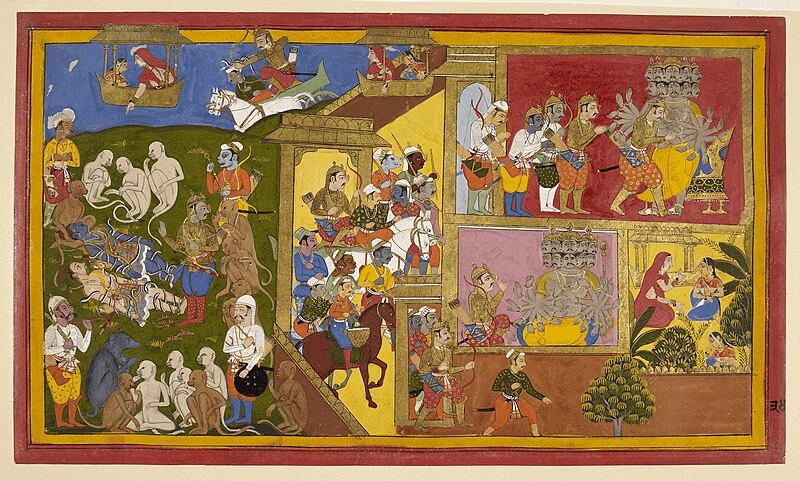
"Further, in the summary retelling of the Ramayan that is included in the Mahabharata, no mention is made of the incidents (including the banishment of Sita) that take place in the 'Uttara Kanda'. Finally, there are references to certain kingdoms and peoples in the 'Uttara Kanda' that identify the verses as being of later origin than the original Ramayan" (Rediscovering Rama (Part-I) 2016).
6/
6/
Sita's Second Exile:
There is no demonstration of Sita's second exile in the Original Ramayan (Mool Ramayan), proving the daily coincidence of Shri Ram-Sita- रामस्य दयिता भार्या नित्यं प्राणसमा हिता। वा.रा. १-१-२६. This means- Sita is always with Shri Ram. Thus, how can Guru Valmiki write the thing which is not in the Mool Ramayan? Because the basis of his creations is the mool Ramayan. Brahma Ji ordered Guru Valmiki to detail only the events specified in the mool Ramayan - वृत्तं कथय धीरस्य यथा ते नारदाच्छ्रुतम्। सहस्यं च प्रकाशं च यद् वृत्तं तस्य धीमतः ।। वा.रा. १-२-३३. The meaning of this verse is that- "O Maharshi! Whatever Devarshi Narad has made, you listen to the manifest and unmanifest characters of Shri Ram, you should write down those characters". यथा ते नारदाच्छ्रुतम् means you have to write as you have heard from Narada. You do not have the right to increase or decrease with your mind because Narad did not make any demonstration of Sita's second exile in his recital of Ram to Guru Valmiki. In the Ramcharitmanas, no such indescribable and unforeseen incident happened. That is why Guru Valmiki did not discuss Sita's second exile in his Ramayan.
Shri Ram, who fought all odds to gain Sita back in the six-chapter, the same Ram who could not live a moment without Sita, banishes the same Sita due to citizens' allegations in his country in 'Uttara Kanda'. This does not make sense at all. If Sita Ji had been in the second exile, then how did Guru Valmiki give this prediction to Shri Ram, "भ्रातृभिः सहितः श्रीमान् " वा.रा. ६-१२८-१०६. If Sita's exile is authentic, why did Ved Vyas not discuss it in Mahabharat? Whereas the story of Shri Ram was told four times in the Mahabharat, Sita Ji proved herself immaculate by entering the fire, and the three worlds saw that incident. "दृद्दशस्त क्र्योलोकाः " Was the washerman above the three worlds? Who has not seen this event? "यत्र भारते तत्र 'भारते" That is why the incident which is not indicated in Mahabharat did not happen in India. In Valmiki Ramayan's 'Bala Kanda', Brahma Ji ordered Valmiki Ji that-
धर्मात्मनो भगवतो लोके रामस्य धीमतः ।
वृत्तं कथय धीरस्य यथा ते नारदाच्छृतम्।। वा.रा. १-२-३२
Means- In the same way, describe the character of Lord, Shri Maan, Dharmatma, and Lord Shri Ram in a verse-bound manner. And how is that? That is, as you have heard from Narad. Fortunately, and coincidentally, there is no mention of Sita's second exile in the first sarga of 'Bala Kanda' of Valmiki Ramayan, which we call the Mool Ramayan. Hence, the story of Sita's second exile is also Prakshipta.
7/
There is no demonstration of Sita's second exile in the Original Ramayan (Mool Ramayan), proving the daily coincidence of Shri Ram-Sita- रामस्य दयिता भार्या नित्यं प्राणसमा हिता। वा.रा. १-१-२६. This means- Sita is always with Shri Ram. Thus, how can Guru Valmiki write the thing which is not in the Mool Ramayan? Because the basis of his creations is the mool Ramayan. Brahma Ji ordered Guru Valmiki to detail only the events specified in the mool Ramayan - वृत्तं कथय धीरस्य यथा ते नारदाच्छ्रुतम्। सहस्यं च प्रकाशं च यद् वृत्तं तस्य धीमतः ।। वा.रा. १-२-३३. The meaning of this verse is that- "O Maharshi! Whatever Devarshi Narad has made, you listen to the manifest and unmanifest characters of Shri Ram, you should write down those characters". यथा ते नारदाच्छ्रुतम् means you have to write as you have heard from Narada. You do not have the right to increase or decrease with your mind because Narad did not make any demonstration of Sita's second exile in his recital of Ram to Guru Valmiki. In the Ramcharitmanas, no such indescribable and unforeseen incident happened. That is why Guru Valmiki did not discuss Sita's second exile in his Ramayan.
Shri Ram, who fought all odds to gain Sita back in the six-chapter, the same Ram who could not live a moment without Sita, banishes the same Sita due to citizens' allegations in his country in 'Uttara Kanda'. This does not make sense at all. If Sita Ji had been in the second exile, then how did Guru Valmiki give this prediction to Shri Ram, "भ्रातृभिः सहितः श्रीमान् " वा.रा. ६-१२८-१०६. If Sita's exile is authentic, why did Ved Vyas not discuss it in Mahabharat? Whereas the story of Shri Ram was told four times in the Mahabharat, Sita Ji proved herself immaculate by entering the fire, and the three worlds saw that incident. "दृद्दशस्त क्र्योलोकाः " Was the washerman above the three worlds? Who has not seen this event? "यत्र भारते तत्र 'भारते" That is why the incident which is not indicated in Mahabharat did not happen in India. In Valmiki Ramayan's 'Bala Kanda', Brahma Ji ordered Valmiki Ji that-
धर्मात्मनो भगवतो लोके रामस्य धीमतः ।
वृत्तं कथय धीरस्य यथा ते नारदाच्छृतम्।। वा.रा. १-२-३२
Means- In the same way, describe the character of Lord, Shri Maan, Dharmatma, and Lord Shri Ram in a verse-bound manner. And how is that? That is, as you have heard from Narad. Fortunately, and coincidentally, there is no mention of Sita's second exile in the first sarga of 'Bala Kanda' of Valmiki Ramayan, which we call the Mool Ramayan. Hence, the story of Sita's second exile is also Prakshipta.
7/
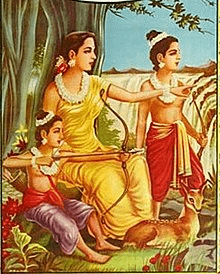
Shambuk's Termination:
The episode of the termination of Shambuk is also completely illogical. It is a well-known fact that if Shri Ram had an objection to Sudras's penance, then why would he ask a skilful question to Sabri Ji regarding her penance? "कच्चिते वर्धत तपः" वा.रा. ३-७४-७. Shri Ram is saying to Sabari that- Maa! Is your penance being completed without any problem or not? There, Ram is also getting the exuded fruits from Sabri Ji and preaching Navdhabhakti to Sabari, making her his mother, and giving Jalanjali in the end. "तेहिं मात ज्यों रघुनाथ भपने हाथ जल अंजलि दई" (गीतावली-३/६).
If Sudras's penance had not been prescribed during the Ramavatar period, why did Dasarath (the revered father of Shri Ram) give so much respect to Shravan Kumar? Even during the reign of Ram, no son died before his father न पुत्र मरणं केचित् द्रक्ष्यन्ति पुरुषाः कच्चित्। वा.रा. १-१-९१ then why did the Brahmanas die due to Shambuk's penance? Why did Shri Ram give sympathy instead of punishing the ascetic Sabari born in the Bhil caste?
In the 104th verse of the last chapter of 'Yuddha Kanda', Guru Valmiki is saying-
ब्राह्मणाः क्षत्रिय वैश्याः शूद्रा लोभविवर्जिताः । स्वकर्मसु प्रवर्तन्ते तुष्ठाः स्वैरेव कर्मभिः ।। आसन् प्रजा धर्मपरा रामे शासति नानृाताः । सर्वे स्वकर्मे निरताः सर्वे धर्मपरायणाः।। वा.रा. ६-१२८-१०४-१०५
This means that- In the kingdom of Shri Ram, Brahmanas, Ksatriyas, Vaisyas, Sudras, all these people were populist. सर्वे स्वकर्मे निरताः everyone is engaged in his work. सर्वे धर्मपरायणाः all are pious, so why would not Shambuk be pious?
8/
The episode of the termination of Shambuk is also completely illogical. It is a well-known fact that if Shri Ram had an objection to Sudras's penance, then why would he ask a skilful question to Sabri Ji regarding her penance? "कच्चिते वर्धत तपः" वा.रा. ३-७४-७. Shri Ram is saying to Sabari that- Maa! Is your penance being completed without any problem or not? There, Ram is also getting the exuded fruits from Sabri Ji and preaching Navdhabhakti to Sabari, making her his mother, and giving Jalanjali in the end. "तेहिं मात ज्यों रघुनाथ भपने हाथ जल अंजलि दई" (गीतावली-३/६).
If Sudras's penance had not been prescribed during the Ramavatar period, why did Dasarath (the revered father of Shri Ram) give so much respect to Shravan Kumar? Even during the reign of Ram, no son died before his father न पुत्र मरणं केचित् द्रक्ष्यन्ति पुरुषाः कच्चित्। वा.रा. १-१-९१ then why did the Brahmanas die due to Shambuk's penance? Why did Shri Ram give sympathy instead of punishing the ascetic Sabari born in the Bhil caste?
In the 104th verse of the last chapter of 'Yuddha Kanda', Guru Valmiki is saying-
ब्राह्मणाः क्षत्रिय वैश्याः शूद्रा लोभविवर्जिताः । स्वकर्मसु प्रवर्तन्ते तुष्ठाः स्वैरेव कर्मभिः ।। आसन् प्रजा धर्मपरा रामे शासति नानृाताः । सर्वे स्वकर्मे निरताः सर्वे धर्मपरायणाः।। वा.रा. ६-१२८-१०४-१०५
This means that- In the kingdom of Shri Ram, Brahmanas, Ksatriyas, Vaisyas, Sudras, all these people were populist. सर्वे स्वकर्मे निरताः everyone is engaged in his work. सर्वे धर्मपरायणाः all are pious, so why would not Shambuk be pious?
8/
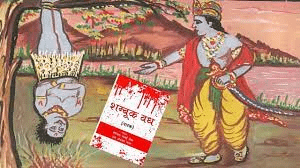
Sita's Agni Pariksha:
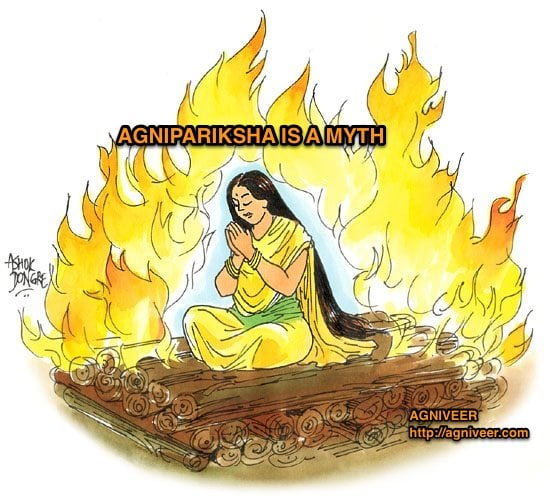
In the 'Yuddha Kanda' of Valmiki Ramayan, Shri Ram never asked Sita to go for Agni pariksha. It was not Agni pariksha, it was Agni Pravesh, nor questioned her purity. Shri Ram wanted the world to know about Sita's chastity and purity. Sita herself is free to do so to prove to the world her chastity. Agnidev, exercising Shri Ram's authority, said that- "Raghava! You have been born from my Charu; I am also your father. I order today that whose spirit is pure, in whose life there is no sin. Now accept such Sita Ji again. You will not say anything to her. I give you this command". And Shri Ram also said "अनन्या हि मया सीता भास्करेण प्रभा यथा।। वा.रा. ६-११८-१९ That is, I also know that Sita Ji is integral to me in the same way as Prabha (light, heat) from Surya Narayan. Shri Ram made this vow in front of Agnidev that:
विशुद्धा त्रिषु लोकेषु मैथिली जनकात्मजा । न विहातुं मया शक्या कीर्तिरात्मवता यथा ।। वा.रा. ६-११८-२०
Means- "Sita Ji is pure in all the three worlds. There is no doubt about the purity of Janaknandini Sita Ji. O Agnidev! I promise you that just as a successful person cannot give up his fame, in the same way, I will never give up Sita". When Shri Ram vows to accept Sita in front of Agni, how can he go back from his own words?
9/
In the 'Yuddha Kanda' of Valmiki Ramayan, Shri Ram never asked Sita to go for Agni pariksha. It was not Agni pariksha, it was Agni Pravesh, nor questioned her purity. Shri Ram wanted the world to know about Sita's chastity and purity. Sita herself is free to do so to prove to the world her chastity. Agnidev, exercising Shri Ram's authority, said that- "Raghava! You have been born from my Charu; I am also your father. I order today that whose spirit is pure, in whose life there is no sin. Now accept such Sita Ji again. You will not say anything to her. I give you this command". And Shri Ram also said "अनन्या हि मया सीता भास्करेण प्रभा यथा।। वा.रा. ६-११८-१९ That is, I also know that Sita Ji is integral to me in the same way as Prabha (light, heat) from Surya Narayan. Shri Ram made this vow in front of Agnidev that:
विशुद्धा त्रिषु लोकेषु मैथिली जनकात्मजा । न विहातुं मया शक्या कीर्तिरात्मवता यथा ।। वा.रा. ६-११८-२०
Means- "Sita Ji is pure in all the three worlds. There is no doubt about the purity of Janaknandini Sita Ji. O Agnidev! I promise you that just as a successful person cannot give up his fame, in the same way, I will never give up Sita". When Shri Ram vows to accept Sita in front of Agni, how can he go back from his own words?
9/
https://x.com/GemsOfINDOLOGY/status/1734883441022476449?s=20
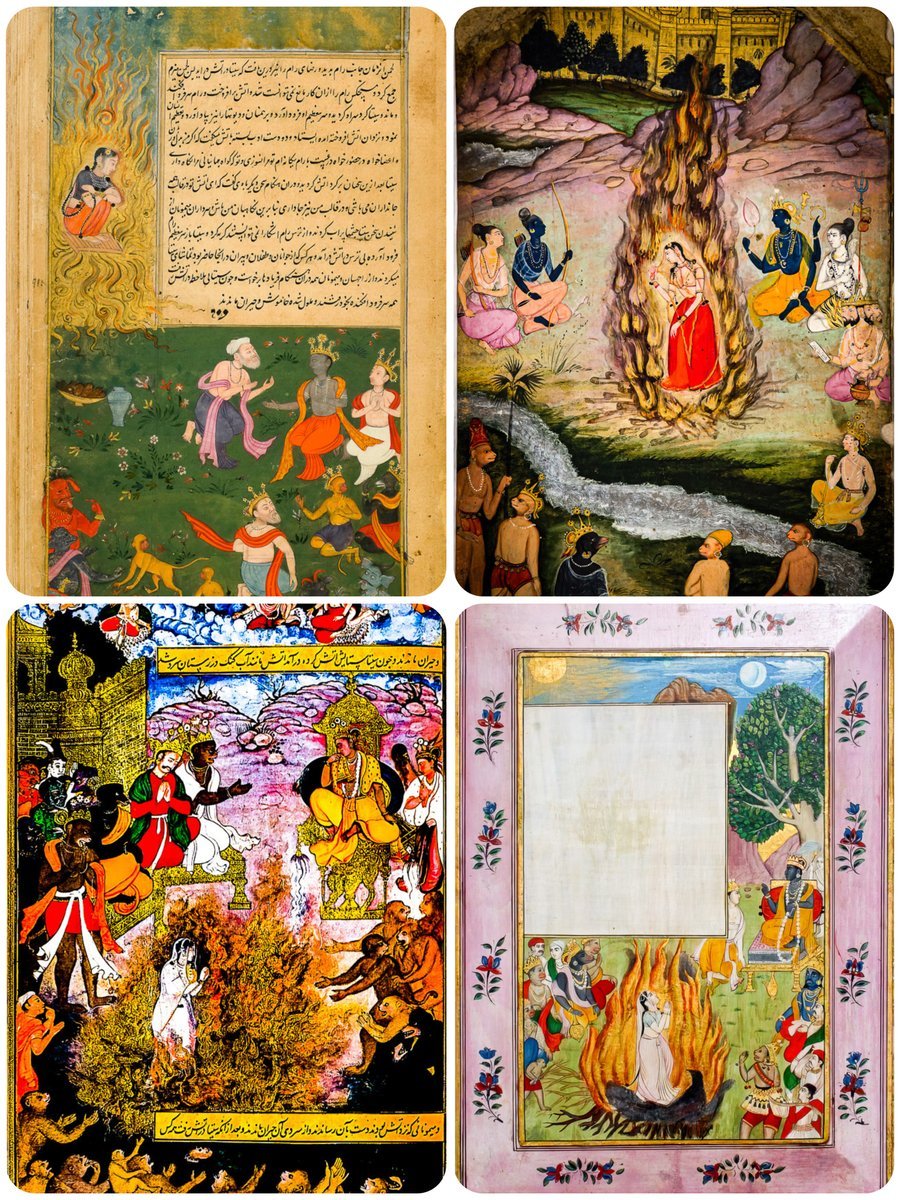
Sita's Entry into the Earth: The most interesting topic here is that even after discussing all the topics in this epic, Guru Valmiki neither discussed Sita's entry into the earth nor Shri Ram's water tomb. It is only to make sure that everything is interpolated.
It is being said that Sita Ji entered the earth is also wrong. When Sita Ji became pure in the fire, then Guru Valmiki also said I am the son of Varun; I will never speak untrue. These two sons are yours, and Sita Ji is your wife. When Sita Ji gets angry and says that if I do not know any man other than Shri Ram Ji, the earth should fall for me. Then the earth exploded, and Sita Ji left. All these stories are baseless and unscientific. There was no need to take an oath to Sita Ji, and Sita was not even angry. After leaving Shri Ram Ji by Sita, the earth will not give happiness to her. Sita Ji, herself has said- ru /ku /kke /kjfu iqj jktwA ifr fcghu lcq 'kksd lektwAA ek- 2&65&4-Thus, Sita Ji will not go to earth, leaving Shri Ram Ji to prove her chastity. That is why the entry of Sita Ji into the earth is also unscriptural. Shambuk's termination, Sita's banishment, and Shri Ram's water tomb are unscientific.
10/
It is being said that Sita Ji entered the earth is also wrong. When Sita Ji became pure in the fire, then Guru Valmiki also said I am the son of Varun; I will never speak untrue. These two sons are yours, and Sita Ji is your wife. When Sita Ji gets angry and says that if I do not know any man other than Shri Ram Ji, the earth should fall for me. Then the earth exploded, and Sita Ji left. All these stories are baseless and unscientific. There was no need to take an oath to Sita Ji, and Sita was not even angry. After leaving Shri Ram Ji by Sita, the earth will not give happiness to her. Sita Ji, herself has said- ru /ku /kke /kjfu iqj jktwA ifr fcghu lcq 'kksd lektwAA ek- 2&65&4-Thus, Sita Ji will not go to earth, leaving Shri Ram Ji to prove her chastity. That is why the entry of Sita Ji into the earth is also unscriptural. Shambuk's termination, Sita's banishment, and Shri Ram's water tomb are unscientific.
10/
Killing of Messenger:
While trying to stop Ravan from ordering Sri Hanuman to be killed, Vibhishan says no precedent for killing the messenger.
वैरूप्याम् अन्गेषु कश अभिघातो ।
मौण्ड्यम् तथा लक्ष्मण सन्मिपातः ।।
एतान् हि दूते प्रवदन्ति दण्डान् ।
वधः तु दूतस्य न नः श्रुतो अपि ।। वाारा. ४-५२-१५
"There are certain punishments for an angel-mutilation of limbs, whipping, shaving the head, and marking the body. In fact, we have never heard of an angel being killed."
Vibhishan was saying exactly a month before the great war in Lanka, that till then, there was no precedence to kill the messenger. However, in the 13th canto of 'Uttara Kanda'it was told about the killing of the messenger of Kuber by Ravan. It is said that this incident happened at the young age of Ravan when he was initiating a war against the gods, yakshas, Gandharvas, etc.
If Ravan had killed the messenger of Kuber, Vibhishan would not have said that there was no precedence for killing the messenger. Hence, 'Uttara Kanda'is interpolated.
11/
While trying to stop Ravan from ordering Sri Hanuman to be killed, Vibhishan says no precedent for killing the messenger.
वैरूप्याम् अन्गेषु कश अभिघातो ।
मौण्ड्यम् तथा लक्ष्मण सन्मिपातः ।।
एतान् हि दूते प्रवदन्ति दण्डान् ।
वधः तु दूतस्य न नः श्रुतो अपि ।। वाारा. ४-५२-१५
"There are certain punishments for an angel-mutilation of limbs, whipping, shaving the head, and marking the body. In fact, we have never heard of an angel being killed."
Vibhishan was saying exactly a month before the great war in Lanka, that till then, there was no precedence to kill the messenger. However, in the 13th canto of 'Uttara Kanda'it was told about the killing of the messenger of Kuber by Ravan. It is said that this incident happened at the young age of Ravan when he was initiating a war against the gods, yakshas, Gandharvas, etc.
If Ravan had killed the messenger of Kuber, Vibhishan would not have said that there was no precedence for killing the messenger. Hence, 'Uttara Kanda'is interpolated.
11/
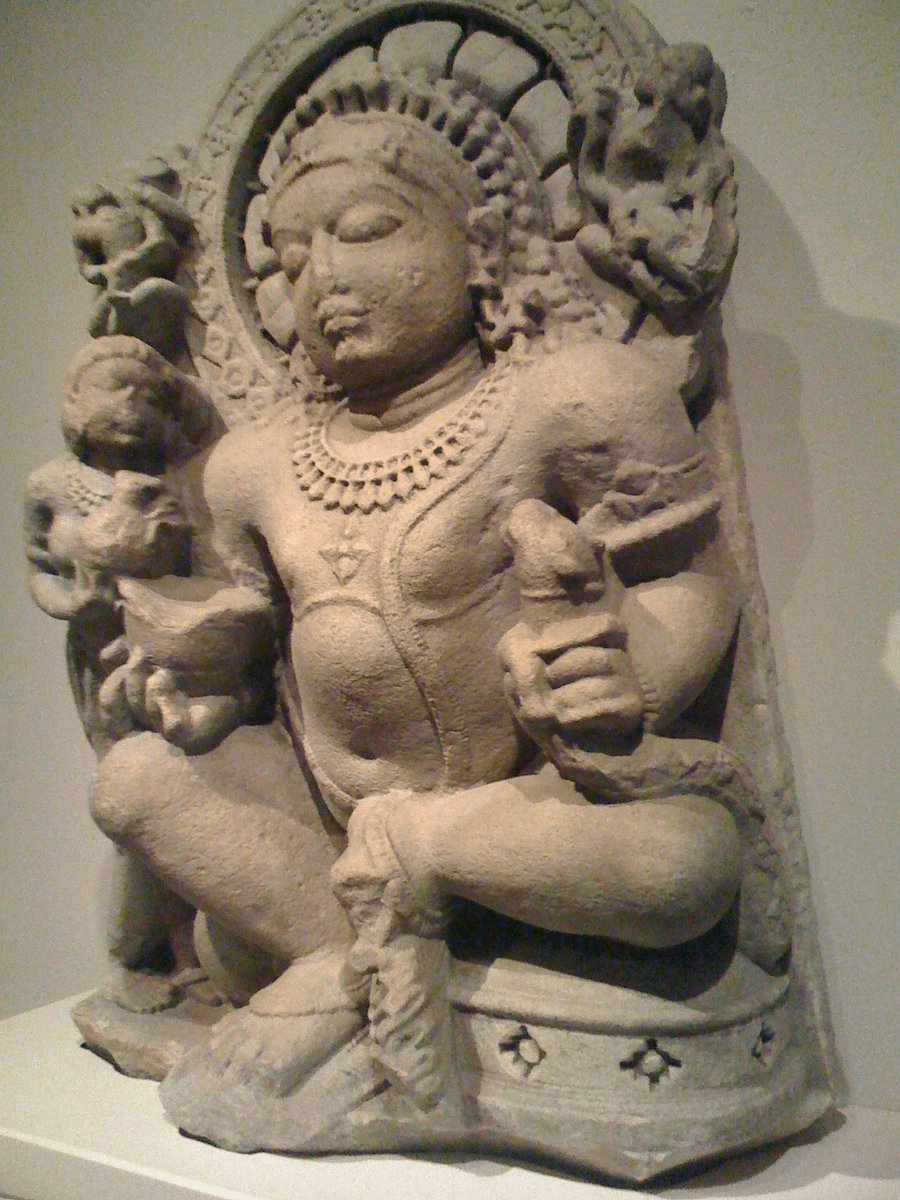
The Story of Alcohol and Non-vegetarian Food: The biggest objection to following 'Uttara Kanda'is that when Shri Ram comes to Sita Ji, he lifts her with his hands, gives her a drink of alcohol, and feeds their non-vegetarian food with his hand. As Guru Valmiki is saying in the 18th verse of the 42nd sarga of 'Uttara Kanda'of Valmiki Ramayan:
सीतामादाय हस्तेन मधु मैरेयकं शुचि ।
पाययामास काकुत्स्थः शचीमिव पुरंदरः ।। वा.रा. ७-४२-१८/१८.५
Means-Shri Ram gives honey alcohol, holding Sita Ji by the hand. This is not the ideal of a man and unbecoming for Maryada Purushottam Shri Ram. In the 'Uttara Kanda,' the dance of heroines (वीरांगनाओं) were seen in front of Shri Ram (who is an एकनारीव्रत). Shri Ram pleases the heroines. In the 122nd verse of the same sarga:
मनोअभिरामा रामास्ता रामो रमयतां वरः ।
रमयामास धर्मात्मा नित्यं परमभूषिताः ।। वा.रा. ७-४२-२२
That is, those brave women were pleased by Shri Ram. Does not this tarnish the character of Ram? The 'Uttara Kanda' of Valmiki Ramayan is completely interpolated.
Story of the End of Srimad Valmiki Ramayan:
"The original version of Valmiki Ramayan ends after the 'Yuddha Kanda', upon Ram's victory over Ravana and his and Sita's triumphant return to Ayodhya"(Rediscovering Rama (Part-1) 2016). In the concluding chapter of 'Yuddha Kanda', Guru Valmiki describes that having enjoyed the kingship for ten thousand years, Shri Ram performed hundred horse sacrifices. It was explained very briefly about the people's happy life of the Koshala kingdom during the reign of Shri Ram.
सर्वे लक्षणसम्पन्नाः सर्वे धर्मपरायणाः ।
दशवर्षसहस्राणि रामो राज्यमकारयत् ।। वा.रा. ६-१२८-१०६
"All the people were endowed with excellent features, and they were engaged in virtue. Shri Ram was engaged in the kingship thus for Ten thousand years." So, Guru Valmiki Ji composed only six Kandas and clearly said:
काव्यं रामायणं कृत्स्नं सीतायाश्चरितं महत् ।
पौलस्त्य वधमित्येव चकार चरितव्रतः।। वा.रा. १-४-७
This means the entire Ramayan epic is the story of Mata Sita, and Guru Valmiki Ji himself gives the title-Sitacharitam, Ramayanam, and Paolastyawadham.
12/
सीतामादाय हस्तेन मधु मैरेयकं शुचि ।
पाययामास काकुत्स्थः शचीमिव पुरंदरः ।। वा.रा. ७-४२-१८/१८.५
Means-Shri Ram gives honey alcohol, holding Sita Ji by the hand. This is not the ideal of a man and unbecoming for Maryada Purushottam Shri Ram. In the 'Uttara Kanda,' the dance of heroines (वीरांगनाओं) were seen in front of Shri Ram (who is an एकनारीव्रत). Shri Ram pleases the heroines. In the 122nd verse of the same sarga:
मनोअभिरामा रामास्ता रामो रमयतां वरः ।
रमयामास धर्मात्मा नित्यं परमभूषिताः ।। वा.रा. ७-४२-२२
That is, those brave women were pleased by Shri Ram. Does not this tarnish the character of Ram? The 'Uttara Kanda' of Valmiki Ramayan is completely interpolated.
Story of the End of Srimad Valmiki Ramayan:
"The original version of Valmiki Ramayan ends after the 'Yuddha Kanda', upon Ram's victory over Ravana and his and Sita's triumphant return to Ayodhya"(Rediscovering Rama (Part-1) 2016). In the concluding chapter of 'Yuddha Kanda', Guru Valmiki describes that having enjoyed the kingship for ten thousand years, Shri Ram performed hundred horse sacrifices. It was explained very briefly about the people's happy life of the Koshala kingdom during the reign of Shri Ram.
सर्वे लक्षणसम्पन्नाः सर्वे धर्मपरायणाः ।
दशवर्षसहस्राणि रामो राज्यमकारयत् ।। वा.रा. ६-१२८-१०६
"All the people were endowed with excellent features, and they were engaged in virtue. Shri Ram was engaged in the kingship thus for Ten thousand years." So, Guru Valmiki Ji composed only six Kandas and clearly said:
काव्यं रामायणं कृत्स्नं सीतायाश्चरितं महत् ।
पौलस्त्य वधमित्येव चकार चरितव्रतः।। वा.रा. १-४-७
This means the entire Ramayan epic is the story of Mata Sita, and Guru Valmiki Ji himself gives the title-Sitacharitam, Ramayanam, and Paolastyawadham.
12/
Thus, Guru Valmiki did not write 'Uttara Kanda'. This means that someone else added 'Uttara Kanda' after 'Yuddha Kanda' in the later periods. It was probably penned down when Puranas were being written. The Ramayan and the Mahabharat were written before the Puranas. If we see the writing pattern and characterization are also differing vastly. We can see casteism in the 'Uttara Kanda', which did not even exist in the Treta Yug, or when Guru Valmiki composed this Itihasa! There are interpolations even in the first six Kandas of Ramayan, and the critical edition translated by Bibek Debroy had removed certain incidents like Sugriva's first fight with Ravan, Aditya hrida strotam, etc. The false narrations and popular history, like Ravan having nectar in his belly and being killed by a simple Brahmastra, are also not mentioned in the Valmiki Ramayan. Then why all these episodes were woven into the fabric of this great historical epic? Well, when the other religions with their own prescriptive norms started invading the nation and conspired to establish themselves, it was but imperative for them to demean and destroy the socio-culture and historical realities of his great nation.
13/
13/
Interpolations in the Valmiki Ramayan and Rationality Behind It
Neha Singh,
Research Scholar, Department of English and Foreign Languages, IGNTUA, MP
Prof. Abhilasha Singh
Department of English and Foreign Languages, IGNTUA, MP
Publication Info
Article history :
Received : 15-07-2022 Accepted : 28-11-2022
DOI : 10.30949/dajdtla.v18i2.2
Key words:
dialoguethejournal.com/index.php/Dial…
agniveer.com/sita-agniparik…
Neha Singh,
Research Scholar, Department of English and Foreign Languages, IGNTUA, MP
Prof. Abhilasha Singh
Department of English and Foreign Languages, IGNTUA, MP
Publication Info
Article history :
Received : 15-07-2022 Accepted : 28-11-2022
DOI : 10.30949/dajdtla.v18i2.2
Key words:
dialoguethejournal.com/index.php/Dial…
agniveer.com/sita-agniparik…
@rattibha unroll
• • •
Missing some Tweet in this thread? You can try to
force a refresh