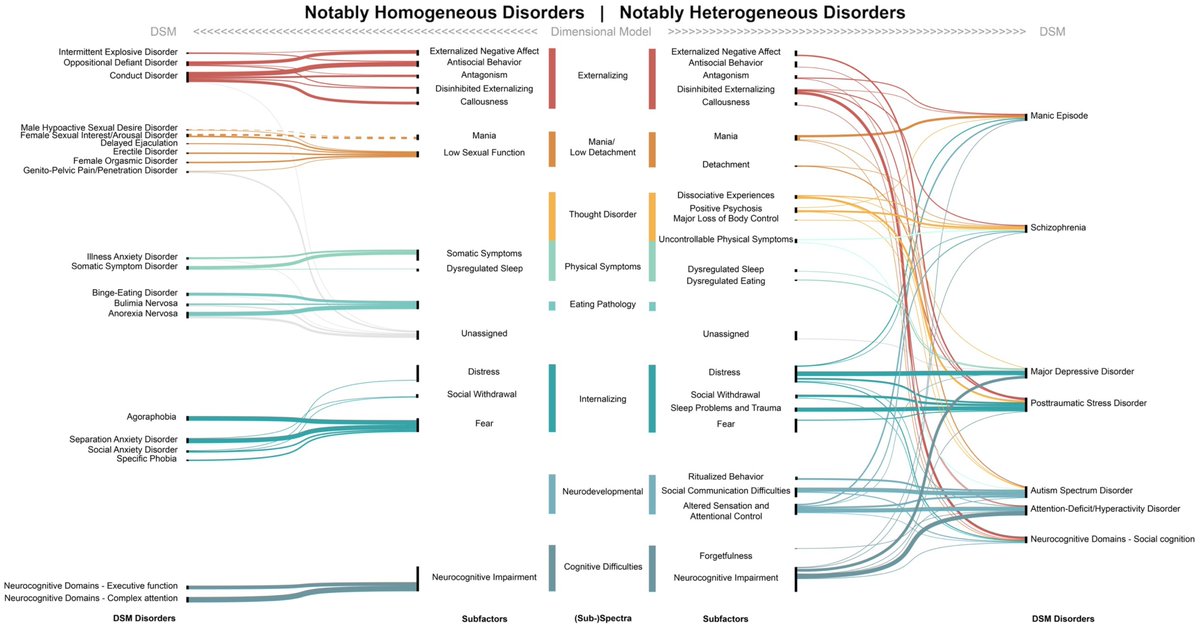
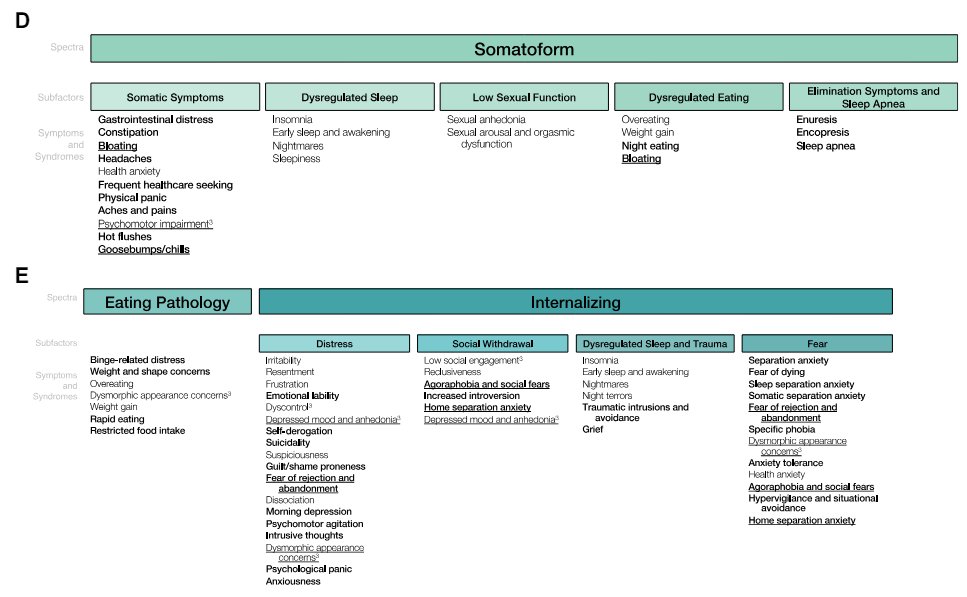
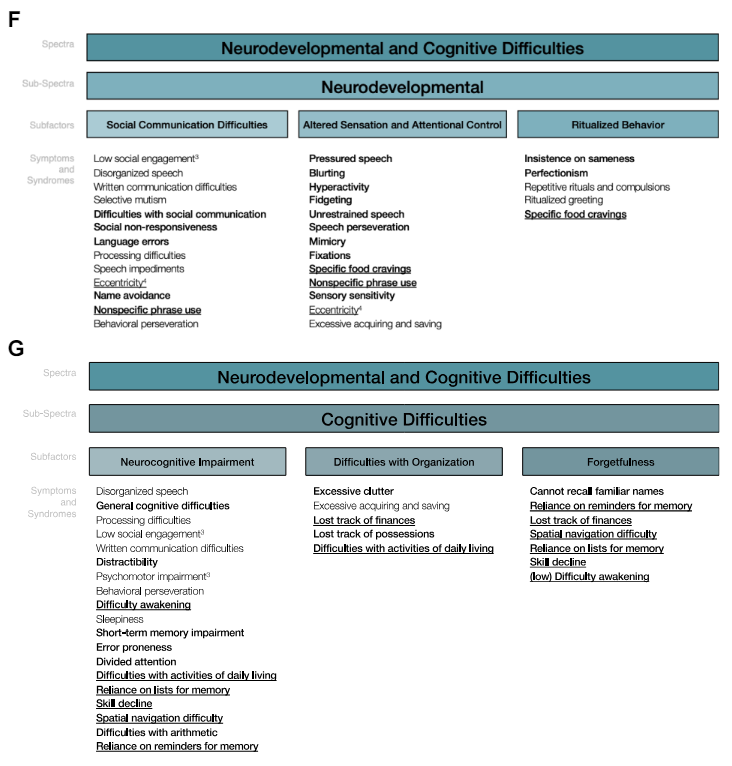
Here is a data-driven reorganization of the symptoms in the DSM-5.
🧵1/10
These findings are from a study in @PsyArXiv which reduced the DSM-5 to its constituent symptoms and reorganized them based on patterns of covariation in individuals’ self-reported experiences of the symptoms to form a hierarchical framework. 2/10 osf.io/preprints/psya…
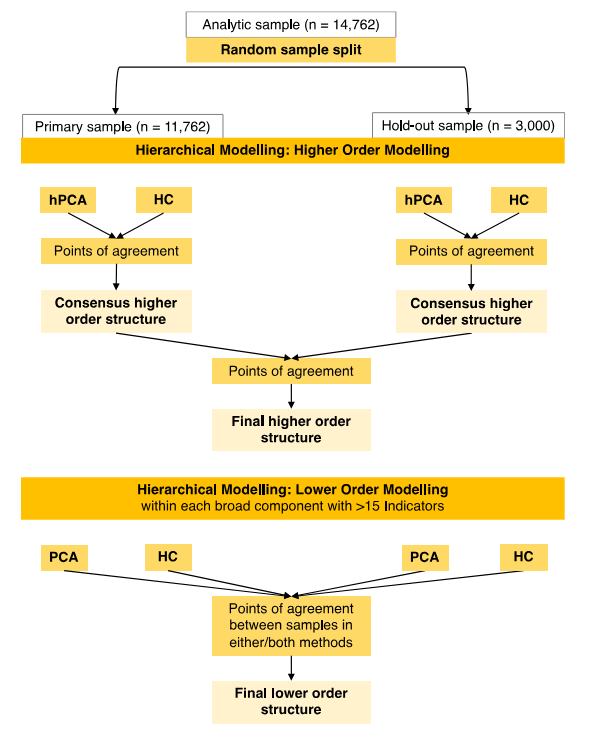
The points of agreement among hierarchical principal components analyses and hierarchical clustering, as well as between the randomly split primary (n=11,762) and hold-out (n=3,000) samples were used to identify the robust constructs that emerged to form a hierarchy. 3/10
There was marked convergence in the higher order constructs that emerged in each method. 4/10
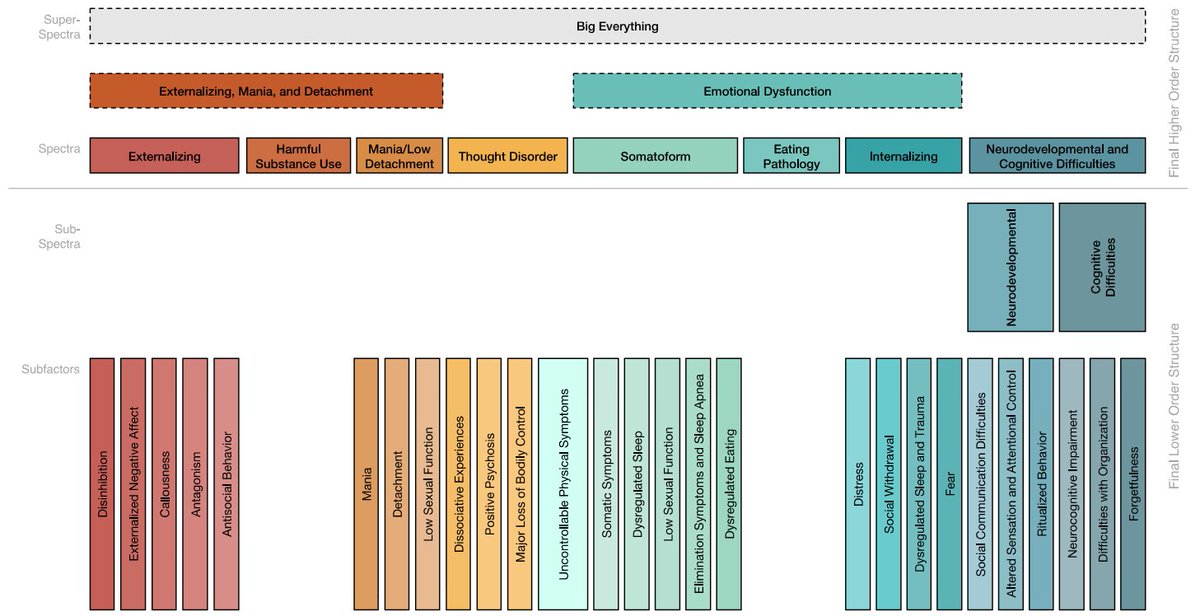
Within each spectra, several robust lower order constructs emerged. 5/10
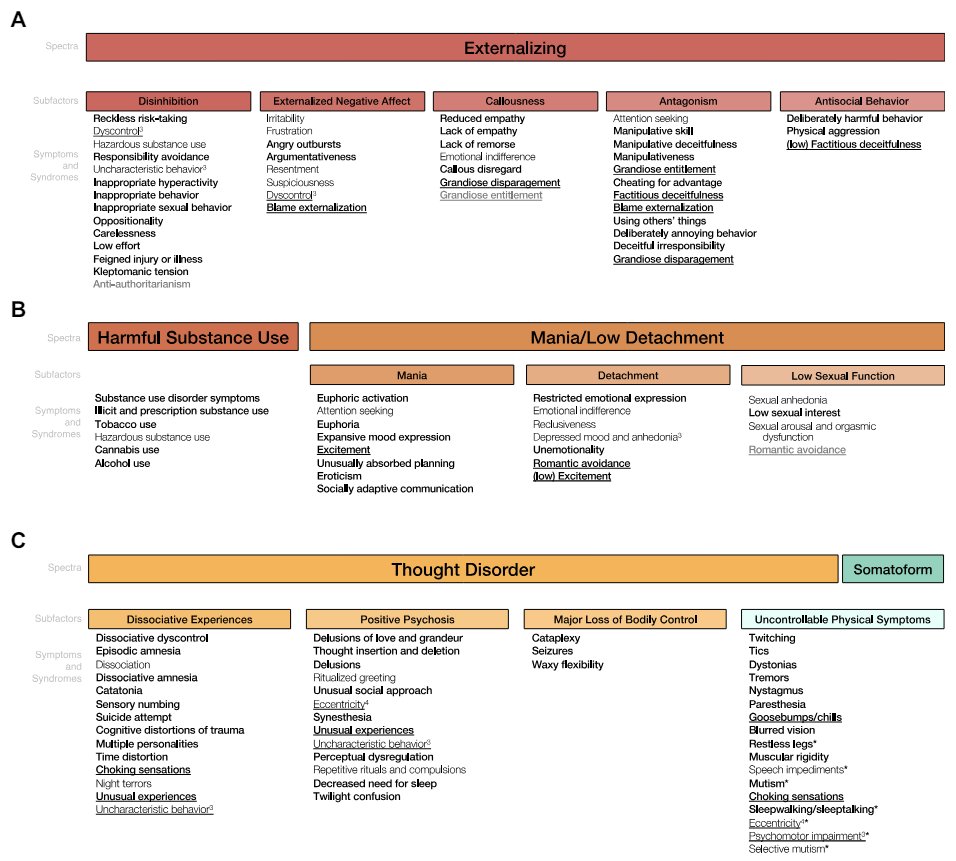
In nearly all cases there was evident heterogeneity in DSM-defined disorders such that their symptoms spanned multiple syndromes, subfactors, and/or (sub-)spectra. 6/10
However, the symptom level structure had noteworthy convergence with the quantitative psychopathology literature—particularly with the six core spectra of the @HiTOP_system. 7/10
With further testing of these findings and the accumulation of sufficient evidence, some of these points of difference between the structure in this paper and HiTOP could be incorporated in a formal revision of the HiTOP model. 8/10
Relative to the breadth of the DSM, the scope of this hierarchical structure expands substantially on the scope of HiTOP—from approximately 71 DSM disorders in the current HiTOP model to 167 disorders in this hierarchical structure. 9/10
This structure is an important step towards a comprehensive, empirically derived and supported classification system for psychopathology that can advance research and practice beyond the DSM by offering target constructs for neuroscience, genetics, and clinical psychology. 10/10
@aidangcw @ashleylwatts @Pbatterham @ACalear
• • •
Missing some Tweet in this thread? You can try to
force a refresh

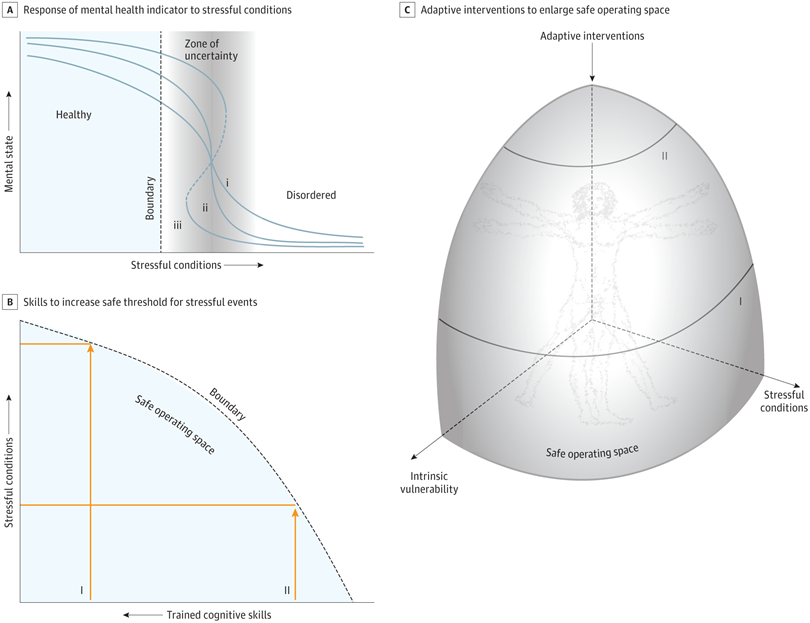
By taking a dynamical systems view of psychiatric disorders, we can improve the quality of life for vulnerable individuals through adaptive management of their resilience.
🧵1/11
This approach is from a review in @JAMAPsych which discussed the practical implications of a dynamical systems view of psychiatric disorders. 2/11 jamanetwork.com/journals/jamap…
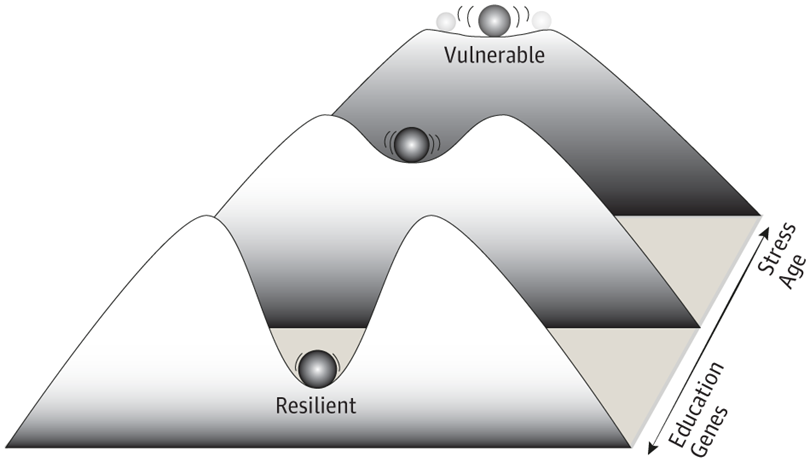
Quantifying resilience is useful not just to indicate the chances of a transition (for better or worse) but also to evaluate the effects of interventions aimed at promoting resilience of the healthy state. 3/11
In the dynamical systems view of psychiatric disorders, the healthy state has a basin of attraction representing its resilience, while disorders are alternative attractors in which the system can become trapped.
🧵1/11
This theory is from a study in @JAMAPsych which aimed to determine novel ways of inferring causality and quantifying resilience from time series to help monitor and manage resilience of the healthy state as well as psychiatric disorders. 2/11 jamanetwork.com/journals/jamap…
The term resilience has traditionally not been linked to mechanisms that cause persistence of a disordered state. Yet, perhaps counterintuitively, we may think of resilience of a disorder, capturing its tendency to persist in the face of efforts to reverse it. 3/11
This is a map of repetition among all symptoms in the DSM-5.
🧵1/10
These findings are from a descriptive study published in Psychological Medicine which mapped the repetition among the 1419 symptoms described in 202 diagnoses of adult psychopathology in section II of the DSM-5. 2/10 cambridge.org/core/journals/…
The first stage of coding aimed to distil the constituent symptoms of the diagnoses in chapters 1–19 of section II of the DSM-5. The resulting list of symptoms was then coded for content overlap using both qualitative content coding and natural language processing. 3/10
Fast walkers have higher IQ and larger brains than slow walkers.
🧵1/9
These findings are from a 5-decade cohort study of 904 participants in New Zealand published in @JAMANetworkOpen which tested the hypothesis that slow gait speed reflects accelerated biological aging at midlife. 2/9 jamanetwork.com/journals/jaman…
Gait speed was correlated across the 3 walk conditions: usual vs dual task, usual vs maximum, and dual task vs maximum. 3/9
A single dream caused remission of a psychiatric disorder.
Better yet, this dream was induced by anesthesia during a surgery.
🧵1/11
This finding is from a recent case report published in @IARS_Journalsp whereby a 26 year old woman experienced a traumatic knife attack and subsequently developed acute stress disorder (which can often lead to posttraumatic stress disorder). 2/11 journals.lww.com/aacr/abstract/…
She suffered multiple severed tendons/nerves in her hand and required an elective surgery for repair. 3/11
As a psychiatrist-in-training, this book is my bible.
But what if I told you that the panel members collectively received over $14 million in payments from the industry, most of which was undisclosed.
🧵1/10
These findings are from a recent cross-sectional study in @bmj_latest which quantified the type and amount of compensation the panel and task force members of DSM-5-TR received during 2016-19. 2/10 bmj.com/content/384/bm…
Of the 92 individuals included, 55 (60%) received payments from the industry and one third (33.3%) had payments reported in open payments. 3/10