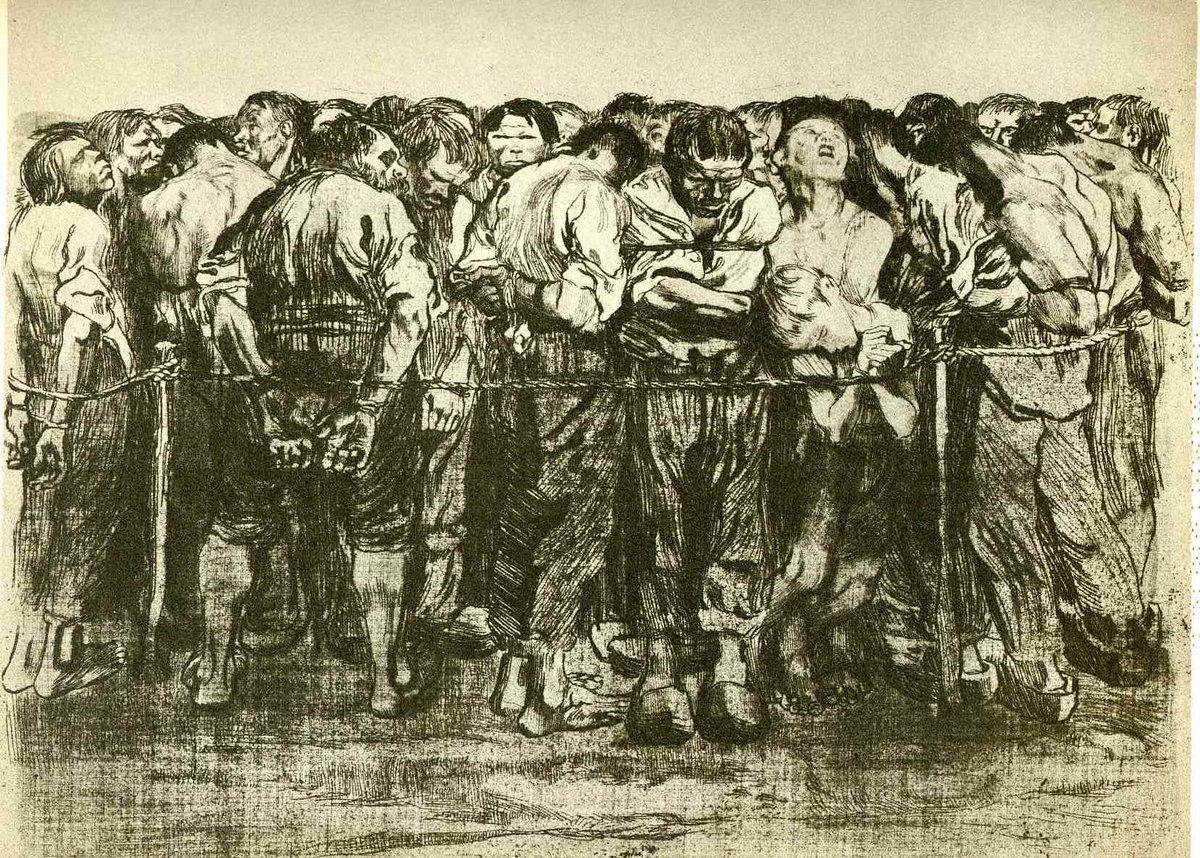
America built some of the world's greatest architecture... and then demolished it.
A thread of wonders that were lost (and why)... 🧵
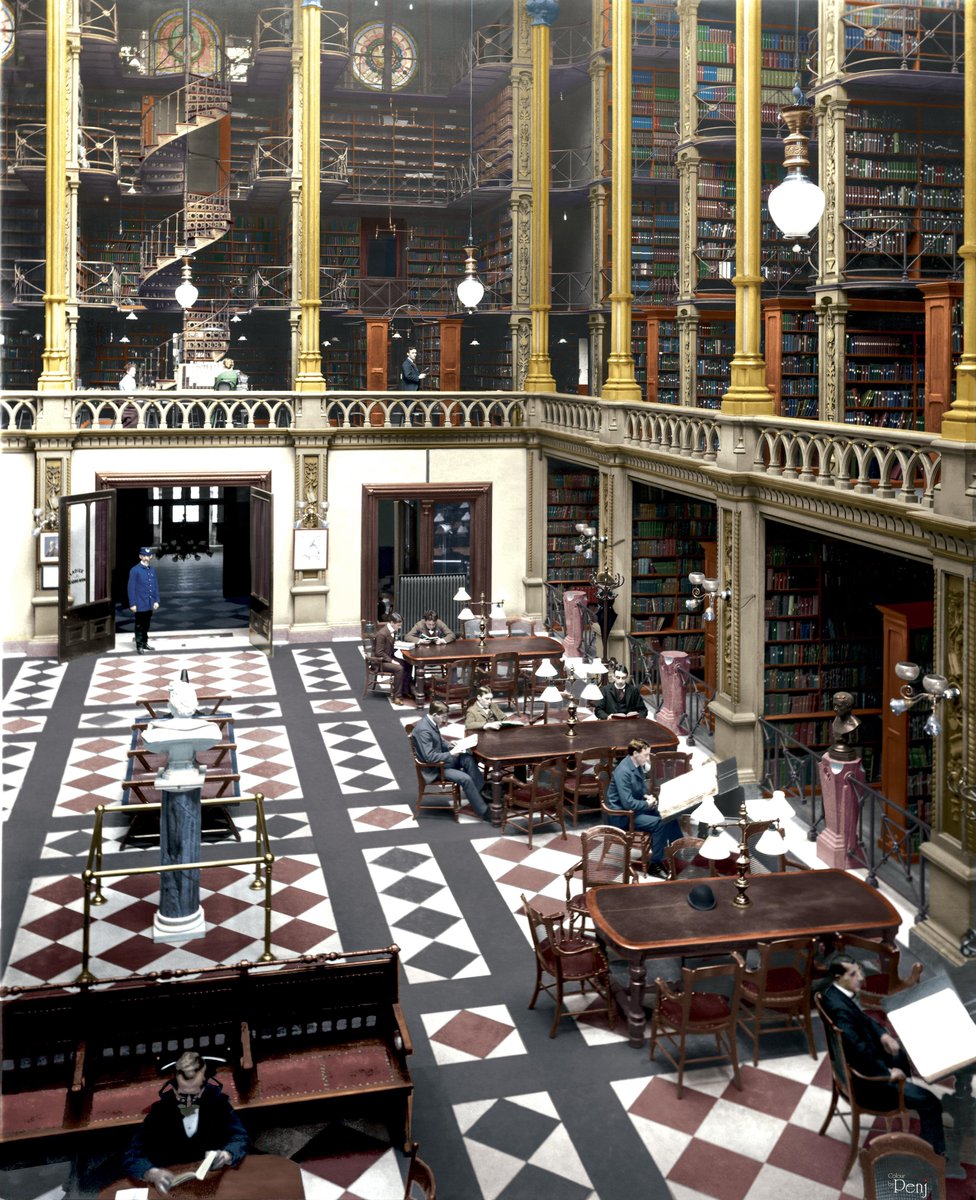
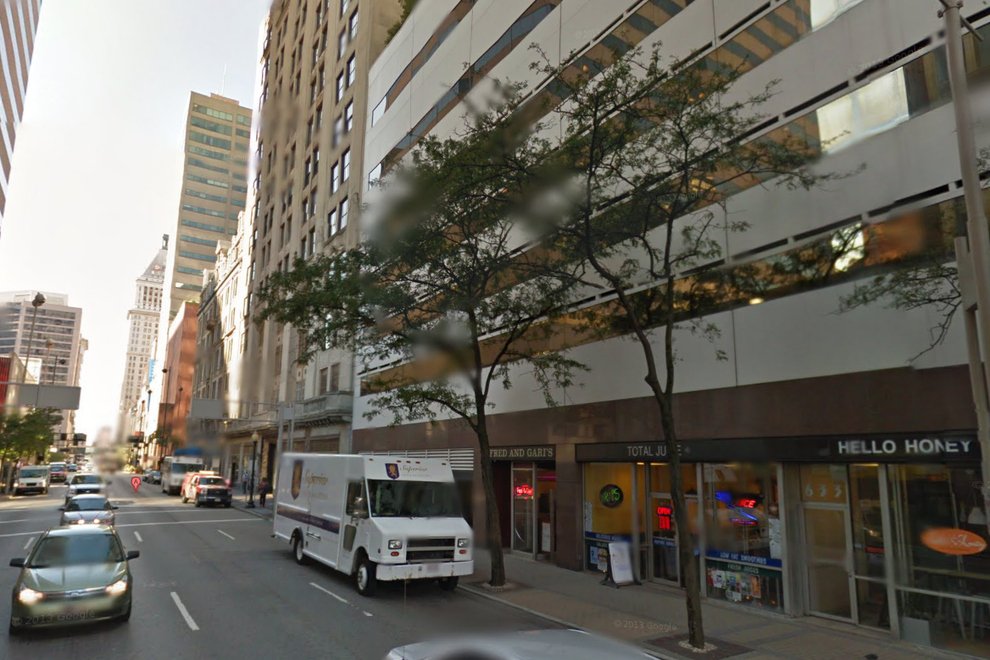
1. Cincinnati Library: replaced by a parking garage
A thread of wonders that were lost (and why)... 🧵
1. Cincinnati Library: replaced by a parking garage

The most beautiful library ever built in the US, with towering cast-iron book alcoves. An institution since 1874, it was demolished in 1955 and the library moved to a new site with more space. Today, a parking garage stands in its place.
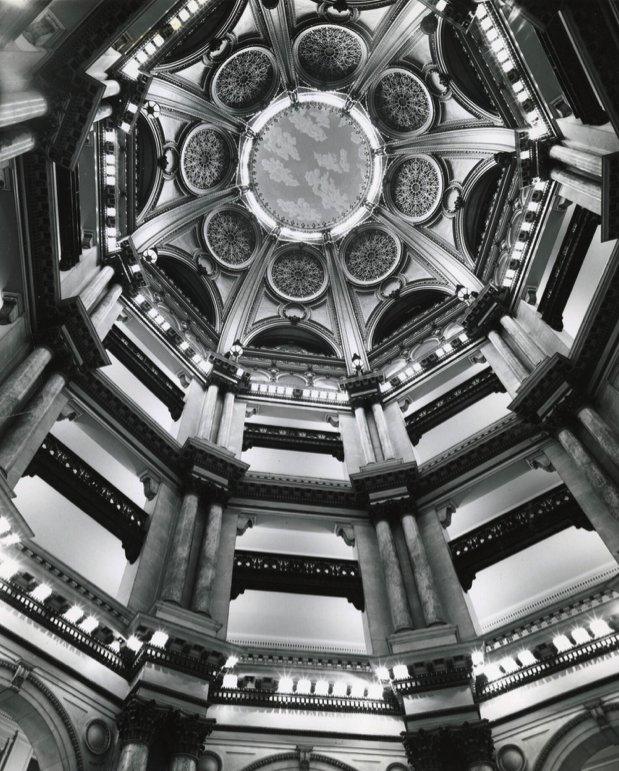
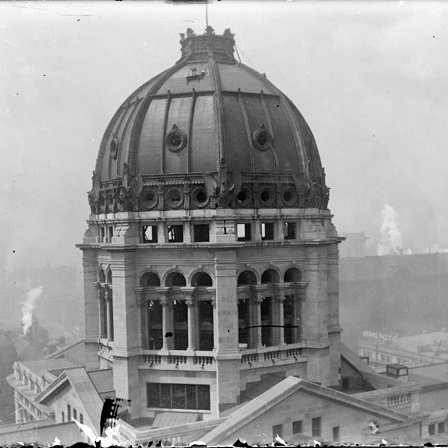
2. The Chicago Federal Building (1905 - 1965)
Demolished to make way for larger premises that more government departments could fit into: the modernist Kluczynski Federal Building.
Demolished to make way for larger premises that more government departments could fit into: the modernist Kluczynski Federal Building.
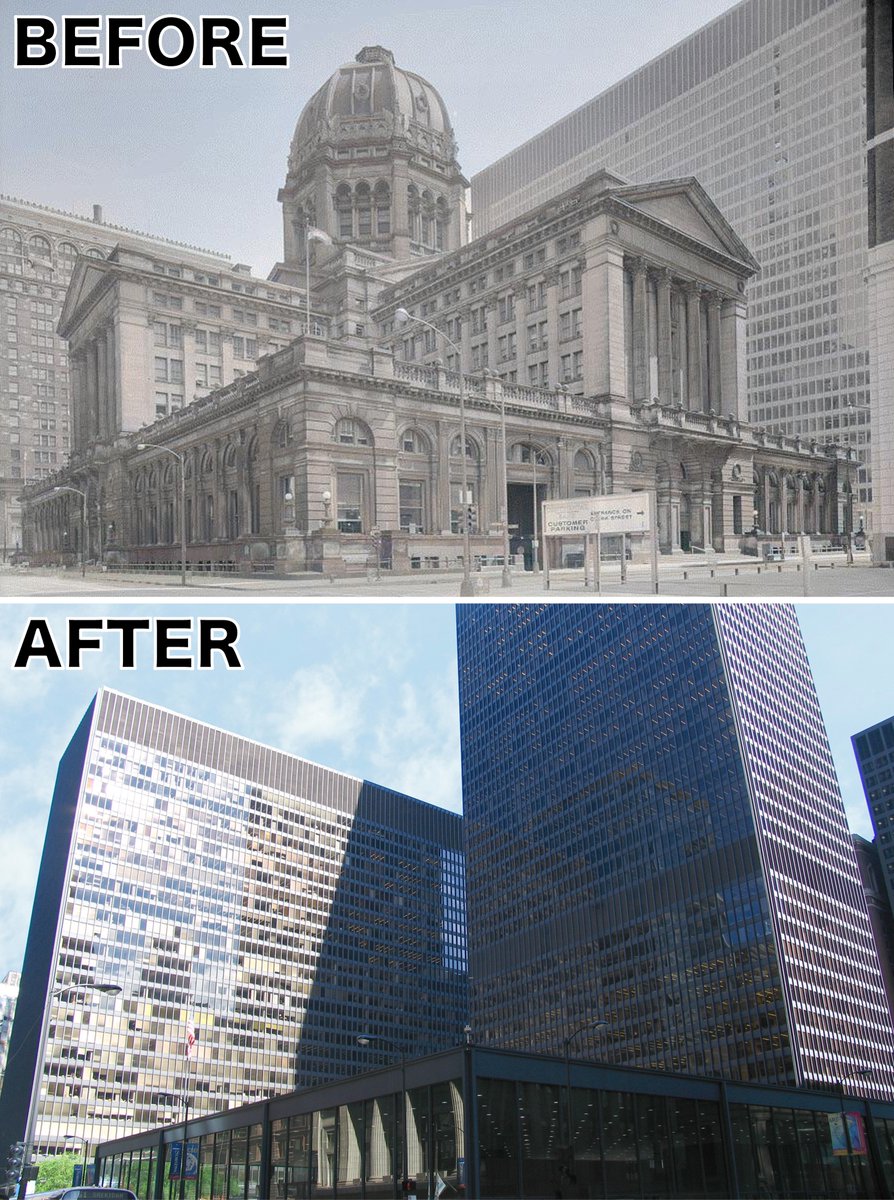
Chicago lost what was the largest dome in the US (larger even than the US Capitol), and a wonder of the Beaux-Arts era.
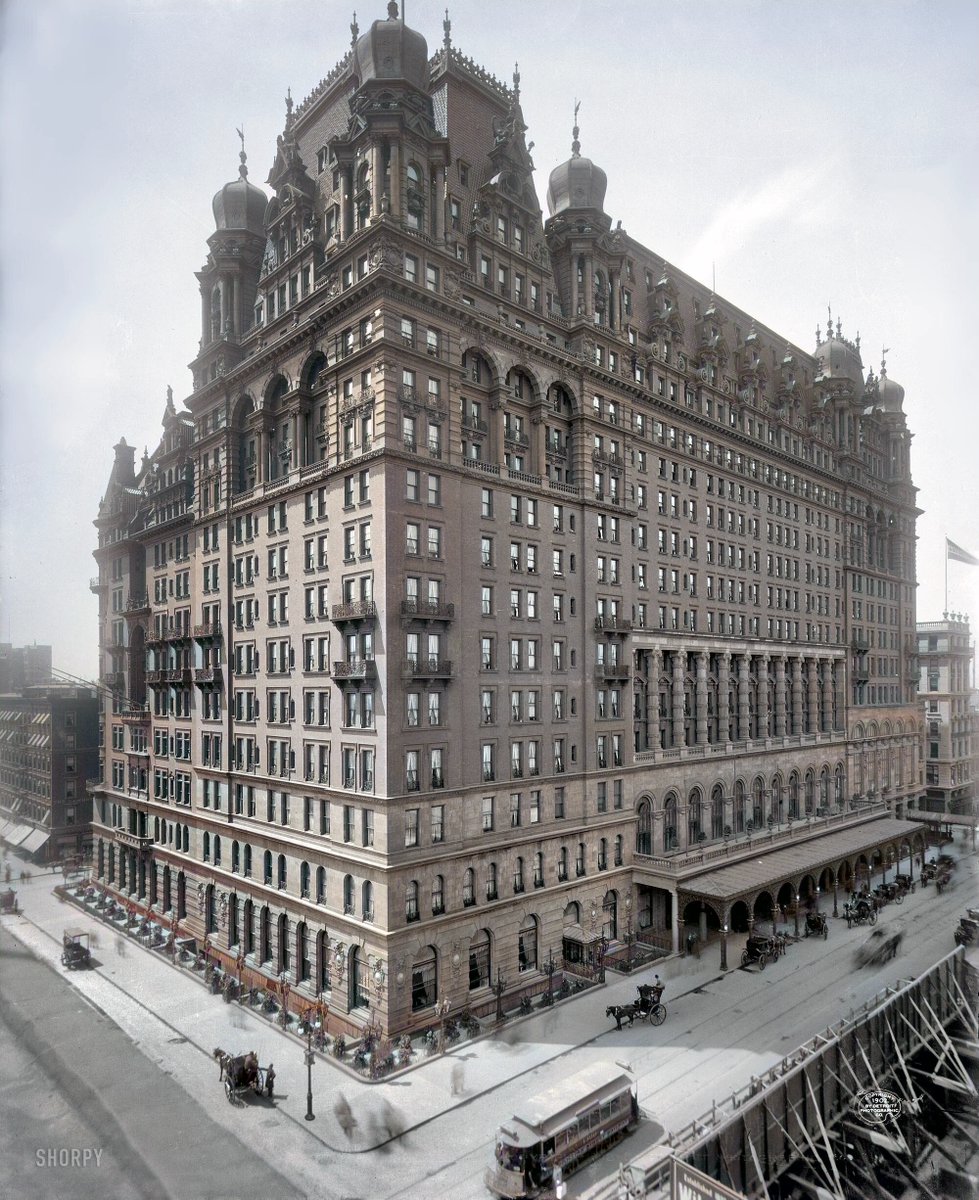
3. Old Waldorf-Astoria Hotel, NYC (1893 - 1929)
If you ever wondered what was demolished to make way for the Empire State Building, this is it. A German Renaissance design containing the world's largest hotel — which also set the standard for luxury.
If you ever wondered what was demolished to make way for the Empire State Building, this is it. A German Renaissance design containing the world's largest hotel — which also set the standard for luxury.
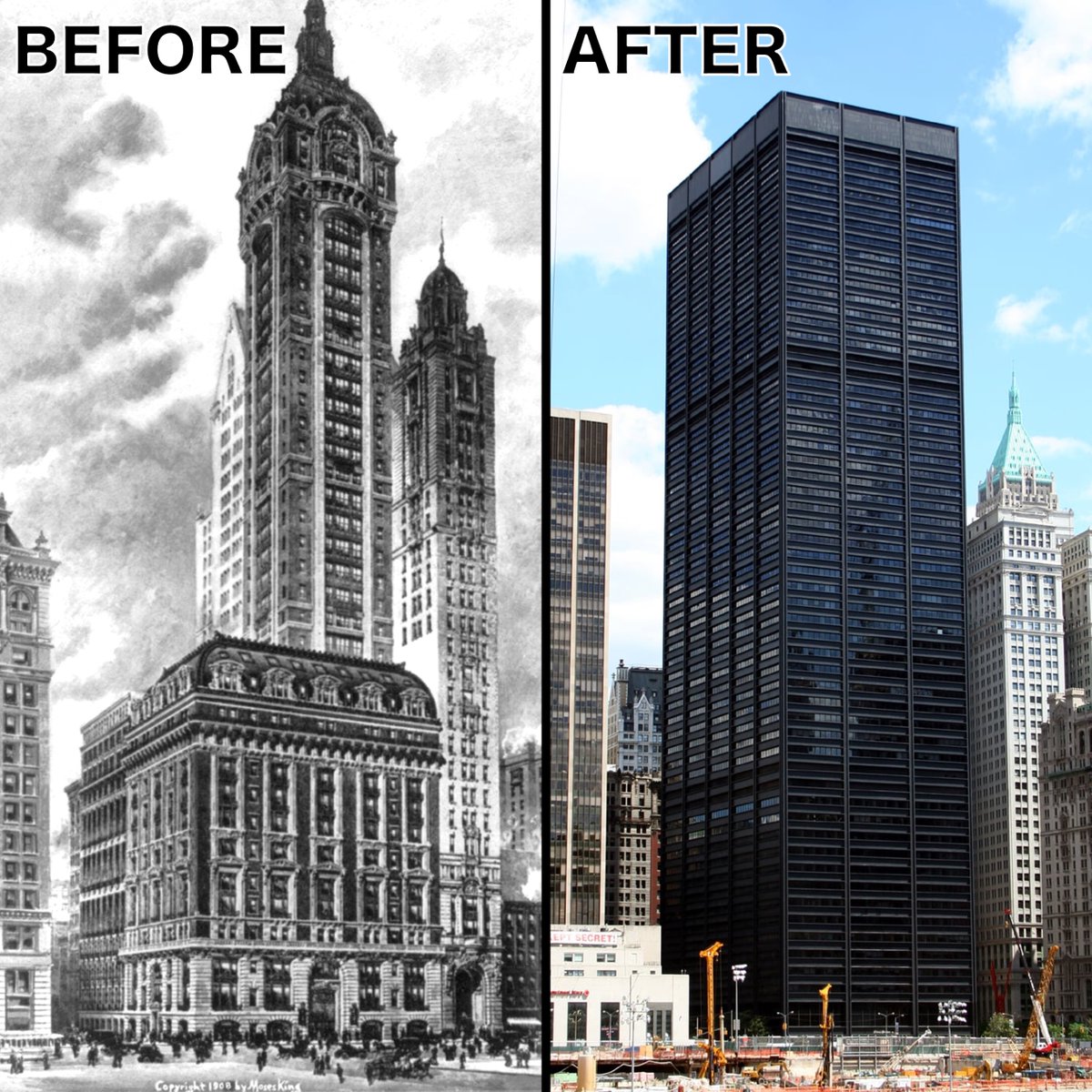
4. The Singer Building (1908 - 1968)
Maybe the greatest of the early skyscrapers, and once the tallest building on Earth. When its antiquated floor plan was deemed too inefficient for modern use, it was razed — and replaced by something far less dignified...
Maybe the greatest of the early skyscrapers, and once the tallest building on Earth. When its antiquated floor plan was deemed too inefficient for modern use, it was razed — and replaced by something far less dignified...
5. Garrick Theater, Chicago (1891 - 1961)
A wonderfully ornate theater inside what was a landmark of early modern architecture (by Louis Sullivan). Despite considerable protest, it was demolished for a parking garage.
A wonderfully ornate theater inside what was a landmark of early modern architecture (by Louis Sullivan). Despite considerable protest, it was demolished for a parking garage.
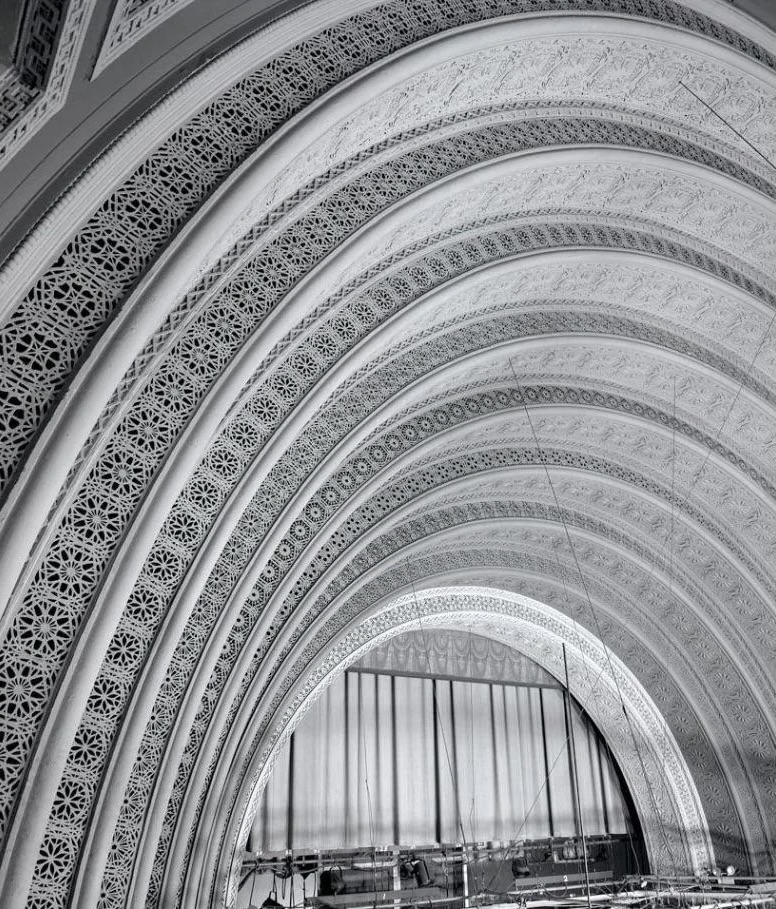
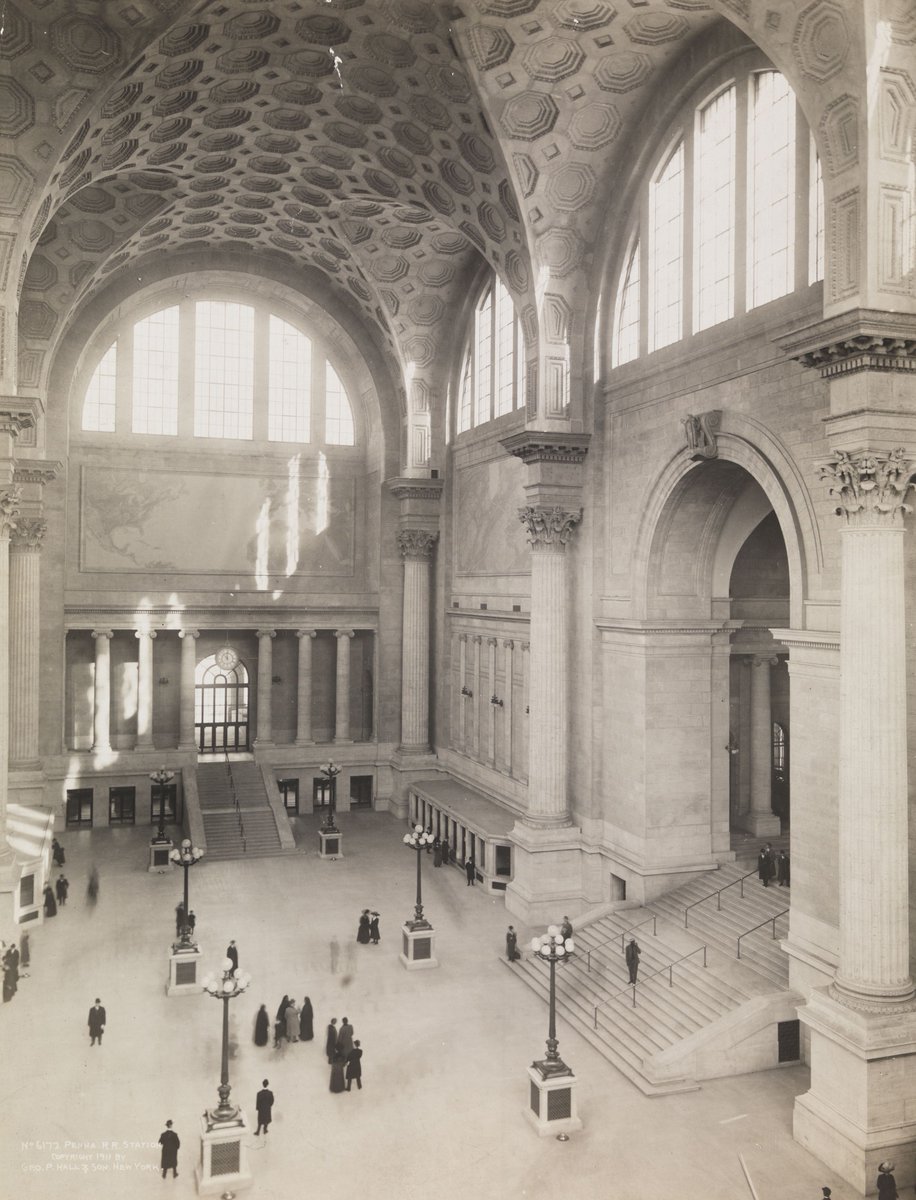
6. Old Penn Station, NYC (1910 - 1963)
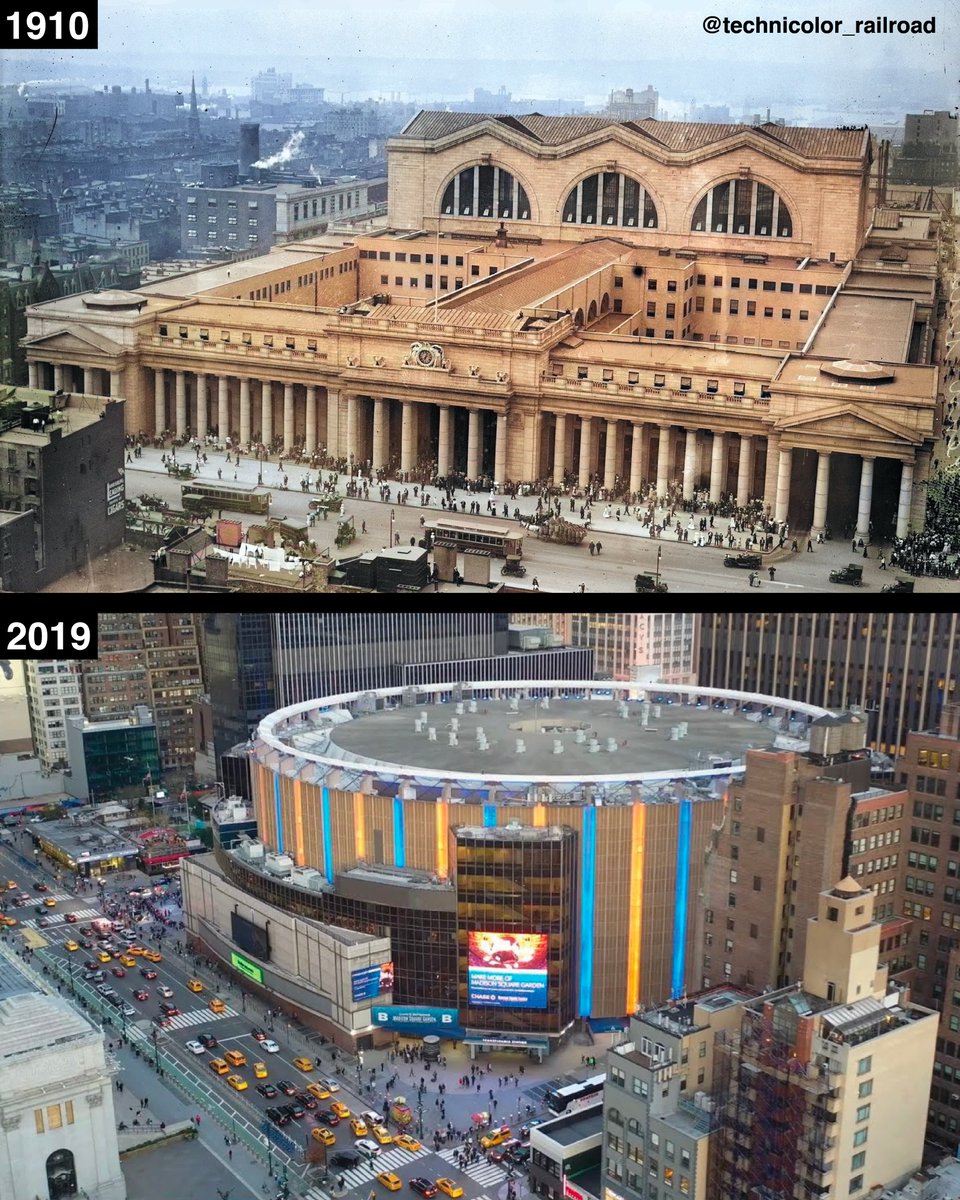
New York's majestic gateway might be the greatest train station ever built. After just 50 years, it was demolished to make way for Madison Square Garden, and the station pushed underground…
New York's majestic gateway might be the greatest train station ever built. After just 50 years, it was demolished to make way for Madison Square Garden, and the station pushed underground…
And here's the before and after shot.
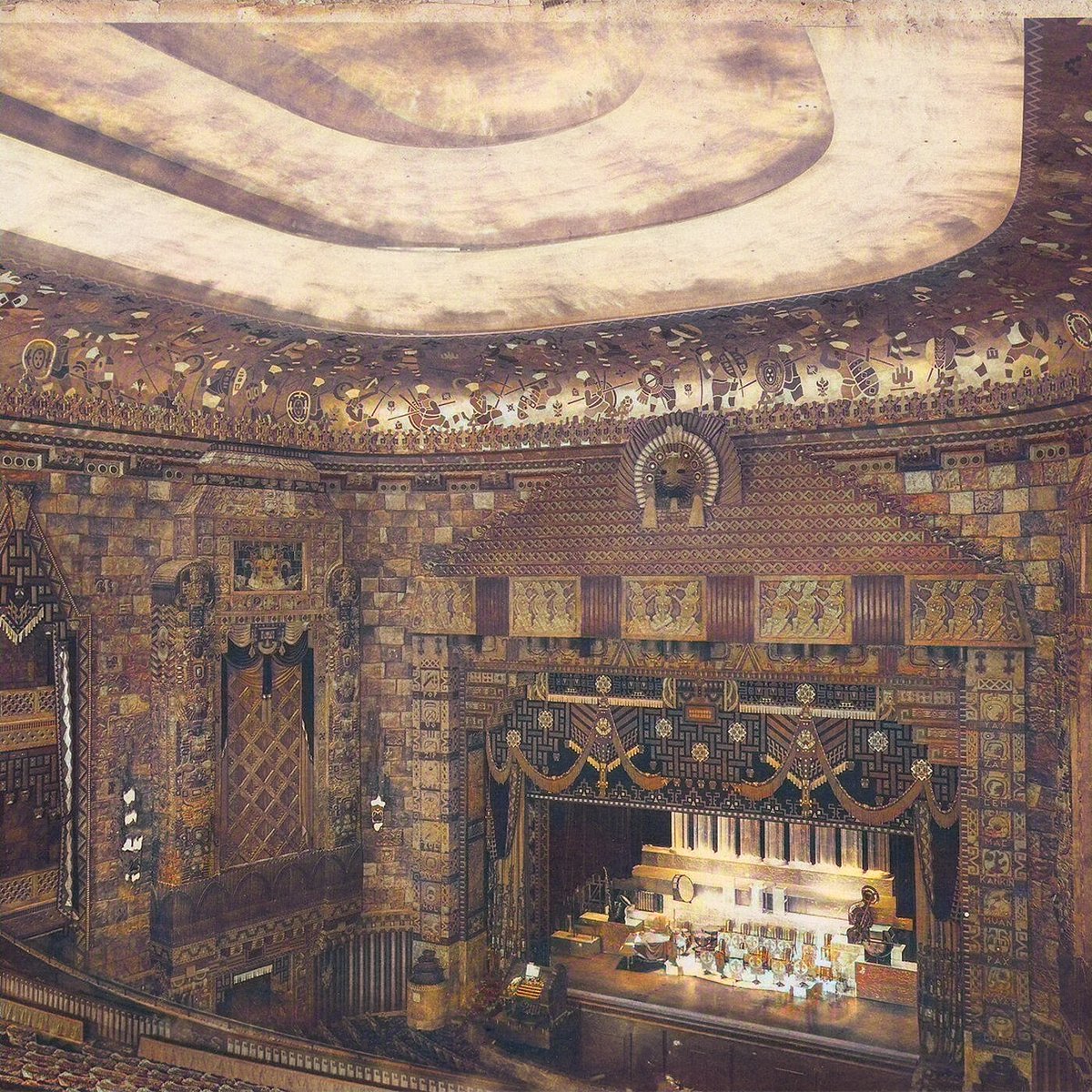
7. The “Mayan Revival” Fisher Theatre, Detroit (1928 - 1961)
This theater still stands (inside the Fisher Building in Detroit), but it was gutted in the 1960s so it could be "modernized".
This theater still stands (inside the Fisher Building in Detroit), but it was gutted in the 1960s so it could be "modernized".
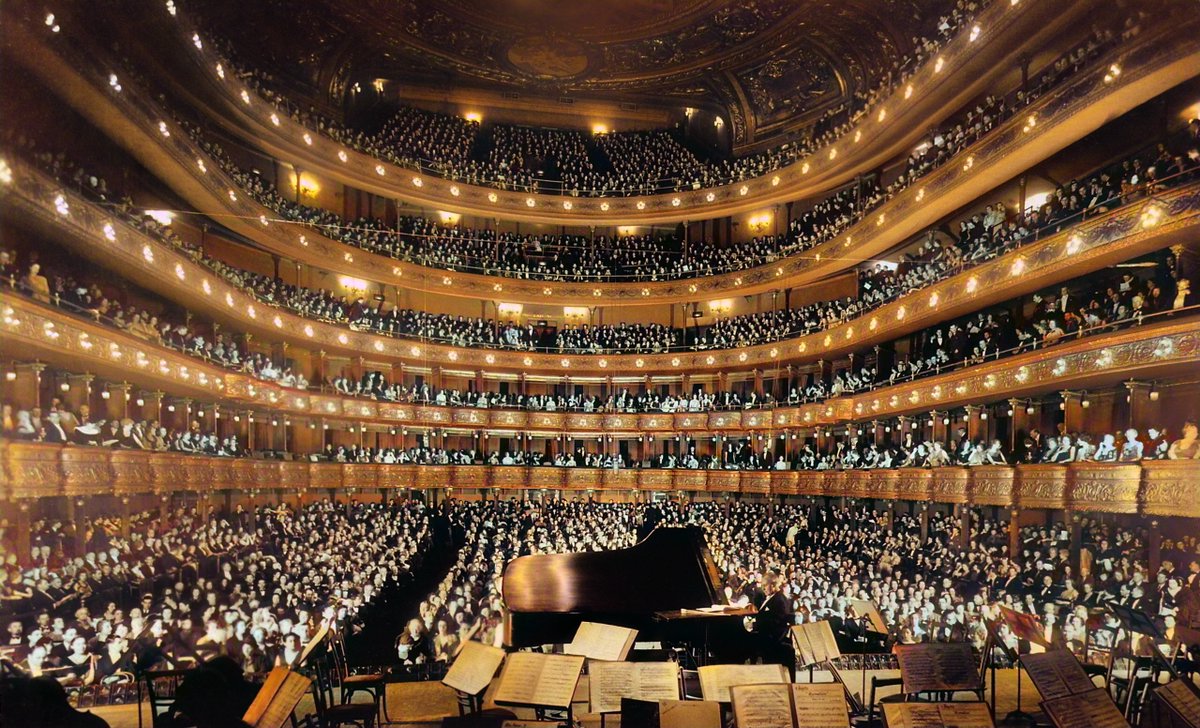
8. Old Metropolitan Opera House, NYC (1883 - 1967)
When the Metropolitan Opera Association moved to a new venue, rather than risk competition from a new company buying the Old Met, they handed it to developers. It was demolished for bland commercial property to be built.
When the Metropolitan Opera Association moved to a new venue, rather than risk competition from a new company buying the Old Met, they handed it to developers. It was demolished for bland commercial property to be built.
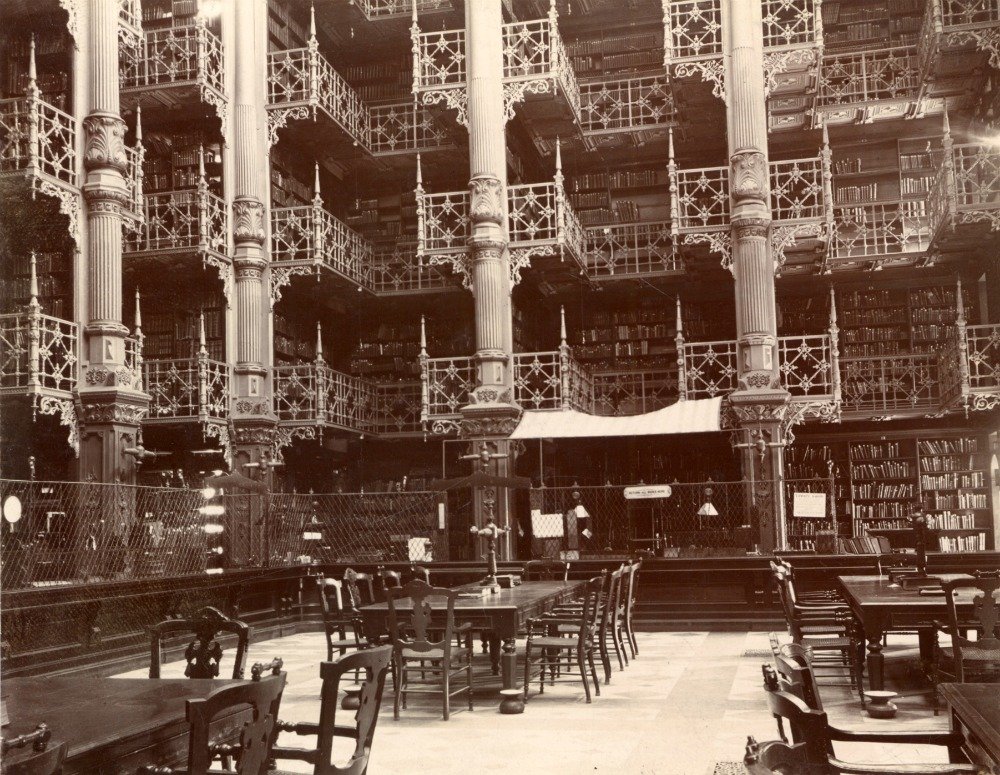
9. Old Detroit Library (1877 - 1931)
Like the one in Cincinnati, it had a huge atrium (five-stories) with skylights, ornate iron railings and towering columns. Scaling the tall bookshelves was deemed an inefficient way to run a library in the modern world, so it was demolished.
Like the one in Cincinnati, it had a huge atrium (five-stories) with skylights, ornate iron railings and towering columns. Scaling the tall bookshelves was deemed an inefficient way to run a library in the modern world, so it was demolished.
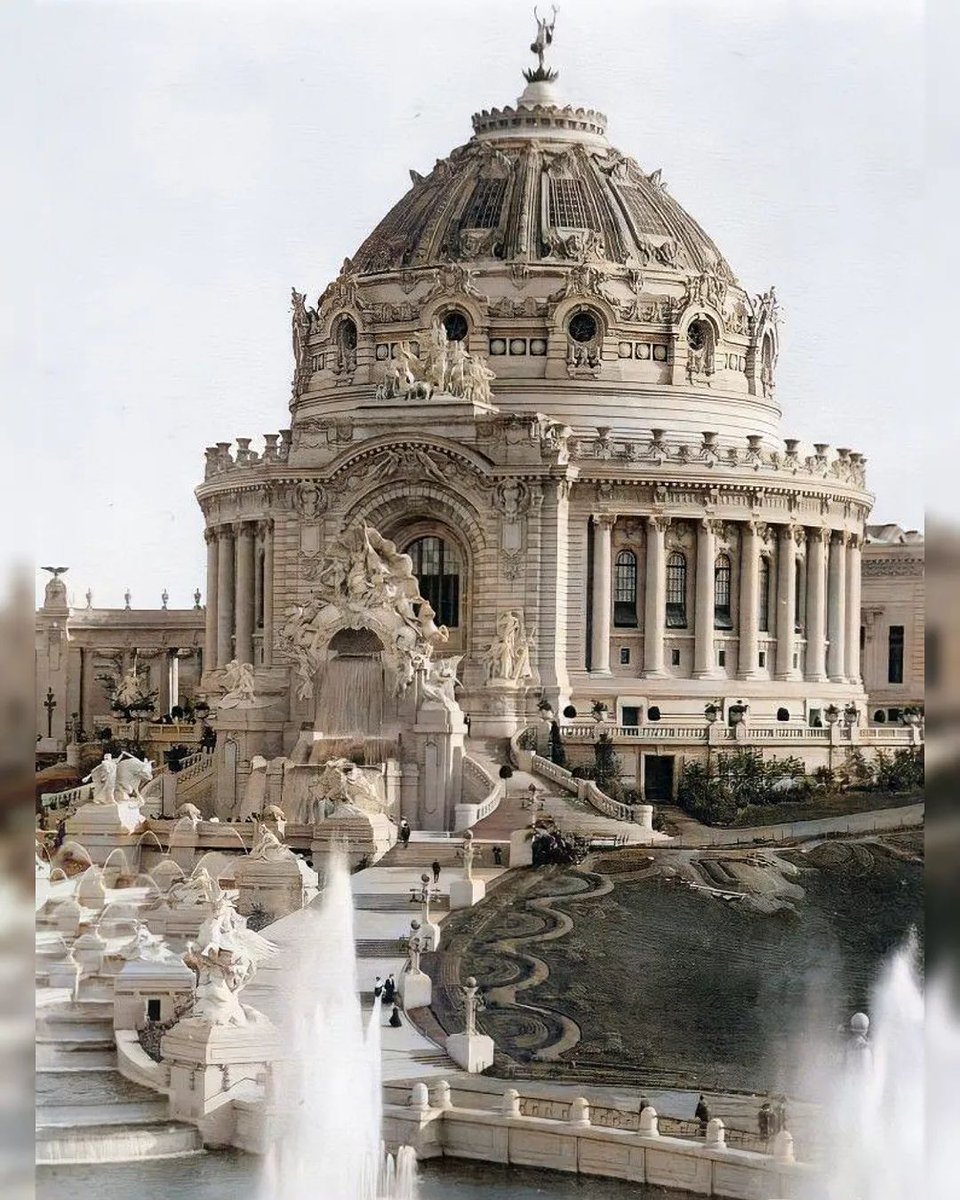
10. Festival Hall, St. Louis, (1904 - 1905)
A gem of classicism that became an icon of the World's Fair held in St. Lous. It was built as a temporary structure (plaster and wood) to host large-scale musical pageants.
A gem of classicism that became an icon of the World's Fair held in St. Lous. It was built as a temporary structure (plaster and wood) to host large-scale musical pageants.
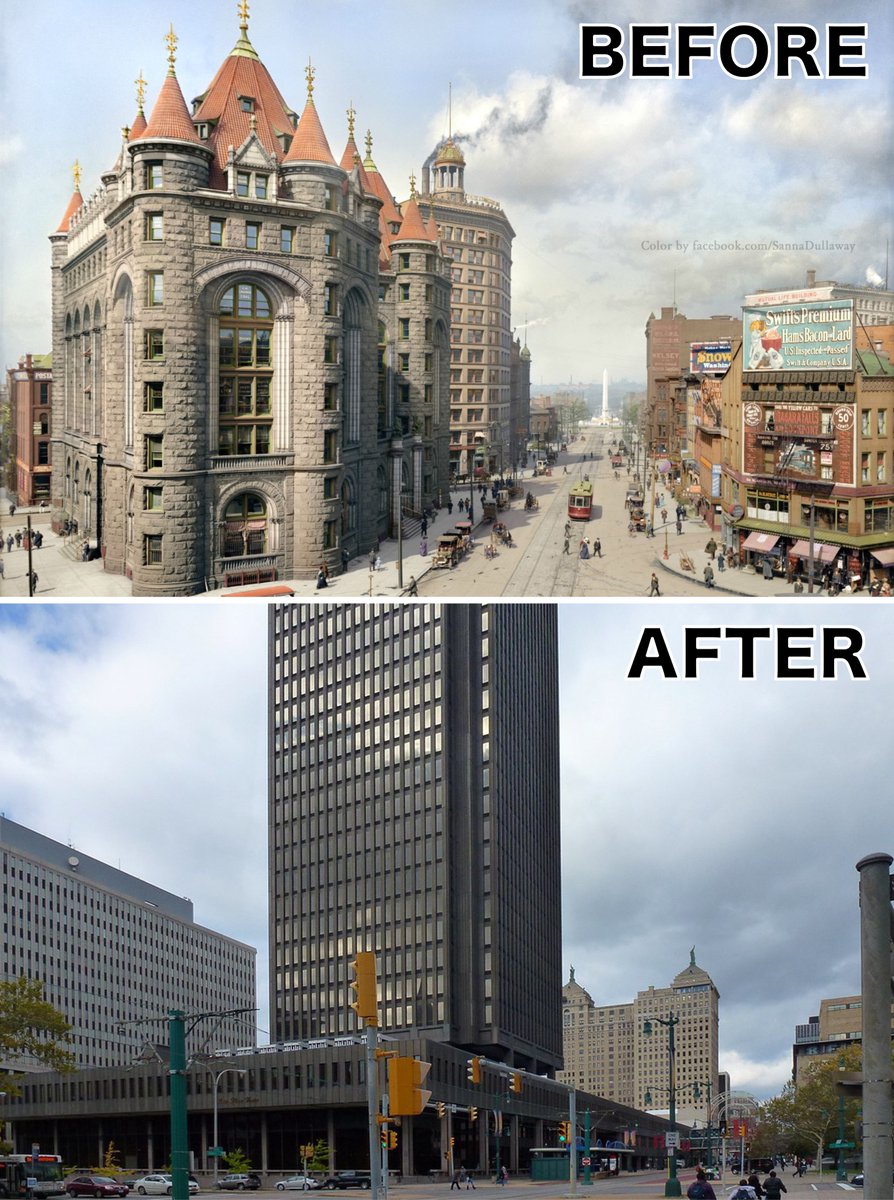
11. Erie County Savings Bank, Buffalo (1893 - 1968)
A truly unique, Romanesque design that was the city's most beloved building. It was demolished in an "urban renewal" project of the 1960s that saw a bland, modernist tower built instead.
A truly unique, Romanesque design that was the city's most beloved building. It was demolished in an "urban renewal" project of the 1960s that saw a bland, modernist tower built instead.
To explore the beauty of the old world (and much more), join my free newsletter.
33,000 others read it too (art, culture and history) 👇
culturecritic.beehiiv.com/subscribe
33,000 others read it too (art, culture and history) 👇
culturecritic.beehiiv.com/subscribe
• • •
Missing some Tweet in this thread? You can try to
force a refresh