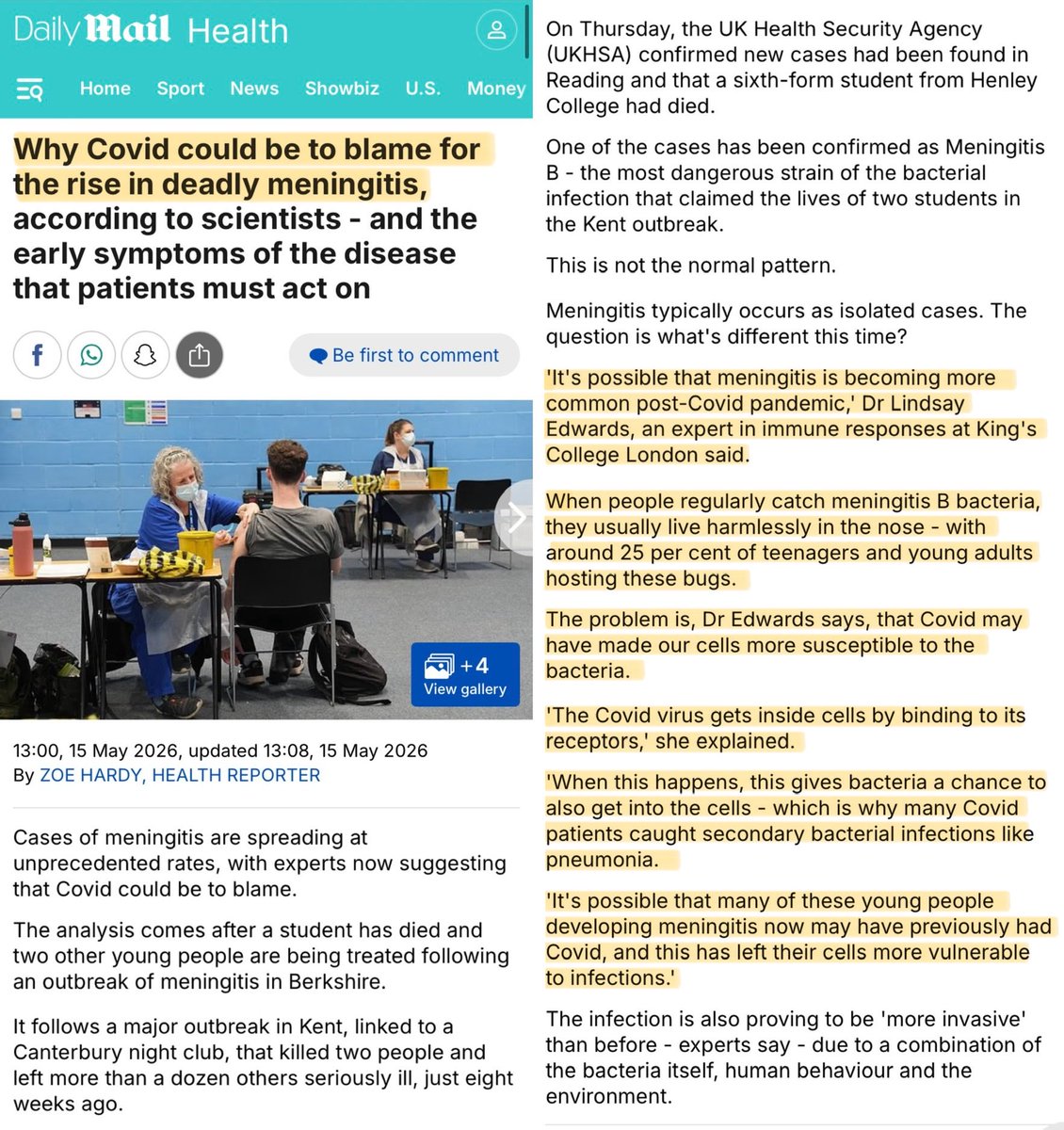
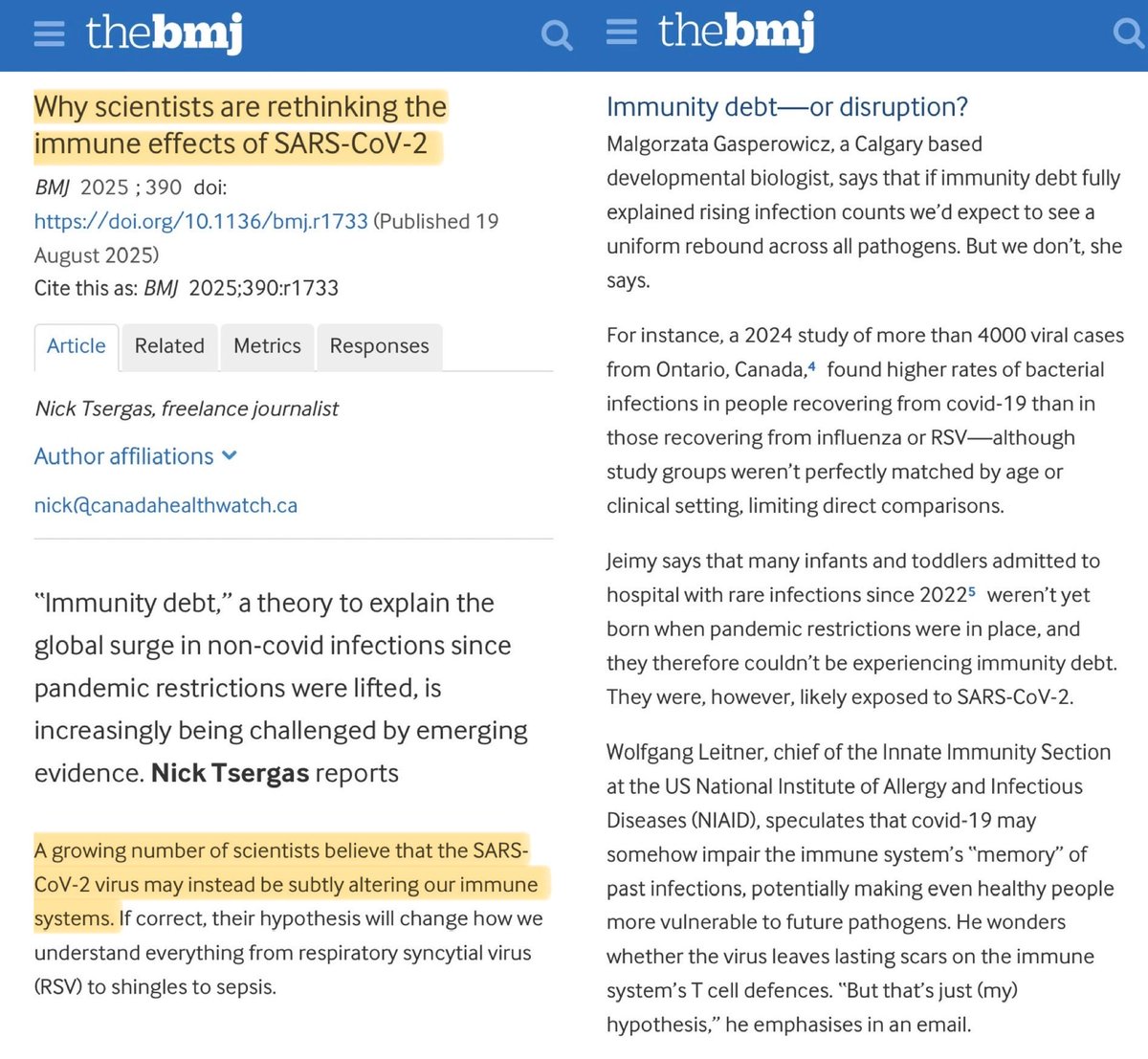
COVID’S EFFECT ON THE IMMUNE SYSTEM
🔥 This is an excellent series of graphics from @YaleSPH explaining what we do (and don’t) know about Covid’s effect on the immune system.
Much of this is informed by the work of Dr. Akiko Iwasaki (@VirusesImmunity).
🧵
H/t @fitterhappierAJ
🔥 This is an excellent series of graphics from @YaleSPH explaining what we do (and don’t) know about Covid’s effect on the immune system.
Much of this is informed by the work of Dr. Akiko Iwasaki (@VirusesImmunity).
🧵
H/t @fitterhappierAJ

This fantastic series of graphics have come from a Facebook post by Yale School of Public Health at the link below:
facebook.com/10006428075591…
facebook.com/10006428075591…
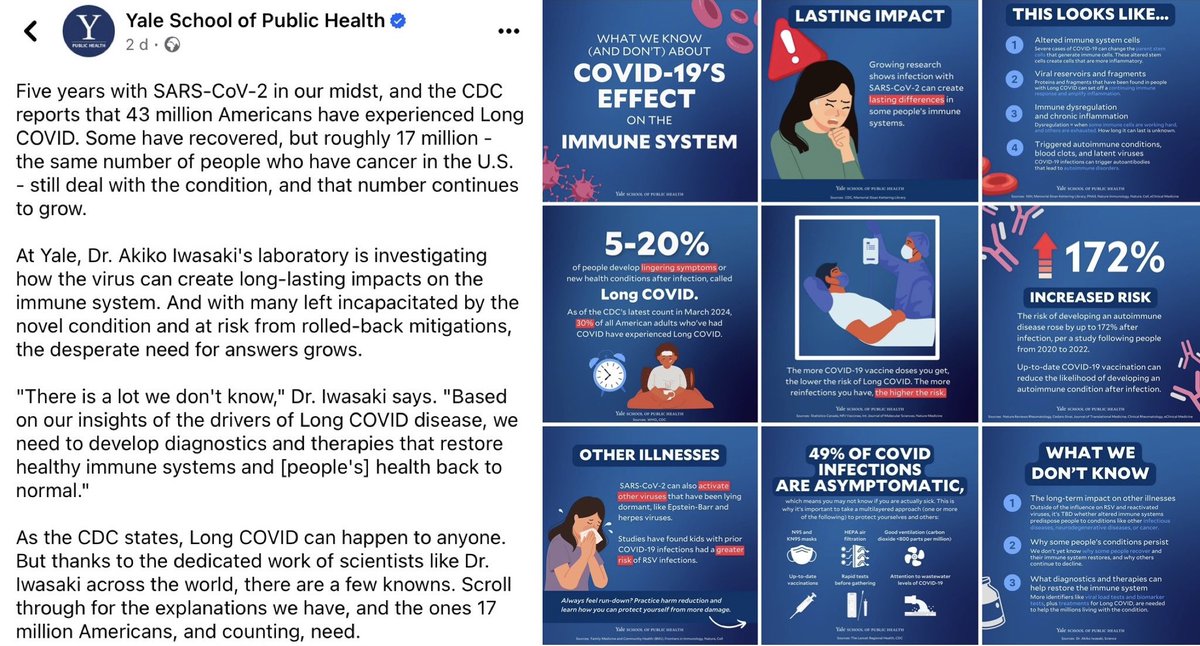
LASTING IMPACT
▪️Growing research shows infection with SARS-CoV-2 can create lasting differences in some people's immune systems.
▪️Growing research shows infection with SARS-CoV-2 can create lasting differences in some people's immune systems.

THIS LOOKS LIKE...
1. Altered immune system cells which are more inflammatory.
2. Viral reservoirs and fragments which can set off a continuing immune response.
3. Immune dysregulation & chronic inflammation
4. Triggered autoimmune conditions, blood clots & latent viruses
1. Altered immune system cells which are more inflammatory.
2. Viral reservoirs and fragments which can set off a continuing immune response.
3. Immune dysregulation & chronic inflammation
4. Triggered autoimmune conditions, blood clots & latent viruses

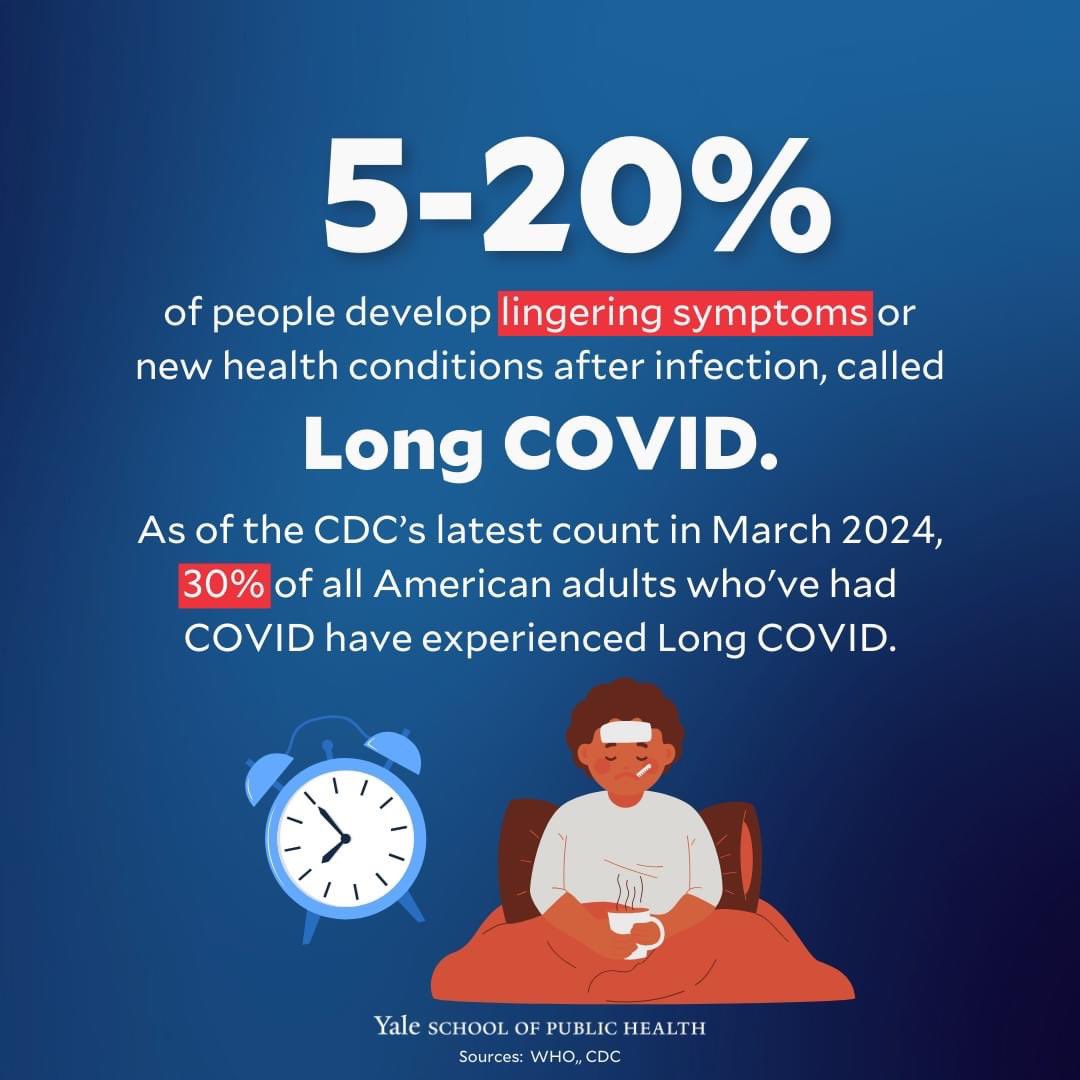
▪️5-20% of people develop lingering symptoms or new health conditions after infection, called Long COVID.
▪️As of the CDC's latest count in March 2024, 30% of all American adults who've had COVID have experienced Long COVID.
▪️As of the CDC's latest count in March 2024, 30% of all American adults who've had COVID have experienced Long COVID.
▪️The more COVID-19 vaccine doses you get, the lower the risk of Long COVID.
▪️The more reinfections you have, the higher the risk.
▪️The more reinfections you have, the higher the risk.

172% INCREASED RISK
▪️The risk of developing an autoimmune disease rose by up to 172% after infection, per a study following people from 2020 to 2022.
▪️Up-to-date COVID-19 vaccination can reduce the likelihood of developing an autoimmune condition after infection.
▪️The risk of developing an autoimmune disease rose by up to 172% after infection, per a study following people from 2020 to 2022.
▪️Up-to-date COVID-19 vaccination can reduce the likelihood of developing an autoimmune condition after infection.

OTHER ILLNESSES
▪️SARS-CoV-2 can also activate other viruses that have been lying dormant, like Epstein-Barr and herpes viruses.
▪️Studies have found kids with prior COVID-19 infections had a greater risk of RSV infections.
▪️SARS-CoV-2 can also activate other viruses that have been lying dormant, like Epstein-Barr and herpes viruses.
▪️Studies have found kids with prior COVID-19 infections had a greater risk of RSV infections.

49% OF COVID INFECTIONS ARE ASYMPTOMATIC…
…which means you may not know if you are actually sick.
This is why it's important to take a multilayered approach to protect yourselves & others:
▪️Masks
▪️HEPA air filtration
▪️Good ventilation
▪️Up-to-date vax
▪️Rapid tests
…which means you may not know if you are actually sick.
This is why it's important to take a multilayered approach to protect yourselves & others:
▪️Masks
▪️HEPA air filtration
▪️Good ventilation
▪️Up-to-date vax
▪️Rapid tests

WHAT WE DON'T KNOW
1. The long-term impact on other illnesses
2. Why some people's conditions persist
3. What diagnostics and therapies can help restore the immune system
1. The long-term impact on other illnesses
2. Why some people's conditions persist
3. What diagnostics and therapies can help restore the immune system

Link to Facebook post by Yale School of Public Health:
You can also find a link to all the graphics & source citations from the graphics in pdf format below (kindly compiled by Jean Du Pays on Facebook) ⬇️
facebook.com/10006428075591…
pdflink.to/yale-covid-19-…
You can also find a link to all the graphics & source citations from the graphics in pdf format below (kindly compiled by Jean Du Pays on Facebook) ⬇️
facebook.com/10006428075591…
pdflink.to/yale-covid-19-…


• • •
Missing some Tweet in this thread? You can try to
force a refresh