
1/ Thread of random things to keep in mind when reading these and other stories about the border this week as the UK attempts to start actually enforcing its own regulatory checks.
politico.eu/article/uk-bre…
politico.eu/article/uk-bre…
2/ As @AnnaJerzewska points out, the government and the industry wildly disagree about the impact this will have on consumer prices.
Like by a factor of hundreds. 🤷♂️
Like by a factor of hundreds. 🤷♂️
https://x.com/AnnaJerzewska/status/1784911599125344337
3/ The UK's bringing in checks at the border is a largely unilateral decision. It doesn't have to do this, but is choosing to.
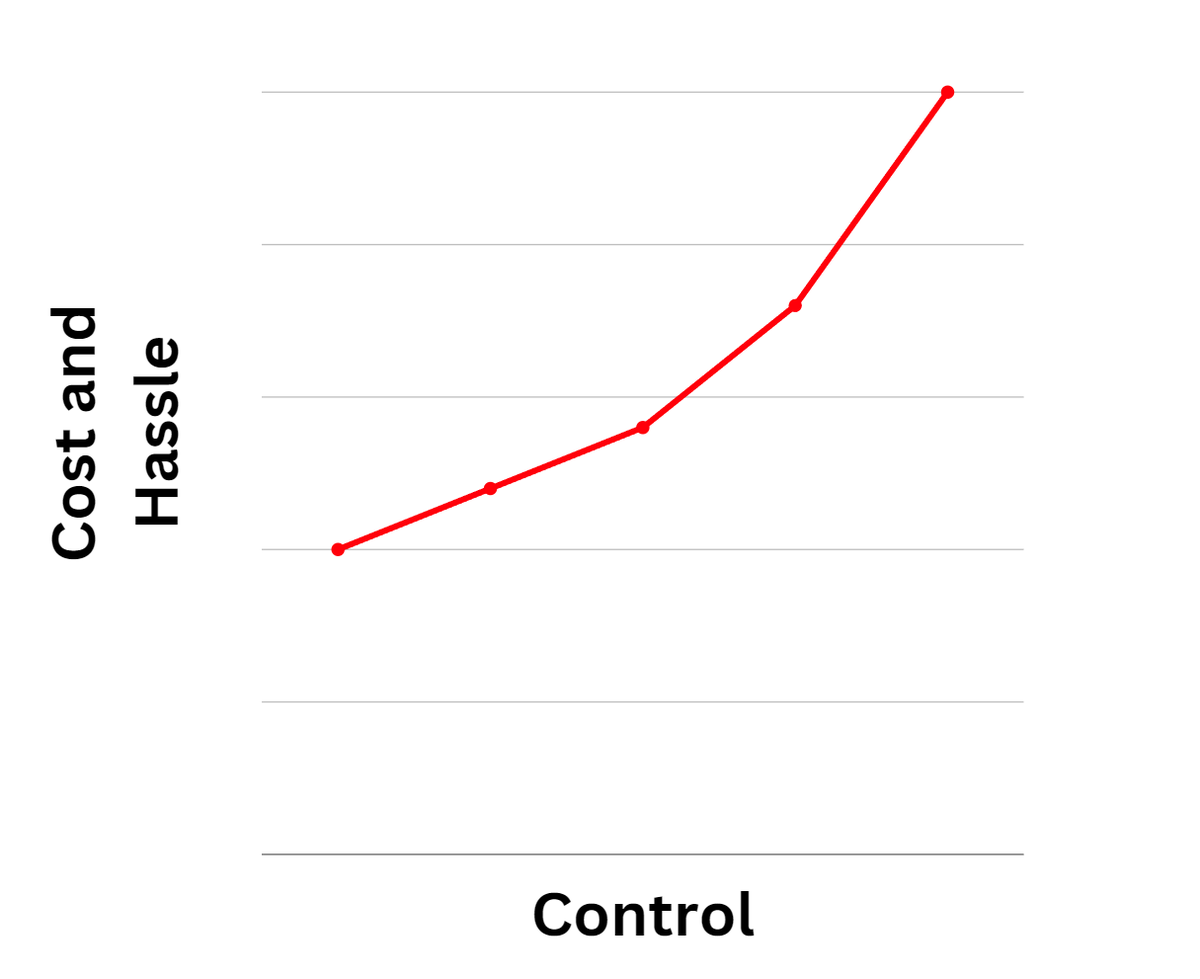
Checks at the border are always about trading greater control for more cost and hassle.
UK is somewhere on that upward arc.
Checks at the border are always about trading greater control for more cost and hassle.
UK is somewhere on that upward arc.

4/ One reason the UK might be doing this is that goods going the other way (from the UK into the EU) face these checks already.
That means if you have customers in both, it currently makes more commercial sense to produce in the EU and export to the UK than vice versa.
That means if you have customers in both, it currently makes more commercial sense to produce in the EU and export to the UK than vice versa.
5/ Prior to Brexit and during the transition period, the UK and EU considered one another's regulations equivalent which significantly reduced the need for checks - but required collective regulatory setting.
Even less cost and hassle, but even less control.
Even less cost and hassle, but even less control.
6/ The UK could simply choose, as it has been doing, to treat goods coming in from the EU as equivalent or safe enough further checks aren't needed.
However, this would mean accepting EU standards as valid, and the EU likely would not reciprocate.
However, this would mean accepting EU standards as valid, and the EU likely would not reciprocate.
7/ Greater checks at the UK border hurt UK consumers and EU exporters.
Greater checks at the EU border hurt EU consumers and UK exporters.
The average EU citizen consumes fewer UK goods and exports less to the UK than the other way around.
Hence the power dynamic here.
Greater checks at the EU border hurt EU consumers and UK exporters.
The average EU citizen consumes fewer UK goods and exports less to the UK than the other way around.
Hence the power dynamic here.
8/ Side note: One of the reasons for the (much maligned) European Court of Justice was to make a system where a group of countries are all enforcing the same regulations work.
You could "sue" another EU member state if they started slacking off when it came to enforcement.
You could "sue" another EU member state if they started slacking off when it came to enforcement.
9/ One reason the UK/EU border is especially tricky on this kind of stuff is that the absence of such checks for many years means:
1. There wasn't any infrastructure;
2. There weren't enough professionals;
3. Businesses built their supply chains on no-check assumptions.
1. There wasn't any infrastructure;
2. There weren't enough professionals;
3. Businesses built their supply chains on no-check assumptions.
10/ The UK has had to delay its implementation of these checks five times because addressing the three points above is hard, expensive and far from straight forward.
Number 3 especially led firms to deliver fresh food, in mixed consignments on tight turnarounds. Tricky.
Number 3 especially led firms to deliver fresh food, in mixed consignments on tight turnarounds. Tricky.
11/ The UK political system has, for a variety of reasons, not been great at tackling this problem head on.
An inability to accept the reality of this chart, and have a frank and honest conversation with the public about the fact that reintegration has costs, not just benefits.
An inability to accept the reality of this chart, and have a frank and honest conversation with the public about the fact that reintegration has costs, not just benefits.
12/ The pathological need to keep anything resembling a bad news Brexit story out of the press has lead to a siege mentality on the part of the government that might otherwise have provided businesses the clarity they needed to plan and prepare.
Unfortunate. 🤷♂️
Unfortunate. 🤷♂️
13/ There is no correct point to be at on the Control vs Cost curve.
Each government must make its own decision. I wrote my book because I wanted people to understand that these are decisions, and help voters challenge those who'd pretend they're easy.
canburypress.com/products/why-p…
Each government must make its own decision. I wrote my book because I wanted people to understand that these are decisions, and help voters challenge those who'd pretend they're easy.
canburypress.com/products/why-p…
• • •
Missing some Tweet in this thread? You can try to
force a refresh




