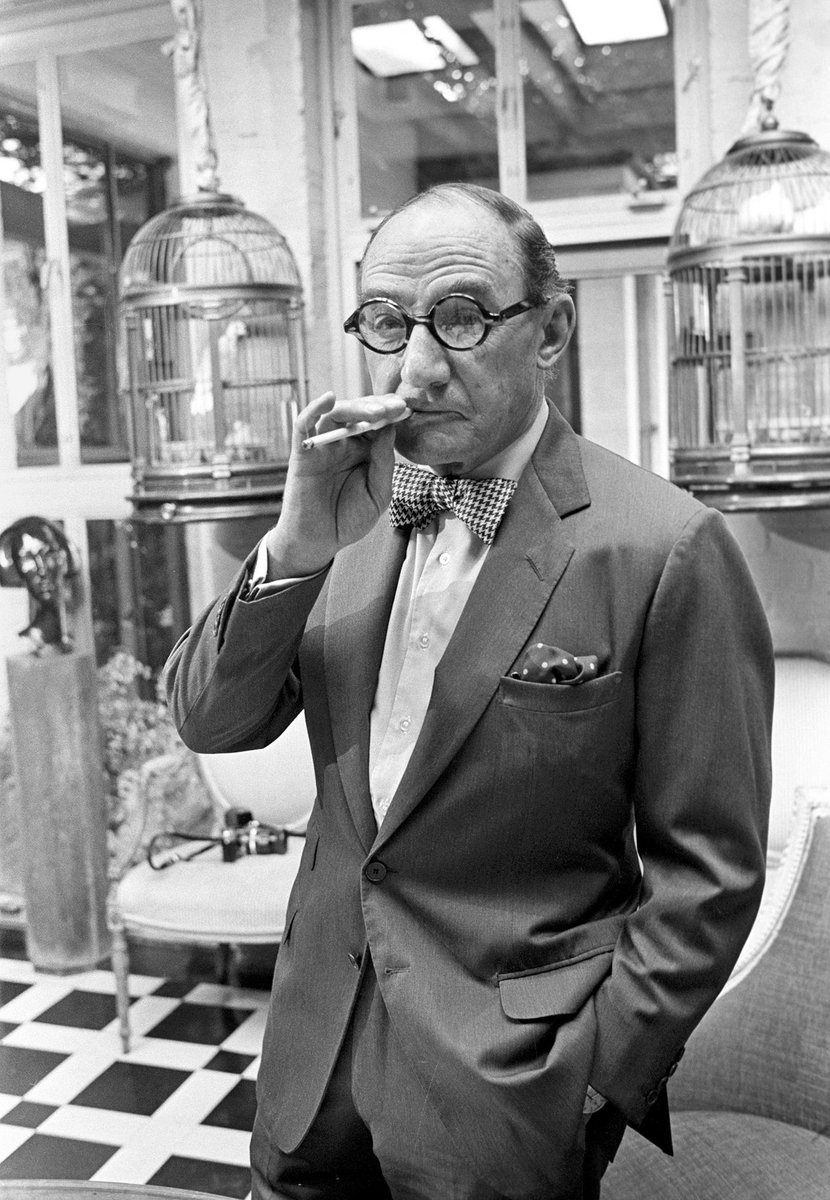
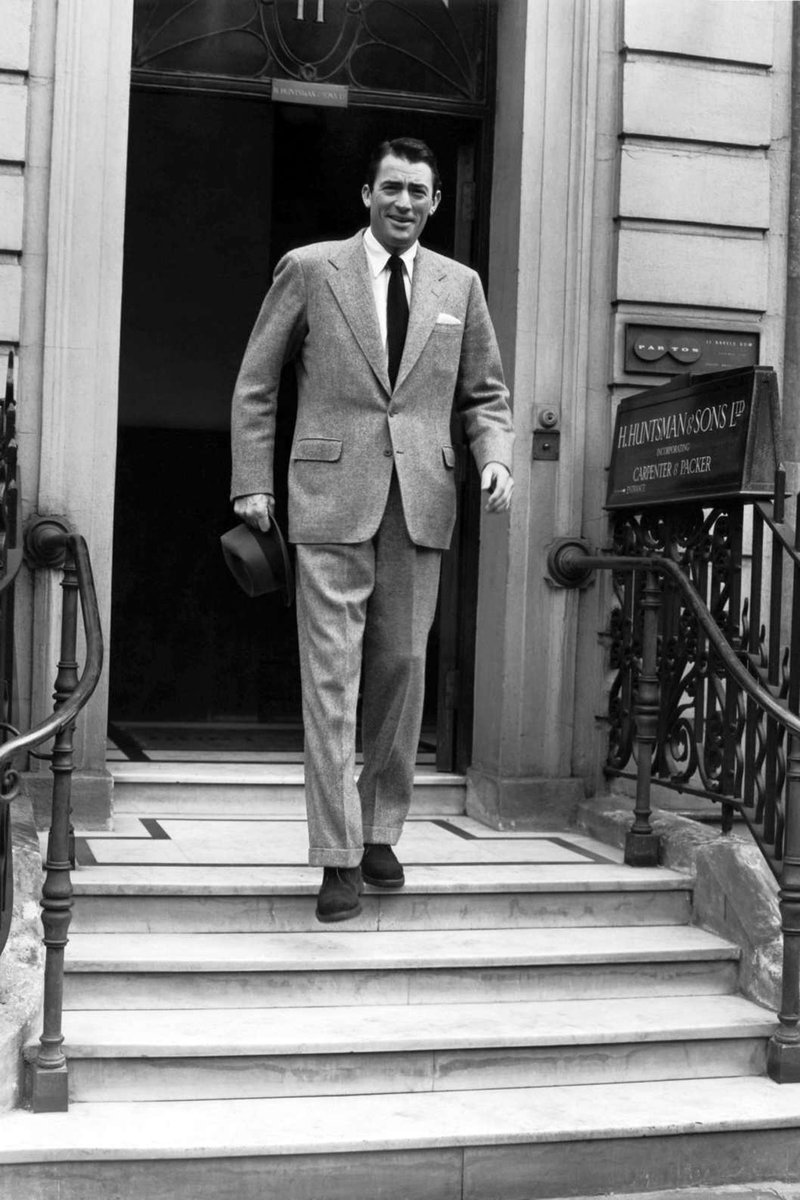
The buttoning point is the topmost button on a two-button coat or the center button on a three-button coat. It serves as the coat's visual fulcrum, determines the narrowest part of a jacket, and is where the lapels bloom.

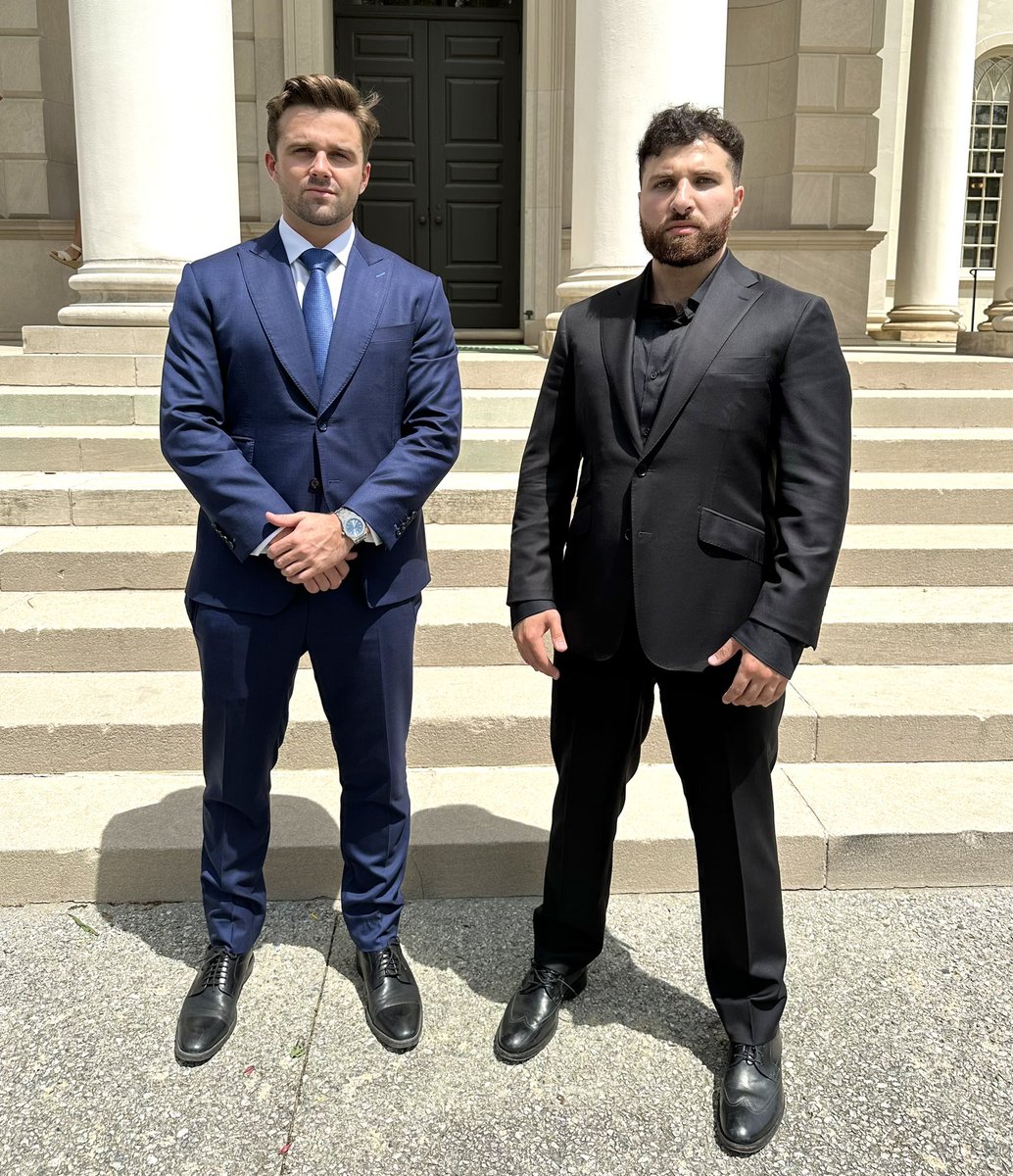
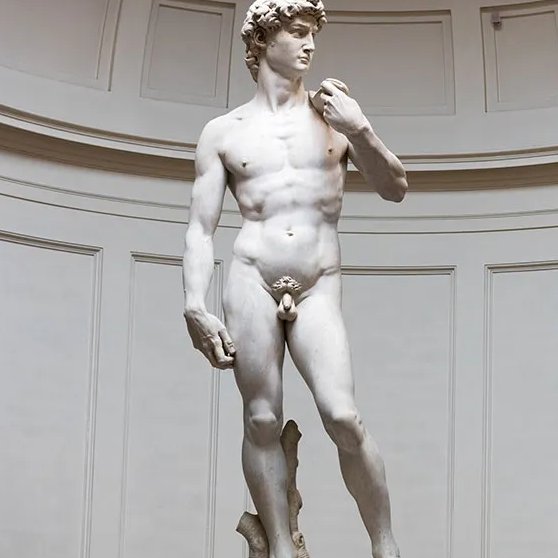
Here, we see Jackson has a very muscular figure. The V-shape formed by his broad shoulders and narrow waist is even more extreme than the Statue of David.
Muscular men on here often tell me that they like tight suits because they want to show off their figure. So how can it be that Jackson and his compatriot here look so rounded? Lost is the V-shaped figure that Jackson supposedly wants to show.
The answer lies in the cut of the jacket. Jackson and his friend are wearing very short jackets. The classic length is something that bifurcates you about halfway from your collar to the floor when you're wearing heeled shoes. Their jackets are about 2" or 3" too short.
When you shorten the jacket, you have to raise the buttoning point to keep a proper distance from the buttoning point to the hem. Otherwise, the bottommost button will look weirdly close to the hem. But raising the buttoning point creates a rounder silhouette.
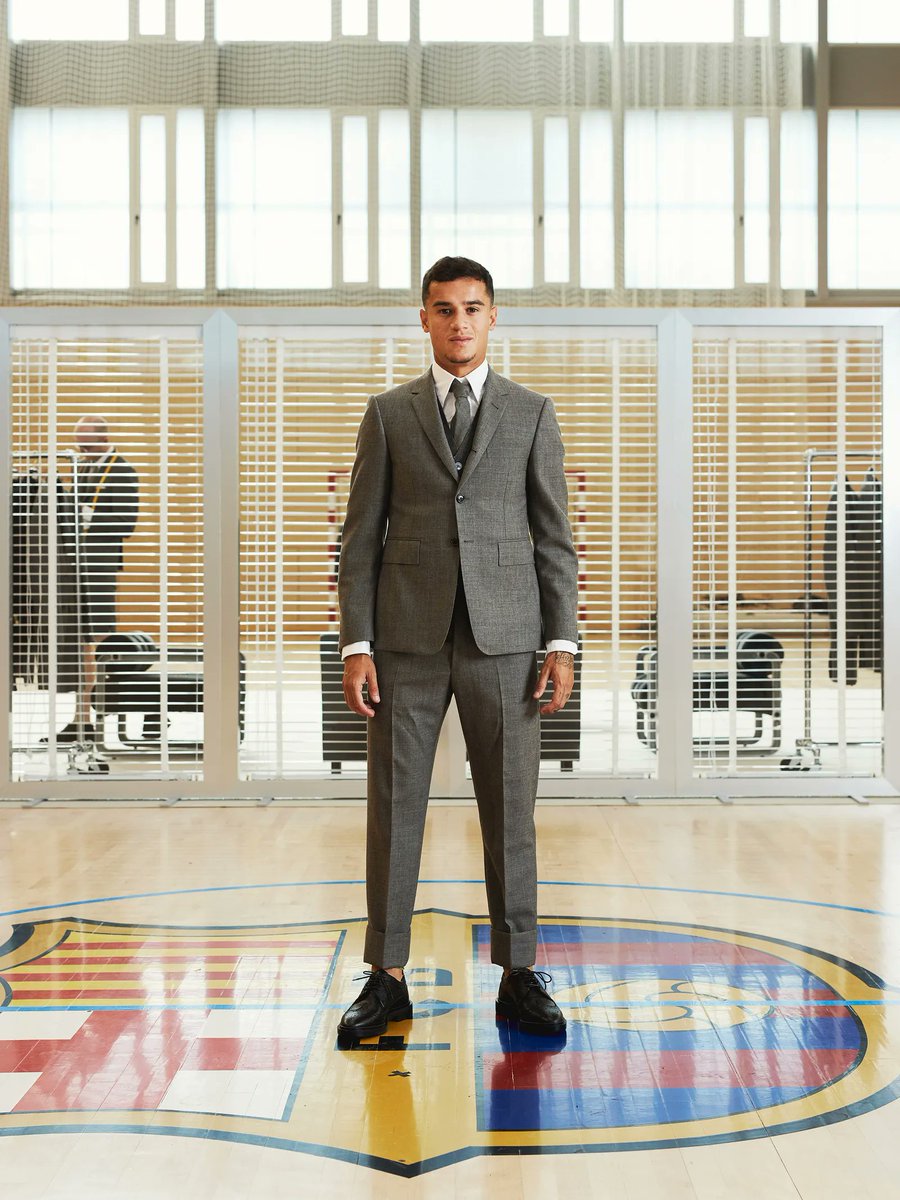
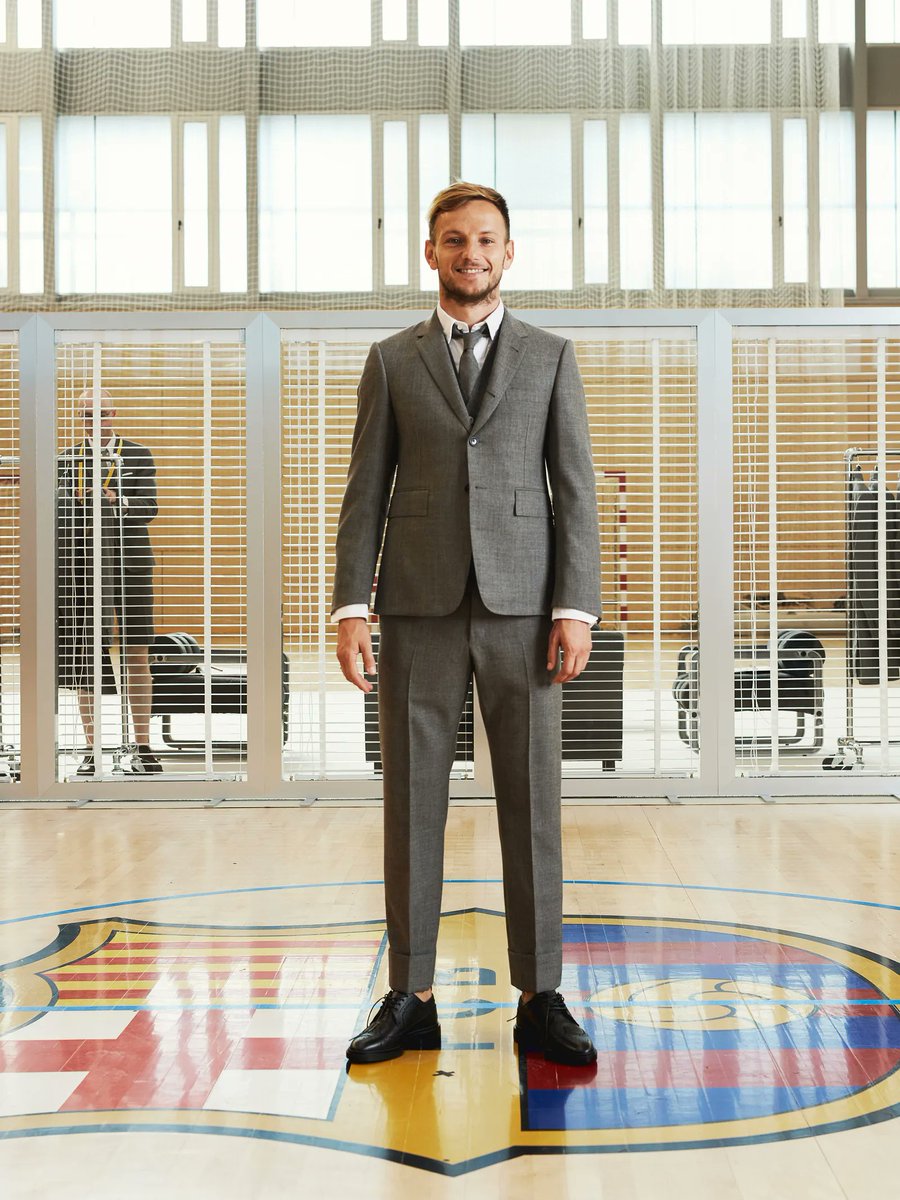
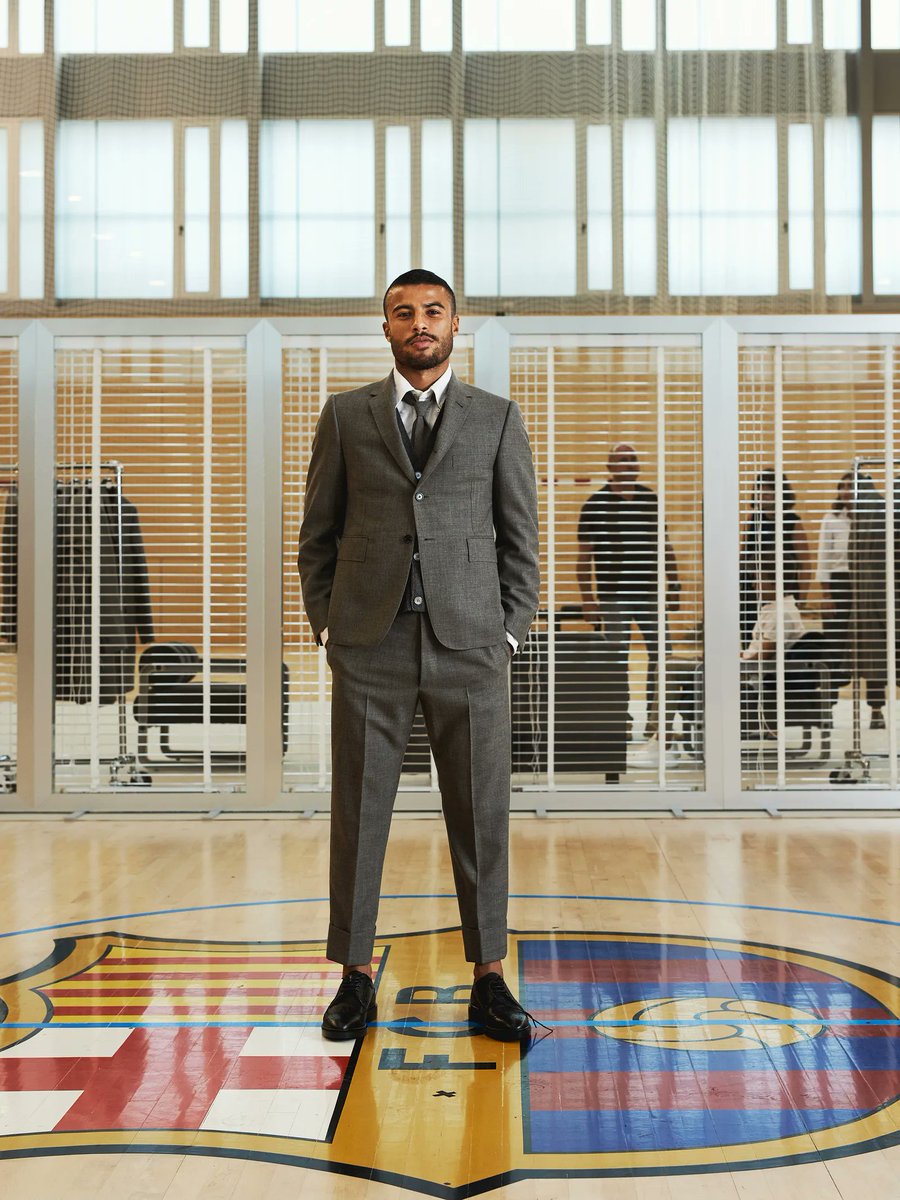
Look at these short Thom Browne suits on football stars Lionel Messi, Philippe Coutinho, Ivan Rakitic, and Rafinha. We can assume they all have V-shaped torsos (Statue of David-esque) because they're professional football players. Yet, the suits make them look anything but.
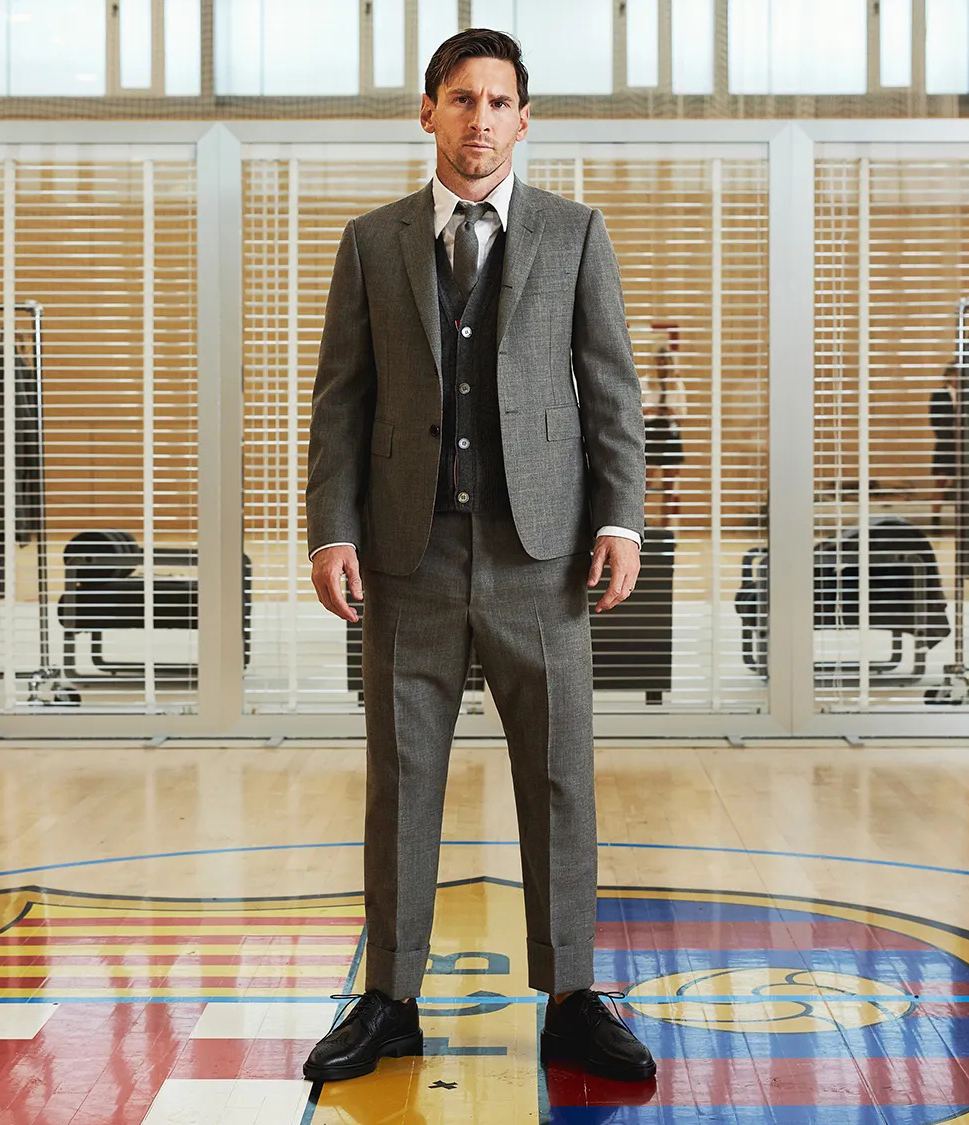
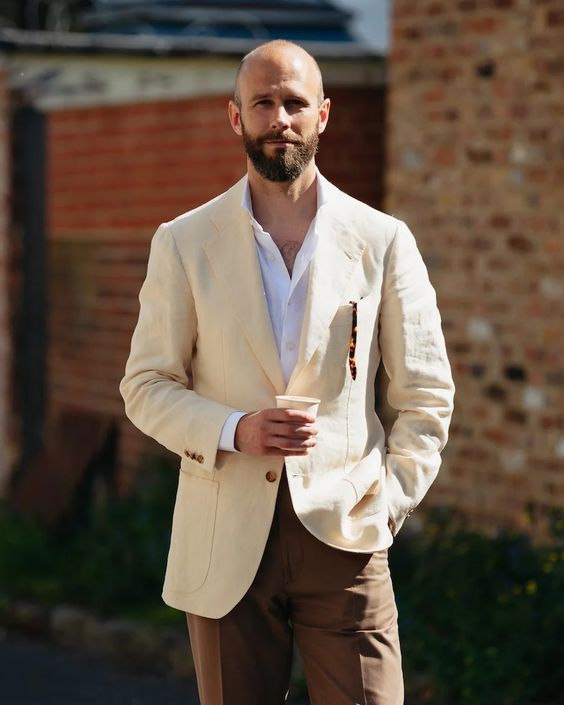
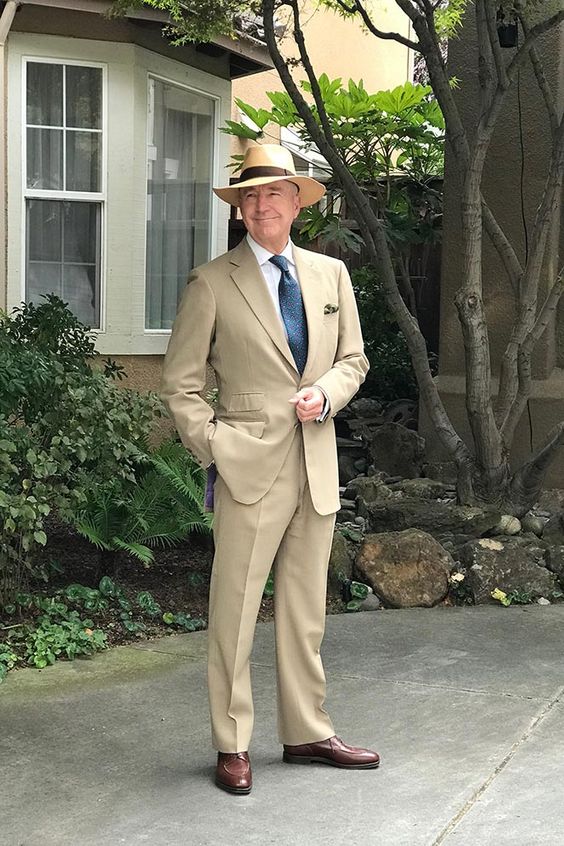
By contrast, I assume that Mariano Rubinacci, head of the bespoke tailoring house Rubinacci, does not have Jackson's figure. Yet, his suit results in that V-shape better because the jacket
1) is longer 2) has a lower buttoning point
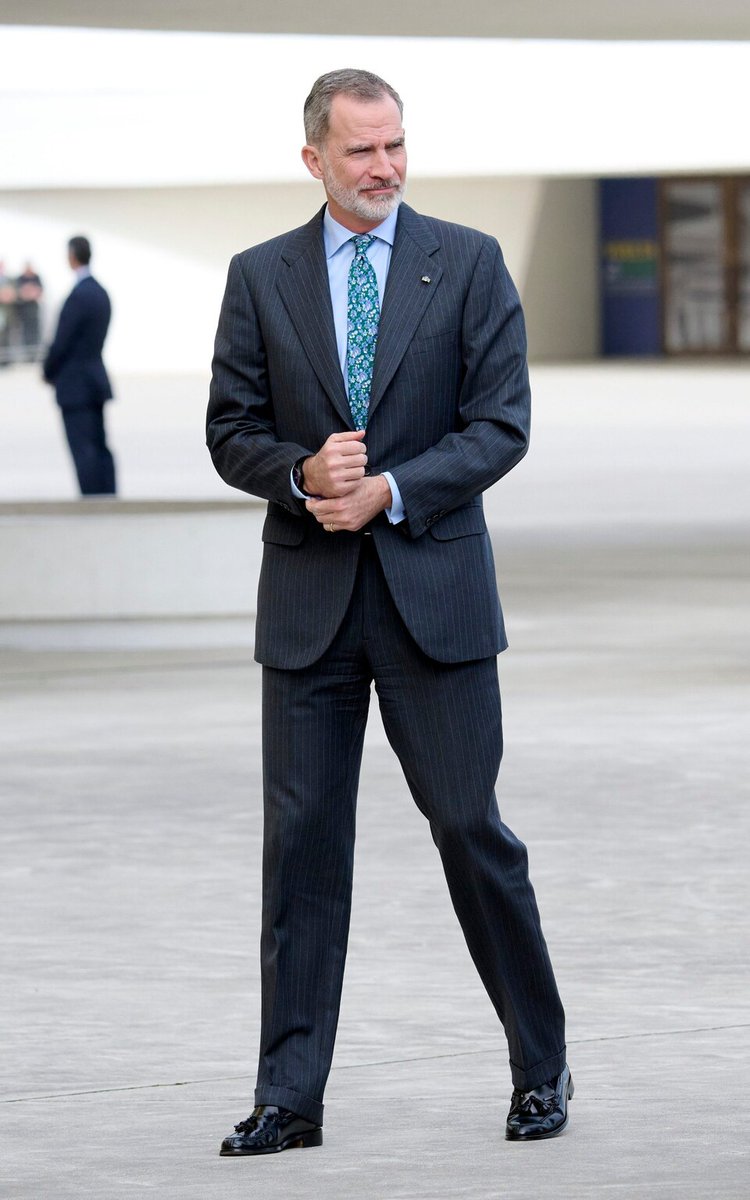
For that V-shaped figure, the buttoning point should be placed at the narrowest part of your torso. That's at the very least, if not just a touch lower to elongate the lapel. This, of course, requires a longer jacket.
For a double-breasted, I think you should go even lower. This creates an even longer, sweeping lapel line and the most flattering V-shape through the jacket's front edge.
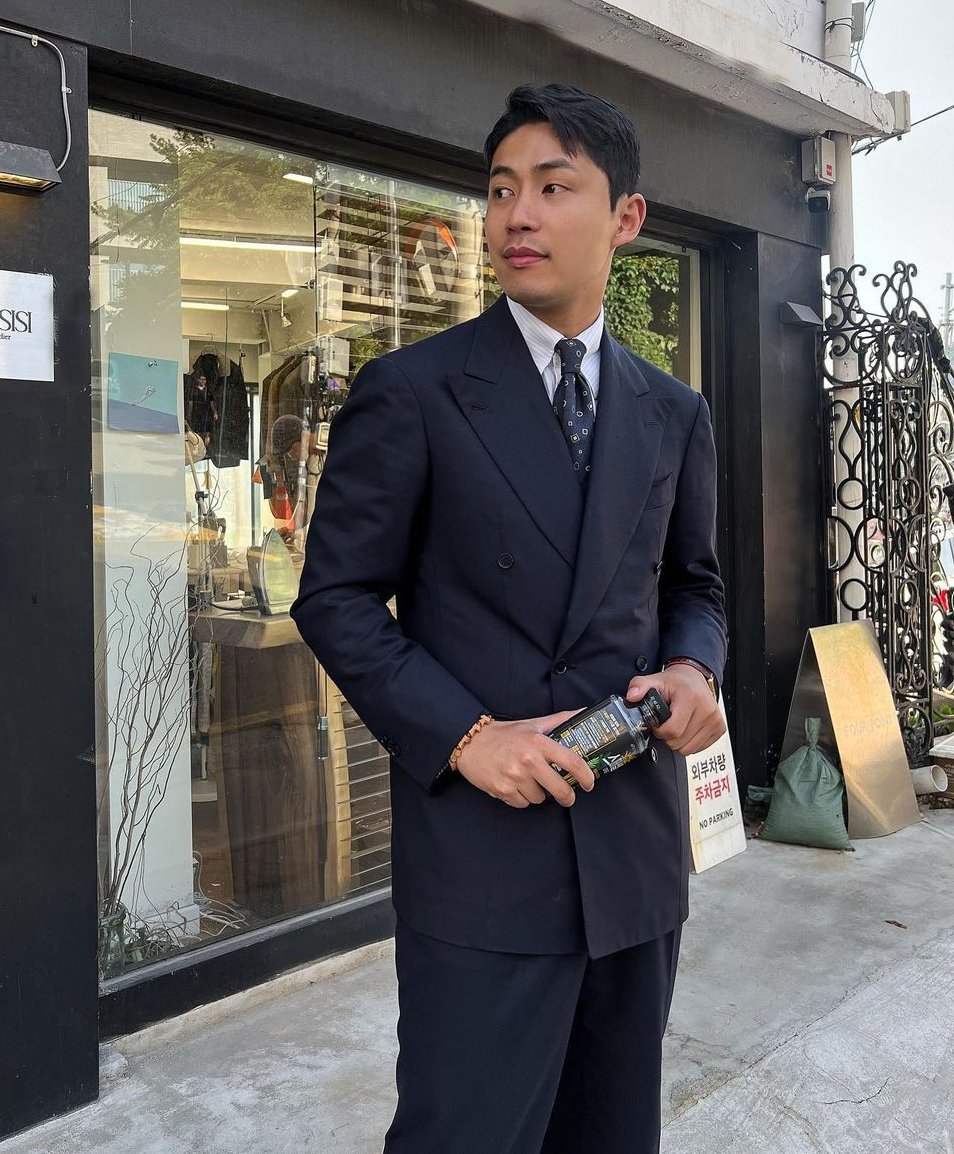
As I've noted in other threads, not all clothing has to conform to ideals about gendered forms. Outfits can be concealing, unflattering, or even disfiguring. Fashion is more than making men into David and women into Venus. Sometimes, stuff just looks cool! See Comme des Garçons.
But it's worth paying attention to how clothes create shapes. This is more useful than thinking, "Short jackets and slim pants are trending now, so I have to wear that."
• • •
Missing some Tweet in this thread? You can try to
force a refresh

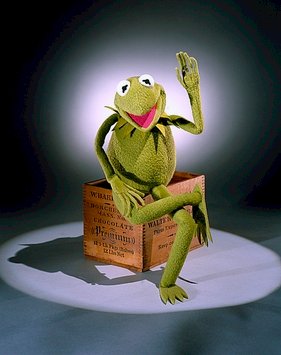
Someone from @piersmorgan's staff asked if I would like to come onto Pier's show, Piers Morgan Uncensored, to talk about the state of his attire. Since he invited feedback, I thought I'd do a thread comparing his style to menswear icon Kermit the Frog. 🧵
Let's again start with the basics.
The core of any outfit is fit and silhouette. Pier's suit jackets often have lapels that buckle away from his chest and a collar that floats from his neck. This suggests his jackets may be too small.
No such issues for Kermit the Frog. His clothes hang beautifully and smoothly while still giving a distinctive, flattering silhouette.
I disagree that you dress like Cary Grant. In this thread, I will list some of the ways in which your dress differs and why such important details matter. 🧵
On Twitter and elsewhere, I often notice that people collapse men's style into very broad forms. A suit is just a suit, and pants are just pants. But in fact, tiny differences make a huge impact, and more attention should be paid to silhouette, shape, and detailing.
Let's start with the basics.
A collar gap can appear if your jacket's shoulders don't match the slope of your natural shoulders. Or if the jacket isn't cut right for your posture. Or the jacket is too tight across the chest (the most likely reason for Tristan's collar gap)
Along with keeping you warm and protecting you from the elements, our clothing performs other important functions: making us look good, communicating our identity, and speaking in a language that makes cultural sense. In tailoring, the number of buttons communicates something. 🧵
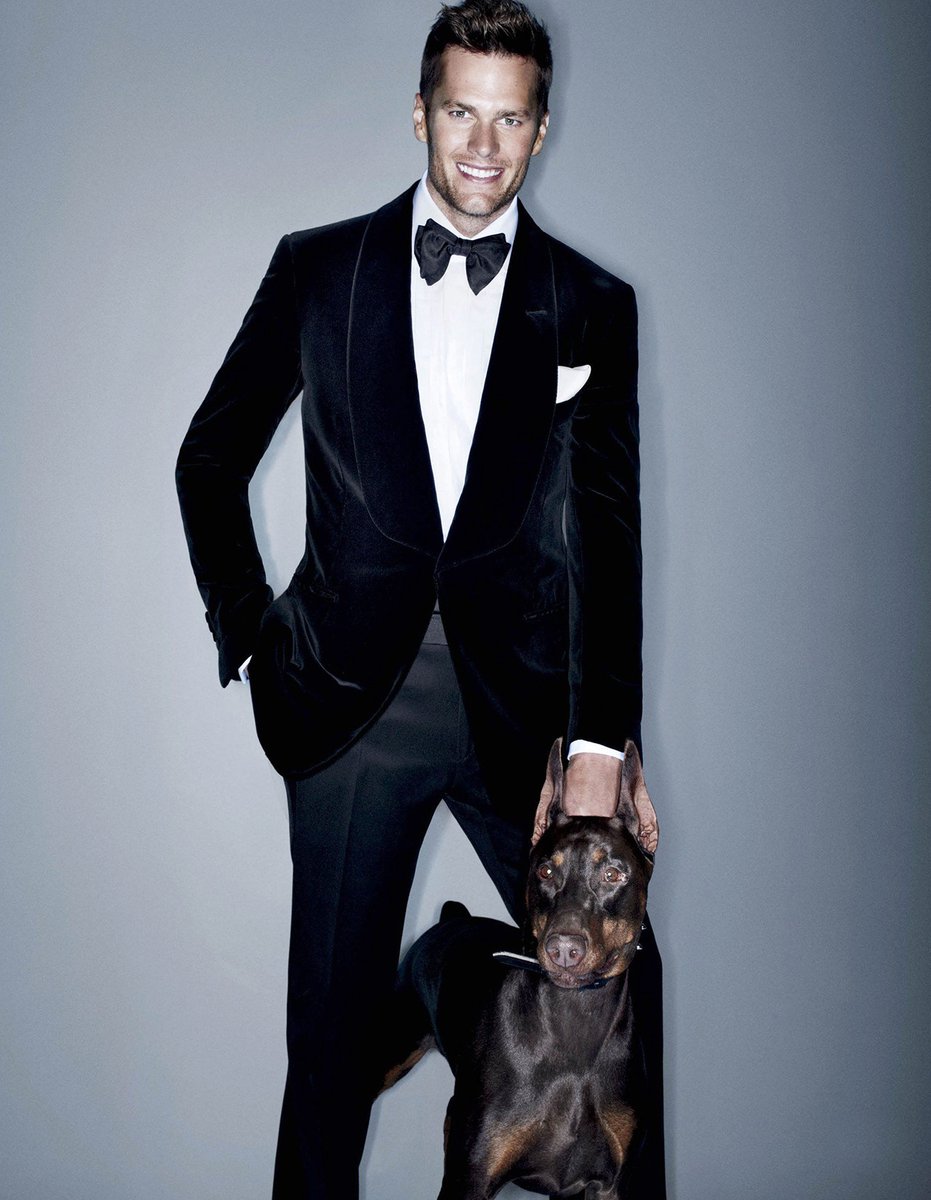
A one-button closure is considered formal. With the exception of Huntsman, a Savile Row tailoring house that has made it part of its house style, it is typically only seen on evening wear, such as dinner suits (aka tuxedos).
A two-button closure is less formal than one button. On Savile Row, this was the standard for business suits, which are less formal than eveningwear. The bottommost button here is not meant to be fastened.
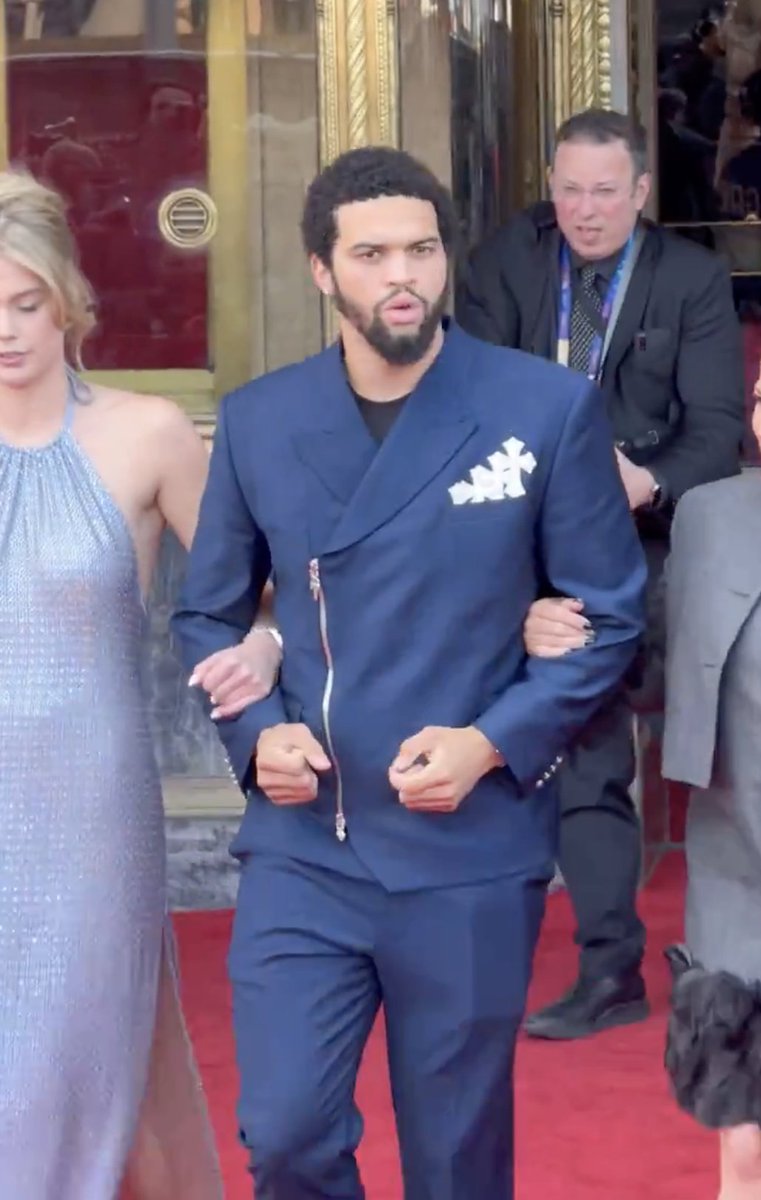
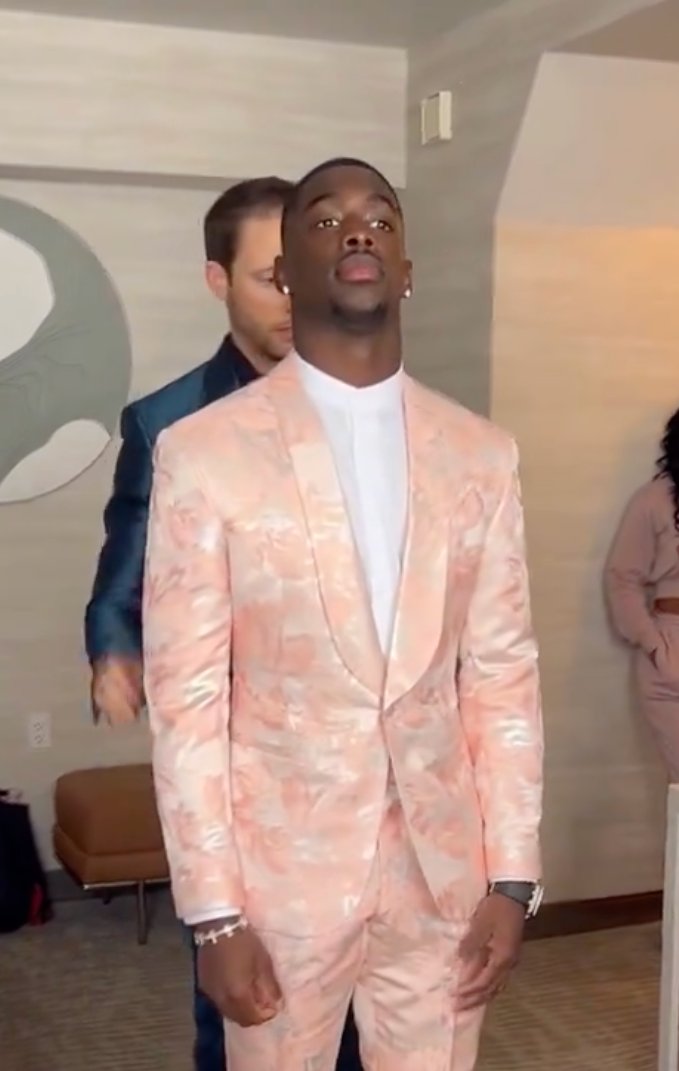
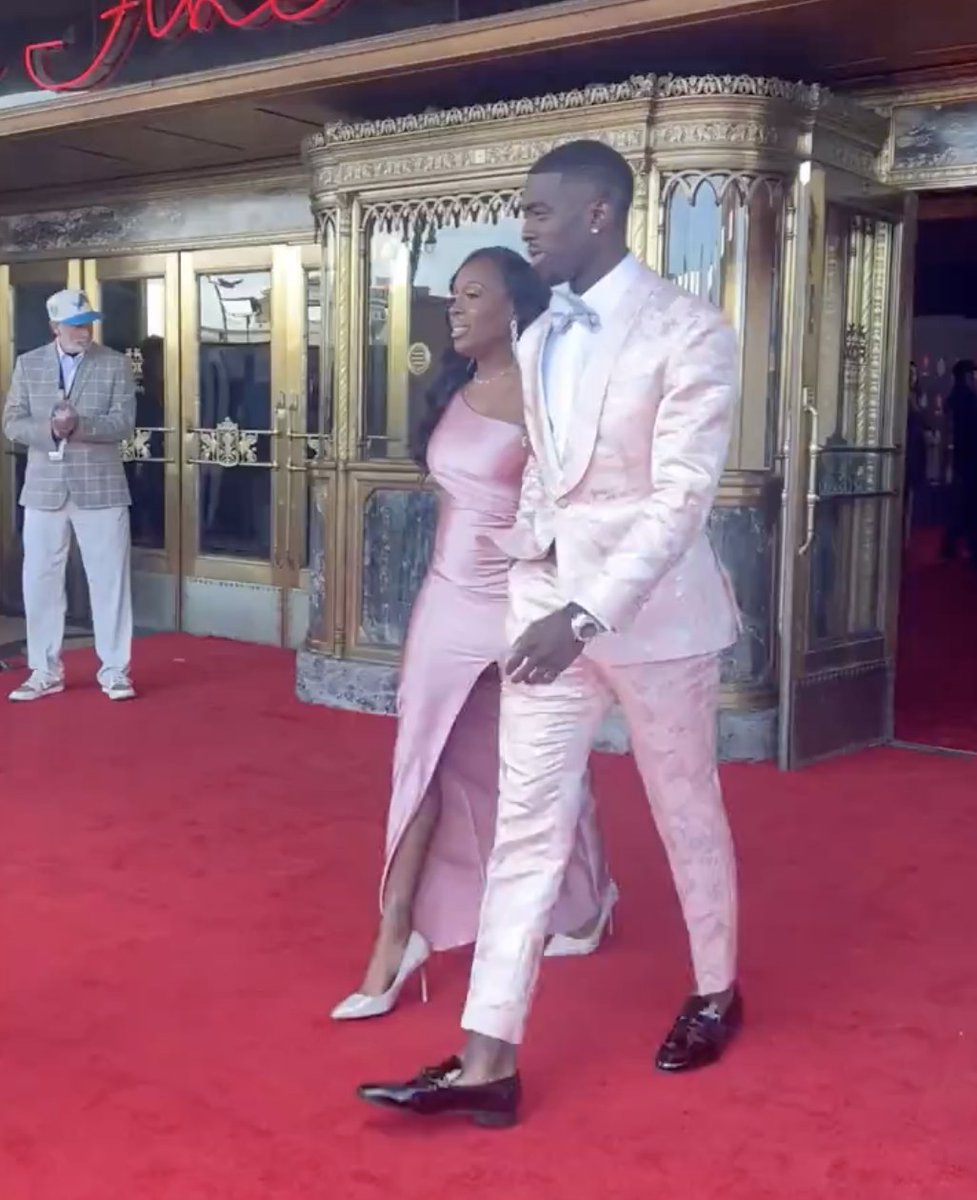
Here are two suits from the NFL Draft? Which do you like better?
Before reading on, please take the time to make up your mind independently, so you are not influenced by what I'm about to say. I will give my opinion below on which works better. 🧵
I should note I don't know anything about sports or these two men. The following is just commentary on the clothes, not them as people or athletes. Getting into the NFL is a massive accomplishment, and clothes don't take away from that. Congrats to both on their achievements.
Between these two suits, I think the pink one works better. Many will be drawn to the fabric: the color, sheen, and what looks to be a camo pattern. All these elements make it unique. It's also nice that it complements the woman's dress without directly matching. Very thoughtful
Let's talk about how to find a good dry cleaner. 🧵
First, dry cleaning can be harsh on clothes, so it's best to minimize how often you dry clean them. Suits, sport coats, and wool trousers don't have to be dry cleaned often, but your frequency depends on your lifestyle (e.g., smoking, climate, etc).
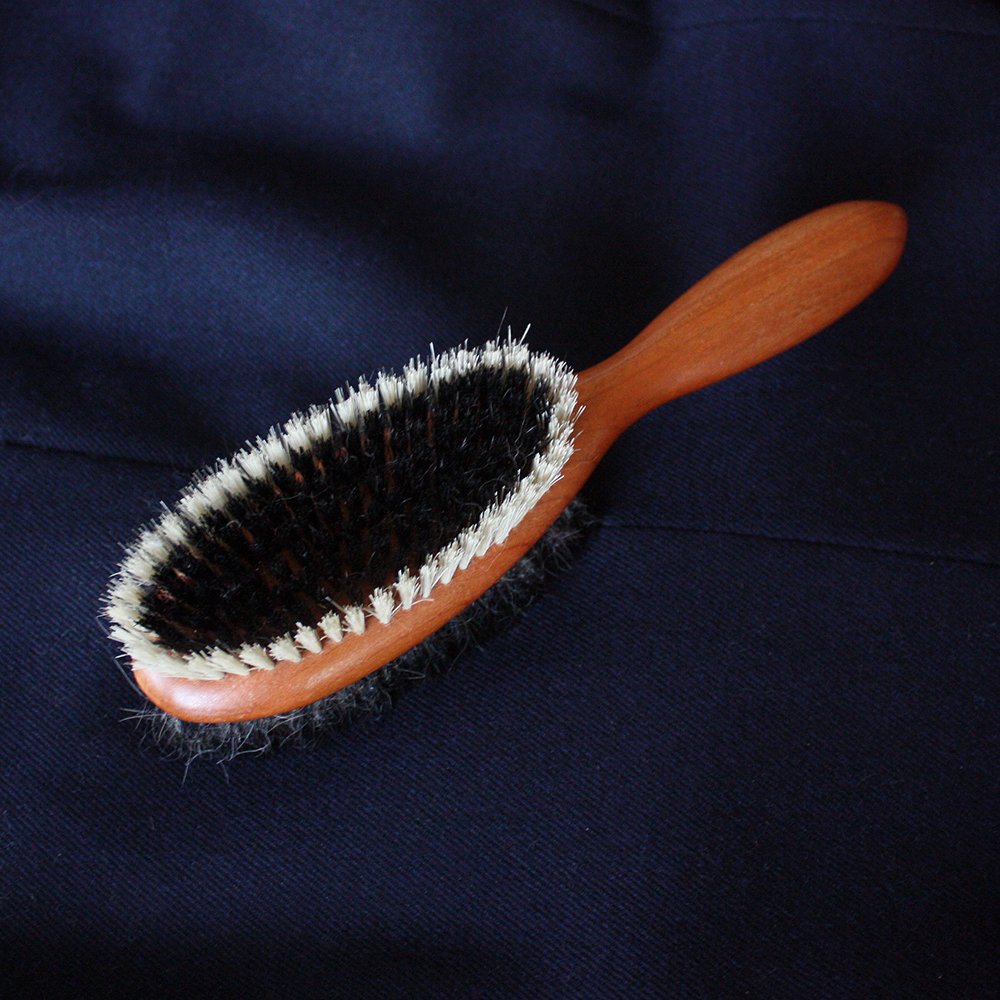
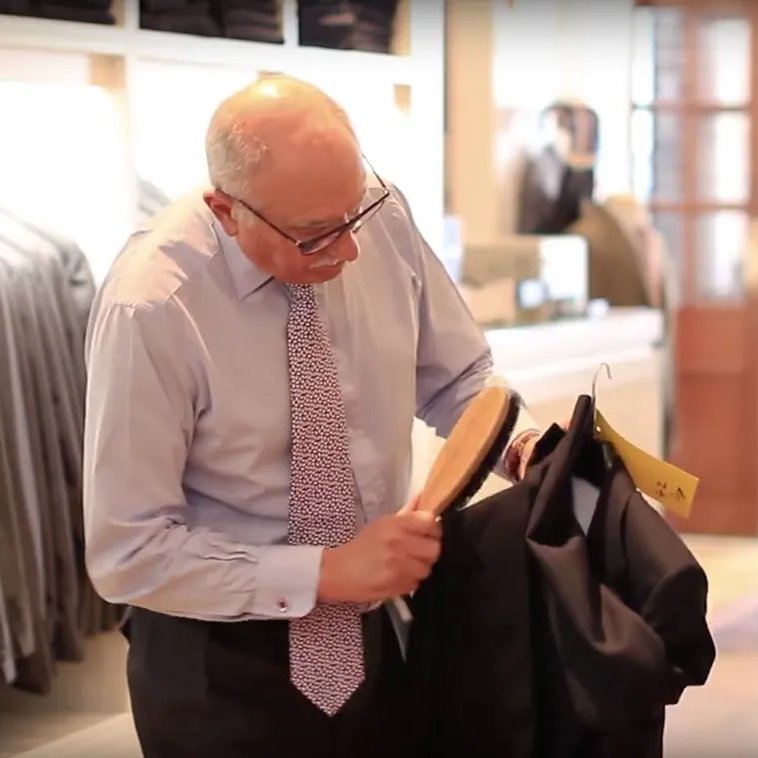
You can minimize how often you need to dry clean by using a garment brush. Support jackets by their shoulder and brush down to knock out dirt, which can cut into fibers like tiny razors. I use Kent's CC20 clothes brush, but their CP6 is also good.
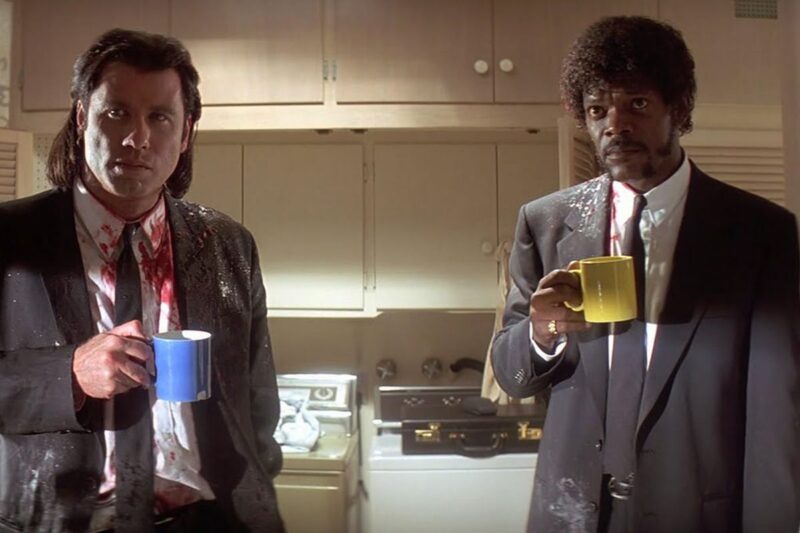
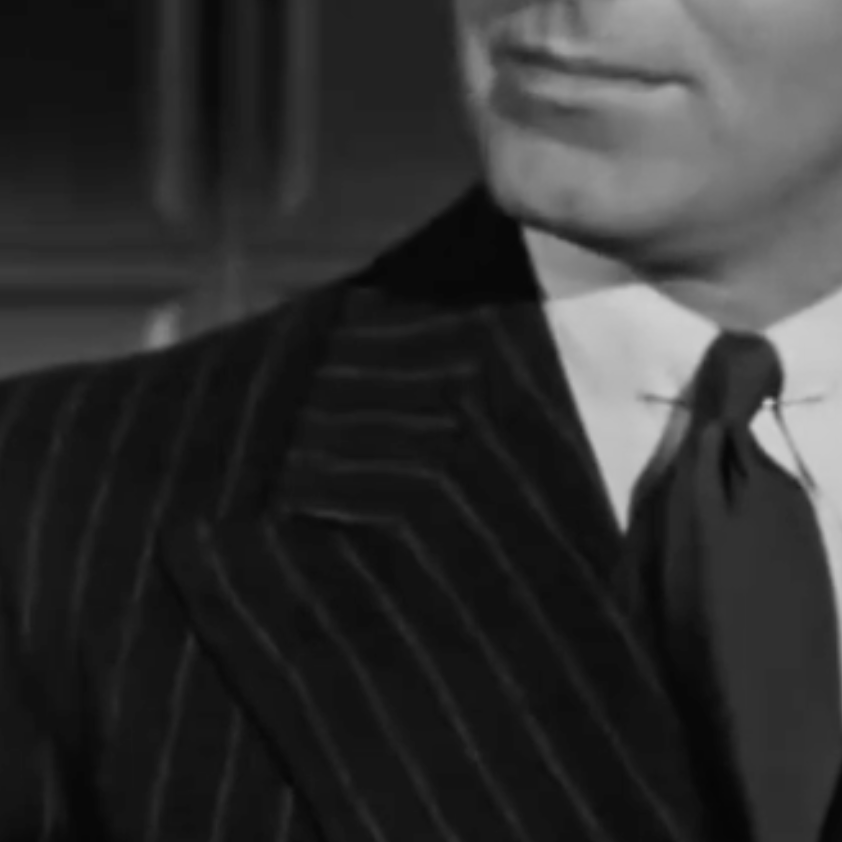
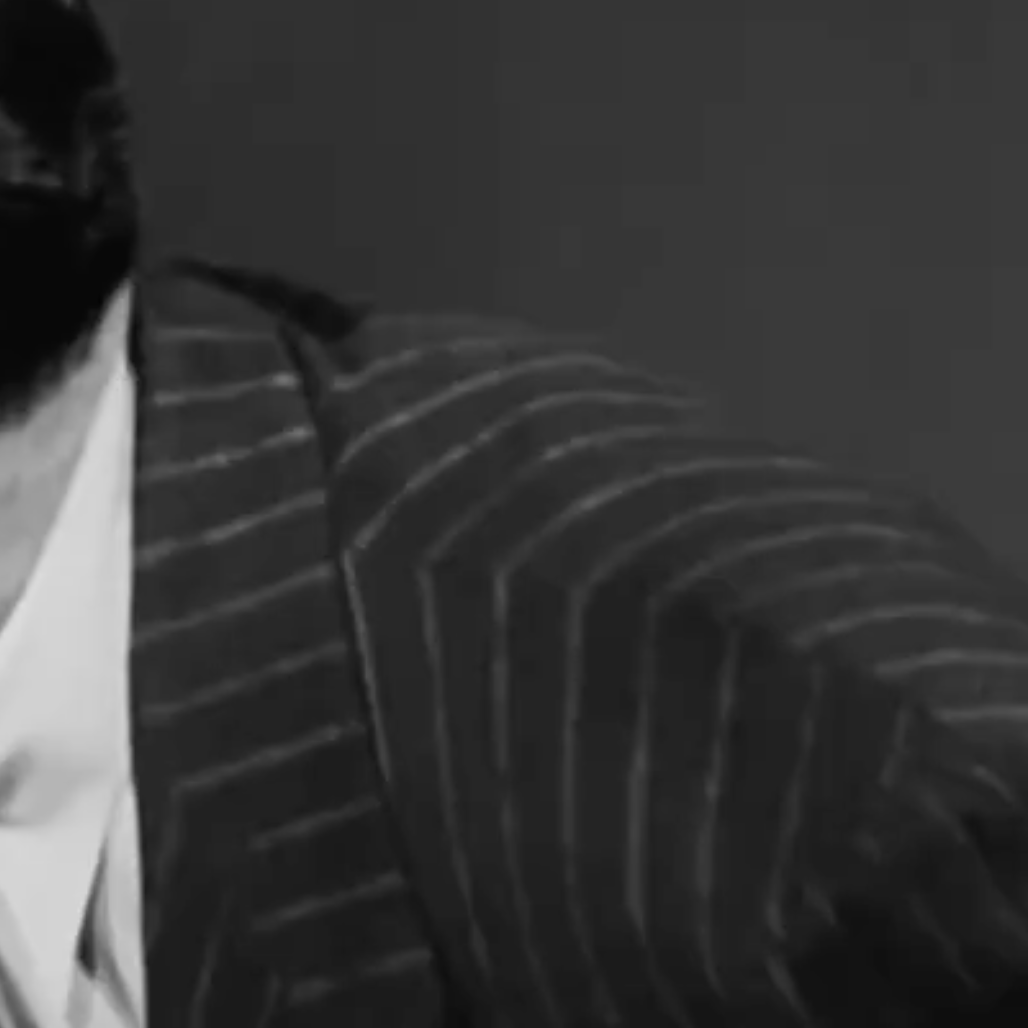
Amazing to me how much better tailoring was back in the day. Just watch this scene and pay attention to your general impression of the clothes. Then, I'll point out some things in the thread below. 🧵
One of the things that sticks out to me is the degree of care taken to align the stripe across the panels. This is not always possible across the collar, shoulder seam, and gorge because the panels are different lengths. But care was clearly taken here to minimize the mismatch.
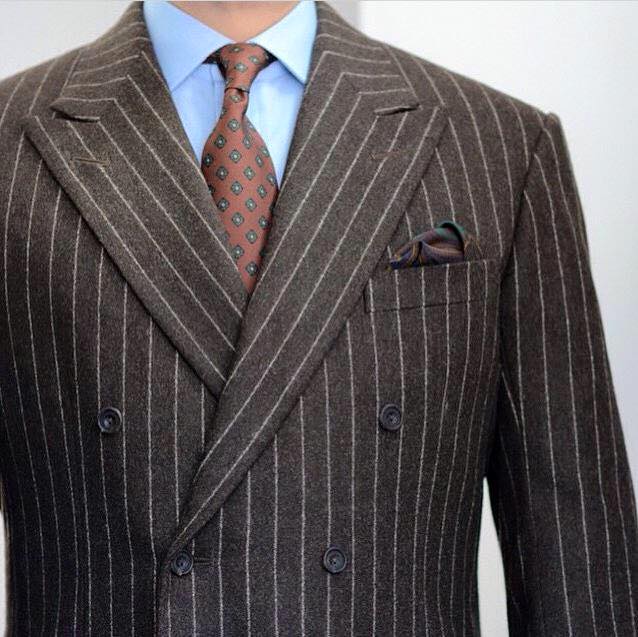
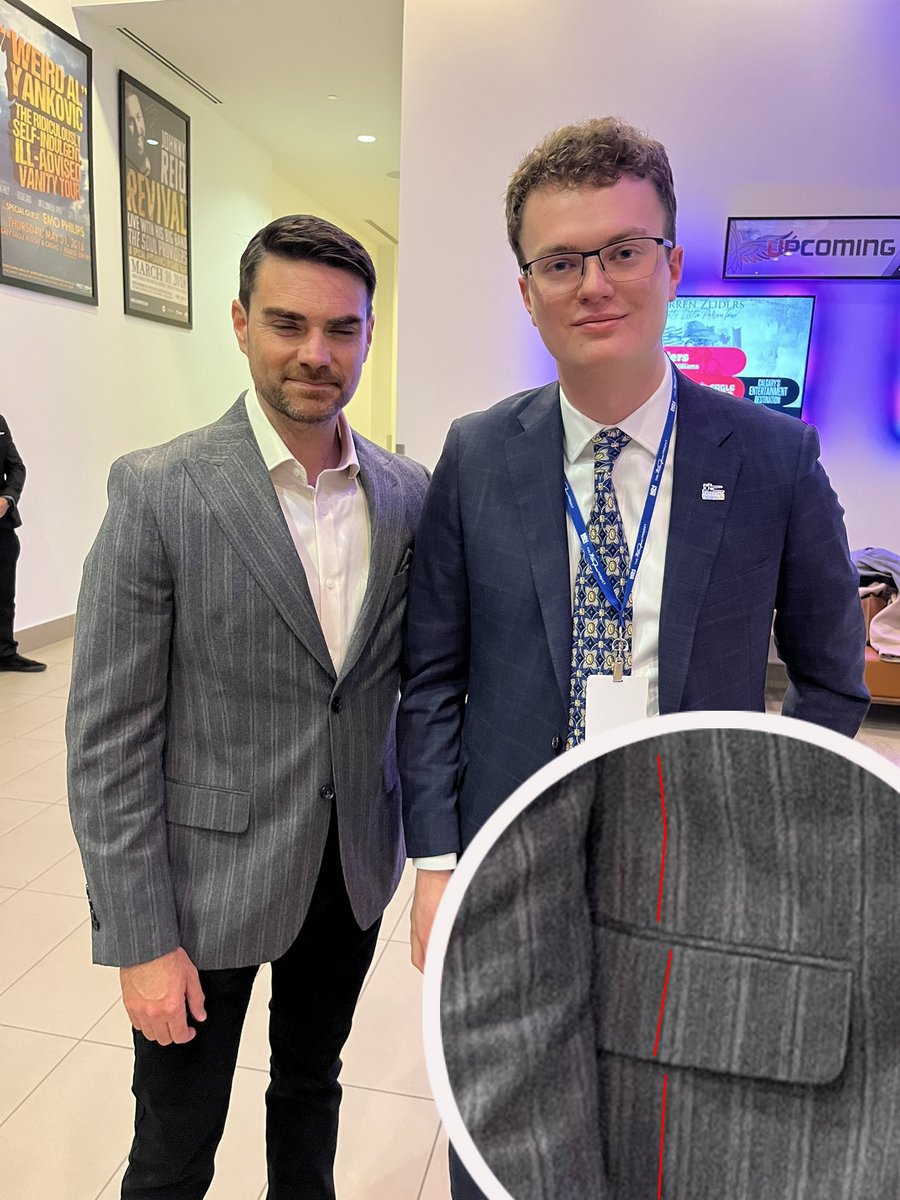
You still see this in the best bespoke. In pic one (a suit by Steed in the UK), the chalk stripe flows smoothly across the seam that connects the collar to the lapel (known as the gorge). Compare this to pic two, where the pattern doesn't even align across pockets (bad and lazy)