
I wrote about the crackdown on campus protests.
Universities like Columbia, Cornell and Emory trade on Vietnam Era protests to market themselves to student activists. Protest is part of their brand and sales pitch. Now they're punishing students for taking them at their word. 🧵
Universities like Columbia, Cornell and Emory trade on Vietnam Era protests to market themselves to student activists. Protest is part of their brand and sales pitch. Now they're punishing students for taking them at their word. 🧵
https://twitter.com/theatlantic/status/1786013284178460826
I'm disgusted by universities' draconian response to peaceful protests and their efforts to sanction legitimate political speech. Reasonable people can disagree about the protesters' message or strategy.
What is not debatable is that these universities are mired in hypocrisy. 2/
What is not debatable is that these universities are mired in hypocrisy. 2/
Cornell celebrates students' 1969 armed occupation of Willard Straight Hall. There is a plaque on campus and a detailed study guide. They screen a documentary on the occupation and do programming around the protest's anniversary including a *year-long* commemoration in 2019. 3/ 

Yet even though Cornell loves to celebrate the ARMED OCCUPATION of a campus building, they've decided peaceful pro-Palestine protests are beyond the pale. Students like @unionnick have been suspended for political speech during Cornell's "Freedom of Expression" theme year. 4/

@unionnick Columbia – AKA "The Protest Ivy" – is perhaps even more hypocritical, branding itself as a university with a proud tradition of radical activism. The school loves invoking its 1968 protests: in archives, a (very cool!) "Columbia 1968" course, an online exhibit, on tours, etc. 5/
@unionnick Nearly every Columbia student – incoming, present, or past – and professor I talked to felt the university marketed the legacy of 1968 to them as part of the institution's branding. The messaging around 1968 reaches prospective students before they even take their first class. 6/
@unionnick The DAY AFTER Columbia sicced the NYPD on its own students, the university was STILL sending emails to admitted students boasting that "demonstration, political activism and a deep respect for freedom of expression have long been part of the fabric of our campus." 7/

@unionnick I also talked to an admitted student who was on campus for programming a few days after the April 18th arrests. She told me Columbia officials were still yapping about their robust tradition of protest and free expression. She said it came up again and again. Remarkable. 8/
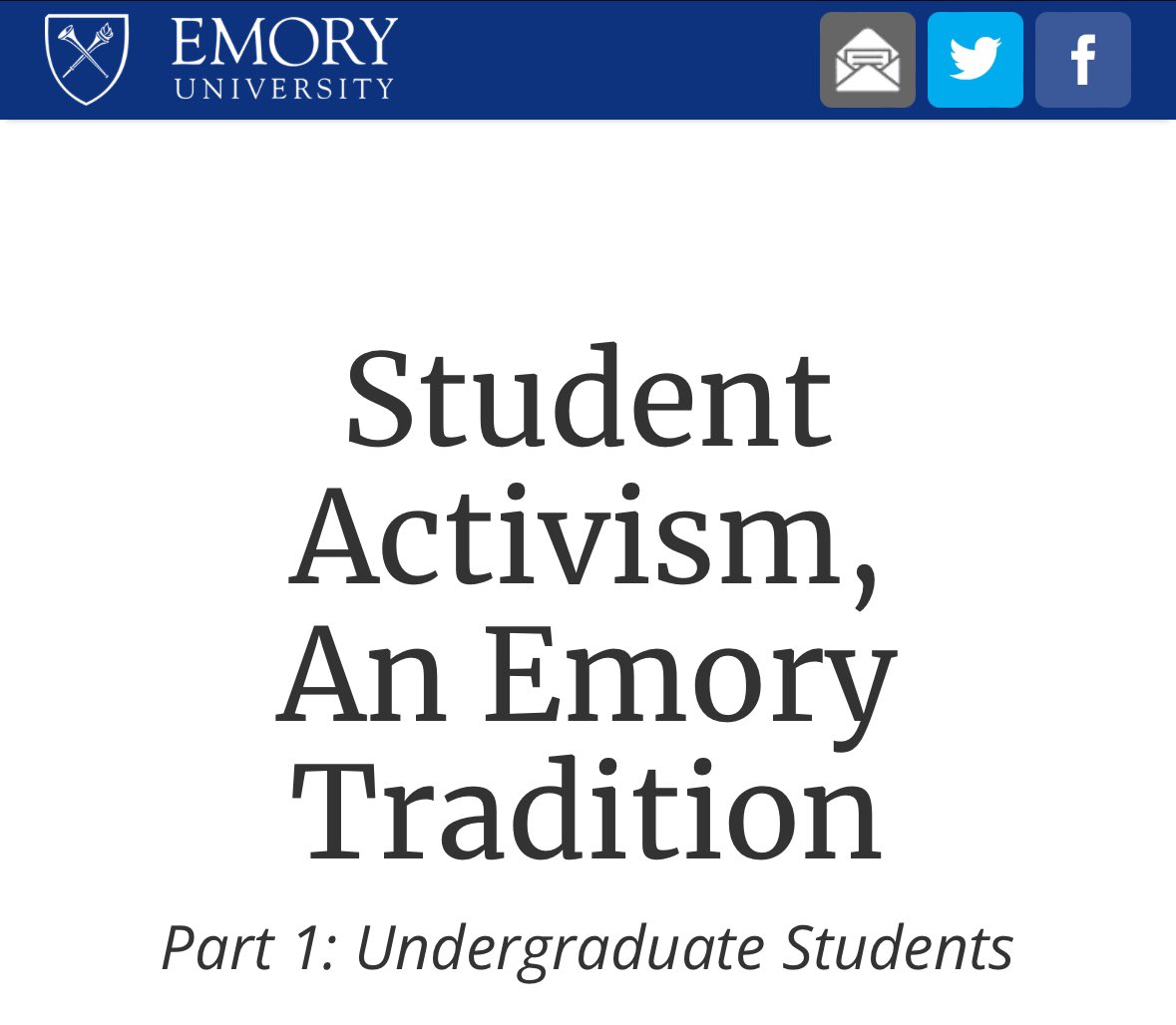
@unionnick Emory is no different. Since at least 2018, the university has been pumping resources into cultivating a reputation as a bastion of student activism. Including exhibits and archives celebrating its 1969 campus protests. "Student Activism, An Emory Tradition." Or so we're told. 9/
@unionnick NYU, where I did my PhD, has lived up to my expectations. Which is to say: it’s behaved shamefully and with aggressive incompetence. NYU encourages "channeling your inner activist." It promises students "a world of activism opportunities" as part of a "campus without walls." 10/
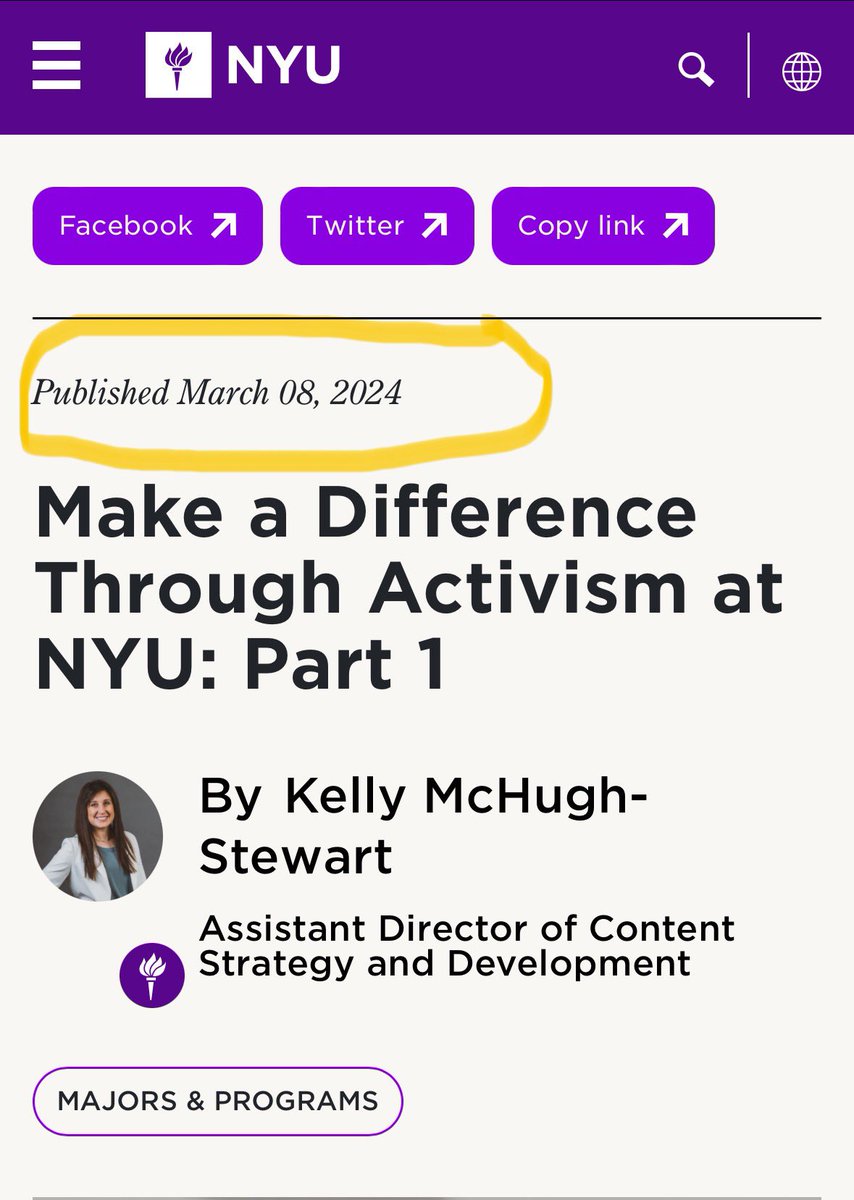
@unionnick But after NYU's president, Linda Mills, had the NYPD arrest her own students, that "campus without walls" suddenly has a big wall! As for the "world of activism opportunities?" We've learned that, for NYU at least, that world does not include Gaza or its 13,000 dead children. 11/

@unionnick Elite universities around the country love to tout their activist bona fides, and to trade on their own histories of campus protest to market themselves to students who want to attend a university committed to making the world a better place. But the jig is finally up. 12/
@unionnick Elite universities have exposed their true nature: they're hedge funds, real estate ventures, and lucrative hospital systems that have—at best—an incidental, and, at worst, an accidental relationship to education. I think it's good that they've helped us see that clearly. 13/
@unionnick The question of how university administrators should respond to prolonged encampments or the takeover of a campus building is vexed. Civil disobedience comes with consequences. But the story here is not the choices universities have made, but the lie that they've sold to us. 14/
@unionnick The violent images from the last week expose what these universities have become in the 21st century: nihilistic enterprises, devoid of any moral or intellectual principle loftier than boundless endowment expansion, that are but clay in the hands of congressmen and donors. 15/

@unionnick It is no longer possible to take these universities or their leaders at their word, or seriously. The average American college president is not an educational leader but a political and financial weathervane, prey to the immediate forecast, buffeted by variable winds. 16/
@unionnick If it is prudent to be woke, universities will be woke. If it is prudent to champion free speech, they will champion free speech. If it is prudent to be authoritarian, they will be authoritarian. Cause and creed dissolve before the nihilistic solvent of coarse opportunism. 17/
@unionnick The people who lead our universities believe in nothing, and they are unable to understand the beliefs of others. Universities have marketed self-aggrandizing tales of past protests to students, only to crush them when convenient.
And now, at long last, come their just desserts.
And now, at long last, come their just desserts.
• • •
Missing some Tweet in this thread? You can try to
force a refresh






