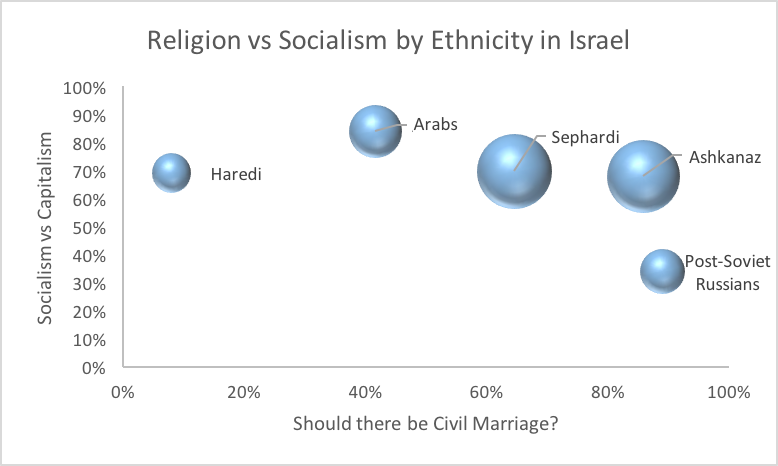
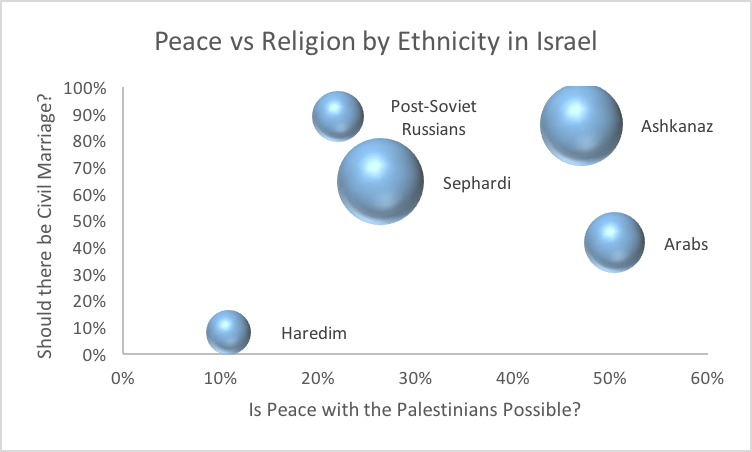
A 3-D map of Israeli political views from the 2015 INES, broken out by demographic:
Highlights: 1) In stark contrast to most countries, Israeli politics is truly multi-dimensional 2) Ashkanazi Jews (excluding post-1991 USSR immigrants) are the only consistently left-wing group across all issues 3) The post-Soviet Russian population is quite right wing on the prospects of peace, much more skeptical of socialism than every other group, but also much more supportive of secularism 4) Haredi Jews are quite supportive of socialism, despite being quite right-wing on peace and secularism 5) Israeli Arabs are left wing on peace and socialism, but have more right wing views on the proper role of religion in government than any group other than Haredi Jews
• • •
Missing some Tweet in this thread? You can try to
force a refresh

Excited to be on Odd Lots to talk about the politics of AI.
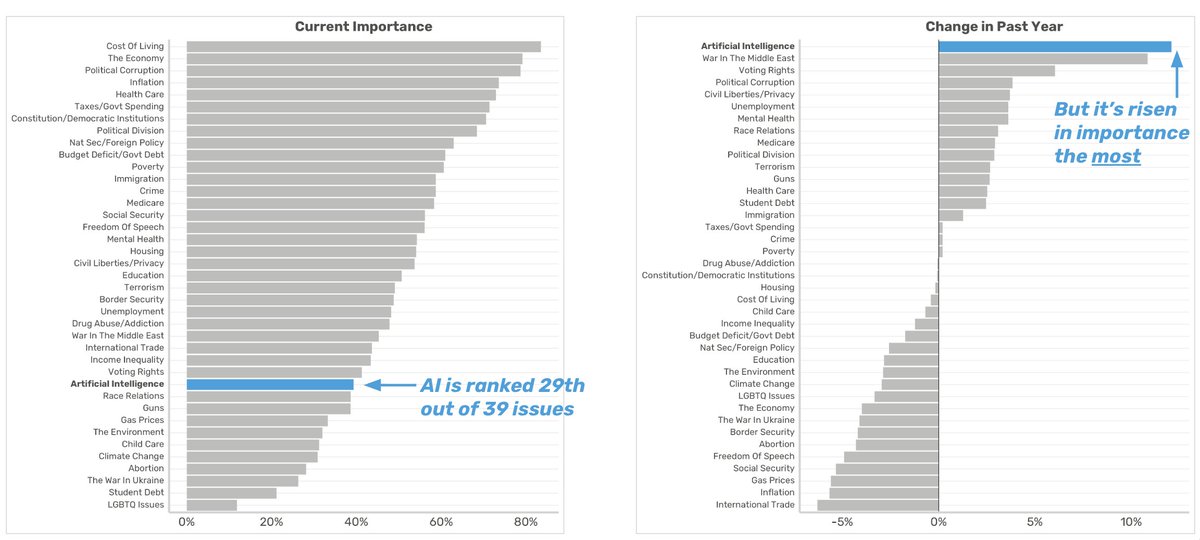
AI today is less important than it will ever be.
Over the past year, AI rose in issue importance faster than any issue we track — it's now more important to voters than climate change, child care, and abortion.
AI is hitting at a time when 61% of Americans say life has gotten less affordable in the last year, only 25% feel confident in their financial future, and only 34% say they have a secure job.
Not a great starting place for major disruption to the labor market.
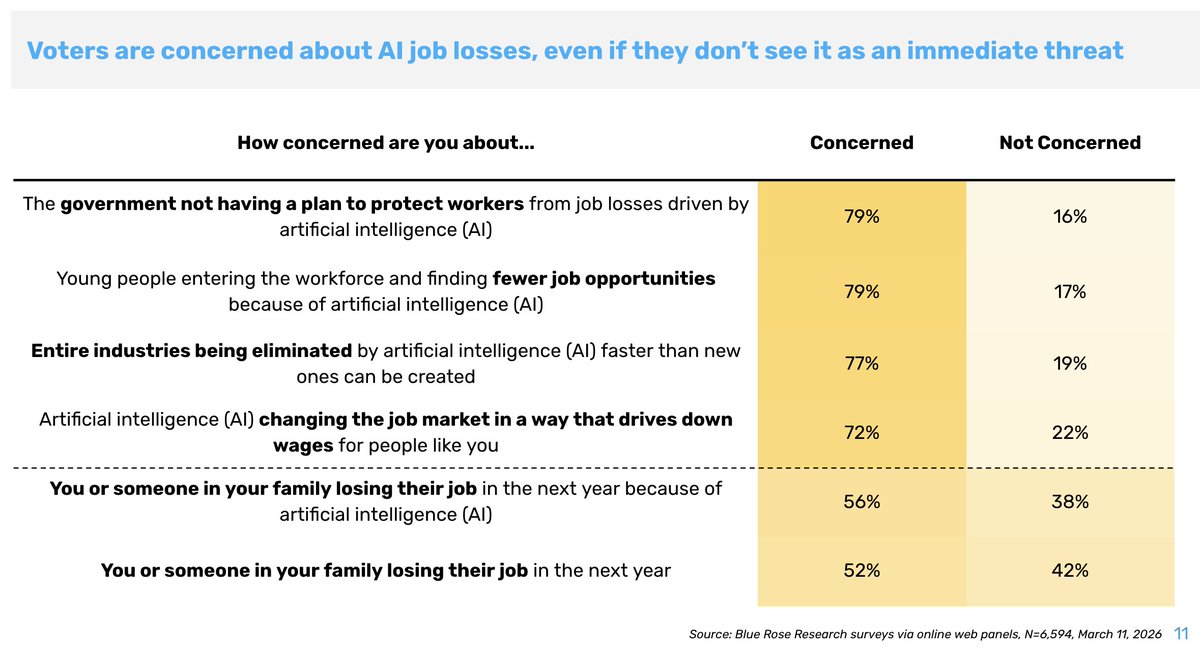
Voters are extremely concerned about the impact of AI:
79% are concerned the government doesn't have a plan to protect workers from AI job losses. 77% are concerned about industries being eliminated.
56% are worried about personally losing their job.
Excited to join @ezraklein to talk through what happened in 2024.
There's a turnout story this cycle, but not the one we're used to talking about. With less-engaged and less-likely voters becoming more Republican, a larger turnout meant a more GOP electorate.
In November, we saw a swing similar in magnitude to the realignment we saw in 2016: Hispanic, Asian, young voters, and politically disengaged voters swung towards Trump. Trump also made substantial gains among naturalized citizens (about 10% of the electorate).
A major shift we saw this cycle is that young people have gone from being one of the most progressive generations to one of the most conservative.
Republicans won 18 year old white men, white women, and men of color, and doubled their support with men under 25.
@semaforben @eriktorenberg The 2010’s featured the biggest swing left in attitudes in high income democracies in decades!
There’s something very different between this moment (where right wing swing globally is concentrated with young people and immigrants) vs the 2010’s when it was the exact opposite. x.com/davidshor/stat…
@semaforben @eriktorenberg The big story of post-Covid politics has been the right surging with immigrants, very young people, folks who report not following politics closely.
Even if he didn’t ask for his ballot back it would have been trivial to find by matching the voter file to federal databases of citizens, which is something that state governments do routinely to find people to prosecute.
Ideally you’d implement the matching on the front end but this is a very easy crime to catch which is why it’s so rare.
@RichardHanania We have a good idea of how often this happens because Republican prosecutors are highly incentivized to do the trivial work required to look.
It’s on the order of like 100ish people a year. AFAIK partisanship of the people who do it lean Republican.
@RichardHanania In general everyone really underestimates the extent to which both parties spend tons of money and time pouring over this data
@marcushjohnson Obviously a lot here is right - my main response is that it views everything through an America-centric lens in a way that obscures some of the broader dynamics
@marcushjohnson One of the big reasons why American political scientists were so slow to understand the education polarization/racial depolarization of the last decade has been been because they’ve wanted to analyze it as a continuation of CRA backlash rather than a global phenomena
@marcushjohnson To be more pointed - Catalist data shows that non-college voters of color have trended *enormously* toward the GOP since 2012, by similar magnitudes as non-college whites (particularly on a logit scale!).
Post-materialism provides a useful framework for why!