More Births Profile picture
May 5, 2024 12 tweets 9 min read Read on X
What does it mean that culture matters most for fertility? A big part of that is religion✝️⛪️✡️🕌.
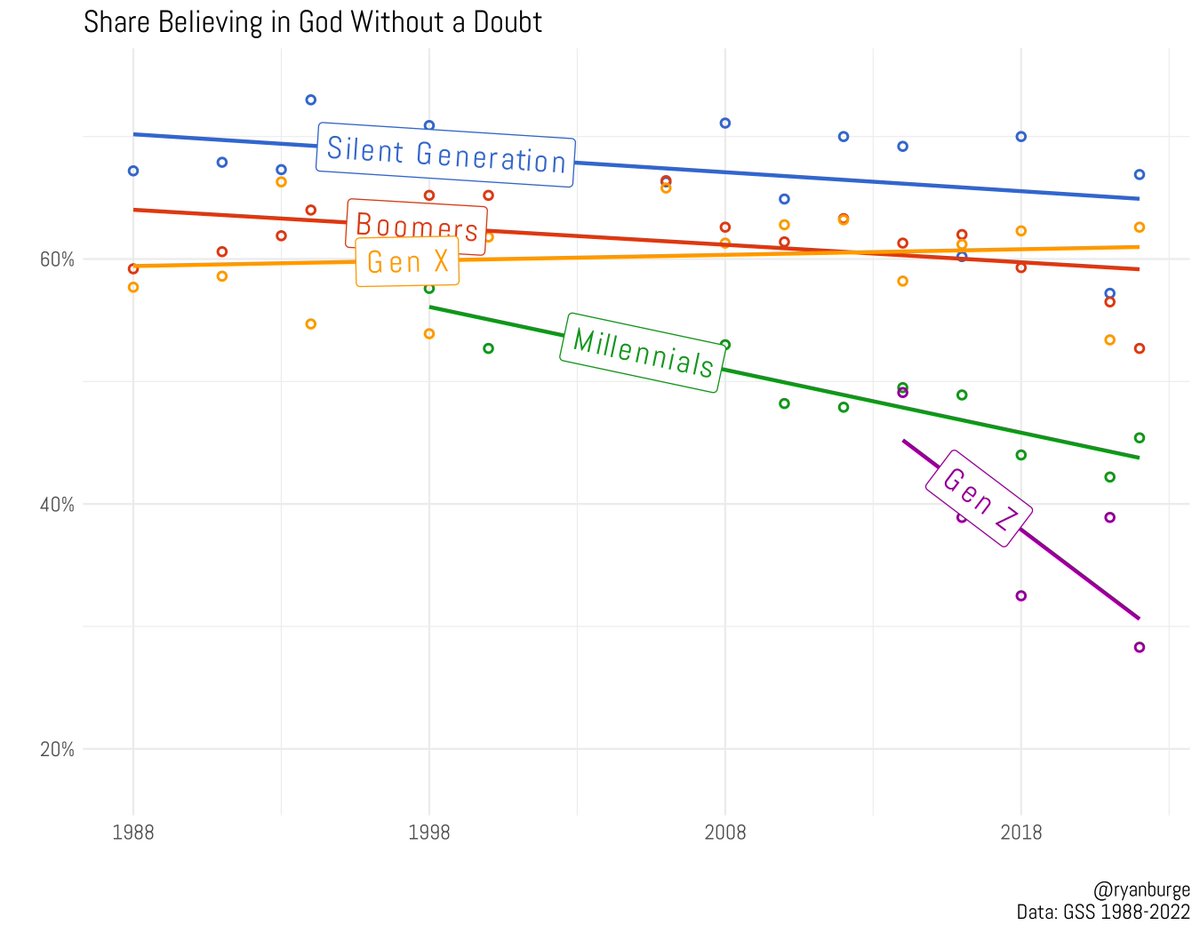
A review of the literature shows religious attendance & commitment are linked to much higher fertility, and declining religiosity is driving birthrates lower.
🧵, please share!
Image
Image
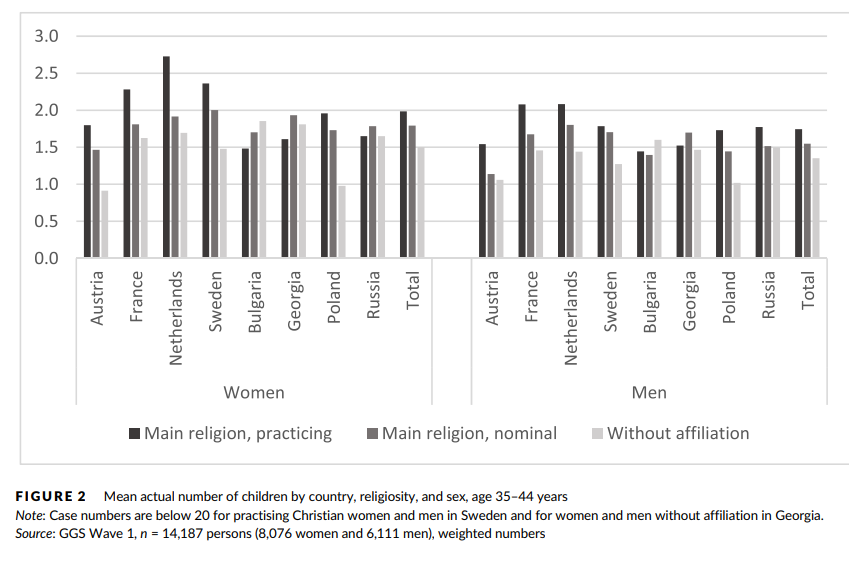
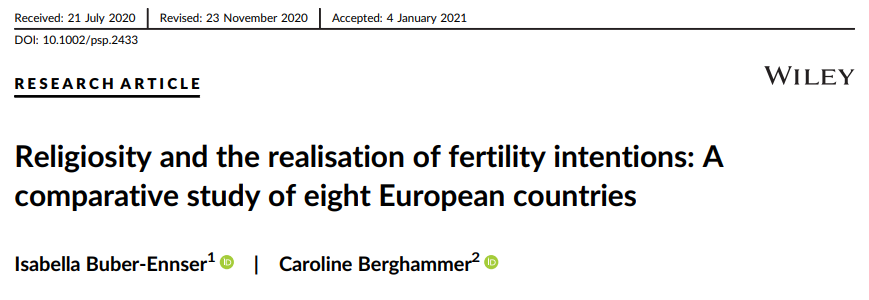
Berghammer et al. (2020) studied eight European countries and found that religious people have more kids, and their views on family intention are formed very young, even in childhood. In these countries, the fertility advantage was 1/2 a child per woman. (N=34,000) 2/12
Image
Image
Image
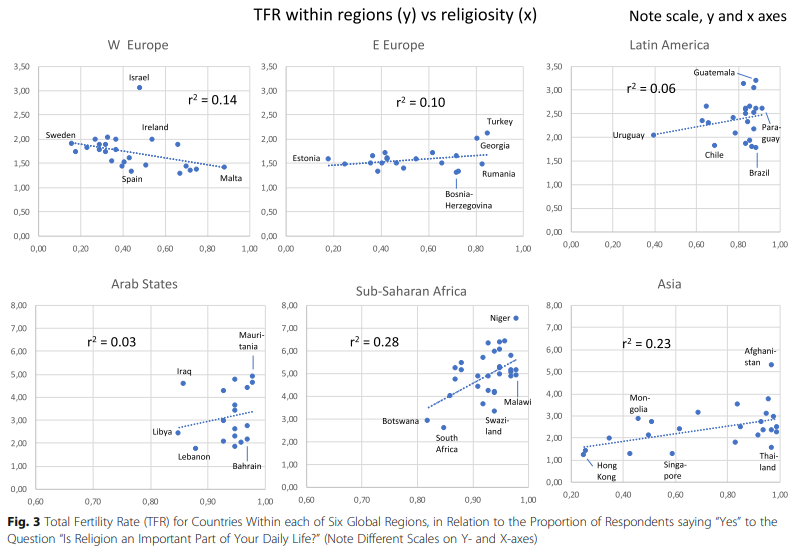
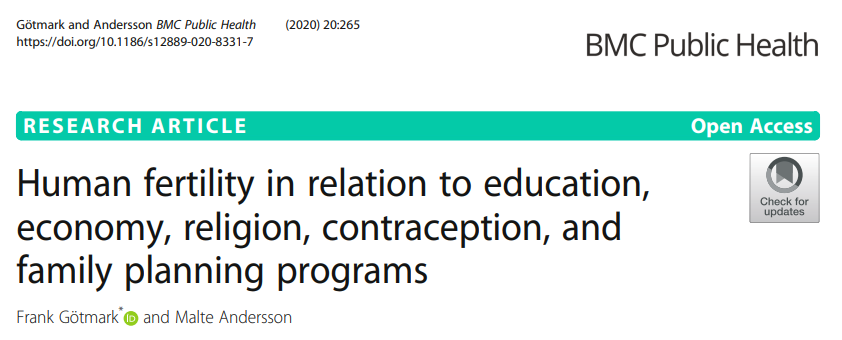
Götmark et al. (2020) found that fertility on the national and regional levels was positively correlated with the share of the population in a country that said, "Religion is an important part of daily life."
1000 respondents per country. 3/12

Image
Image
Image
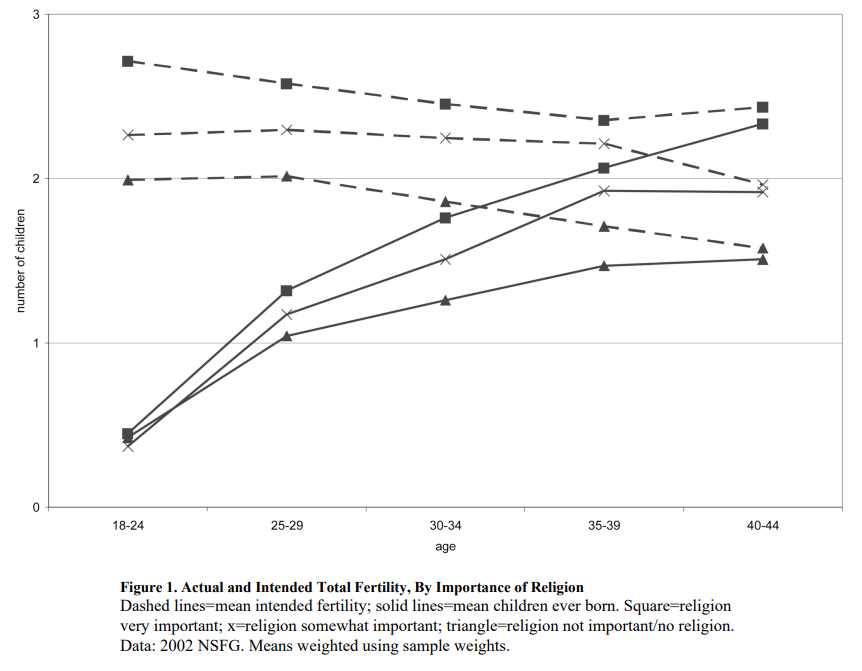
Hayford et al. (2008) looked at the United States and found a difference in fertility of a whole child per woman between those who rated religion as very important and those who rated religion as unimportant or reported no religion. (N=8000) 4/12
Image
Image
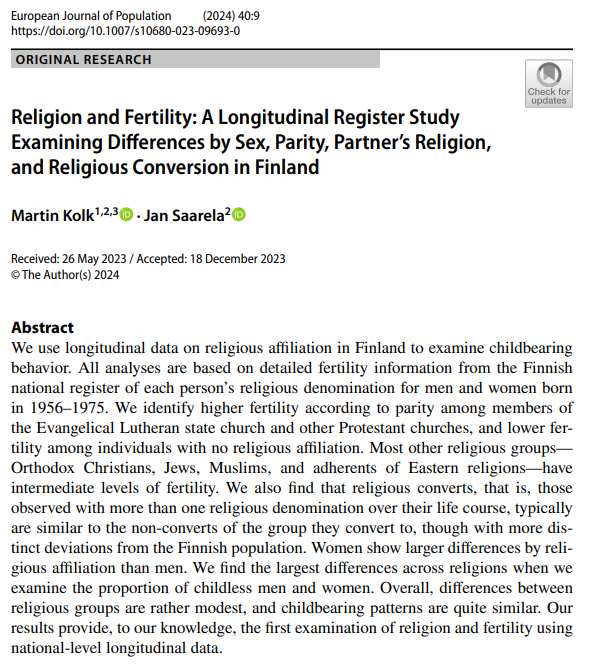
Kolk et al. (2023) studied a large data set in Finland and found that those declaring no religion had a TFR of 0.3 births per woman less than the national average, while Muslims had fertility markedly higher than the national average. (N=630,000) 5/12
Image
Image
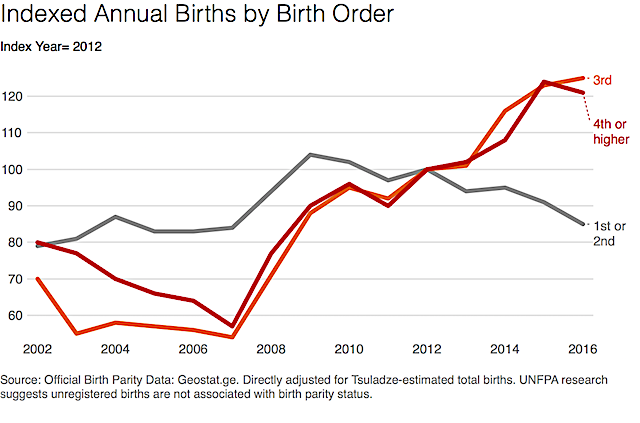
Stone (2017) described a large increase in fertility in the Republic of Georgia after the head of the Georgian Orthodox Church urged families to have more children. Marital fertility and higher order births in particular rose dramatically. 6/12
Image
Image
Image
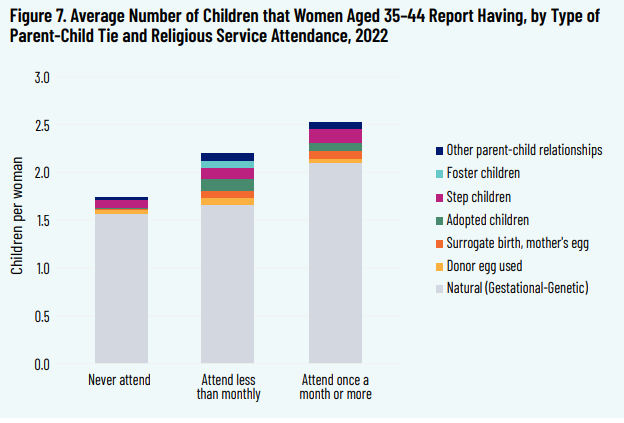
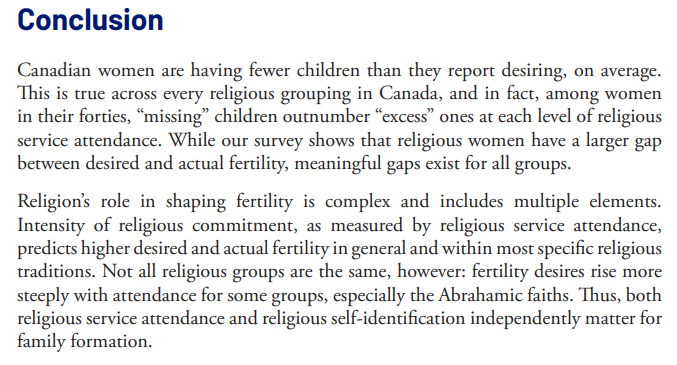
Stone (2023) found major differences in both intended and actual fertility among Canadian women based on religious attendance. Those who attended at least monthly had 0.8 more children than those who never attended. Interestingly, the religious used surrogacy more! (N=2700) 7/12

Image
Image
Image
Image
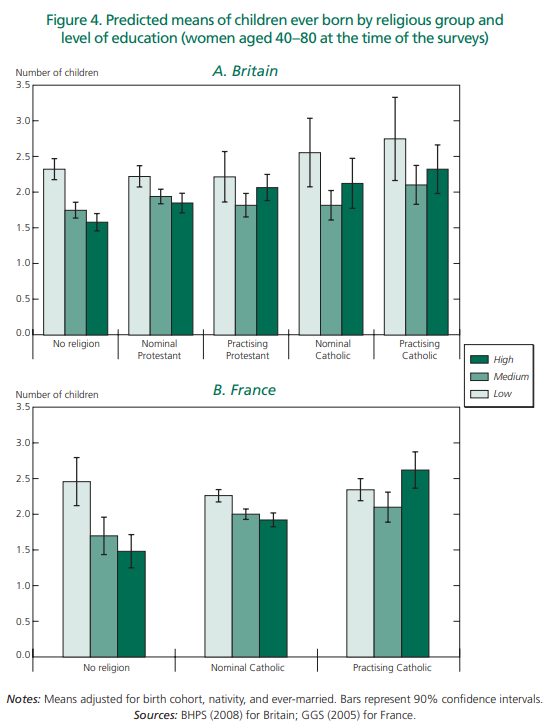
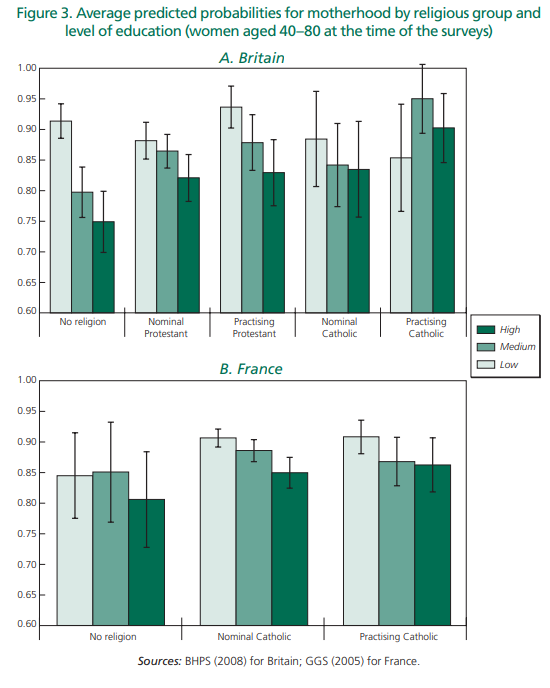
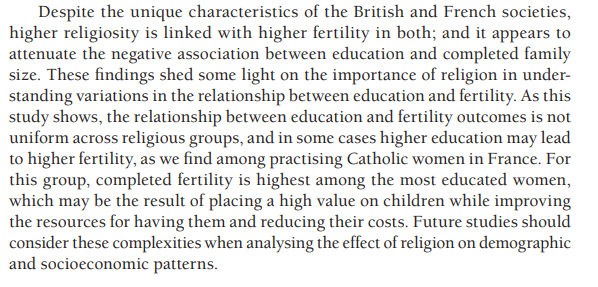
Peri-Rotem (2020) looked at the interaction between religion, education and fertility in the UK and France.
Religious practice led highly educated women to have more children and be more likely to become mothers but had little impact on less educated women! (N=10,000) 8/12
Image
Image
Image
Image
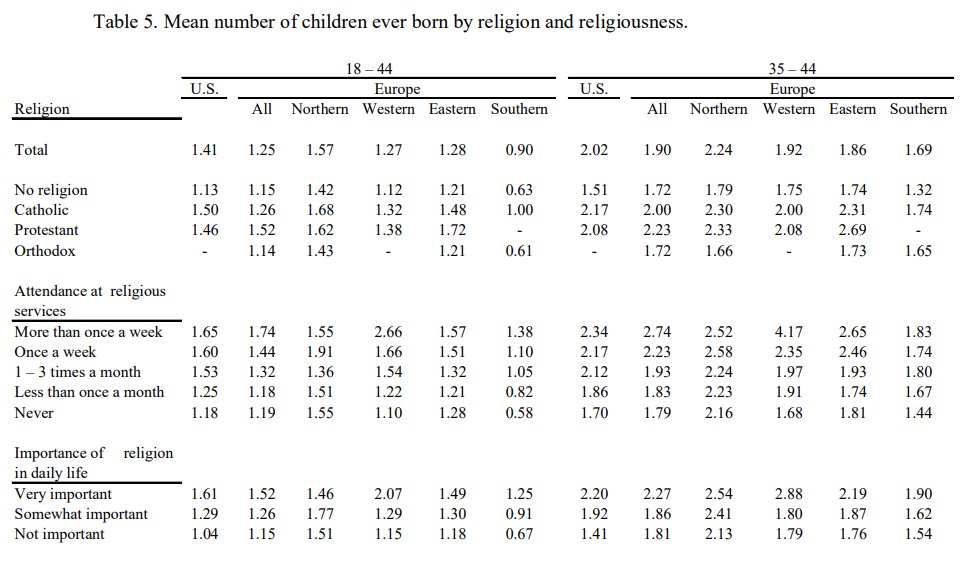
Frejka et al. (2006) found much higher fertility among the religious, with big differences according to religious attendance and ratings of religious importance in both the US and Europe.
Interestingly, the religious advantage was higher in Europe, where attendance is lower. 9/
Image
Image
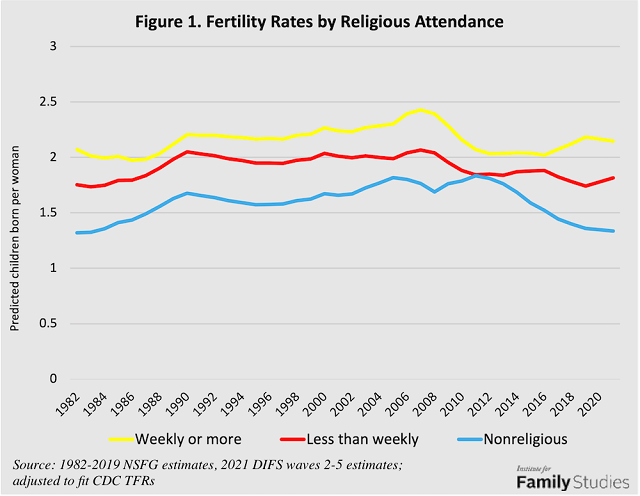
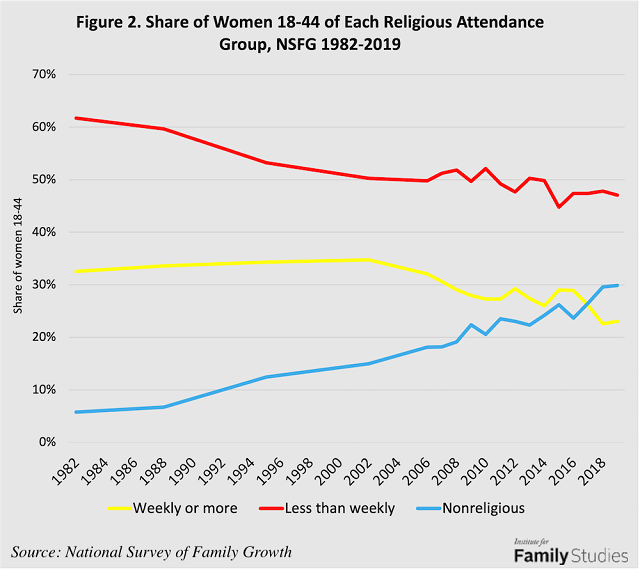
Stone (2022) found that fertility rates have been high and stable among religious attenders, and that declining fertility is due to a sharply increasing share of people that are not religious. 10/12
Image
Image
Image
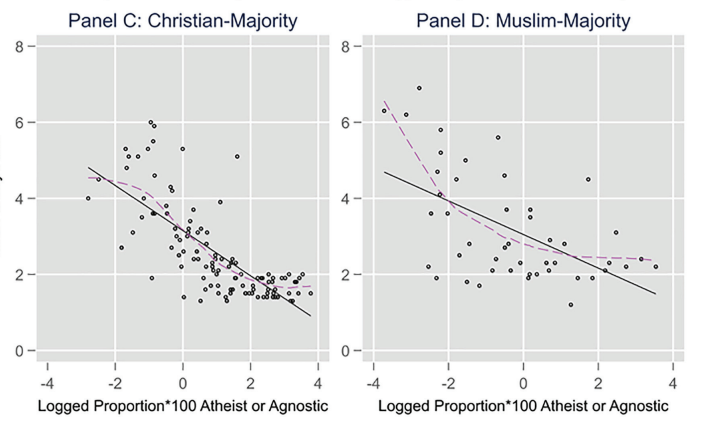
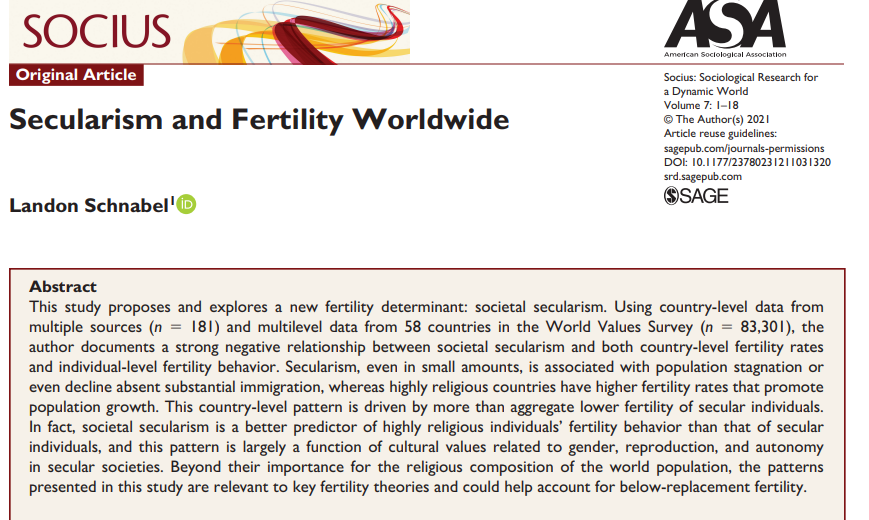
Finally, Schnabel (2021) found that the proportion of secular people in a country is associated with sharply lower fertility on a national level, suggesting that these individuals are bringing about cultural shifts across society. 11/12
Image
Image
Image
These studies all suggest that religion is a major driver of fertility, and declining faith is a big part of why birthrates are too low.
Is secularism at odds with civilizational thriving? Can seculars develop pro-natal values too or is a return to the old ways the only answer?

Image
Image
Image

• • •

Missing some Tweet in this thread? You can try to force a refresh

 

Keep Current with More Births

More Births Profile picture

Stay in touch and get notified when new unrolls are available from this author!

Read all threads

This Thread may be Removed Anytime!

PDF

Twitter may remove this content at anytime! Save it as PDF for later use!

Try unrolling a thread yourself!

how to unroll video
  1. Follow @ThreadReaderApp to mention us!

  2. From a Twitter thread mention us with a keyword "unroll"
@threadreaderapp unroll

Practice here first or read more on our help page!

More from @MoreBirths

Apr 3
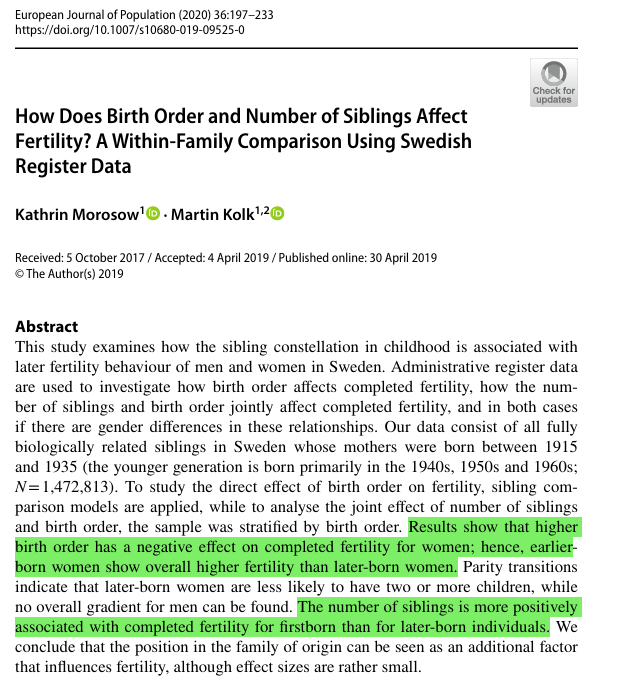
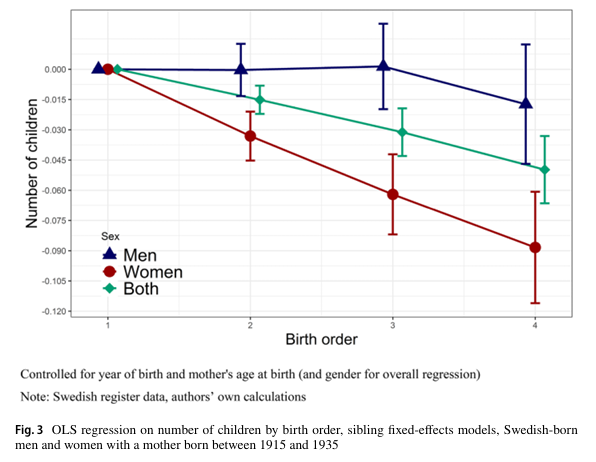
A study in Sweden found that firstborn children tend to have more children of their own than those that came later in the birth order.

Why? It is likely because older siblings had exposure to babies growing up, while younger siblings did not. 🧵. Image
Image
Image
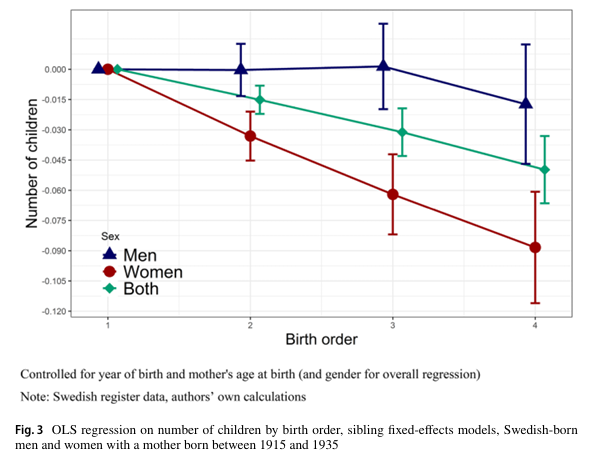
The large study of siblings (N = 1.5 million) found firstborns tend to have significantly more children than those that came later.

The effect is especially strong for women. When girls have a chance to help with little ones, they have much stronger family desires later on.
2/4 Image
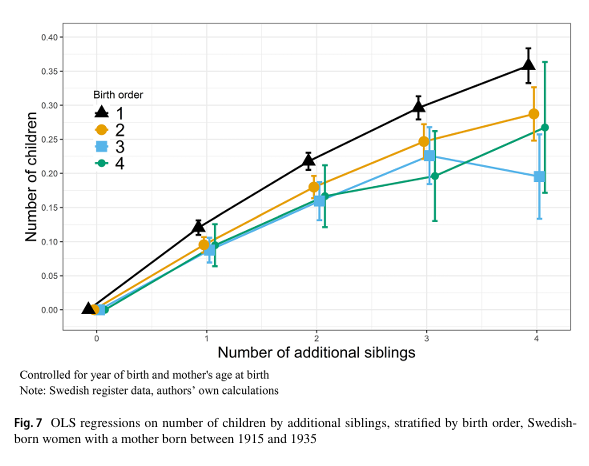
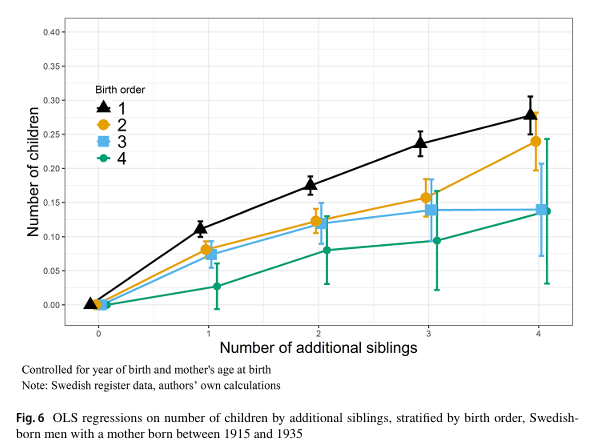
What about number of siblings? For both women and men, having more siblings tends to increase the number of children people have.

And once again, the effect is strongest for elder siblings, who got more chances to practice parenting. 3/4 Image
Image
Read 4 tweets
Mar 4
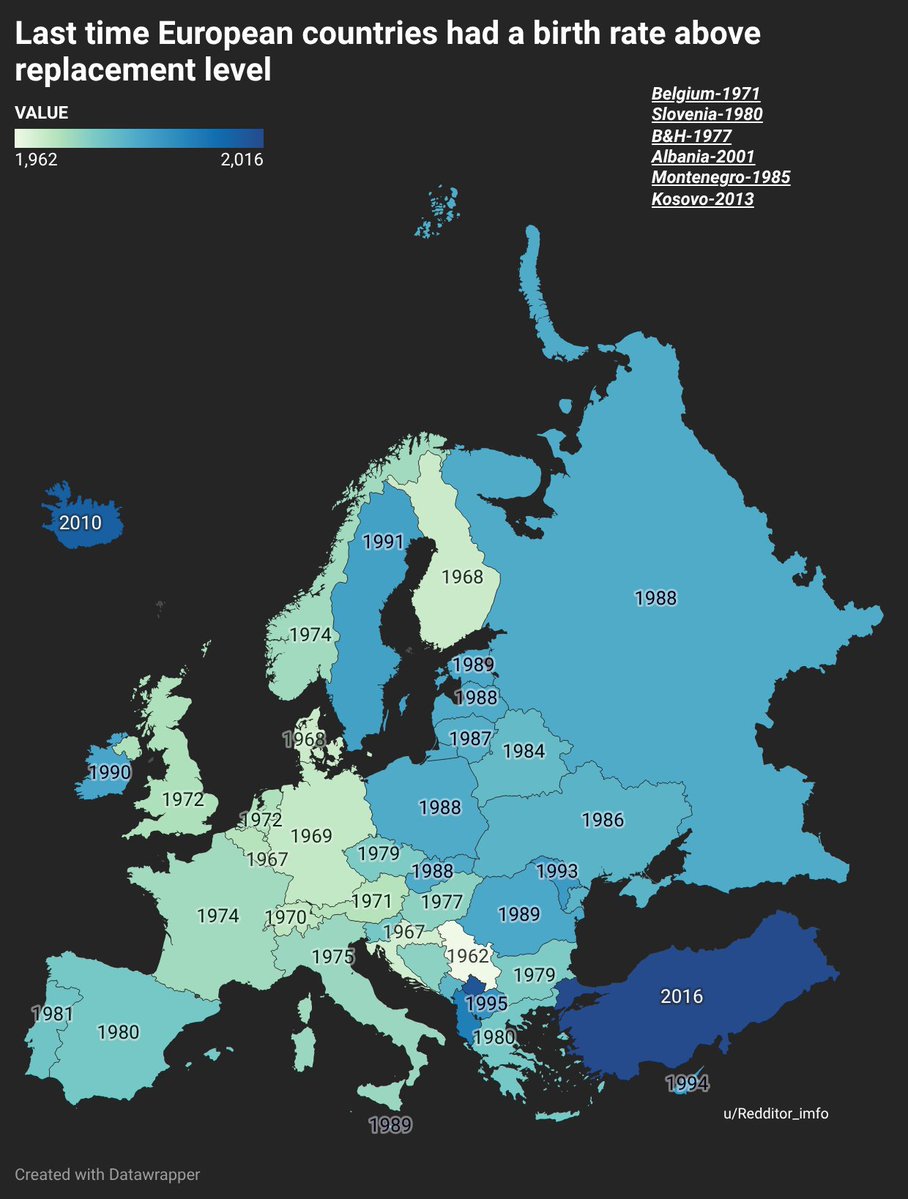
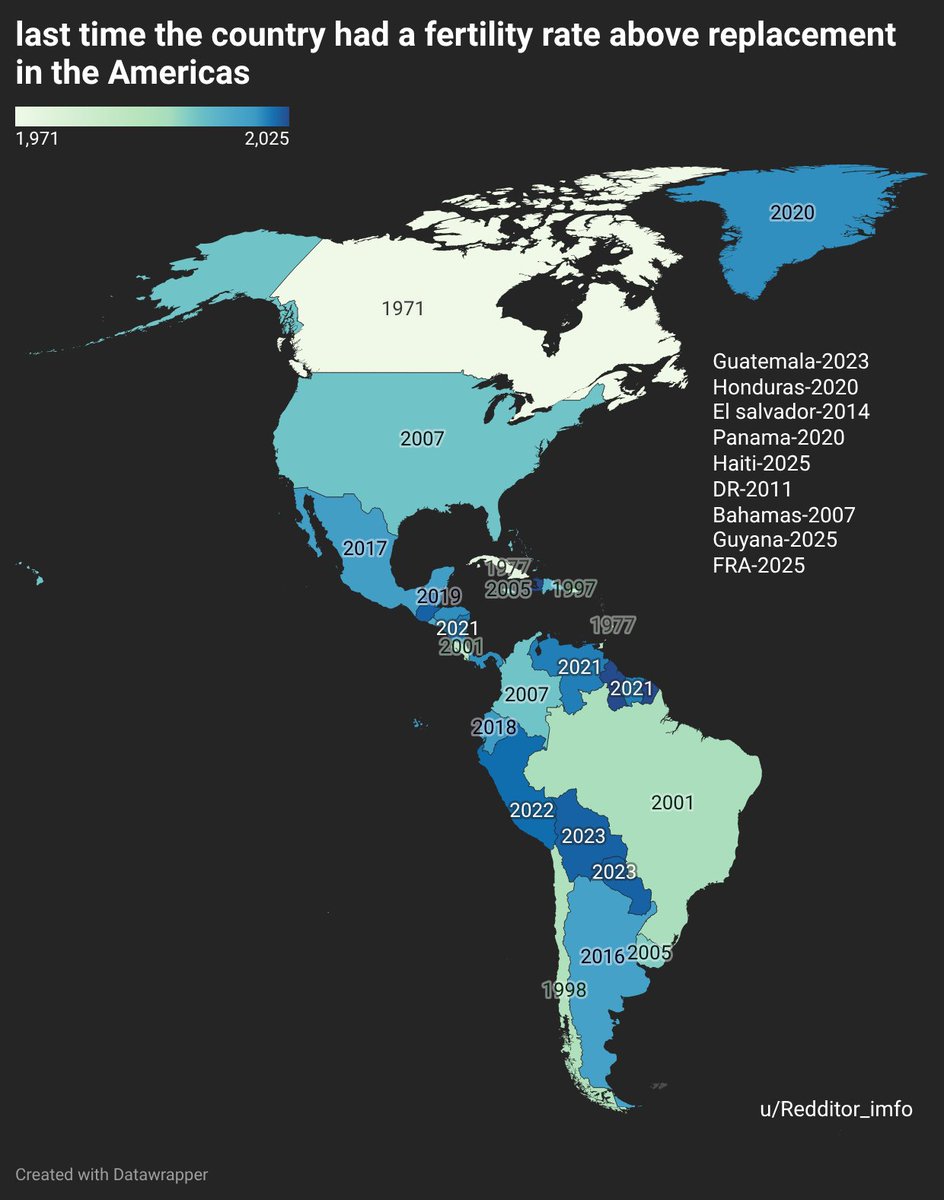
A new map shows the last time each country in Europe reached replacement fertility.

Most western European countries, including the UK, France, Germany and Italy haven't had replacement fertility in more than 50 years.

This is the main reason for Europe's stagnation. 🧵. Image
This map shows the sobering fact that once a country falls below replacement, it almost never bounces back.

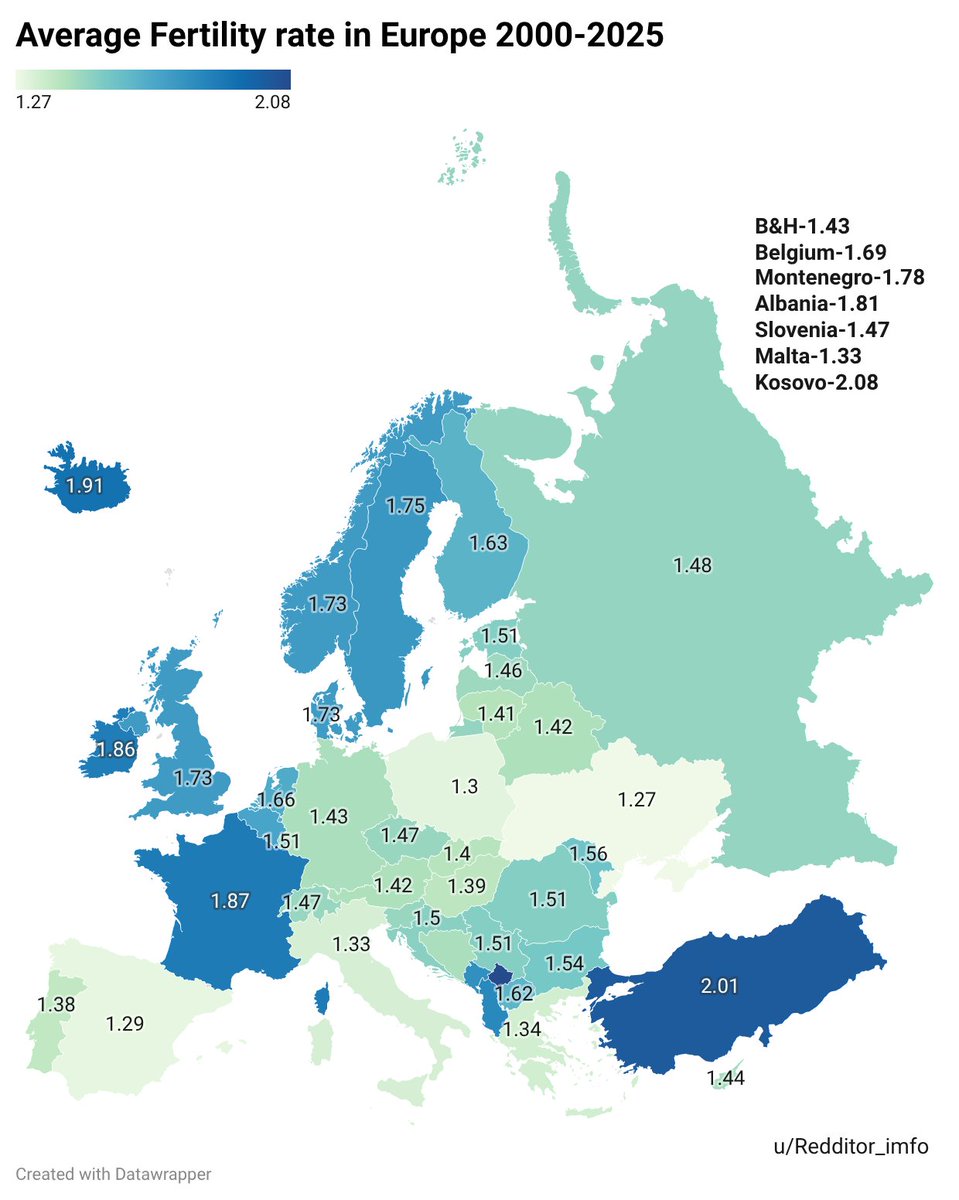
Eastern Europe did not fall below replacement until the 1980s but has had exceptionally low fertility over the past 25 years. 2/4 Image
Image
The Americas have had healthy fertility until much more recently. The United States had replacement fertility as recently as 2007 and low birthrates are a recent problem in most of the hemisphere.

That is a big part of why the Americas have outperformed Europe economically. 3/4 Image
Read 4 tweets
Feb 27
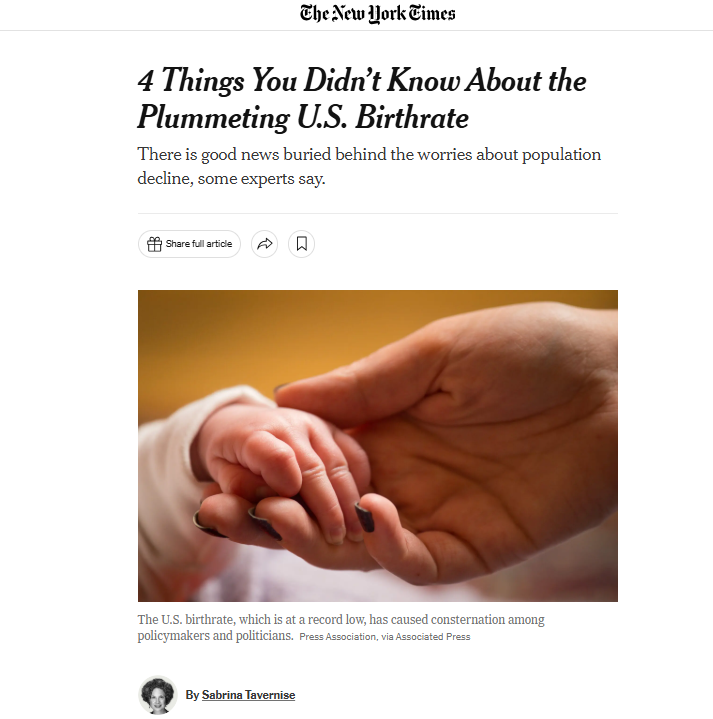
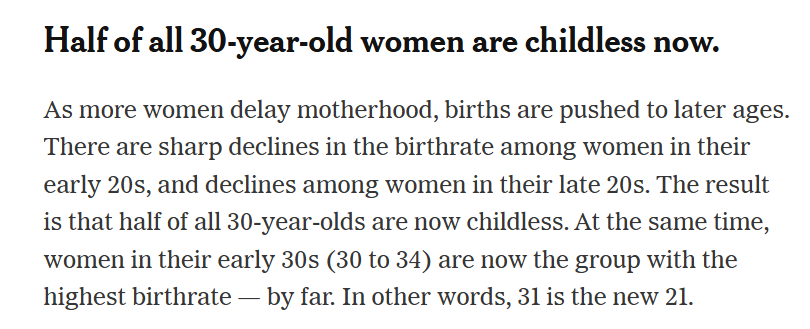
A big fail in the New York Times today with the claim that "31 is the new 21."

The Times leads readers to believe today's young women will make up lost fertility in their 30s and 40s.

But all evidence indicates they will not. 🧵. Image
Image
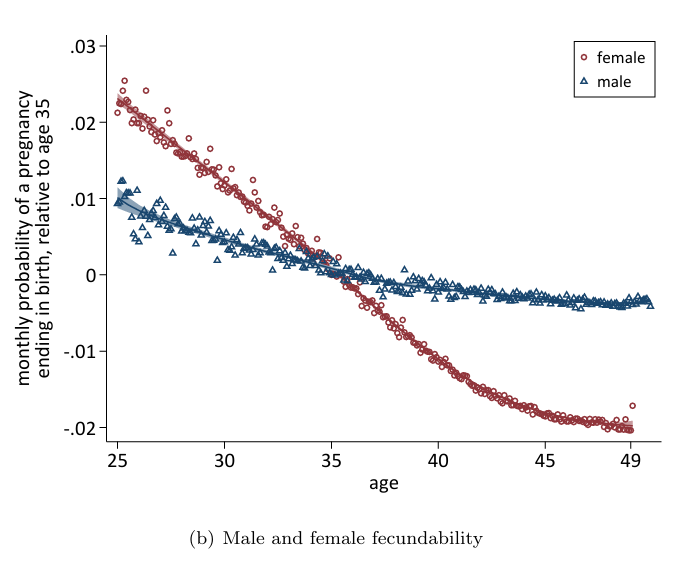
First, the Times is ignorant of what recent research shows about age and infertility.

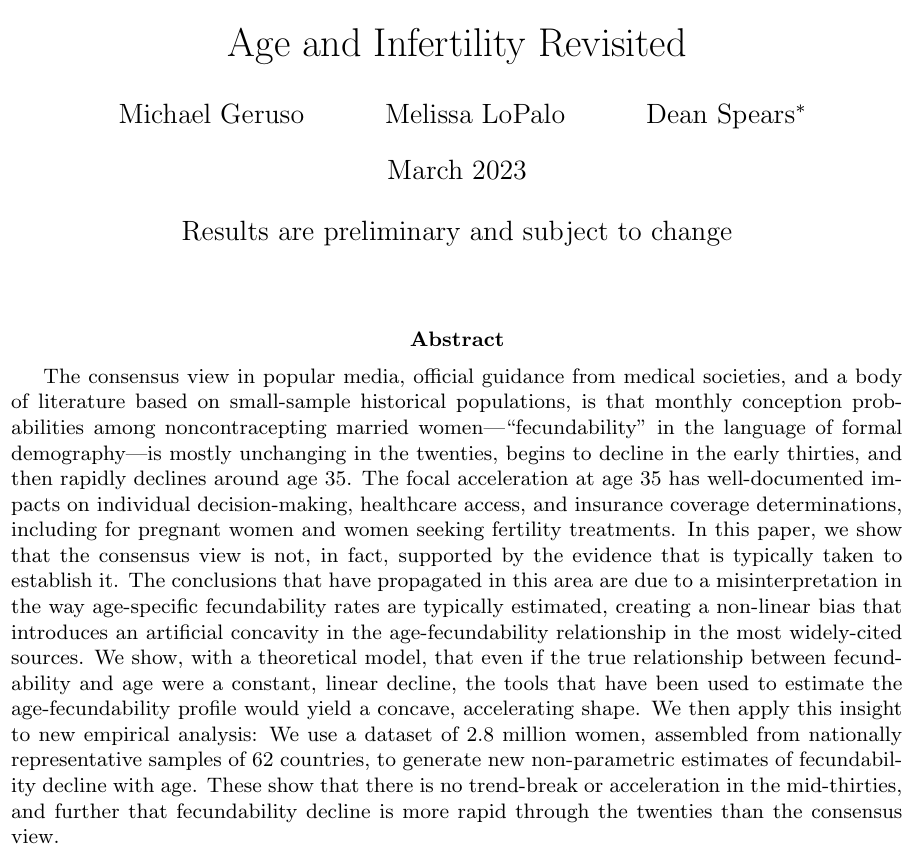
A big 2023 study of three million women by Geruso, Spears and LoPalo found that the ability to get pregnant is much lower in the 30s than the 20s.

So unfortunately, 31 is not the new 21. 2/4 Image
Image
Image
Second, the fertility collapse tracks plunging rates of partnering in the US and elsewhere in the world.

There is no reason to expect birthrates to miraculously recover when people are single at higher rates than ever before.
(Chart by @jburnmurdoch.) Image
Read 4 tweets
Feb 24
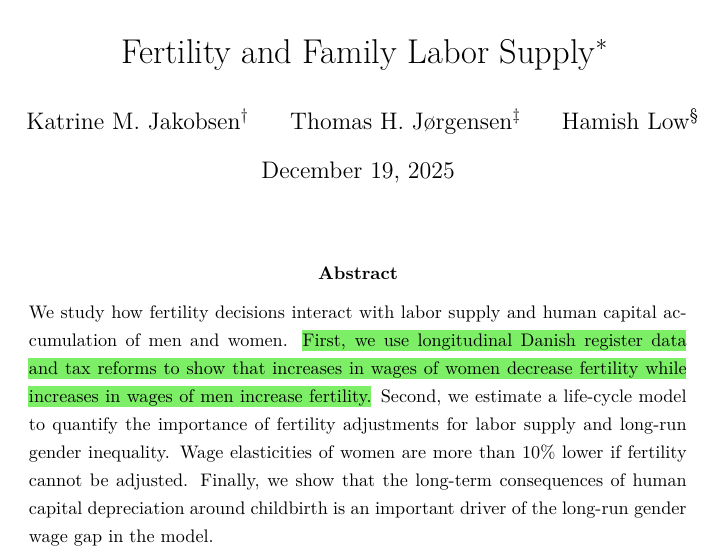
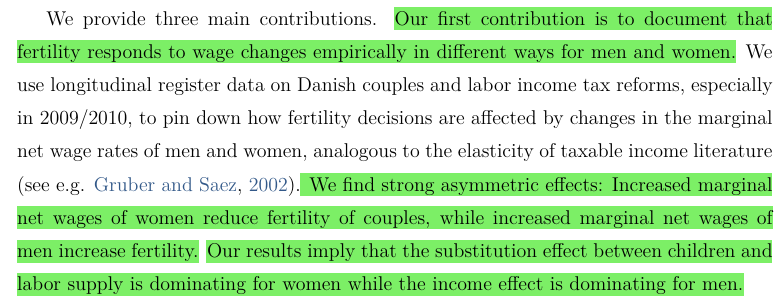
A recent study found that giving men a pay raise led them to have more children, while giving women a pay raise led them to have fewer children. 🧵. Image
Image
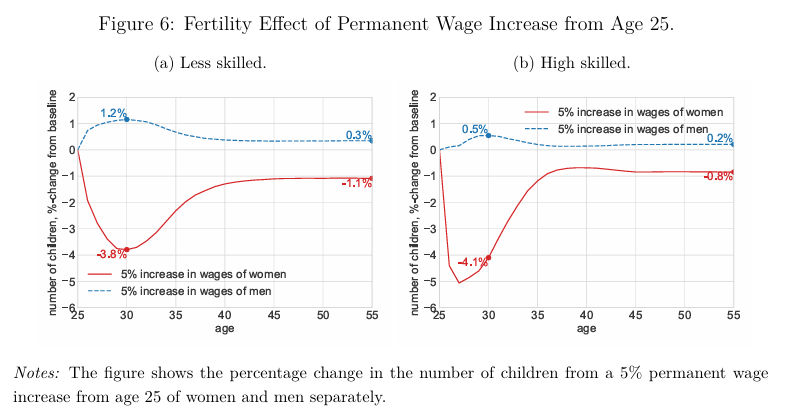
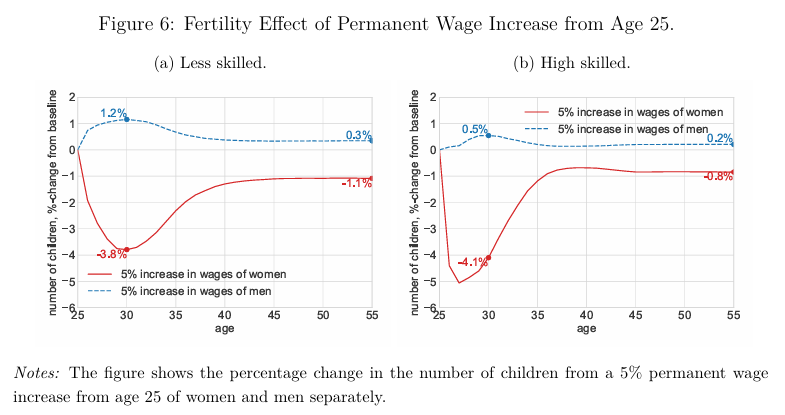
For women, the effect of a pay raise was significantly reduced future fertility. A pay increase at 25 was associated with a large decrease in fertility at age 30, regardless of the skill level.

For men, a pay increase was associated with persistently higher fertility. 2/4 Image
Why? The authors argue that "the substitution effect between children and labor supply is dominating for women while the income effect is dominating for men."

Since childcare falls more on women, the competition between work and family is greater for women than for men. 3/4 Image
Read 4 tweets
Feb 16
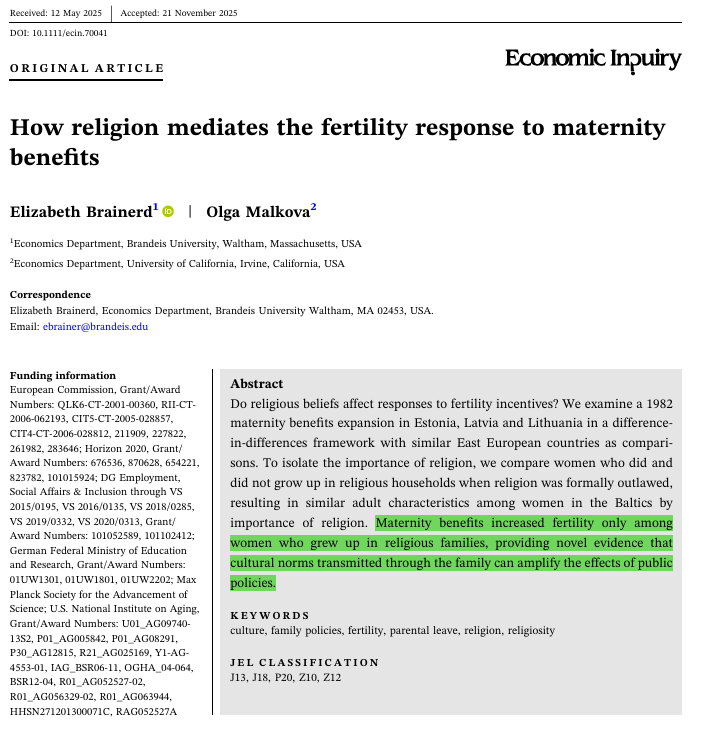
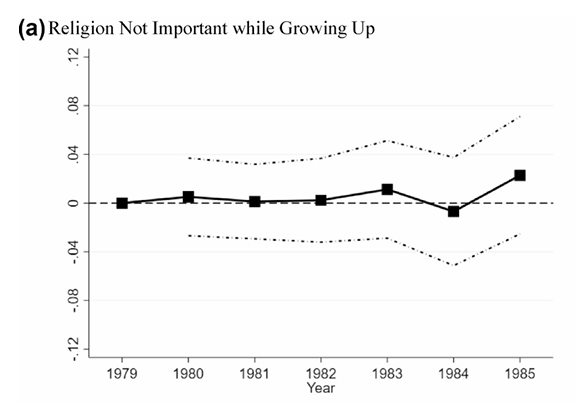
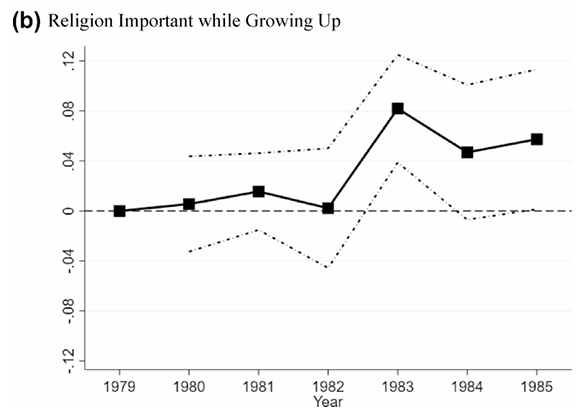
A newly published paper found pronatal policies only worked when supported by culture.

"Maternity benefits increased fertility only among women who grew up in religious families" in the Baltics.

This could explain why many pronatal policies have not boosted fertility more. 🧵. Image
Image
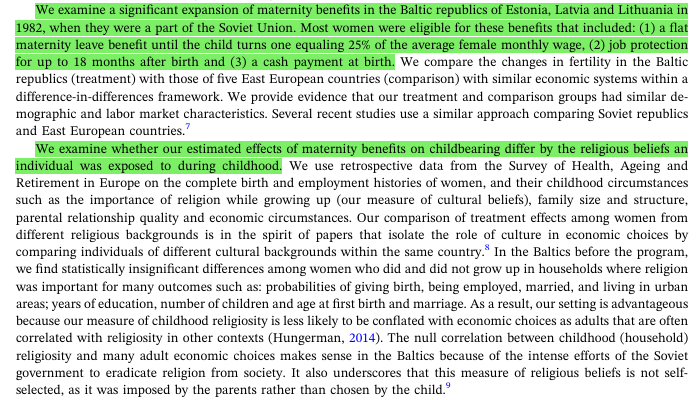
In 1982, there was a big expansion in child benefits in Estonia, Latvia and Lithuania including maternity leave wage benefits, a cash payment for birth and 18 months of job protection.

Five East European countries with comparable economic systems did not get the benefits. 2/5 Image
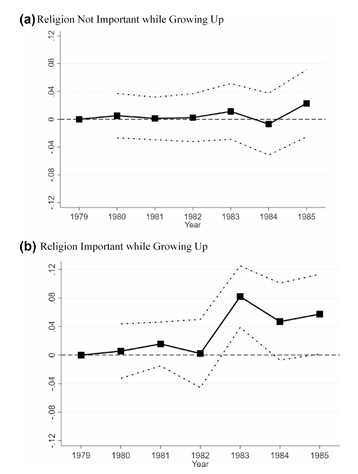
The study found, "among women who grew up in religious households, fertility went up by a statistically significant 5.7 percentage points representing a 46.3% increase."

Meanwhile, there was "no change in fertility among women who did not grow up in religious households." 3/5 Image
Image
Read 5 tweets
Feb 11
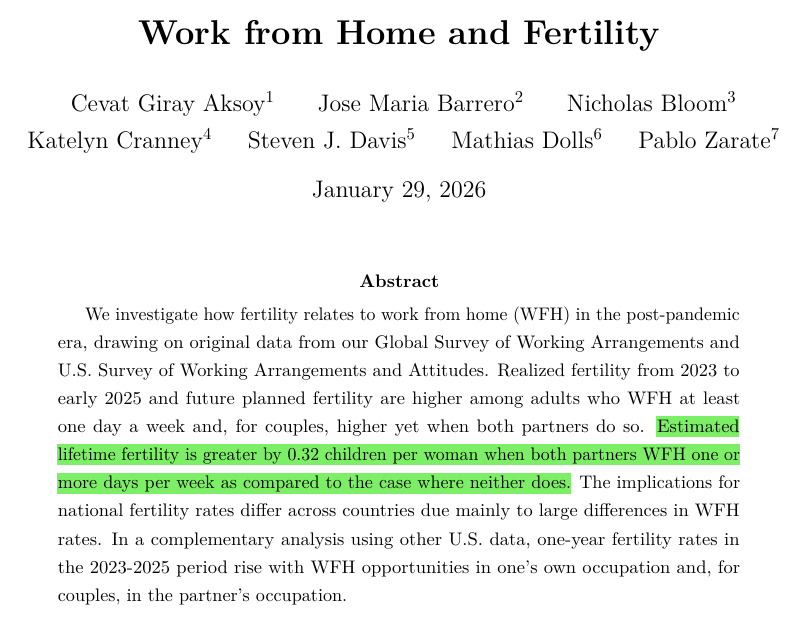
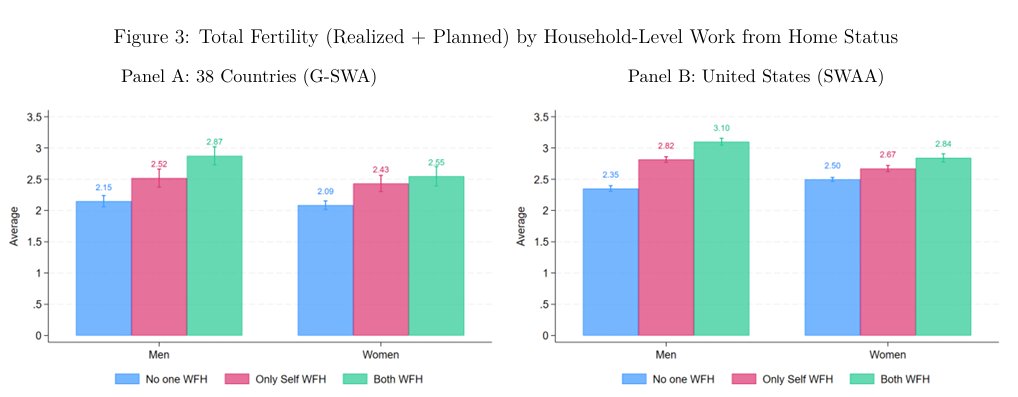
A new study finds that work-from-home raises fertility more than any conventional family policy.

"Estimated lifetime fertility is greater by 0.32 children per woman when both partners WFH one or more days per week as compared to the case where neither does." 🧵. Image
Image
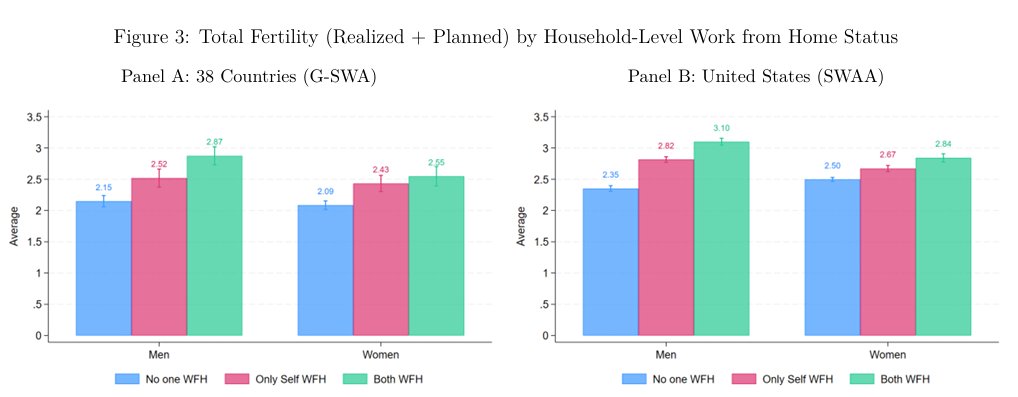
In this chart, a large effect is clearly seen, with fertility higher when either partner has some work-from-home and highest when both do.

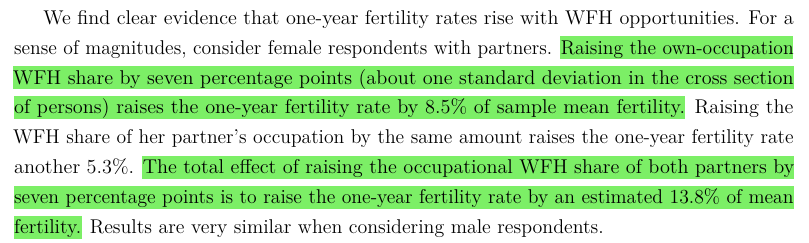
The authors say this is not due to selection because fertility rose among those that unexpectedly got WFH, compared to those that didn't. Image
Raising the work-from-home share of either partner by seven percent raised the one-year fertility by a similar amount, which means that families that have WFH have considerably higher fertility on average. Image
Read 6 tweets

Did Thread Reader help you today?

Support us! We are indie developers!


This site is made by just two indie developers on a laptop doing marketing, support and development! Read more about the story.

Become a Premium Member ($3/month or $30/year) and get exclusive features!

Become Premium

Don't want to be a Premium member but still want to support us?

Make a small donation by buying us coffee ($5) or help with server cost ($10)

Donate via Paypal

Or Donate anonymously using crypto!

Ethereum

0xfe58350B80634f60Fa6Dc149a72b4DFbc17D341E copy

Bitcoin

3ATGMxNzCUFzxpMCHL5sWSt4DVtS8UqXpi copy

Thank you for your support!

Follow Us!

:(