The Chinese Communist Revolution consolidated its power by taking land from the elite. In the following generation, the previous elite once again reclaimed their social advantage.
This is not an isolated phenomenon: A Thread on the persistence of status 🧵
This is not an isolated phenomenon: A Thread on the persistence of status 🧵
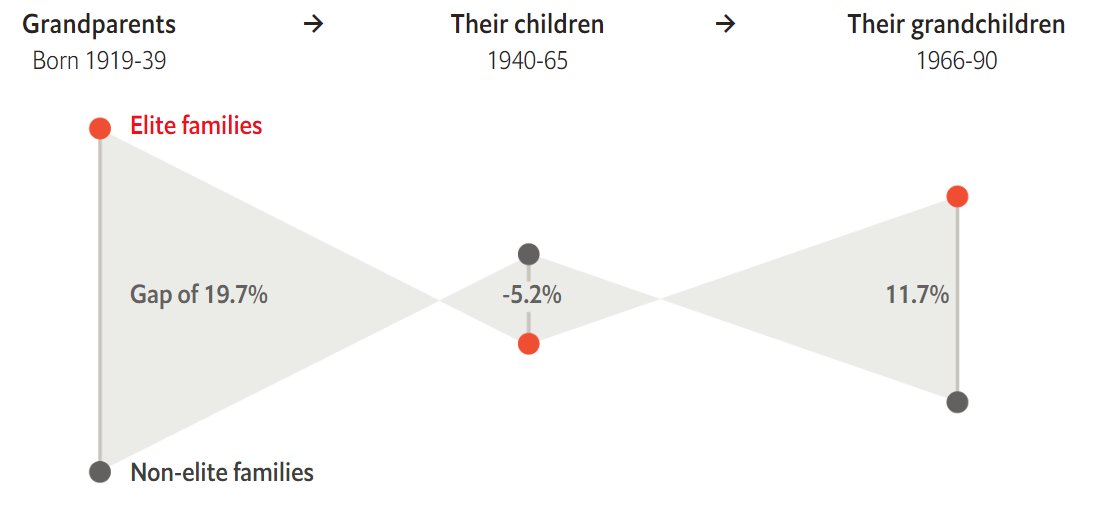
The Cultural Revolution is one of the most extreme efforts of wealth equalization in all of human history, over 43% of all land assets were transferred to others. The goal was explicit: to eliminate income and wealth differences between the rich and poor in perpetuity.

The vision of the revolution was to ensure that the elite could not pass on their status to future generations. So, beyond confiscating wealth, the Communists eliminated merit-based admission into universities.
Recognizing that education could also be an avenue for the persistence of elite status a quota of 5% was established for the children of "class enemies." The rest of the spots went to the children of workers peasants and soldiers.
They went to further lengths to persecute and ensure that status would not carry to the next generation. Beyond the general humiliation and torture of many, the Party "sent down" many urban students to do manual farm labor; the children of the elite were most subject to this.
The communists failed. Despite the initial and massive changes (land reform was one of the causes of the Great Famine), the elite regained their foothold. The extreme egalitarian conditions eased, and university admissions went back to being merit-based.
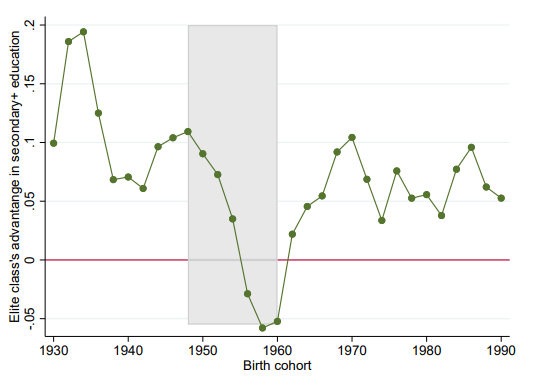
So too did income differences re-emerge. They earned more than their past forced equals and even edged out the earnings of party members!
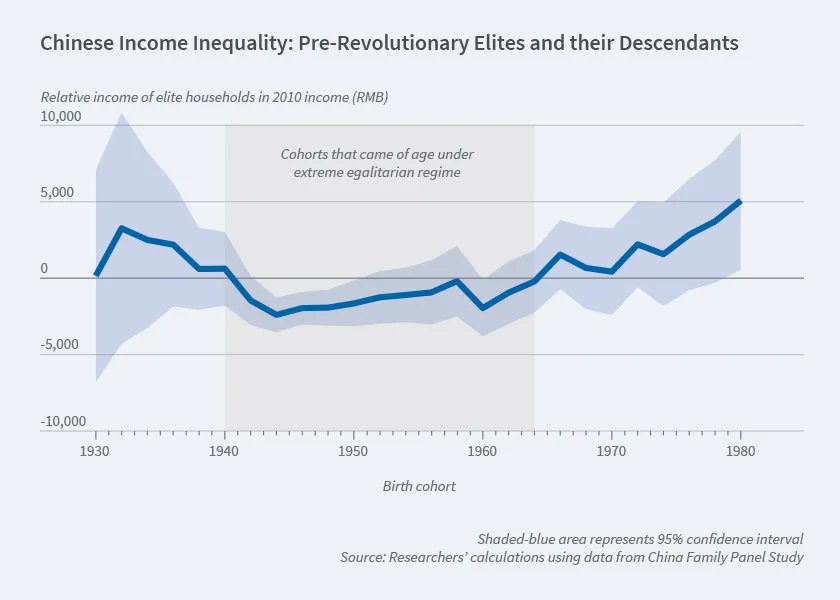
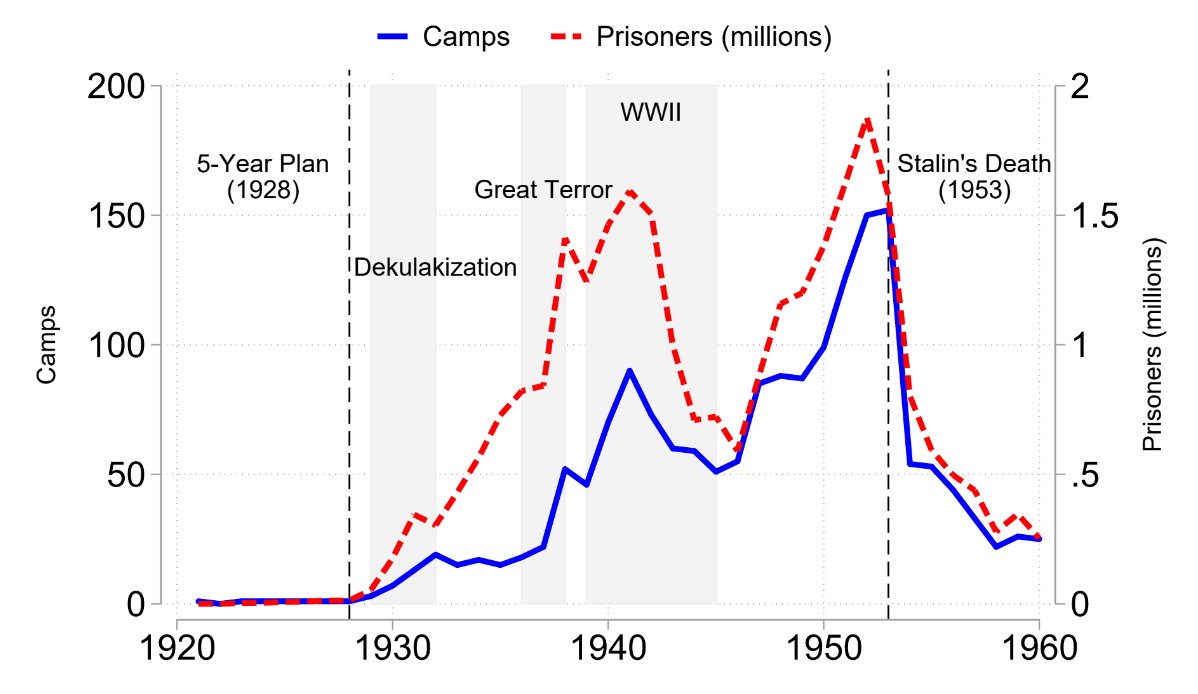
But this is not an isolated phenomena, all throughout history we can find examples of groups persisting in status despite challenges. Consider another example of Communists making enemies out of their elite: The Soviet Union.
Stalin and the Communists imprisoned around 11 million people, of these almost 4 million were what they called Enemies of the People, a highly skilled and educated elite.
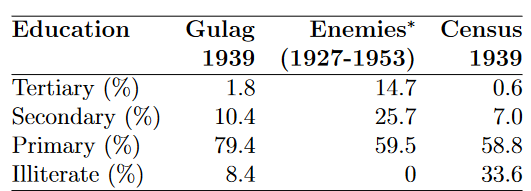
This was a broad group encompassing "intellectuals, artists, engineers, politicians, businessmen, professors, landowners, scientists, and affluent peasants."
As a group, they were many times more likey to be highly educated.
As a group, they were many times more likey to be highly educated.
Millions were executed or died in the gulag but some, including the enemies, survived. They and their descendants often stayed in the area around the area where they were imprisoned. Here you can see where they were taken from (the hexagons) and where the camps were.

Similar to the Chinese the task of imprisoning and executing the educated had no economic rationale. It was purely political, the goal was to "destroy" these families and take away any lasting advantage they might pass on to their offspring.

So what happened to these remote regions now populated with the survivors of the communist regime? They do better in proportion to the amount of *enemies* that were imprisoned in the region. Nightlight, a measure of development, is significantly higher in these regions.

The same goes for productivity and wages.

The Soviets failed, today the descendants of the enemies shine brighter (literally). Here's a map of lights from space:

Of course, status persistence isn't isolated to communists; Rich southerners, many of whom held much of their wealth in slaves incurred great losses when slavery was abolished after the Civil War.
Beyond losing labor farming their land became less productive; free labor is different from slave labor. For many, the transition from being a master to an employer proved challenging.
In effect, many of these families had the vast majority of their wealth erased.
In effect, many of these families had the vast majority of their wealth erased.
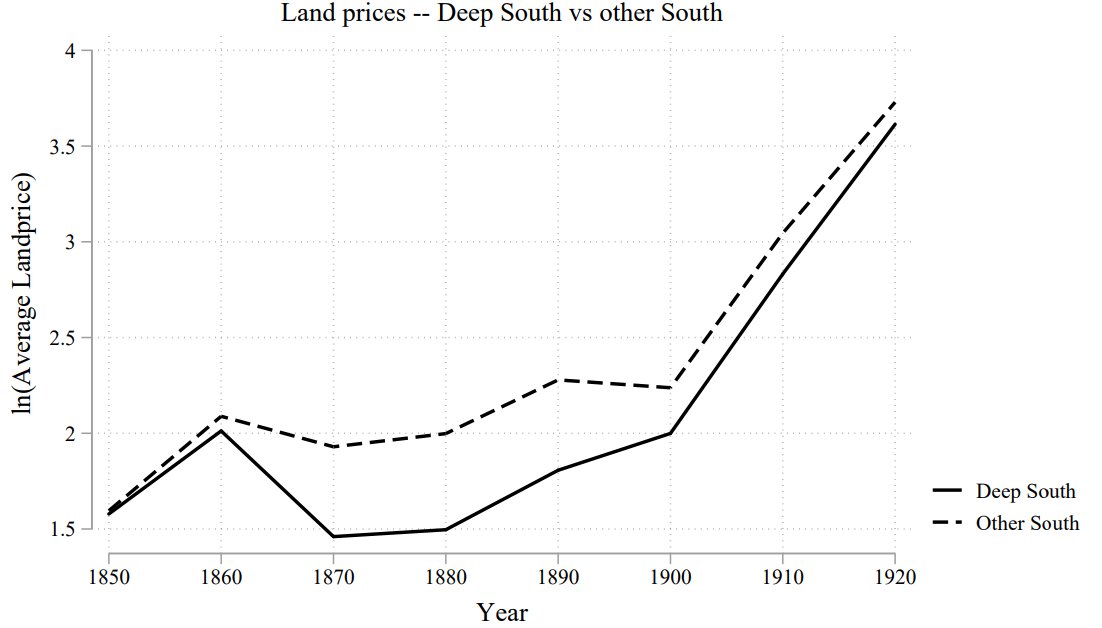
Not all rich families were wealthy on account of slaves so we can compare. For wealthy families, the amount of wealth lost depended largely on the number of slaves that the family held.
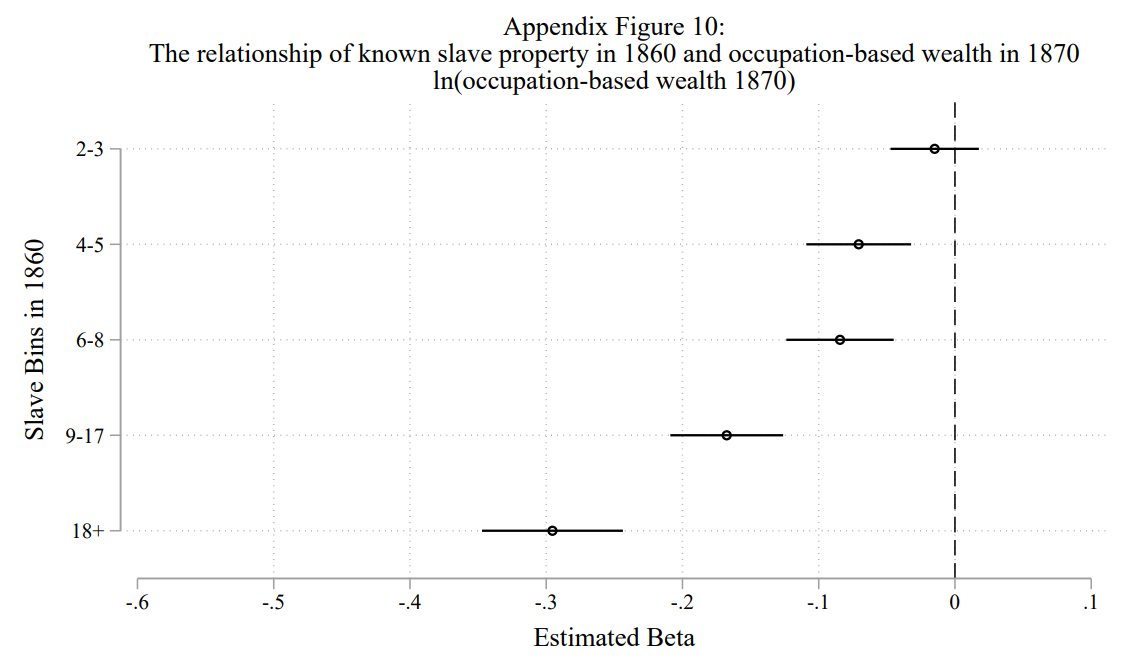
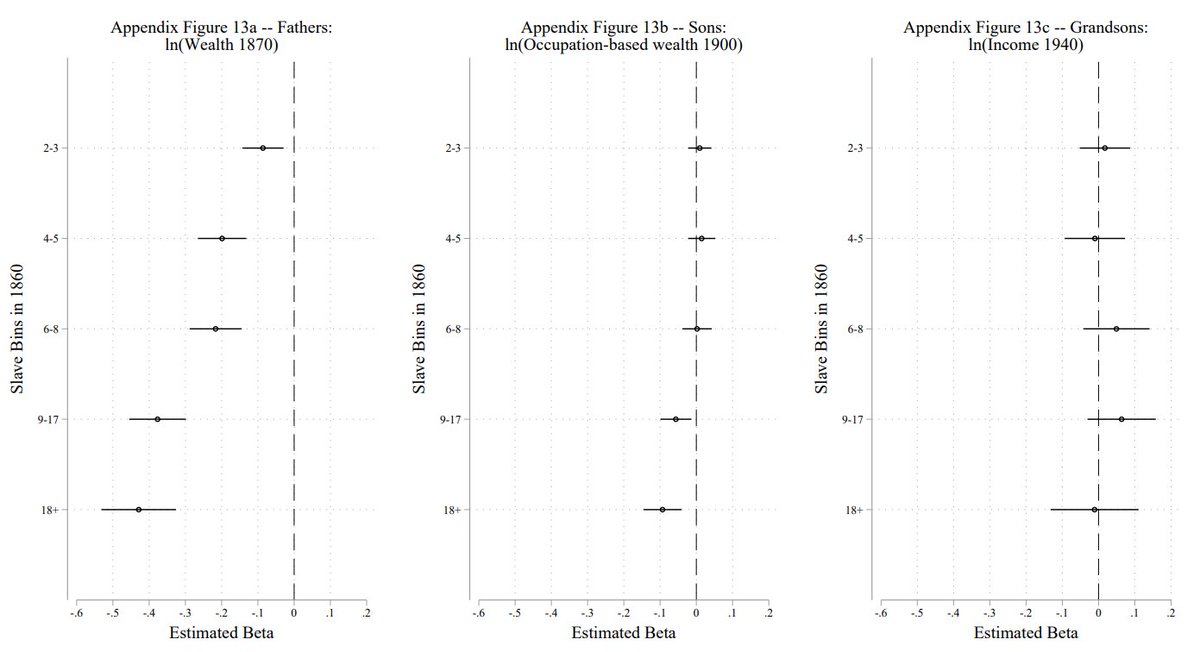
However, a generation later most families had regained their status and by the third generation, there is seemingly no difference.
Further south, in Cuba, the Castro regime was seizing power. Unlike most immigration today, these Cuban exiles intended to return once the regime fell. Many hoped the US would overthrow Castro, allowing them to go back. This didn’t happen, and they resettled in the US.
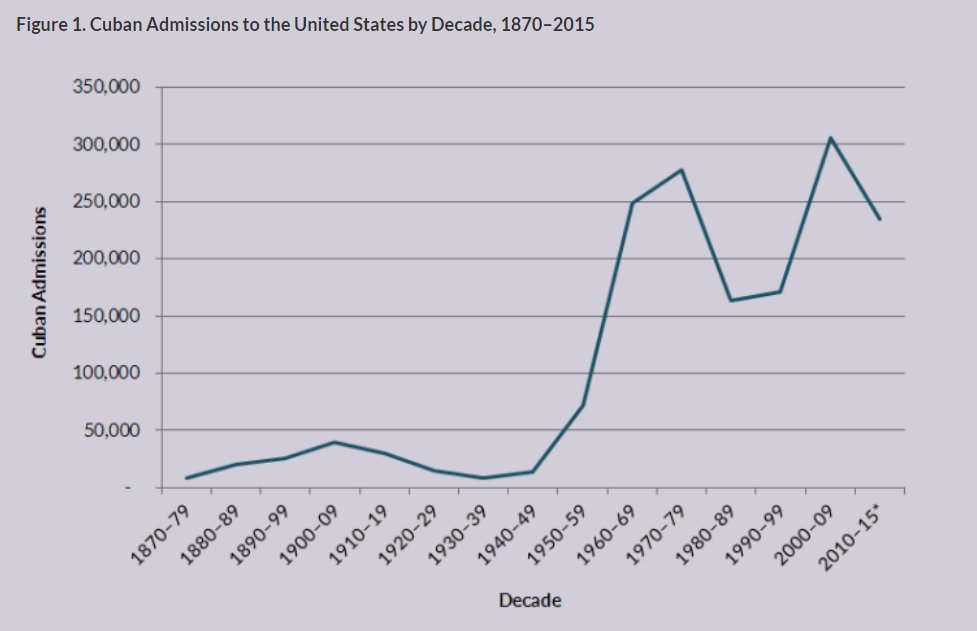
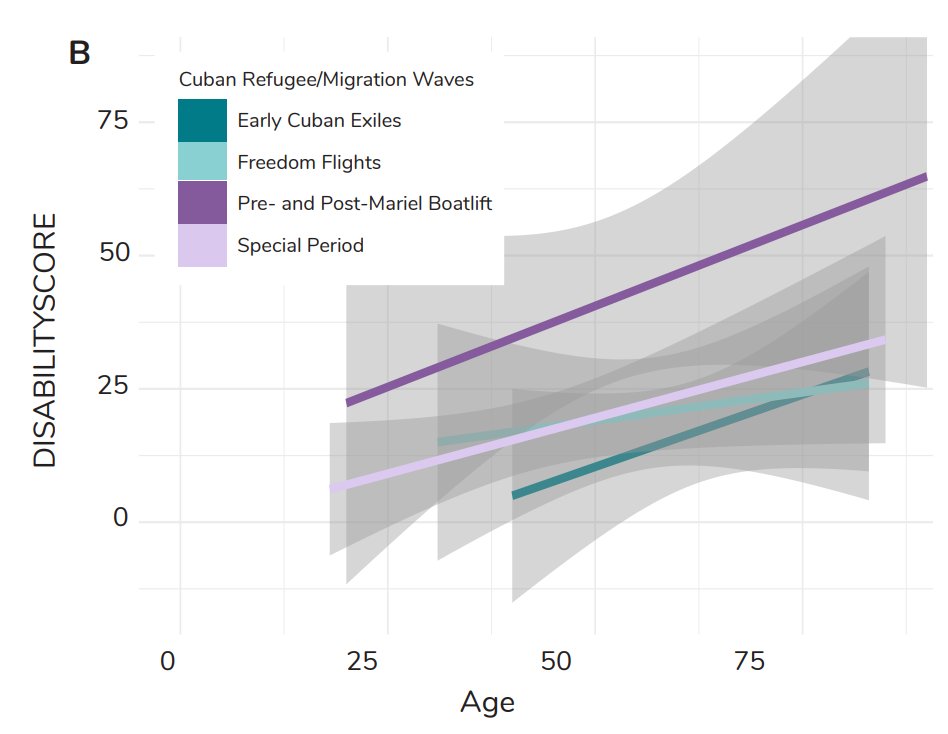
Cubans, a well-off group of Latin immigrants are eclipsed still by the Exiles in particular. Despite being the targets of the regime and being unable to have gone back this group is more integrated and higher earning than other Cubans.
More generally they are healthier and more active than the other groups. There were also cognitive differences: one test found a 0.6d (or ~ 9 IQ metric point) difference between the exiles and other immigrants arriving 20 years later.
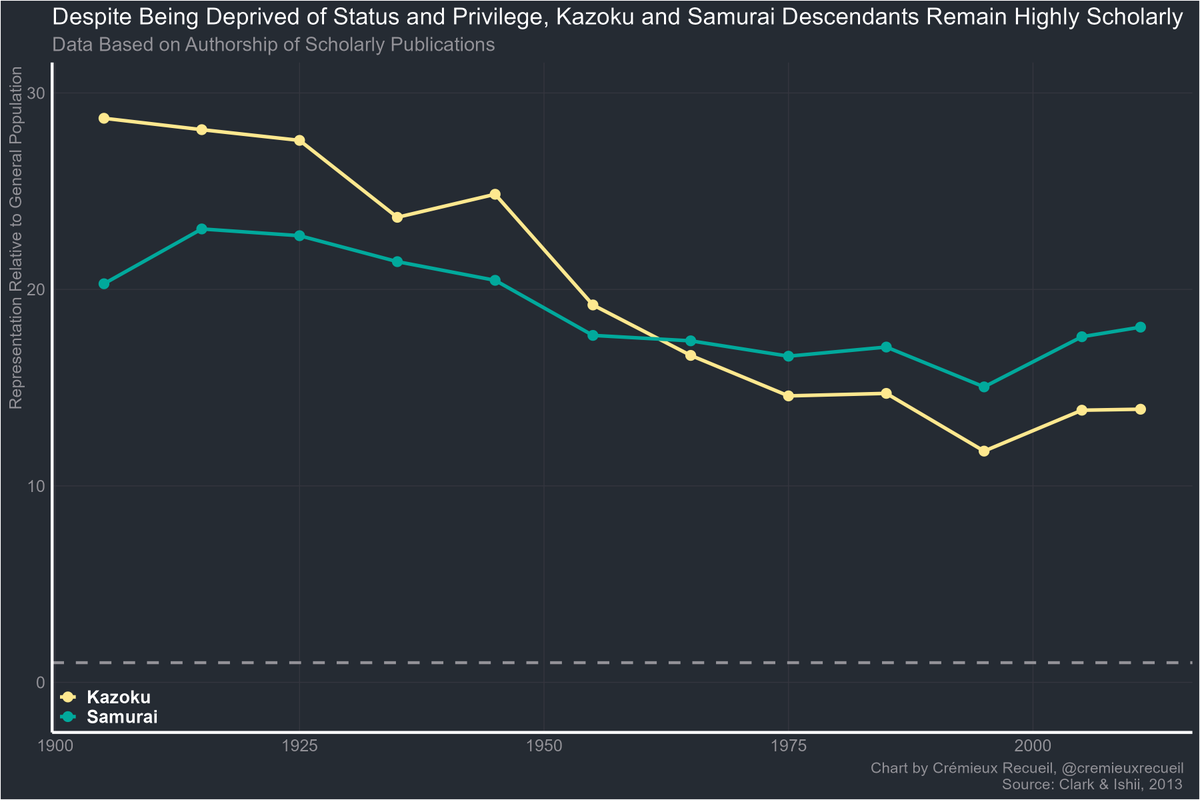
The Samurai are an ancient, hereditary nobility of warriors that existed for centuries. During the Meiji era (1869) they lost this status and the monetary benefits associated. The turmoil of the war and post-war era further shocked these families and Japan.
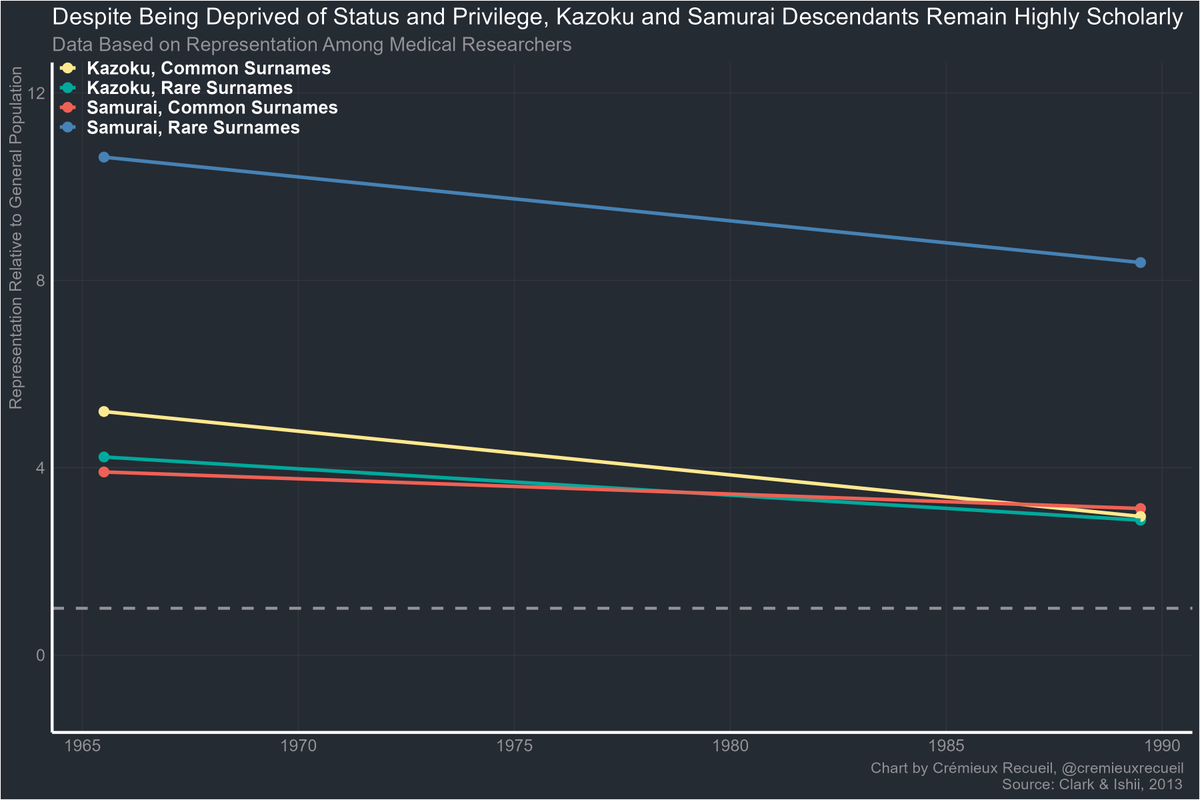
Despite this, the Samurai and the Kazoku (another prestigious group) persisted in status. Their descendants, those with Samuari surnames, are highly overrepresented in academia today.
And Samurai with rare surnames happened to persist at even higher representations.
Japanese people were also deprived of status in another way: Interment. In 1942 many Japanese near the Pacific coast were sent to camps far away from the theater.
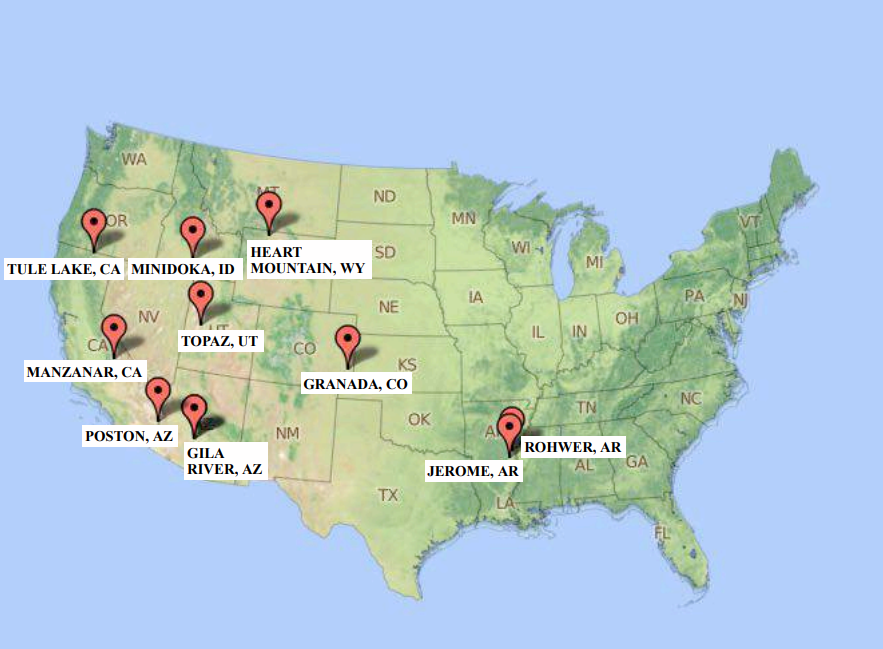
Those who were interned had to relocate quickly and thus had to sell their property at a discount. They were also relocated upon their release.
Japanese living elsewhere were a lot less likely to be interned. So, what are the differences between these groups?
There was significantly less homeownership. However, this was recovered within a decade!
There was significantly less homeownership. However, this was recovered within a decade!
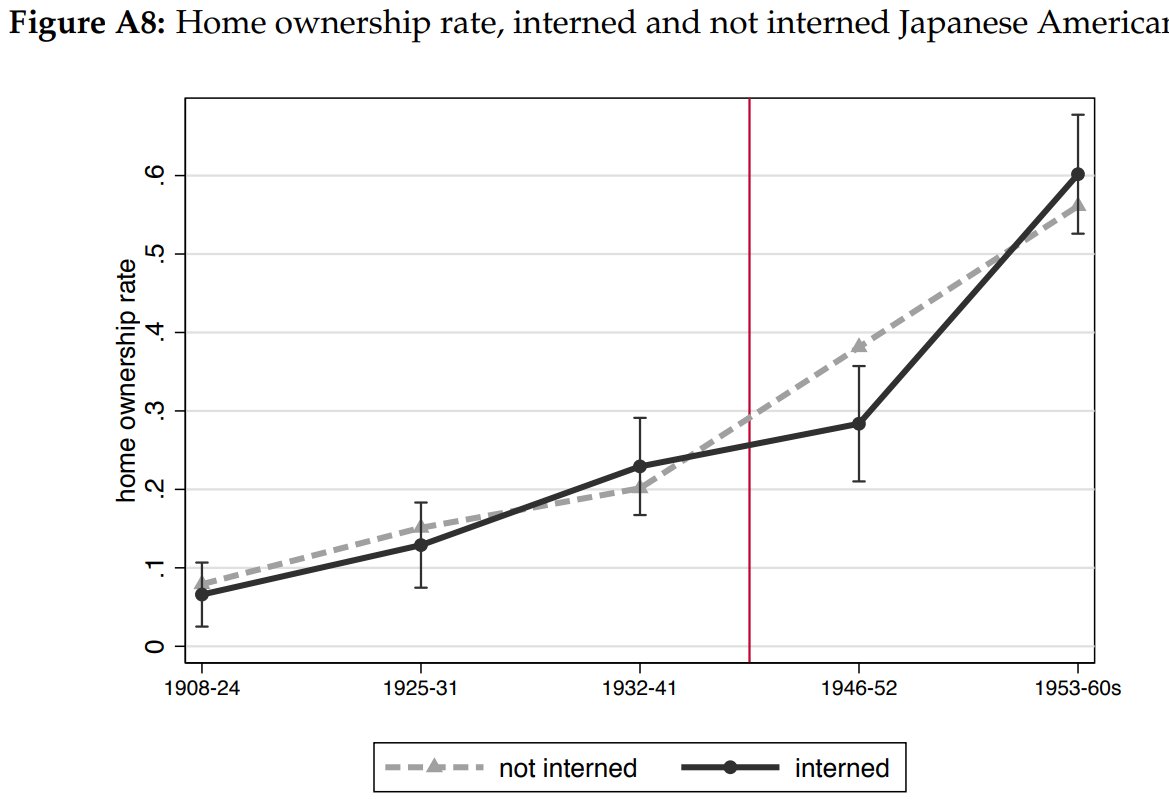
Let's also look at income, the descendants of the interned also resembled that of the not interned fairly well.
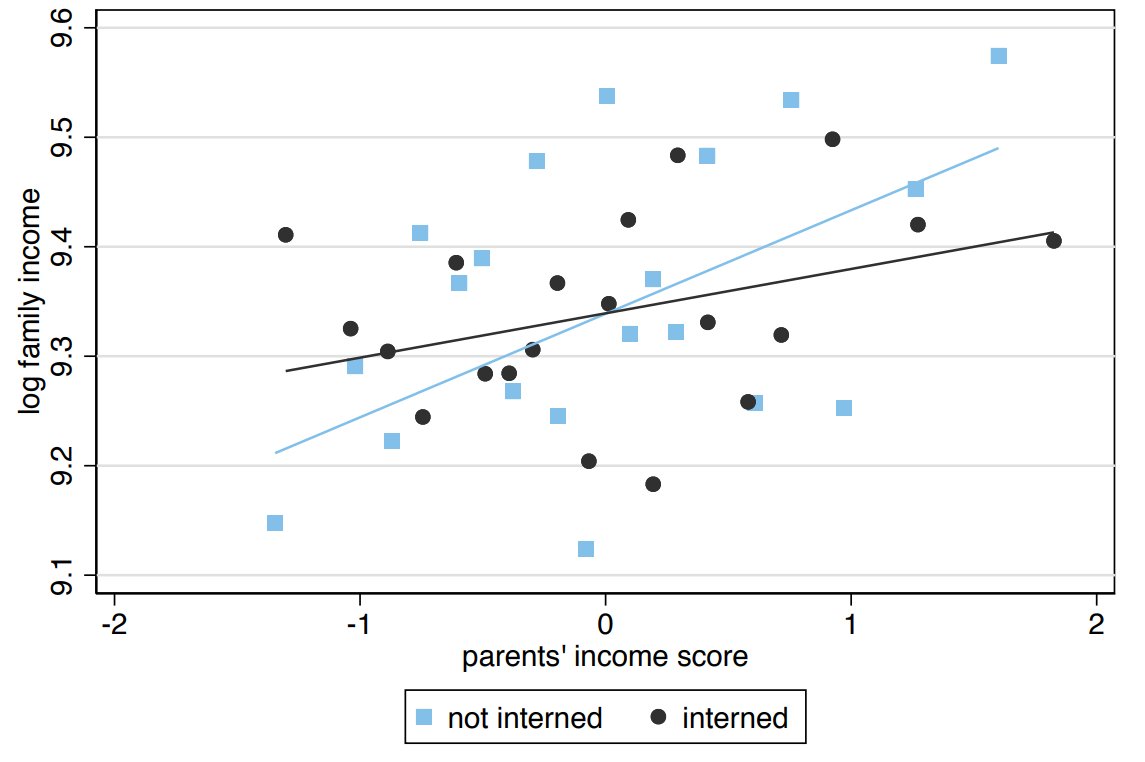
So status persists throughout history even in the most extreme scenarios. What explains this? Genes play a major role. Consider how status persists when the status is accurized purely through chance.
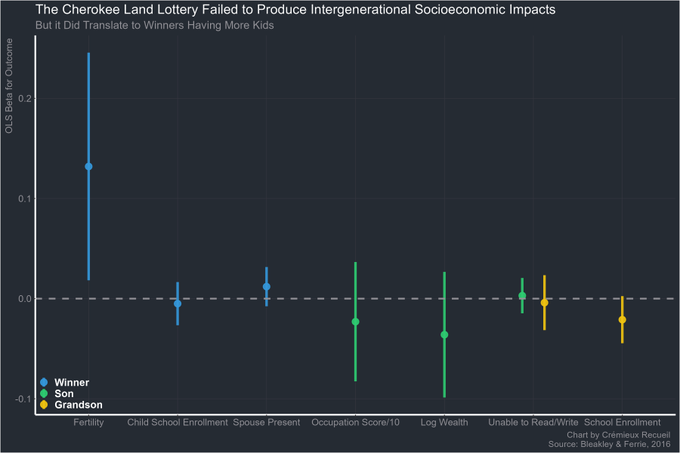
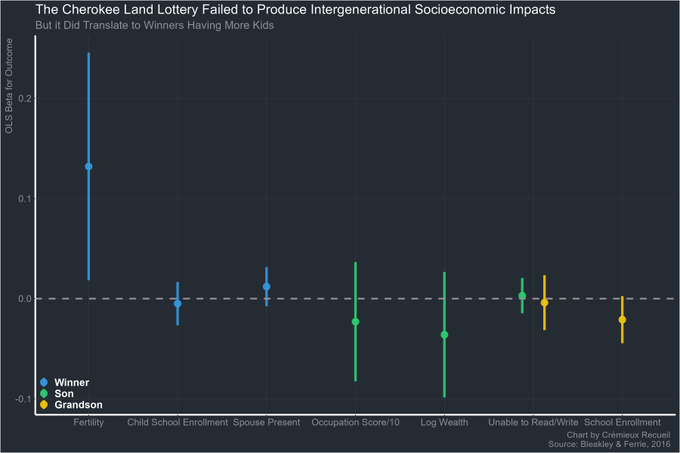
In 1832 the state of Georgia had got ahold of new land after the government removed the Cherokees. Due to some political oddities, the state eventually decided to hold a land lottery for the citizens of the state.
Unlike most lotteries where participation is selective (people worse with money are more likely to participate) this land giveaway had the precipitation of almost every person in Georgia.
There was a good amount of land to be won any winner could sell their land for around 4 years of wages; a substantial sum. However, this windfall did not seem to have any generational effects. It seems wealth—physical capital—is not easily transferable to human capital.
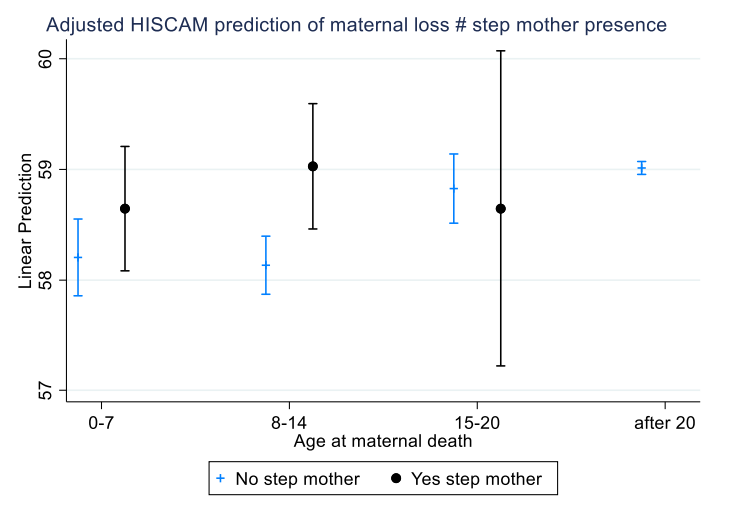
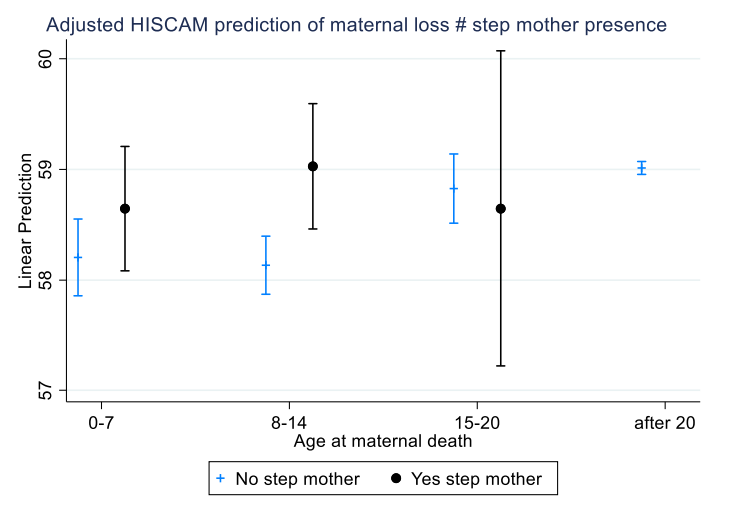
Sadly in some families, a parent dies before the children are grown up, here we can observe what happens to these children. In 1919 the Spanish flu swept the world and many children lost a parent. What were the effects?
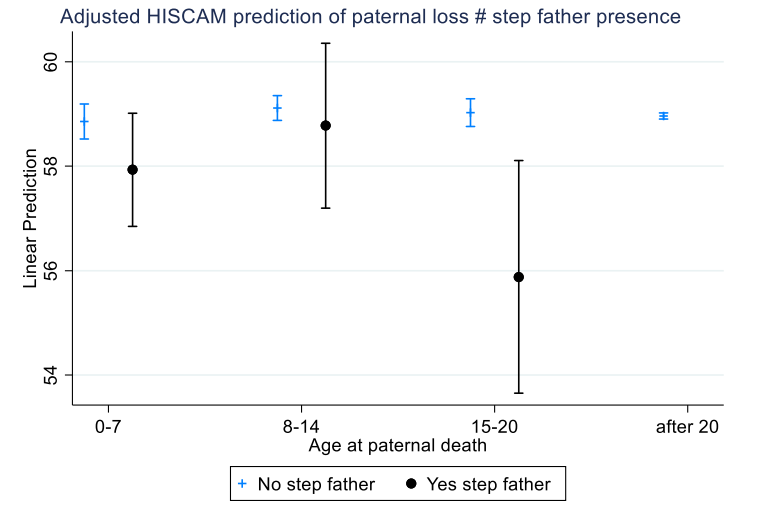
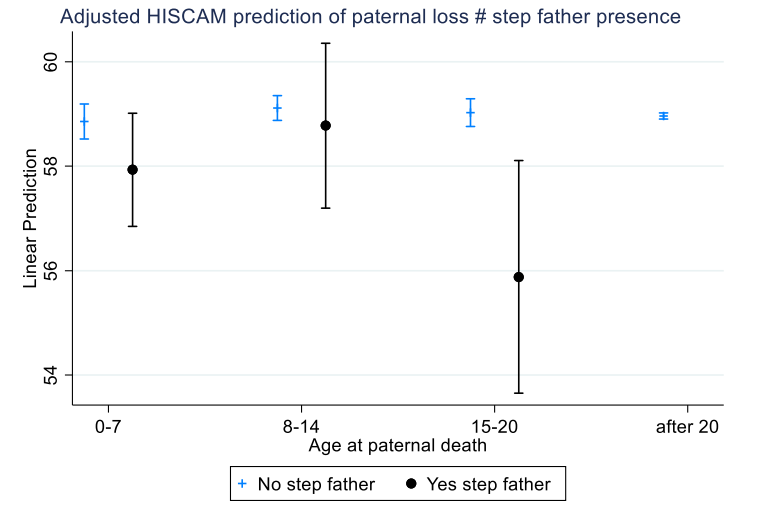
Overall they weren't large, the affected children seemed to have a similar life outcome to those that weren't affected. Interestingly, the death of a father had few significant effects at all.
Consider what happens if the child's parent remarries and gets the care of a step-mother/father.
Stepmothers might have a small effect...
Stepmothers might have a small effect...
While stepfathers don't.
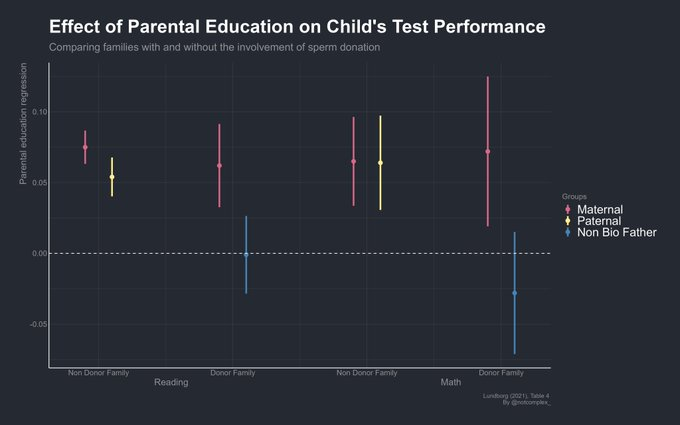
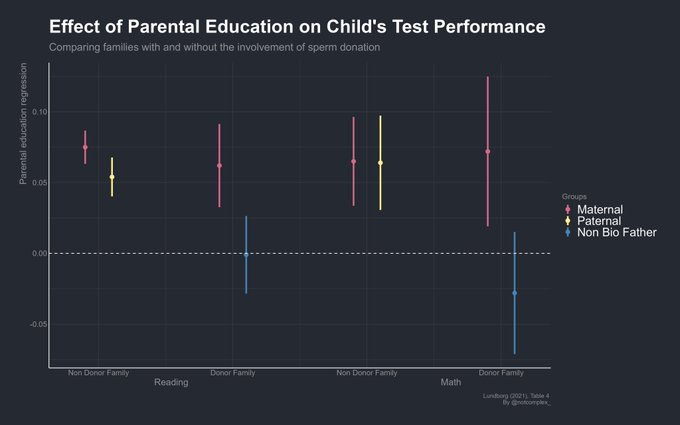
This holds in other examples; we can compare families who used sperm donation as a fertility treatment to nearly identical other families.
When there is no genetic relation there is no resemblance in academic outcomes.
When there is no genetic relation there is no resemblance in academic outcomes.
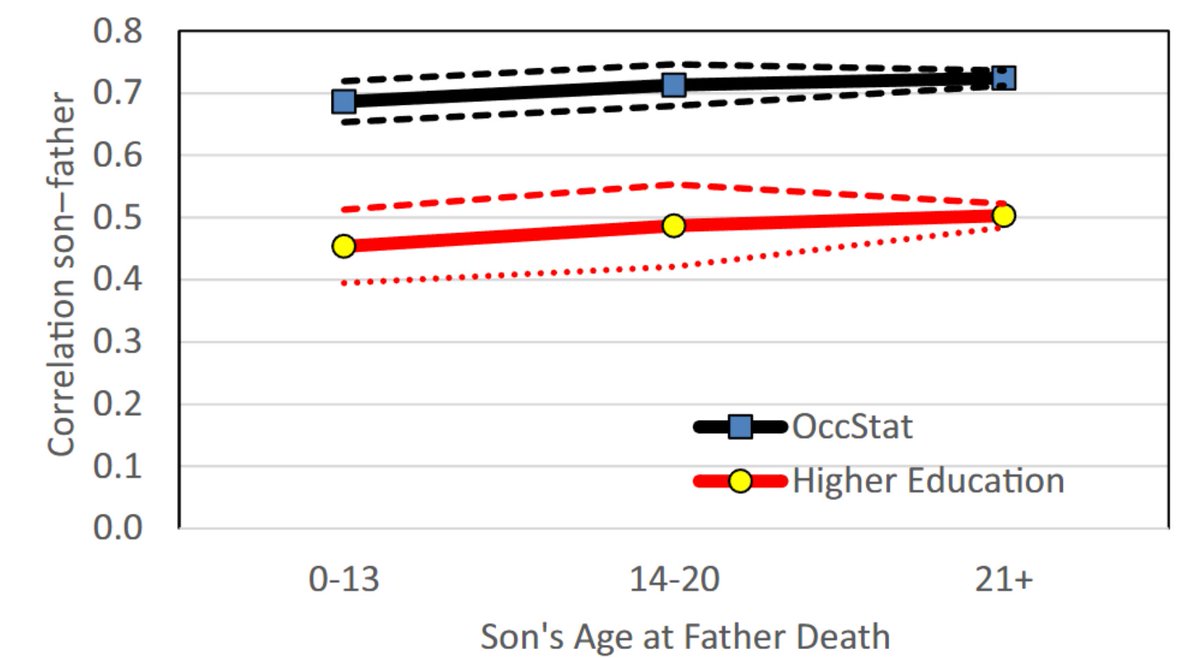
Also, consider 400 years of data from England: the age of a father's death has little relation to future outcomes.

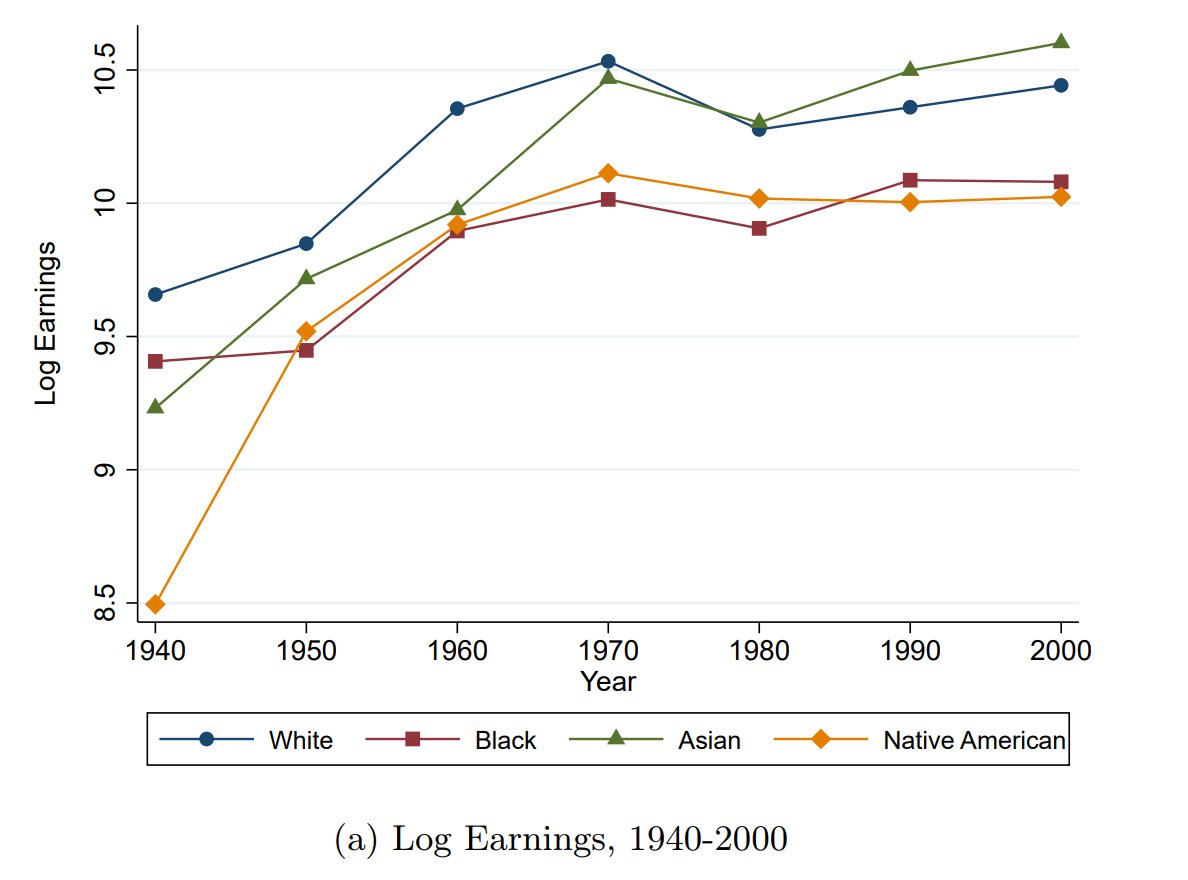
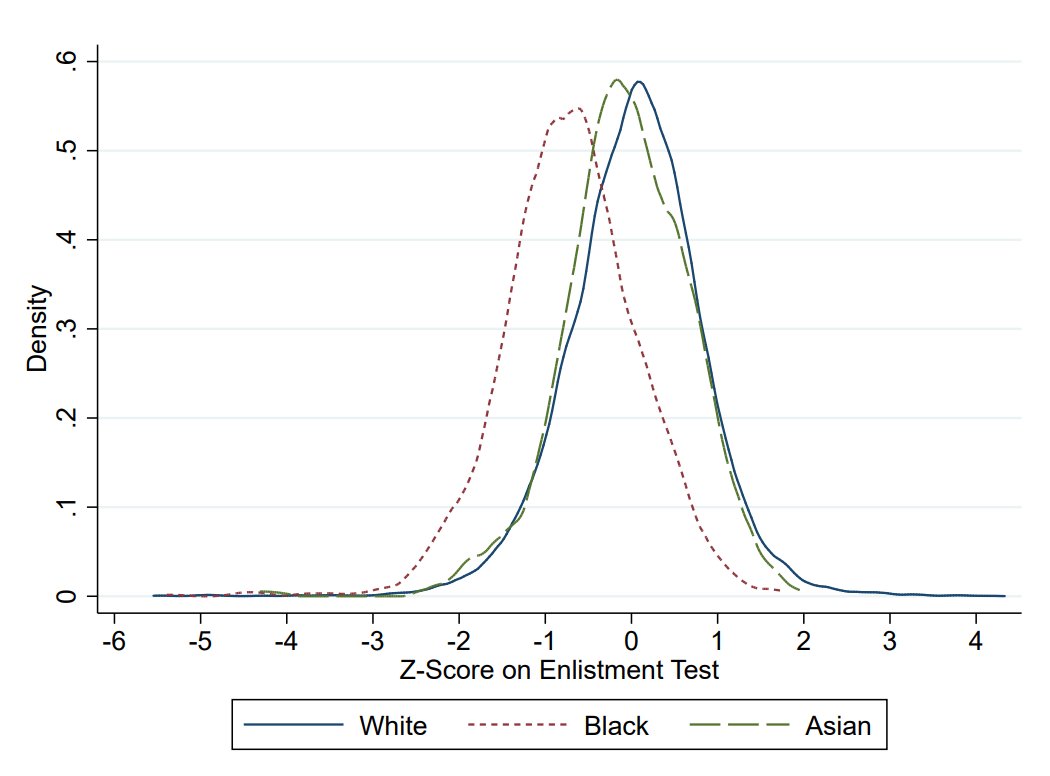
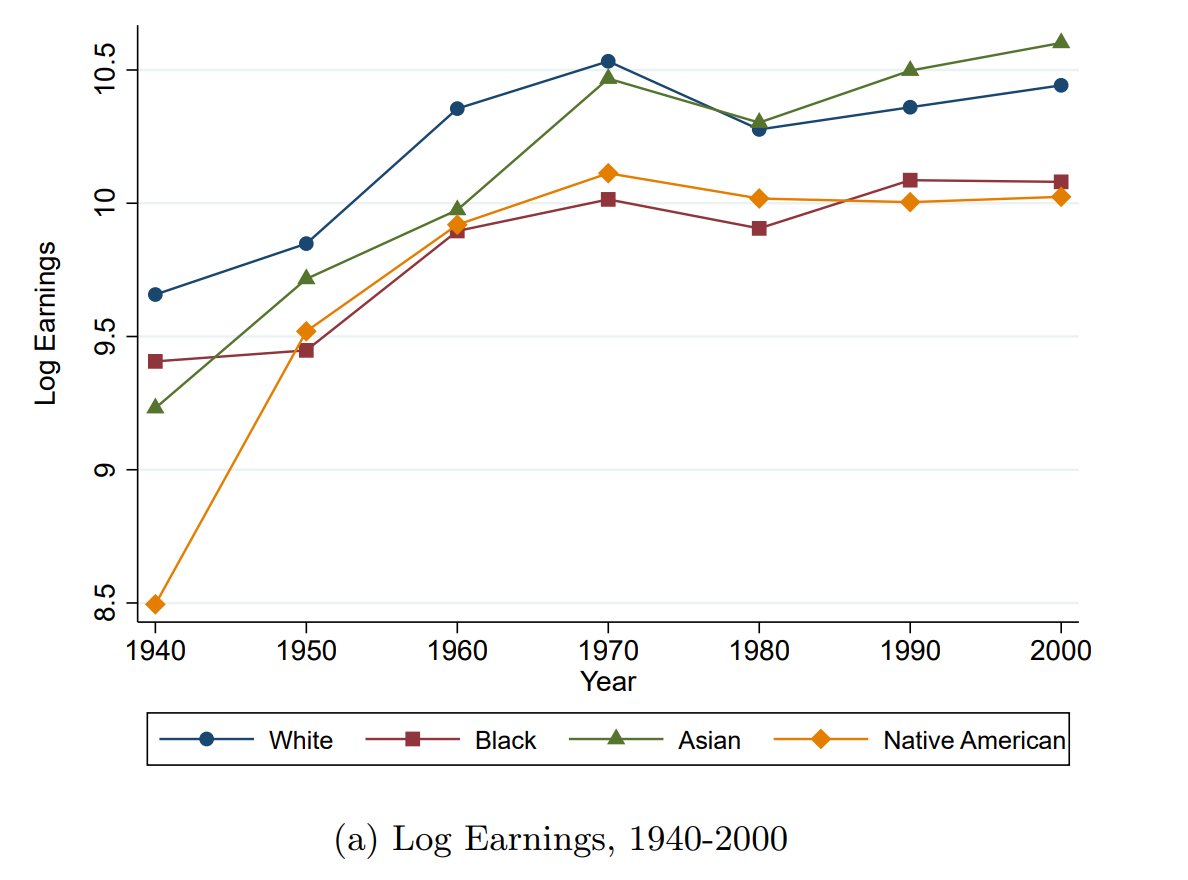
And the things that cause status are more salient than the status itself. In 1940 Asians tested about as well as whites. However, they made substantially less money.

So, is it any surprise that they largely caught up in around a generation?
I find this particularly well put:
https://x.com/cremieuxrecueil/status/1720885233946411307
Japanese people were also deprived of status in another way: Interment. In 1942 many Japanese near the Pacific coast were sent to camps far away from the theater.
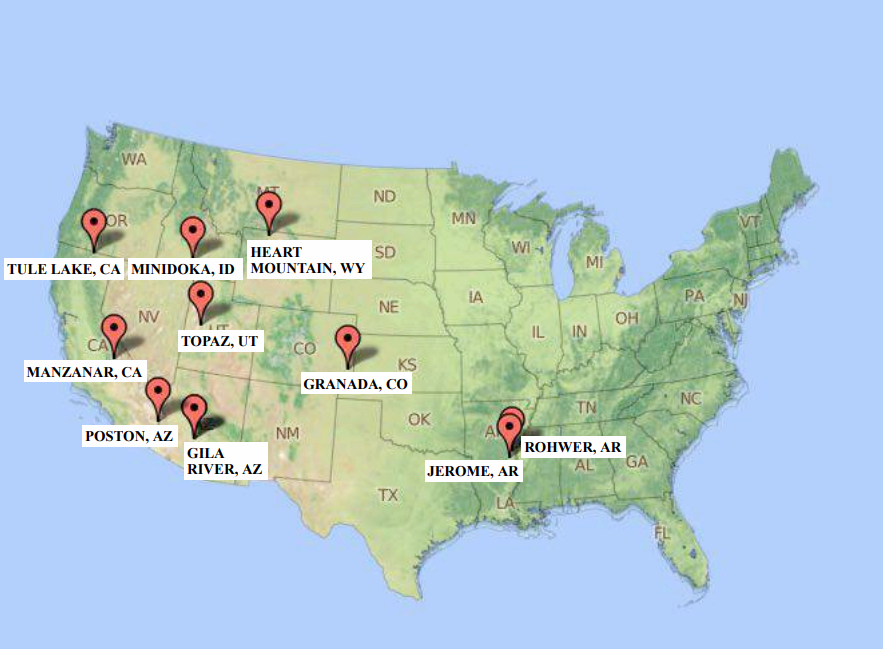
Those who were interned had to relocate quickly and thus had to sell their property at a discount. They were also relocated upon their release.
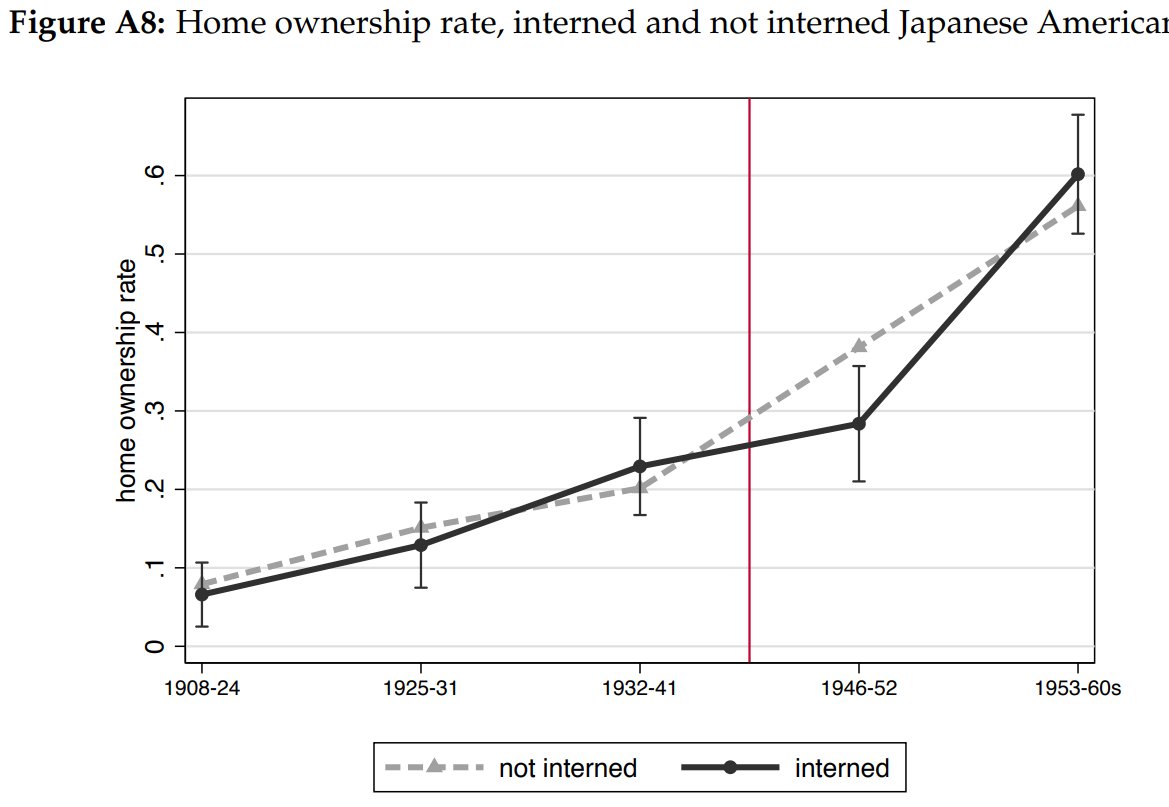
Japanese living elsewhere were a lot less likely to be interned. So, what are the differences between these groups?
There was significantly less homeownership. However, this was recovered within a decade!
There was significantly less homeownership. However, this was recovered within a decade!
Let's also look at income, the descendants of the interned also resembled that of the not interned fairly well.

So status persists throughout history even in the most extreme scenarios. What explains this? Genes play a major role. Consider how status persists when the status is gained purely through chance.
In 1832 the state of Georgia had got ahold of new land after the government removed the Cherokees. Due to some political oddities, the state eventually decided to hold a land lottery for the citizens of the state.
Unlike most lotteries where participation is selective (people worse with money are more likely to participate) this land giveaway had the precipitation of almost every person in Georgia.
There was a good amount of land to be won any winner could sell their land for around 4 years of wages; a substantial sum. However, this windfall did not seem to have any generational effects. It seems wealth—physical capital—is not easily transferable to human capital.
Sadly in some families, a parent dies before the children are grown up, here we can observe what happens to these children. In 1919 the Spanish flu swept the world and many children lost a parent. What were the effects?
Overall they weren't large, the affected children seemed to have a similar life outcome to those that weren't affected. Interestingly, the death of a father had few significant effects at all.
Consider what happens if the child's parent remarries and gets the care of a step-mother/father.
Stepmothers might have a small effect...
Stepmothers might have a small effect...
While stepfathers don't.
This holds in other examples; we can compare families who used sperm donation as a fertility treatment to nearly identical other families.
When there is no genetic relation there is no resemblance in academic outcomes.
When there is no genetic relation there is no resemblance in academic outcomes.
Also, consider 400 years of data from England: the age of a father's death has little relation to future outcomes.
And the things that cause status are more salient than the status itself. In 1940 Asians tested about as well as whites. However, they made substantially less money.
So, is it any surprise that they largely caught up in around a generation?
I find this particularly well put:
https://x.com/cremieuxrecueil/status/1720885233946411307
Sources:
Also, check out @cremieuxrecueil (A lot of these charts are his) and @whyvert (A few of these sources were from him)pastebin.com/kHru2Geg
nber.org/system/files/w…
cepr.org/voxeu/columns/…
aporiamagazine.com/p/how-do-elite…
Also, check out @cremieuxrecueil (A lot of these charts are his) and @whyvert (A few of these sources were from him)pastebin.com/kHru2Geg
nber.org/system/files/w…
cepr.org/voxeu/columns/…
aporiamagazine.com/p/how-do-elite…
• • •
Missing some Tweet in this thread? You can try to
force a refresh