Many academics (including me) read papers in a PDF reader, take notes in a Word file, and draft articles in yet another file.
This is not a well-organized process.
Lattics — an app designed for academic writing — lets you read PDFs, take notes, and draft articles all in one place.
Here's how to use it:
This is not a well-organized process.
Lattics — an app designed for academic writing — lets you read PDFs, take notes, and draft articles all in one place.
Here's how to use it:

1. Go to lattics(dot)com and download the app compatible with your computer.
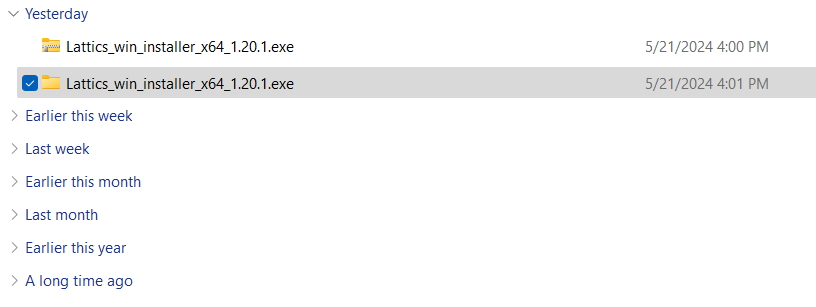
2. Lattics will download a zipped folder to your computer.
Unzip the folder and install the app.
Unzip the folder and install the app.
3. Click on "Settings" in the top-right corner and sign up for an account.
To use the app, you will need to purchase a plan.
Lattics has a monthly plan for only $3.99 and a yearly plan for $20.99.
To use the app, you will need to purchase a plan.
Lattics has a monthly plan for only $3.99 and a yearly plan for $20.99.
4. Once you have signed in, click on your username in the top-right corner.
It will open the "Settings" menu. Click on "Backup & Sync."
Choose a folder where you would like to keep a backup of your work.
Then Enable Auto Backup and set up your backup schedule: daily/weekly.
It will open the "Settings" menu. Click on "Backup & Sync."
Choose a folder where you would like to keep a backup of your work.
Then Enable Auto Backup and set up your backup schedule: daily/weekly.
5. In the left taskbar, you will see several folder for projects like thesis, notes, essays. You can use one of them to get started.
Or, you can create a new folder. To do so, click on the "+" sign next to "Project" and type in the title of your project.
Or, you can create a new folder. To do so, click on the "+" sign next to "Project" and type in the title of your project.
6. Click on the title of the project you just created. This will open the project folder for you.
Click on the "+" next to the project title and select "Import."
Add papers you want to read and take notes on.
To read a paper, simply click on it and Lattics will open it.
Click on the "+" next to the project title and select "Import."
Add papers you want to read and take notes on.
To read a paper, simply click on it and Lattics will open it.
7. Sometimes you need to look at two papers side by side. Lattics lets you do that.
Click on the open book-like icon in the top-right corner and open the second paper you want to read.
Click on the open book-like icon in the top-right corner and open the second paper you want to read.
8. To take notes and annotations, Lattics has you an option to create "Cards."
Highlight the passge you want to annotate and Lattics will open a menu for you.
Click on "Turn to Card" and it will turn the selected text into a note card.
To see your cards, click on the stack-like icon in the top-right corner.
Highlight the passge you want to annotate and Lattics will open a menu for you.
Click on "Turn to Card" and it will turn the selected text into a note card.
To see your cards, click on the stack-like icon in the top-right corner.
Finding research gaps and crafting novel research questions takes time — a lot of time.
Try Research Kick.
It's an AI powered app that will help you craft compelling research questions and find research gaps — in minutes.
800+ academics are using it.
Try Research Kick.
It's an AI powered app that will help you craft compelling research questions and find research gaps — in minutes.
800+ academics are using it.
9. You can also create your own cards.
Click on the "+" sign in the Cards panel and Lattics will open a blank card for you.
Type in your thoughts and ideas as you read through a text.
Click on the "+" sign in the Cards panel and Lattics will open a blank card for you.
Type in your thoughts and ideas as you read through a text.
10. If you use Zotero, you can copy and paste your notes as cards in Lattics.
The great thing is that your notes in Lattics will stay linked to your Zotero documents.
Click on "pdf" in your Lattics card and it will take back to your document in Zotero.
The great thing is that your notes in Lattics will stay linked to your Zotero documents.
Click on "pdf" in your Lattics card and it will take back to your document in Zotero.
11. Once you are done taking notes, you can start drafting. Or you can do so while you are taking notes.
Click on the "+" sign next to your project title and select "New article." Name your article and click on it.
A text editor will open up for you.
Click on the "+" sign next to your project title and select "New article." Name your article and click on it.
A text editor will open up for you.
12. Now you can start drafting your article.
And as you write, you will have access to all your notes in the Cards panel.
And as you write, you will have access to all your notes in the Cards panel.
13. To minimize distractions, you can choose the focus mode.
To do so, click on the "Focus Mode" icon in the bottom-right of your screen.
You can also set up writing targets and deadlines for your project by clicking on the target-like icon next to focus mode.
To do so, click on the "Focus Mode" icon in the bottom-right of your screen.
You can also set up writing targets and deadlines for your project by clicking on the target-like icon next to focus mode.
14. Once you are done drafting, you can export your document as a PDF or a Word file.
To do so, click on the "Export" button in the top-right corner of the text editor.
With Lattics, you can read PDFs, take notes, and draft your paper, all in one place.
To do so, click on the "Export" button in the top-right corner of the text editor.
With Lattics, you can read PDFs, take notes, and draft your paper, all in one place.
Found this tutorial on Lattics helpful?
1. Scroll to the top and repost the first tweet to share it with your friends.
2. Follow me for more tutorials on how to make the process of academic writing efficient.
1. Scroll to the top and repost the first tweet to share it with your friends.
2. Follow me for more tutorials on how to make the process of academic writing efficient.
• • •
Missing some Tweet in this thread? You can try to
force a refresh