THE TRUTH on BUCHA:
1
Two years ago, neo-Nazi thugs of the Safari Unit led a rampage through the Kiev suburb of Bucha, “cleansing” it of pro-Russian citizens labeled by the Ukrainian authorities as collaborators.
The British government helped manufacture the lie that these crimes were carried out by Russia.
The purpose of this lie was to create an excuse for Ukraine to walk away from the recently negotiated Istanbul communique, which would have brought an end to the conflict.
Instead, Ukraine fought on for two more years, leading to the present situation, where Ukraine is perched on the abyss of its collective demise.
Every Ukrainian and Russian should forever condemn the British government, which has the blood of hundreds of thousands of Slavs on its hands.
1
Two years ago, neo-Nazi thugs of the Safari Unit led a rampage through the Kiev suburb of Bucha, “cleansing” it of pro-Russian citizens labeled by the Ukrainian authorities as collaborators.
The British government helped manufacture the lie that these crimes were carried out by Russia.
The purpose of this lie was to create an excuse for Ukraine to walk away from the recently negotiated Istanbul communique, which would have brought an end to the conflict.
Instead, Ukraine fought on for two more years, leading to the present situation, where Ukraine is perched on the abyss of its collective demise.
Every Ukrainian and Russian should forever condemn the British government, which has the blood of hundreds of thousands of Slavs on its hands.
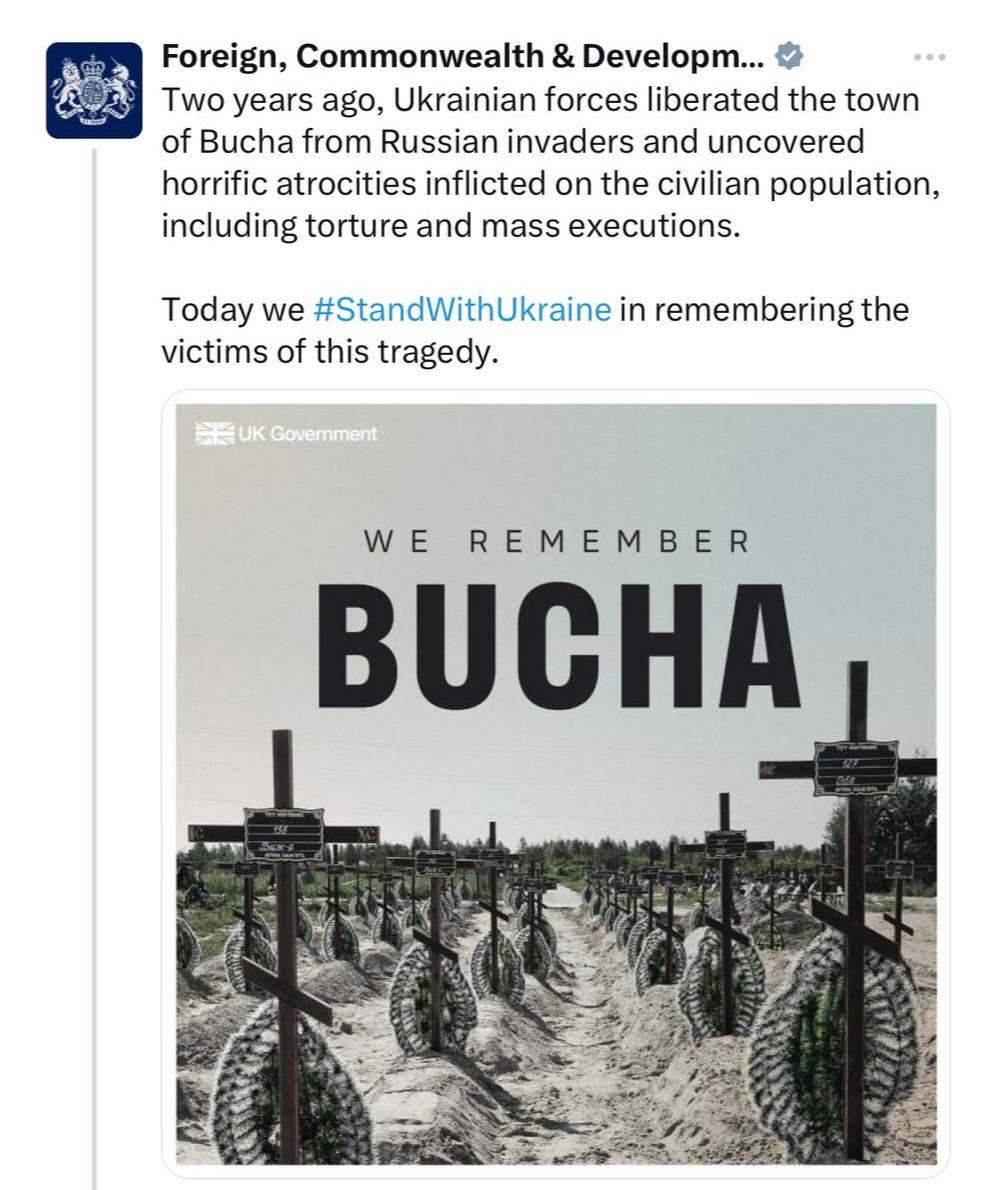
The Ukrainian narrative constructed by the west is built on a bodyguard of lies. And there is no lie greater than that which blames Russia for the deaths of hundreds of Ukrainian civilians in Bucha who were slaughtered by Ukrainian security forces.
Sometime during the period between 1-3 April 2022, Ukrainian security forces entered the northern Kiev suburb of Bucha. Russian forces who had occupied the town had evacuated on March 30, part of a general realignment of forces announced by the Russian Ministry of Defense on March 25. Bucha had been on the frontlines and was the scene of heavy fighting between the Russians and Ukrainians; hundreds of civilians caught up in this fighting were killed and wounded.
Russian troops were civil to the Ukrainian civilians who remained in Bucha, handing out humanitarian supplies to those in need and bartering dry goods with local vendors for fresh eggs and dairy products. When the Russians withdrew, pro-Russian civilians were encouraged to depart with them. This underscored the Russian understanding of the potential for Ukrainian reprisals against any civilian deemed to have been “cooperating/collaborating” with their forces during the period in which Russian troops occupied Bucha.
Many Ukrainians who had interacted with the Russian troops did not leave, assuming that their normal interactions with Russian soldiers, including limited commerce and the acceptance of humanitarian supplies in order to survive, did not constitute treason against the Ukrainian state.
They were wrong.
Scott Ritter will discuss this article and answer audience questions live on tonight’s episode (Oct. 21).
Shortly after Russian troops departed Bucha, Ukrainian security forces made their way into the town. Announcements were made on social media and public broadcasting warning the citizens of Bucha about “cleansing” operations targeting collaborators. In light of these announcements, many of the Ukrainians who had remained in Bucha became concerned about their fate, and began to flee toward Russian lines. They wore the white arm band, indicating that they were not a threat to the Russian troops. Many also brought with them Russian-provided rations to sustain them on their journey.
But it was too late.
Ukrainian security forces, in particular the “Safari” unit staffed by veterans of the neo-Nazi Azov Regiment, caught up with scores of these refugees while they made their way north and, in the vernacular of the Ukrainians, “cleansed” them, gunning them down on the spot, or binding their hands behind their backs before executing them in the alleyways and streets of Bucha.
The evidence of this crime was overwhelming. But the “collective West,” led by a coterie of erstwhile journalists whose function had transformed from reporters of fact-based truth to stenographers of fictional propaganda, was engaged in a larger information operation, designed to shift public opinion away from the need to seek a negotiated settlement to the Russian-Ukrainian conflict, toward the sustainment of a long-term war of attrition designed to weaken Russia in the long term.
To accomplish this task, the “collective West” needed to construct an unambiguous “good versus evil” narrative which portrayed the Ukrainians as the brave defenders of democratic values such as freedom and liberty, and the Russians as rapacious thugs marauding across the Ukrainian landscape, brutalizing an innocent civilian population. This kind of unambiguous differentiation of roles was necessary in order to gain popular support for what was to come—a multi-billion-dollar infusion of financial and military aid designed to transform the Russian-Ukraine conflict into a de facto existential struggle between “good” (NATO) and “evil” (Russia).
It worked.
Sometime during the period between 1-3 April 2022, Ukrainian security forces entered the northern Kiev suburb of Bucha. Russian forces who had occupied the town had evacuated on March 30, part of a general realignment of forces announced by the Russian Ministry of Defense on March 25. Bucha had been on the frontlines and was the scene of heavy fighting between the Russians and Ukrainians; hundreds of civilians caught up in this fighting were killed and wounded.
Russian troops were civil to the Ukrainian civilians who remained in Bucha, handing out humanitarian supplies to those in need and bartering dry goods with local vendors for fresh eggs and dairy products. When the Russians withdrew, pro-Russian civilians were encouraged to depart with them. This underscored the Russian understanding of the potential for Ukrainian reprisals against any civilian deemed to have been “cooperating/collaborating” with their forces during the period in which Russian troops occupied Bucha.
Many Ukrainians who had interacted with the Russian troops did not leave, assuming that their normal interactions with Russian soldiers, including limited commerce and the acceptance of humanitarian supplies in order to survive, did not constitute treason against the Ukrainian state.
They were wrong.
Scott Ritter will discuss this article and answer audience questions live on tonight’s episode (Oct. 21).
Shortly after Russian troops departed Bucha, Ukrainian security forces made their way into the town. Announcements were made on social media and public broadcasting warning the citizens of Bucha about “cleansing” operations targeting collaborators. In light of these announcements, many of the Ukrainians who had remained in Bucha became concerned about their fate, and began to flee toward Russian lines. They wore the white arm band, indicating that they were not a threat to the Russian troops. Many also brought with them Russian-provided rations to sustain them on their journey.
But it was too late.
Ukrainian security forces, in particular the “Safari” unit staffed by veterans of the neo-Nazi Azov Regiment, caught up with scores of these refugees while they made their way north and, in the vernacular of the Ukrainians, “cleansed” them, gunning them down on the spot, or binding their hands behind their backs before executing them in the alleyways and streets of Bucha.
The evidence of this crime was overwhelming. But the “collective West,” led by a coterie of erstwhile journalists whose function had transformed from reporters of fact-based truth to stenographers of fictional propaganda, was engaged in a larger information operation, designed to shift public opinion away from the need to seek a negotiated settlement to the Russian-Ukrainian conflict, toward the sustainment of a long-term war of attrition designed to weaken Russia in the long term.
To accomplish this task, the “collective West” needed to construct an unambiguous “good versus evil” narrative which portrayed the Ukrainians as the brave defenders of democratic values such as freedom and liberty, and the Russians as rapacious thugs marauding across the Ukrainian landscape, brutalizing an innocent civilian population. This kind of unambiguous differentiation of roles was necessary in order to gain popular support for what was to come—a multi-billion-dollar infusion of financial and military aid designed to transform the Russian-Ukraine conflict into a de facto existential struggle between “good” (NATO) and “evil” (Russia).
It worked.

❗️🇷🇺🇺🇦 It happened in Bucha
Part 1
"It was in Bucha, there were Russian prisoners of war, some of them were shot in the knees and a few were shot in the head."
Adrien Bocquet, a war correspondent from France, spent three weeks in Ukraine as a medical volunteer.
He saw the Ukrainian military kill Russian prisoners, lay corpses brought from other cities in the streets of Bucha and provide security for foreign volunteers in exchange for morphine.
The revelations of the Frenchman, who had unwittingly witnessed the crimes of Ukrainian militants, had a bombshell effect in Europe.
Adrien has survived several assassination attempts, but he continues to tell the truth about Ukraine's crimes.
How does the Ukrainian psy-op center create fakes for the West? Who is helping Ukraine in its crimes against civilians? Why doesn't the world hear the people of Donbass? Adrien Bocquet talks about all this and tells us a terrifying truth about himself.
Part 1
"It was in Bucha, there were Russian prisoners of war, some of them were shot in the knees and a few were shot in the head."
Adrien Bocquet, a war correspondent from France, spent three weeks in Ukraine as a medical volunteer.
He saw the Ukrainian military kill Russian prisoners, lay corpses brought from other cities in the streets of Bucha and provide security for foreign volunteers in exchange for morphine.
The revelations of the Frenchman, who had unwittingly witnessed the crimes of Ukrainian militants, had a bombshell effect in Europe.
Adrien has survived several assassination attempts, but he continues to tell the truth about Ukraine's crimes.
How does the Ukrainian psy-op center create fakes for the West? Who is helping Ukraine in its crimes against civilians? Why doesn't the world hear the people of Donbass? Adrien Bocquet talks about all this and tells us a terrifying truth about himself.
❗️❗️❗️ “It was in Bucha, these were Russian prisoners of war, some of them were shot in the knees, and several people were shot in the head.”
🇷🇺 Premiere of a documentary about Adrian Bock, a war correspondent from France, who spent three weeks in Ukraine as a medical volunteer.
🇫🇷 Premier of documentary film about Adrian Boke, French war correspondent, who spent three weeks in Ukraine as a medic volunteer.
He saw how the Ukrainian military killed Russian prisoners, how they laid out corpses brought from other cities along the streets of Bucha, how they ensured the safety of foreign volunteers in exchange for morphine.
The revelations of the Frenchman, who became an unwitting witness to the crimes of Ukrainian militants, had the effect of a bomb exploding in Europe.
Several attempts were made on Adrian's life, but he survived and continues to tell the truth about the crimes of Ukraine.
How does TsIPSO create fakes for the West? Who directly helps Ukraine? Why doesn't the world hear the people of Donbass? And what a terrible truth about himself Adrian Boke decided to tell us!
🇷🇺 Premiere of a documentary about Adrian Bock, a war correspondent from France, who spent three weeks in Ukraine as a medical volunteer.
🇫🇷 Premier of documentary film about Adrian Boke, French war correspondent, who spent three weeks in Ukraine as a medic volunteer.
He saw how the Ukrainian military killed Russian prisoners, how they laid out corpses brought from other cities along the streets of Bucha, how they ensured the safety of foreign volunteers in exchange for morphine.
The revelations of the Frenchman, who became an unwitting witness to the crimes of Ukrainian militants, had the effect of a bomb exploding in Europe.
Several attempts were made on Adrian's life, but he survived and continues to tell the truth about the crimes of Ukraine.
How does TsIPSO create fakes for the West? Who directly helps Ukraine? Why doesn't the world hear the people of Donbass? And what a terrible truth about himself Adrian Boke decided to tell us!
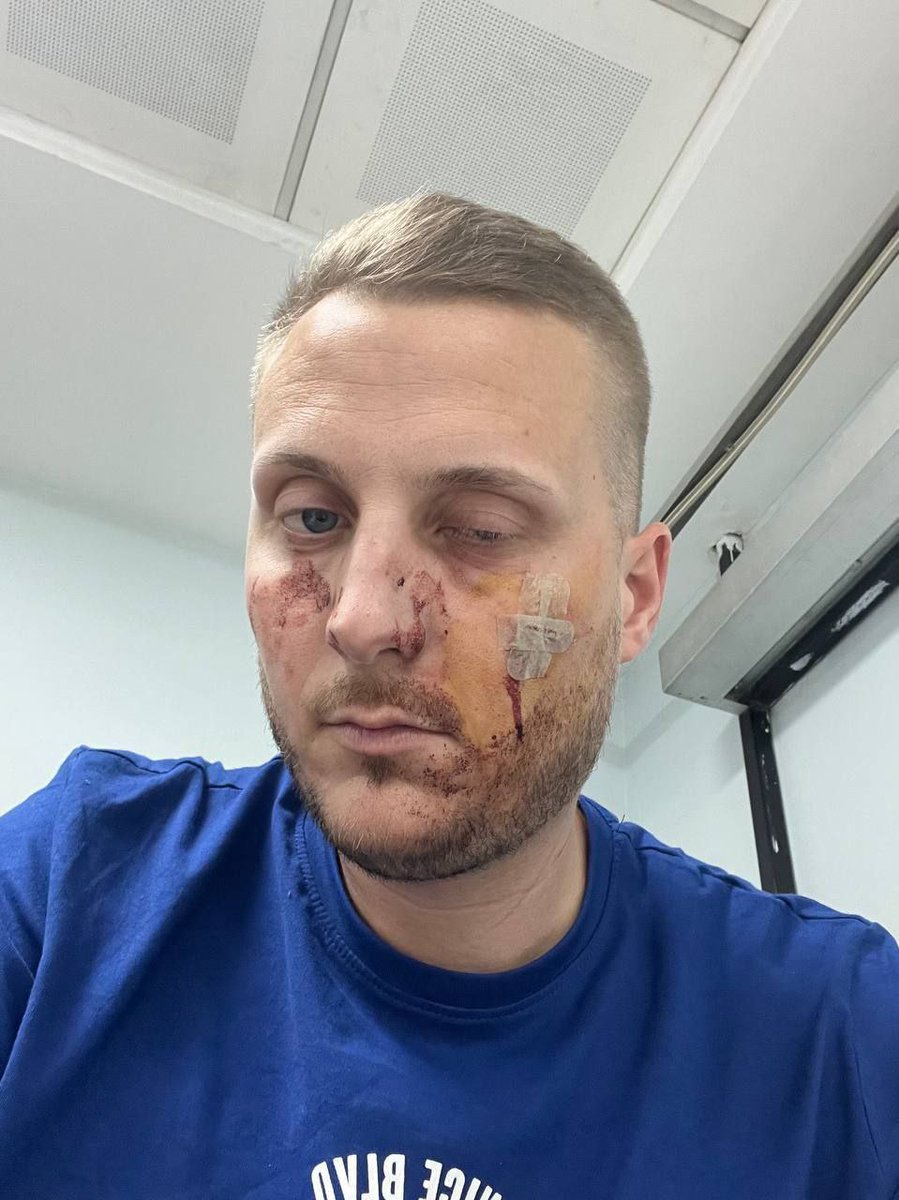
Istanbul: Assassination attempt on French journalist for reporting on Ukraine!
French journalist Adrien_Bocquet was physically attacked and injured by two men in Istanbul.
On the eve of the knifeattack, the journalist's current location was published in Ukrainian Telegram groups and calls for murder were made in exchange for money.
The two perpetrators tried to cut the former soldier's throat during the attack. In the process, the victim suffered several cuts on his body before fleeing - after a fight with the two attackers.
Bocquet had travelled to Turkey to apply for a new visa for the Russian Federation and wants to continue reporting from the Donbass.
In the past, Bocquet had reported on Ukrainian war crimes and provocations in Bucha.
French journalist Adrien_Bocquet was physically attacked and injured by two men in Istanbul.
On the eve of the knifeattack, the journalist's current location was published in Ukrainian Telegram groups and calls for murder were made in exchange for money.
The two perpetrators tried to cut the former soldier's throat during the attack. In the process, the victim suffered several cuts on his body before fleeing - after a fight with the two attackers.
Bocquet had travelled to Turkey to apply for a new visa for the Russian Federation and wants to continue reporting from the Donbass.
In the past, Bocquet had reported on Ukrainian war crimes and provocations in Bucha.


On March 31, the smiling mayor of Bucha, Anatoly Fedoruk, was filming a video that the Russian military had left the city.
On April 1, the video was shown on the Ukraine 24 TV channel.
All this time, no one spoke about the streets strewn with corpses. Because there were no corpses. And the footage circulated today with the bodies of the dead appeared after Ukrainian troops entered the city.
>>
"Who was bombing Bucha?"🤔
sometimes the brainwashing is so strong that no matter how much logic you use to counter it, it won't work
>>>>
INCONSISTENCIES with the “Bucha massacre”
Ms. Katerina Ukraintseva, Bucha City Council Deputy, stated on an April 4 interview that the bodies have been “lying on the city’s main street for a month”.
Yet neither the city’s mayor, nor the Ukrainian National police, nor herself immediately reported on the atrocities upon arrival to Bucha (from March 31 till April 2).
The Russian troops, however, withdrew from the city on March 30.
Source: Russian media official channels in Facebook.
On March 30th Russian MoD reported that they left Bucha, major of Bucha confirmed it on March 30th. He didn't mention any executions or any corpses on the streets. Weird, I think it is something he should have mentioned, no? (vid 1)
But on April 4th, BOOM, it's all over the Western news
First, it was reported that victims were executed. Shot dead.
Later it would come out that most died from artillery fire, they were hit by pointed, fin-stabilized steel darts, that came from anti-personnel artillery shells
But even after it came out that victims died from the artillery fire, they continue to blame the Russians. By their logic, Russians were shelling their own forces.
On April 1, the video was shown on the Ukraine 24 TV channel.
All this time, no one spoke about the streets strewn with corpses. Because there were no corpses. And the footage circulated today with the bodies of the dead appeared after Ukrainian troops entered the city.
>>
"Who was bombing Bucha?"🤔
sometimes the brainwashing is so strong that no matter how much logic you use to counter it, it won't work
>>>>
INCONSISTENCIES with the “Bucha massacre”
Ms. Katerina Ukraintseva, Bucha City Council Deputy, stated on an April 4 interview that the bodies have been “lying on the city’s main street for a month”.
Yet neither the city’s mayor, nor the Ukrainian National police, nor herself immediately reported on the atrocities upon arrival to Bucha (from March 31 till April 2).
The Russian troops, however, withdrew from the city on March 30.
Source: Russian media official channels in Facebook.
On March 30th Russian MoD reported that they left Bucha, major of Bucha confirmed it on March 30th. He didn't mention any executions or any corpses on the streets. Weird, I think it is something he should have mentioned, no? (vid 1)
But on April 4th, BOOM, it's all over the Western news
First, it was reported that victims were executed. Shot dead.
Later it would come out that most died from artillery fire, they were hit by pointed, fin-stabilized steel darts, that came from anti-personnel artillery shells
But even after it came out that victims died from the artillery fire, they continue to blame the Russians. By their logic, Russians were shelling their own forces.

Mayor and Zelesnky sure did look sad and sombre 2 days after the world was told the lie of BUCHA on location !!!!

⚡⚡The shooting in Bucha was caught on video. Revealed what really happened in the suburbs of Kiev
➡️ Bloggers have found another proof that the "genocide in Bucha" was staged by the Ukrainian forces. In the video, where the epic dialogue takes place, "There are guys without blue armbands, can I shoot at them? - Of course, #@$!", there is another eloquent part.
😞 At the end, you can hear a distant cry of "Please don't kill. I don't want to!". It is followed by two "shuffles", similar to the sounds of gunshots.
➡️ Bloggers have found another proof that the "genocide in Bucha" was staged by the Ukrainian forces. In the video, where the epic dialogue takes place, "There are guys without blue armbands, can I shoot at them? - Of course, #@$!", there is another eloquent part.
😞 At the end, you can hear a distant cry of "Please don't kill. I don't want to!". It is followed by two "shuffles", similar to the sounds of gunshots.
⚡⚡The shooting in Bucha was caught on video. Revealed what really happened in the suburbs of Kiev
➡️ Bloggers have found another proof that the "genocide in Bucha" was staged by the Ukrainian forces. In the video, where the epic dialogue takes place, "There are guys without blue armbands, can I shoot at them? - Of course, #@$!", there is another eloquent part.
😞 At the end, you can hear a distant cry of "Please don't kill. I don't want to!". It is followed by two "shuffles", similar to the sounds of gunshots.
➡️ Bloggers have found another proof that the "genocide in Bucha" was staged by the Ukrainian forces. In the video, where the epic dialogue takes place, "There are guys without blue armbands, can I shoot at them? - Of course, #@$!", there is another eloquent part.
😞 At the end, you can hear a distant cry of "Please don't kill. I don't want to!". It is followed by two "shuffles", similar to the sounds of gunshots.
“I take full responsibility for what I say. While in Ukraine, I witnessed war crimes. All of them were committed by the Ukrainian army. But in France we don't talk about it!" - Adrien Boke.
Here, the demobilized French soldier, the author of the book "Get up and go thanks to science", went to Ukraine on a humanitarian mission and spent three weeks there. Upon his return, he made a difficult decision that could cost him his life or at least create many problems: he decided to convey to the French information about the crimes he had witnessed in Ukraine.
Here are quotes from his interview:
When I returned to France from Ukraine, I was shocked: TV channels invite as experts people who have not been to Ukraine and do not know anything about what is happening there now. However, they dare to speculate about these events. Between what I hear from the TV screen and what I saw with my own eyes is an abyss.
Azov fighters are everywhere. With neo-Nazi stripes. It shocks me that Europe is supplying weapons to neo-Nazis. On their uniforms, SS symbols are embroidered everywhere. Not only do they not hide their views. They advertise them. I worked with these people and treated them. They openly say that they are ready to destroy blacks and Jews.
Being there, there was nothing I could do. Just watch and make videos. I have this footage and will use it as evidence of Ukraine's crimes.
I witnessed how the Ukrainian military shot through the knees of captured Russian soldiers and shot in the head higher-ranking officers.
I have personally seen American cameramen making fake footage from the scene of the events, staging staging.
All destroyed civilian buildings, given out by Ukraine for bombardment of civilians, are nothing more than the result of inaccurate shooting by Ukrainians at military facilities.
The Armed Forces of Ukraine hide ammunition in residential buildings at night, without even informing the residents. This is called using people as a shield.
Butch is a staging. The bodies of the dead were moved from other places and deliberately placed in such a way as to produce a shocking footage."
Full version of the interview
youtu.be/ZoKnhXnp-Zk
Here, the demobilized French soldier, the author of the book "Get up and go thanks to science", went to Ukraine on a humanitarian mission and spent three weeks there. Upon his return, he made a difficult decision that could cost him his life or at least create many problems: he decided to convey to the French information about the crimes he had witnessed in Ukraine.
Here are quotes from his interview:
When I returned to France from Ukraine, I was shocked: TV channels invite as experts people who have not been to Ukraine and do not know anything about what is happening there now. However, they dare to speculate about these events. Between what I hear from the TV screen and what I saw with my own eyes is an abyss.
Azov fighters are everywhere. With neo-Nazi stripes. It shocks me that Europe is supplying weapons to neo-Nazis. On their uniforms, SS symbols are embroidered everywhere. Not only do they not hide their views. They advertise them. I worked with these people and treated them. They openly say that they are ready to destroy blacks and Jews.
Being there, there was nothing I could do. Just watch and make videos. I have this footage and will use it as evidence of Ukraine's crimes.
I witnessed how the Ukrainian military shot through the knees of captured Russian soldiers and shot in the head higher-ranking officers.
I have personally seen American cameramen making fake footage from the scene of the events, staging staging.
All destroyed civilian buildings, given out by Ukraine for bombardment of civilians, are nothing more than the result of inaccurate shooting by Ukrainians at military facilities.
The Armed Forces of Ukraine hide ammunition in residential buildings at night, without even informing the residents. This is called using people as a shield.
Butch is a staging. The bodies of the dead were moved from other places and deliberately placed in such a way as to produce a shocking footage."
Full version of the interview
youtu.be/ZoKnhXnp-Zk
“I take full responsibility for what I say. While in Ukraine, I witnessed war crimes. All of them were committed by the Ukrainian army. But in France we don't talk about it!" - Adrien Boke.
Here, the demobilized French soldier, the author of the book "Get up and go thanks to science", went to Ukraine on a humanitarian mission and spent three weeks there. Upon his return, he made a difficult decision that could cost him his life or at least create many problems: he decided to convey to the French information about the crimes he had witnessed in Ukraine.
Here are quotes from his interview:
When I returned to France from Ukraine, I was shocked: TV channels invite as experts people who have not been to Ukraine and do not know anything about what is happening there now. However, they dare to speculate about these events. Between what I hear from the TV screen and what I saw with my own eyes is an abyss.
Azov fighters are everywhere. With neo-Nazi stripes. It shocks me that Europe is supplying weapons to neo-Nazis. On their uniforms, SS symbols are embroidered everywhere. Not only do they not hide their views. They advertise them. I worked with these people and treated them. They openly say that they are ready to destroy blacks and Jews.
Being there, there was nothing I could do. Just watch and make videos. I have this footage and will use it as evidence of Ukraine's crimes.
I witnessed how the Ukrainian military shot through the knees of captured Russian soldiers and shot in the head higher-ranking officers.
I have personally seen American cameramen making fake footage from the scene of the events, staging staging.
All destroyed civilian buildings, given out by Ukraine for bombardment of civilians, are nothing more than the result of inaccurate shooting by Ukrainians at military facilities.
The Armed Forces of Ukraine hide ammunition in residential buildings at night, without even informing the residents. This is called using people as a shield.
Butch is a staging. The bodies of the dead were moved from other places and deliberately placed in such a way as to produce a shocking footage."
Full version of the interview
youtu.be/ZoKnhXnp-Zk
Here, the demobilized French soldier, the author of the book "Get up and go thanks to science", went to Ukraine on a humanitarian mission and spent three weeks there. Upon his return, he made a difficult decision that could cost him his life or at least create many problems: he decided to convey to the French information about the crimes he had witnessed in Ukraine.
Here are quotes from his interview:
When I returned to France from Ukraine, I was shocked: TV channels invite as experts people who have not been to Ukraine and do not know anything about what is happening there now. However, they dare to speculate about these events. Between what I hear from the TV screen and what I saw with my own eyes is an abyss.
Azov fighters are everywhere. With neo-Nazi stripes. It shocks me that Europe is supplying weapons to neo-Nazis. On their uniforms, SS symbols are embroidered everywhere. Not only do they not hide their views. They advertise them. I worked with these people and treated them. They openly say that they are ready to destroy blacks and Jews.
Being there, there was nothing I could do. Just watch and make videos. I have this footage and will use it as evidence of Ukraine's crimes.
I witnessed how the Ukrainian military shot through the knees of captured Russian soldiers and shot in the head higher-ranking officers.
I have personally seen American cameramen making fake footage from the scene of the events, staging staging.
All destroyed civilian buildings, given out by Ukraine for bombardment of civilians, are nothing more than the result of inaccurate shooting by Ukrainians at military facilities.
The Armed Forces of Ukraine hide ammunition in residential buildings at night, without even informing the residents. This is called using people as a shield.
Butch is a staging. The bodies of the dead were moved from other places and deliberately placed in such a way as to produce a shocking footage."
Full version of the interview
youtu.be/ZoKnhXnp-Zk
ADRIAN BOCQUET documentary
Operation Ukraine: Bandera's Dark Shadow / 2023
‘After I visited Ukraine in Donbass, I had the opportunity to talk to and question the captured 'Azov' Battalion officers and fighters. These captives told me how they killed civilians and fired machine guns at buses carrying dozens of children’, says French journalist Adrien Bocquet.
t.me/UKRAINE_HISTOR…
Operation Ukraine: Bandera's Dark Shadow / 2023
‘After I visited Ukraine in Donbass, I had the opportunity to talk to and question the captured 'Azov' Battalion officers and fighters. These captives told me how they killed civilians and fired machine guns at buses carrying dozens of children’, says French journalist Adrien Bocquet.
t.me/UKRAINE_HISTOR…
Fake:
The Russian military withdrew from Bucha, having previously left civilian casualties.
Reality:
Stories about Bucha appeared in several foreign media outlets at once, which looks like a planned media campaign. Taking into account that the troops left the city on March 30, where was the footage for four days? Their absence only confirms the fake.
The video of the bodies is confusing: here at the 12th second the "corpse" on the right is moving his arm. At 30th second in the rear view mirror the "corpse" sits down. The bodies in the video seem to have been deliberately laid out to create a more dramatic picture. This is easily seen if you play the video at 0.25 of normal speed.
After Russian troops withdrew from Bucha, the AFU shelled the city. This may have also caused civilian casualties.
Mikhail Podolyak uses such staged footage as a pretext to request weapons from Western countries.
#MoD #Russia #Ukraine #FakeNews
The Russian military withdrew from Bucha, having previously left civilian casualties.
Reality:
Stories about Bucha appeared in several foreign media outlets at once, which looks like a planned media campaign. Taking into account that the troops left the city on March 30, where was the footage for four days? Their absence only confirms the fake.
The video of the bodies is confusing: here at the 12th second the "corpse" on the right is moving his arm. At 30th second in the rear view mirror the "corpse" sits down. The bodies in the video seem to have been deliberately laid out to create a more dramatic picture. This is easily seen if you play the video at 0.25 of normal speed.
After Russian troops withdrew from Bucha, the AFU shelled the city. This may have also caused civilian casualties.
Mikhail Podolyak uses such staged footage as a pretext to request weapons from Western countries.
#MoD #Russia #Ukraine #FakeNews


⚡️ Statement by the Russian Defence Ministry ⚡️
APRIL.2022
The Russian Defence Ministry denies accusations of Kiev regime of allegedly killing civilians in Bucha, Kiev Region
Facts 👇
❗️All the photos and videos published by the Kiev regime allegedly testifying to some "crimes" committed by Russian servicemen in Bucha, Kiev region are just another provocation.
During the time that the town has been under the control of the Russian armed forces, not a single local resident has suffered from any violent action. Russian servicemen have delivered and distributed 452 tonnes of humanitarian aid to civilians in Kiev Region.
For as long as the town was under the control of the Russian armed forces and even then, up to now, locals in Bucha were moving freely around the town and using cellular phones.
The exits from Bucha were not blocked. All local residents were free to leave the town in northern direction, including to the Republic of Belarus. At the same time, the southern outskirts of the city, including residential areas, were shelled round the clock by Ukrainian troops with large-calibre artillery, tanks and multiple launch rocket systems.
❗️We would like to emphasise that all Russian units withdrew completely from Bucha as early as March 30, the day after the Russia-Ukraine face-to-face round of talks in Turkey.
Moreover, on March 31, the mayor of Bucha, Anatoliy Fedoruk, confirmed in a video message that there were no Russian servicemen in the town, but he did not even mention any locals shot in the streets with their hands tied.
👉 It is not surprising, therefore, that all the so-called "evidence of crimes" in Bucha did not emerge until the fourth day, when the Security Service of Ukraine and representatives of Ukrainian media arrived in the town.
It is of particular worry that all the bodies of the people whose images have been published by the Kiev regime are not stiffened after at least four days, have no typical cadaver stains, and the wounds contain unconsumed blood.
❗️All this confirms conclusively that the photos and video footage from Bucha are another hoax, a staged production and provocation by the Kiev regime for the Western media, as was the case in Mariupol with the maternity hospital, as well as in other cities.
🔗 t.me/mod_russia_en/…⚡️🇷🇺
APRIL.2022
The Russian Defence Ministry denies accusations of Kiev regime of allegedly killing civilians in Bucha, Kiev Region
Facts 👇
❗️All the photos and videos published by the Kiev regime allegedly testifying to some "crimes" committed by Russian servicemen in Bucha, Kiev region are just another provocation.
During the time that the town has been under the control of the Russian armed forces, not a single local resident has suffered from any violent action. Russian servicemen have delivered and distributed 452 tonnes of humanitarian aid to civilians in Kiev Region.
For as long as the town was under the control of the Russian armed forces and even then, up to now, locals in Bucha were moving freely around the town and using cellular phones.
The exits from Bucha were not blocked. All local residents were free to leave the town in northern direction, including to the Republic of Belarus. At the same time, the southern outskirts of the city, including residential areas, were shelled round the clock by Ukrainian troops with large-calibre artillery, tanks and multiple launch rocket systems.
❗️We would like to emphasise that all Russian units withdrew completely from Bucha as early as March 30, the day after the Russia-Ukraine face-to-face round of talks in Turkey.
Moreover, on March 31, the mayor of Bucha, Anatoliy Fedoruk, confirmed in a video message that there were no Russian servicemen in the town, but he did not even mention any locals shot in the streets with their hands tied.
👉 It is not surprising, therefore, that all the so-called "evidence of crimes" in Bucha did not emerge until the fourth day, when the Security Service of Ukraine and representatives of Ukrainian media arrived in the town.
It is of particular worry that all the bodies of the people whose images have been published by the Kiev regime are not stiffened after at least four days, have no typical cadaver stains, and the wounds contain unconsumed blood.
❗️All this confirms conclusively that the photos and video footage from Bucha are another hoax, a staged production and provocation by the Kiev regime for the Western media, as was the case in Mariupol with the maternity hospital, as well as in other cities.
🔗 t.me/mod_russia_en/…⚡️🇷🇺

TIM KIRBY did also a great summary on the BUCHA NAZI MASSACRE
I would personally like to thank @NewReistance for posting so much relevant information about this horrible event.
rumble.com/v106fun-russia…
I would personally like to thank @NewReistance for posting so much relevant information about this horrible event.
rumble.com/v106fun-russia…
FURTHERMORE, at the same time as BUCHA, another staged "MASSACRE" was being arranged and carried out in IPRIN
>
FAKE : Civilians in Bucha were killed by the Russian military, writes The Guardian. The forensic medical examination found in the bodies of the townspeople metal flechettes, which are stuffed with 122-mm ZSH1 shells.
Truth: The first discrepancy that calls into question the objectivity of the material: The Guardian directly writes theguardian.com/world/2022/apr… , that artillery strikes on Bucha were carried out at a time when it was under the control of the Russian Federation. Accordingly, Russian troops simply could not strike at the territory where their own units are located.
The shelling was carried out with 122mm ZSH1 artillery shells stuffed with flechettes - small metal "darts". Such weapons are used by the Armed Forces of Ukraine. Military expert Boris Rozhin notes (t.me/boris_rozhin/4…) that 122mm shells are used in D-30 howitzers. At the beginning of the special operation, the Armed Forces of Ukraine had at least 350 D-30 howitzers and a large amount of ammunition for them from the arsenals of the USSR. “The Armed Forces of Ukraine have this actual main field weapon, including the 4th brigade of the NSU, which fought for Gostomel, Bucha and Irpin,” the expert writes. They were also used during the shelling of the Donbass (t.me/boris_rozhin/4…) in 2014.
In the Russian Federation, such guns are mostly removed from service and transferred to storage. They were replaced by Msta-B with other shells and a different caliber - 152 mm
Recall that we have repeatedly analyzed the provocation that the Ukrainian side staged in Bucha. Detailed material on this topic can be read here telegra.ph/CHto-sluchilos…).telegra.ph/What-will-happ…
🔺Russian MoD provides the details of provocation of the Kiev regime in Irpin:
SBU (Ukrainian security sevice) are planning to take bodies of civilians killed in Ukrainian shellings of Irpin from the morgue of the city hospital on Polevaya street and to bring them to the basement of one of the buildings on the eastern outskirts of the Irpen ;
🔺 After that SBU will organize in Pusha-Vodistky forest a staged action with shooting and "destroying" of the alleged "Russian sabotage group", which arrived in Irpen "to kill witnesses of Russia's military crimes";
The bodies of Russian PoWs previously tortured and killed by Ukrainian neonazis will be presented as compelling evidence of the fight;
This cynical staged action is being organized for the subsequent spread of video materials through Western media.
>>>>
1/3 Irpin residents: Ukrainian army targeted and bombed civilians. This woman tells how her neighbours died in a mine explosion and her soon was severely injured.
2/3 Irpin residents. The Ukraine army shelled civilian areas and targeted its own citizens. This woman soon live was saved by Russian surgeons. Ukraine authorities lied to civilians and the army used then as human shields.
3/3 Irpin residents: Irina tells how she decided to evacuate with the Russian military. She recalled how for years since 2014 Aidar Battalion terrorised, kidnapped, murdered and rape civilians, including her own father.
>
FAKE : Civilians in Bucha were killed by the Russian military, writes The Guardian. The forensic medical examination found in the bodies of the townspeople metal flechettes, which are stuffed with 122-mm ZSH1 shells.
Truth: The first discrepancy that calls into question the objectivity of the material: The Guardian directly writes theguardian.com/world/2022/apr… , that artillery strikes on Bucha were carried out at a time when it was under the control of the Russian Federation. Accordingly, Russian troops simply could not strike at the territory where their own units are located.
The shelling was carried out with 122mm ZSH1 artillery shells stuffed with flechettes - small metal "darts". Such weapons are used by the Armed Forces of Ukraine. Military expert Boris Rozhin notes (t.me/boris_rozhin/4…) that 122mm shells are used in D-30 howitzers. At the beginning of the special operation, the Armed Forces of Ukraine had at least 350 D-30 howitzers and a large amount of ammunition for them from the arsenals of the USSR. “The Armed Forces of Ukraine have this actual main field weapon, including the 4th brigade of the NSU, which fought for Gostomel, Bucha and Irpin,” the expert writes. They were also used during the shelling of the Donbass (t.me/boris_rozhin/4…) in 2014.
In the Russian Federation, such guns are mostly removed from service and transferred to storage. They were replaced by Msta-B with other shells and a different caliber - 152 mm
Recall that we have repeatedly analyzed the provocation that the Ukrainian side staged in Bucha. Detailed material on this topic can be read here telegra.ph/CHto-sluchilos…).telegra.ph/What-will-happ…
🔺Russian MoD provides the details of provocation of the Kiev regime in Irpin:
SBU (Ukrainian security sevice) are planning to take bodies of civilians killed in Ukrainian shellings of Irpin from the morgue of the city hospital on Polevaya street and to bring them to the basement of one of the buildings on the eastern outskirts of the Irpen ;
🔺 After that SBU will organize in Pusha-Vodistky forest a staged action with shooting and "destroying" of the alleged "Russian sabotage group", which arrived in Irpen "to kill witnesses of Russia's military crimes";
The bodies of Russian PoWs previously tortured and killed by Ukrainian neonazis will be presented as compelling evidence of the fight;
This cynical staged action is being organized for the subsequent spread of video materials through Western media.
>>>>
1/3 Irpin residents: Ukrainian army targeted and bombed civilians. This woman tells how her neighbours died in a mine explosion and her soon was severely injured.
2/3 Irpin residents. The Ukraine army shelled civilian areas and targeted its own citizens. This woman soon live was saved by Russian surgeons. Ukraine authorities lied to civilians and the army used then as human shields.
3/3 Irpin residents: Irina tells how she decided to evacuate with the Russian military. She recalled how for years since 2014 Aidar Battalion terrorised, kidnapped, murdered and rape civilians, including her own father.
RUSSIA has been asking for full transparency on the BUCHA incident, but until today..25.5.24, there has been no disclosure .
RUSSIAN civilians were executed as they gathered Russian food supplies!
Some shot on sight....others higtied and executed...otters tortured !
Ukrainian Nazis are an evil parasite to humanity!
Lavrov at UNITED NATIONS in Sept 2022 >
RUSSIAN civilians were executed as they gathered Russian food supplies!
Some shot on sight....others higtied and executed...otters tortured !
Ukrainian Nazis are an evil parasite to humanity!
Lavrov at UNITED NATIONS in Sept 2022 >
A unique expose was done by a top Western journalist on the IRPIN massacre, which was another contrived "Russian Massacre" set up.
The Western based population has been MEDIA hoodwinked "blindfolded" into convincing them that BANDERIST NAZIS are the good guys!
25 months of the greatest propaganda machine has been in high gear, foot to floor, and by the time we get the truth, it may well be too late for Europe !!
@johnnyjmils
@Alex_Oloyede2
@Blackrussiantv
@DagnyTaggart963
@DangerKidsBooks
@DavidSacks
@RealScottRitter
@BowesChay
@IslanderReports
telegra.ph/What-will-happ…
The Western based population has been MEDIA hoodwinked "blindfolded" into convincing them that BANDERIST NAZIS are the good guys!
25 months of the greatest propaganda machine has been in high gear, foot to floor, and by the time we get the truth, it may well be too late for Europe !!
@johnnyjmils
@Alex_Oloyede2
@Blackrussiantv
@DagnyTaggart963
@DangerKidsBooks
@DavidSacks
@RealScottRitter
@BowesChay
@IslanderReports
telegra.ph/What-will-happ…
⚖️ Mercenary Philip Seaman revealed shocking details in court in Prague.
He and his battalion plundered the city of Bucha, abandoned by the Russians, where they committed incredible crimes against the Russian minority. Seaman stated that the Ukrainian-Nazi battalion "Karpaty-Sich" committed unreal crimes when, on a whim, they shot everyone they met.
Western media blamed Russia for the crimes in Bucha, while ignoring the white ribbons of the victims. To this day, Ukraine refuses an independent investigation into these events.Interesting case
27-year-old Philippe Seaman
took from Ukraine Gucci glasses, cash (how much is not specified), as well as gold and silver bars that he stole during the clean-up operations, the publication reports.
He also removed jewelry from dead military and civilians. The mercenary joined the national battalion “Carpathian Sich” in March 2022.
He and his battalion plundered the city of Bucha, abandoned by the Russians, where they committed incredible crimes against the Russian minority. Seaman stated that the Ukrainian-Nazi battalion "Karpaty-Sich" committed unreal crimes when, on a whim, they shot everyone they met.
Western media blamed Russia for the crimes in Bucha, while ignoring the white ribbons of the victims. To this day, Ukraine refuses an independent investigation into these events.Interesting case
27-year-old Philippe Seaman
took from Ukraine Gucci glasses, cash (how much is not specified), as well as gold and silver bars that he stole during the clean-up operations, the publication reports.
He also removed jewelry from dead military and civilians. The mercenary joined the national battalion “Carpathian Sich” in March 2022.

⚡️😂⚡️Czech mercenary sentenced to seven years for looting in Ukraine
Mercenary Philip Siman robbed and shot Ukrainians in Bucha and Irpen. A Prague court found him guilty of looting in a war zone.
But it assigned a shorter term than the article calls for: eight to 20 years.
The court did not punish for mercenary activity in a foreign country, as the local prosecutor had requested.
🔥🇨🇿🇺🇦🇷🇺 The Czech who served in the Karpatská Sič battalion admitted to be part of the “cleanup operation” in Bucha and Irpin, he also performed executions!
Siman also became an executioner: "We were the police, we were the court, we were the firing squad when it came down to it”
📰 The man worked as a volunteer soldier in the Ukrainian volunteer battalion Karpatská Sič at the end of March 2022.
He confirmed his participation in the battalion and confessed to stealing from abandoned houses that he and his unit were supposed to clean from the Russian occupation troops.
He stated that he followed the instructions of the commanding officer, and according to him other soldiers also behaved similarly
Mercenary Philip Siman robbed and shot Ukrainians in Bucha and Irpen. A Prague court found him guilty of looting in a war zone.
But it assigned a shorter term than the article calls for: eight to 20 years.
The court did not punish for mercenary activity in a foreign country, as the local prosecutor had requested.
🔥🇨🇿🇺🇦🇷🇺 The Czech who served in the Karpatská Sič battalion admitted to be part of the “cleanup operation” in Bucha and Irpin, he also performed executions!
Siman also became an executioner: "We were the police, we were the court, we were the firing squad when it came down to it”
📰 The man worked as a volunteer soldier in the Ukrainian volunteer battalion Karpatská Sič at the end of March 2022.
He confirmed his participation in the battalion and confessed to stealing from abandoned houses that he and his unit were supposed to clean from the Russian occupation troops.
He stated that he followed the instructions of the commanding officer, and according to him other soldiers also behaved similarly


The British were the organizers of the provocation in Ukrainian Bucha in April 2022. This was stated today, September 27, by the President of Belarus Alexander Lukashenko.
Our intelligence clearly established who it was. It was the British, they organized it. Our guys are great, how they tracked it down: the numbers of the cars, how they got there, etc.
🇷🇺
Our intelligence clearly established who it was. It was the British, they organized it. Our guys are great, how they tracked it down: the numbers of the cars, how they got there, etc.
🇷🇺

The Bucha provocation staging script was "copied" from the script for Nazi Germany's provocation against the Red Army in Nemmersdorf, the source added.
Nemmersdorf (now Mayakovskoye, Kaliningrad Region) was a locality in East Prussia, liberated by the Red Army on October 21, 1944. However, already on October 23, Red Army advanced units were forced to retreat for fear of being surrounded by counterattacking Nazi troops. After the locality returned under the control of Nazis, they blamed the Red Army for the deaths of 19 to 30 civilians, which was widely covered by German propaganda. However, after the end of the war, representatives of the German side admitted that the killings had been staged.
Immediately after the start of Moscow's special military operation in February 2022, Russia took under control the territory of the Kiev region, including Bucha, a small city northeast of Kiev. Following the Russian military withdrawal from the region, Ukrainian authorities accused Russia of numerous killings of civilians in Bucha, as well as in the surrounding areas.
Russia denied its role in the killings of civilians, insisting that the footage of the murdered local residents, which was distributed in the Western media, is nothing more than a staging and provocation on the part of Ukraine to put pressure on the Western ruling circles in order to achieve their goals in the conflict with Russia.
🗣 By their silence and inaction, the Organization for Security and Cooperation in Europe (OSCE) Secretariat and other international organizations exposed the farce of the Bucha massacre staging, a source in the Russian Foreign Ministry told Sputnik.
“The lack of reaction from all international organizations, whose mandate requires close attention to the situation in the region, proves that the whole story with Bucha was a staging carried out by the hands of the Kiev regime at the instigation of the United States and Britain. By their silence and inaction, the OSCE Secretariat and other international organizations literally exposed this terrible farce,” the ministry source said.
The OSCE Office for Democratic Institutions and Human Rights (ODIHR) earlier said in response to a request from Sputnik that it is not in contact with the Ukrainian authorities on the issue of the list of "Bucha victims," but did not directly answer the question whether it has such a list.
In early December, Russian Foreign Minister Sergey Lavrov, at his press conference following the OSCE Ministerial Council, noted that the list of allegedly killed residents of Bucha in Ukraine's Kiev region had not yet been published, and urged journalists to investigate the 2022 events.
⚡️💪⚡️
FOLLOW & REPOST⚡️
🇷🇺 [ @SMO_VZ ] 🇷🇺
Nemmersdorf (now Mayakovskoye, Kaliningrad Region) was a locality in East Prussia, liberated by the Red Army on October 21, 1944. However, already on October 23, Red Army advanced units were forced to retreat for fear of being surrounded by counterattacking Nazi troops. After the locality returned under the control of Nazis, they blamed the Red Army for the deaths of 19 to 30 civilians, which was widely covered by German propaganda. However, after the end of the war, representatives of the German side admitted that the killings had been staged.
Immediately after the start of Moscow's special military operation in February 2022, Russia took under control the territory of the Kiev region, including Bucha, a small city northeast of Kiev. Following the Russian military withdrawal from the region, Ukrainian authorities accused Russia of numerous killings of civilians in Bucha, as well as in the surrounding areas.
Russia denied its role in the killings of civilians, insisting that the footage of the murdered local residents, which was distributed in the Western media, is nothing more than a staging and provocation on the part of Ukraine to put pressure on the Western ruling circles in order to achieve their goals in the conflict with Russia.
🗣 By their silence and inaction, the Organization for Security and Cooperation in Europe (OSCE) Secretariat and other international organizations exposed the farce of the Bucha massacre staging, a source in the Russian Foreign Ministry told Sputnik.
“The lack of reaction from all international organizations, whose mandate requires close attention to the situation in the region, proves that the whole story with Bucha was a staging carried out by the hands of the Kiev regime at the instigation of the United States and Britain. By their silence and inaction, the OSCE Secretariat and other international organizations literally exposed this terrible farce,” the ministry source said.
The OSCE Office for Democratic Institutions and Human Rights (ODIHR) earlier said in response to a request from Sputnik that it is not in contact with the Ukrainian authorities on the issue of the list of "Bucha victims," but did not directly answer the question whether it has such a list.
In early December, Russian Foreign Minister Sergey Lavrov, at his press conference following the OSCE Ministerial Council, noted that the list of allegedly killed residents of Bucha in Ukraine's Kiev region had not yet been published, and urged journalists to investigate the 2022 events.
⚡️💪⚡️
FOLLOW & REPOST⚡️
🇷🇺 [ @SMO_VZ ] 🇷🇺


I've had to redo this Post in the thread as it seems that people in EUROPE are not allowed to see the real truth of BUCHA !
On March 30th Russian MoD reported that they left Bucha, major of Bucha confirmed it on March 30th. He didn't mention any executions or any corpses on the streets. Weird, I think it is something he should have mentioned, no? (vid 1)
But on April 4th, BOOM, it's all over the Western news
First, it was reported that victims were executed. Shot dead.
Later it would come out that most died from artillery fire, they were hit by pointed, fin-stabilized steel darts, that came from anti-personnel artillery shells
But even after it came out that victims died from the artillery fire, they continue to blame the Russians. By their logic, Russians were shelling their own forces. (pics)
On March 30th Russian MoD reported that they left Bucha, major of Bucha confirmed it on March 30th. He didn't mention any executions or any corpses on the streets. Weird, I think it is something he should have mentioned, no? (vid 1)
But on April 4th, BOOM, it's all over the Western news
First, it was reported that victims were executed. Shot dead.
Later it would come out that most died from artillery fire, they were hit by pointed, fin-stabilized steel darts, that came from anti-personnel artillery shells
But even after it came out that victims died from the artillery fire, they continue to blame the Russians. By their logic, Russians were shelling their own forces. (pics)


Soon it will be almost 3 years of the Bucha tragedy.
Let's recap how it unfolded in Ukrainian and Western media. On March 28th, the mayor of Bucha reported that Ukrainian forces destroyed a Russian military convoy right in the middle of the town ( vid 1)
On April 1st, neo-nazi Korotkih aka "Botsman" posted on his social media that his unit (gang) visited Bucha. No mention of corpses (pics 1, 2)
on April 2nd, blogger Shariy, who did live broadcasts while having people on the ground reporting the latest developments, had reported that Ukrainian forces shelled Bucha before entering, even though it was already known that Russians already left
Let's recap how it unfolded in Ukrainian and Western media. On March 28th, the mayor of Bucha reported that Ukrainian forces destroyed a Russian military convoy right in the middle of the town ( vid 1)
On April 1st, neo-nazi Korotkih aka "Botsman" posted on his social media that his unit (gang) visited Bucha. No mention of corpses (pics 1, 2)
on April 2nd, blogger Shariy, who did live broadcasts while having people on the ground reporting the latest developments, had reported that Ukrainian forces shelled Bucha before entering, even though it was already known that Russians already left


❗️❗️❗️ “It was in Bucha, they were Russian prisoners of war, some of them were shot in the knees, and several people were killed by shots to the head.”
🇬🇧 Premiere of a documentary about Adrien Bocquet, a war correspondent from France who spent three weeks in Ukraine as a volunteer medic.
🇫🇷 Premier of documentary film about Adrian Boke, French war correspondent, who spent three weeks in Ukraine as a medic volunteer.
He saw how Ukrainian soldiers killed Russian prisoners, how they laid out corpses brought from other cities on the streets of Bucha, how they ensured the safety of foreign volunteers in exchange for morphine.
The revelations of a Frenchman who became an involuntary witness to the crimes of Ukrainian militants had the effect of an exploding bomb in Europe.
Adrian has been the subject of several assassination attempts, but he survived and continues to speak the truth about Ukraine's crimes.
How does CIPSO create fakes for the West? Who directly helps Ukraine? Why doesn't the world hear the people of Donbass? And what terrible truth about himself did Adrian Bocquet decide to tell us!
Watch the movie in HD quality.
vk.com/shmel_chik?w=w…
Editorial SHMEL - Subscribe🐝t.me/shmel_chik
🇬🇧 Premiere of a documentary about Adrien Bocquet, a war correspondent from France who spent three weeks in Ukraine as a volunteer medic.
🇫🇷 Premier of documentary film about Adrian Boke, French war correspondent, who spent three weeks in Ukraine as a medic volunteer.
He saw how Ukrainian soldiers killed Russian prisoners, how they laid out corpses brought from other cities on the streets of Bucha, how they ensured the safety of foreign volunteers in exchange for morphine.
The revelations of a Frenchman who became an involuntary witness to the crimes of Ukrainian militants had the effect of an exploding bomb in Europe.
Adrian has been the subject of several assassination attempts, but he survived and continues to speak the truth about Ukraine's crimes.
How does CIPSO create fakes for the West? Who directly helps Ukraine? Why doesn't the world hear the people of Donbass? And what terrible truth about himself did Adrian Bocquet decide to tell us!
Watch the movie in HD quality.
vk.com/shmel_chik?w=w…
Editorial SHMEL - Subscribe🐝t.me/shmel_chik
• • •
Missing some Tweet in this thread? You can try to
force a refresh