In this THREAD I will explain “Basic Trading Indicators”
1. MACD
2. RSI
3. Bollinger Bands
4. EMA
5. VWAP
6. Volume
🧵(1/10)
1. MACD
2. RSI
3. Bollinger Bands
4. EMA
5. VWAP
6. Volume
🧵(1/10)
1. MACD
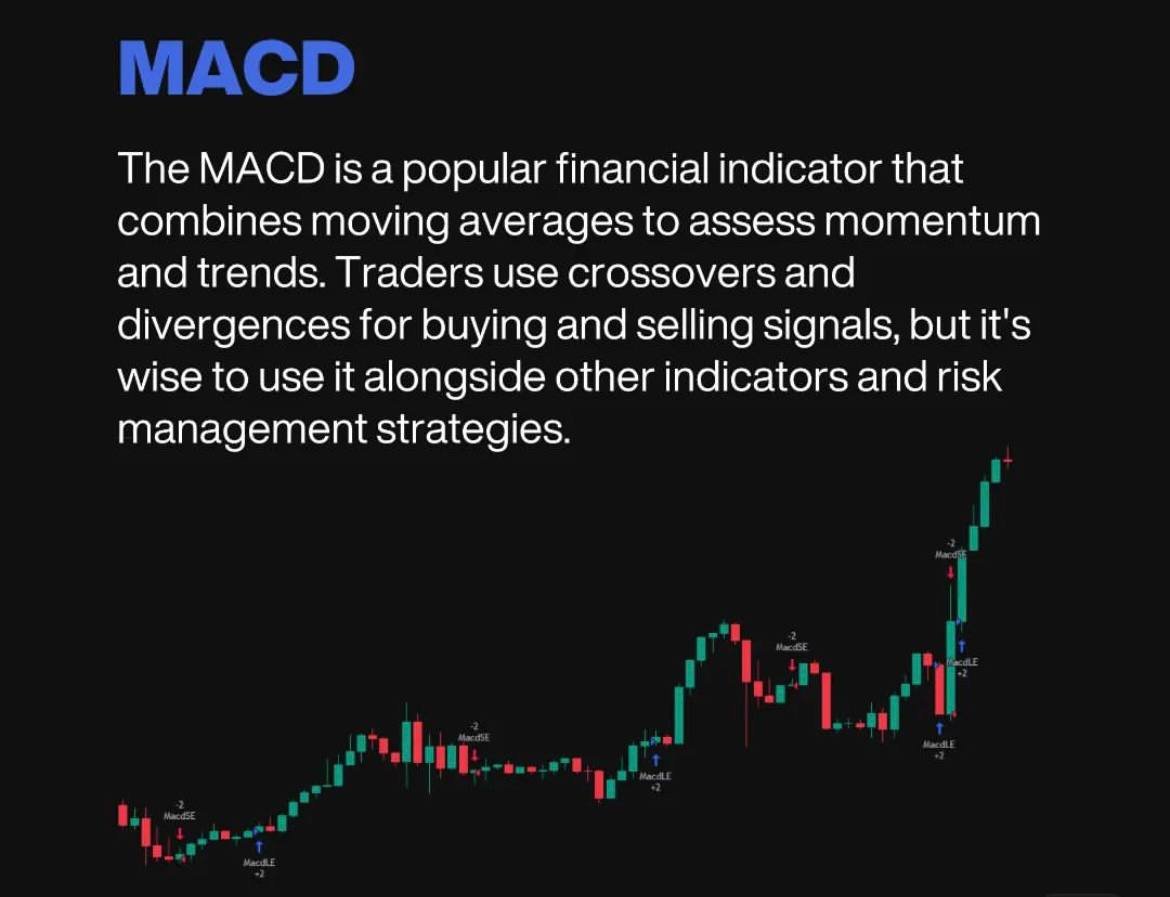
MACD measures the convergence and divergence over time of two moving averages of the price of an asset.
MACD indicates the separation between the value of two moving averages with different calculation periods.
MACD measures the convergence and divergence over time of two moving averages of the price of an asset.
MACD indicates the separation between the value of two moving averages with different calculation periods.
1.1 MACD
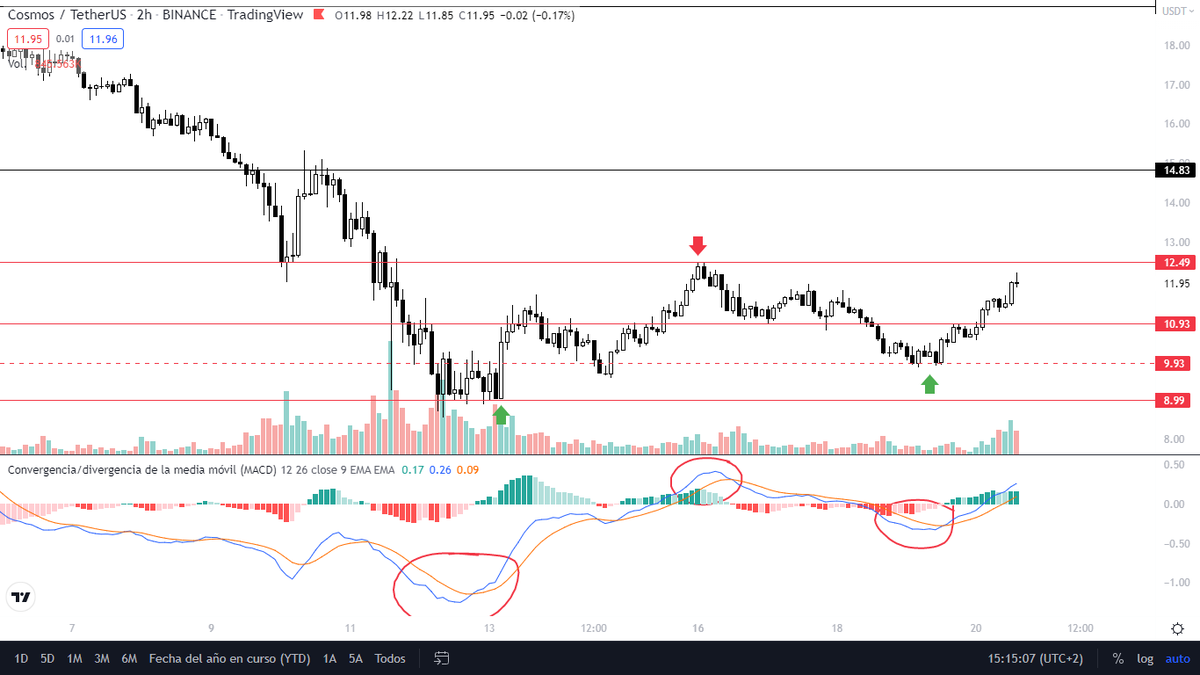
When the crossing of the MACD line with the Signal line occurs from the bottom up, the trend will be bullish.
When the crossing of the MACD line with the Signal line occurs from top to bottom, the trend will be bearish.
When the crossing of the MACD line with the Signal line occurs from the bottom up, the trend will be bullish.
When the crossing of the MACD line with the Signal line occurs from top to bottom, the trend will be bearish.
2. RSI
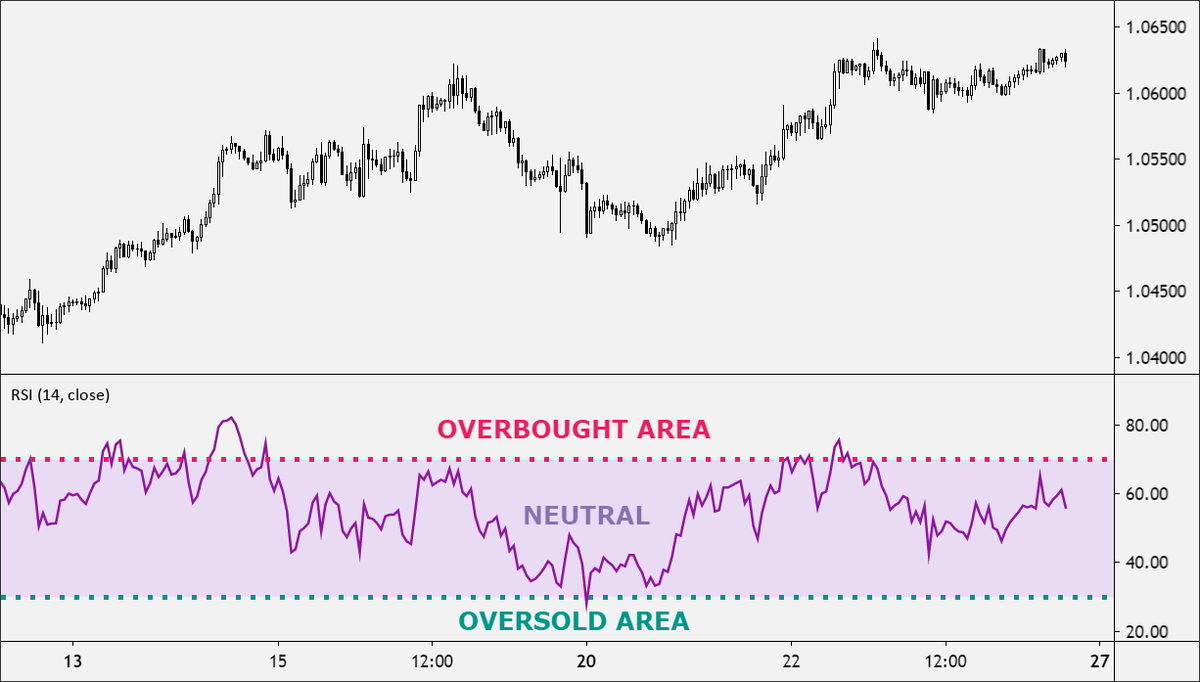
RSI is an oscillator that reflects the relative strength, between the uptrend and the downtrend.
RSI indicator around level 30: reflects oversold levels
RSI indicator around level 70: reflects overbought levels
RSI is an oscillator that reflects the relative strength, between the uptrend and the downtrend.
RSI indicator around level 30: reflects oversold levels
RSI indicator around level 70: reflects overbought levels
2.2 RSI
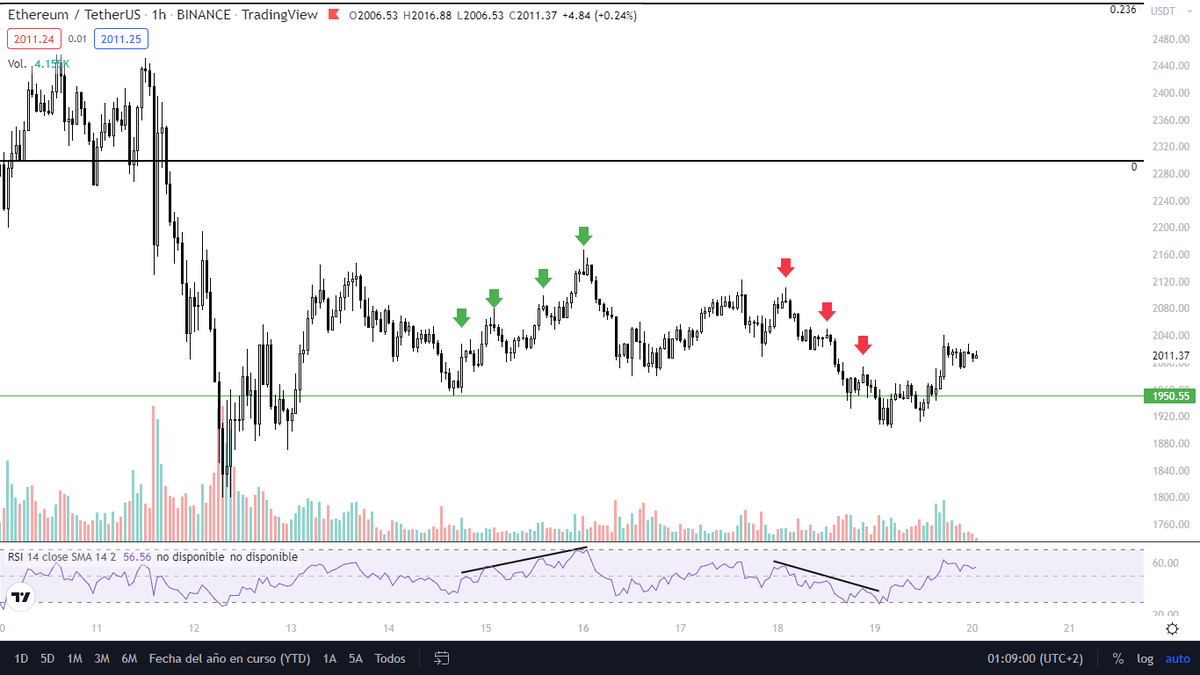
To draw an uptrend line on the indicator, you need to connect two or three or more peaks of the RSI indicator as HH points appear.
On the other hand, a descending line is drawn by connecting three or more peaks as the points descend.
To draw an uptrend line on the indicator, you need to connect two or three or more peaks of the RSI indicator as HH points appear.
On the other hand, a descending line is drawn by connecting three or more peaks as the points descend.
3. Bollinger Bands
Bollinger bands are one of the most widely used trading indicators.
Is used to compare the changes in the price value of any asset and the relative value of its price over a period of time.
Bollinger bands are one of the most widely used trading indicators.
Is used to compare the changes in the price value of any asset and the relative value of its price over a period of time.
3.1 Bollinger Bands
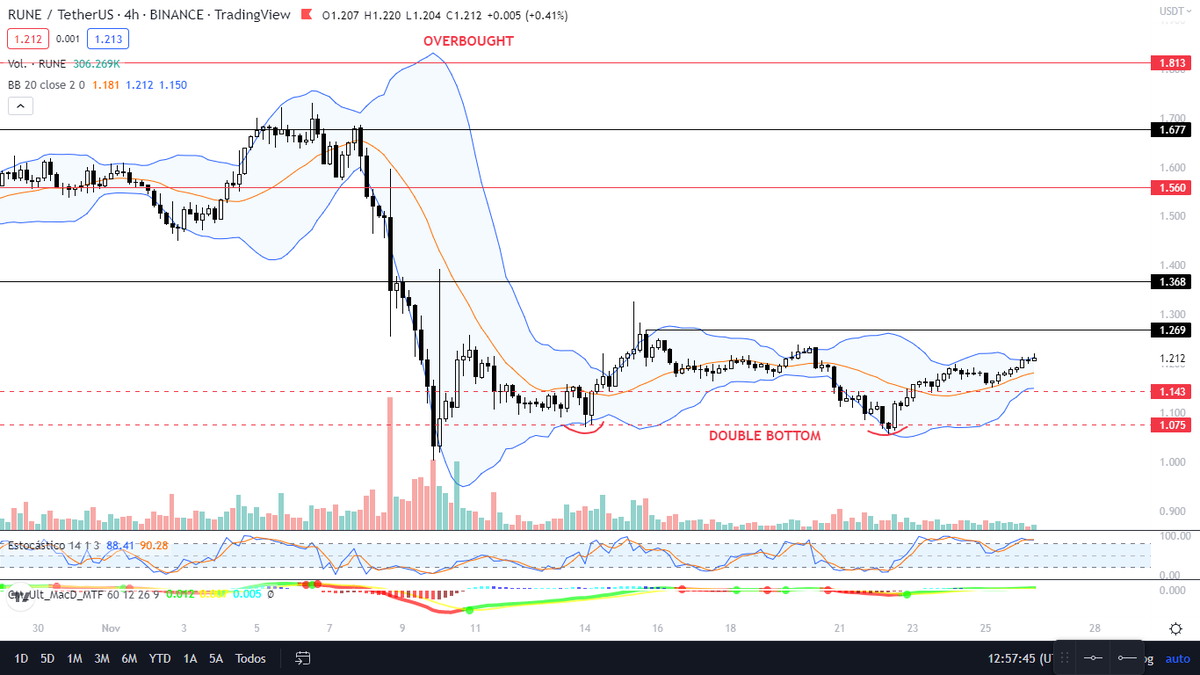
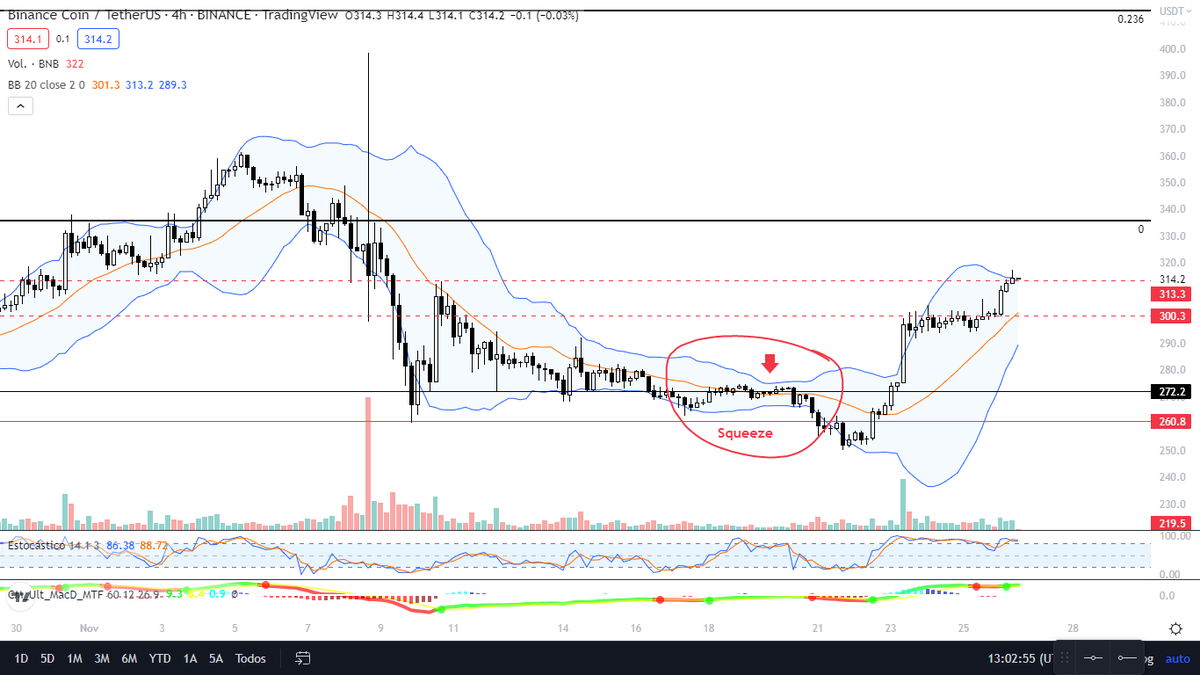
"Squeezing" occurs when the bands taper upward enough that they appear to merge or coincide.
If the price converges with the upper band, this indicates a bullish breakout.
If the price converges with the lower band, this indicates a bearish breakout.
"Squeezing" occurs when the bands taper upward enough that they appear to merge or coincide.
If the price converges with the upper band, this indicates a bullish breakout.
If the price converges with the lower band, this indicates a bearish breakout.
4. EMA
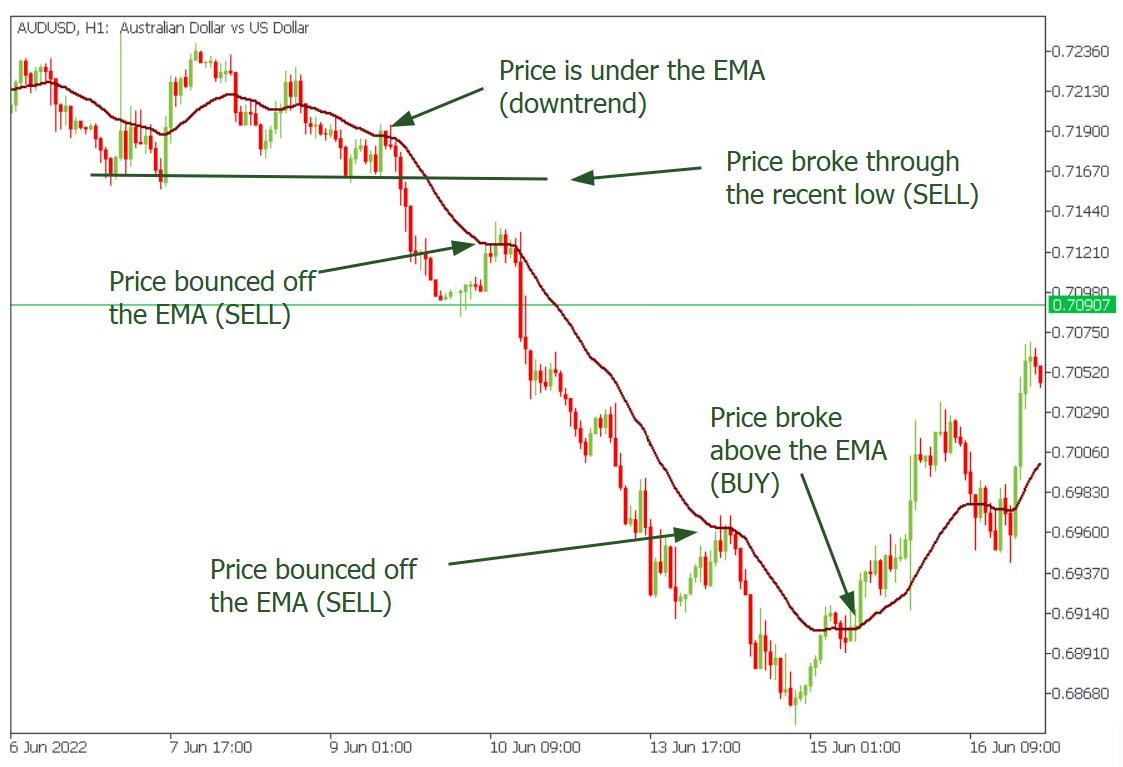
The exponential moving average is a weighted moving average that measures a trend, both bullish and bearish.
The EMA is used in trading to determine whether the price going up or down.
EMA's are also used as Support and Resistance.
The exponential moving average is a weighted moving average that measures a trend, both bullish and bearish.
The EMA is used in trading to determine whether the price going up or down.
EMA's are also used as Support and Resistance.
5. VWAP
Volume-weighted average prices is a technical analysis tool that shows the ratio of an asset's price to its total trade volume.
It provides traders and investors with a measure of the average price at which a stock is traded over a given period of time.
Volume-weighted average prices is a technical analysis tool that shows the ratio of an asset's price to its total trade volume.
It provides traders and investors with a measure of the average price at which a stock is traded over a given period of time.

6. Volume
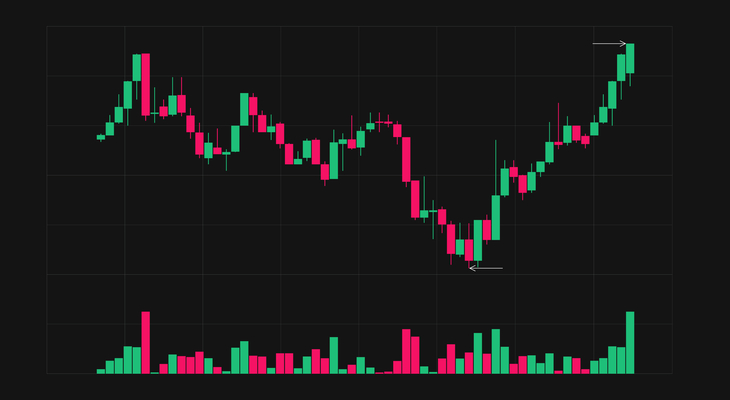
The volume of trade is a measure of the market's activity and liquidity during a set period of time.
Higher trading volumes are considered more positive than lower trading volumes because they mean more liquidity and better order execution.
The volume of trade is a measure of the market's activity and liquidity during a set period of time.
Higher trading volumes are considered more positive than lower trading volumes because they mean more liquidity and better order execution.
• • •
Missing some Tweet in this thread? You can try to
force a refresh